Car battle
Nissan Ariya vs. Toyota bZ4X: Complete comparison 2026
Detailed comparison of the Nissan Ariya vs. Toyota bZ4X electric SUVs. Discover the real-world range, equipment, and a clear verdict to help you with your choice.
Apr 14, 2026
Articles
Car battle
Detailed comparison of the Ford Mustang Mach-E and Volkswagen (VW) ID.4. Discover real-world range data, equipment details, and a clear verdict to help you choose a used EV.
May 18, 2026
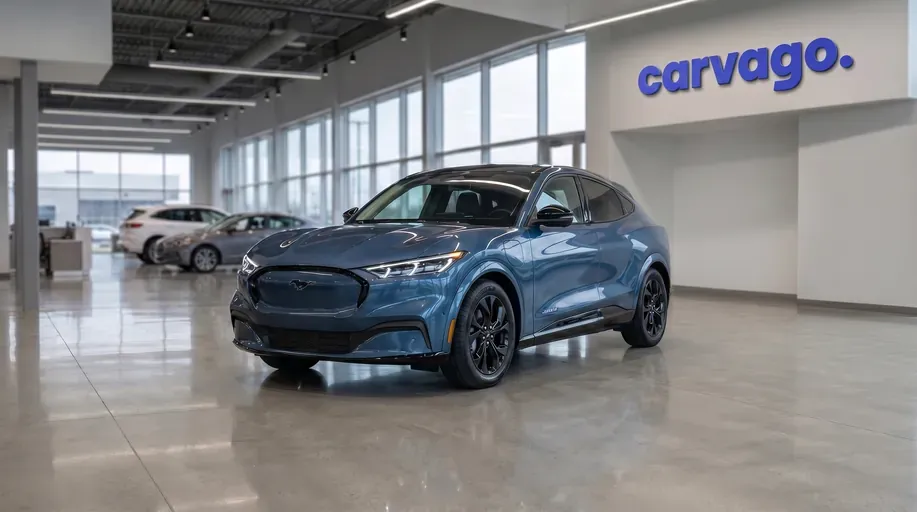
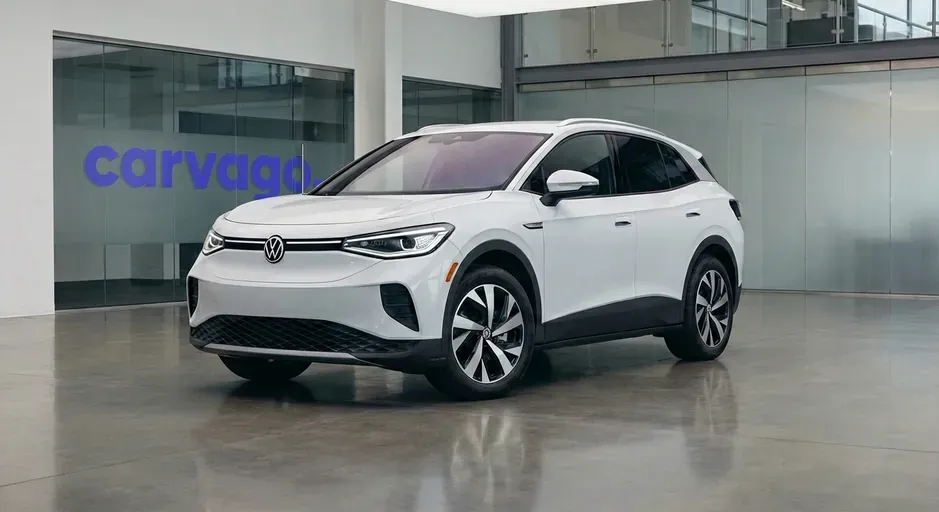
Ford Mustang Mach-E brings a sporty spirit and iconic design to the world of all-electric crossovers, boldly reimagining the legendary legacy of the American automaker for the modern era. In contrast, the Volkswagen ID.4, which also appears in selected global markets under the names ID.4 Crozz or ID.4 X, bets on proven German practicality, an exceptionally spacious interior, and a comfortable ride focused on everyday family use. Let's take a detailed look in this comparison at which of these two popular electric vehicles offers a better overall package in the world of slightly used cars, tailored exactly to your needs.
When you place the Ford Mustang Mach-E and Volkswagen ID.4 side by side, you will notice a slightly different approach to the overall proportions at first glance. Although both models fall into the popular electric SUV segment and compete directly on the market for roughly four-year-old used cars, the American representative clearly signals more muscular and sportier ambitions with its external dimensions. With a length approaching 4.75 metres, the Mustang Mach-E is more than 130 mm longer than its German competitor, which gives it a significantly more dominant stance on the road and visually brings it closer to cars a class larger.
However, a fundamental and very noticeable difference can be found when looking at the wheelbase. The Ford boasts a wheelbase of nearly three metres (2,984 mm), which is a significant 213 mm more than what the Volkswagen ID.4 offers. This body parameter has a huge impact on how the car feels – wheels pushed to the very corners enhance the dynamic profile and promise excellent directional stability at highway speeds. On the other hand, the Volkswagen, which maintains more traditional and compact proportions with a length of less than 4.6 metres, clearly scores in everyday city traffic.
While both models are very similar in height, staying within the range of common crossovers just above the 1.6-metre mark, the Ford is also about 30 mm wider. From a user perspective, the choice depends primarily on the environment in which you will move most often. If you often park in narrow spaces of city housing estates or older underground garages, the more compact and narrower ID.4 will be a significantly more agile and user-friendly choice. But if you are looking for a highway cruiser with a more majestic and sportily tuned profile and don't mind sacrificing a bit of agility, the larger dimensions of the Mustang Mach-E will undoubtedly appeal to you.
| Parameter | Ford Mustang Mach-E SUV | Volkswagen ID.4 SUV |
|---|---|---|
| Length (mm) | 4713 - 4750 | 4582 - 4584 |
| Width (mm) | 1881 - 1882 | 1852 |
| Height (mm) | 1613 - 1648 | 1619 - 1640 |
| Wheelbase (mm) | 2984 - 2985 | 2769 - 2771 |
Luggage capacity is often one of the most important parameters when choosing a family SUV. In this regard, both electric vehicles represent a slightly different approach to spaciousness and practicality. For families who need a car for the daily school run, large weekend shopping trips, or long summer holidays, the liters in the trunk are absolutely crucial. While one model is designed primarily with maximum efficiency and utilization of enclosed space in mind, the other prioritizes a more aggressive, sloping roofline, which logically takes its toll on the total cargo volume.
In a direct comparison of figures, the rear luggage compartment of the Volkswagen ID.4 offers a generous base volume of 543 liters. This is a highly above-average value, which is fully sufficient for weekend shopping as well as packing the family for a longer holiday. The Ford Mustang Mach-E has a smaller trunk in the rear with a volume of 402 liters. The difference of 141 liters represents, in practice, space for several extra suitcases or sports bags. However, the Mustang Mach-E partially makes up for this handicap with the bonus of a front trunk (so-called frunk) under the hood, which, thanks to its washable plastic bottom, is ideal for storing dirty shoes or charging cables. The Volkswagen ID.4 offers no storage space at the front.
After folding down the rear seats, the advantage of the German model's more voluminous body becomes even more apparent. The Volkswagen ID.4 can transform into a very capable hauler with a total transport capacity of up to 1,575 liters, which you will appreciate when moving old furniture or transporting bulky sports equipment. The Ford Mustang Mach-E provides a maximum volume of 1,420 liters in a two-seat configuration. While both cars perform excellently in terms of daily use, if your main priority is raw transport capacity, the German representative is clearly more useful.
| Parameter | Ford Mustang Mach-E SUV | Volkswagen ID.4 SUV |
|---|---|---|
| Base volume (liters) | 402 | 543 |
| Maximum volume with seats folded (liters) | 1420 | 1575 |
Thanks to its larger trunk, the Volkswagen ID.4 clearly dominates in overall family utility, while the Mustang Mach-E balances its smaller rear trunk with at least a practical washable compartment under the front hood.
The ability to tow a trailer is playing an increasingly crucial role for modern electric SUVs. Many buyers are looking for a versatile vehicle that can handle not only daily city traffic but also the attachment of a heavier bike rack or towing a caravan for a family holiday. When comparing approximately four-year-old representatives of the first generation of the Ford Mustang Mach-E and Volkswagen ID.4 models, we encounter different approaches to overall practicality. The maximum weight of an unbraked trailer is identical for both cars and reaches the standard maximum of 750 kg, which is fully sufficient for weekend shopping of bulky materials or transporting light cargo on a trailer.
However, for heavier, braked trailers, the capabilities of the two electric vehicles diverge significantly. The base version of the Ford Mustang Mach-E with the smaller battery (Standard Range) offers a towing capacity of only 750 kg, which is relatively low for an SUV. If you require higher towing power from the Ford, it is necessary to choose the variant with the larger battery (Extended Range). For 2021 models, this started at the same values, but during 2022 it underwent a homologation upgrade and its capacity increased to a more interesting 1000 to 1500 kg. In contrast, the Volkswagen ID.4 offers a very solid foundation even in its cheapest specifications – the Pure and Pro Performance motorizations easily handle a braked trailer weighing 1000 kg, while the more powerful Pro versions and the sporty dual-motor GTX can tow 1200 kg without trouble.
In practice, these differences mean that while the base Mach-E will primarily be used as a platform for heavier e-bike racks, the Volkswagen ID.4 and more expensive versions of the Ford will easily provide space for a few extra suitcases in the form of a smaller cargo trailer or a lighter caravan, which you will appreciate especially when traveling on longer holidays. In conclusion, it can be summarized that the Volkswagen ID.4 provides a more reliable and better-utilized towing capacity across its entire model portfolio. With the Ford, for full-fledged towing of larger trailers, you must specifically reach for versions with extended range and verify the production year of the given car on the used car market.
| Model and motorization | Braked weight of trailer (kg) | Unbraked weight of trailer (kg) |
|---|---|---|
| Ford Mustang Mach-E Standard Range | 750 | 750 |
| Ford Mustang Mach-E Extended Range | 750 - 1500 | 750 |
| Volkswagen ID.4 Pure / Pro Performance | 1000 | 750 |
| Volkswagen ID.4 Pro / GTX | 1200 | 750 |
When it comes to comparing the powertrains of these two electric SUVs, the difference in their philosophy is immediately apparent. Both vehicles in the generations current for the used car market (around four years old) rely exclusively on pure electric drive (BEV), an automatic single-speed transmission, and offer a choice between a single electric motor configuration (rear-wheel drive) or two electric motors (all-wheel drive). However, the Ford Mustang Mach-E clearly aims for emotion and sporty performance, as evidenced by its base versions with 198 kW and the massive power of 358 kW in the extreme GT variant with 860 Nm of torque. Conversely, the Volkswagen ID.4 focuses much more on everyday pragmatism, range, and affordability. Its range starts at a significantly more modest 109 kW for the base model and ends at 220 kW in the sporty GTX version, making it a more sensible and economical choice for used car buyers, which makes sense for calm family travel.
The range of powertrains for the Mustang Mach-E revolves around two battery capacities: Standard Range (usable capacity 68 kWh) and Extended Range (usable capacity 88 kWh). Both of these battery versions can be combined with either rear-wheel drive (RWD) or all-wheel drive (AWD), which adds a second electric motor to the front axle. Power starts at a respectable 198 kW and reaches 258 kW with 580 Nm of torque for the Extended Range AWD version. The absolute top of the range is the GT AWD model, which with its 358 kW will satisfy even the most demanding seekers of extreme acceleration. The values listed below reflect the specifications of cars from 2021 to 2022, which currently form the core of the offering on the four-year-old used car market.
| Motor type | Fuel | Power (kW) | Torque (Nm) | Transmission |
|---|---|---|---|---|
| Standard Range RWD | Electric | 198 | 430 | 1-speed automatic |
| Standard Range AWD | Electric | 198 | 580 | 1-speed automatic |
| Extended Range RWD | Electric | 216 | 430 | 1-speed automatic |
| Extended Range AWD | Electric | 258 | 580 | 1-speed automatic |
| GT AWD | Electric | 358 | 860 | 1-speed automatic |
The Volkswagen ID.4 from the early production years bets on a noticeably more modest and economical portfolio, tied to two battery sizes: Pure (usable capacity 52 kWh) and Pro/GTX (77 kWh). In the models available on the used car market, you will find a diverse range of power outputs. The base is represented by the Pure version with 109 kW and 220 Nm of torque. Special mention goes to the popular Pure Performance variant with 125 kW, which was only produced until mid-2022. You won't find it in newer model years, making it an interesting exclusivity solely on the used car market. However, the backbone of sales for four-year-old used cars is the Pro Performance version (150 kW) with a larger battery and rear-wheel drive. For drivers looking for better traction, there is the Pro 4MOTION variant with 195 kW, and at the very top of the range stands the sporty GTX 4MOTION with 220 kW and all-wheel drive.
| Motor type | Fuel | Power (kW) | Torque (Nm) | Transmission |
|---|---|---|---|---|
| Pure | Electric | 109 | 220 | 1-speed automatic |
| Pure Performance | Electric | 125 | 310 | 1-speed automatic |
| Pro Performance | Electric | 150 | 310 | 1-speed automatic |
| Pro 4MOTION | Electric | 195 | 425 | 1-speed automatic |
| GTX 4MOTION | Electric | 220 | 460 | 1-speed automatic |
So, who are these individual cars suitable for? Customers oriented towards dynamics, driving fun, and aggressive acceleration will undoubtedly appreciate the significantly more powerful engines offered by the Ford Mustang Mach-E. This car behaves very briskly even in its base versions and targets more demanding drivers, at the cost of slightly higher consumption. On the other hand, rational-minded buyers or families with a tighter budget, for whom calm, smooth, and economical driving is a priority, will find the ideal compromise in the wide range of less powerful versions of the Volkswagen ID.4.
While the Mustang Mach-E impresses even in its base form with the strength and crushing performance of the GT version, the ID.4 wins with a more sensible and efficient approach for calmer family travel.
Choosing the right powertrain is crucial for electric vehicles, as it fundamentally affects not only daily dynamics but, above all, real-world range and overall reliability. While the Ford Mustang Mach-E and Volkswagen ID.4 both target drivers looking for an electric SUV, they each take a different approach. While Ford bets on sporty emotions, a stiffer chassis, and massive batteries, Volkswagen is a typical pragmatist that scores points with interior space, quietness, and efficiency. In the market for approximately four-year-old used cars (we are focusing primarily on the 2021 and 2022 model years), we encounter several variants for both vehicles, where it is necessary to choose carefully not only based on performance parameters but also according to a verifiable service history.
The rear-wheel drive (RWD) version with the larger battery (Extended Range with a usable capacity of 88 kWh) represents the most sensible and balanced choice on the used market from 2021 to 2022. Due to the absence of a front electric motor, the car is lighter, slightly more efficient, and offers the longest range in the entire model line. The theoretical 610 km translates into a very solid 450 to 500 km in real-world driving. The 216 kW output and 430 Nm of torque on the rear axle are more than sufficient for brisk overtaking and more enjoyable driving. All-wheel drive (AWD) versions or even the high-performance GT version unnecessarily cut into the range and increase tire wear, while the Standard Range variant has a range that is already quite limiting in the winter months for older model years.
What to watch out for when buying a used car:
This configuration is ideal for drivers who regularly travel longer distances, want a bit of sporty character from their car, and occasionally appreciate the slight oversteer handling characteristics resulting from rear-wheel drive.
For the Volkswagen ID.4, the absolute favorite is the Pro Performance version with a usable battery capacity of 77 kWh and an output of 150 kW, which was widely available between 2020 and 2023. The base Pure powertrain with a smaller 52 kWh battery only makes sense for suburban commuting – its highway range is too short for a heavy family SUV. Conversely, the top-of-the-line GTX version adds all-wheel drive and higher performance, but the trade-off is significantly higher electricity consumption and a stiffer suspension setup. The rear-wheel-drive Pro Performance with 310 Nm of torque offers a perfectly balanced compromise. It easily handles a real-world combined range of around 400 km, and the dynamics are more than sufficient for smooth family travel.
What to watch out for when buying a used car:
Thanks to its excellent turning circle, superb sound insulation, and soft suspension, this version of the ID.4 is tailor-made for pragmatic families and calmer drivers looking for maximum user comfort with low operating costs.
Although official consumption figures provided by manufacturers according to the WLTP measurement cycle always look very tempting on paper, real-world operation of electric vehicles shows a slightly different picture. Actual electricity consumption (which replaces traditional fuel in these models) depends not only on driving style but also very significantly on weather conditions, temperature, and aerodynamics. For the most accurate comparison on the used car market – where in this case we focus on roughly four-year-old cars from 2021 and 2022 (corresponding to the 1st generation of both models) – we therefore base our findings on real user experiences collected on the Spritmonitor.de portal and from long-term tests.
| Model and motorization | Average consumption (kWh/100 km) |
|---|---|
| Volkswagen ID.4 Pure / Pure Performance | 16.8 |
| Volkswagen ID.4 Pro Performance | 17.2 |
| Volkswagen ID.4 GTX | 17.6 |
| Ford Mustang Mach-E Standard Range | 18.3 |
| Ford Mustang Mach-E Extended Range | 18.8 |
From the table of measured data, it is clearly evident that the Volkswagen ID.4 is a more efficient car in terms of electricity consumption. Its rounded aerodynamic shapes and the tuning of the dedicated MEB platform bear fruit in practice. Even the version with the larger battery (Pro Performance) maintains a very decent average consumption just above the 17 kWh/100 km mark, and even the most powerful dual-motor GTX version remains relatively economical. Conversely, the Ford Mustang Mach-E pays a price for its sportier and more muscular design. Both of its most common versions on the used car market show consumption roughly 1 to 2 kWh per 100 km higher. However, a surprising and positive finding is that the more powerful variant with the larger battery (Extended Range) for the Ford does not mean a drastic increase in appetite, making it the most sensible choice for those looking for a compromise between range and efficiency.
For average drivers moving mostly in city and suburban traffic, this difference in consumption will be more or less negligible, and both models will offer excellent efficiency. But if you are among the drivers who often travel long distances or regularly use highways, the difference in aerodynamics and consumption will manifest much more significantly. In such a case, the Volkswagen ID.4 saves not only the wallet but, thanks to overall lower consumption, also shortens the time needed to replenish energy at charging stations. The Mustang Mach-E, in return, targets drivers for whom visual impression and driving dynamics are more of a priority and who are willing to pay for them with slightly higher operating costs.
In conclusion, it can be summarized that although the Volkswagen ID.4 is more economical in real-world operation than the Ford Mustang Mach-E, the difference is not so vast that it must represent a major obstacle when purchasing. When choosing on the market for four-year-old used cars, energy consumption will serve more as a supplementary argument. For pragmatists and travelers, the numbers clearly play in favor of Volkswagen, while those interested in the Ford will gladly accept its slightly higher consumption in exchange for a more attractive style and sporty character.
When looking at the used electric vehicle market for cars approximately four years old (2021 and 2022 models), the different focus of both models is apparent at first glance. While the Volkswagen ID.4 appeals more to practical families and offers a more affordable entry into the world of battery SUVs, the Ford Mustang Mach-E maintains a more premium and sportier image on the secondary market. This is directly reflected in its higher purchase prices.
From a wallet perspective, a four-year-old Volkswagen ID.4 becomes an exceptionally attractive choice. The cheapest 2021 units with over 100,000 kilometers start at roughly €21,000 to €23,000.
The "golden middle way" for 2022 models with an average mileage of around 50,000 to 70,000 kilometers currently ranges between €23,000 and €27,000. If you are interested in well-equipped versions, such as the popular Pro Performance with the larger 77 kWh battery and long range, or vehicles with very low mileage, prepare an amount approaching €29,000. The significant depreciation from the original purchase price makes a used ID.4 one of the most affordable modern family EVs on the market.
On the other hand, the used "electric Mustang" holds its value much more confidently. Basic versions (2021 cars with the smaller battery and mileage approaching 100,000 km) can be purchased from approximately €24,000 to €26,000.
Most attractive four-year-old models with adequate mileage and decent equipment sell in the range of €28,000 to €32,000. Top versions, such as the Extended Range AWD with the large battery, or even the sporty GT version with over 480 hp, can still easily justify a price tag exceeding €39,000 for well-maintained units. Compared to the VW, you simply pay a "style tax" and for more pronounced dynamics.
| Model | Price from (high mileage, base equipment) | Average price (golden middle, ~60,000 km) | Price up to (TOP condition, max equipment / GT edition) |
|---|---|---|---|
| Volkswagen ID.4 | ~ €21,000 | €23,000 – €27,000 | ~ €29,000 |
| Ford Mustang Mach-E | ~ €24,000 | €28,000 – €32,000 | €39,000 and more |
If your main priority is affordability, large interior space, and the best price-to-utility ratio, a used Volkswagen ID.4 is the clear winner, while the Ford Mustang Mach-E will please drivers who are happy to pay extra for higher performance and a more attractive appearance.
Both compared electric vehicles can boast a maximum five-star rating in Euro NCAP safety tests. However, when choosing a used car, it is always crucial to consider the context and the year of testing. Test methodology and protocols are constantly becoming stricter over time – while older cars would often struggle to reach three stars today, modern tests place immense emphasis not only on passive body rigidity but also on advanced assistance systems, such as new frontal collision simulations, cyclist detection, or emergency scenarios at intersections. Percentage results from different years therefore usually cannot be directly compared. In this case, however, we have ideal conditions for a direct comparison, as both the Ford Mustang Mach-E and the Volkswagen ID.4 underwent testing in the same year (2021) and according to identical, very strict criteria.
Ford Mustang Mach-E performed very well in the 2021 tests. It scored 92% for adult occupant protection and 86% for child occupant protection. The assessors praised the stable cabin and the presence of a center airbag, which prevents the heads of front passengers from colliding during a side impact. In the area of vulnerable road user protection (pedestrians and cyclists), the car achieved 69%, and its safety assistance systems (known as the Co-Pilot360 package) earned a solid 82%. Autonomous emergency braking demonstrated good functionality, but the Mach-E lost minor points in pedestrian protection due to stiffer A-pillars and the base of the windshield.
The Volkswagen ID.4 demonstrates a slightly more comprehensive level of safety and, in terms of percentage ratings, slightly outperforms its American competitor in all areas. Adult protection was rated at an excellent 93% and child protection at 89%. A more significant difference can be observed in the protection of vulnerable road users, where the ID.4 reached 76%, and in the safety assistants grouped under the name IQ.DRIVE, which scored 85%. Like the Ford, the Volkswagen is also equipped with a center airbag as standard; however, its active assistance systems reacted somewhat more promptly in Euro NCAP test scenarios and provide broader protection.
In conclusion, it can be stated that both cars offer a top-tier level of safety and, from the perspective of today's used car market standards, possess highly modern active and passive protection features. However, the Volkswagen ID.4 emerges from this duel as an even more comprehensive family car, primarily thanks to slightly better results in pedestrian protection and the more sophisticated functioning of its predictive safety assistants.
| Parameter | Ford Mustang Mach-E | Volkswagen ID.4 |
|---|---|---|
| Year of testing | 2021 | 2021 |
| Adult occupant protection | 92 % | 93 % |
| Child occupant protection | 86 % | 89 % |
| Vulnerable road user protection | 69 % | 76 % |
| Safety assistance systems | 82 % | 85 % |
Both vehicles provide an excellent level of modern safety, but the Volkswagen ID.4, thanks to overall better and more balanced results in all categories, takes the title of the safer choice for family use.
In addition to standard equipment, each model offers several unique features that can be decisive for the customer, with both cars approaching added value in completely different ways.
Attractive sporty design with clear references to the legendary Mustang model
Very fun and dynamic driving characteristics, especially in rear-wheel drive and GT versions
Above-standard range for versions with the larger battery (Extended Range), exceeding 500 km in real-world conditions
Practical washable front trunk (frunk) with a volume of 81 liters and a drain plug
Smooth and intuitive SYNC 4A infotainment system with a giant 15.5-inch vertical screen
Stiffer suspension tuning, which significantly reduces ride comfort on broken roads
Electronic door opening buttons (instead of classic handles) can be troublesome in freezing weather
Higher loading lip of the rear luggage compartment
Charging speed (DC curve) drops very quickly after exceeding 80% battery capacity
The Ford Mustang Mach-E is ideal for drivers transitioning to an electric vehicle who don't want to lose visual and driving emotions. With its attractive appearance, powerful motors, and playful dynamics, it perfectly appeals to those who find conventional family electric SUVs too sterile and boring.
Exceptionally comfortable and smooth suspension that filters out bumps excellently
Generous and airy interior space, ideal for comfortable travel with the whole family
Excellent maneuverability and a surprisingly small turning radius for rear-wheel-drive versions
Reliable travel range and solid aerodynamic efficiency on the highway
Attractive price-to-practical-value ratio on the current used car market
Sluggish and often freezing infotainment (a typical ailment of cars from the first years of production)
Significant ergonomic blunders, such as unlit touch sliders for volume and shared window control buttons
Complete absence of a front trunk for storing charging cables
Purely functional and rather cumbersome driving behavior without any sporting ambitions
The Volkswagen ID.4 is a typical representative of a rational family cruiser that prioritizes peace, safety, and maximum comfort. It perfectly suits pragmatically-minded users looking for a spacious and quiet electric car for daily family logistics who don't mind the more specific touch ergonomics in the interior.
Based on long-term user feedback, service reports, recalls, and practical insights brought by, among others, our comprehensive car audit, we have compiled an overview of the most common problems that buyers of both used electric cars should watch out for.
The first years of production of the electric Ford Mustang Mach-E struggled mainly with teething troubles in the software area and, in early model years, also with high-voltage electronics issues.
When buying a used Mach-E, it is crucial to check the recall history, especially regarding the replacement of battery contactors (HVBJB), and to ensure that the car has the latest version of the onboard software.
The Volkswagen ID.4 is a mechanically robustly built car, whose market launch was nevertheless heavily marred by unfinished software and quirks of the onboard electronics.
For older ID.4 models, it is an absolute necessity for reliable operation to verify whether the car has had its original 12V battery replaced, the door handle seals checked, and above all, the newer software version 3.0 or higher installed.
When buying a used car, a thorough inspection is key. Even though these are electric vehicles, where concerns about the internal combustion engine are eliminated, both models have their specifics from the early years of production that need to be focused on. Therefore, before purchasing, we recommend not underestimating a professional physical car inspection, which will reveal any hidden defects.
Volkswagen ID.4 offers a standard rear trunk with a volume of 543 liters, which is significantly more than the 402 liters of the Ford. However, the Mustang Mach-E also has a practical luggage compartment under the front hood (the so-called frunk) with a volume of 81 liters, which is ideal for wet charging cables. For family travel and transporting bulkier items, however, the Volkswagen has a slight advantage thanks to its more traditional body shape.
Ford relies on its famous name and offers a significantly sportier performance with a stiffer chassis, sharper steering, and more aggressive acceleration. Volkswagen, on the other hand, aims primarily for a relaxed ride, softer damping of bumps, and maximum family comfort. If you are looking for fun behind the wheel, choose the Mach-E; for a quiet and comfortable daily drive, the ID.4 is ideal.
Both cars can be purchased with different battery sizes, with the top versions with the largest battery in both models exceeding a paper range of 500 km. In real-world traffic, both cars are very similar, although the Ford with the Extended Range can cover a few dozen more kilometers on a single charge. Highway consumption for both of these used cars from 2021 and 2022 averages around 20 to 23 kWh/100 km depending on weather and driving style.
Ford dominates the interior with a giant 15.5-inch vertical display with the smooth SYNC 4 system and a practical physical volume knob. Volkswagen chose a more minimalist approach, but older ID.4 models often face criticism for unlit touch sliders under the display and occasionally slower system responses. In terms of user-friendliness and screen response speed, the Mustang wins among four-year-old used cars.
The first years of the VW ID.4 handle a maximum charging power of 125 kW (for the Pro version), while the Ford with the larger battery can accept up to 150 kW. At a fast-charging station, you can replenish energy from 10 to 80% capacity in both vehicles in about 35 to 40 minutes. Although Volkswagen has improved its charging curves for used cars over time through software updates, the actual time spent at the charger is comparable for both cars.
While the Ford Mustang Mach-E will primarily appeal to drivers looking for an attractive sporty design, dynamic driving characteristics, and smoother infotainment, the Volkswagen ID.4 represents the ideal choice for pragmatically-minded families who prioritize generous interior space, exceptional comfort, and a lower purchase price. The American crossover bets on emotion and driving pleasure, albeit at the cost of a stiffer chassis and slightly higher electricity consumption. In contrast, the German representative dominates in everyday practicality, better use of luggage space, and overall efficiency, although with four-year-old used cars, you need to more carefully monitor the status and updates of the onboard software. So if you are looking for unmistakable style and driving fun in an electric car, go for the Ford, while for comfortable, quiet, and more affordable family logistics, clearly choose the Volkswagen.
Sources: ADAC, auto.cz, denik.cz, automagazin.cz, dopravniinfo.cz, autospecial.cz
This article was prepared using artificial intelligence tools. The section guarantor is Petr Dušek.
Detailed comparison of the Nissan Ariya vs. Toyota bZ4X electric SUVs. Discover the real-world range, equipment, and a clear verdict to help you with your choice.
Apr 14, 2026
Detailed comparison of Ford Mustang Mach-E vs Volkswagen ID.5. Which electric SUV offers better range, performance, and spaciousness? Read our final verdict.
May 1, 2026
Detailed comparison of the BMW iX3 vs Jaguar I-Pace. Discover the differences in range, equipment, and driving experience. Read our verdict and choose the best premium electric SUV.
Apr 23, 2026