Car battle
Hyundai Ioniq 5 vs. Kia EV6: Complete Comparison 2025
Hyundai Ioniq 5 vs. Kia EV6: Which electric car is better? A detailed comparison of range, technology, and price to help you make the right decision.
Apr 13, 2026
Articles
Car battle
Detailed comparison of the BMW iX3 vs Jaguar I-Pace. Discover the differences in range, equipment, and driving experience. Read our verdict and choose the best premium electric SUV.
April 23, 2026
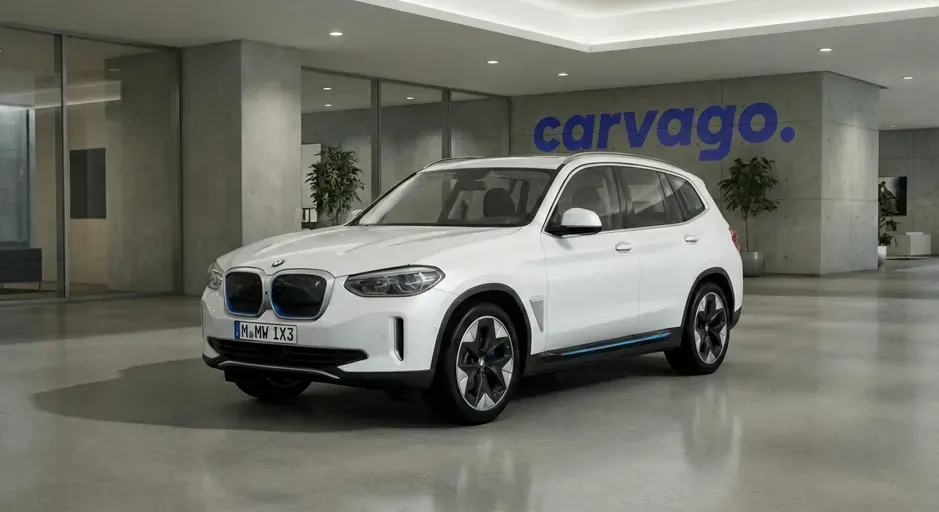
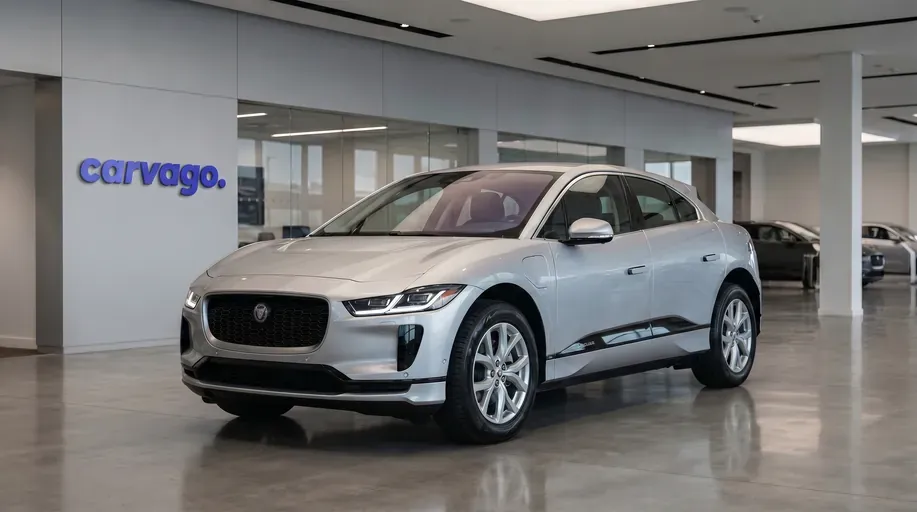
The BMW iX3 represents a precise German take on the all-electric premium SUV, fully benefiting from the proven concept of the popular X3 model and combining traditional build quality with a modern emission-free powertrain. Standing against it is the Jaguar I-Pace, an innovative British pioneer that entered the luxury electric vehicle segment with a bold dynamic design, sophisticated aerodynamics, and a pure sporting spirit. The following comparison will detail the key differences between these two technologically advanced models and show which approach to luxury electromobility makes more sense on the used car market.
When looking at the exterior dimensions of both electric SUVs, you immediately notice different approaches to design and proportions. While the BMW iX3 relies on traditional body styling based on internal combustion models, the Jaguar I-Pace was designed from the start as a pure electric vehicle and resembles more of a low-slung sporty crossover. With a length of 4,734 mm, the BMW iX3 is 52 mm longer than the Jaguar I-Pace (4,682 mm) and at the same time substantially taller by 102 mm (1,668 mm compared to 1,566 mm). In practice, these differences mean that the BMW iX3 offers a more upright driving position and a more airy feel in the head area, which will be especially appreciated by taller passengers looking for a classic driving experience in a taller SUV.
However, an interesting turn occurs when comparing the width and wheelbase, where the British model has a clear advantage. The Jaguar I-Pace dominates with an impressive width of 2,011 mm, which is a significant 120 mm more than its Bavarian competitor (1,891 mm). Furthermore, extremely short overhangs allowed Jaguar to stretch the wheelbase to a generous 2,990 mm, surpassing the BMW by a noticeable 126 mm (2,864 mm). Thanks to these parameters, the Jaguar I-Pace provides passengers with significantly more longitudinal legroom in the rear seats and a more generous shoulder width, although owners will pay for this advantage with the need for greater caution when parking in narrow city garages or alleys.
Both models thus target a slightly different audience and require different compromises. The British electric car maximizes internal space between the axles on a shorter overall footprint, while the German representative sticks to the proven and balanced concept of its model range. Ultimately, your decision will be largely influenced by the environment in which you will move most often – for everyday city maneuvering, the BMW is a more pleasant choice thanks to its narrower body, while for long trips with four people, the Jaguar offers a noticeably more generous and sportily tailored cabin.
| Parameter | BMW iX3 SUV | Jaguar I-Pace SUV |
|---|---|---|
| Length (mm) | 4734 | 4682 |
| Width (mm) | 1891 | 2011 |
| Height (mm) | 1668 | 1566 |
| Wheelbase (mm) | 2864 | 2990 |
When choosing a premium electric SUV from the used car market, practicality and trunk size often play a decisive role, especially if the vehicle is to serve as a full-fledged family car. Differences in construction between the approximately four-year-old BMW iX3 and Jaguar I-Pace models mean that although both cars offer enough space for weekend shopping and longer holidays, they approach the interior layout very differently. While one bets on a traditional body and maximum utility value, the other benefits from a sportier cut and the specific advantages of a purely electric platform.
The BMW iX3 of the popular G08 generation (for model years 2021–2025) is directly based on the conventionally powered X3 model, which is reflected in its extremely practical and boxy-shaped trunk. In the basic five-seat configuration, it offers a very solid volume of 510 liters. It is an easily accessible space without unnecessary protrusions, where you can easily pack luggage for the whole family. After folding down the rear seat backrests (traditionally split 40:20:40), the capacity increases to an impressive 1560 liters, creating an almost flat loading surface. Although this generation of the BMW iX3 does not offer any storage space under the front hood (the so-called frunk), the manufacturer addresses this shortcoming with a cleverly placed compartment for muddy charging cables safely hidden under the floor of the main trunk.
The British Jaguar I-Pace (X590 generation), on the other hand, takes full advantage of its unique body with a forward-shifted cabin and a sharply sloping sporty rear. According to the standard and stricter VDA methodology, it offers a basic volume of 505 liters (although the manufacturer sometimes mentions a so-called "wet" volume of 656 liters in marketing, simulating the pouring of liquid). In normal use, the Jaguar's trunk is fully comparable to its Munich rival. However, a fundamental difference occurs when you need to transport larger cargo. After folding down the rear seats, the I-Pace provides a maximum usable VDA volume of only 1163 liters. Compared to the BMW, the user loses valuable space for several extra suitcases, which you will feel especially when moving larger items. Jaguar partially compensates for this volume handicap with the existence of a practical front trunk with a volume of 27 liters, which is perfect for permanent and separate storage of power cables or mandatory equipment.
| Parameter | BMW iX3 SUV | Jaguar I-Pace SUV |
|---|---|---|
| Basic volume (liters) | 510 | 505 |
| Maximum volume with seats folded (liters) | 1560 | 1163 |
Although both models carry essentially the same in the basic configuration, after folding the seats, the significant superiority of the BMW iX3 becomes apparent, which represents a more practical and versatile choice in terms of total volume.
Towing capacity is often a major compromise for many electric vehicles, and the BMW iX3 and Jaguar I-Pace are no exception. For buyers looking for a practical SUV capable of towing heavier loads, this parameter can be crucial when choosing a used car, as the limits of both vehicles differ significantly from their combustion-engine equivalents.
Looking at the specific figures, we find that there are no differences between the two models on the used car market (around 4 years old). Both the BMW iX3 in the G08 generation (produced 2021–2025) and the Jaguar I-Pace EV400 in the X590 generation (model years 2020–2024) offer a maximum permitted braked trailer weight of exactly 750 kg. The exact same value of 750 kg applies to both vehicles for a standard unbraked trailer as well. While we are used to values approaching the two-tonne mark for conventional mid-size SUVs, these purely electric variants are significantly limited from the factory.
An interesting point from the history of these models is that with the Jaguar I-Pace, you have to watch out for older 2018 models or the less powerful EV320 versions, which often lack tow bar homologation entirely. For BMW, on the other hand, things are looking up – the brand-new iX3 50 generation (from 2026 on the Neue Klasse platform) promises an increase in towing capacity to 2000 kg. However, if you are choosing a late-model used car, you will have to settle for the aforementioned 750 kilograms.
In practice, these strict limitations mean that neither car is suitable for towing full-sized caravans or heavy trailers with other cars. However, the 750 kg value is perfectly sufficient for normal weekend use – whether it's a small trailer for garden waste, transporting building materials to a cottage, or for securely mounting a carrier for several heavy e-bikes.
In conclusion, it can be stated that when it comes to towing capacity, there is an absolute tie between the two rivals on the used car market. Neither will serve as a "workhorse" for demanding travelers with a caravan, but for occasional light transport, both will provide the exact same reliable service.
| Model and engine | Braked trailer weight (kg) | Unbraked trailer weight (kg) |
|---|---|---|
| BMW iX3 (G08 generation) | 750 | 750 |
| Jaguar I-Pace EV400 (X590 generation) | 750 | 750 |
The BMW iX3 and the Jaguar I-Pace represent different approaches to premium electric SUVs, which is clearly reflected in their powertrains. While Jaguar bet on uncompromising performance, two electric motors, and standard all-wheel drive (AWD) from the start, BMW took the path of maximum efficiency with its electric iX3, featuring a single motor driving only the rear axle. Jaguar offers the EV320 and EV400 versions for its British beast, featuring a large 90 kWh battery and a system output of up to 294 kW (400 hp). It clearly targets drivers looking for sporty dynamics and blistering 0-100 km/h acceleration in less than 5 seconds. In contrast, the BMW iX3 relies on a refined eDrive powertrain with an output of 210 kW (286 hp). Although it lags behind the Jaguar on paper in terms of absolute power, the Munich model excels in precise efficiency and real-world consumption. For more conservative drivers and on long journeys, the BMW may be the more sensible choice, while the Jaguar will be appreciated by performance enthusiasts and those who strictly need all-wheel traction.
When looking for a used BMW iX3 on the secondary market around four years old, you will be exclusively interested in the G08 generation (produced between 2021 and 2025). From a powertrain selection perspective, it will be very simple. The automaker bet on a single eDrive electric motor specification for this model, with 210 kW (286 hp) and a solid 400 Nm of torque. This variant always relies on rear-wheel drive and a single-speed reduction gearbox, giving the car the typical sporty-elegant character of the Bavarian brand with excellent handling. The newer NA5 generation, designated iX3 50 xDrive (with all-wheel drive), which is planned for production from 2026, understandably does not yet appear on the four-year-old used car market. Therefore, in the G08 generation, you will find only one, but exceptionally reliable and efficient, powertrain.
| Engine type | Fuel type | Power (kW) | Torque (Nm) | Transmission |
|---|---|---|---|---|
| eDrive (RWD) | Electric | 210 | 400 | 1AT |
The Jaguar I-Pace (X590 generation, available on the market between 2018 and 2024) offers slightly more options. All versions boast advanced all-wheel drive as standard, provided by two synchronous electric motors – one on the front and one on the rear axle. The absolute standard and most common variant is the top-of-the-line EV400 model, which provides a stunning 294 kW (400 hp) and a massive 696 Nm of torque. For used cars from 2020 and 2021, however, you may occasionally encounter the rarer, power-limited EV320 version on the market. This variant uses the exact same 90 kWh battery and hardware base, but its electric motors were software-tuned to a combined 235 kW (320 hp) and 500 Nm. The EV320 model was only on the market for a very short time as a more affordable alternative without compromising on range, so today it is more of a rare find.
| Engine type | Fuel type | Power (kW) | Torque (Nm) | Transmission |
|---|---|---|---|---|
| EV320 (AWD) | Electric | 235 | 500 | 1AT |
| EV400 (AWD) | Electric | 294 | 696 | 1AT |
If you are looking for a reliable companion with excellent efficiency and traditional rear-wheel drive, the BMW iX3 will impress you; however, for lovers of blistering acceleration and year-round all-wheel drive confidence, the Jaguar I-Pace EV400 will be the clear winner.
When choosing a four-year-old premium electric SUV, you will encounter two completely different drive philosophies with these two rivals. While the Jaguar I-Pace was developed from the start as a dedicated electric vehicle relying on the brutal power of two motors and all-wheel drive, the BMW iX3 (G08 generation) was created by installing an electric drive into the platform of a conventional SUV with a single motor at the rear. Choosing the right motorization and thoroughly inspecting it are absolutely critical for long-term satisfaction, real-world range, and avoiding potential expensive service traps with used EVs. Our recommendations for roughly four-year-old vehicles are therefore based on real-world consumption ratings, feedback from long-term owners, and the mechanical durability of used cars.
BMW played it safe with the iX3 G08 model (available between 2021–2025) and, unlike other electric vehicles, offered a single, yet precisely tuned motorization throughout its production. The 210 kW (286 hp) electric motor driving only the rear wheels is an absolutely ideal choice for the typical used family SUV buyer. It offers a great balance between immediate dynamics (acceleration from 0 to 100 km/h in 6.8 s) and the exemplary efficiency of the fifth-generation eDrive system. The new generation iX3 (NA5) with all-wheel drive will not arrive until 2026, making this rear-wheel-drive model the most relevant and only choice for the four-year-old used car market.
The technical advantage of this layout is excellent consumption management and lower mechanical complexity compared to dual-motor models. The real-world range with the 74kWh battery (usable capacity) consistently stays around 380–400 km, which is a pleasant surprise on long trips. This version is perfectly tailored for more conservative drivers transitioning from internal combustion engine vehicles who drive longer distances and appreciate the classic rear-wheel-drive feel. Although the iX3 is a mechanically very reliable choice, as a buyer, you should watch out for the following points:
Although a weaker and cheaper EV320 variant intended to lower the base price briefly appeared on the market between 2020 and 2021, for the roughly four-year-old used X590 generation, we clearly recommend going for the full-fat and most widespread EV400 motorization. A pair of electric motors with a total output of 294 kW (400 hp) and a massive torque of 696 Nm makes the I-Pace one of the most capable SUVs ever in terms of dynamics. The integrated 90 kWh battery lowers the center of gravity, and combined with a perfect 50:50 weight distribution, the car responds to steering inputs more like a sporty hatchback than a heavy SUV.
The EV400 model is simply a fantastic tool for dynamic users and fans of British design who demand all-wheel drive and lag-free acceleration from their car. However, it is necessary to keep in mind that in its early years of production, the I-Pace went through certain teething troubles. For a four-year-old car, an inspection, ideally by an EV specialist, is absolutely key:
Official consumption values stated by manufacturers according to the WLTP test cycle often seem somewhat optimistic, which is why it is always useful to look at real-world data from everyday operation. For electric vehicles, efficiency is extremely sensitive to weight, aerodynamics, and driving style, so deviations from "paper" promises tend to be significant. For the most accurate comparison of the used cars we evaluated, which are around four years old (referring to generations from 2020–2023), we have therefore used real user data from specialized community platforms.
Data source: Spritmonitor.de and
| Model and Powertrain | Average Consumption (kWh/100 km) |
|---|---|
| BMW iX3 (210 kW) | 19.2 |
| Jaguar I-Pace EV320 (235 kW) | 22.3 |
| Jaguar I-Pace EV400 (294 kW) | 23.5 |
Although both are premium electric SUVs, the difference in their overall efficiency on the road is quite profound. The BMW iX3 is offered exclusively with rear-wheel drive (RWD) and benefits from a precisely tuned fifth-generation eDrive system. Thanks to better aerodynamic properties and lower friction losses, its real average consumption comfortably stays below the psychological threshold of 20 kWh per 100 km. In contrast, the Jaguar I-Pace relies on a massive construction, standard all-wheel drive (AWD) using two electric motors, and significantly sportier tires. All this takes its toll – the average consumption of the British beast for both powertrains commonly exceeds 22 kWh/100 km and rises even much higher in the winter months or on the highway. Paradoxically, even the weaker EV320 version of the Jaguar does not bring any tangible energy savings compared to the more powerful EV400.
What does this mean for the average driver in practice? If you are looking for a reliable SUV for long-distance travel or daily commuting and care about both the longest possible highway range and savings on charging, the efficient and economical BMW iX3 will be much friendlier to your wallet. The I-Pace, on the other hand, is tailored for those who primarily seek unmistakable style, top-tier traction in the mountains, and vigorous acceleration at the cost of spending more time at fast-charging stations and paying more money.
When deciding between these two cars on the used market, energy demand should represent a crucial factor. Economically and pragmatically minded drivers will find a clear favorite in the BMW, while those interested in the Jaguar I-Pace must accept a higher "fuel" tax in exchange for attractive British character and the power of all-wheel drive.
When choosing a used luxury electric SUV, depreciation plays a key role. Models approximately four years old (currently 2021–2022 model years) represent the so-called "sweet spot" on the used car market – the vehicles have already undergone their steepest price drop but still offer modern technology, high levels of safety, and a traction battery in very good condition.
The BMW iX3 entered the market as an exceptionally efficient and rational choice within the premium segment. Since it shares its design inside and out with the conventional and immensely popular X3 model, there is great interest in these vehicles on the used market.
The Jaguar I-Pace has been on the market a bit longer (since 2018) and was one of the pioneers of the luxury battery crossover category. Original purchase prices, especially for top-equipped EV400 HSE versions, commonly exceeded the €103,000 mark.
| Model | Typical years | Estimated used price (€) | Depreciation rate |
|---|---|---|---|
| BMW iX3 (G08) | 2021 – 2022 | 31,000 – 53,000 | Average |
| Jaguar I-Pace | 2021 – 2022 | 29,000 – 45,000 | Very high |
Note: Final prices on the used car market may vary depending on current supply, documented battery capacity (SoH), and the detailed service history of the specific vehicle.
While the BMW iX3 holds its value better and represents a more conservative safe bet, the Jaguar I-Pace scores with an extreme price drop, allowing you to get stunning performance and premium equipment for an unbeatable amount on the used market.
Both compared models, the BMW iX3 and Jaguar I-Pace, boast a maximum five-star rating in the rigorous crash tests of the independent Euro NCAP organization. When choosing on the used car market, however, it is necessary to put these results into the correct context and pay attention to the year in which the testing itself took place. Euro NCAP testing protocols are constantly evolving and becoming significantly stricter every year. New frontal impact scenarios, advanced cyclist detection, and autonomous braking assessments at intersections are gradually being integrated into the evaluation. For this reason, percentage scores from different years cannot be directly and unreservedly compared.
The safety certification for the BMW iX3 was, in terms of passive protection, adopted from its sister combustion model, the X3, which underwent testing back in 2017, i.e., according to a significantly milder methodology. While the level of structural strength and protection for adult passengers remains top-notch (93%), the score for safety assistants is, for understandable reasons by the standards of the time, only 58%. For used cars approximately four years old, it is also important to know that the validity of this older official certificate formally expired in January 2024. However, to demonstrate technological progress, the Bavarian automaker had the modernized driver assistance system (so-called Highway Assist) tested separately in 2021, where the iX3 model received an excellent "Very Good" rating. This confirmed that the level of active safety did not remain in 2017 and that highly advanced technologies protect the occupants.
Jaguar I-Pace underwent crash tests in 2018, when more modern requirements for the protection of vulnerable road users and integrated active assistance systems had already begun to apply. As a result, it offers a substantially more comprehensive evaluation within a single main crash test. The British electric car earned an excellent 91% for adult protection and an above-average 81% for child passenger protection. Compared to the BMW, it has a significantly more balanced result in the assistance systems category (81%) in terms of testing, which on paper made it one of the safest and most comprehensively rated cars of its time.
| Parameter | BMW iX3 | Jaguar I-Pace |
|---|---|---|
| Year of testing | 2017 | 2018 |
| Adult occupant protection | 93% | 91% |
| Child protection | 84% | 81% |
| Vulnerable road user protection | 70% | 73% |
| Safety assistance systems | 58% | 81% |
In conclusion, both vehicles provide robust bodies and a premium level of passive safety, which reliably protects adult and child passengers in the event of a serious accident. However, if you are looking for the most balanced basic official rating according to more modern standards when buying a used electric car, the Jaguar I-Pace relies on a slightly newer methodology with a significantly better-rated package of standard assistants directly from the crash test. Although the BMW iX3 pays the price in the main tables for its older vintage and currently expired passive safety certificate, in reality, it fully compensates for this with constant over-the-air innovations and modernized driving support systems that shone in additional tests from 2021. Both cars are thus considered an above-standard safe choice today.
While the Jaguar I-Pace offers a more balanced certification on paper covering active assistants, the BMW iX3 relies on excellent passive protection from 2017, which is complemented in real-world traffic by highly advanced and demonstrably functional assistance systems from later years.
In addition to standard equipment, each of the models offers several unique features that can be decisive for the customer and perfectly illustrate their different approach to added value.
Highly efficient electric drive with surprisingly low real-world consumption
Intuitive and fast iDrive multimedia system with excellent ergonomics
Top-notch build quality and premium materials in the interior
Traditional and practical SUV design without unnecessary design gimmicks
Excellent driving comfort and top-tier cabin soundproofing even at highway speeds
Not available with all-wheel drive (rear-wheel drive only)
Uses a platform primarily designed for internal combustion engines, which limits the spatial layout
Lacks a front trunk (frunk) for practical storage of charging cables
Maximum DC charging speed of 150 kW is rather average in this class
The BMW iX3 is a perfect choice for those looking for a traditional premium family SUV with an electric drive without having to learn new habits. Thanks to the great iDrive system, high drive efficiency, and exemplary comfort, it will please more conservative drivers who don't mind the lack of all-wheel drive for everyday driving.
Unique and timeless design that combines elements of an SUV and a sports coupe
Dedicated electric platform providing generous passenger space and a long wheelbase
Standard all-wheel drive (AWD) and excellent driving characteristics
A practical front storage space (frunk) is available under the hood
400 hp output ensures top-tier dynamics and a highly above-average driving experience
Significantly higher real-world electricity consumption and thus a shorter range
Significantly slower fast charging with a maximum output of only 100 kW
Slower and outdated infotainment in older models (before the introduction of the Pivi Pro system)
Poorer rear-quarter visibility due to the sloping roofline and narrow rear window
The Jaguar I-Pace will appeal to car enthusiasts who primarily look for sporty driving performance, fresh British style, and the security of all-wheel drive in an electric vehicle. Despite compromises in the form of slower charging and higher consumption, it is an exceptionally driver-attractive car that stands out on the road.
Based on breakdown statistics from service centers, long-term user experience, and data provided by an independent technical inspection of the car before purchase, we have compiled an overview of the most common problems that potential buyers of a four-year-old used car should watch out for in both compared models.
The Bavarian electric SUV, sharing its base with the standard X3 model (G08 generation), is considered one of the most reliable premium electric cars on the market, and the vast majority of reported faults are limited to minor software complications rather than serious mechanical failures.
The electric "X3" does not suffer from fatal mechanical defects, and its problems are mostly limited to onboard software bugs, inaccurate range estimation, and normal chassis wear proportional to the car's weight.
The Jaguar I-Pace belongs to the generation of pioneers among luxury electric cars and requires increased caution on the used car market. Compared to its German competitor, according to service statistics, it suffers from much more serious and financially costly defects.
The I-Pace offers fantastic driving characteristics, but it suffers from potentially expensive charging system failures and, above all, major battery recalls that require a careful check of the history of a specific unit.
When buying a used car, a thorough inspection is key. For electric vehicles, defects are looked for differently than for internal combustion engines, and even a seemingly minor detail can mean a costly repair. That's why an independent used car check before the purchase itself pays off more than ever. Here are some specific points to focus on for these two models.
Although the Jaguar I-Pace has a significantly larger battery (90 kWh), the real-world range of both cars is very similar in practice, around 350 to 400 kilometres per charge. The BMW iX3 benefits from excellent aerodynamics and highly efficient energy management. The British car loses its lead in total battery capacity mainly due to higher average consumption and greater weight.
Thanks to its dual electric motors with 400 hp and all-wheel drive, the Jaguar I-Pace is a significantly faster, more dynamic, and overall sportier choice. In contrast, the BMW iX3 relies solely on rear-wheel drive with 286 hp, which ensures a very smooth but less explosive ride. For lovers of more spirited driving and sharp cornering, the I-Pace is the clear favourite.
The BMW iX3 shares its body fully with the standard X3 model, offering a more traditionally designed, airy interior and a highly usable 510-litre boot. Although the Jaguar counters with a larger boot volume on paper (656 litres), its sloping roofline and sporty shapes mean significantly less headroom for rear passengers. In terms of everyday family usability and overall outward visibility, the German SUV makes slightly more sense.
The BMW iX3 supports DC fast charging at up to 150 kW as standard, allowing it to charge from 10 to 80% capacity in less than 35 minutes. In contrast, the Jaguar I-Pace models from 2021 and 2022 support a maximum charging power of up to 104 kW. On long journeys, you will spend significantly less time at fast-charging stations with the BMW.
The Jaguar I-Pace completely dominates in this discipline thanks to its standard all-wheel drive (AWD), which provides perfect traction and stability on slippery surfaces. The BMW iX3 is sold exclusively as a rear-wheel drive (RWD) vehicle, which significantly limits its ability to handle snowy mountain roads or mud. If you frequently travel to the mountains, the British car, equipped with air suspension, is a much safer and more capable option.
Choosing between a roughly four-year-old BMW iX3 and a Jaguar I-Pace depends primarily on your personal priorities, as both cars approach the concept of a luxury electric vehicle in completely different ways. While the Bavarian SUV represents a rational safe bet thanks to excellent operating efficiency, an exceptionally practical body, and a traditionally superb user interface with rear-wheel drive, the British challenger attracts with its aggressive aerodynamic design, crushing 400 hp output, and standard all-wheel drive. Although the Jaguar scores on the used car market with a massive price drop, for which you get an exceptionally sporty and well-equipped car, as an owner you must expect higher energy consumption and the risk of slightly more expensive servicing. In the end, the BMW iX3 is an absolutely ideal and reliable choice for families looking for a maximally efficient everyday SUV, while the I-Pace will rather thrill car enthusiasts who prefer strong driving emotions, British elegance, and uncompromising year-round traction in an electric vehicle.
Sources: ADAC, idnes.cz, garaz.cz, auto-mania.cz, automix.cz, autorskola.cz
This article was prepared using artificial intelligence tools. The section guarantor is Petr Dušek.
Hyundai Ioniq 5 vs. Kia EV6: Which electric car is better? A detailed comparison of range, technology, and price to help you make the right decision.
Apr 13, 2026
Detailed comparison of Tesla Model X vs Volvo EX90. Find out the real range, compare the equipment, and read our verdict. Choose the best electric SUV!
Apr 16, 2026
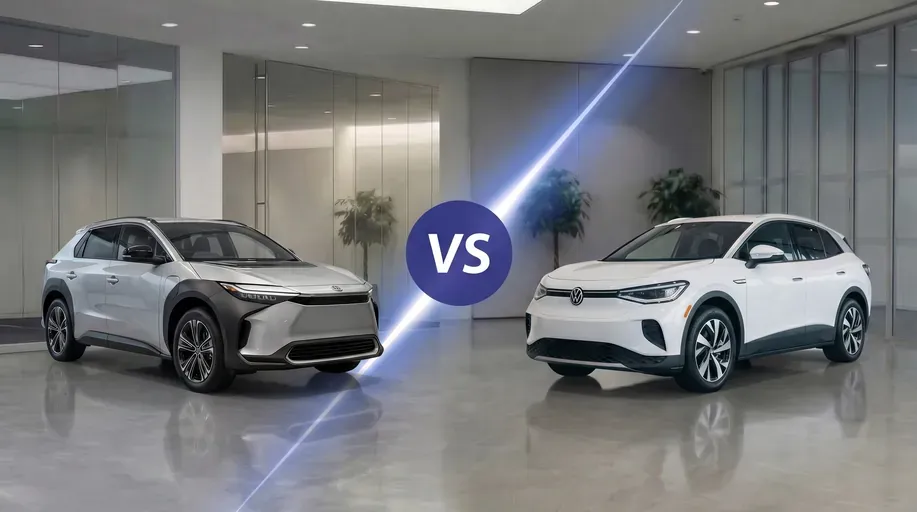
Comprehensive comparison of Toyota bZ4X vs. Volkswagen ID.4. Discover the real-world range, differences in equipment, and read our verdict on which electric SUV to choose.
Apr 15, 2026