Car battle
Hyundai Ioniq 5 vs. Kia EV6: Complete Comparison 2025
Hyundai Ioniq 5 vs. Kia EV6: Which electric car is better? A detailed comparison of range, technology, and price to help you make the right decision.
Apr 13, 2026
Articles
Car battle
Detailed comparison of Ford Mustang Mach-E vs Volkswagen ID.5. Which electric SUV offers better range, performance, and spaciousness? Read our final verdict.
May 1, 2026
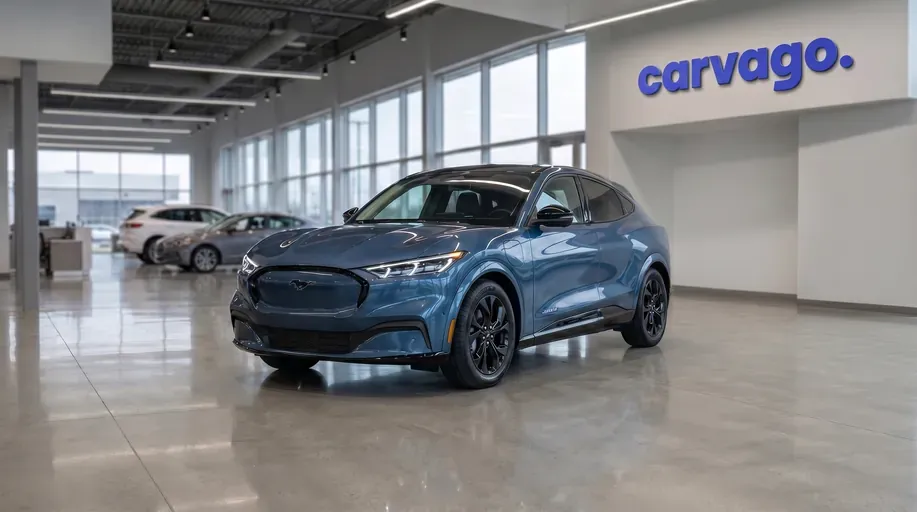
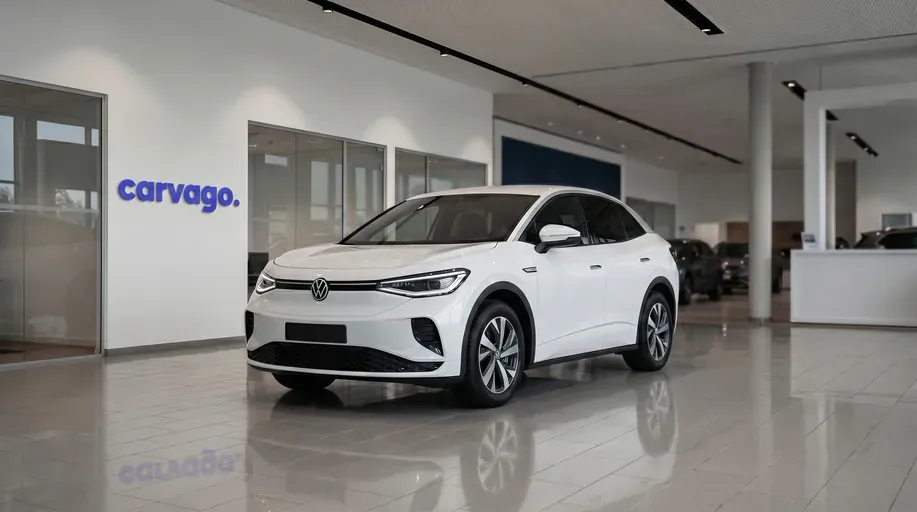
Ford Mustang Mach-E brings a sporty spirit and the iconic heritage of the legendary American car to the world of purely electric SUVs, successfully combining it with modern technologies and dynamic driving characteristics. Against it stands the Volkswagen ID.5, often perceived as a more stylish coupe version of the popular ID.4 model, which instead bets on sophisticated aerodynamics, a highly comfortable and spacious interior, and renowned German efficiency. Let's take a look together at how these two ambitious representatives of family electric vehicles stand in mutual comparison and which of them represents a better choice for your needs on the used car market.
When you place the Ford Mustang Mach-E and the Volkswagen ID.5 side by side, you immediately notice the different approach of both manufacturers to the proportions of an electric SUV. Ford plays the note of overseas majesty, and its body is overall noticeably more massive. In length, the Mustang Mach-E measures up to 4750 mm, while the Volkswagen ID.5, with its maximum 4599 mm, is a good 15 centimeters shorter. This difference contributes to the more athletic and muscular stance of the American model, while the German competitor gives a sleeker and overall more compact impression.
However, the most crucial factor when looking at the exterior dimensions of both cars is the wheelbase. The Mustang Mach-E boasts a wheelbase approaching three meters (up to 2985 mm), surpassing its rival from Wolfsburg by a significant more than 21 centimeters. Such a massive difference in practice means that the Ford offers passengers much more generous longitudinal space in the cabin, which will be especially appreciated by passengers with long legs in the rear seats. Additionally, a longer wheelbase generally aids in more confident directional stability during fast highway travel, making the Mach-E a confident highway cruiser.
On the other hand, the more compact footprint of the Volkswagen ID.5 brings undeniable advantages that shine especially in everyday city traffic. With a shorter length, shorter wheelbase, and a body roughly three centimeters narrower (1852 mm vs 1882 mm), it is easier to maneuver in narrow streets and underground garages. Parking the ID.5 does not require as much vigilance as with the sprawling Ford. When choosing between these two electric vehicles, you must clarify your daily routes: for frequent long-distance trips and maximum interior space, the Ford has the upper hand; for better agility in the metropolis and easier daily coexistence with parking spaces, the VW ID.5 will be the more rational choice.
| Parameter | Ford Mustang Mach-E SUV | Volkswagen ID.5 SUV |
|---|---|---|
| Length (mm) | 4713 - 4750 | 4582 - 4599 |
| Width (mm) | 1881 - 1882 | 1852 |
| Height (mm) | 1613 - 1648 | 1601 - 1618 |
| Wheelbase (mm) | 2984 - 2985 | 2770 - 2773 |
Luggage space often plays a key role when choosing a family electric car, as these vehicles frequently serve as the primary car in the household. Practicality for everyday use, whether it's transporting sports equipment or easy cargo handling, is essential for buyers. Both the Ford Mustang Mach-E and the Volkswagen ID.5 boast a very dynamic silhouette in the style of modern SUV-coupes. Although the sloping rear gives them an attractive sporty look, each automaker has approached the storage space solution quite differently.
The Volkswagen ID.5 effectively leverages the advantages of the fully electric MEB platform, allowing it to offer an excellently packaged and deep rear space. The base volume of its rear trunk is a generous 549 liters, a capacity sufficient for weekend shopping or a longer vacation. Once the rear bench is folded down, the storage capacity increases to a massive 1561 liters. Given the dynamically sloping roofline, this is an excellent result that offers families space for several more suitcases than is usual for stylish SUV-coupes.
In contrast, the Ford Mustang Mach-E offers a somewhat more modest base trunk with a volume of 402 liters, which means a deficit of 147 liters compared to its German competitor. Folding the rear backrests brings you to 1420 liters. However, Ford cleverly compensates for this smaller rear volume with a practical feature missing from the ID.5 – a front trunk, or "frunk." This provides an additional capacity of 81 liters, has a durable washable surface, and even includes a drain hole. This space is ideal for the worry-free transport of muddy boots or storing charging cables, so they don't get in the way under standard luggage in the back.
| Parameter | Ford Mustang Mach-E SUV | Volkswagen ID.5 SUV |
|---|---|---|
| Base volume (liters) | 402 | 549 |
| Max. volume with seats folded (liters) | 1420 | 1561 |
From the perspective of overall practicality, the choice depends entirely on how you use the storage spaces daily. If the largest possible uninterrupted area for a stroller or bulky items is essential for you, the Volkswagen ID.5 is the clear choice with its larger base and total trunk capacity. The Mustang Mach-E, on the other hand, while losing in absolute rear space figures, gains valuable points for its flexibility, allowing for the intelligent separation of clean and dirty cargo thanks to its well-thought-out front frunk.
The Volkswagen ID.5 will please families with its larger rear trunk, while the Ford Mustang Mach-E complements its slightly smaller rear storage space with a highly practical front trunk ideal for charging cables and dirty items.
When choosing an electric car on the used market, towing capacity often plays a key role, as not every electric vehicle is structurally designed to tow heavier loads. For buyers, this figure is absolutely crucial – it determines whether they will use the car only with a bike rack or if it will also serve as a practical workhorse for heavier loads. Roughly four-year-old Ford Mustang Mach-E and Volkswagen ID.5 models from the first generation offer very interesting possibilities in this regard, covering the common needs of users. In their basic configuration, both models can tow an unbraked trailer with the same weight of 750 kg, a capacity perfectly sufficient for a weekend purchase of bulky material at a DIY store or a small garden trailer.
More significant differences occur with braked trailers, where standard and maximum values depend heavily on battery capacity and the specific powertrain. On the used market, the Volkswagen ID.5 serves as a stable baseline across the entire range – standard Pro and Pro Performance versions (from 2022–2023) can typically tow 1,000 kg, while the more powerful GTX model can handle a maximum of 1,200 kg. In contrast, the Ford Mustang Mach-E requires more attention when choosing a used car. The version with the basic battery (Standard Range) offers a maximum braked capacity limited to just 750 kg. However, for the version with the larger battery (Extended Range), the manufacturer released significantly higher capacities. Models from 2022 onwards can handle a braked trailer weight of an impressive 1,500 kg, significantly outpacing older 2021 vehicles, which started at a much lower limit ranging from 750 to 1,000 kg.
In practice, these values bring diametrically different usage possibilities. While the Volkswagen ID.5 offers reliable space for a few extra suitcases in the form of a small utility trailer or a very compact trailer, the Mustang Mach-E in the Extended Range version opens the way to true freedom. The mentioned 1,500 kg for the Ford is reliably enough for a medium-sized family caravan or transporting a boat, making this electric SUV a car that is safely sufficient for both weekend shopping and longer holidays. In conclusion, it can be summarized that although the Volkswagen ID.5 offers more consistent parameters and certainty across all available versions, for customers requiring the towing of heavy trailers, the Ford Mustang Mach-E with the larger battery is the clear favorite on the market for roughly four-year-old used cars.
| Model and powertrain | Braked trailer weight (kg) | Unbraked trailer weight (kg) |
|---|---|---|
| Ford Mustang Mach-E Standard Range | 750 | 750 |
| Ford Mustang Mach-E Extended Range | 1000 - 1500 | 750 |
| Volkswagen ID.5 Pro / Pro Performance | 1000 | 750 |
| Volkswagen ID.5 GTX | 1200 | 750 |
When comparing the powertrains of these two electric SUVs, it is clear at first glance that each manufacturer has chosen a slightly different approach, which is crucial for used car buyers in terms of dynamics and overall driving feel. While the Volkswagen ID.5 focuses more on smoothness, comfort, and efficiency, the Ford Mustang Mach-E bets on emotion and raw performance, referencing its legendary name. Even in the base engine options for approximately four-year-old vehicles from 2021–2022, there is a vast difference: the cheapest Ford offers 198 kW, while the base ID.5 starts at a much more modest 128 kW. Both cars are fully electric, use single-speed automatic transmissions, and offer a choice between rear-wheel drive (4x2) and all-wheel drive (4x4). However, if you are looking for absolute dynamics, the Mustang Mach-E in the GT version, with its 358 kW and massive 860 Nm of torque, clearly outclasses even the most powerful Volkswagen ID.5 GTX of the time, which provides "only" 220 kW. On the other hand, ID.5 vehicles, thanks to their focus on aerodynamics and more moderate performance tuning, reward with stable consumption and excellent use of internal energy for peaceful family travel.
The range of powertrains for the Ford Mustang Mach-E from the first years of production revolves around two battery capacities (Standard Range and Extended Range) and the option of single or dual-axle drive. Even the base rear-wheel-drive version with the smaller battery offers a respectable 198 kW. Surprisingly, the Standard Range AWD version has the exact same power, but adds a second electric motor to the front axle and significantly increases torque to 580 Nm for more vigorous acceleration from a standstill. For lovers of longer ranges and frequent highway trips, the Extended Range RWD variant with 216 kW was available, while its all-wheel-drive (AWD) equivalent stepped up to 258 kW. The true pinnacle of the range is the brutal GT AWD version with 358 kW (487 hp) and a staggering 860 Nm of torque, which turns this family SUV into a full-fledged sports car. For drivers prioritizing long range, the GT might be unnecessarily "thirsty," making the powerful Extended Range version the ideal compromise for everyday driving.
| Engine Type | Fuel | Power (kW) | Torque (Nm) | Transmission |
|---|---|---|---|---|
| Standard Range RWD | Electric | 198 | 430 | 1-speed |
| Standard Range AWD | Electric | 198 | 580 | 1-speed |
| Extended Range RWD | Electric | 216 | 430 | 1-speed |
| Extended Range AWD | Electric | 258 | 580 | 1-speed |
| GT AWD | Electric | 358 | 860 | 1-speed |
The Volkswagen ID.5 entered the market in 2022 with a simpler and much more relaxed range of electric motors aimed at the average consumer. Most vehicles from these first years of production were equipped with a battery with a usable capacity of 77 kWh. The base model, labeled Pro, featured a single electric motor on the rear axle with 128 kW. Dynamically much more attractive was the Pro Performance version, which offered 150 kW while maintaining the same torque of 310 Nm. However, it is important to note that the Pro Performance version was only available in the initial offering from May 2022 to October 2023, after which it was replaced; thus, its presence on the used car market is tied exclusively to these early model years. For those interested in all-wheel drive and higher agility, the top-of-the-line GTX model was reserved, providing a combined output of 220 kW thanks to two electric motors. Although updated models from 2024 brought increased performance, vehicles typically available as four-year-old used cars will primarily appeal to calmer drivers looking for a quiet, exceptionally comfortable family car rather than a purebred brawler like the Ford.
| Engine Type | Fuel | Power (kW) | Torque (Nm) | Transmission |
|---|---|---|---|---|
| Pro (RWD) | Electric | 128 | 310 | 1-speed |
| Pro Performance (RWD) | Electric | 150 | 310 | 1-speed |
| GTX 4MOTION (AWD) | Electric | 220 | 460 | 1-speed |
The Ford Mustang Mach-E will thrill drivers longing for massive power and a sporty experience, while the Volkswagen ID.5 will please calmer personalities looking for smoothness, efficiency, and everyday user-friendliness.
Choosing the right powertrain is key to long-term satisfaction with a used electric car, and these two electric SUV-coupes take completely different approaches to propulsion and technology. While the Ford Mustang Mach-E bets on strong emotions and a sporty character, offering a choice between a smaller (Standard Range) and a large (Extended Range) battery with a huge power range up to a dazzling 358 kW in the dual-motor GT version, the Volkswagen ID.5 follows a more pragmatic and family-oriented approach. In Volkswagens from the first years of production (roughly 2022–2023), you will always find the same 77 kWh battery in the floor, with only the power of the electric motors changing, which topped out at 220 kW in the sporty GTX all-wheel drive at the time. Our recommendation for roughly four-year-old vehicles is based on real-world experience, the ratio between power and real consumption, reliability on the used car market, and long-term feedback from owners themselves.
From the range of versions available for roughly four-year-old cars, the rear-wheel drive variant with the extended range (Extended Range) represents the most sensible choice. In terms of nomenclature, you will encounter this specific designation on models manufactured between January 2021 and September 2022 (subsequently, the powertrain was renamed to the Premium trim level in the autumn of 2022). The battery with a huge usable capacity of 88 kWh offers an exceptionally generous real-world range well over 400 km (on paper up to 610 km according to the WLTP methodology), making the car a great companion even for long-distance travel. Furthermore, the rear-wheel drive gives the car a slightly oversteer-prone and traditional character that you would expect from the pony badge, while the entire system is noticeably more efficient and lighter than the all-wheel drive variants. The 216 kW output is perfectly sufficient for both smooth and very brisk driving. However, with early used cars from 2021 and 2022, pay close attention to the service history and recall actions. It is absolutely crucial to check whether the main high-voltage battery contactor (the so-called HVBJB issue) has been replaced at an authorized service center – its overheating in the first model years could lead to a "Stop Safely Now" warning and a sudden loss of power while driving. Also, physically check the fit and finish of the optional panoramic roof, which in rare cases suffered from leaks. But if a specific used car has a documented service history and the key manufacturing defects have been successfully resolved, you get a reliable and extremely stylish electric car that will be appreciated especially by long-distance drivers with a weakness for dynamic design.
For the Volkswagen ID.5 from the early production phases, the Pro Performance powertrain is the absolute golden middle ground. This specific rear-wheel drive version was offered between May 2022 and October 2023, after which it was gradually replaced in the lineup by more powerful derivatives. Its 150 kW output is an ideal compromise for a relatively heavy and comfort-oriented SUV-coupe. Compared to the weaker base Pro version (128 kW), you get significantly better and safer dynamics for highway overtaking, while compared to the top-of-the-line GTX model (220 kW), which is unnecessarily stiffer due to its suspension, you maintain much higher travel comfort and lower electricity consumption. The MEB architecture here relies fully on the 77 kWh battery, which allows for a very reliable real-world range of between 400 and 450 km on a single charge. Mechanically, and in terms of the lifespan and degradation of the traction battery, the Volkswagen ID family is among the most durable on the market. However, the main weakness of the first model years from 2022 and 2023 was the slow, often freezing infotainment and occasional software bugs throughout the vehicle. During a test drive at a dealership, the most important task is to check the software version on the central display – verify that the car has the latest over-the-air (OTA) updates fully installed. Once the vehicle's software is up to date, the system runs smoothly and stably. This version of the ID.5 is then a perfectly ideal choice for families and calmer drivers looking for excellent travel comfort, great rear-seat spaciousness, and a reliable car for every day.
For electric vehicles, just like for cars with internal combustion engines, there is often a noticeable difference between official consumption values given by the manufacturer and real-world practice. In everyday traffic, factors such as driving style, route profile, or the frequency of using heating and air conditioning play a crucial role. For the most accurate comparison of both models on the used car market (focusing on cars approximately four years old, i.e., primarily 2022 versions), we therefore base our findings on aggregated long-term tests and real-world driver data from community platforms such as the German Spritmonitor.de.
| Model and powertrain | Average consumption (kWh/100 km) |
|---|---|
| Volkswagen ID.5 Pro | 16.4 |
| Volkswagen ID.5 Pro Performance | 16.4 |
| Volkswagen ID.5 GTX | 17.1 |
| Ford Mustang Mach-E Extended Range | 17.6 |
| Ford Mustang Mach-E Standard Range | 18.3 |
The table above reveals some quite interesting trends and differences in the efficiency of both vehicles:
For a typical user, this means a fairly clear recommendation. If you commute longer distances daily, spend a lot of time on highways, or simply belong to the group of buyers sensitive to the operating budget, the Volkswagen ID.5 is the ideal choice with lower costs per kilometer driven, thanks to its better aerodynamics and tuned drivetrain. The Ford Mustang Mach-E, on the other hand, targets drivers for whom muscular design and a more aggressive character are priorities, and who are willing to accept slightly higher charging bills and slightly more frequent stops at charging stations.
In the end, electricity consumption definitely represents one of the key factors when deciding between these two used cars. While the ID.5 offers rational and highly economical operation, the Mustang Mach-E requires a small energy surcharge for its emotions and distinctive character.
Looking at the used car market for vehicles around 4 years old (2021 and 2022 models) reveals a huge advantage for second-hand buyers. Both of these electric SUVs have seen a fairly significant drop in their original value since their launch. This means that cars that cost over €62,000 new can now be bought for a fraction of the original price, making them very attractive choices.
The Volkswagen ID.5 (from 2021–2022) maintains a relatively stable price level on the used market, benefiting from more accessible service and the traditional popularity of VW Group vehicles. The market offering is mainly limited to variants with a 77 kWh battery (usable).
The Ford Mustang Mach-E, as a more stylish and aggressive alternative, covers a much wider price spectrum. This is due to the greater variability in battery sizes (Standard Range vs. Extended Range), the availability of rear-wheel or all-wheel drive, and the offering of the uncompromising sporty GT version.
| Car category / Power class | Volkswagen ID.5 | Ford Mustang Mach-E |
|---|---|---|
| Base power versions | from €25,000 | from €24,000 |
| Higher power / Larger battery capacity | €26,000 – €29,000 | €27,000 – €31,000 |
| Top-tier sporty models (GTX / GT) | €31,000 – €35,000 | €35,000 – €41,000+ |
For both models, it is clear that electric vehicles drop in price quickly in the first years of their life. While the price list for the Volkswagen is slightly flatter and more predictable due to the unified battery size on the used market, the Mustang Mach-E can cover a much wider range of requirements and budgets. From a technical standpoint, you get a modern car in both cases; however, before purchasing, we always recommend checking the condition of the high-voltage battery (SoH).
A four-year-old Volkswagen ID.5 and Ford Mustang Mach-E can now be purchased at prices starting around €25,000, making both cars an exceptionally rational entry ticket into the world of modern, attractive, and spacious electromobility.
Both of these electric vehicles received the maximum five-star rating in the rigorous Euro NCAP crash tests. However, for used cars, it is always necessary to view safety results in the context of the time when the testing actually took place. The Euro NCAP methodology and protocols are constantly evolving and becoming stricter over time, which means that percentage scores from different years cannot be directly compared. The newer the test, the more demanding the requirements – especially for active accident prevention systems, cyclist detection, or the evaluation of intersection assist systems. In this case, however, we have ideal conditions for comparison for used car buyers. Both models underwent testing in the same year, according to the modern and very strict standards applicable for that period.
The Ford Mustang Mach-E was tested in 2021. The car received top ratings for adult protection (92%) and child protection (86%). The presence of a center airbag, which prevents the heads of front passengers from colliding, and an active pop-up hood that reduces potential consequences of a collision for pedestrians and cyclists, significantly contribute to the high level of passive safety. In the category of vulnerable road user protection, the American model achieved a score of 69%, while its richly equipped assistance systems – including intelligent adaptive cruise control, lane-keeping assist, and autonomous emergency braking – earned a respectable 82%.
The Volkswagen ID.5 also underwent Euro NCAP testing in 2021 and likewise received a five-star certificate. From the perspective of raw percentage data, however, it performed even slightly better in the tables than its American competitor. Adult occupant protection reached an excellent 93% and child safety 89%, with the standard-fit center airbag also playing an important role here in side impacts. The most significant difference between the two cars can be found in the systems for protecting vulnerable road users, where Volkswagen recorded an above-average 76% thanks to advanced detection systems. Safety assistants then earned a solid 85%.
In conclusion, it can be stated that both cars represent the absolute benchmark of safety on the nearly-new used car market and benefit from highly modern and complex technologies with their results. Based on a direct comparison using the same methodology, however, the Volkswagen ID.5 surpasses the Ford by several percentage points across all sub-metrics, particularly in terms of consideration for pedestrians and software advancement, making it a slightly more comprehensive and modern choice for family use.
| Parameter | Ford Mustang Mach-E | Volkswagen ID.5 |
|---|---|---|
| Year of testing | 2021 | 2021 |
| Adult occupant protection | 92 % | 93 % |
| Child occupant protection | 86 % | 89 % |
| Vulnerable road user protection | 69 % | 76 % |
| Safety assist systems | 82 % | 85 % |
Although both models excel in crash tests and guarantee a maximum level of safety, the Volkswagen ID.5 achieved a slightly higher score in all monitored Euro NCAP categories, making it the winner on paper.
In addition to standard equipment, both models offer much more than just basic functions, and each approaches driver value in its own, completely unmistakable way.
Attractive and sporty design inspired by the legendary Mustang model
More fun driving characteristics and great acceleration (especially in powerful all-wheel-drive versions)
Practical front trunk (so-called frunk) with a volume of 81 liters, ideal for charging cables
Fast and clear SYNC 4 multimedia system with a giant 15-inch vertical screen
Very rich standard equipment in most used cars on offer
Stiffer chassis tuning, which significantly reduces comfort on broken roads
Significant drop in charging speed at higher states of charge (above 80%)
Less intuitive electronic door opening using buttons on the B and C pillars
Cheaper interior plastics in some details compared to European competitors
The Ford Mustang Mach-E is a perfect choice for drivers who demand not only locally emission-free operation from an electric car, but also emotion, distinctive style, and a sportier ride. In the four-year-old used car market, it makes sense primarily for those buyers who are happy to sacrifice smooth comfort in exchange for an unmistakable look and immediate driving dynamics.
Very spacious interior and generous rear headroom despite the sloping roofline
Highly comfortable and smooth chassis, especially if the car is equipped with DCC adaptive dampers
Excellent turning radius in rear-wheel-drive versions, which significantly facilitates city parking
Pleasantly quiet cabin and higher quality material fit and finish with an emphasis on a traditional European feel
Excellent optional front lights with IQ.Light LED Matrix technology
Major ergonomic blunders, such as unlit touch sliders for volume and temperature control
Older software versions (in used cars from the start of production in 2022) may suffer from slower infotainment responses
Complete absence of a front trunk, so cables take up space in the back
Driving behavior is very safe, but rather sterile and does not offer much driving pleasure
The Volkswagen ID.5, on the other hand, targets more pragmatic customers who prefer maximum travel comfort, a quiet ride, and plenty of space for the whole family. It is an ideal electric SUV-coupe for carefree daily travel, where you will especially appreciate the extraordinary comfort and easy handling.
Based on our own comprehensive vehicle inspections, long-term user feedback, breakdown statistics, and recall bulletins, we have compiled an overview of the most common issues that buyers of used electric vehicles should watch out for.
Ford Mustang Mach-E from the initial years of production (2021–2022) struggled with several "teething troubles" of the first model years, with most mechanical and electronic ailments now having a clear solution directly from the manufacturer.
While the electric motors themselves and the actual degradation of the traction battery are exemplary in the Mach-E, for models from 2021 and 2022, it is crucial to check the service history and verify whether the vehicle has undergone recalls for the replacement of high-voltage contactors and key OTA updates.
Volkswagen ID.5 arrived on the market slightly later than its sibling, the ID.4, which allowed it to partially avoid the very worst initial mistakes from the factory; nevertheless, this model also has its specific weak points.
From a mechanical standpoint and in terms of the durability of battery components, the ID.5 represents a very solid and trouble-free choice. However, for a used car, it is absolutely essential to verify whether it is running newer or fully updated software from the factory, which vastly improves everyday usability.
When buying a used car, a thorough inspection is key, and it always pays to invest in a professional physical inspection of a used car. Both of these fully electric SUVs have their specifics, and during a test drive, there are several points worth focusing on.
Both cars offer a range of over 500 km according to the WLTP standard in their top versions with the largest battery. The Ford Mustang Mach-E can reach up to 600 km, while the Volkswagen ID.5 ends slightly below this value with a range of around 540 km. The real-world range for both models typically ranges between 400 and 450 km depending on driving conditions.
The Volkswagen ID.5 has a slightly larger main luggage compartment with a volume of 549 liters compared to 402 liters for the Ford. However, the Mustang Mach-E compensates for this shortcoming with a practical front trunk (so-called frunk) with a volume of 81 liters, which the ID.5 does not offer at all. After folding the rear seats, both cars provide a very similar space exceeding 1,400 liters.
The Ford Mustang Mach-E offers significantly sportier and more playful driving characteristics that refer to its famous name and involve the driver more in the action. In contrast, the Volkswagen ID.5 is tuned more for comfort, a smooth ride, and overall user-friendliness. For lovers of dynamic driving, the Ford is a better choice, while the Volkswagen handles quiet family travel better.
The charging speed of both cars is very comparable and sufficient for normal travel. The Volkswagen ID.5 supports fast charging with a power of 135 kW (up to 175 kW for the GTX version) in newer versions, while the Ford Mustang Mach-E can handle up to 150 kW with a larger battery. From 10 to 80% battery capacity, both models charge at a powerful station in about 30 to 35 minutes.
The Ford Mustang Mach-E dominates the interior with a huge 15.5-inch vertical display with the SYNC 4 system, which users praise for its speed and clarity. The Volkswagen ID.5 uses a 12-inch display with touch control, whose system occasionally struggled with slower responses in older versions. Thanks to software updates, the infotainment at VW has gradually improved significantly, although the solution from Ford remains more intuitive for many thanks to the physical volume control.
Ford Mustang Mach-E and Volkswagen ID.5 represent two completely different approaches to the family electric SUV, with the American model betting on emotion and ferocity, while the German one focuses on pragmatic efficiency and uncompromising comfort. If you are looking for an exceptionally comfortable, economical, and more agile car with a larger rear trunk for peaceful daily commuting, the Volkswagen ID.5 will be the more rational choice for you. Conversely, the Ford Mustang Mach-E is guaranteed to thrill drivers longing for sporty driving characteristics, massive power, and generous longitudinal cabin space, to which it adds a highly practical front trunk and higher towing capacity. Although you can now purchase roughly four-year-old used examples of both models at very similar and attractive prices, the final decision depends purely on whether you prefer quiet family smoothness or require unmistakable character and driving pleasure.
Sources: ADAC, aktualne.cz, denik.cz, autojournal.cz, autosalon.tv, cistadoprava.cz
This article was prepared using artificial intelligence tools. The section guarantor is Petr Dušek.
Hyundai Ioniq 5 vs. Kia EV6: Which electric car is better? A detailed comparison of range, technology, and price to help you make the right decision.
Apr 13, 2026
Hyundai Ioniq 5 vs Toyota bZ4X: Which electric SUV is worth it? Read our detailed comparison of real-world range, equipment, and prices, including our verdict.
Apr 26, 2026
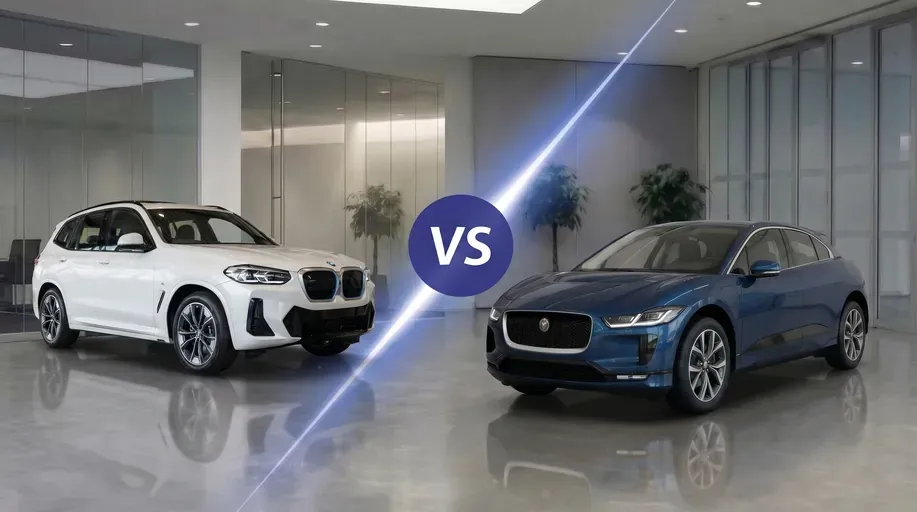
Detailed comparison of the BMW iX3 vs Jaguar I-Pace. Discover the differences in range, equipment, and driving experience. Read our verdict and choose the best premium electric SUV.
Apr 23, 2026