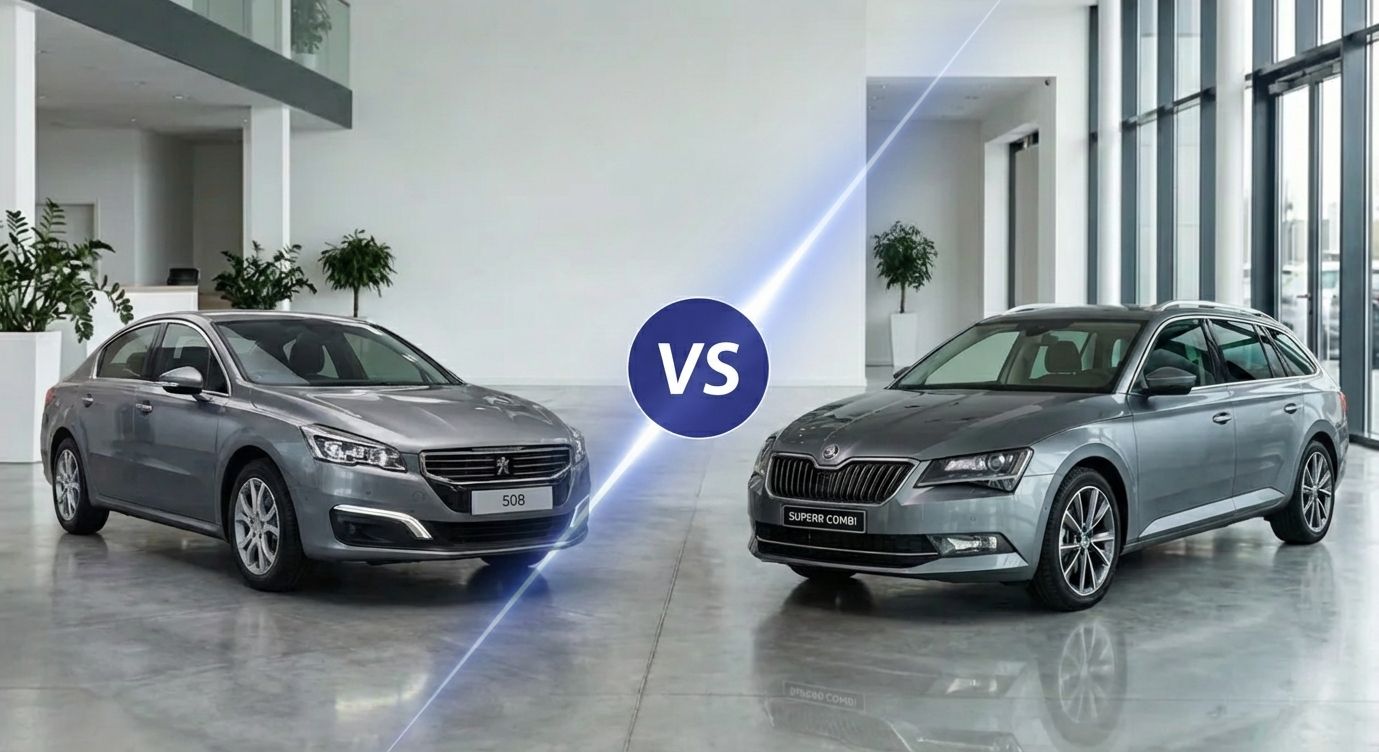
Car battle
Peugeot 508 vs Škoda Superb: Complete Comparison 2025
Peugeot 508 vs. Škoda Superb: Detailed comparison, real-world experiences, and the verdict to help you choose the best executive car.
Apr 13, 2026
Articles
Car battle
Detailed comparison of Ford Mondeo vs. Renault Talisman. Discover the differences in equipment, engines, and reliability, and read our verdict to make the right choice.
April 28, 2026
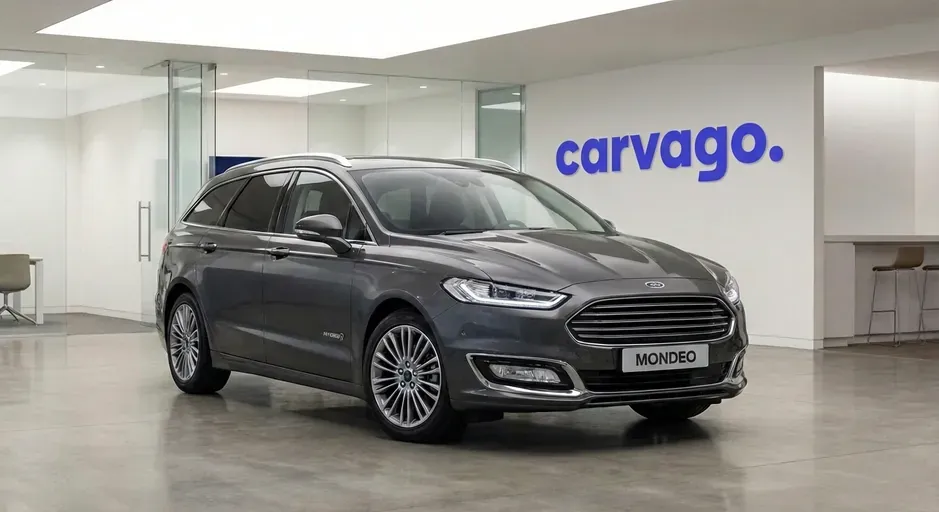
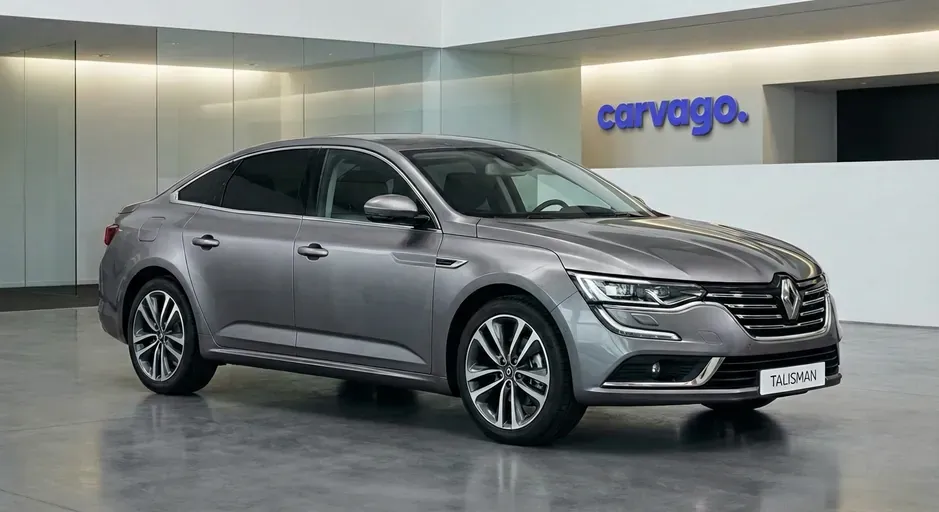
Ford Mondeo, formerly also known as the Ford Fusion in overseas markets, is a traditional mainstay of the mid-size class that has long built a reputation as a reliable car with excellent driving characteristics and above-standard interior space. Standing against it is the elegant Renault Talisman, sold in some markets under the name Renault Samsung SM6, which seeks to impress primarily with its unmistakable French charm, premium emphasis on comfort, and innovative technologies. Let's take a detailed look together at which of these two attractive executive and family cars fares better in a direct comparison and offers you a smarter choice on the used car market.
When you place the fifth-generation Ford Mondeo and the first-generation Renault Talisman side by side, you will immediately see why both models are among the most popular family and executive cruisers on the used car market. In terms of overall length, both cars are very evenly matched. While the Ford Mondeo estate measures 4867 mm, the French Talisman Grandtour lags behind by a completely negligible 2 millimetres (4865 mm). For sedan and liftback body styles, the difference is slightly larger in favour of the Ford, which at 4871 mm is 22 mm longer than the Renault sedan. In both cases, however, we are talking about cars nearly five metres long, so when parking daily in tight underground garages, both models behave quite similarly and will require a certain amount of caution.
More significant differences begin to surface when looking at the width and overall height of the body. The Renault Talisman offers a width of 1868 mm, which is 16 mm more than the Mondeo (1852 mm). Combined with a generally lower roofline – the Talisman is at most 1465 mm high, while the Mondeo in its practical estate version reaches up to 1501 mm – the French representative makes a much more planted and dynamic impression on the road. In practice, this proportional difference means that you will have a slightly better view out of the Ford, and it will offer more generous headroom in the rear seats for taller individuals. The Talisman, on the other hand, will please drivers who prefer a visually attractive and sportier silhouette.
However, a key parameter for longitudinal cabin space is the wheelbase. Here, the Ford Mondeo claims a very important victory with a solid value of 2850 mm. The Renault Talisman counters with a wheelbase of 2808 to 2809 mm, which means a loss of more than 40 mm for it. For the occupants themselves, this seemingly minor difference has a clear impact: the Mondeo can offer more knee room for passengers in the second row. So, if you are looking for a car where you will regularly transport adults in the back and comfort on long journeys is a priority for you, the wheelbase clearly plays in favour of the American brand.
| Parameter | Ford Mondeo (Sedan/Liftback) | Renault Talisman (Sedan) | Ford Mondeo (Estate) | Renault Talisman (Estate) |
|---|---|---|---|---|
| Width (mm) | 1852 | 1868 | 1852 | 1868 |
| Length (mm) | 4871 | 4849 | 4867 | 4865 |
| Height (mm) | 1482 | 1456 - 1463 | 1501 | 1456 - 1465 |
| Wheelbase (mm) | 2850 | 2808 - 2809 | 2850 | 2808 - 2809 |
When choosing a used mid-size family car, trunk volume often plays a key role, and a comparison of roughly four-year-old Ford Mondeo (Mk5 generation) and Renault Talisman (1st generation) models offers an interesting look at the different approaches of both automakers. In terms of overall practicality, both cars score well; however, each targets a slightly different customer. While Renault bets on massive absolute paper values and trunk depth in the classic sedan, Ford counters with significantly better access to the trunk in its immensely popular liftback body style. In practice, this means a significant difference in how easily a family can load bulky items, such as a stroller.
If we look at specific numbers for standard internal combustion engines, the Renault Talisman in its default sedan version offers a generous 608 liters in the base, which exceeds the 541 liters of the five-door Ford Mondeo liftback. However, after folding the rear seats, the disadvantage of the small loading opening and the sedan concept of the Renault is fully revealed – the Ford, with its massive tailgate, allows for the use of a great 1437 liters of space, while in the Talisman sedan, the total usable volume is limited to 1022 liters. Even more important for the used car market is the evaluation of the highly sought-after estate versions. Here, the Renault Talisman Grandtour (Estate) scores with a storage space of 572 liters in the base and a massive 1700 liters after folding the rear backrests. The Ford Mondeo Estate (Turnier) lags slightly behind on paper with its 525 liters, with a maximum transport capacity reaching 1630 liters. However, the Mondeo easily makes up for this slight handicap in the charts with its perfectly regular trunk shape and low loading sill, so the space is always more than sufficient for any weekend shopping or longer vacation.
A crucial factor for buyers of young used cars in this age category is also the precise choice of specification, because hybrid technology can significantly impact the trunk floor and take away necessary space for a few extra suitcases. In the Ford Mondeo HEV, the placement of the batteries takes a heavy toll – the trunk volume in the hybrid sedan drops to a well below-average 383 liters (and the seats cannot be folded at all due to the battery), and in the much more popular hybrid estate, the base shrinks to a weaker 403 liters. Renault, on the other hand, did not launch a plug-in hybrid Talisman in this generation. Thanks to this, even cars from the end of production always reliably maintain their traditional top-tier trunk values and, in this respect, bring fewer necessary compromises when planning any trip.
| Parameter | Ford Mondeo Liftback | Ford Mondeo Sedan (Hybrid) | Ford Mondeo Estate | Renault Talisman Sedan | Renault Talisman Estate |
|---|---|---|---|---|---|
| Base volume (liters) | 541 l | 383 l | 525 l | 608 l | 572 l |
| Max. volume with seats folded (liters) | 1437 l | Cannot be folded | 1630 l | 1022 l | 1700 l |
While the Renault Talisman wins in absolute volumes for its basic body styles, the Ford Mondeo, thanks to its liftback version and overall better loading sills, offers much more flexible and safer loading options for everyday family life.
Towing capacity is a key parameter for many mid-size car owners, whether you plan to tow a heavy family caravan or just regularly transport construction materials or garden equipment. From this perspective, the fifth-generation Ford Mondeo and the first-generation Renault Talisman represent very capable choices on the used car market, but their approach to the maximum weight of a braked trailer varies quite fundamentally depending on the chosen engine.
The standard engines of both cars easily cover the common needs of most drivers, but the maximum limits clearly show who the bigger workhorse is. Common diesel and petrol versions of the Renault Talisman can tow trailers weighing from 1,500 kg to 1,850 kg. In this case, the popular Blue dCi diesel engines in the estate versions (Grandtour) reach the absolute peak, achieving a value of 1,850 kg. In contrast, the Ford Mondeo offers a towing capacity of up to a massive 2,000 kg for its sought-after two-litre diesels (both the older TDCi and the newer EcoBlue) and more powerful EcoBoost petrol versions.
When choosing a used car, however, it is necessary to pay close attention to versions with significantly different capacities, which applies especially to the representatives with the blue oval badge. While a petrol Talisman with the TCe 160 GPF engine can hitch at least 1,500 kg, the Mondeo's values drop deep down if you choose more ecologically or urban-oriented versions. The Ford Mondeo 2.0 Hybrid has its braked trailer capacity slashed to just 750 kg, and the extremely economical 1.5 TDCi ECOnetic diesel version even to a marginal 400 kg.
In practice, these differences mean that with a powerful diesel Mondeo, you get an uncompromising towing machine whose margin for additional load is fully sufficient even for the largest caravans or transporting larger boats to the sea. The Renault Talisman, with a limit of up to 1,850 kg, is a bit more conservative, but its towing power is still perfectly sufficient for a weekend purchase of bulky furniture, hitching a motorcycle trailer, or a longer holiday with a standard caravan. However, if you wanted to go on holiday with your family using a hybrid Mondeo, you would have to limit yourself to just a small utility trailer for hauling mown grass.
In conclusion, to maximize utility value when towing heavy loads, it makes sense to look for the powerful diesel specifications of the Ford Mondeo. The Renault Talisman, on the other hand, counters with more balanced and consistent values across its entire newer engine range, where no unpleasant surprises await you after installing a tow bar.
| Model and motorization | Braked weight of trailer (kg) | Unbraked weight of trailer (kg) |
|---|---|---|
| Ford Mondeo 2.0 EcoBlue / TDCi (110 - 140 kW) | 1650 - 2000 | 750 |
| Ford Mondeo 1.5 EcoBoost (118 - 121 kW) | 1250 - 1650 | 750 |
| Ford Mondeo 2.0 Hybrid (103 kW) | 750 | 750 |
| Ford Mondeo 1.5 TDCi ECOnetic (88 kW) | 400 | 400 |
| Renault Talisman BLUE dCi 160 / 200 (118 - 147 kW) | 1800 - 1850 | 750 |
| Renault Talisman TCe 160 / 225 GPF (117 - 165 kW) | 1500 - 1800 | 750 |
When choosing a used mid-size car around four years old (manufactured approximately between 2018–2022), the Ford Mondeo and Renault Talisman represent very different approaches to powertrains. For the fifth-generation Mondeo facelift, Ford focused on robust diesel engines and offered an attractive full-hybrid system, ideal for drivers spending a lot of time in the city and on suburban routes. The Mondeo also has one big ace up its sleeve for more demanding users – the option to combine more powerful diesels with all-wheel drive (AWD). The Renault Talisman, on the other hand, bets on French elegance complemented by snappy EDC dual-clutch transmissions and sophisticated petrol engines developed with maximum efficiency in mind. For both competitors, buyers will find the ideal engine for long motorway journeys in the form of reliable diesels with an output of around 110 kW, with each manufacturer handling the needs of sporty drivers or proponents of modern ecological technologies slightly differently.
The engine range of the Ford Mondeo (5th generation) underwent a significant modernization around 2019, which is key for those interested in an approximately four-year-old used car. The older TDCi units were replaced by cleaner and more economical 2.0 EcoBlue engines, supplied in three power levels. The most sought-after "golden mean" is the version tuned to 110 kW (150 hp), while at the top of the range sits the model with 140 kW (190 hp), which could often be paired with a modern eight-speed automatic and all-wheel drive. Petrol engines are represented by the 1.5 EcoBoost turbocharged four-cylinder. The 2.0 Hybrid version is definitely worth mentioning, combining a 2.0-litre naturally aspirated petrol engine with an electric motor and an eCVT continuously variable transmission. Although it doesn't feel as confident on the motorway as a modern diesel, it achieves admirably low fuel consumption in city driving. The earlier powerful 2.0 EcoBoost petrol variants had already quietly disappeared from the standard range in this model year.
| Engine type | Fuel | Power (kW) | Torque (Nm) | Transmission |
|---|---|---|---|---|
| 1.5 EcoBoost | Petrol | 121 | 240 | 6MT / 6AT |
| 2.0 EcoBlue | Diesel | 88 / 110 / 140 | 300 / 370 / 400 | 6MT / 8AT |
| 2.0 Hybrid | Petrol / Electric | 138 (system) | 300 (system) | eCVT |
In its first generation, following the introduction of stricter emission limits, the Renault Talisman introduced gasoline particulate filters (GPF) for petrol engines and unified diesel units under the name Blue dCi. The entry-level petrol engine from this era is the very successful 1.3 TCe 160 GPF unit with 117 kW, which was developed in cooperation with Mercedes. Lovers of dynamic driving will prefer the powerful 1.8 TCe 225 GPF petrol four-cylinder offering 165 kW (225 hp), derived from Alpine sports models. The diesel range is limited to modernized engines, where we find the smaller 1.7 Blue dCi unit (in 88 and 110 kW power versions), exclusively combined with a manual transmission. The larger 2.0 Blue dCi (118 kW and the more powerful 147 kW) already comes as standard with an excellent six-speed EDC dual-clutch automatic. Although the Talisman does not offer 4x4 drive compared to the Ford, it compensates for this with the unique 4Control active four-wheel steering system, which gives it the perceived agility of a car from a class below on twisty backroads.
| Engine type | Fuel | Power (kW) | Torque (Nm) | Transmission |
|---|---|---|---|---|
| 1.3 TCe 160 GPF | Petrol | 117 | 270 | 7EDC |
| 1.8 TCe 225 GPF | Petrol | 165 | 300 | 7EDC |
| 1.7 Blue dCi 120 / 150 | Diesel | 88 / 110 | 300 / 340 | 6MT |
| 2.0 Blue dCi 160 / 200 | Diesel | 118 / 147 | 360 / 400 | 6EDC |
While the Ford Mondeo appeals with the availability of all-wheel drive and a modern, economical full-hybrid for frequent city commutes, the Renault Talisman impresses with sophisticated petrol engines and responsive EDC dual-clutch automatics.
Choosing the right engine is absolutely crucial for large mid-size executive cars for long-term satisfaction, reliability, and reasonable operating costs. While the Ford Mondeo historically relied on a wide range of diesel and petrol units, the updated EcoBlue diesel range clearly dominates among approximately four-year-old used cars (2019–2022 models), bringing lower emissions and better refinement. The Renault Talisman, on the other hand, underwent an interesting development – initially, the automaker offered smaller-displacement engines (e.g., 1.6 dCi), but for newer models, fortunately, returned to honest and highly robust 2.0 BLUE dCi diesel engines under customer pressure. The following recommendations are therefore based exclusively on practice, mechanical durability, and vehicle behavior in real-world used car market operation.
This two-liter diesel, which was offered in the fifth-generation Mondeo for the years 2019 to 2021, represents an ideal balance between dynamics, fuel consumption, and everyday practicality. In terms of technical advantages, it offers a strong torque of 370 Nm, which ensures confident flexibility even for a fully loaded family estate, with a real-world consumption of around 5.5 to 6 liters per 100 km. It is the best choice in the range because it runs noticeably quieter and more refined than the older TDCi units and pairs perfectly with the modern eight-speed automatic. What to watch out for: The 2.0 EcoBlue engine uses a so-called "wet belt" (a belt bathed in oil) to drive the oil pump. When service is delayed or the wrong engine oil is used, this belt begins to crumble, and its particles then clog the oil pickup screen, which can cause fatal lubrication failure of the entire engine. Fortunately, prevention is simple – shorten oil change intervals to a maximum of 15,000 km / 1 year and strictly require oil specified directly by the manufacturer. This engine is a perfect choice for highway mile-munchers and calmer drivers who appreciate a massive range on a single tank and the car's effortless power.
After some initial hesitation with the twin-turbocharged 1.6-liter in the first years of production, Renault returned to a full-fledged two-liter diesel, which makes the Talisman an exemplary highway cruiser. This power unit from the famous and mechanically very durable M9R engine family is clearly the best you can choose under the hood of a late-model Talisman. Its main technical weapons include a maintenance-free and robust timing chain, smooth pull, and a generous torque of 360 Nm. In combination with the quick-shifting EDC dual-clutch transmission, it guarantees a smooth ride with long-term consumption comfortably below the 6-liter diesel mark. What to watch out for: As with the vast majority of modern diesels, there is a risk of gradual clogging of the diesel particulate filter (DPF) and potential oil dilution with diesel from unfinished regenerations when driving exclusively in city traffic jams over the long term. To prevent this, it is essential to "stretch the car's legs" at least once every fortnight with a continuous highway or extra-urban drive where the filter can burn off. The engine is perfect for business travelers, long-distance drivers, and those who prefer maximum smoothness, where the legendary French level of ride comfort can truly shine.
Official fuel consumption figures provided by manufacturers often differ from reality, especially with older measurement standards (NEDC), which may still appear in the registration documents of some model years. To get a more accurate picture of how much fuel these used mid-size cars, roughly four years old (manufactured around 2018–2022), actually consume, it is ideal to look at user databases. Data from the popular website Spritmonitor.de, which collects records from thousands of drivers in real-world conditions, clearly shows that the official figures should be taken with a grain of salt. The table below summarizes the average fuel consumption of the most common engines for both models, with the data sorted by powertrain type.
| Model and engine | Average consumption (l/100 km) |
|---|---|
| Ford Mondeo 2.0 Hybrid | 5.8 |
| Ford Mondeo 2.0 TDCi / EcoBlue | 6.2 |
| Renault Talisman Blue dCi 160 / 200 | 6.3 |
| Renault Talisman TCe 160 GPF | 6.6 |
| Ford Mondeo 1.5 EcoBoost | 7.8 |
| Renault Talisman TCe 225 GPF | 7.9 |
Several interesting trends can be seen from the table above. The diesel engines of both cars (whether the 2.0 EcoBlue or the older TDCi in the Ford, or the modern Blue dCi in the Renault) deliver exactly what is expected of them in this class – on motorways and long journeys, they can easily maintain fuel consumption between 6 and 6.5 litres per 100 km. However, the situation is quite different for the petrol versions. While the small turbocharged 1.5 EcoBoost engine often has to struggle with the heavy Ford Mondeo, which is reflected in real-world consumption approaching 8 litres, Renault, with its advanced 1.3 TCe unit (marketed as the TCe 160 GPF), can drive more efficiently and saves more than a litre of fuel per 100 km on average. The Ford Mondeo Hybrid is a chapter of its own. It shows its undeniable strength primarily in the city and on country roads, where it can drive well below 6 litres; however, during long motorway journeys, its main advantage quickly fades.
For the typical user, this means one thing: if you spend most of your time on the motorway covering hundreds of kilometres, the traditional 2.0-litre diesels in both cars are a safe bet with an excellent balance of performance and fuel economy. If, on the other hand, you are looking for a large car more for suburban commuting or shorter family trips, Renault's modern petrol TCe 160 is a great choice that won't strain the family budget as much as the rival Ford. The Ford Mondeo Hybrid will then appeal to a very specific group of drivers who require the space of a classic mid-size car but mostly move in congested city traffic, where the electric motor does its best work.
In the final analysis, fuel consumption for the diesel versions will likely not be the main deciding factor, as both cars offer almost identical and very solid figures here. However, the scales may tip in favour of the Renault Talisman if you prefer pure petrol power, where the French representative is a significantly more economical choice thanks to its overall more efficient engines.
Both the Ford Mondeo and Renault Talisman share one fundamental fact – as used cars, they represent an excellent price-to-utility ratio in their class. Both models lost their original value on the used car market slightly faster than their direct German and Czech competitors, making them a very attractive choice for second-hand buyers. Furthermore, both manufacturers ended production of these models in early 2022. If you are looking for a car roughly four years old, you will come across the youngest, most refined, and usually exceptionally well-equipped examples from the very end of their production run.
For the Ford Mondeo from the final years of production, there is a very diverse selection on the market. Prices for young used cars with a production date around 2021 to 2022 remain in a stable range from €14,400 to €20,500.
Although the Renault Talisman was significantly rarer on the roads when new than the Mondeo, the price level on the used market is almost identical, oscillating for roughly four-year-old models in the range of €16,000 to nearly €20,500.
| Model (approx. 4 years old) | Starting price (high mileage) | Average price (balanced condition) | Top trim prices |
|---|---|---|---|
| Ford Mondeo | €14,400 | €16,400 | €18,500 – €20,500 |
| Renault Talisman | €16,000 | €17,700 | €19,700 – €20,500 |
From a purely financial perspective when buying a used car, it is impossible to name a clear winner, as the price tags for roughly four-year-old cars almost overlap. However, the Ford Mondeo benefits from a significantly higher supply of vehicles on the market – they often come from operational leases, so it is easier to choose the colour and equipment, and the service history is simple to verify. Additionally, cheaper spare parts are easier to find, and practically any experienced mechanic can handle the servicing.
The Renault Talisman, on the other hand, will be a much more exclusive choice that still doesn't look dated on the road today. For very similar money, you often get a more opulent interior and more interesting features; however, finding an ideal piece with genuine mileage on the market will require a bit more patience, and specific body parts may be more expensive to source in the event of a minor accident.
Whether you choose the more conservative and practical Mondeo or the more extravagant Talisman with French charm, in both cases, you get a huge, comfortable family car with a price tag thousands of euros lower than that of traditional rivals.
When evaluating safety, it might seem at first glance that both cars offer the same level of protection, as both the Ford Mondeo and Renault Talisman boast a maximum five-star rating from the independent Euro NCAP organization. However, for a correct understanding, it is absolutely crucial to put these results into context and look at the year of testing. Euro NCAP's methodology and testing protocols are constantly evolving and the criteria are becoming significantly stricter, which means that percentage scores from different years cannot be fairly and directly compared.
Ford Mondeo underwent initial crash tests in 2014, but with the arrival of the updated version, it underwent a new assessment in 2019 under substantially stricter rules. These place much greater emphasis on active safety and the protection of vulnerable road users. The Mondeo passed this newer test with flying colors and defended its full five stars. The car excelled particularly in adult occupant protection, where it achieved an impressive 96%. In the area of child protection, it scored 87%, for vulnerable road users (pedestrians and cyclists) 70%, and for safety assistance systems it received 73%. These results clearly demonstrate that the Mondeo's assistance systems, including pre-collision assist with pedestrian detection, correspond very well to modern standards, although the formal validity of the 2019 certificate has naturally already expired under current rules.
Renault Talisman, on the other hand, was tested in 2015, immediately after its initial market launch. At that time, it achieved an excellent score and also easily earned five stars. Its results included 86% for adult passenger protection, 84% for child protection, 68% for vulnerable road user protection, and 76% in the safety systems category. Although these are very solid numbers, it is necessary to keep in mind that the test was conducted according to a much older and more lenient methodology. Modern active safety systems, detailed simulations of intersection crashes, or more advanced cyclist recognition were not assessed nearly as strictly in 2015 as in later years. The Talisman was a very safe car in its time, but from today's perspective and for the needs of the market for roughly four-year-old used cars, its older rating no longer fully reflects the latest safety challenges.
| Parameter | Ford Mondeo | Renault Talisman |
|---|---|---|
| Year of testing | 2019 | 2015 |
| Adult occupant protection | 96 % | 86 % |
| Child protection | 87 % | 84 % |
| Vulnerable road user protection | 70 % | 68 % |
| Safety assistance systems | 73 % | 76 % |
In conclusion, it can be stated that although both cars provide strong passive protection for the occupants, the Ford Mondeo comes out better in the safety comparison. Thanks to the repeated assessment from 2019, it has a demonstrably more modern safety package that successfully stood up to the substantially stricter requirements of the test commissioners and corresponds much more accurately to the demands of current traffic.
Although both models boast five stars, the Ford Mondeo benefits from the newer 2019 test and offers a more proven and modern set of assistance systems, making it a slightly safer choice for today's traffic.
In addition to standard equipment, each model offers several unique features that go beyond basic functionality and show that both brands have their own, very different approach to added value and the overall driving experience.
Excellent driving characteristics with an ideal compromise between confident handling and comfort
Top-tier cabin soundproofing even at high highway speeds
Very spacious interior, especially shoulder width and rear legroom
Reliable and economical 2.0 EcoBlue diesel engines in newer model years
Extensive service network and generally reasonable spare parts prices
More dated interior and dashboard appearance compared to more modern competitors
Higher curb weight, which negatively affects agility and city fuel consumption
The SYNC 3 infotainment system is functional, but lags behind in graphics and speed
The model no longer has a direct successor, which may affect its residual value in the long run
Ford Mondeo is an ideal choice for drivers who spend a lot of time on highways and are looking for a maximally comfortable mile-muncher with a precisely tuned chassis. Although its dashboard is already showing its age, its mechanical robustness and economical diesel engines make it an exceptionally sensible choice on the used car market with an excellent price-to-value ratio.
Exceptionally attractive exterior design that still looks prestigious on the road
4Control four-wheel steering system, which significantly eases parking and improves cornering stability
Very comfortable chassis for long trips, especially in combination with adaptive dampers
Huge and easily accessible luggage compartment in the Grandtour (estate) version
Rich standard equipment and luxury materials in the widely available top-tier Initiale Paris version
Occasional software glitches and more complex operation of the older R-Link 2 infotainment (pre-facelift)
The EDC dual-clutch automatic transmission can occasionally jerk during slow crawling in traffic jams
Cheaper-feeling hard plastics in the lower part of the interior, which may creak with age
Faster depreciation of residual value on the used car market compared to more established rivals
The Renault Talisman will most appeal to customers who desire French charm, maximum driving comfort, and excellent equipment for a fraction of the original price. Thanks to the 4Control system, it surprises with its agility despite its larger dimensions, making it an elegant and very practical alternative for those who want to stand out from the mainstream.
Based on long-term owner experience, service statistics, and our own records from the Independent Car Audit service, we have compiled a detailed overview of the most common problems that buyers of roughly four-year-old used cars should watch out for.
The fifth-generation Ford Mondeo is considered a mechanically robust car in its later years of production, but even it has specific weaknesses that can lead to expensive repairs without regular maintenance.
The Ford Mondeo is a robust and mechanically durable car that primarily requires careful automatic transmission servicing and sufficient warming up of diesel engines on longer trips. Most problems are of a routine wear-and-tear nature or minor electronic faults.
The Renault Talisman brought a very attractive design and advanced technology, but its reputation on the used car market is sometimes hampered by more delicate electronics and some mechanical shortcomings, most often appearing after crossing the 100,000-kilometer mark.
The Talisman offers top-tier comfort and generous interior space, but it demands precise servicing, especially regarding the dual-clutch transmissions. A potential buyer may be troubled by unpredictable electronic faults and faster wear of chassis components.
When buying a used car, a thorough inspection is crucial. Here are several specific points to focus on for these two models. If you are unsure about the history or functionality of a chosen vehicle, an independent technical inspection of the car is always worthwhile before purchase, as it will reveal any hidden defects for you.
The Renault Talisman in its sedan version offers a generous luggage capacity of 608 liters, while the Mondeo liftback provides 541 liters. For the more popular estate versions, the situation is similar: the Talisman Grandtour holds 572 liters and the Mondeo estate 525 liters. Renault is therefore slightly more spacious for luggage in both body styles.
Both models serve as excellent highway cruisers, but the Renault stands out thanks to its optional 4Control all-wheel steering system and adaptive dampers, which ensure an exceptionally smooth ride. Ford, on the other hand, offers a sportier and more composed chassis that provides the driver with better feedback in corners. If you prefer absolute comfort, the Talisman leads; for driver engagement, the Mondeo is the better choice.
Ford models from the final years of production are considered very solid cars with proven EcoBlue diesel engines that do not suffer from major systemic faults. The Talisman had more frequent issues with electronics and fit-and-finish in its early years of production, but models after the facelift (from 2020 onwards) are significantly more reliable. Overall, the Mondeo ranks as a slightly safer choice in terms of long-term mechanical durability.
After its facelift, Renault offers the vertical Easy Link system, which has more modern graphics and faster response times than its older R-Link version. The Mondeo relies on the proven and robust SYNC 3 system, which is graphically simpler but very intuitive and stable for the user. Both cars in newer model years fully and reliably support smartphone mirroring via Apple CarPlay and Android Auto.
In real-world driving, cars with two-liter diesel engines perform very similarly, with fuel consumption usually ranging between 5.5 and 6.5 l/100 km. The Talisman with the Blue dCi engine tends to be a fraction of a liter more economical during steady highway driving thanks to slightly better aerodynamics. The Mondeo may have slightly higher consumption in certain situations due to its overall higher curb weight.
Both vehicles represent an exceptionally attractive choice in the market for roughly four-year-old used cars, offering an excellent price-to-value ratio, yet each targets a slightly different driver. The Ford Mondeo is an ideal candidate for those who prefer precise driving characteristics, mechanically robust diesel engines with high towing capacity, and overall reliability when tackling long motorway journeys. In contrast, the elegant Renault Talisman scores points with customers looking for unmistakable French charm, maximum travel comfort supported by the unique 4Control four-wheel steering system, and more efficient petrol engines. While the Mondeo will thus please more pragmatically-minded drivers requiring proven and durable technology, the Talisman makes sense for everyone whose priority is a premium driving feel, an above-standard luggage compartment, and rich technological equipment.
Sources: ADAC, mdcr.cz, lidovky.cz, techfocus.cz, autoservis.cz, autobox.cz
This article was prepared using artificial intelligence tools. The section guarantor is Petr Dušek.
Peugeot 508 vs. Škoda Superb: Detailed comparison, real-world experiences, and the verdict to help you choose the best executive car.
Apr 13, 2026
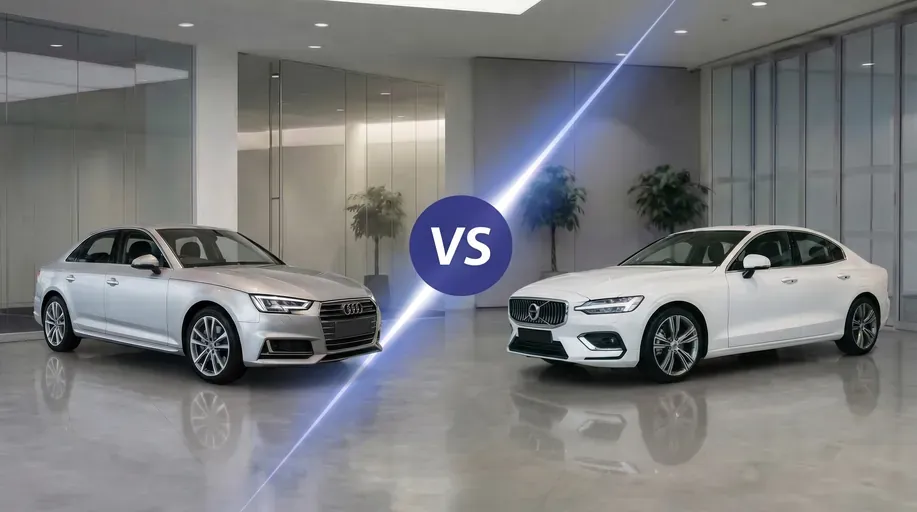
Detailed comparison of the Audi A4 and Volvo S60. Discover the differences in driving characteristics, equipment, and reliability of used cars. Read our verdict and make the right choice!
Apr 22, 2026
Jaguar XE vs. Mercedes-Benz C-Class comparison. Read a detailed comparison of used cars, driving characteristics, and equipment to find out which one to choose.
Apr 22, 2026