Car battle
Hyundai i20 vs. Kia Rio: Complete comparison 2026
Detailed comparison of Hyundai i20 vs. Kia Rio. Find out which used hatchback has better equipment, driving characteristics, and reliability. Read our verdict.
May 16, 2026
Articles
Car battle
Dacia Sandero vs Volkswagen Polo (VW Polo): Detailed comparison. Discover the differences in equipment, reliability, and price, and find out which hatchback is the better choice.
May 19, 2026
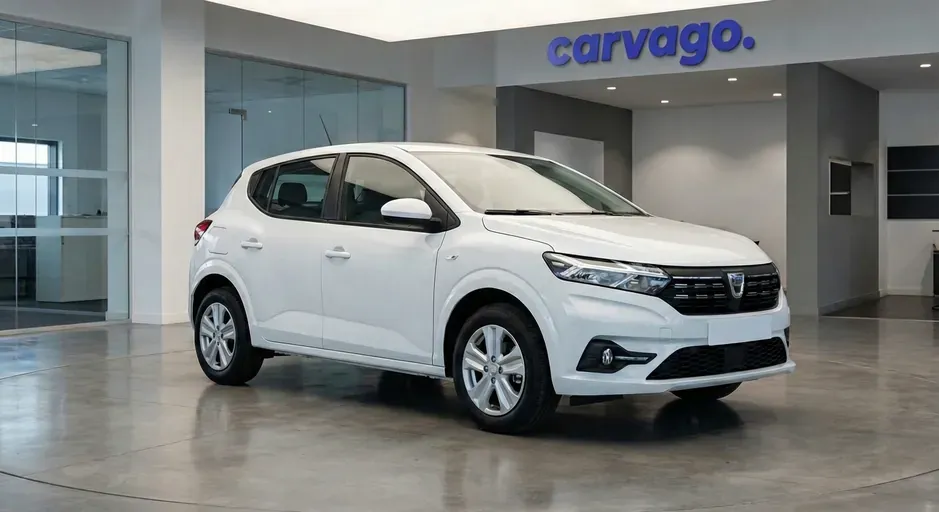
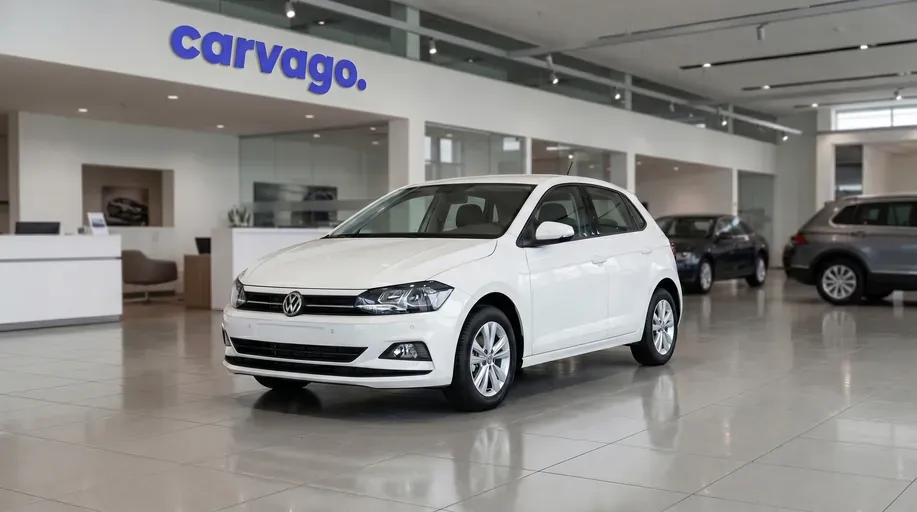
The Dacia Sandero, also sold as the Renault Sandero in some global markets, is an exceptionally popular and practical hatchback that has gained popularity primarily due to its unrivaled price-to-value ratio. Standing against it is the Volkswagen Polo – also known as the Polo Vivo or Polo Track in certain world regions – which has long been considered the qualitative and technological benchmark of the small car segment, with an emphasis on precise craftsmanship and advanced driving characteristics. Let's take a detailed look at how these two prominent competitors fare in a head-to-head battle and which of them represents the smarter choice for your next purchase on the used car market.
Although both the Dacia Sandero and the Volkswagen Polo belong to the same segment of small city cars (B-segment), looking at the exterior dimensions of roughly four-year-old used cars reveals that they approach space utilization differently. While both models from the current generations are very similar in length and represent an ideal choice for navigating narrow city streets, in other parameters, the Romanian representative unexpectedly outgrows its German competitor.
The third-generation Dacia Sandero measures 4088 mm in length as standard, which is a negligible 14 mm more than the sixth-generation Volkswagen Polo (4074 mm). However, a fundamental difference occurs when looking at the width. With its 1848 mm, the Sandero surpasses the Polo (1751 mm) by a staggering 97 mm. In practice, this means disproportionately more shoulder room for the occupants, which you will appreciate especially when traveling with more people or when placing children in car seats. On the other hand, the Polo, which is nearly ten centimeters narrower, is noticeably more user-friendly when parking in tight gaps between older cars or in narrow underground garages.
The Sandero is also nearly 5 centimeters taller (1499 mm vs 1451 mm for standard versions), which makes getting in easier and offers an overall airier feel in the cabin. Furthermore, if you were to go for the popular plastic-clad Sandero Stepway version, you get a car with a height of up to 1586 mm and a more generous ground clearance, which better withstands high city curbs. The wheelbase, which is key for longitudinal space in the rear seats, also clearly plays in favor of the Dacia. With a value of 2604 mm, it beats the Polo by 52 mm, resulting in more generous legroom for rear passengers.
If you are looking for an agile car purely for the narrowest city centers, the more compact and narrower Volkswagen Polo might suit you better, as it feels slightly more agile thanks to its lower build and shorter wheelbase. But if your city car serves as the sole family transporter, the Dacia Sandero, thanks to its significantly greater width and longer wheelbase, will offer you substantially more interior comfort, approaching cars a class larger.
| Parameter | Dacia Sandero Hatchback | Volkswagen Polo Hatchback |
|---|---|---|
| Width (mm) | 1848 - 1853 | 1751 |
| Length (mm) | 4088 - 4102 | 4053 - 4074 |
| Height (mm) | 1496 - 1586 | 1426 - 1451 |
| Wheelbase (mm) | 2604 | 2548 - 2555 |
Trunk capacity plays a key role in the decision-making of small city car buyers, as this parameter often determines their overall family usability and everyday practicality. If we focus on roughly four-year-old used cars from the perspective of the current market (i.e., the 3rd generation Dacia Sandero and the 6th generation Volkswagen Polo), both competitors prove that even in the B-segment, highly above-average values can be offered today.
The 6th generation Volkswagen Polo dominates with a basic trunk volume of 351 liters. In practice, this is space for several extra suitcases compared to older models, and the value brings the Polo dangerously close to cars from a higher automotive class. In contrast, the 3rd generation Dacia Sandero offers a slightly more modest, yet still very solid 328 liters. After folding the rear backrests, the differences narrow slightly – Volkswagen Polo provides a total volume of up to 1125 liters, while the Dacia Sandero grows to 1108 liters. For both models, it is true that their space is perfectly sufficient for weekend shopping or a longer holiday for two.
However, a fundamental difference between these models occurs when you consider buying a version with an alternative drive. The Volkswagen Polo in the 1.0 TGI variant (compressed natural gas - CNG) pays significantly for the additional installation of pressure cylinders, and its basic trunk capacity drops to a rather below-average 251 liters (maximum 1025 liters). In contrast, the Dacia Sandero with the very popular factory LPG drive (TCe 100 ECO-G version) loses none of its practicality. The manufacturer cleverly integrated the toroidal gas tank into the spare wheel well, so the trunk still offers a full 328 liters of capacity.
| Parameter | Dacia Sandero Hatchback | Volkswagen Polo Hatchback |
|---|---|---|
| Basic volume (liters) | 328 | 351 |
| Maximum volume with seats folded (liters) | 1108 | 1125 |
In terms of pure numbers for standard internal combustion engines, the Volkswagen Polo is overall slightly better, benefiting from excellent interior space packaging. However, the Dacia Sandero scores full points with more environmentally conscious drivers, as it does not limit transport capacity even with the installation of a gas drive.
The Volkswagen Polo offers a larger trunk in classic versions, but if you are looking for a gas-powered car, the Dacia Sandero wins thanks to maintaining the full size of the luggage compartment.
Although towing capacity isn't usually the main selling point for compact hatchbacks, for many buyers it is a valuable practical bonus. The ability to hitch a trailer to the car often comes in handy, whether it's for moving furniture, hauling materials from a DIY store, or even towing a lighter caravan. For both compared vehicles, the towing capacity is quite solid for the given class; however, the manufacturers' approach to the limits of individual engines differs.
The third-generation Dacia Sandero (produced since 2021) represents a very stable average. With most main engines, including the turbocharged three-cylinder TCe 90 or the popular ECO-G 100 variant, you can easily tow a braked trailer weighing up to 1,100 kg. On the plus side, even the factory LPG installation does not reduce the car's towing capacity in any way. A limit of 980 kg applies only if you opt for the basic naturally aspirated SCe 65 engine. The Sandero can handle unbraked trailers up to approximately 545 to 580 kg.
The competing sixth-generation Volkswagen Polo, on the other hand, offers a significantly wider range, reflecting a more diverse lineup of power units. The entry-level naturally aspirated 1.0 MPI unit can tow a maximum of 800 kg. With the turbocharged 1.0 TSI (70 kW) engines, the capacity increases to 1,000 kg, while their more powerful specifications (81 to 85 kW) reach 1,100 kg. At the absolute top are versions like the 1.5 TSI and the sporty Polo GTI, which can be hitched to a braked trailer with an impressive weight of 1,200 kg. A special case is the eco-friendly 1.0 TGI CNG version, for which factory towing homologation was not approved at all.
The differences mentioned above mean that although both are city hatchbacks, in higher specifications, the Polo provides slightly more confidence and room for several dozen to hundreds of kilograms of extra load. However, if you choose the middle ground, both the Dacia Sandero and the Volkswagen Polo offer an identical 1,100 kg – a value that is sufficient for weekend shopping for bulky materials as well as a longer holiday with the family and a trailer.
| Model and engine | Braked trailer (kg) | Unbraked trailer (kg) |
|---|---|---|
| Dacia Sandero 3rd gen SCe 65 (49 kW) | 980 | 545 |
| Dacia Sandero 3rd gen TCe 90 / ECO-G 100 | 1100 | 560-580 |
| Volkswagen Polo VI 1.0 / 1.0 MPI (59 kW) | 800 | 560 |
| Volkswagen Polo VI 1.0 TSI OPF (70 kW) | 1000 | 560-580 |
| Volkswagen Polo VI 1.0 TSI OPF (81-85 kW) | 1100 | 580-600 |
| Volkswagen Polo VI 1.5 TSI / GTI (110-152 kW) | 1200 | 600 |
When choosing a used car approximately 4 years old (mostly models from 2021 onwards), the engine range of the Dacia Sandero and Volkswagen Polo differs fundamentally in philosophy and focus. While Dacia bets on absolute simplicity, low operating costs, and maintaining an affordable price, Volkswagen offers a much wider range with an emphasis on more advanced technology, higher performance, and more sophisticated automatic transmissions. The basis for both consists of one-litre naturally aspirated three-cylinder engines; however, the differences deepen with higher trim levels. For a buyer looking for maximum fuel savings, the Sandero with factory LPG (Dacia's most efficient variant) is a huge draw. In contrast, the Polo attracts more demanding drivers with much more powerful turbocharged TSI engines, and there is even a top-of-the-line GTI sports version with power well over 200 hp. Approaches to automatic shifting also differ – the dynamics of the lightning-fast DSG dual-clutch transmission in the Polo represent a more premium experience than the calmer, smooth CVT in the Dacia.
The third generation of the Dacia Sandero narrowed its range exclusively to petrol one-litre three-cylinder engines, which provides a clear and straightforward choice on the used car market without unnecessary complexities. The cornerstone is the naturally aspirated 1.0 SCe 65 (49 kW) engine, which targets quiet city traffic with its parameters. The golden mean is the turbocharged 1.0 TCe 90 (67 kW), which offers much better dynamics and, besides the manual, is the only one in the range that can be paired with a comfortable continuously variable transmission (CVT). However, the absolute bestseller and Dacia's greatest strength is the 1.0 TCe 100 ECO-G (74 kW) version. This engine burns both petrol and liquefied petroleum gas (LPG) straight from the factory, which brings unbeatably low costs per kilometre and, thanks to two tanks, offers an excellent total range. Those interested in older diesel cars will not find them here – dCi engines were completely discontinued in the third generation.
| Engine Type | Fuel | Power (kW) | Torque (Nm) | Transmission |
|---|---|---|---|---|
| 1.0 SCe 65 | Petrol | 49 | 95 | 5MT |
| 1.0 TCe 90 | Petrol | 67 | 160 | 6MT / CVT |
| 1.0 TCe 100 ECO-G | Petrol / LPG | 74 | 170 | 6MT |
The sixth generation of the Volkswagen Polo (especially after the 2021 facelift) has a significantly richer and more sophisticated range of power units. The entry point is the proven naturally aspirated 1.0 MPI (59 kW) engine, but the core of the used car offering consists of exceptionally refined turbocharged 1.0 TSI engines. These are available in versions with 70 kW or a more powerful 81 kW and can be combined with a fast seven-speed DSG dual-clutch transmission. VW's ecological alternative is the 1.0 TGI (66 kW) version, primarily designed for burning compressed natural gas (CNG). If you are looking for a roughly 4-year-old Polo on the used market and hoping for an economical diesel, it is necessary to point out a fact from the database – the popular 1.6 TDI SCR engines ceased production in 2020 and you will no longer find them in younger model years. The absolute peak and attraction for drivers looking for performance is the traditional GTI variant, hiding a potent 2.0 TSI four-cylinder engine under the hood with up to 152 kW.
| Engine Type | Fuel | Power (kW) | Torque (Nm) | Transmission |
|---|---|---|---|---|
| 1.0 MPI | Petrol | 59 | 93 | 5MT |
| 1.0 TSI | Petrol | 70 / 81 | 175 / 200 | 5MT / 7DSG |
| 1.0 TGI | Petrol / CNG | 66 | 160 | 6MT |
| 2.0 TSI (GTI) | Petrol | 147 / 152 | 320 | 6DSG / 7DSG |
For buyers with a strictly defined budget focused on operating savings, the Sandero is an unbeatable choice thanks to the ECO-G engine. However, if you spend a lot of time outside the city, require a modern dual-clutch automatic, or desire above-standard dynamics, the Volkswagen Polo with its family of TSI engines (and the GTI version) offers the characteristics of a car from a more mature category.
When it comes to the cost per kilometre, the Sandero with factory LPG has no competition on the 4-year-old used car market; on the other hand, the Volkswagen Polo will please with a wider selection of powerful and incredibly refined TSI turbo engines complemented by the excellent DSG automatic.
Choosing the right engine is crucial for long-term satisfaction. Our recommendations are based on real-world performance, daily fuel consumption, owner feedback, and proven mechanical reliability. While Volkswagen relies on sophisticated TSI direct-injection engines with excellent refinement and a focus on on-paper efficiency for roughly four-year-old Polo models, the third-generation Dacia Sandero scores with unrivaled mechanical simplicity and factory-installed LPG, which accounts for a very significant share of sales for this car.
This one-liter turbocharged three-cylinder with factory LPG (widely available for the third generation since 2021) is the absolute favorite in Dacia's lineup. It offers an excellent balance of solid dynamics, practicality, and minimal operating costs. The technical strength of this unit is indirect fuel injection (MPI). In practice, this means that fuel washes the intake valves, and the engine does not suffer from fatal carbon buildup during frequent cold starts. Another advantage is the noticeably higher torque (170 Nm) when running on gas compared to regular gasoline. By combining both tanks, you can achieve a real-world range well over 1,000 km. A known risk with used cars is neglected service specific to the gas system, which can lead to clogged injectors. You can tell if the system has been neglected during a test drive by unpleasant engine jerking during the automatic switch to LPG or by a slower throttle response. Fortunately, this problem is easy to solve and eliminate by consistently replacing the gaseous and liquid phase filters every 30,000 km. The engine is ideal for budget-conscious drivers with higher mileage who commute to work, but thanks to the absence of direct injection and a sensitive particulate filter, it reliably handles city driving as well.
In the sixth generation of the Polo (VI), this mid-range power version of the one-liter three-cylinder is the "golden mean" and clearly dominates the used car market. Compared to the base naturally aspirated 1.0 MPI engine (which was soon discontinued), the turbocharger provides confident pull for safe overtaking, while maintaining a significantly lower purchase price and service complexity than the more powerful 1.5 TSI four-cylinder. The technical advantage of the EA211 evo family unit is excellent flexibility from low revs and great real-world fuel consumption, which stays between 5.0 and 5.5 liters per 100 km in combined driving. The engine's operation is unusually refined for a three-cylinder and very well soundproofed. A known risk, given the direct injection and the presence of a gasoline particulate filter (OPF), is the risk of oil dilution with gasoline and carbon deposits in the intake if the car is used exclusively for short trips to the nearest supermarket. You can recognize an incipient problem by a slight but noticeable fluctuation in idle speed after a morning start, or by a strong smell of gasoline from the engine oil dipstick. This risk can be very effectively mitigated by shortening the oil change interval to 15,000 km (or one year) and occasionally taking the car for a run on the highway to ensure proper filter regeneration. The 1.0 TSI is best suited for versatile drivers who alternate between city and highway driving and require a mature, economical, and flexible performance without any need to look for a used diesel.
Official fuel consumption values provided by manufacturers according to the WLTP measurement cycle are significantly more accurate than in the past, yet in practice, they often differ from reality. To obtain the most objective picture of actual fuel efficiency, it is ideal to rely on long-term user data, such as that collected by the independent community portal Spritmonitor.de. We have therefore focused on the most common engine options for approximately four-year-old used cars, specifically representatives of the third-generation Dacia Sandero and the sixth-generation Volkswagen Polo. In both of these popular hatchbacks, the used car market is currently clearly dominated by economical petrol engines.
The table below summarizes the average combined fuel consumption of the main engine versions of both cars that you will most frequently encounter in used car listings:
| Model and engine | Average consumption (l/100 km) |
|---|---|
| Dacia Sandero 1.0 SCe 65 (3rd gen) | 5.3 |
| Dacia Sandero 1.0 TCe 90 (3rd gen) | 5.4 |
| Dacia Sandero Stepway 1.0 TCe 110 (3rd gen) | 5.5 |
| Dacia Sandero 1.0 TCe 100 ECO-G / LPG (3rd gen) | 6.2 |
| Volkswagen Polo 1.0 MPI (6th gen) | 5.5 |
| Volkswagen Polo 1.0 TSI (6th gen) | 5.5 |
| Volkswagen Polo 1.5 TSI (6th gen) | 6.3 |
| Volkswagen Polo 1.6 TDI SCR (6th gen, until 2020) | 4.6 |
A closer look at the data reveals a rather surprising finding: basic naturally aspirated engines with lower power (Dacia 1.0 SCe and VW 1.0 MPI) offer almost no fuel savings in real-world driving compared to their more powerful turbocharged counterparts. For example, the turbocharged 1.0 TSI three-cylinder in the Polo averages the same 5.5 l/100 km as the significantly weaker and less flexible MPI. A similar trend applies to the Sandero, where the highly versatile 1.0 TCe 90 engine runs at a very solid 5.4 l/100 km. If we focus on comparing petrol with diesel, older diesels (e.g., Polo 1.6 TDI) were able to push the average down to an impressive 4.6 l/100 km, but they are practically non-existent in modern four-year-old used cars in this segment, and buying one only really makes sense for purely highway commutes.
From the perspective of a typical user, these values mean one thing: for most drivers who regularly commute to work, navigate through the city, or head out on a weekend trip, the fuel consumption of modern three-cylinder petrol engines from both brands will be trouble-free and very comparable. However, Dacia has a major trump card up its sleeve for the most frugal drivers and long-distance travelers on a limited budget. The popular factory LPG version (Sandero 1.0 TCe 100 ECO-G) consumes approximately 6.2 liters of gas per 100 km, but given that the price of LPG is consistently half that of petrol, it slashes real operating costs per kilometer to an absolute minimum, making it an essentially unbeatable choice.
In conclusion, for those interested in standard petrol power, fuel consumption itself will not be the deciding factor between these two cars, as the differences in practice are only marginal. The scales tip decisively in favor of the Sandero only if your absolute priority is the maximum reduction of operating costs through the version burning liquefied petroleum gas, for which you will not find a direct factory answer in an adequately aged Polo.
When choosing a used B-segment hatchback, approximately four years old (2021 and 2022 models), you will encounter two completely different price worlds. On one side stands the third-generation Dacia Sandero, which targets customers' wallets with an unbeatable price tag and a pragmatic approach. On the other side is the sixth-generation Volkswagen Polo (often already after the 2021 facelift), which positions itself as a more premium and technologically advanced choice, naturally reflected in its significantly higher market value.
While basic versions of the Sandero can be purchased on the used car market for amounts that barely exceed the €10,000 mark, you can more or less forget about a similar sum for Volkswagen Polo models of these years. A considerable price gap remains across all trim levels and engine options.
The used third-generation Sandero is an absolute hit in the affordable used car market. Its price range moves at exceptionally favorable values for budget-oriented buyers:
The Volkswagen Polo from 2021 and 2022 targets more demanding drivers who require better sound insulation, higher-quality interior materials, and very good safety equipment. This is reflected in the situation at used car dealerships:
| Model (2021–2022 models) | Starting price (€) | Price for an equipped/popular unit (€) | Target buyer group |
|---|---|---|---|
| Dacia Sandero III | from €9,000 | €12,000 – €14,000 | Drivers looking for maximum utility and low costs for minimum money. |
| Volkswagen Polo VI | from €14,000 | €17,000 – €20,000 | More demanding motorists requiring technology, comfort, DSG, and prestige. |
The Dacia Sandero offers a clear choice for drivers whose priority is their bank balance and overall low operating costs. If your goal is a modern-looking car that reliably gets you from point A to point B, you will often save more than €5,000 by buying a Sandero instead of a Polo. The Volkswagen Polo, on the other hand, is worth it for those who spend more time behind the wheel, prefer the comfort of an automatic transmission, and appreciate the overall more refined and mature character of the car, in which they are willing to invest a larger amount.
While the Dacia Sandero dominates as an unbeatably affordable and pragmatic choice, the Volkswagen Polo justifies its significantly higher price with more premium craftsmanship, more advanced technologies, and mature driving comfort.
Although buyers of modern used cars often automatically expect a five-star Euro NCAP rating, this specific comparison perfectly demonstrates how crucial it is to know the broader context and the year of testing. The methodology and testing protocols of this independent organization are constantly evolving and becoming more stringent. Today, strict requirements for advanced assistance systems, new frontal impact simulations, cyclist detection capabilities, or handling crisis scenarios at intersections are much more reflected in the overall rating. For this reason, percentage results across different years cannot always be directly compared. Even though in this case only one year separates the tests of both cars, the differences in the level of passive and active safety are absolutely vast.
Dacia Sandero (third generation) underwent crash tests in 2021 and took home an overall rating of just two stars. This low score was not primarily caused by a fatal failure of the body itself – which, according to the methodology at the time, would have reached roughly a four-star level – but by a significant absence of modern active assistants. Dacia's radar-based autonomous emergency braking system primarily reacts only to other vehicles and cannot reliably prevent collisions with pedestrians or cyclists. The car also lacks more advanced camera systems for active lane keeping.
Volkswagen Polo (sixth generation after facelift), on the other hand, underwent testing according to even stricter methodology in 2022 and received the full five stars. Volkswagen successfully passed the updated frontal and side impact tests and benefits from much richer equipment, which includes an innovative center airbag between the front seats. The Polo's assistance systems reliably handle the detection of vulnerable persons, which was reflected in a significantly higher score in the active protection categories.
From a safety perspective, the conclusion is clear. While Dacia chooses a strategy of providing the absolute minimum necessary for homologation with regard to the lowest possible vehicle price, Volkswagen offers a comprehensive and very modern safety package.
| Parameter | Dacia Sandero | Volkswagen Polo |
|---|---|---|
| Year of testing | 2021 | 2022 |
| Adult occupant protection | 70 % | 94 % |
| Child occupant protection | 72 % | 80 % |
| Vulnerable road user protection | 41 % | 70 % |
| Safety assistance systems | 42 % | 70 % |
While the Volkswagen Polo provides top-tier protection with a full five-star rating, the Dacia Sandero failed in the tests with two stars due to an outdated range of active safety assistants.
In addition to standard equipment, each of the models offers more than just basic mobility, with both cars taking a completely different and typical approach to added value, reflecting their overall philosophy.
The third-generation Romanian hatchback focuses on smart solutions that reduce both the purchase price and operating costs, while significantly making everyday life easier.
The German representative (especially after the facelift of the sixth generation) brings equipment features and technology to the small car segment that were until recently reserved only for cars from much higher classes.
Unbeatably lowest purchase price on the used car market in the given segment
Availability of the sought-after and reliable factory LPG drive (ECO-G engine)
Surprisingly spacious interior and solid luggage compartment volume (328 liters)
Very low operating costs and cheap spare parts
Standard LED headlights on the third generation with excellent luminosity
Cheaper hard plastics in the interior and weaker cabin soundproofing at highway speeds
Low rating in Euro NCAP tests (mainly due to missing active safety assistants)
Absence of more powerful engines for more demanding drivers
Dacia Sandero is the uncrowned king of value for money, which will please mainly rational-minded buyers. It represents an ideal choice for those looking for an unpretentious, cheap, and relatively spacious car for daily commuting with minimal operating costs.
Top-notch interior workmanship using soft-touch and high-quality materials
Excellent driving comfort and soundproofing that rivals cars from a class above
A wide range of advanced safety systems and a 5-star rating in Euro NCAP tests
Excellent residual value retention for potential resale
Significantly higher purchase price on the used car market compared to mainstream competition
Higher hourly rates in service centers and more expensive spare parts
Basic naturally aspirated engines (1.0 MPI) are very slow and sluggish by today's standards
Volkswagen Polo targets more demanding drivers who require the level of a full-sized car wrapped in a compact city format. It is a perfect choice for those willing to pay extra for comfort, modern technology, and excellent safety, while also appreciating its slower depreciation.
Based on service reports, long-term owner experience, and the results regularly revealed by our independent car technical inspection, we have compiled an overview of the most common problems you should focus on with roughly four-year-old used examples of both models.
The third-generation Dacia Sandero is mechanically quite robust thanks to sharing more modern technology with Renault vehicles, yet typical ailments resulting from lower production costs still appear.
The Dacia Sandero scores with very durable mechanics without fatal design flaws. Potential problems are limited to occasional software freezes and minor savings in interior workmanship, which is, however, easily tolerable given the purchase price.
The sixth-generation Volkswagen Polo (type AW) is considered a very mature and technically advanced car in its class, but it is not immune to certain specific service issues, especially in the area of more complex assistance and powertrain systems.
The Volkswagen Polo is a well-built car, but its long-term reliability is closely linked to meticulous maintenance. The greatest risk with used cars is the threat of an expensive repair to a neglected DSG dual-clutch transmission and occasional coolant leaks in otherwise reliable TSI engines.
When buying a used car, a thorough inspection is key. Here are a few specific points to focus on for these two models, although only a detailed independent technical inspection of the car will give you 100% certainty before making a final decision.
Overall, the Dacia Sandero offers lower costs for regular servicing and spare parts; additionally, it is available with a very economical factory LPG drive (Eco-G engine). The Volkswagen Polo generally has a higher hourly rate at authorized service centers and slightly more expensive parts. However, the advantage of the Polo lies in its very advanced TSI engines, which offer excellent fuel economy during smooth driving.
In practice, the luggage compartments of both cars from generations roughly four years old are very similar. The Volkswagen Polo offers a base volume of 351 liters, which is a highly above-average value for this car class. The Dacia Sandero lags only slightly behind with a volume of 328 liters, but its trunk has a very practical shape that is easy to use for everyday shopping.
The Volkswagen Polo is the clear winner in terms of cabin soundproofing, the quality of materials used, and the overall refinement of the chassis. It also offers much more advanced assistance systems, better multimedia, and an overall more luxurious driving feel. While the Dacia Sandero provides decent basic comfort and plenty of space, it is noticeably noisier at higher speeds and its interior consists mainly of hard, albeit durable, plastics.
Thanks to its strong brand image, high build quality, and popularity on the used car market, the Volkswagen Polo holds its percentage value very well. However, the Dacia Sandero has a significantly lower purchase price when new, so its absolute financial loss in terms of money is often lower than that of the Polo over the first years of operation. From a financial perspective, both roughly four-year-old cars represent a sensible and rational investment on the used car market.
The Volkswagen Polo is much more suitable for regular highway travel, mainly due to its higher directional stability and more effective insulation of aerodynamic noise. The Dacia Sandero is tuned more for urban and suburban traffic, where its agility and more compliant damper settings stand out. Furthermore, the Sandero lacks the more powerful four-cylinder engines for fast highway driving that the Polo offers for more demanding drivers.
Although the Dacia Sandero and Volkswagen Polo belong to the same small car segment, they target completely different customer groups on the used car market. If your absolute priority is an unbeatable price-to-value ratio, an unexpectedly spacious cabin, and minimal operating costs associated with factory LPG power, the Dacia Sandero will serve as an ideal and undemanding companion. The Volkswagen Polo, on the other hand, justifies its significantly higher purchase price with top-notch craftsmanship, full five-star safety, and mature driving characteristics with excellent sound insulation. While the Romanian representative thus represents a highly pragmatic choice for budget-conscious families, the German hatchback is a perfect choice for more demanding motorists looking for premium technology and highway comfort comparable to cars from higher classes.
Sources: ADAC, e15.cz, lidovky.cz, autotechnik.cz, automix.cz, autosystem.cz
This article was prepared using artificial intelligence tools. The section guarantor is Petr Dušek.
Detailed comparison of Hyundai i20 vs. Kia Rio. Find out which used hatchback has better equipment, driving characteristics, and reliability. Read our verdict.
May 16, 2026
Hyundai i10 vs Suzuki Ignis Comparison: A classic city mini or a small crossover? Discover the differences in equipment, fuel consumption, and driving characteristics.
May 7, 2026
Detailed comparison: Peugeot 208 vs. Toyota Yaris. Looking for a reliable used city car? We reveal real-world fuel consumption, equipment, and deliver a clear verdict.
May 4, 2026