Renault Clio vs. Volkswagen Polo: Complete comparison 2026
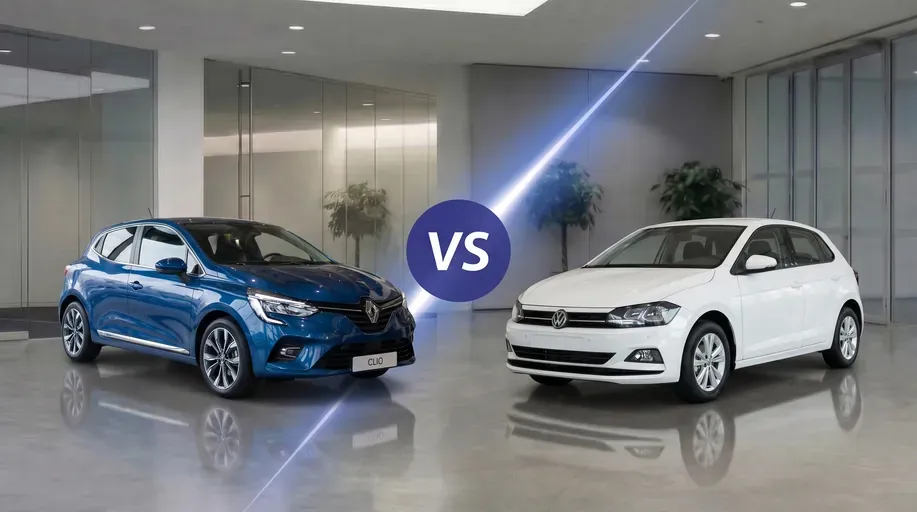
Renault Clio vs. Volkswagen (VW) Polo: Which hatchback to choose? A detailed comparison of equipment, driving characteristics, and a real verdict for your right choice.
Apr 17, 2026
Articles
Car battle
Hyundai i10 vs Suzuki Ignis Comparison: A classic city mini or a small crossover? Discover the differences in equipment, fuel consumption, and driving characteristics.
May 7, 2026


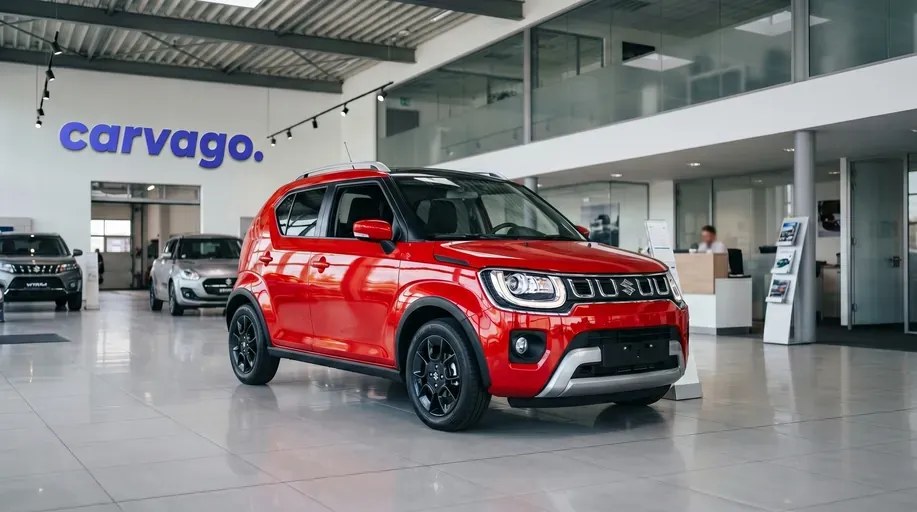
Hyundai i10, also known as the Hyundai Grand i10 Nios in some global markets, is a sophisticated city hatchback that attracts with its rich equipment and excellent maneuverability. On the other hand, the Suzuki Ignis, sold in certain regions under the name Maruti Suzuki Ignis, brings a bold design with higher ground clearance and the unmistakable character of a practical micro-SUV to the small car segment. In the following comparison, we will take a detailed look at which of these two affordable and agile models represents the smarter choice for your daily commutes.
Looking at the exterior dimensions, we find ourselves in the territory of the smallest cars on the market (A-segment), which are perfect for everyday city driving. If you are choosing a roughly four-year-old used car, you will most likely be looking at the third generation of both models. However, this is where a fundamental conceptual difference comes to light. While the Hyundai i10 stays true to the traditional silhouette of a classic low hatchback, the Suzuki Ignis successfully styles itself as a so-called micro-SUV, betting on higher ground clearance and an overall more robust, boxy appearance.
In terms of footprint, there is very little between the two cars, and they will provide essentially the same service when searching for the smallest parking space at a shopping center. With a length of 3,700 mm, the Suzuki Ignis exceeds the standard Hyundai i10 by only 30 mm (for the sportier i10 T-GDI versions, this difference narrows to just 25 mm). It is very similar with the width and wheelbase. The Japanese challenger is a negligible 10 mm wider and has a 10 mm longer wheelbase (2,435 mm compared to 2,425 mm for the i10). In practice, these minor nuances mean that maneuverability in narrow streets is excellent for both cars, and you won't suffer from a lack of agility in either of them.
However, a major turning point comes when comparing height, which is often the main deciding factor for a specific group of buyers. The Suzuki Ignis stands up to 1,605 mm tall, which is a significant 125 mm more than the Hyundai i10 (1,480 mm). This massive difference gives the Suzuki a clear advantage in a noticeably higher seating position. As a result, the driver gets a better overview of what's happening in front of them, and getting in and out is substantially more comfortable – something especially appreciated by the older generation of drivers or parents who regularly handle a child car seat. In contrast, thanks to its overall lower body construction, the Hyundai i10 offers a lower center of gravity. This gives it more confident handling in corners, less body roll, and slightly better aerodynamics during occasional highway trips.
| Parameter | Hyundai i10 Hatchback | Suzuki Ignis SUV |
|---|---|---|
| Width (mm) | 1680 | 1690 |
| Length (mm) | 3670 - 3675 | 3700 |
| Height (mm) | 1480 - 1483 | 1595 - 1605 |
| Wheelbase (mm) | 2425 | 2435 |
When choosing a compact city car, trunk capacity is often a surprisingly important parameter. Whether it's for family weekend shopping, transporting sports equipment, or luggage for a short holiday, every extra liter counts. The Hyundai i10 and Suzuki Ignis approach interior space differently, which significantly impacts their daily practicality and cargo-carrying capabilities.
The third-generation Hyundai i10 (available on the used car market since 2020) offers a very solid and consistent 252 liters in its basic configuration for its category. With the rear seats folded down, this space increases to up to 1,050 liters. This value is perfectly sufficient for common daily tasks and represents a highly usable space for a traditional city hatchback. With this model, you'll also appreciate the certainty – you don't have to deal with any volume compromises depending on the chosen equipment or engine.
On the other hand, the third-generation Suzuki Ignis benefits from its taller body style, belonging to the small SUV category, and a very clever interior layout. Thanks to sliding rear seats, the Ignis can offer a basic volume of up to 267 liters, slightly outperforming its Korean rival and providing space for a few extra shopping bags. However, there is one important limitation – if you opt for the popular all-wheel-drive version (AllGrip) or certain mild-hybrid variants, the trunk shrinks to a significantly more modest 204 liters due to the built-in technology. With the seats folded, however, the Ignis provides up to 1,100 liters, again slightly exceeding the i10 and making it suitable for transporting larger items.
| Parameter | Hyundai i10 Hatchback | Suzuki Ignis SUV |
|---|---|---|
| Basic volume (liters) | 252 | 204 - 267 |
| Maximum volume with seats folded (liters) | 1050 | 1086 - 1100 |
If you are looking for a car with maximum variability and don't mind a potential compromise in volume for the 4x4 version, the Suzuki Ignis serves slightly better thanks to its sliding seats and overall higher capacity when folded. The Hyundai i10, on the other hand, will be appreciated by buyers who prefer a consistent and sufficiently spacious trunk across all available versions, without having to meticulously examine technical specifications and reduced trunk space for a specific unit on the used car market.
Thanks to sliding seats, the Suzuki Ignis offers slightly more space, but you must watch out for hybrid versions and 4x4s, where the trunk shrinks significantly; the Hyundai i10, conversely, provides a stable and highly usable 252 liters across all its variants.
When evaluating practicality, trailer weight plays a surprisingly important role even in the segment of the smallest cars. Although city cars are not primarily intended for towing heavy loads, the possibility of attaching a trailer represents a huge advantage for everyday life. In this comparison on the used car market (for models approximately 4 years old), stark differences appear between the two cars.
The third-generation Suzuki Ignis (from 2017–2024) proves to be an unexpected powerhouse. In all its versions – whether it's the standard 1.2 Dualjet petrol engine or its mild-hybrid variants (SHVS) – it offers a maximum braked trailer weight of exactly 1000 kg. The typical weight of an unbraked (standard) trailer for this model is around 400 kg. This is a capacity fully sufficient not only for a weekend trip to the hardware store but also for towing a smaller caravan on a longer holiday. The Ignis thus proves that even a compact car can handle a lot of hard work.
In contrast, the third-generation Hyundai i10 (from 2020–2025) is significantly limited in this regard. The manufacturer allows a braked trailer with a maximum weight of only 300 to 310 kg across all available engines, from the basic one-liter three-cylinder to the top-of-the-line 1.0 T-GDI. Values for unbraked trailers are often completely missing from official technical data, or towing capabilities are excluded entirely. Such a low permitted weight does not allow for full-fledged towing of a classic cargo trailer in practice. It serves primarily to create space for a few extra suitcases using a small cart or for the legal installation of a bicycle rack on the tow bar.
The conclusion in this discipline is quite clear: if you require at least basic towing capabilities and versatility for cottage trips or moving from your small car, the Suzuki Ignis is the clear and unrivaled winner. The Hyundai i10 remains a pure city specialist, whose limits would soon leave you wanting when needing to transport a larger load.
| Model and motorization | Braked weight of trailer (kg) | Unbraked weight of trailer (kg) |
|---|---|---|
| Hyundai i10 1.0 (46 - 49 kW) | 300 - 310 | - |
| Hyundai i10 1.0 T-GDI (66 - 74 kW) | 300 - 310 | - |
| Hyundai i10 1.2 (58 - 62 kW) | 300 - 310 | - |
| Suzuki Ignis 1.2 Dualjet (66 kW) | 1000 | 400 |
| Suzuki Ignis 1.2 Dualjet Hybrid / SHVS (61 - 66 kW) | 1000 | 400 |
The engine options of these two small cars reflect the different approaches of manufacturers to propulsion in the city car segment. For buyers in the used car market, this comparison is key, as the choice determines not only fuel consumption but also overall agility and traction. While the Hyundai i10 relies on classic petrol engines (1.0 MPi and 1.2 MPi) and is one of the few city hatchbacks to offer a more powerful turbocharged variant, the 1.0 T-GDI, the Suzuki Ignis completely switched to the 1.2 Dualjet engine with fuel-efficient mild-hybrid technology after 2020. An absolute rarity and a huge advantage for Suzuki in this class is the availability of reliable all-wheel drive (ALLGRIP), which you won't find at all in the Hyundai i10. Both cars primarily target efficiency in heavy traffic, but their specifics will appeal to quite different types of drivers.
Under the hood of the current third-generation Hyundai i10 (produced since 2020), you will find exclusively petrol units. While older generations previously offered factory LPG or even diesel variants, these options have long been absent from the catalogue for used cars around 4 years old. The base is a modest naturally aspirated 1.0 MPi three-cylinder, which is sufficient for normal city commuting. If you head out on the motorway more often or prefer a calmer and smoother performance, the more refined naturally aspirated 1.2 MPi four-cylinder will be a better choice. Both of these engines can be purchased with either a classic five-speed manual transmission or a five-speed automated manual transmission (AMT). For dynamic driving enthusiasts, there is the rarer 1.0 T-GDI version, typically reserved for the sporty N Line trims, which offers significantly higher torque thanks to turbocharging.
| Engine type | Fuel | Power (kW) | Torque (Nm) | Transmission |
|---|---|---|---|---|
| 1.0 MPi | Petrol | 49 | 96 | 5MT / 5AMT |
| 1.2 MPi | Petrol | 62 | 118 | 5MT / 5AMT |
| 1.0 T-GDI | Petrol | 74 | 172 | 5MT |
The third-generation Suzuki Ignis is structurally very different. After the key facelift in 2020 (the model year representing the most sought-after 4-year-old used cars), Suzuki focused on a single main power unit, the 1.2 Dualjet four-cylinder. This is electrified as standard with a 12V mild-hybrid system (MHEV). Although this system slightly reduced the maximum power from the original 66 kW (in versions up to 2020) to a modest 61 kW after the facelift, in return, it ensured even better operating efficiency and contributed to smoother engine responses at lower revs. At the same time, the AGS automated manual transmission from earlier years was replaced by a CVT continuously variable transmission for the automatic version. However, the ALLGRIP system remains by far the most sought-after specialty on the used car market. The combination of mechanical all-wheel drive and high ground clearance makes the small and light Ignis an exceptionally capable vehicle not only for winter but also for hilly or rural areas.
| Engine type | Fuel | Power (kW) | Torque (Nm) | Transmission |
|---|---|---|---|---|
| 1.2 Dualjet (until 2020) | Petrol | 66 | 120 | 5MT / 5AMT |
| 1.2 Dualjet Hybrid (from 2020) | Petrol (MHEV) | 61 | 107 | 5MT / CVT |
While the Hyundai i10 will please those interested in a more spirited drive (1.0 T-GDI) and great-working engines without electrification, the Suzuki Ignis is very fuel-efficient thanks to the mild-hybrid and, in combination with 4x4 drive, has no rival in the small used car market.
Choosing the right engine is a key step toward long-term satisfaction with a used car, and our recommendations for roughly four-year-old used cars are based on real-world performance, achieved fuel consumption, owner feedback, and proven mechanical reliability. While the third-generation Hyundai i10 relies on proven petrol units with a traditional and service-friendly design, the Suzuki Ignis chooses the path of modern technological efficiency with an emphasis on absolute weight minimization. An interesting fact from the history of these models is that in the very early stages of small car development, Hyundai experimented with a miniature 1.1 CRDi diesel engine, whereas today it prefers pure petrol classics. Suzuki, on the other hand, has long stuck to compact petrol four-cylinders, and the Ignis stands out as a major rarity in the smallest car segment – it can cleverly combine its mild-hybrid technology with full-fledged four-wheel drive.
The 1.2-liter naturally aspirated four-cylinder from the third generation (produced between 2020–2025) represents clearly the best choice in the range, ideally combining mechanical durability with decent dynamics. Although this trouble-free engine is slowly disappearing from the new car lineup due to emission standards and being replaced by smaller engines, it remains among the most sought-after on the market for roughly four-year-old used cars, completely overshadowing the basic one-liter three-cylinder with its quiet and much more refined operation. The technical advantage of the unit is its classic indirect fuel injection and smooth torque delivery; thanks to this, real-world consumption stays stable around 5.5 liters, and the engine handles typical short-distance commutes without a blink, with no risk of hard carbon buildup on the intake valves. In terms of risks, the mechanical foundation of the engine is practically immortal, but you must focus your attention on how and where the previous owner used the car. For used cars that evidently served as purely urban "delivery" vehicles, always carefully check the condition of the clutch during a test drive – if it jerks during a smooth start or engages only at the very top of the pedal travel, you face an early investment in its replacement. This engine will find ideal use with pragmatic and conservative drivers or families looking for a completely trouble-free second car for the household that can hold its own in heavy city traffic as well as during occasional weekend trips on the highway.
This exceptionally efficient mild-hybrid four-cylinder from model years 2020 to 2024 is a true engineering gem, and given that production of the third generation in this configuration has already ended in our market, these four-year-old used cars represent a very valuable and sought-after market item. Compared to most competitors, the Ignis wins with absolute operational lightness, as the entire car weighs less than 900 kg, and the small electrical assistance can work real wonders while driving. The main technical strength of the engine is the clever system of two injectors per cylinder (Dualjet) connected to a 12V integrated starter-generator, which immediately fills in torque gaps from low revs and reliably brings real fuel consumption well below the 4.5 liters per 100 km mark. The key weakness of the car is surprisingly not hidden in the top-notch and bulletproof engine with a timing chain, but is tucked away under the driver's seat, where a small lithium-ion battery for the hybrid system is located. Long months of sitting in a used car lot without operation can cause irreversible deep discharge of the battery; therefore, during a test drive, you must monitor the trip computer graphics to see if the hybrid system willingly and smoothly recuperates energy every time you lift off the throttle or brake. With its exceptional agility and the unique option to pair this economical powertrain with the reliable ALLGRIP all-wheel drive, the Ignis is ideally suited for active individuals, cottage owners, and residents of sub-mountain or mountain areas who require low operating costs and traction certainty on any surface.
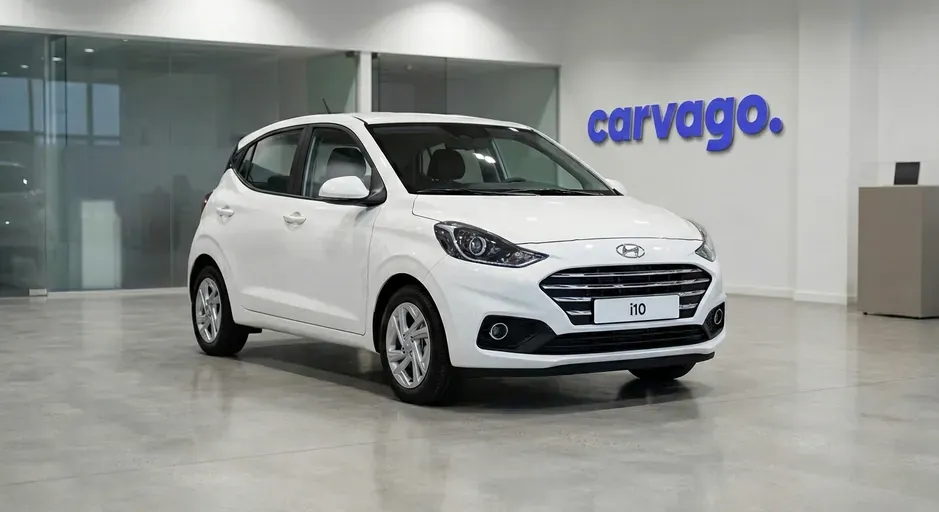
Official fuel consumption figures provided by manufacturers often differ from reality, which is why it is much more useful to look at real-world data from everyday use when choosing a used car. For the most accurate comparison, we used data from drivers themselves on the independent portal Spritmonitor.de, which collects long-term refueling statistics. We focused primarily on the third generations of both models, which currently appear most frequently on the used car market as roughly four-year-old vehicles (manufactured around 2020). The results show that in this category of the smallest city cars, petrol and mild-hybrid engines reliably dominate, while older diesel engines (such as the once-offered 1.1 CRDi versions for Hyundai or 1.3 DDiS for Suzuki) have completely disappeared in these modern generations.
| Model and engine | Average consumption (l/100 km) |
|---|---|
| Suzuki Ignis 1.2 Dualjet | 4.8 |
| Suzuki Ignis 1.2 Dualjet Hybrid | 5.1 |
| Hyundai i10 1.0 MPi | 5.5 |
| Hyundai i10 1.0 T-GDI | 5.5 |
| Hyundai i10 1.2 MPi | 5.8 |
Looking at the data, it is clear that the Suzuki Ignis is a master of fuel economy. Its exceptionally lightweight construction combined with the efficient naturally aspirated 1.2 Dualjet four-cylinder engine keeps consumption safely below the five-liter mark. It may come as a surprise that newer mild-hybrid versions show slightly higher real-world consumption (averaging 5.1 l/100 km). In used cars from this period, this is often due to different measurement cycles and the need to meet stricter emission standards, even though the laboratory promised savings. The Hyundai i10 is slightly less economical, but we are still talking about excellent values. An interesting finding is that the turbocharged 1.0 T-GDI three-cylinder consumes exactly the same amount of fuel in practice as the basic naturally aspirated one-liter, while offering much better dynamics. The larger 1.2 MPi four-cylinder then requires about 5.8 liters, which is a small price to pay for its exceptionally smooth and refined operation.
For the typical user, this means only one thing: whether you spend most of your time crawling through city traffic jams or regularly commute to work from the suburbs, neither car will break your budget. But if you are one of those drivers who counts every penny and prides themselves on maximum efficiency, the Suzuki Ignis will save you the most money in the long run. On the other hand, the Hyundai i10 with the 1.2 MPi engine is ideal for those who are happy to sacrifice less than an extra liter of fuel in exchange for the smoother operation of a more mature four-cylinder during more frequent trips out of town.
In the end, fuel consumption will likely not be the main and only deciding factor in choosing one car over the other, as both represent an extremely economical choice in terms of total operating costs. However, if you are looking for the absolute winner in efficiency, both on paper and in reality, the Suzuki Ignis takes a clear lead in this duel.
If you are looking for a reliable used city car approximately four years old (2021–2022 models), an interesting comparison awaits you. At this age, we focus on the third-generation Hyundai i10 (on the market since 2019) and the facelifted third-generation Suzuki Ignis (since 2020). The price differences between these two models are quite significant and reflect their different concepts and equipment.
While the Hyundai i10 represents a classic city hatchback with an excellent price-to-value ratio, the Suzuki Ignis bets on a micro-SUV concept and specific technology that holds its value unexpectedly high.
| Model (2021–2022 models) | Indicative price from (€) | Indicative price to (€) |
|---|---|---|
| Hyundai i10 (3rd generation) | 8 000 | 12 000 |
| Suzuki Ignis (3rd generation facelift) | 12 000 | 16 000 |
What determines the price on the used car market?
If you are looking for the most cost-effective city car, the Hyundai i10 offers maximum value for the money, while the more expensive Suzuki Ignis makes sense primarily for those who will actually use the optional all-wheel drive or higher ground clearance.
Although we could start with a general remark that both cars in their maximum equipment or promotional materials are associated with five-star Euro NCAP ratings (which the fully equipped Suzuki actually achieved in its time), a realistic look at the tables shows a much more complex situation and highlights the fundamental importance of context and the year of testing. The test protocols of the independent organization Euro NCAP are constantly evolving and becoming radically stricter over time. While older methodologies were relatively lenient, newer ones must face simulations with a new progressive deformable barrier, advanced cyclist detection, or complex scenarios of approaching collisions at intersections. For this reason, percentage scores from different years cannot be simply and directly compared.
The third-generation Hyundai i10 underwent crash tests in December 2020, following a significantly stricter and more modern methodology. Given these more demanding criteria, which harshly penalize even minor hesitations in active safety, the model received an overall rating of 3 stars. In a full-width frontal impact, commissioners noted "submarining" (the pelvis slipping under the seat belt) for the driver dummy, although the cabin stability itself remained solid. Furthermore, the car had to meet diametrically stricter limits for autonomous emergency braking (AEB). The percentage results for assistance systems and pedestrian protection thus come from an incomparably more demanding testing environment.
The Suzuki Ignis underwent Euro NCAP testing much earlier, at the end of 2016, when a dual rating system was applied. In its basic equipment, the car received 3 stars at the time, but with an optional safety pack of assistance systems, it managed to achieve the then-maximum 5 stars. The resulting high score is based on a methodology that did not subject cars to today's complex traffic scenarios and intersection maneuvers. From today's perspective, the certification for the Ignis is therefore considered expired, as safety standards have come a long way in the intervening years.
| Parameter | Hyundai i10 | Suzuki Ignis |
|---|---|---|
| Year of testing | 2020 | 2016 |
| Adult occupant protection | 69 % | 87 % |
| Child occupant protection | 75 % | 79 % |
| Vulnerable road user protection | 52 % | 77 % |
| Safety assistance systems | 59 % | 60 % |
In conclusion, if safety reflecting current conditions and threats of everyday traffic is key for you when choosing a used car, the Hyundai i10 offers a more modern and comprehensive safety standard. Although the older five-star result of the Suzuki Ignis with the safety pack looks much more attractive from a historical perspective, the electronic systems and structural strength of the i10 model had to withstand significantly stricter and more modern limits.
Although the Suzuki Ignis in full equipment earned five stars in 2016, for a used car buyer, the Hyundai i10 from the more demanding 2020 testing year provides a much more relevant and modern level of comprehensive safety.
In addition to standard equipment, each of the models offers several unique features that prove that even in the segment of the smallest city cars, advanced solutions can be obtained, with each carmaker approaching added value in its own, very distinctive way.
In its third generation, the South Korean representative focused on bringing technology and equipment to the mini-car class that was until recently reserved only for cars several classes larger.
The Japanese model takes a completely different direction. It bets on crossover proportions, extraordinary practicality, and capabilities you wouldn't expect from such a small car.
Excellent interior build quality and high-quality materials for the class
Refined driving characteristics and good sound insulation of the chassis and engine
Modern and intuitive infotainment with fast response and smartphone mirroring support
Surprisingly spacious cabin providing enough room even for adult passengers in the back
Availability of the sporty N Line version with a livelier 1.0 T-GDi turbocharged engine
The automated manual transmission (AMT) jerks and shifts slowly; a conventional automatic is missing
Higher purchase price for better-equipped used cars compared to some rivals
Fixed rear bench does not allow for variable trunk expansion at the expense of legroom
The Hyundai i10 is an ideal choice for those looking for a mature-feeling city car with a more premium interior and modern technology. Thanks to excellent sound insulation and a stable chassis, this model holds its own even on occasional longer trips outside the city, where it offers comfort on par with cars from a class above.
Unique look with micro-SUV elements and a higher driving position for a better view of traffic
Optional all-wheel drive (AllGrip), which is a complete rarity in this segment
Sliding rear seats allow for flexible adjustment of the luggage compartment
Extremely low fuel consumption thanks to low weight and a standard mild-hybrid system
Excellent maneuverability in tight spaces and great all-around visibility from the car
The interior feels cheaper due to a larger amount of hard plastics
Outdated infotainment system with more complex controls and slower responses
More pronounced body roll in corners caused by the higher build and softer suspension
Noticeably worse cabin sound insulation and aerodynamic noise at highway speeds
The Suzuki Ignis targets drivers who appreciate a higher seating position, practical interior variability, and an unmistakable, slightly eccentric crossover-inspired look. Its absolutely essential advantage is the optional 4x4 drive, which makes this lightweight car a perfect and exceptionally economical companion even for mountainous or rural areas with poor road quality.
Based on our own CarAudit inspections, breakdown statistics, service reports, and long-term user experiences, we have compiled an overview of the most common problems that used car buyers should watch out for with these models. To minimize the risk of hidden defects, a thorough comprehensive car inspection is always recommended before purchase.
The third-generation Hyundai i10 (since 2020) is generally perceived as a very durable and low-maintenance car; however, even it has its weak points, which manifest themselves especially during frequent operation in dense urban environments.
The Hyundai i10 is a mechanically robust car whose engines can last a long time if service intervals are followed. However, watch out for faster clutch wear and the condition of the rear brakes, which tend to seize unpleasantly and thus require preventive maintenance.
The current generation of the Suzuki Ignis is renowned for its lightweight and exceptionally durable construction; however, even in roughly four-year-old used cars, specific faults mainly associated with onboard electronics and the chassis can appear.
The technology of the Suzuki Ignis can withstand even rougher handling and clearly excels in the segment in terms of the longevity of its naturally aspirated engine. However, the unpredictable infotainment and a more delicate chassis, which struggles with the pitfalls of broken city roads, occasionally cause headaches for owners.
When buying a used car, a thorough inspection is key. Especially with small city cars, which often suffer from scratches from tight parking and excessive wear from constant short trips, an Independent technical inspection of the car is well worth it. Here are a few specific points to focus on for these two models, typically if you are choosing a car about four years old.
Suzuki Ignis offers a slightly larger luggage compartment in its basic configuration with a volume of 260 litres, while the Hyundai i10 has 252 litres. However, in the all-wheel-drive version of the Ignis, the usable boot volume is reduced to 204 litres. An additional advantage of the Suzuki is the optional sliding rear seats, which allow the cargo space to be flexibly increased at the expense of legroom.
The Suzuki Ignis is slightly more economical thanks to its very low weight and standard mild-hybrid system (1.2 Dualjet). In real-world city and suburban traffic, it can be driven without much trouble with a fuel consumption of under 5 litres per 100 km. The Hyundai i10 is also very efficient with its naturally aspirated engines, but it lags slightly behind the hybrid technology in heavy city traffic.
Yes, the Suzuki Ignis is one of the few cars in this size category that can be purchased with the AllGrip intelligent all-wheel drive. Thanks to this technology and a higher ground clearance of 180 mm, it can handle dirt roads and snowy mountain roads without any problems. The Hyundai i10 is a classic city hatchback and is always supplied exclusively with front-wheel drive.
Both cars are absolutely ideal for tight city traffic, as they measure just under 3.7 metres in length and are very easy to manoeuvre. The Suzuki Ignis has the advantage of a higher seating position, which provides the driver with an excellent view and makes getting in or handling a child car seat easier. The Hyundai i10, on the other hand, often scores slightly better with a more finely tuned power steering and a higher-quality rear parking camera.
The Hyundai i10 is noticeably more mature, comfortable, and refined on longer trips on motorways. It offers much better cabin soundproofing, and its stable chassis can filter out even larger bumps very effectively. Due to its narrow and tall body, the Ignis is more susceptible to crosswinds, and more aerodynamic noise penetrates the interior at motorway speeds.
The choice between these two nimble used cars depends primarily on your lifestyle and priorities for daily travel. The Hyundai i10 represents an overall more mature, refined, and better-insulated choice with modern safety technologies, which will perfectly serve drivers looking for a maximally comfortable classic hatchback primarily for paved urban and suburban roads. Conversely, the Suzuki Ignis scores with its bold micro-SUV concept featuring a higher and more comfortable seating position, unbeatably low fuel consumption thanks to its mild-hybrid powertrain, and an absolutely unique offering in this segment: AllGrip all-wheel drive. While the Korean representative thus reliably satisfies pragmatists longing for top-notch connectivity and more confident driving characteristics, the Japanese challenger will thrill more active individuals or residents of hilly areas who will make full use of the variable rear seats, extraordinary traction, and surprisingly high towing capabilities in a compact package.
Sources: ADAC, denik.cz, mdcr.cz, autorevue.cz, autotechnik.cz, logistika.ihned.cz
This article was prepared using artificial intelligence tools. The section guarantor is Petr Dušek.

Renault Clio vs. Volkswagen (VW) Polo: Which hatchback to choose? A detailed comparison of equipment, driving characteristics, and a real verdict for your right choice.
Apr 17, 2026

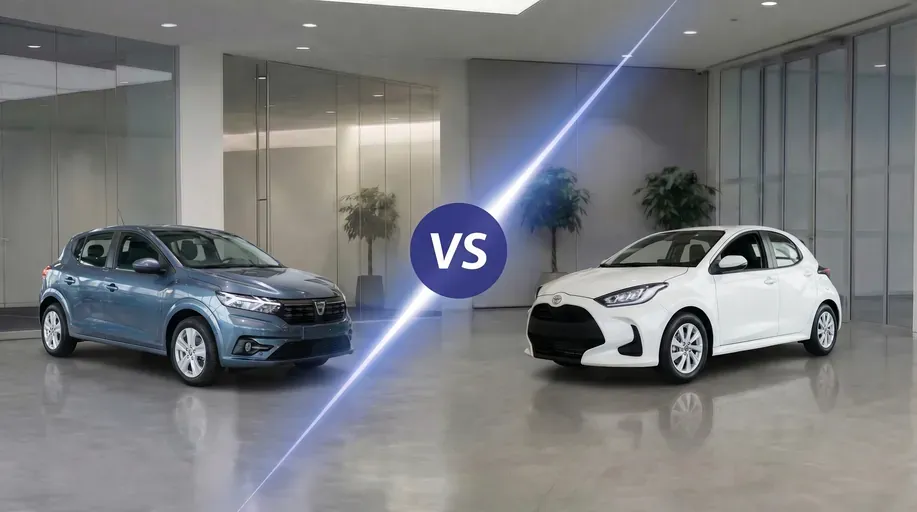
Detailed comparison: Dacia Sandero vs. Toyota Yaris. We reveal real-world experiences, fuel consumption, and equipment. Read our verdict and choose the ideal used car.
Apr 18, 2026

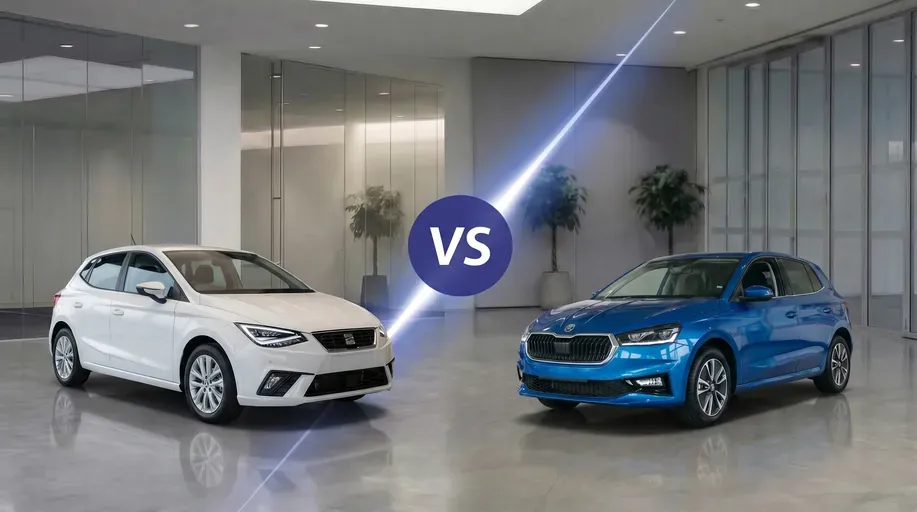
Detailed comparison of Seat Ibiza vs. Škoda Fabia. Discover real-world experiences, equipment comparisons, fuel consumption, and the final verdict to help you with your choice.
Apr 22, 2026