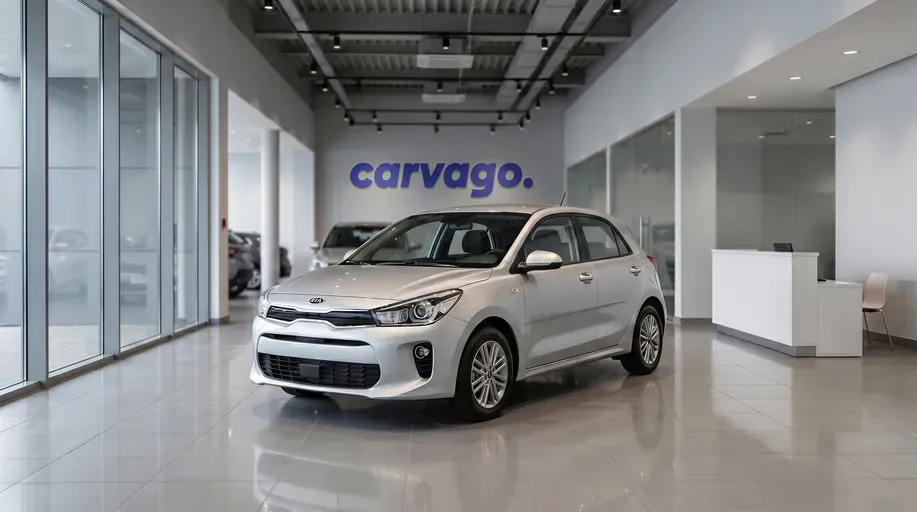
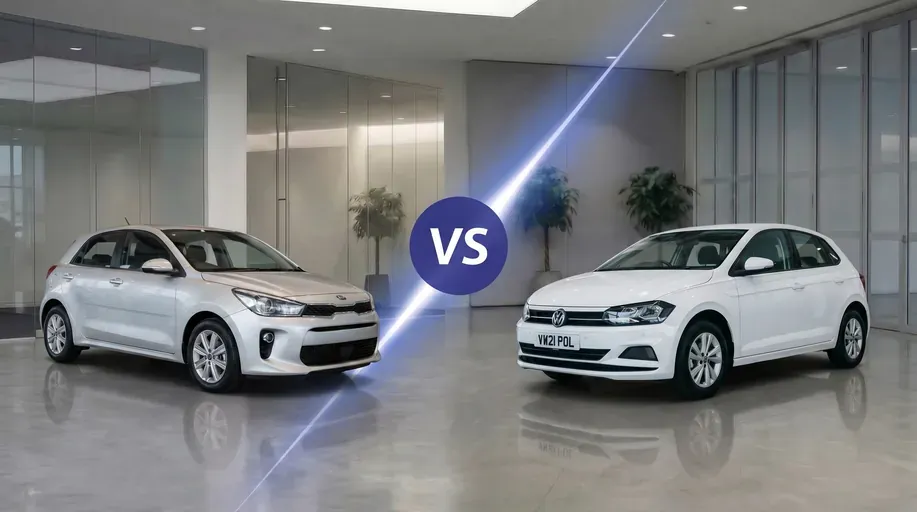
Kia Rio vs. Volkswagen Polo: Complete comparison 2026
Detailed comparison of Kia Rio vs. Volkswagen (VW) Polo. We evaluate engines, equipment, and the real-world reliability of used cars. Find out which city hatchback to choose!
Apr 25, 2026
Articles
Car battle
Detailed comparison of Hyundai i20 vs. Kia Rio. Find out which used hatchback has better equipment, driving characteristics, and reliability. Read our verdict.
May 16, 2026


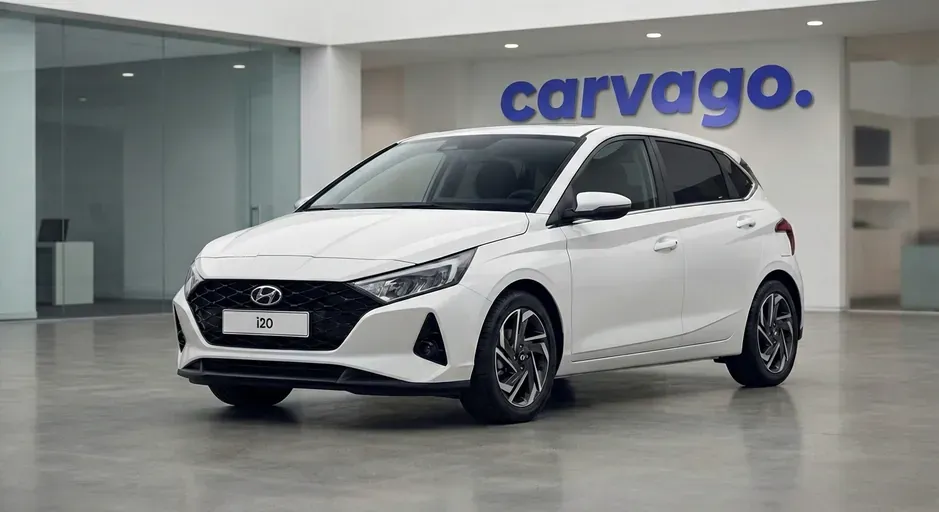
Hyundai i20, also known as the Elite i20 in some global markets, is a popular South Korean hatchback that attracts attention with its distinctive design and rich technological equipment. Its direct competitor is its corporate sibling, the Kia Rio, also sold abroad under the names Kia K2 or Kia Pride, which scores points primarily for its high reliability, practicality, and excellent value for money. The following comparison will introduce you in detail to the differences between these popular representatives on the nearly-new used car market and help you decide which one will better suit your daily needs.
Since the Hyundai i20 and Kia Rio share the same group technology, their exterior dimensions are very close in many respects. The best proof of this platform kinship is the identical wheelbase of 2,580 mm. This is great news for the occupants, as both cars offer above-standard longitudinal space for their class and plenty of legroom even in the rear seats.
The most significant difference when comparing the bodies is found in the width of the vehicles. The third generation of the Hyundai i20 (introduced in 2020) boasts a generous width of 1,775 mm, while the Kia Rio YB generation measures 1,725 mm in width. The Hyundai is therefore a full 50 mm wider. In practice, this means a slightly airier feel in the cabin and more shoulder room. From the outside, the i20 gives a more planted and confident impression. In terms of overall length, the standard Kia Rio is slightly longer (up to 4,070 mm) compared to the basic Hyundai i20 (4,040 mm), although the sporty i20 N variants extend the length up to 4,075 mm. For city parking, both models are equally agile.
The height of both hatchbacks is practically identical, staying at a reasonable 1,450 mm, from which the sporty Hyundai models shave off just 10 millimeters in favor of better aerodynamics. The final choice thus depends on the details of your daily routine. If your daily bread is parking in the absolute tightest city spots or underground garages, you will appreciate the five-centimeter narrower build of the Kia Rio. However, if you often drive with more people and prefer a slightly more spacious cabin in the lateral direction combined with a more mature stance on the road, the Hyundai i20 will be the better choice.
| Parameter | Hyundai i20 Hatchback | Kia Rio Hatchback |
|---|---|---|
| Length (mm) | 4040 - 4075 | 4065 - 4070 |
| Width (mm) | 1775 | 1725 |
| Height (mm) | 1440 - 1450 | 1450 |
| Wheelbase (mm) | 2580 | 2580 |
Luggage compartment volume is a key parameter for many buyers, whether the car serves for daily commuting or as a family vehicle. In the small hatchback category, where the Hyundai i20 and Kia Rio belong, every extra liter plays a significant role in overall practicality and everyday usability. Both manufacturers approached the interior design very cleverly, with their main goal being to offer enough space for a weekend shopping trip as well as a longer vacation.
If we focus on models from recent years, which are currently in demand on the market as roughly four-year-old used cars, we encounter a fairly clear winner. The third-generation Hyundai i20 offers a generous boot capacity of 352 liters in its standard configuration. When the rear seats are folded, this space increases to 1,165 liters, making it one of the space leaders in its class. The competing Kia Rio (YB generation) lags slightly behind with a standard volume of 325 liters and provides a maximum capacity of 1,103 liters after folding the rear backrests. In practice, this difference represents valuable space for a few extra suitcases in the Hyundai, which you will appreciate especially when packing for more demanding trips.
However, an important detail when choosing a used car is the specific engine versions, which can unexpectedly affect the usability of the boot. In the case of the Hyundai i20, it is necessary to pay close attention to the mild-hybrid versions (48V-Hybrid). Due to the placement of the traction battery under the floor, the standard boot volume is reduced by a substantial 90 liters to a below-average 262 liters (and 1,075 liters after folding). Conversely, the Kia Rio does not have this limitation in its electrified mild-hybrid versions and retains its full 325 liters. Therefore, if you are looking for an economical hybrid, the Kia offers significantly more space.
For better clarity, take a look at the comparison of standard conventional engine versions of both models in the Hatchback version:
| Parameter | Hyundai i20 Hatchback | Kia Rio Hatchback |
|---|---|---|
| Standard volume (l) | 352 | 325 |
| Max. volume with seats folded (l) | 1,165 | 1,103 |
The conventional Hyundai i20 offers an overall larger and more practical boot, but if you are choosing an economical mild-hybrid used car, the situation completely reverses in favor of the Kia Rio thanks to better battery placement.
While towing capacity or trailer weight is not usually the first thing buyers evaluate in small city hatchbacks, for many of them it plays a very significant role in terms of overall practicality. The ability to attach a small trailer with cargo or a bike rack significantly expands the car's daily usability. Looking at models around four years old (the third-generation Hyundai i20 and the facelifted YB generation of the Kia Rio), we find that although they share similar technology, their towing capabilities differ slightly in key engine versions.
The basic (standard) braked trailer weight for the naturally aspirated 1.2-liter four-cylinder engines (62 kW) is identical for both sister models, reaching a respectable 910 kg. However, we find significant differences in the popular turbocharged 1.0 T-GDI three-cylinder engines, where the maximum values differ. While the third-generation Hyundai i20 with this unit pushes its maximum capacity up to 1,110 kg (even for the 48V mild-hybrid versions), the Kia Rio, after its 2020–2023 update, limited the towing capacity for these engines—including their mild-hybrid variants with reduced towing power—to a maximum of 900 kg. In the case of an unbraked trailer, both cars count on a standard value of 450 kg, typical for this segment.
In real life, these seemingly minor deviations have clear practical impacts. If you buy a Hyundai i20 with the more powerful engine, you get a larger margin – the stated 1,110 kg is fully sufficient for a weekend purchase of heavier building materials or a longer holiday with a small caravan. Conversely, the reduced capacity of 900 kg in newer Kia Rio models may be slightly limiting for these bulkier purposes, although it is more than enough for regular garden waste or extra space for several suitcases in the form of a light trailer.
Conclusion: From a towing perspective, the Hyundai i20 comes out slightly better in this comparison. It provides higher maximum capacities for turbocharged engines and therefore offers significantly more freedom for drivers who want to use their car as a versatile workhorse.
| Model and engine | Braked trailer weight (kg) | Unbraked trailer weight (kg) |
|---|---|---|
| Hyundai i20 1.2 (62 kW) | 910 | 450 |
| Hyundai i20 1.0 T-GDI / 48V-Hybrid (74–88 kW) | 1110 | 450 |
| Kia Rio 1.2 (62 kW) | 910 | 450 |
| Kia Rio 1.0 T-GDI / 48V-Mild-Hybrid (74–88 kW) | 900 | 450 |
Since both the Hyundai i20 and Kia Rio fall under the same parent company, Hyundai Motor Group, they share the vast majority of their engine lineup. For those interested in a roughly four-year-old used car (manufactured around 2022), this means that in both models, they will encounter practically identical power units, which differ more in their availability across specific trim levels. The base engine for both cars is a reliable 1.2-liter naturally aspirated four-cylinder, which is ideal for calm city driving and makes sense for drivers on a tighter budget. Much better dynamics are provided by the turbocharged 1.0 T-GDI three-cylinder, also available with advanced 48V mild-hybrid technology to reduce consumption and improve flexibility on the highway. High-mileage drivers requiring diesel will no longer find what they need among four-year-old used cars – the older 1.1 CRDi and 1.4 CRDi diesel units were phased out with the arrival of the modern generations of both cars and replaced by mild-hybrid technologies. A fundamental difference between the two models is the overall focus of the top of the range – while Hyundai offers a full-fledged sports experience with the i20 N version, you will look for a hot version of the Kia in vain.
The third generation of the Hyundai i20 (produced since 2020) focuses fully on modern petrol engines in terms of propulsion. For undemanding drivers, the proven 1.2 MPi naturally aspirated four-cylinder with 62 kW is available, which is very simple in design and paired exclusively with a five-speed manual transmission. However, the main part of the used car market consists of the 1.0 T-GDI turbocharged three-cylinders. These can be found in 74 kW and 88 kW versions, often equipped with a 48V mild-hybrid system. These modern engines can be combined with an intelligent manual transmission (iMT), which can coast with the engine off while driving, or with a responsive seven-speed dual-clutch automatic (DCT). A real draw for car enthusiasts, however, is the Hyundai i20 N model developed by the N division. Under its hood lies a 1.6 T-GDI turbocharged four-cylinder tuned to an impressive 150 kW (204 hp) with 275 Nm of torque, beating the vast majority of competitors in its class. Older 1.1 CRDi and 1.4 CRDi engines known from the second generation (available until 2018) are no longer found in this generation.
| Engine type | Fuel | Power (kW) | Torque (Nm) | Transmission |
|---|---|---|---|---|
| 1.2 MPi | Petrol | 62 | 118 | 5MT |
| 1.0 T-GDI | Petrol | 74 | 172 | 6MT / 7DCT |
| 1.0 T-GDI 48V-Hybrid | Petrol (MHEV) | 74 / 88 | 172 / 200 | 6iMT / 7DCT |
| 1.6 T-GDI (i20 N) | Petrol | 150 | 275 | 6MT |
In the case of the fourth generation of the Kia Rio (designated as YB, facelift available since 2020), the engine range is very rational and reflects the car's rather pragmatic focus. With the facelift and emission standards in 2020, the model definitively lost the previously popular 1.4 CRDi diesel versions and the more powerful naturally aspirated 1.4 MPI, and the range was limited exclusively to smaller displacement engines. The base is the same 1.2 DPI naturally aspirated engine with 62 kW, which excels in reliability and is a perfect choice for those primarily looking at low operating and service costs. Those who spend more time on suburban routes or the highway will appreciate the modern 1.0 T-GDI three-cylinder. This offers 74 kW in the standard turbocharged version, or 88 kW (120 hp) in the top variant, which is standardly equipped with 48V mild-hybrid technology (EcoDynamics+). Mild-hybrid assistance increases torque up to 200 Nm, which has a positive effect on the car's flexible acceleration. Although the Rio is an excellent and economical car for everyday driving, those interested in a dynamic sporty ride will not find it here, as the performance peak ends at 88 kW and the GT Line model represents only a visual and chassis package.
| Engine type | Fuel | Power (kW) | Torque (Nm) | Transmission |
|---|---|---|---|---|
| 1.2 DPI | Petrol | 62 | 118 | 5MT |
| 1.0 T-GDI 100 | Petrol | 74 | 172 | 6MT / 7DCT |
| 1.0 T-GDI 120 48V-Mild-Hybrid | Petrol (MHEV) | 88 | 200 | 6iMT / 7DCT |
The power units are technically very similar and share excellent efficiency; while the Kia Rio will flawlessly satisfy more pragmatic drivers looking for a reliable commuter, the Hyundai i20 will please enthusiasts with the availability of its phenomenal N sports version.
Although the Hyundai i20 and Kia Rio share a significant portion of their technology under the skin, they approach engine options with a different character that reflects their slightly different target groups. While the more modern third-generation Hyundai i20 (on the market since 2020) relies primarily on more advanced and dynamic turbocharged three-cylinder engines, its sister model, the Kia Rio in its YB generation, is considered one of the best cars for lovers of reliable naturally aspirated classics. Interestingly, as the overview table below based on production data clearly illustrates, the Kia Rio model was definitively discontinued for the European market in 2023. This means that you can no longer get these reliable and old-fashioned engines as new, making them highly sought-after items on the market for roughly four-year-old used cars.
| Model | Recommended engine | Generation | Years of availability |
|---|---|---|---|
| Hyundai i20 | 1.0 T-GDI (74 kW) | 3rd Generation | 2020 - present |
| Kia Rio | 1.2 (62 kW) | YB | 2017 - 2023 (discontinued) |
This turbocharged one-liter three-cylinder is the best choice for the current third generation, brilliantly balancing dynamics, practicality, and favorable operating costs. Compared to the naturally aspirated versions, it offers incomparably more flexible acceleration thanks to a generous torque of 172 Nm, which is available even at low RPMs. In real-world driving, the fuel consumption is pleasing, reliably staying between 5.5 and 6.0 l/100 km. However, to achieve a trouble-free lifespan, it is critical to check the condition of the timing chain when buying. Ask the seller for a completely cold start and listen: oil pressure in the hydraulic tensioner can drop overnight, which initially manifests as a metallic rattle. If the rattling disappears within two seconds, it is an operational standard. If the sound persists longer, it indicates a stretched chain and an inevitable investment in immediate service. Similarly, we recommend shortening the oil change interval to a maximum of 15,000 km, which is proven to protect the expensive turbocharger. Thanks to its versatility and agile performance, this engine is perfect for drivers who regularly take the i20 on highways or go on longer weekend trips.
Given the discontinued production of the model, roughly four-year-old used cars of the YB generation represent one of the absolute last chances to acquire a mechanically simple, durable, and low-maintenance vehicle. The naturally aspirated 1.2 four-cylinder petrol engine (known by the abbreviations DPI or formerly CVVT) with indirect fuel injection is the essence of absolute, unrivaled reliability. While it won't offer stunning pull and you have to rev it more for highway climbs, it rewards you with an above-average quiet, balanced operation without vibrations and a real-world fuel consumption of around 6 l/100 km. Furthermore, the engine completely lacks risky modern components such as sensitive turbochargers or direct injection (which means there is no risk of the dreaded carbon buildup on intake valves during constant cold starts and short trips). When choosing a used car, however, focus on the smoothness of starts. If the car jerks and hops significantly in first gear on a cold or damp morning, it is a sign of prematurely worn clutch friction material – a typical and easily recognizable ailment of this generation that can only be solved by replacing the clutch kit. Because the engine lacks a sixth gear, highway driving is noisier. This choice is thus specifically built for defensive drivers and purely city or suburban traffic, where it guarantees years of service with minimal long-term maintenance costs.
Official fuel consumption figures provided by manufacturers often represent a laboratory ideal that is difficult to achieve in everyday real-world driving. When choosing a roughly four-year-old used car, it is therefore crucial to look at real-world data from drivers themselves. In this comparison, we focused on the generations that currently dominate the four-year-old car market – specifically the third-generation Hyundai i20 (from 2020) and the facelifted fourth-generation Kia Rio (YB generation, 2020–2023). All values listed are based on independent user data from the popular community portal Spritmonitor.de, where thousands of owners from across Europe regularly enter their actual refueling receipts.
| Model and Engine | Average Consumption (l/100 km) |
|---|---|
| Kia Rio 1.0 T-GDI 48V (88 kW) | 5.4 |
| Kia Rio 1.0 T-GDI (74 kW) | 5.5 |
| Hyundai i20 1.0 T-GDI 48V (74 kW) | 5.6 |
| Kia Rio 1.2 DPI (62 kW) | 5.7 |
| Hyundai i20 1.2 MPi (62 kW) | 5.9 |
| Hyundai i20 1.0 T-GDI (74 kW) | 6.0 |
Looking more closely at the measured data, we encounter several interesting trends. It is clear that small turbocharged three-cylinder engines do not deliver the fuel savings in practice that a driver would expect from looking at promotional materials. Although older diesel engines (such as the 1.4 CRDi, which used to run effortlessly under five liters in these segments) have definitively disappeared from the range, modern gasoline turbo engines do not fully replace them in terms of absolute efficiency and are very sensitive to driving style. While the one-liter 1.0 T-GDI engine in the Kia stays at a very respectable 5.5 l/100 km, the real-world consumption for the Hyundai i20 is slightly higher. Another surprising finding is that the extra cost for mild-hybrid technology (48V) only brings savings in the range of tenths of a liter in real-world driving. Classic naturally aspirated four-cylinder engines (1.2 MPi for Hyundai and 1.2 DPI for Kia) maintain a very stable appetite of around 5.7 to 5.9 l/100 km, which, despite the higher numbers, makes them an honest and predictable choice for drivers.
For the average user, a fairly clear recommendation emerges from this data. If you are looking for a car primarily for short city hops or quiet suburban commuting, the basic 1.2-liter naturally aspirated engines from both brands represent an absolutely ideal choice with reasonable fuel consumption and the bonus of highly reliable technology. On the other hand, turbocharged one-liter three-cylinder engines will be appreciated by drivers who more regularly cover highway miles or drive with a fully loaded car, where turbocharging offers the much-needed dynamic reserve. Overall, however, neither automaker has anything to reproach the other for – the differences in consumption between the two sibling models are so negligible that fuel appetite will most likely not be the main factor deciding the purchase of one vehicle over the other. The main say will rather belong to the overall condition of the specific used car and personal preference for the design.
The third-generation Hyundai i20 (BC3, from 2020) and the facelifted fourth-generation Kia Rio (YB, 2020–2023) are technical siblings. From a used car perspective, this means shared engine reliability and a very similar value depreciation curve. Given that Kia discontinued sales of the Rio in European markets during 2023, roughly four-year-old used cars are becoming the ideal and also the last available stock from this model line.
Current price range (model years 2021–2023):
The supply of used Hyundai i20 cars is noticeably wider on the market, giving you a better chance to choose a specific color or equipment level. On the other hand, the Kia Rio scores with one major trump card for the used car market – a seven-year factory warranty.
| Compared Parameter | Hyundai i20 (Gen. 3 / BC3) | Kia Rio (Gen. 4 facelift / YB) |
|---|---|---|
| Recommended used year | 2021 – 2023 | 2021 – 2023 |
| Estimated price (base trim) | from €11,000 | from €10,000 |
| Estimated price (higher trim/turbo) | €14,000 – €16,000 | €12,000 – €14,000 |
| Market availability | Very high | Medium (rapidly decreasing) |
| Factory warranty for a 4-year-old car | Approx. 1 year remaining (out of 5) | Approx. 3 years remaining (out of 7) |
While a four-year-old Hyundai i20 usually has the last year of its unlimited-mileage warranty remaining, an equally old Kia Rio can often still benefit from roughly three years of coverage (limited to 150,000 km). For buyers seeking security against unexpected service expenses, this is one of the most important parameters in the entire comparison.
Regarding routine maintenance costs, insurance, or spare parts prices, both cars benefit greatly from the shared group platform, and the differences between the brands practically disappear in operation.
While the Hyundai i20 pleases with a wider selection and a more aggressive look, the Kia Rio, with its slightly lower purchase price and long remaining warranty, represents a more rational choice for used car buyers.
Although both models often feature a premium five-star Euro NCAP rating throughout their history, it is crucial for the used car market to understand the context and the year of testing. Safety test methodologies and protocols are constantly evolving and becoming significantly stricter over time. Therefore, percentage results from different years cannot be directly compared, as the latest tests place much greater emphasis on active accident prevention and the protection of pedestrians and cyclists in urban traffic.
The third-generation Hyundai i20 was evaluated in 2021 (officially sharing safety results with the technically related Bayon model) and earned a very solid four stars. The tests were already conducted according to stricter modern protocols, which standardly included advanced cyclist detection and detailed simulations of risky scenarios at intersections.
In contrast, the fourth-generation Kia Rio underwent crash tests in 2017. With the optional Safety Pack, it achieved the then-maximum five stars; however, the standard version without the pack had to settle for only a three-star rating. From today's perspective, the 2017 methodological criteria are noticeably more lenient, and the validity of this certification for the Rio model has already officially expired from Euro NCAP's point of view.
The table below summarizes the percentage scores for both models. To maintain maximum context, we provide the results for the Kia Rio with the optional Safety Pack, without which the protection and assistance systems would be rated significantly lower.
| Parameter | Hyundai i20 | Kia Rio |
|---|---|---|
| Year of testing | 2021 | 2017 (with Safety Pack) |
| Adult occupant protection | 76 % | 93 % |
| Child occupant protection | 82 % | 84 % |
| Vulnerable road user protection | 76 % | 71 % |
| Safety assistance systems | 67 % | 59 % |
These results precisely demonstrate what a change in testing methodology means in practice. Although the Kia Rio achieved a visually more impressive 93% for adult occupant protection at the time, its score for safety assistants (59%) lags behind. The Hyundai i20, on the other hand, received more balanced ratings in much more demanding tests. As a result, the Hyundai i20 represents a more modern and comprehensive safety package. More advanced assistance systems ensure that the car not only protects well during an actual impact but also much better meets current standards for preventing an accident altogether.
Although the Kia Rio can boast an older five-star result in its full specification, the Hyundai i20 from the stricter 2021 testing provides more advanced safety assistants and represents a more secure choice for a used car.
Both carmakers pride themselves on offering much more than just basic equipment even in the small car segment, with each model approaching this added value in its own way. While one bets on dazzling technology, the other scores with clever mechanics and flawless user-friendliness.
The third generation of the i20 is designed to offer technologies from cars a class above in the B-segment. It focuses primarily on digitalization and maximum comfort on board.
After the fourth-generation facelift, the Kia Rio combines the modern digital world with classic, proven solutions that make it excel in everyday use and operational efficiency.
Distinctive and modern exterior design that easily catches the eye in traffic
Top-tier technological equipment, including a large and fast infotainment system
Very generous rear-seat space for the small car class
Range of fuel-efficient and dynamic mild-hybrid engines
Confident and agile driving characteristics suitable even for more spirited driving
Firmer suspension tuning, which reduces comfort on poor-quality roads
Noticeably higher proportion of hard and cheap-feeling plastics in the interior
The base naturally aspirated 1.2 MPI four-cylinder is relatively weak and sluggish for driving outside the city
The Hyundai i20 is an ideal choice for buyers looking for modern technology, a fresh design, and above-average rear cabin space in a small city car. Its stiffer chassis will be appreciated by drivers who prefer confidence in corners over soft comfort.
Transferable 7-year factory warranty, which is a huge advantage when buying a used car
Excellent interior ergonomics with intuitive physical buttons for climate control
More comfortable and compliant suspension that filters out city bumps better
Great value for money with logically structured trim levels
Significantly more conservative design, which looks a bit understated next to its sibling
Less advanced digital instruments and an older onboard system architecture
A slightly more cramped feel in the rear seats compared to the i20
Production of the model for the European market has ended, which may slightly affect residual value in the future
The Kia Rio represents a very pragmatic and reliable choice, benefiting from its comfortable tuning and traditional user-friendliness. Thanks to the still-valid long warranty, it is the perfect car for drivers who want to minimize service risks when buying a used car and appreciate calm, trouble-free travel.
Based on our own inspections as part of a comprehensive car audit, breakdown statistics from technical inspection stations, and long-term owner experiences, we have compiled a detailed overview of the most common problems that used car buyers should watch out for.
The third generation of the Hyundai i20 is considered a reliable car, but with the increasing complexity of powertrains, specific ailments are starting to appear, especially in electrified versions and automatic transmissions.
The third-generation i20 is a mechanically solid car, but before buying, we recommend thoroughly checking the smoothness of the dual-clutch transmission and the condition of the batteries in mild-hybrid versions.
The fourth generation of the Kia Rio relies on a slightly simpler technical architecture than its newer sibling, which guarantees it decent longevity, yet it is not immune to typical teething problems and wear from harsh city traffic.
The Kia Rio scores points with its durable naturally aspirated engines and overall structural simplicity; the greatest attention when buying a used one should therefore be directed toward the functionality of the air conditioning and checking the chassis for beginning corrosion.
When buying a used car, a thorough inspection is key, and for both of these related Korean models from around 2022, there are specific areas you should pay particular attention to during a test drive.
To ensure you are not buying a pig in a poke and to uncover any potential hidden defects, the ideal step is CarAudit. This detailed independent inspection of the car's technical condition by an experienced mechanic evaluates the chassis, diagnostics, as well as legal and service history, giving you peace of mind before the final purchase confirmation.
The third-generation Hyundai i20 offers a solid 352 liters of luggage space in its basic configuration. The fourth-generation Kia Rio lags only slightly behind, with a trunk capacity of 325 liters. However, if you choose the mild-hybrid version of the i20, the usable volume drops to 262 liters due to the battery placement.
The Hyundai i20 feels more modern inside thanks to its futuristic dashboard layout and the available pair of large 10.25-inch displays. Kia relies more on traditional ergonomics with physical buttons for climate control and a classic 8-inch touchscreen. The choice therefore depends on whether you prefer significant digitalization or classic clarity and ease of use.
Yes, as both brands belong to the same group, these models share most of their powertrains and chassis components. In the used car market, you will most often come across the reliable naturally aspirated 1.2 MPi four-cylinder or the turbocharged 1.0 T-GDi three-cylinder. Fuel consumption and driving dynamics are therefore almost identical for both cars, typically ranging from 5 to 5.5 liters per 100 km.
Kia benefits from its famous seven-year warranty, which is, however, limited to 150,000 kilometers. Hyundai, on the other hand, traditionally provides a five-year factory warranty on its vehicles with no mileage limit. So, if you are buying a roughly four-year-old car with standard mileage, Kia will likely offer a longer remaining period of factory coverage.
Thanks to their compact length of just over four meters and excellent turning radius, both models are perfectly ideal for city traffic. The Hyundai has a slight advantage in somewhat more precise steering and overall agility on the road. Conversely, customers often rate the chassis of the Rio model as slightly more compliant and comfortable when driving over city bumps.
Although the Hyundai i20 and Kia Rio share almost identical group technology and reliable engines, each of these hatchbacks appeals to a slightly different target group in the nearly-new used car market. The Hyundai i20 represents an ideal choice for more demanding drivers, offering a more aggressive exterior design, more generous interior space, more modern assistance systems, and a sportier-tuned chassis combined with top-tier digital equipment. In contrast, the Kia Rio is considered the embodiment of everyday pragmatism and will appeal to more conservative buyers who appreciate excellent internal ergonomics with traditional physical controls, a more comfortable city ride, and, above all, the valuable peace of mind provided by a longer remaining factory warranty. Your final decision will thus not be a matter of compromising on mechanical reliability, but rather a personal choice between the significant technological progress and agility of the i20 versus the maximum user-friendliness and rational advantages of the Rio.
Sources: ADAC, mdcr.cz, idnes.cz, emobility.cz, elektromobil.cz, racinglife.cz
This article was prepared using artificial intelligence tools. The section guarantor is Petr Dušek.

Detailed comparison of Kia Rio vs. Volkswagen (VW) Polo. We evaluate engines, equipment, and the real-world reliability of used cars. Find out which city hatchback to choose!
Apr 25, 2026

Toyota Aygo X vs Volkswagen up! (VW Up): Detailed comparison of city cars. Discover the differences in space, fuel consumption and equipment, and read our verdict.
Apr 13, 2026

Detailed comparison: Kia Rio vs Seat Ibiza. Discover the differences in driving characteristics, reliability, and space. Read the verdict before choosing a used car!
Apr 15, 2026