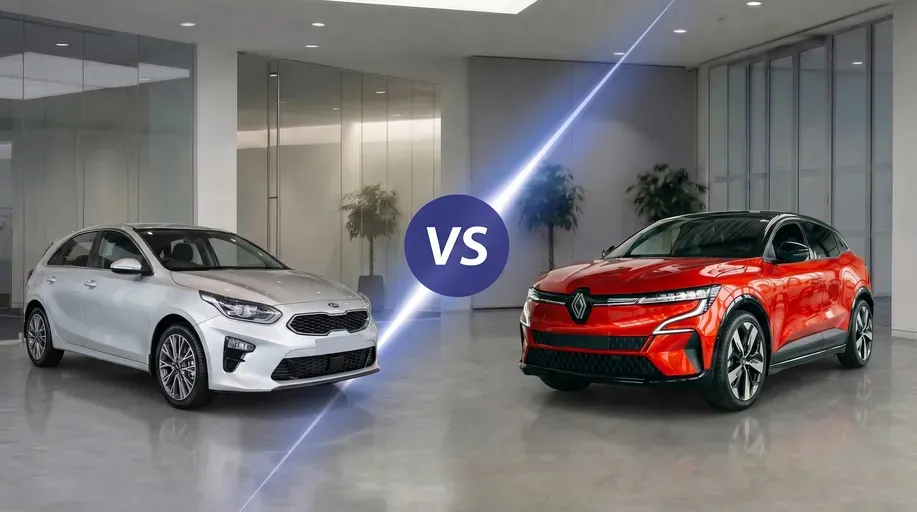
Car battle
Kia Ceed vs. Renault Mégane: Complete comparison 2026
Used car comparison: Kia Ceed vs Renault Mégane. Which hatchback or estate to choose? We compared engines, equipment, and reliability. Read our verdict!
Apr 22, 2026
Articles
Car battle
Citroën C4 vs SEAT Leon Comparison: Which used car makes more sense? A detailed comparison of equipment, driving characteristics, and a verdict that will make your choice easier.
April 24, 2026
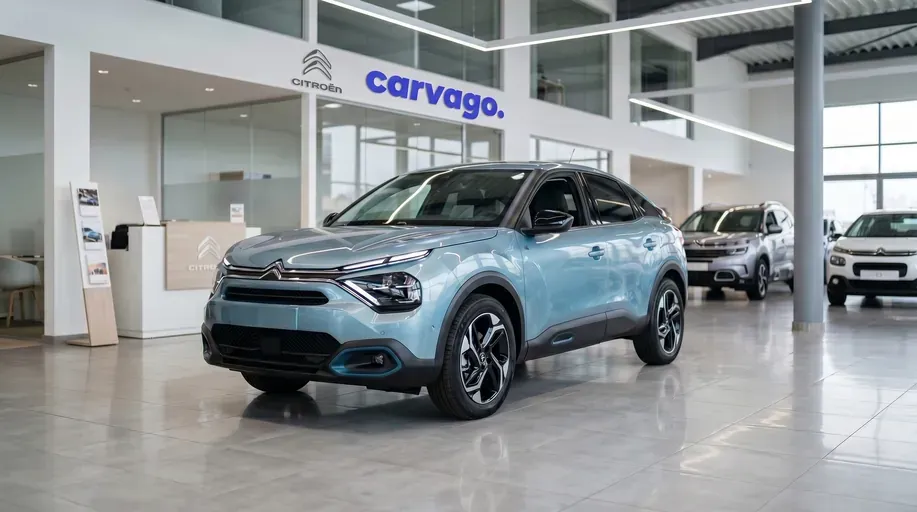
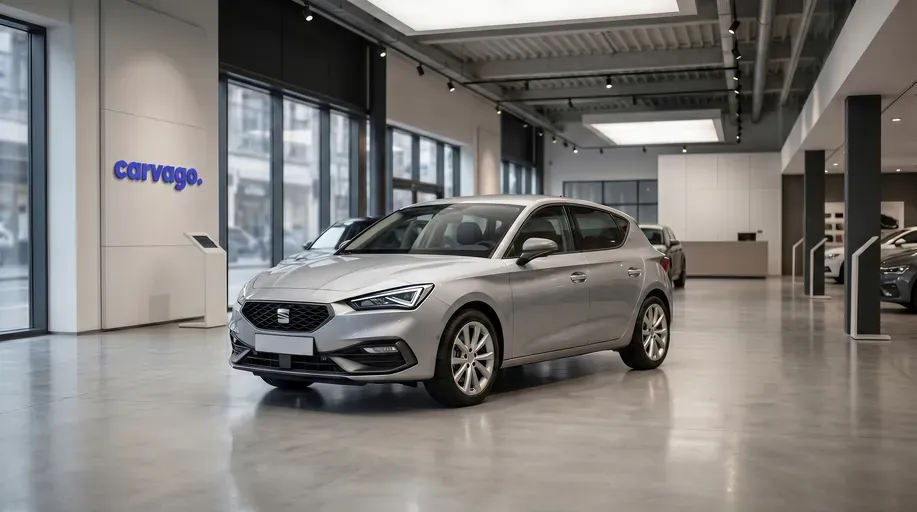
The Citroën C4, which is also available on the market in the purely electric ë-C4 variant or with a fastback body under the C4 X designation, represents the French take on a compact family car with original crossover features and a maximum emphasis on driving comfort. Its rival today is the Seat Leon, a popular Spanish hatchback sharing proven group technology, whose top performance versions can now be found on the market under the separate Cupra Leon brand. Let's take a detailed look at whether, when choosing a roughly four-year-old used car, smooth and unconventional French comfort makes more sense, or rather precise and more dynamic Spanish temperament.
When comparing roughly four-year-old used cars of these two models, we focus on the 3rd generation Citroën C4 (from 2020) and the 4th generation Seat Leon, designated KL (from 2020). The first fundamental difference lies in the very concept of the two cars. While the Seat Leon remains faithful to the traditional family of classic hatchbacks and spacious estates (Estate), the third-generation Citroën C4 has taken the path of popular crossovers (SUVs). In terms of width, both cars are practically the same – the French model measures 1800 mm, while its Spanish competitor lags behind by a negligible 1 mm.
Looking at the overall length, the Seat Leon hatchback is 4368 mm long, which is 13 to 18 mm longer than the Citroën C4 (4350–4355 mm). If you are looking for maximum utility and generous luggage space, the Leon offers the Estate (Sportstourer) version, which boasts a length of 4642 mm and thus fulfills the role of an ideal family hauler. The wheelbase is also a significant factor. The Leon offers 2682 to 2686 mm, which is 12 to 16 mm more than the C4 (2670 mm). In practice, this means slightly better longitudinal legroom for rear-seat passengers in the Spanish car.
The biggest gap between the two models is logically found in height, where the different body structures are evident. The Citroën C4, with a height of 1520 to 1525 mm, benefits from a higher ground clearance, which brings the advantage of higher seat mounting. This makes it much easier for drivers and passengers to get into the car and gives them a better view of the road ahead. The Seat Leon, on the other hand, sits closer to the ground with a height of 1437 to 1460 mm. The classic low seating position not only benefits aerodynamics but also helps lower the center of gravity, resulting in more confident and sportier handling through corners.
In conclusion, the choice depends purely on personal preference and daily use. The Citroën C4 is an excellent choice for drivers who often drive in the city and appreciate easier entry and a better overview, while the Seat Leon will appeal to those who prefer a traditional driving position, greater stability at higher speeds, or simply need the huge trunk of the estate variant.
| Parameter | Citroën C4 SUV | Seat Leon Hatchback | Seat Leon Estate |
|---|---|---|---|
| Width (mm) | 1800 | 1799 | 1799 |
| Length (mm) | 4350–4355 | 4368 | 4642 |
| Height (mm) | 1520–1525 | 1442–1460 | 1437–1456 |
| Wheelbase (mm) | 2670 | 2682–2686 | 2682–2686 |
Luggage space is one of the key factors for many families and practical-minded buyers when choosing a used car. Although the Citroën C4 (3rd generation) presents itself as a crossover with SUV elements and the Seat Leon (KL generation) as a traditional representative of the compact class, they offer surprisingly identical space in their basic configuration. Both models are very well prepared for everyday use. However, differences begin to appear once you explore other body styles and maximum capacities with the seats folded down, where the Seat demonstrates its traditional group-wide versatility.
Looking at the exact figures, we find that the standard Citroën C4 and the five-door Seat Leon hatchback have the same basic trunk volume of 380 liters. However, if you fold down the rear seats, the Leon hatchback offers slightly better space utilization with a maximum capacity of 1301 liters compared to 1250 liters for the Citroën. The real trump card of the Spanish model is the practical estate version (Sportstourer). It provides a huge luggage compartment with a volume of 620 liters, which increases to an impressive 1600 liters after folding down the backrests. This provides room for several extra suitcases and space that is entirely sufficient for a weekend shopping trip or a longer vacation with a stroller.
An important aspect in the four-year-old used car market is also the electrified versions, where the approach of the two manufacturers differs significantly:
In the end, this means a clear choice for used car buyers. If your absolute priority is maximum hauling capacity and family utility, the Seat Leon estate with conventional drive is unrivaled in this duel. However, if a standard trunk size is enough for you and you are looking for style or electric drive without losing liters, the C4 will be a smart choice.
| Parameter | Citroën C4 SUV | Seat Leon Hatchback | Seat Leon Estate |
|---|---|---|---|
| Base volume (liters) | 380 | 380 | 620 |
| Max volume with seats folded down (liters) | 1250 | 1301 | 1600 |
While the basic hatchbacks offer identical and fully sufficient space, the Seat Leon wins overwhelmingly thanks to its estate variant. The Citroën C4, on the other hand, scores points because its fully electric version does not rob the passengers of a single liter of useful volume.
Trailer weight, or towing capacity, is often a decisive parameter for drivers who plan to tow a caravan, a boat, or a fully loaded trailer. Looking at roughly four-year-old used cars, we find that both vehicles offer completely different possibilities and target a different target group of users.
The third-generation Citroën C4 (on the market since 2020) plays more of a role as a stylish and comfortable family crossover, which is logically reflected in its towing capabilities. Standard versions with PureTech 130 or BlueHDi 130 engines can tow a braked trailer with a maximum weight of 1200 kg. For the base PureTech 100 petrol engine, the limit even drops to 1000 kg. A specific chapter is the fully electric e-C4 models, where the manufacturer does not count on towing heavy trailers at all, and the new mild-hybrid variants (Hybrid 136), which are at the limit of a maximum of 1100 kg.
The fourth-generation SEAT Leon (KL designation, also since 2020) is, by contrast, a much more capable hauler. Even with the basic 1.0 TSI (81 kW) engine, it can handle a trailer weighing 1300 kg. The more common 1.5 TSI petrol and 2.0 TDI diesel engines easily raise this value to 1500 to 1600 kg. If you choose the estate body (Leon Sportstourer) for family needs, even wider possibilities open up – for example, the e-HYBRID plug-in hybrid models can handle a load of 1500 to 1700 kg, while some versions of the more powerful 2.0 TDI (110 kW) diesel have an impressive 1600 to 2000 kg listed in the registration document.
In practice, these differences mean quite fundamental limitations or, conversely, freedom. While the Citroën C4 is an ideal choice mainly for light unbraked trailers – which is perfectly sufficient for a weekend trip to the DIY store or taking away garden waste – the SEAT Leon is not afraid of harder work. It provides great stability even when you need to attach a bulky trailer creating space for several extra suitcases, and in more powerful specifications, it will tow even a medium-sized family caravan for a longer holiday by the sea without any problems.
Conclusion: If towing capacity is a priority for you and you expect to regularly tow larger loads, the SEAT Leon comes out of this comparison as the clear winner. It offers significantly higher weight limits and more diverse options across powerful engines, especially in its more practical Sportstourer variant.
| Model and engine | Braked trailer (kg) | Unbraked trailer (kg) |
|---|---|---|
| Citroën C4 1.2 PureTech 100 (3rd gen) | 1000 | Not specified |
| Citroën C4 1.2 PureTech 130 (3rd gen) | 1200 | Not specified |
| Citroën C4 1.5 BlueHDi 130 (3rd gen) | 1200 | Not specified |
| SEAT Leon 1.0 TSI (81 kW) (gen. KL) | 1300 | Not specified |
| SEAT Leon 1.5 TSI (110 kW) (gen. KL) | 1500 | Not specified |
| SEAT Leon Sportstourer 1.4 e-HYBRID (gen. KL) | 1500 | Not specified |
| SEAT Leon Sportstourer 2.0 TDI (110 kW) (gen. KL) | 1600 - 2000 | Not specified |
Choosing the right engine is crucial for used car buyers as it directly affects fuel consumption, reliability, and the overall driving experience. While the Citroën C4 focuses primarily on exceptional comfort and a clearer range of turbocharged engines, the Seat Leon brings a much wider and sportier palette of power units. Roughly four-year-old Citroën C4 models (3rd generation) rely basically on the 1.2 PureTech three-cylinder petrol engine and the economical 1.5 BlueHDi diesel, with the fully electric e-C4 version being a highly sought-after and maximally efficient alternative. In contrast, the Seat Leon (KL generation) is technologically much more diverse – alongside classic TSI turbocharged petrol engines, it also offers mild-hybrid systems (eTSI), a powerful plug-in hybrid with mains charging capability, and even 4Drive all-wheel drive for the estate versions (Sportstourer). For frugal drivers and calm travel, the Citroën offering is absolutely ideal; however, more demanding drivers, regular highway mile-munchers, or sportier individuals will find much more variable and powerful engines in the Seat.
Under the hood of the third-generation Citroën C4, we find power units tuned primarily for a smooth and quiet ride. The petrol part of the range consists of 1.2 PureTech turbocharged three-cylinder engines with outputs from 74 to 114 kW. It is important to mention that the most powerful PureTech 155 variant and the entry-level BlueHDi 110 diesel engine were withdrawn from production around mid-2022, but you will encounter them without problems on the market for roughly four-year-old used cars, and they form an interesting alternative to current production. For long distances, the more powerful BlueHDi 130 diesel with a robust 300 Nm of torque is a great choice. A special chapter is the fully electric e-C4 version with locally emission-free operation and 100 kW of power, which represents the greenest choice of both compared cars. Transmissions include a traditional six-speed manual (6MT) and the popular, very comfortable eight-speed automatic (8AT).
| Engine type | Fuel | Power (kW/hp) | Torque (Nm) | Transmission |
|---|---|---|---|---|
| 1.2 PureTech 100 | Petrol | 74 / 100 | 205 | 6MT |
| 1.2 PureTech 130 | Petrol | 96 / 130 | 230 | 6MT / 8AT |
| 1.2 PureTech 155 | Petrol | 114 / 155 | 240 | 8AT |
| 1.5 BlueHDi 110 | Diesel | 81 / 110 | 250 | 6MT |
| 1.5 BlueHDi 130 | Diesel | 96 / 130 | 300 | 8AT |
| e-C4 | Electricity | 100 / 136 | 260 | 1AT |
The fourth-generation Seat Leon (KL) shares an advanced platform with other Group vehicles, making its engine range exceptionally rich. It includes petrol, diesel, mild-hybrid, plug-in hybrid, and gas variants. The petrol base consists of 1.0 TSI three-cylinder engines and the immensely popular 1.5 TSI four-cylinder engines. If these engines are paired with a seven-speed dual-clutch automatic (7DSG), they carry the eTSI designation and feature mild-hybrid technology to reduce consumption and allow for coasting with the engine off. High-mileage lovers will appreciate the economical and refined 2.0 TDI two-liter engines (up to 110 kW). A big draw for corporate and eco-conscious drivers is the 1.4 e-HYBRID plug-in hybrid with 150 kW of power and a pure electric range of over 50 km. The 1.5 TGI engine burning compressed natural gas (CNG) also appears on the four-year-old used car market – however, its production was definitively ended at the beginning of 2023. The pinnacle of the standard range for enthusiastic drivers remains the powerful 2.0 TSI two-liter with 140 kW.
| Engine type | Fuel | Power (kW/hp) | Torque (Nm) | Transmission |
|---|---|---|---|---|
| 1.0 TSI / eTSI | Petrol / Mild-Hybrid | 66 / 90 | 175 | 6MT |
| 1.0 TSI / eTSI | Petrol / Mild-Hybrid | 81 / 110 | 200 | 6MT / 7DSG |
| 1.5 TSI / eTSI | Petrol / Mild-Hybrid | 96 / 130 | 200 | 6MT / 7DSG |
| 1.5 TSI / eTSI | Petrol / Mild-Hybrid | 110 / 150 | 250 | 6MT / 7DSG |
| 2.0 TSI | Petrol | 140 / 190 | 320 | 7DSG |
| 1.4 e-HYBRID | Plug-in Hybrid | 150 / 204 | 350 | 6DSG |
| 1.5 TGI | Petrol / CNG | 96 / 130 | 200 | 6MT / 7DSG |
| 2.0 TDI | Diesel | 85 / 115 | 300 | 6MT |
| 2.0 TDI | Diesel | 110 / 150 | 360 | 6MT / 7DSG |
The Citroën C4 will appeal to buyers looking for a French-style soft ride with the option of pure electricity, while the Seat Leon clearly wins with its incredible breadth of range, powerful highway diesels, and advanced hybrids for more demanding drivers.
The range of power units for the Citroën C4 and Seat Leon shows the different approaches of the two carmakers within the current (roughly four-year-old) used car market. While the French representative from the Stellantis stable relies primarily on turbocharged three-cylinder petrol engines and efficient diesels with the option of purely electric versions, the Spanish competitor benefits from the wide and advanced modular range of the VW Group, dominated by very refined petrol four-cylinders with advanced mild-hybrid technology. Choosing the right engine is key to long-term satisfaction – the following recommendations are therefore based on real-world experience, power balance, actual fuel consumption, and long-term mechanical reliability.
Within the third generation (production of which started in late 2020 and forms the current offering of four-year-old used cars), the 96 kW turbocharged three-cylinder is the most sensible choice in terms of dynamics and purchase price.
For the KL generation (sold since 2020), the absolute king of engines is the 1.5 TSI turbocharged four-cylinder (from the EA211 evo family), or its electrified mild-hybrid version, the eTSI, which is always paired with a seven-speed dual-clutch DSG transmission.
Official fuel consumption figures provided by car manufacturers in official materials often differ from the reality of daily driving. Although the newer and stricter WLTP methodology has brought significantly more accurate numbers, actual consumption always depends heavily on the driver's style, the route profile, and the current load of the vehicle.
To get the most accurate picture of real-world fuel consumption, we analyzed user data from the crowdsourcing portal Spritmonitor.de, where tens of thousands of drivers regularly record their refueling. We focused primarily on the third generation of the Citroën C4 and the fourth generation of the Seat Leon (designated KL), i.e., cars manufactured around 2021, which currently represent an ideal choice on the market for roughly four-year-old used cars.
| Model and engine | Average consumption (l/100 km) |
|---|---|
| Seat Leon 1.0 TSI 81 kW | 5.8 |
| Citroën C4 1.2 PureTech 74 kW | 6.0 |
| Seat Leon 1.5 TSI 110 kW | 6.1 |
| Citroën C4 1.2 PureTech 96 kW | 6.2 |
| Seat Leon 2.0 TDI 110 kW | 5.0 |
| Citroën C4 1.5 BlueHDi 96 kW | 5.2 |
Several very interesting trends emerge from the collected data. While the basic small-displacement three-cylinder engines (1.0 TSI for Seat and 1.2 PureTech for Citroën) promise very low consumption on paper, they do not achieve such significant savings in the real world as one might theoretically expect. Particularly surprising is the result of the more powerful petrol four-cylinder 1.5 TSI in the Leon, which, thanks to a clever cylinder deactivation system (ACT) under low load, manages to drive at an average of 6.1 l/100 km. This value is almost comparable to the significantly weaker engines in the Citroën. Diesel engines, on the other hand, clearly dominate in absolute efficiency, with the legendary 2.0 TDI from the VW Group in the Leon showing a consistently excellent average of exactly five liters, followed very closely by the successful and refined 1.5 BlueHDi unit from Citroën.
Clear recommendations for regular users follow from this data. If you move mainly in the city and on shorter suburban routes, petrol variants are a much more suitable and, in the long run, more reliable choice, as they do not suffer from particulate filter clogging. The Seat Leon with the 1.5 TSI engine also offers a top-tier compromise between excellent dynamics and favorable operating costs. Conversely, drivers spending a lot of time on motorways or commuting long distances should clearly opt for diesel versions. They will save money for both regular high-mileage drivers and thrifty buyers who appreciate a huge range well exceeding 800 kilometers on a single tank.
In the end, however, fuel consumption itself will likely not be the main deciding factor between these two cars. Both models offer highly efficient and modern power units in their classes, with differences in final fuel costs being absolutely minimal for direct competitors. Your final choice should therefore depend more on whether you prefer the maximum comfort and supple ride of the Citroën C4 with its specific soft suspension, or the sharper, more confident, and overall sportier driving characteristics of the Spanish Seat Leon.
When looking for cars roughly four years old (for example, 2021 and 2022 models), the differing dynamics of value depreciation for both models are fully revealed. While the Spanish representative of the VW Group holds its price quite confidently, the French hatchback with crossover elements represents one of the most affordable entry points into the world of modern used cars in the compact class.
| Used Car Category | Citroën C4 (3rd generation) | Seat Leon (4th generation) |
|---|---|---|
| Base trim and higher mileage | €11,000 – €13,000 | €14,000 – €15,000 |
| The middle ground (good condition) | €13,000 – €16,000 | €16,000 – €18,000 |
| Low mileage and TOP trim | €16,000 – €18,000 | €19,000 – €21,000+ |
The third generation of the Citroën C4 is experiencing a typical scenario for most French cars on the used market – a steeper drop in value during the first years of operation. For second-hand buyers, however, this is excellent news. Four-year-old cars with the base 1.2 PureTech engine can be found on the market even below the €12,000 mark. Even for very well-equipped versions (such as the popular Shine trim level) with an automatic transmission and a verifiable history, you will typically pay around €14,000 to €16,000.
The fourth generation of the Seat Leon benefits from its kinship with the popular Škoda Octavia and Volkswagen Golf. In practice, this means that as a used car, it holds its value exceptionally well. The cheapest units, usually with smaller engines or mileage exceeding 100,000 kilometres, hardly drop below the €14,000 mark. However, if you are aiming for the sought-after sporty FR version with the more reliable 1.5 TSI four-cylinder (or its mild-hybrid eTSI variant), you must prepare at least €16,000 to €18,000.
Looking at the overall financial distribution, the Citroën is a perfectly logical choice for buyers who have a fixed and rather limited budget. You get a significantly younger and better-equipped car for less money. While the Seat Leon requires a larger bank balance at the time of purchase, this price difference will likely be partially returned to you when you resell it – interest in VW Group vehicles is absolutely steady on the market, and their price drop in subsequent years is much more gradual.
While the Citroën C4 attracts with very attractive purchase prices and is a win for limited budgets, the Seat Leon requires a higher initial investment, which will be partially compensated by a much slower decline in value upon resale.
Although many customers automatically assume that modern family cars always achieve a five-star Euro NCAP rating, it is crucial to look at the broader context and the specific year of testing when choosing a used car. The methodology and protocols of these safety tests are constantly evolving and becoming stricter. Percentage scores from different years cannot be directly compared. Newer testing procedures place much greater emphasis on active safety features, introduce crash simulations with a moving obstacle, and more severely penalize shortcomings in detecting cyclists or pedestrians at intersections.
SEAT Leon (tested in 2020)
The fourth generation of the SEAT Leon underwent testing in 2020 and took home the full five-star rating. The car was among the first models to pass the new, stricter protocols. It benefited primarily from an excellent level of passive safety (scoring 92% for adult occupant protection) and the standard center airbag. This is designed to prevent the heads of the driver and front passenger from colliding in a severe side impact. The autonomous emergency braking (AEB) systems also worked very well, reliably identifying pedestrians and cyclists.
Citroën C4 (tested in 2021)
The third generation of the Citroën C4 was tested a year later and received an overall four-star rating. While the structural integrity of the cabin and the protection of adult and child passengers inside the car performed well, the vehicle lost key points in the areas of assistance systems and protection of vulnerable road users. Euro NCAP inspectors pointed out that the standard collision avoidance assistant had trouble correctly detecting pedestrians in some test scenarios. More advanced functions with cyclist recognition were only available as part of optional extra equipment.
From a safety perspective, the SEAT Leon comes out on top. It offers a more modern and comprehensive protection package, primarily due to the standard implementation of advanced passive features (such as the center airbag) and more sophisticated preventive systems that confidently meet even today's strictest standards.
| Parameter | Citroën C4 | Seat Leon |
|---|---|---|
| Year of testing | 2021 | 2020 |
| Adult occupant protection | 80 % | 92 % |
| Child occupant protection | 83 % | 88 % |
| Vulnerable road user protection | 57 % | 71 % |
| Safety assist systems | 63 % | 80 % |
Thanks to better results in vulnerable road user protection, more reliable preventive assistants, and a full five-star rating, the SEAT Leon is the safer and more modern choice from a comprehensive safety perspective.
In addition to standard equipment, each of the models offers several unique features that can be decisive for the customer's final choice. While the French representative bets on absolute well-being and unconventional solutions for passengers, the Spanish competitor prioritizes dynamics and modern digital technologies.
The third generation of the Citroën C4, which fits perfectly into the market for used cars around four years old, stands out significantly with its specific crossover-hatchback blend. Its strength lies in its focus on maximum comfort and practicality in everyday life.
The fourth generation of the Seat Leon, built on the group's MQB Evo platform, targets younger and tech-oriented drivers. It utilizes the latest systems and places great emphasis on the driving experience.
Exceptional ride comfort thanks to shock absorbers with progressive hydraulic cushions (Advanced Comfort)
Original and distinctive design with crossover elements, providing a slightly higher driving position
Exceptionally comfortable seats with generous padding, ideal for long journeys
Ergonomic retention of physical buttons and rotary dials for climate control settings
A fully electric version (ë-C4) is also easily available on the used car market
The sloping roofline limits headroom for taller passengers in the rear seats
Very soft suspension means more pronounced body roll and less confidence during more dynamic cornering
More outdated multimedia system with slower responses and average graphics
Only average luggage capacity (380 liters), which limits the transport of taller items due to the body shape
Citroën C4 is a perfect choice for drivers who prioritize maximum comfort, a relaxed ride, and original design over sporting ambitions. It will particularly appeal to used car buyers looking for a clever combination of a classic hatchback and a modern crossover suitable even for broken city roads.
Great driving characteristics with a confident chassis and an emphasis on a more agile, sporty performance
Wide range of proven and economical VW Group engines (TSI, TDI) including plug-in hybrid variants
Excellent interior space, with the practical estate version (Sportstourer) offering a huge 620-liter trunk
Sharp, attractive exterior design complemented by a modern and minimalist interior
The advanced MQB Evo platform brings modern assistance systems and an excellent level of passive safety
Frustrating temperature and volume control via touch sliders below the display, which are not backlit at night
Stiffer suspension tuning means poorer filtration of sharp bumps, especially in the FR trim with larger wheels
More frequent software bugs and slower infotainment startup in cars from the first years of production (2020–2021)
A higher proportion of cheaper hard plastics in the lower half of the interior compared to the previous generation
Seat Leon targets more dynamically oriented drivers looking for a modern and practical family car, but who also want to enjoy the driving itself. Thanks to the very spacious Sportstourer variant and a wide range of reliable engines, it is one of the most rational purchases in its class on the four-year-old used car market.
Based on data from long-term use, service bulletins, and our own comprehensive car inspections (CarAudit), we have compiled an overview of the most common problems that buyers of roughly four-year-old used cars should watch out for.
While the third-generation Citroën C4 attracts buyers with its unconventional design and exceptionally comfortable ride, used units require focus on specific weak points in both the powertrains and the onboard electronics.
When buying a used C4, a documented service history and timely oil changes are absolutely crucial. For 1.2 PureTech engines, even the slightest neglect of maintenance means a high risk of a very expensive repair.
The fourth-generation Seat Leon, built on a modern platform, shares most of its technology with its sister model, the Volkswagen Golf, resulting in both excellent driving characteristics and similar, mostly software-related issues in early model years.
Mechanically, the fourth-generation Seat Leon is a robust and reliable car with well-engineered engines. However, the joy of driving can be complicated by unstable software in the onboard systems; you should always verify before buying whether it has been updated at a dealership.
When buying a used car, a thorough inspection is key. Here are some specific points to focus on for these two models, while before making a final decision, it is worth investing in a professional service such as a comprehensive car audit to ensure you are not buying a pig in a poke.
Seat Leon offers slightly better practicality; the hatchback version has a luggage capacity of 380 litres, while the Sportstourer estate offers a generous 620 litres. The Citroën C4, which is sold as a crossover, has a 380-litre boot and does not offer an estate variant. The Leon is therefore a more suitable choice for families with high space requirements.
The Citroën C4 clearly excels in ride comfort thanks to special shock absorbers with hydraulic stops and exceptionally soft seats. The Seat Leon, on the other hand, is tuned more sportily, has a stiffer chassis, and offers more confident and precise handling in corners. The choice therefore depends on whether you prefer absolute smoothness or driver engagement.
The Citroën C4 scores by offering a fully electric version, the ë-C4, in the current generation alongside classic petrol and diesel engines. The Seat Leon, by contrast, bets on a wide range of efficient TSI and TDI internal combustion engines, complemented by mild-hybrid and plug-in hybrid variants. For pure electromobility, you must choose the French car, while the Spanish competitor is ideal for fans of modern hybrids.
The Citroën C4 offers very good ergonomics because, unlike many of today's cars, it has retained physical buttons and rotary dials for the air conditioning. The Seat Leon has a more modern infotainment system with better graphics, however, most functions, including temperature settings, are controlled via the touchscreen or a slider bar. For drivers who prefer intuitive operation by touch while driving, the Citroën may be more user-friendly.
For four-year-old used cars, the Seat Leon maintains a very good reputation, although software bugs in the infotainment system occasionally appeared in the first years of the current generation. The Citroën C4 is generally reliable, but it is recommended to carefully monitor the condition and replacement intervals of the timing belt on 1.2 PureTech petrol engines. Both cars function without major or costly breakdowns with regular maintenance and adherence to service schedules.
Choosing between a roughly four-year-old Citroën C4 and a Seat Leon depends primarily on your priorities regarding comfort and overall family utility. While the French crossover scores with an exceptionally comfortable chassis, a more affordable purchase price on the used car market, and the option to buy it as a pure electric vehicle, its Spanish competitor clearly wins with its more confident driving characteristics, a wider range of engines, and a huge trunk in the estate version. The Seat Leon is thus a rational choice for active families, highway mile-munchers, and drivers preferring a sportier feel with high passive safety, while the Citroën C4 will perfectly serve everyone looking for a price-attractive, stylish, and maximally relaxed car for calm daily commuting.
Sources: ADAC, aktualne.cz, svetmotoru.cz, smartmania.cz, autorevue.cz, finmag.cz
This article was prepared using artificial intelligence tools. The section guarantor is Petr Dušek.
Used car comparison: Kia Ceed vs Renault Mégane. Which hatchback or estate to choose? We compared engines, equipment, and reliability. Read our verdict!
Apr 22, 2026
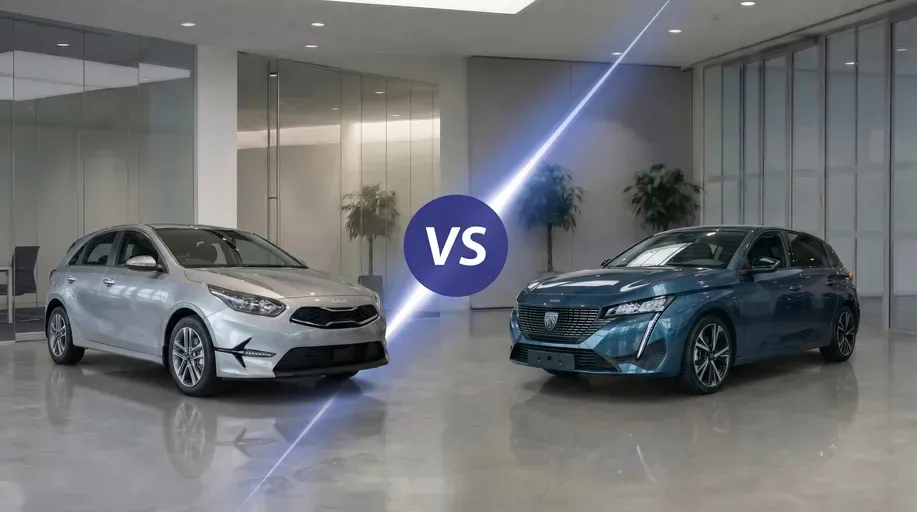
Detailed comparison of the Kia Ceed (Cee'd) vs Peugeot 308. Find out which used hatchback offers better engines, equipment, and real-world reliability. Choose the right one for you!
Apr 20, 2026
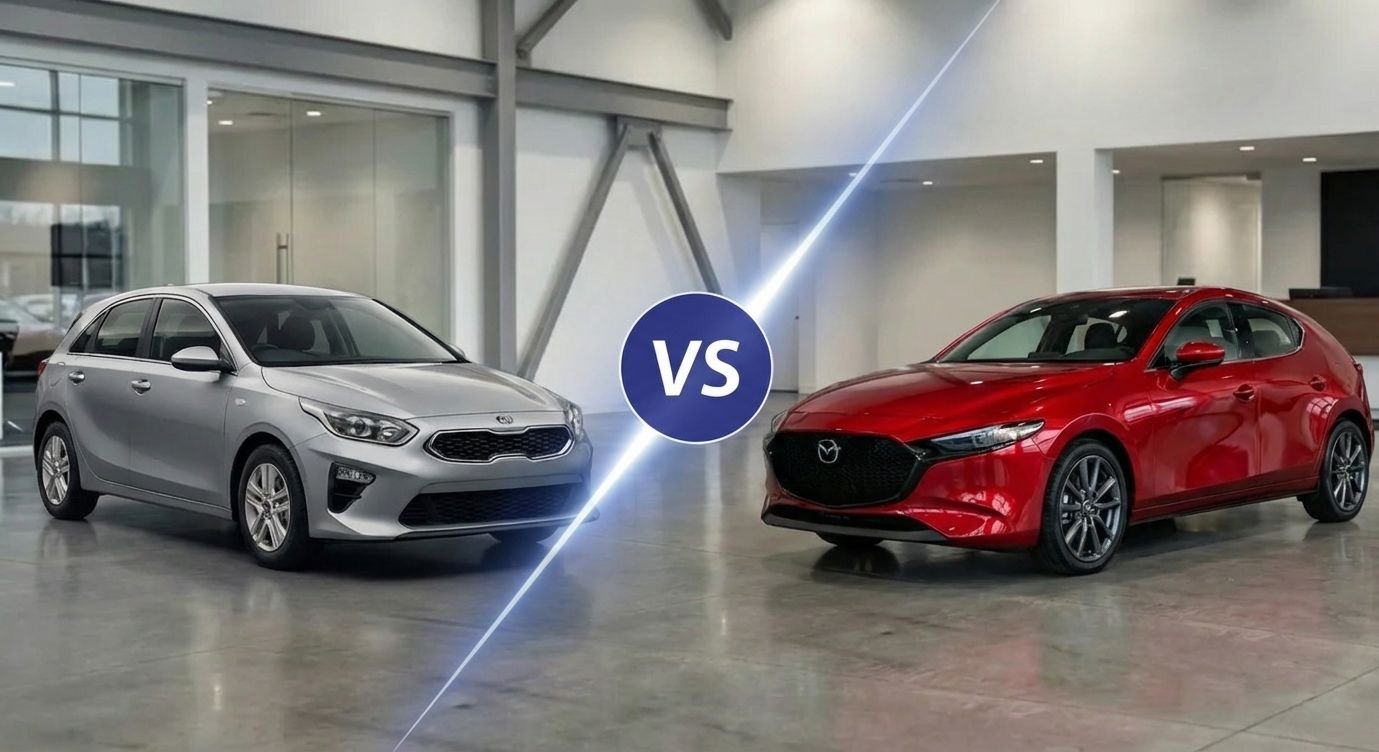
Detailed comparison: Kia Ceed vs. Mazda 3. We compared the engines, equipment, and driving characteristics. Read our verdict and find out which hatchback to choose.
Apr 8, 2026