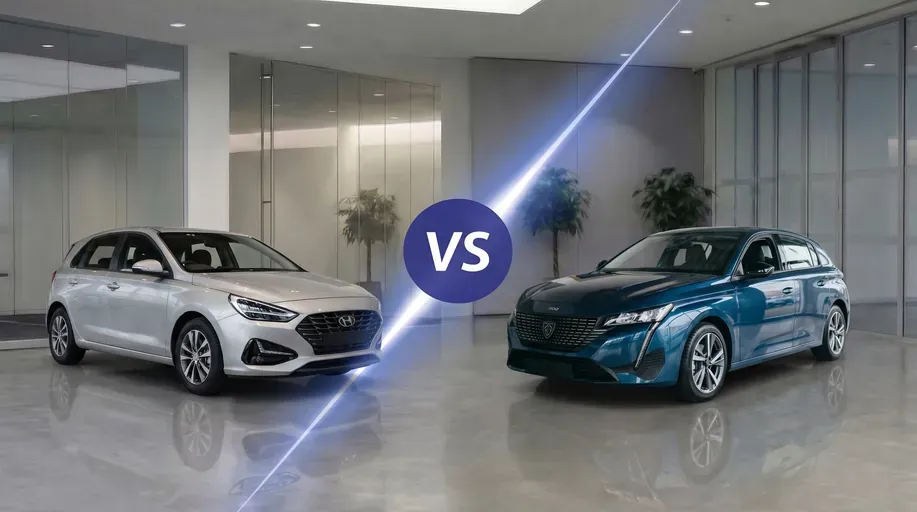
Car battle
Hyundai i30 vs. Peugeot 308: Complete comparison 2026
Used car comparison: Hyundai i30 vs Peugeot 308: We compared engines, equipment and reliability. Read our verdict and find out which hatchback to choose.
May 8, 2026
Articles
Car battle
Detailed comparison of used Citroën C4 vs Opel Astra. Find out which hatchback offers better engines, equipment, and driving comfort. Read our test and verdict.
May 11, 2026
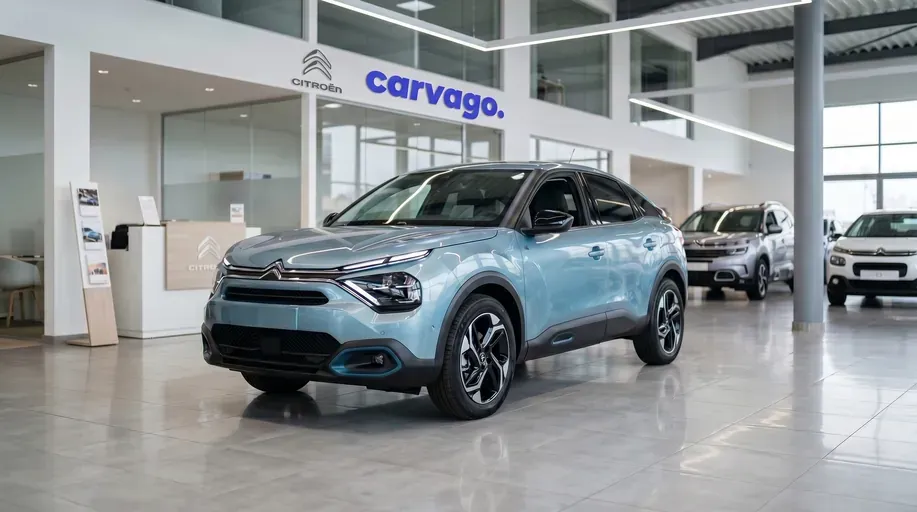
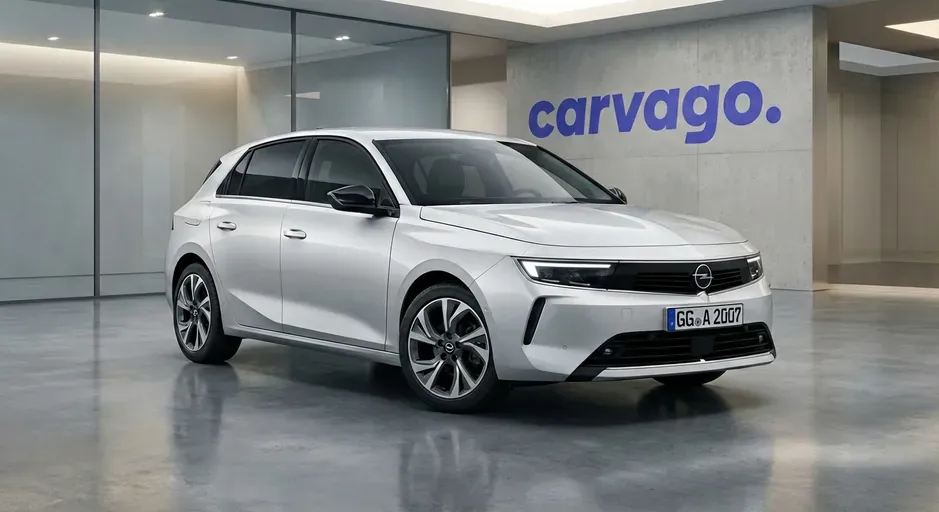
Citroën C4, also available in its fully electric variant under the designation ë-C4, catches the eye at first glance with its unconventional design featuring crossover elements and an extraordinary emphasis on driving comfort. Standing against it is the Opel Astra, also known as the Vauxhall Astra in some markets, which represents the benchmark of traditional German precision with sharp lines and modern technologies on board. Let's take a detailed look at how these two popular representatives of the compact class fare in a direct comparison and which of them could be the ideal choice for you.
When focusing on exterior dimensions, the Citroën C4 and Opel Astra represent two different approaches to the compact class, fully reflecting current trends in the market for roughly four-year-old used cars. While the Opel Astra (in its latest L generation available since 2022) sticks to the traditional proportions of a classic hatchback and family estate, the third generation of the Citroën C4 (on the market since 2020) has opted for the popular and slightly elevated crossover style. While the Opel Astra Hatchback, with a length of 4,374 mm, is less than two centimeters longer than the C4 (up to 4,355 mm). However, a much more significant difference can be found in the width, where the Astra offers a generous 1,860 mm, which is a full 60 mm more than its French competitor. This difference has a positive impact not only on a more stable stance on the road but also on the perceived wider space inside the cabin.
The Citroën C4, on the other hand, scores confidently with its height. With a value of up to 1,525 mm, it exceeds the Astra by about 4 to 9 centimeters depending on the chosen version. The Citroën's elevated build brings an indisputable advantage in the form of a higher seating position, which makes getting in easier and ensures a better view from the car – features that more and more drivers are looking for in urban and suburban traffic today. As for the wheelbase, which is key for the longitudinal space for rear-seat passengers, both models in their short-tail versions are very similar. The Citroën C4 has a wheelbase of 2,670 mm, while the Opel Astra Hatchback, at 2,675 mm, is only a negligible five millimeters more generous.
However, if you need to transport a family or bulkier cargo regularly, Opel holds a strong trump card in the form of the estate version, traditionally known as the Sports Tourer. This extends the overall length of the car to 4,642 mm and the wheelbase to an impressive 2,732 mm. In this generation, the Citroën C4 is offered in only one body style, so it naturally cannot match the Opel Astra Estate in terms of length and luggage capacity. The choice between these two models thus largely depends on your daily needs: the C4 will appeal to those looking for an elevated and more comfortable crossover for the city, while the Astra will please fans of a traditional sportier seating position and, thanks to the estate version, also more demanding families requiring maximum transport capacity.
| Parameter | Citroën C4 SUV | Opel Astra Hatchback | Opel Astra Estate |
|---|---|---|---|
| Width (mm) | 1800 | 1859 - 1860 | 1859 - 1860 |
| Length (mm) | 4350 - 4355 | 4374 | 4642 |
| Height (mm) | 1520 - 1525 | 1432 - 1488 | 1443 - 1498 |
| Wheelbase (mm) | 2670 | 2675 | 2732 |
Luggage capacity is often a decisive factor for family use and the overall daily practicality of a vehicle. When comparing roughly four-year-old used cars, typically the third-generation Citroën C4 (from 2020) and the Opel Astra generation L (from 2022), we encounter a fundamental difference in the body styles offered. While the Opel Astra offers a choice between a traditional five-door hatchback and a spacious estate (referred to as Sports Tourer), the Citroën C4 relies exclusively on a single body version that balances on the edge between a hatchback and a crossover. This fact gives the Astra a natural advantage for buyers who require the maximum possible transport flexibility from their vehicle.
If we pit the base models against each other, the Opel Astra Hatchback with a conventional powertrain offers a volume of 422 litres, which grows to 1,339 litres after folding the rear seats. The Citroën C4 is somewhat more modest in this regard, providing exactly 380 litres, and 1,250 litres with the seats down. In practice, this difference means exactly that extra space for a few more suitcases that you will appreciate when packing for a family trip. However, a completely different situation arises with modern electrified versions. Citroën managed to solve the battery installation in the e-C4 model without losing a single litre, maintaining its 380 litres. In contrast, the plug-in hybrid and fully electric versions of the Astra drop in capacity to 352 litres, thereby yielding the top spot to their French rival in this specific comparison.
For customers with high space requirements, the clear favourite is the Opel Astra Estate (Sports Tourer). With an impressive base volume of 597 litres (or 516 litres for hybrids) and a maximum capacity of up to 1,634 litres, it is an absolute family ideal. Such a generously designed luggage compartment is fully sufficient for weekend shopping as well as longer holidays, where you can easily pack a baby stroller, sports equipment, and plenty of bags. This is a discipline in which the stylishly tuned Citroën C4, lacking an estate body, logically cannot fully compete.
| Parameter | Citroën C4 Hatchback | Opel Astra Hatchback | Opel Astra Estate |
|---|---|---|---|
| Base volume (l) | 380 | 422 | 597 |
| Max. volume with seats folded (l) | 1250 | 1339 | 1634 |
Thanks to its unrivalled estate version and larger boot in the standard hatchback, the Opel Astra is a better family workhorse; however, the Citroën C4 wins with the consistency of its space even in electric variants.
The ability to tow a trailer is often a deciding factor for drivers who need to regularly transport building materials, garden waste, or head out on holiday with a caravan. When comparing approximately four-year-old used cars, namely the Citroën C4 (3rd generation) and the Opel Astra (generations K and the newer L), we encounter a rather significant difference in the philosophy and technical limits of both vehicles.
Citroën C4: More for light tasks and weekend shopping
The third generation of the Citroën C4, styled significantly as a comfortable crossover, offers quite modest towing capacities. The base engines and newer mild-hybrid versions (e.g., PureTech 100 or Hybrid 136/145) can handle a braked trailer weighing 1000 to 1100 kg. The absolute maximum that this generation of C4 allows on the tow bar is 1200 kg, specifically with the more powerful petrol versions (PureTech 130 and 155) or the popular diesel engines (BlueHDi 110 and 130).
In practice, this means safe space for a few extra suitcases in a small trailer, trouble-free transport of heavy e-bikes, or a capacity sufficient for a weekend trip to a DIY store. However, you cannot legally and safely hitch heavy family caravans behind this car. For the fully electric ë-C4 version, towing data is missing entirely, which usually means the tow bar can only be used for a bike rack.
Opel Astra: A decent muscleman in the compact class
The German competitor fares significantly better in terms of utility and holds the role of a traditional compact workhorse. If you opt for the popular previous generation Astra K (sold until 2021/2022), you can tow 1403 to 1550 kg with the 1.4 DI Turbo petrol engines. The absolute champion is the 1.6 CDTI and BiTurbo diesel version, which in the K generation confidently handles a braked trailer weighing up to 1700 kg.
The newer generation L, which is also strongly represented on the nearly-new used car market, offers a capacity of 1200 to 1400 kg with the common 1.2 Turbo three-cylinder, while the popular 1.5 Diesel can tow a stable 1500 to 1550 kg. For both models, however, it is necessary to remember that electrification limits towing power due to the higher curb weight of the batteries – the plug-in hybrid Astra 1.6 Turbo Hybrid (generation L) therefore tows "only" 1330 to 1450 kg.
Short conclusion
The differences in paper values manifest immediately in real life. While the Citroën C4 is a great choice for drivers who use a tow bar rather occasionally for light tasks or hauling garden waste, the Opel Astra is the clear choice for those who need a workhorse. Especially with a diesel engine, the Astra represents an ideal partner even for longer holidays with a fully loaded and heavy caravan.
| Model and engine | Braked trailer weight (kg) | Unbraked trailer weight (kg) |
|---|---|---|
| Citroën C4 (3rd gen) 1.2 PureTech | 1000 - 1200 | No data |
| Citroën C4 (3rd gen) 1.5 BlueHDi | 1200 | No data |
| Citroën C4 (3rd gen) Hybrid | 1000 - 1200 | No data |
| Opel Astra (gen. K) 1.2 / 1.4 DI Turbo | 1220 - 1550 | No data |
| Opel Astra (gen. K) 1.6 CDTI / BiTurbo | 1500 - 1700 | No data |
| Opel Astra (gen. L) 1.2 Turbo | 1200 - 1400 | No data |
| Opel Astra (gen. L) 1.5 Diesel | 1500 - 1550 | No data |
| Opel Astra (gen. L) 1.6 Turbo Hybrid | 1330 - 1450 | No data |
(Note: Manufacturers do not directly specify values for unbraked trailers in the provided data; the legislative and technical limit for cars of this size is usually 600 to 750 kg.)
When comparing the engine lineups of the Citroën C4 and the Opel Astra, the most interesting fact is their technical foundation. Although both cars belong to the Stellantis group and share most internal combustion engines in roughly four-year-old used models (around the 2022 model year)—specifically the 1.2-liter petrol three-cylinder and 1.5-liter diesel four-cylinder engines—they utilize different chassis platforms, which fundamentally changes the range of electrified versions. The Citroën C4 (3rd generation) sits on an extended platform originally intended for smaller vehicles (CMP), which allows it to offer the popular all-electric e-C4 versions but completely lacks plug-in hybrids. In contrast, the Opel Astra (the latest generation L) uses the larger and more advanced EMP2 platform. Thanks to this, it brings powerful plug-in hybrid (PHEV) powertrains to the market with up to 165 kW (225 hp), as well as a modern fully electric variant. Budget-conscious and rational buyers, as well as high-mileage drivers, will appreciate the reliable and identical foundation in both cars in the form of economical 1.5-liter diesels or 1.2 Turbo/PureTech petrol engines. However, if you are looking for maximum dynamics and the option of plug-in charging, the Astra clearly leads with its plug-in hybrids, while the C4 will appeal more to drivers who prefer supple comfort and smooth all-electric drive.
Under the hood of the third-generation Citroën C4, you will find a diverse range of engines with the corporate designations PureTech (petrol) and BlueHDi (diesel), joined by the all-electric e-C4 versions. The base is the 1.2 PureTech three-cylinder petrol engine with 74 kW (100 hp), but the best-selling and most versatile choice on the used car market is the more powerful 96 kW (130 hp) variant, which can also be combined with the excellent EAT8 eight-speed automatic. Between 2021 and 2022, the most powerful and very dynamic 1.2 PureTech version tuned to 114 kW (155 hp) was also sold, but it was soon withdrawn from the range and is rather a rarity on the used market. Diesel is represented by the economical 1.5 BlueHDi four-cylinder in 110 and 130 hp versions. The all-electric e-C4 originally arrived with a 100 kW (136 hp) electric motor, which was later followed by a more modern version with 115 kW (156 hp) and extended range.
| Engine Type | Fuel | Power (kW) | Torque (Nm) | Transmission |
|---|---|---|---|---|
| 1.2 PureTech 100 | Petrol | 74 | 205 | 6MT |
| 1.2 PureTech 130 | Petrol | 96 | 230 | 6MT / 8AT |
| 1.2 PureTech 155 | Petrol | 114 | 240 | 8AT |
| 1.5 BlueHDi 110 | Diesel | 81 | 250 | 6MT |
| 1.5 BlueHDi 130 | Diesel | 96 | 300 | 8AT |
| e-C4 136 | Electricity | 100 | 260 | 1AT |
| e-C4 156 | Electricity | 115 | 260 | 1AT |
The latest generation L of the Opel Astra (for roughly four-year-old used cars, the range transitions from the previous, completely different generation K, but we will focus on the newer and technically more advanced "L") shares the internal combustion engine architecture with its French sibling but labels them more simply. The petrol base is the 1.2 Turbo three-cylinder, which starts at a slightly higher output of 81 kW (110 hp) for the Opel and continues with the identical 130 hp version (96 kW). For diesel enthusiasts, there is the 1.5 Diesel four-cylinder tuned to 96 kW (130 hp), available with both a manual and a well-regarded automatic. However, the Astra's main trump card over the C4 is the 1.6 Turbo Hybrid plug-in units. These combine a 1.6-liter petrol engine with an electric motor to provide a massive combined output of 132 kW (180 hp). For enthusiastic drivers, there is also the sport-oriented Astra GSe version with a fantastic 165 kW (225 hp). The model range was subsequently completed by the all-battery Astra Electric with 115 kW (156 hp).
| Engine Type | Fuel | Power (kW) | Torque (Nm) | Transmission |
|---|---|---|---|---|
| 1.2 Turbo 110 | Petrol | 81 | 205 | 6MT |
| 1.2 Turbo 130 | Petrol | 96 | 230 | 6MT / 8AT |
| 1.5 Diesel 130 | Diesel | 96 | 300 | 6MT / 8AT |
| 1.6 Turbo Hybrid 180 | PHEV | 132 | 360 | 8AT |
| 1.6 Turbo Hybrid 225 (GSe) | PHEV | 165 | 360 | 8AT |
| Astra Electric | Electricity | 115 | 270 | 1AT |
While the Citroën C4 scores with customers through its wide range of conventional engines with an emphasis on comfort and an affordable pure electric vehicle, the Opel Astra will satisfy even more demanding drivers looking for a truly dynamic ride thanks to its powerful plug-in hybrids.
Choosing the right engine is critical for long-term satisfaction with a used car, which is why our recommendations are based on overall performance, real-world fuel consumption, owner feedback, and mechanical reliability. When looking for cars approximately 4 years old (i.e., Citroën C4 3rd generation and Opel Astra generation L models from 2021–2022), we encounter a very interesting fact: although both cars look different and appeal to a different target group, they share absolutely identical technology from the Stellantis alliance under the hood. If you were to look for the previously very popular purely "Opel" four-cylinder engines (such as the excellent 1.4 Turbo) in the tables of currently available four-year-old used cars, you would find that they have completely disappeared from the range due to the Astra L's transition to a new platform. They have been replaced by more efficient, but all the more maintenance-sensitive three-cylinder engines, which require a precise choice and careful inspection on the used car market.
This turbocharged three-cylinder petrol engine with 96 kW (130 hp) is the best compromise choice from the entire range for the softly and comfortably tuned Citroën C4. Compared to the basic 100-hp version, it already provides a decent power reserve for safe overtaking, does not suffer from unnecessarily higher consumption of more powerful variants, and works perfectly with the optional eight-speed automatic. Technically, it benefits from a torque curve with a maximum of 230 Nm, which kicks in at very low revs. Thanks to this, the car's performance is surprisingly flexible, while you can keep the real combined consumption around a favorable 6 liters per 100 km. As with most modern used cars, however, you must account for specific risks. The main bogeyman is the timing belt running directly in oil, which tends to crumble due to overdue and degraded oil, clogging the oil pickup and causing a fatal loss of lubrication pressure. As an experienced buyer, always shine a light through the oil filler neck and visually inspect the top side of the belt – it must not show any signs of cracks or crumbling structure. Essential prevention and a solution for long life is shortening the oil change interval for the precisely specified oil to a maximum of 10,000 to 15,000 km. In terms of overall use, it is a perfect family engine for calmer and defensive drivers who mix daily city traffic with weekend trips on country roads.
Although Opel refers to this unit in the Astra L purely as the 1.2 Turbo, mechanically it is the exact same French engine from PSA production that also powers the C4. The 96 kW output represents the most recommended middle of the range, as the light aluminum block blends ideally with the Astra's stiffer and more driver-oriented chassis – the front axle is not unnecessarily burdened and the car's willingness to turn is excellent. From a technical standpoint, the Astra also scores with significantly more thorough acoustic insulation, so the typical three-cylinder growl does not penetrate the cabin as much in the Opel, and you will practically not hear the engine on the highway. In combination with the low build and excellent body aerodynamics, truly excellent fuel consumption can be achieved even on long trips. However, the same mechanical risks remain. In addition to the problem with the potential disintegration of the wet timing belt, poorly serviced units can also suffer from intake carbon buildup and the risk of low-speed pre-ignition (LSPI), especially if the car spent its life only constantly hopping around the city. Always insist on buying a car with a demonstrably and timely changed oil and fill up with additivated petrol, which will help clean the intake. This engine best suits more active drivers who appreciate more dynamic cornering on country roads and require a reliable partner for regular commuting. For dedicated highway haulers with huge annual mileage, however, we would recommend the economical alternative in the form of the 1.5 Diesel engine.
Official fuel consumption figures provided by car manufacturers in catalogs often differ significantly from everyday reality. While laboratory measurements may promise miraculously low numbers, real-world road traffic shows a somewhat different picture. To get an accurate idea of the fuel consumption of these approximately four-year-old vehicles (from the currently most sought-after generations on the used car market), we rely on independent user data directly from drivers. We have drawn long-term real-world values from the popular community portal Spritmonitor.de.
| Model and engine | Average consumption (l/100 km) |
|---|---|
| Opel Astra 1.5 Diesel 96 kW | 5.0 |
| Citroën C4 1.5 BlueHDi 96 kW | 5.3 |
| Opel Astra 1.2 Turbo 96 kW | 6.1 |
| Citroën C4 1.2 PureTech 96 kW | 6.3 |
| Opel Astra 1.4 DI Turbo 110 kW | 6.4 |
Looking at the data, a very clear trend emerges. Traditional diesel engines, such as the 1.5 Diesel in the Opel Astra or the 1.5 BlueHDi in the Citroën C4, confirm their role as economical highway cruisers. With real-world consumption hovering around the five-liter mark, they represent the pinnacle of efficiency for long journeys. Conversely, with small turbocharged petrol engines, it is clear that so-called downsizing does not bring as much fuel savings as one might expect from the paper figures. The popular French three-cylinder 1.2 PureTech averages 6.3 liters in the real world, and its German counterpart, the 1.2 Turbo, is very similar, staying slightly above six liters. The slightly higher consumption of the Citroën C4 is largely due to its taller crossover-style body, which suffers from slightly worse aerodynamics than the traditionally low-slung hatchback from Rüsselsheim.
These real-world values should directly shape your decision-making based on where you will use the car most often:
As a result, fuel consumption itself will likely not be the main deciding factor between these two cars. The figures for comparable engines differ by negligible tenths of a liter at most. A much more important role in your final choice will therefore be played by the overall driving feel – whether you prefer the absolute smooth comfort offered by the Citroën C4 or the more traditionally and driver-oriented chassis of the Opel Astra.
When searching for roughly four-year-old used cars of both brands, you will encounter quite significant price differences on the market. These are mainly caused by the different market launch dates of the individual generations. Customers looking for cars from 2021 and 2022 can choose a stable and proven generation from one brand, while the other is at a generational turning point.
With roughly four-year-old Citroën C4 cars, you will always get a representative of the third generation, which arrived on the market with a fresh design inspired by SUVs. The selection is wide, and the depreciation remains at the average for the compact class.
If you are looking for a roughly four-year-old Astra, you must clarify exactly which generation you want before buying. The market is divided between the outgoing Astra K and the then-new Astra L, which moved under the technological wings of the Stellantis group.
The following table illustrates indicative prices for models produced around 2022, which form the core of sales in the four-year-old used car market:
| Model | Generation | Typical price range | Depreciation characteristics |
|---|---|---|---|
| Citroën C4 | 3rd generation | €10,000 – €14,000 | Average decline, good availability |
| Opel Astra | K (older) | €8,000 – €11,000 | Above-average decline (bargain buy) |
| Opel Astra | L (newer) | €12,000 – €18,000 | Below-average decline, holds value |
While a roughly four-year-old Citroën C4 maintains a steady price level regardless of the month of manufacture, with the Opel Astra it depends very much on whether you buy the budget-friendly older generation K or pay extra for the modern L version.
Even though many drivers automatically expect a five-star Euro NCAP rating when looking for a used car, both the Citroën C4 and the Opel Astra earned a very solid four stars in rigorous modern testing. This result perfectly illustrates how important it is to consider the context and the specific year of testing when evaluating safety. The methodology of independent testing organizations is constantly evolving and becoming stricter over time. In recent years, evaluations have included new frontal collision simulations, more advanced emergency scenarios at intersections, and more sensitive detection of cyclists and pedestrians. For this reason, percentage scores from different years cannot always be directly compared – a solid four-star rating from recent years represents a much higher level of real-world safety than a full score for a decade-old model.
The third-generation Citroën C4 underwent crash tests in 2021, while the current generation of the Opel Astra was tested a year later, in 2022. Both vehicles were thus tested according to very strict modern protocols, which no longer evaluate only the structural strength of the body but place enormous emphasis on the functionality and timely reactions of active assistance systems in critical moments.
| Parameter | Citroën C4 | Opel Astra |
|---|---|---|
| Year of testing | 2021 | 2022 |
| Adult occupant protection | 80 % | 80 % |
| Child occupant protection | 83 % | 82 % |
| Vulnerable road users | 57 % | 67 % |
| Safety assist | 63 % | 66 % |
From the detailed percentage results, it is clear that both models offer an excellent level of passive safety. In terms of adult and child occupant protection, they perform almost identically and meet the high expectations placed on modern compact cars. The reason these models did not reach the five-star maximum is due to extremely strict limits in the categories of assistance systems and reactive pedestrian protection. However, the Opel Astra, tested in 2022, comes out better in this comparison. Thanks to more advanced tuning of the autonomous emergency braking (AEB) system, it outperformed the Citroën C4 by ten percentage points in the discipline protecting vulnerable road users.
Both cars appear on the used car market with valid certification that is still highly relevant, and they already feature essential safety elements in their standard equipment. These include lane-keeping systems, traffic sign recognition, and driver drowsiness detection.
In an overall assessment, it can be said that both cars offer an excellent level of safety corresponding to current standards. However, thanks to its more recent testing date and better results in active pedestrian protection, the Opel Astra represents a more comprehensive and slightly more advanced safety package.
While both cars guarantee excellent passive protection for the occupants, the Opel Astra gains a slight advantage in the overall safety comparison thanks to its slightly better and more reliable assistance systems.
Beyond standard equipment, both models offer much more than just basic functions, and each has its own very distinctive approach to bringing daily added value to drivers and passengers.
Extraordinary ride comfort thanks to unique suspension with progressive hydraulic cushions
Wide and soft Advanced Comfort seats providing excellent comfort on long journeys
Attractive design combining features of a traditional hatchback and a raised crossover
More favorable purchase price on the used car market with a good price-to-equipment ratio
Retention of practical physical controls for climate settings
More pronounced body roll in corners and less confident behavior during more dynamic driving
Sloping roofline limits headroom for taller passengers in the rear seats
Slower response and less intuitive multimedia system interface
Citroën C4 is a perfect choice for drivers and families who prioritize maximum comfort, a relaxed ride, and original style over sporty performance. Its soft chassis filters out the pitfalls of broken roads excellently, making it a great companion for everyday relaxed travel at a reasonable price.
Confident and clean design with the modern Opel Vizor front grille
Very good driving characteristics offering confidence in corners and directional stability on the highway
Top-tier ergonomic front seats with independent AGR health certification
Modern Pure Panel driver's cockpit with two displays and more premium interior craftsmanship
Option for excellent Intelli-Lux LED Pixel Light adaptive headlights with outstanding range
Stiffer chassis tuning, which does not reach the smoothness of the Citroën on large bumps
More limited knee and foot space for rear-seat passengers
Higher average purchase price for used cars of similar age and equipment
Opel Astra targets more demanding motorists looking for precise craftsmanship, modern technology, and a more confident, driver-appealing performance. It represents an ideal mix of a stylish car with excellent ergonomics, which, thanks to advanced headlights and great seats, excels even during frequent and long highway journeys.
Based on our own CarAudit inspections, failure statistics, service bulletins, and long-term user experience, we have compiled an overview of the most common problems that buyers of roughly four-year-old used cars should watch out for.
The third generation of the Citroën C4 (produced since 2020) is generally a reliable car; however, due to the shared technology of the Stellantis group, it faces several known ailments that require caution.
The third-generation C4 pays the price mainly for the weaker points of the shared group engines. Careful selection of the power unit and a demonstrably documented service history with more frequent oil changes are an absolute necessity here for trouble-free operation.
The Opel Astra generation L (produced since 2021) shares the chassis platform and the vast majority of power units with its French siblings, but to the shared mechanical specifics, it adds several of its own shortcomings associated with the new dashboard architecture.
The mechanical reliability of the Astra logically stems from the shared French engines, but the main challenge in the first years of production is represented by occasional software glitches in the modern Pure Panel system. Timely updates and a thorough pre-purchase inspection are the keys to peaceful ownership.
When buying a used car, a thorough inspection is key and it always pays to invest in a professional physical inspection of a used car, because both vehicles have their specifics and technical areas that need attention.
The Opel Astra Hatchback offers a luggage capacity of 422 litres, while the Citroën C4 provides a slightly smaller 380 litres. Additionally, the Astra is also available in a more practical version, the Opel Astra Estate (Sports Tourer), with a capacity of up to 597 litres, which the C4 does not offer at all. For families with higher luggage requirements, the Astra is therefore the better choice.
The Citroën C4 clearly stands out in terms of comfort thanks to special shock absorbers with progressive hydraulic cushions and extra soft seats. The Opel Astra, on the other hand, has a stiffer suspension setup, which offers more confidence in corners and a sportier driving feel. The choice therefore depends on whether you prefer a smooth and calm ride or more agile and precise steering.
Both cars use proven petrol and diesel engines from the Stellantis group family. However, the Citroën C4 has been offered as a purely electric car (ë-C4) since the beginning of its current generation, which will be appreciated by fans of locally emission-free driving. The Opel Astra from 2021 and 2022, on the other hand, focused on powerful plug-in hybrid versions, with the fully electric variant arriving on the market only later.
The interior of the Opel Astra is dominated by a modern dual display called the Pure Panel, which feels very technologically advanced and has a fast response. The Citroën C4 opts for a more minimalist approach but retains practical physical buttons for climate control, which simplifies operation while driving. Overall, the Astra offers more advanced infotainment, while the C4 scores with the user-friendliness of basic elements.
The Citroën C4 is an ideal choice for those looking for an original look on the border between a hatchback and a crossover with a maximum emphasis on passenger comfort. The Opel Astra, on the other hand, will appeal more to traditionally-minded drivers who require a sharp and dynamic design, modern interior technology, and more confident driving characteristics.
The choice between the Citroën C4 and the Opel Astra depends primarily on your daily needs and preferred driving style. While the French representative appeals to lovers of unconventional crossover design and offers unrivaled smooth comfort thanks to its special suspension, its German competitor excels with more confident driving characteristics, a modern digital interior, and top-of-the-line adaptive headlights. Thanks to its more spacious estate version and powerful plug-in hybrids, the Astra represents a more rational choice for more demanding families and frequent motorway travelers. In contrast, the Citroën C4 is an ideal partner for those looking for a stylish, slightly more affordable, and exceptionally comfortable car for relaxed urban or suburban travel.
Sources: ADAC, svetmotoru.cz, auto.cz, autohome.cz, autojournal.cz, motorsport.cz
This article was prepared using artificial intelligence tools. The section guarantor is Petr Dušek.
Used car comparison: Hyundai i30 vs Peugeot 308: We compared engines, equipment and reliability. Read our verdict and find out which hatchback to choose.
May 8, 2026
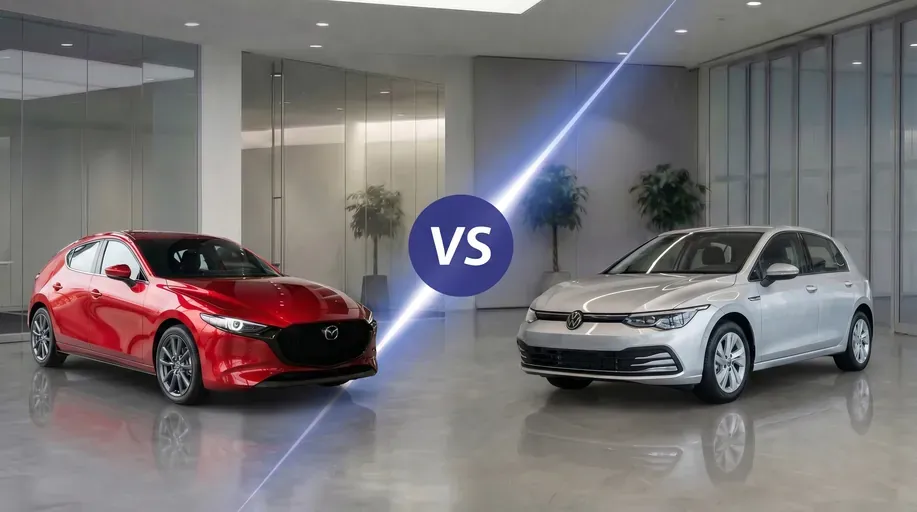
Detailed comparison of Mazda 3 (Mazda3) vs Volkswagen Golf (VW Golf). Explore the equipment, real-world driving experiences, and read our verdict before making your choice.
May 5, 2026
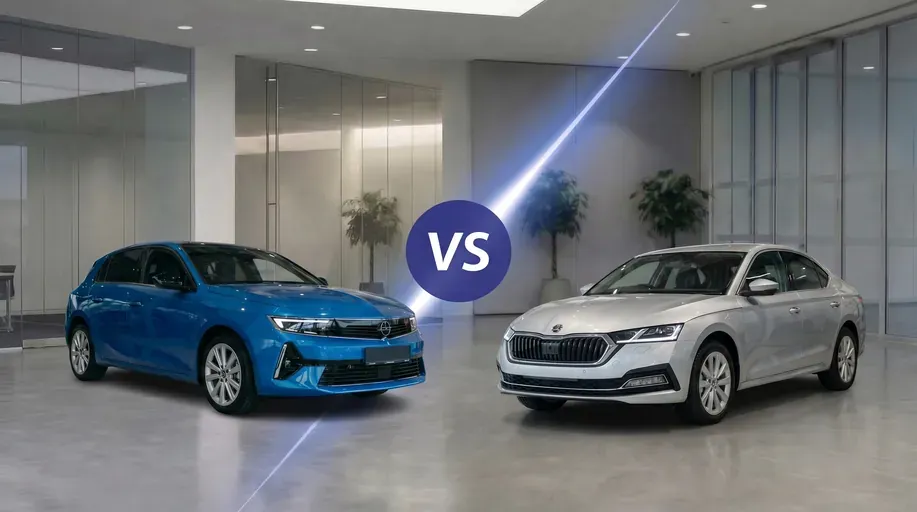
Detailed comparison of Opel Astra vs. Škoda Octavia. We evaluated real-world driving characteristics, equipment, and space. Read our verdict and make the right choice!
Apr 25, 2026