Car battle
BMW iX1 vs. Volvo XC40 Recharge: Complete comparison 2026
Detailed comparison of BMW iX1 vs Volvo XC40 Recharge (EX40). Which electric SUV has better range, equipment, and features? Read our clear verdict.
May 12, 2026
Articles
Car battle
Detailed comparison of Volvo C40 Recharge (EC40) vs Volvo XC40 Recharge (EX40). Discover the differences in range and design. Verdict for an easy choice of an electric SUV!
May 13, 2026
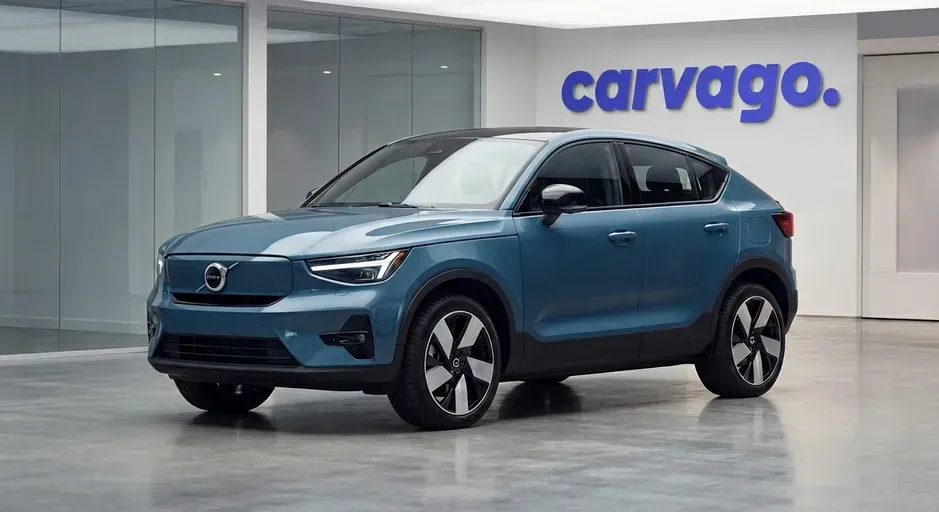
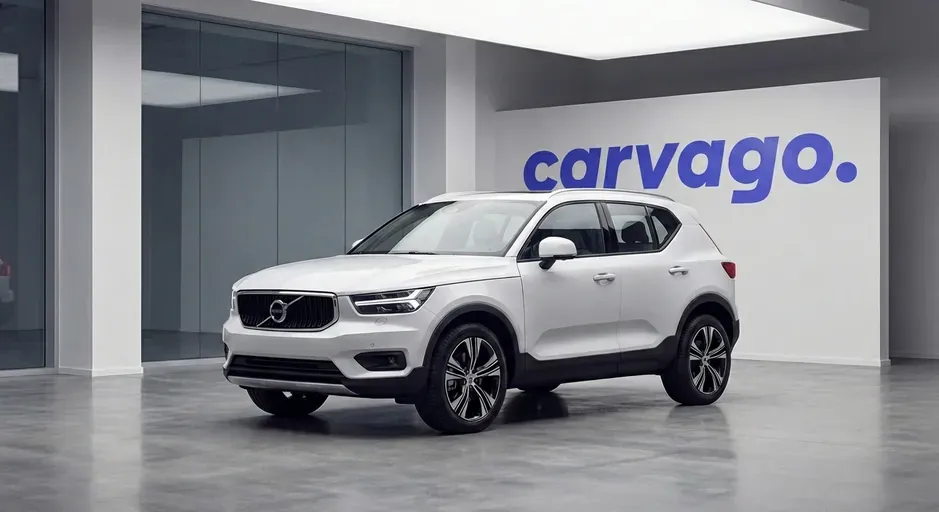
The Volvo C40 Recharge, which is also known as the Volvo EC40 in newer model years following a change in corporate nomenclature, is a stylish all-electric crossover with a dynamically sloping roofline that emphasizes innovative design and modern technology. Its technically related sibling, the Volvo XC40 Recharge, which is now appearing on the market under the name Volvo EX40, offers more traditional proportions of a classic compact SUV with a maximum focus on interior space and everyday practicality. Let's take a detailed look at how these two premium Swedish electric vehicles stand in a direct comparison and which of them represents a better choice for your needs on the used car market.
Both models, Volvo C40 Recharge and Volvo XC40 Recharge, are built on the same CMA chassis platform, which is clearly reflected in their nearly identical footprint. The wheelbase is identical to the millimeter for both cars, measuring 2,702 mm. The length differs only minimally – while the C40 model measures 4,440 mm, the XC40 reaches a length of 4,425 to 4,440 mm depending on the specific production year. In practice, this means that whichever of these electric vehicles you choose, you get a compact vehicle that is very easy to maneuver in narrow city streets and can be parked in standard parking spaces without any problems.
However, a fundamental difference in external dimensions can be found when looking at the silhouette of both cars. The Volvo C40 Recharge was designed from the start with a sloping roofline, making its total height 1,591 mm. In contrast, the more classically styled Volvo XC40 Recharge is roughly 60 mm taller, with a height of 1,647 to 1,652 mm. A slight difference can also be found in the width, where the C40 model, at 1,873 mm, is exactly one centimeter wider than the base XC40 (1,863 mm).
These different proportions play a key role in the final decision. The lower and wider build of the C40 Recharge brings a sportier look and better aerodynamics, which can slightly benefit energy consumption on the highway. On the other hand, the taller body of the XC40 offers a traditional, boxier SUV stance, which provides slightly easier entry and, above all, more generous headroom for rear passengers.
| Parameter | Volvo C40 Recharge SUV | Volvo XC40 Recharge SUV |
|---|---|---|
| Length (mm) | 4440 | 4425 - 4440 |
| Width (mm) | 1873 | 1863 |
| Height (mm) | 1591 | 1647 - 1652 |
| Wheelbase (mm) | 2702 | 2702 |
When choosing a practical family car, trunk capacity often plays a key role. Although the Volvo C40 Recharge and Volvo XC40 Recharge models share the same platform and technical foundation, their different body designs have a direct impact on everyday usability and interior space. While the XC40 relies on the traditional, boxier shapes of a classic SUV, the C40 model brings a sportier silhouette with a sloping coupe-style roofline. This design choice for the C40 adds visual appeal and better aerodynamics, but also slightly limits the overall cargo capacity—an important factor for families seeking uncompromising practicality.
Looking at the 2021 and 2022 models, which currently make up an attractive selection on the used car market, the all-electric Volvo C40 Recharge offers a standard trunk capacity of 413 liters. With the rear seats fully folded, this storage space expands to a maximum of 1205 liters. On the other hand, the more classically styled Volvo XC40 Recharge in its electric versions provides slightly more space, with a base volume of 414 to 419 liters. After folding the backrests, this figure increases to between 1290 and 1295 liters. It is also worth mentioning the older plug-in hybrid variants of the XC40 Recharge (T4 and T5), where the batteries take up a bit more of the storage area, reducing their base capacity to 405 liters.
In practice, these figures mean that while the trunk in both models is perfectly adequate for weekend shopping or longer holidays, the boxier XC40 has a clear advantage when loading larger items. Thanks to its taller rear and flatter roofline, it offers room for several extra suitcases when the seats are folded. Due to its traditional design, the XC40 is a much more suitable choice for users who frequently transport bulky items, strollers, or sports equipment. Conversely, the C40 will appeal more to drivers who prioritize unique style.
| Parameter | Volvo C40 Recharge SUV | Volvo XC40 Recharge SUV (Electric) | Volvo XC40 Recharge SUV (Plug-in Hybrid) |
|---|---|---|---|
| Base volume (liters) | 413 | 414 – 419 | 405 |
| Max volume with seats folded (liters) | 1205 | 1290 – 1295 | 1281 |
Although the differences in base volume on paper are minimal, the traditional boxy shape of the Volvo XC40 makes it a significantly more practical companion for transporting bulky cargo than the more stylishly shaped C40.
Towing capacity is a key parameter for many potential buyers of premium compact SUVs, as it determines the overall practicality and daily usability of the vehicle. Whether you plan to transport heavy construction materials or set off on a trip with a caravan, the Volvo C40 Recharge and Volvo XC40 Recharge models, built on a shared platform, will pleasantly surprise you with their capabilities. Focusing on used cars approximately four years old (model years 2021–2022), we can see that the towing capacity for both electric vehicles is practically identical and depends primarily on the chosen drivetrain.
The entry-level electric versions with a single electric motor (Single Motor) for both models can identically tow a braked trailer with a standard weight of 1500 kg. However, if you require higher performance for towing, it is worth opting for the more powerful variant with two electric motors and all-wheel drive (Twin Motor). In this case, the maximum permissible weight of a braked trailer for both the Volvo C40 and XC40 Recharge increases to a very solid 1800 kg.
The 300-kilogram difference between the base and maximum capacity clearly defines the purpose for which you can use the vehicles. The standard value of 1500 kg is perfectly sufficient for weekend shopping and longer holidays with a lighter caravan or a bike rack on the tow bar. The higher weight of 1800 kg for the twin-motor versions and hybrids then opens up space for a few extra suitcases hidden in a substantially larger and heavier caravan, or ensures the trouble-free transport of a smaller boat.
From the perspective of towing capacity, there is no massive difference between the battery-powered variants of the C40 and XC40. Decision-making can therefore safely narrow down purely to your design and space preferences – whether you choose the sporty sloping roof of the C40 model or the classic boxy practicality of the XC40, you will be able to tow the same load behind you.
| Model and powertrain | Braked trailer weight (kg) | Unbraked trailer weight (kg) |
|---|---|---|
| Volvo C40 Recharge Single Motor | 1500 | 750 |
| Volvo C40 Recharge Twin Motor | 1800 | 750 |
| Volvo XC40 P8 (2020–2021) | 1500 | 750 |
| Volvo XC40 Recharge Single Motor | 1500 | 750 |
| Volvo XC40 Recharge Twin Motor | 1800 | 750 |
| Volvo XC40 Recharge T4 / T5 (PHEV) | 1800 | 750 |
When comparing the powertrains of these two Swedish representatives, it is crucial to recognize their different technological approaches within the used car market. While the Volvo C40 Recharge was designed exclusively as a pure electric vehicle from its introduction, the XC40 Recharge model offers a much more diverse range. Historically, the "Recharge" label at Volvo meant any form of external charging, so among roughly four-year-old used XC40s, you will find both pure electric vehicles and sophisticated plug-in hybrids under this label. An interesting technological moment affecting only the electric versions of both models is the powertrain modernization that took place approximately mid-generation. The automaker took a rare step and changed the concept for Single Motor versions from front-wheel drive to rear-wheel drive, radically improving traction, agility, and overall driving efficiency. For high-performance enthusiasts, the Twin Motor version with a massive 300 kW output and all-wheel drive is available in both ranges.
The powertrain range for the Volvo C40 Recharge focuses purely on electric drive, sending a clear signal to drivers looking for a locally emission-free and highly dynamic SUV-coupe. The Single Motor version is the standard. In the initial years of production (2021–2022), it featured 170 kW and front-wheel drive, but later received a redesigned electric motor with 175 kW and a much more agile rear-wheel drive. Later, the Extended Range rear-wheel drive version appeared, boosted to 185 kW, benefiting from a larger battery capacity. The top choice for those interested in truly sporty acceleration is the Twin Motor variant. Thanks to two independent electric motors, it delivers a combined output of 300 kW and torque approaching 670 Nm to all four wheels, allowing the car to accelerate from zero to one hundred in an impressive 4.7 seconds. A modern single-speed reduction gearbox ensures smooth power delivery in all variants.
| Motor Type | Fuel | Power (kW) | Torque (Nm) | Gearbox |
|---|---|---|---|---|
| Single Motor (FWD/RWD) | Electricity | 170 / 175 | 330 / 420 | 1-speed reduction |
| Single Motor Extended Range | Electricity | 185 | 420 | 1-speed reduction |
| Twin Motor | Electricity | 300 | 660 / 670 | 1-speed reduction |
With the XC40 Recharge, in addition to the identical fully electric variants (Single and Twin Motor), you will also find highly sought-after plug-in hybrid powertrains on the used car market. These versions, labeled T4 and T5, combine a refined 1.5-liter turbocharged three-cylinder gasoline engine with a powerful electric motor and a smooth-shifting seven-speed dual-clutch transmission. The less powerful T4 version provides a more than sufficient system output of 155 kW, while the more powerful T5 boasts an impressive 192 kW and a system torque of 425 Nm. As evident from available production data, both of these plug-in hybrid versions were manufactured and available only until approximately the beginning of 2024. Subsequently, Volvo began to restrict the term Recharge and removed these hybrids from current new car offers in favor of pure electromobility. However, in approximately four-year-old second-hand vehicles, the T4 and T5 models are quite commonly available and represent a fantastic compromise for drivers for whom pure electric drive does not yet make sense due to longer routes.
| Motor Type | Fuel | Power (kW) | Torque (Nm) | Gearbox |
|---|---|---|---|---|
| T4 Plug-in Hybrid | Gasoline + Electricity | 155 | 405 | 7-speed DCT |
| T5 Plug-in Hybrid | Gasoline + Electricity | 192 | 425 | 7-speed DCT |
| Single Motor (FWD/RWD) | Electricity | 170 / 175 | 330 / 420 | 1-speed reduction |
| Single Motor Extended Range | Electricity | 185 | 420 | 1-speed reduction |
| Twin Motor | Electricity | 300 | 660 / 670 | 1-speed reduction |
While the elegant C40 model, with its exclusively electric powertrains, is perfect for modern purists, the XC40 Recharge offers a significant advantage in the used car market in the form of the T4 and T5 plug-in hybrids, which cleverly combine urban emission-free driving with the certainty of traditional combustion range on long journeys.
While both models share the same CMA platform and a modern minimalist Scandinavian interior, their powertrain offerings on the used car market show a different approach. The C40 Recharge was conceived from its launch exclusively as a pure electric vehicle (EV), betting on a more aerodynamic and stylish SUV-coupe silhouette. In contrast, the roughly four-year-old Volvo XC40 Recharge gives buyers on the market a much wider choice – in addition to pure electric versions, it also offers highly sought-after plug-in hybrid powertrains. Choosing the right drive thus depends primarily on your real-world daily charging possibilities, the ratio between city driving and long highway trips, and your preferences regarding mechanical simplicity.
For the elegant C40 SUV-coupe from 2022 to 2023, the basic Single Motor electric version with one electric motor is the most rational and user-friendly choice. It offers a well-balanced output of 170 kW, which, with instant torque delivery, ensures completely confident dynamics in both city and highway traffic. Its main technical advantage over the extremely powerful dual-motor version (Twin Motor with 408 hp) is lower overall weight and much more favorable real-world energy consumption, which usually ranges around 18–20 kWh/100 km. From a battery with a usable capacity of 69 kWh, it is thus possible to drive approximately 350 to 380 kilometers in practice without much stress. For these older versions, which still had front-wheel drive (from 2023 Volvo switched the Single Motor to rear-wheel drive), be careful of occasional loss of traction of the front wheels during sharp acceleration in the wet. During a used car inspection, always visually check the tread depth and excessively worn outer edges of the front tires. These signs reliably reveal the more aggressive driving style of the previous owner, which can mean unnecessarily stressed front axle components. This version is ideal for drivers with home or office charging options who are looking for an exceptionally quiet, smooth, and visually attractive car and prioritize daily efficiency over unnecessarily extreme performance.
For a used XC40 Recharge model from 2020 to 2022, the T4 Plug-in Hybrid powertrain is an extremely pragmatic and attractive choice. This variant has completely disappeared from the range for newer generations because Volvo ended its production, making it an even more sought-after item in the context of four-year-old used cars. It perfectly combines a 1.5-liter turbocharged three-cylinder petrol engine with an electric motor. The total system output of 155 kW is more than enough for brisk driving even with a fully loaded car, while the 10.7 kWh battery allows for a real-world pure electric range of around 35–40 kilometers. Its main technical advantage is the ability to cover the normal daily commute without a drop of petrol, but at the same time, it does not require planning charging stops during weekend long-distance trips. A major risk with a used plug-in hybrid, however, is a situation where the previous owner refused to charge it. Driving with a discharged battery means hauling heavy ballast, which leads to an increase in consumption (easily over 8 liters) and disproportionate wear on the small internal combustion engine, which has to pull the heavy SUV alone and often jumps straight into high revs while cold. Therefore, always strictly demand a documented service history and, during the test drive, focus on the smoothness of the cold internal combustion engine engagement – the process must be smooth, it must not jerk significantly or emit metallic knocking. The T4 powertrain is thus a perfect all-rounder for suburban drivers who faithfully recharge at home during the week but require complete freedom of movement on weekends.
Official fuel or electricity consumption figures often differ significantly from everyday reality, especially for electrified vehicles where many more variables come into play. To obtain an accurate and objective picture, we analyzed real-world data directly from drivers on the independent community portal Spritmonitor.de. We focused primarily on the electric and plug-in hybrid powertrains of both models from 2020 to 2022, which precisely match the current market offering of roughly four-year-old used cars.
| Model and powertrain | Average consumption |
|---|---|
| Volvo C40 Recharge Single Motor | 18.7 kWh/100 km |
| Volvo C40 Recharge Twin Motor | 20.7 kWh/100 km |
| Volvo XC40 Recharge Single Motor | 20.0 kWh/100 km |
| Volvo XC40 Twin Motor (P8) | 23.8 kWh/100 km |
| Volvo XC40 T4 Recharge (PHEV) | 4.5 l/100 km |
| Volvo XC40 T5 Recharge (PHEV) | 4.7 l/100 km |
Two key trends clearly emerge from the presented data. For purely electric versions, the influence of different aerodynamics is fully evident. The more stylish Volvo C40, with its sloping coupe-like rear, is noticeably more efficient in real-world traffic than the more traditionally styled, boxy XC40 SUV. This difference is most pronounced in the extremely powerful dual-motor versions (Twin Motor), where the XC40 P8 model shows an unexpectedly high average consumption approaching 24 kWh/100 km, which significantly cuts into the usable range. Conversely, the more aerodynamic C40 is roughly 3 kWh per hundred kilometers more economical with the same technology. A fundamental specific for the XC40 model is the plug-in hybrid powertrains (T4 and T5 Recharge), which were not offered for the C40 at all. Their real-world consumption of around 4.5 to 4.7 l/100 km is excellent for a heavy premium SUV, but it only applies under the condition of consistent and regular battery charging from the grid. Without regular charging, petrol consumption quickly jumps to the 7 to 8-liter mark.
For a typical user, these findings lead to relatively clear recommendations depending on the driving profile:
In summary, real-world consumption and efficiency should play the role of the deciding factor when choosing between these two cars. If your absolute priority is economical electric operation and a longer real-world range, the aerodynamically friendlier Volvo C40 is the clear winner. Conversely, the Volvo XC40 wins over its buyers with its immense flexibility in the form of available plug-in hybrid versions, representing a safer and more certain choice for drivers for whom full electromobility is not yet an ideal solution.
When looking at the used electric vehicle market for 2021 and 2022 models (roughly 4-year-old cars), both Volvo models represent a very attractive choice. The original purchase prices of these premium SUVs were typically well above €49,000, but thanks to the natural depreciation of electric vehicles, you can now find them on the used car market for significantly more affordable amounts.
The XC40 Recharge entered the market slightly earlier, so its availability in used car dealerships is broader. Thanks to its more practical and classic body style, it maintains steady interest among families and customers looking for maximum interior space.
The more stylish sibling, the C40 with its coupe-SUV body, began production a bit later, so the oldest used cars on the market typically date back to 2022. It offers slightly better aerodynamics and, above all, a more attractive lifestyle look, which is reflected in the price tags.
| Model | Year of Manufacture | Starting Used Price | Price of Better Equipped Versions (Twin Motor) |
|---|---|---|---|
| Volvo XC40 Recharge | 2021 - 2022 | from €27,000 | approx. €35,000 |
| Volvo C40 Recharge | 2022 | from €31,000 | approx. €39,000 |
Both cars share an identical platform and technology, so in terms of maintenance costs, neither model requires a significantly higher budget. From a price perspective, the Volvo XC40 makes slightly more sense for more rational buyers looking for a good price-to-utility ratio. With the C40 model, buyers on the used market pay extra for the more exclusive rear-end shape and slightly newer model years.
While the Volvo XC40 Recharge can currently be purchased more affordably on the used market and offers more practical space, you pay extra for the slightly more expensive C40 primarily for its more attractive coupe silhouette and better aerodynamics.
Both models, the Volvo C40 Recharge and the Volvo XC40 Recharge, earned a full five-star rating in the rigorous Euro NCAP crash tests, confirming Volvo's reputation as an undisputed leader in safety. However, when comparing these results, it is crucial to consider the context and the specific year of testing. Euro NCAP protocols and methodology are constantly evolving and becoming stricter. Therefore, percentage results from different years cannot be directly compared, as newer tests include much more demanding scenarios, such as new frontal impact simulations, improved detection of cyclists and pedestrians at intersections, or stricter evaluations of active safety features.
The Volvo C40 Recharge underwent testing in 2022 and was evaluated according to modern and very strict rules. It achieved an excellent 92% for adult occupant protection and 89% for child occupant protection. Given the current stricter methodology for evaluating active safety, a score of 89% in the safety assist category is an exceptionally respectable result and demonstrates the advanced technologies this model offers. Protection for vulnerable road users reached a solid 70%.
The Volvo XC40 model (whose 2018 test results were later updated and applied to the electric Recharge variant) earned an impressive 97% for adult protection and 87% for child protection at the time. In the category of protection for vulnerable road users, the car achieved 71%, and it scored 76% for safety assist systems. Although these are exemplary values, it is important to realize that the car's 2018 certification has already expired by current standards, and the requirements for assistance features at that time were more lenient than when testing the newer C40 model.
While both cars provide fantastic structural safety and reliably protect their occupants in any collision, the C40 Recharge better reflects the strictest current standards due to its more recent certification date, particularly in the areas of software and assistance systems. For those interested in a used car roughly four years old, however, both models guarantee the best safety in their class.
| Parameter | Volvo C40 Recharge | Volvo XC40 Recharge |
|---|---|---|
| Year of testing | 2022 | 2018 |
| Adult occupant protection | 92 % | 97 % |
| Child occupant protection | 89 % | 87 % |
| Vulnerable road user protection | 70 % | 71 % |
| Safety assist systems | 89 % | 76 % |
Although the Volvo XC40 Recharge shows a slightly higher percentage score for adult protection from 2018 on paper, the Volvo C40 Recharge with its 2022 test offers a demonstrably more modern package of active assistants, proven against significantly stricter safety criteria.
In addition to standard equipment, each model offers several unique features that can be decisive for the customer, and both cars clearly demonstrate their distinct approach to added value. While they share a common technical foundation, their focus and detailed execution appeal to different types of drivers.
This model represents a more dynamic approach to electromobility, focusing on innovative materials and cutting-edge design.
The more traditionally styled SUV excels in unsurpassed everyday usability and offers clever details that make life easier for families and active individuals.
Traditional SUV body shape ensures excellent headroom for rear passengers
Better luggage compartment usability for transporting bulkier and taller items
Great rear visibility and an overall airier feel in the cabin
Top-tier active and passive safety typical of the Volvo brand
Intuitive infotainment with integrated Google services (Android Automotive)
Poorer aerodynamics of the boxy body slightly shortens the maximum range
Higher electricity consumption, which is particularly evident at highway speeds
Firmer suspension tuning combined with large wheels occasionally compromises comfort on broken roads
Higher curb weight reduces the car's agility in corners
The Volvo XC40 Recharge is an ideal choice for families and drivers looking for an exceptionally safe, practical, and easily accessible electric SUV without compromising on interior space. Thanks to its traditional body, it offers great visibility and utility, making it the perfect companion for daily work and family duties.
Attractive and dynamic coupe-SUV body style
Better aerodynamics result in slightly lower consumption and a marginally longer real-world range
Eco-focused interior with premium materials and a complete absence of real leather
Extremely fast acceleration and overwhelming dynamics in the Twin Motor dual-motor version
Rich standard equipment in most used examples on the market
Significantly worse rear visibility and a surprisingly missing rear wiper
Limited headroom for rear-seat passengers due to the sharply sloping roofline
Less practical trunk shape makes it impossible to transport tall boxes or larger dogs
Often a slightly higher purchase price on the used car market compared to the base XC40 model
The Volvo C40 Recharge will primarily appeal to buyers who prefer a distinctive style, sportier look, and slightly better operational efficiency in their electric car at the expense of absolute utility. It is an excellent choice for couples or smaller families who don't mind the specifics of the sloping roof and prefer a fresh design over hauling capabilities.
Based on long-term feedback from owners, service bulletins, and data from the CarAudit service, we have compiled an overview of the most common problems that potential buyers of four-year-old used cars should watch out for. Especially with modern electric vehicles full of complex electronics, a detailed comprehensive vehicle inspection is crucial before purchase, revealing not only mechanical wear but also the state of software and onboard modules.
The more stylish Volvo C40 Recharge shares most of its technology (CMA architecture) with its sibling, which also means sharing the vast majority of typical defects of early model years (around 2022).
The stylish coupe-SUV is mainly troubled by software shortcomings and a malfunctioning TCAM module, but mechanically and from the perspective of the electric drive itself, it is an above-average reliable vehicle.
As a slightly older and more practical representative of the Recharge family, the Volvo XC40 exhibits identical systemic quirks, joined by minor mechanical ailments related to the nature of an electric vehicle.
Mechanically and in terms of build quality, it is a sturdy car; the biggest headaches for four-year-old used cars are thus the malfunctioning infotainment, connectivity, and occasional issues with the high-voltage heater.
When buying a used electric car, a thorough inspection is crucial. Although both models share the same CMA platform and powertrain, each has its own specifics and typical "teething troubles" from the first years of production that require special attention. For peace of mind, it is always worth getting an independent technical inspection of the vehicle before purchase, which will map out the car's true condition in detail and reveal any hidden risks.
Volvo XC40 Recharge offers a more practical luggage space of 452 liters thanks to its traditional boxy body. The C40 Recharge has a smaller base volume of 413 liters due to its sportier design, and its sloping roof limits the transport of taller items. Both electric cars, however, identically feature a very practical front trunk (so-called frunk) with a volume of 31 liters, which is ideal for storing charging cables.
Thanks to its more aerodynamic body shape with a sloping rear, the Volvo C40 Recharge provides a slightly longer range than its taller and boxier sibling. Depending on the specific battery size and drivetrain, the difference in the official range is approximately 10 to 20 kilometers in favor of the C40. In everyday real-world driving, however, the energy consumption values of both these cars are almost identical.
The Volvo XC40 Recharge provides significantly more headroom for adult passengers in the back thanks to the classic straight roofline of an SUV. The design-oriented C40 Recharge, with its sloping silhouette, may feel slightly cramped for taller passengers and also has a smaller rear window, which impairs rear visibility. Knee room is completely identical in both vehicles, as they share the exact same CMA chassis platform.
The dashboard architecture, control layout, and the excellent infotainment with integrated Google system are exactly the same in both cars. However, the Volvo C40 Recharge became the brand's first model whose interior was designed to be completely leather-free, using sustainable premium materials. In contrast, in older used XC40 Recharge models, you may still encounter traditional genuine animal leather upholstery in some trim levels.
For family purposes, the Volvo XC40 Recharge is clearly more suitable and practical. It offers an overall airier cabin, easier entry to the rear seats, and, above all, a much more usable boot for transporting a stroller or bulky luggage. The C40 Recharge is aimed more at couples or individuals who prefer a more dynamic style and are willing to make a small compromise in everyday utility.
The final decision between these two technically related Swedish siblings depends primarily on your priorities regarding design and everyday practicality. If you are looking for a maximally versatile family car with a more spacious trunk, better visibility, and a wider selection of powertrains including flexible plug-in hybrids, the traditionally styled Volvo XC40 Recharge will be a more rational and overall more affordable choice for you on the market of roughly four-year-old used cars. Conversely, the Volvo C40 Recharge represents a perfect alternative for couples and individuals who prefer an attractive aerodynamic coupe silhouette with an exclusively sustainable interior for their pure electric vehicle and don't mind making a small compromise in overall utility in exchange for a completely fresh style.
Sources: ADAC, garaz.cz, svetmotoru.cz, autojournal.cz, autorevue.cz, autobox.cz
This article was prepared using artificial intelligence tools. The section guarantor is Petr Dušek.
Detailed comparison of BMW iX1 vs Volvo XC40 Recharge (EX40). Which electric SUV has better range, equipment, and features? Read our clear verdict.
May 12, 2026
Mercedes-Benz EQA vs. Volvo C40 Recharge. Which premium electric SUV is better? A detailed comparison of range, performance, and price will help you decide.
Apr 14, 2026
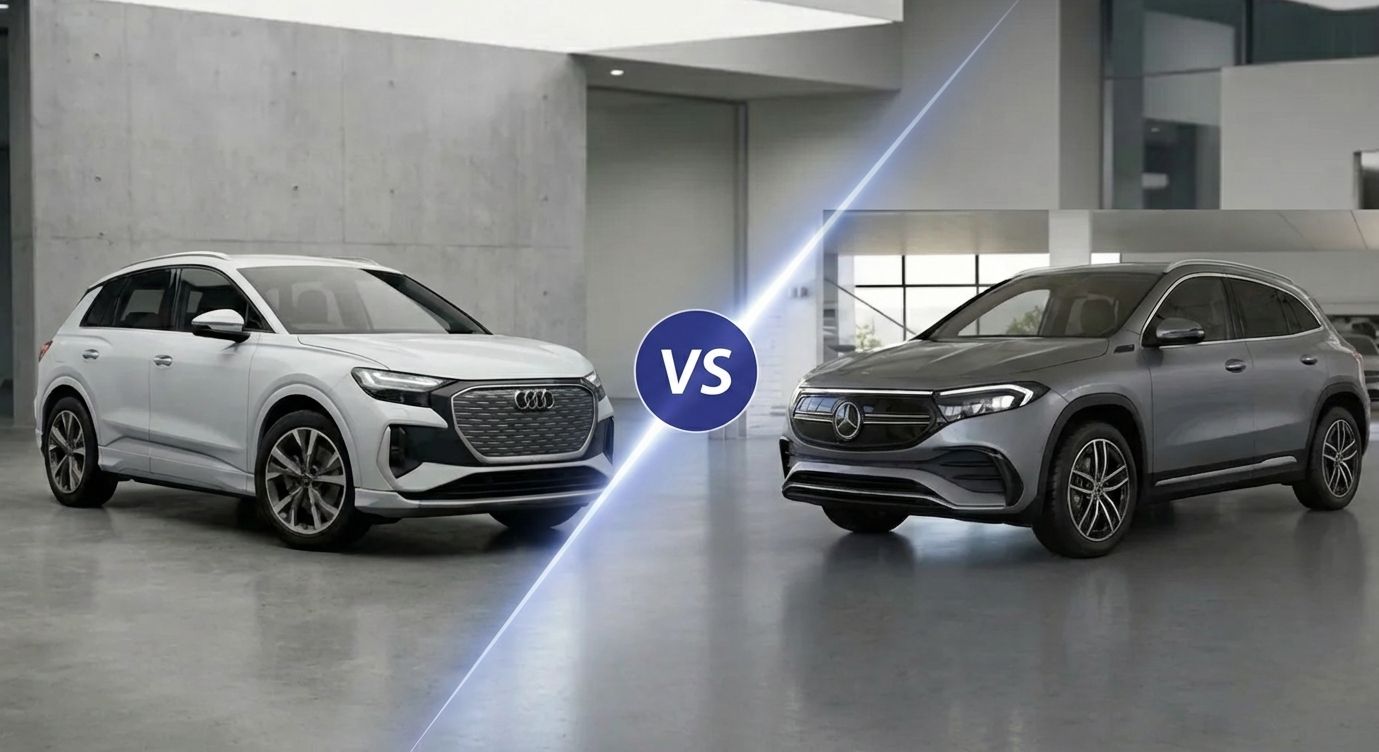
Comparison: Audi Q4 e-tron vs. Mercedes-Benz EQA. Discover the real-world range, differences in equipment, and our clear verdict for choosing the right premium used SUV.
Apr 13, 2026