Car battle
BMW iX1 vs. Mercedes-Benz EQB: Complete comparison 2026
BMW iX1 vs. Mercedes-Benz EQB: Which electric SUV to choose? Read a detailed comparison of range, space, and equipment and find out our final verdict.
Apr 15, 2026
Articles
Car battle
Detailed comparison of BMW iX1 vs Volvo XC40 Recharge (EX40). Which electric SUV has better range, equipment, and features? Read our clear verdict.
May 12, 2026
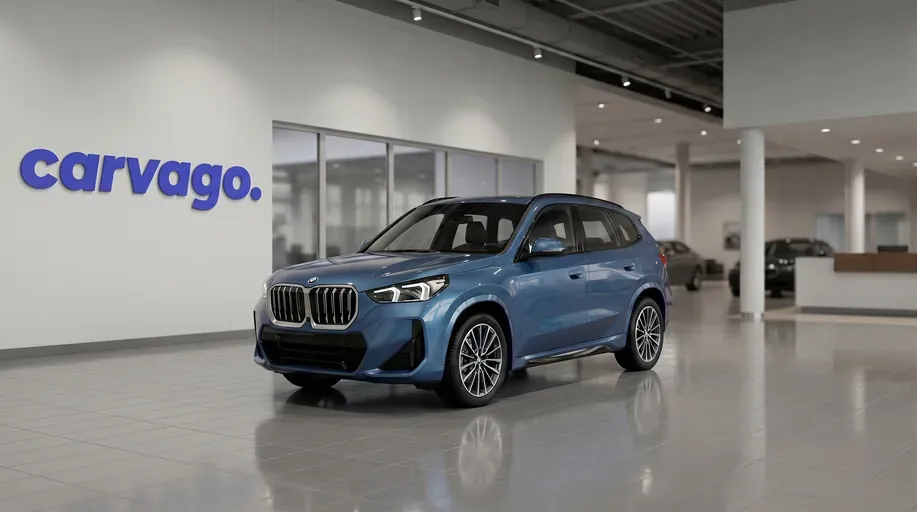
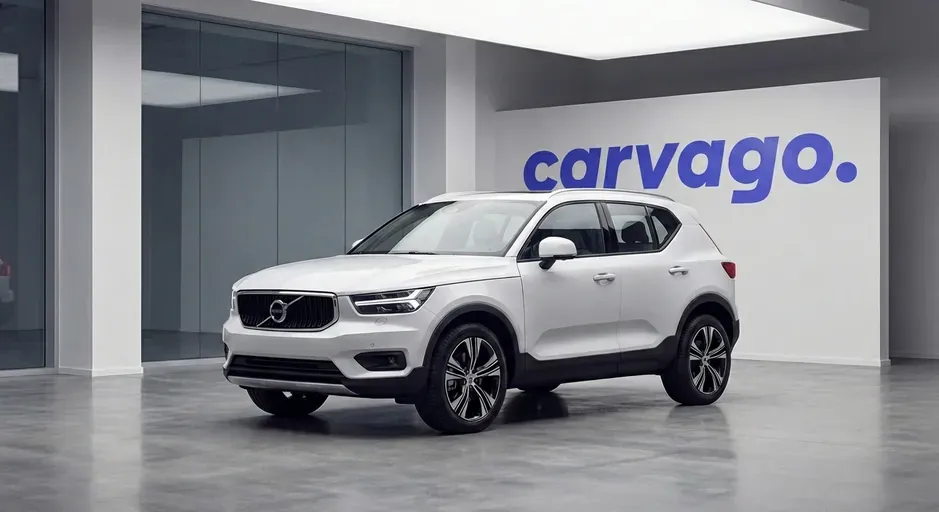
BMW iX1, also known by its internal generation designation U11, is a premium compact electric SUV that combines the sporty dynamics typical of the Munich-based automaker with state-of-the-art technology. Its direct competitor is the Volvo XC40 Recharge, also sold under the name Volvo EX40 for newer models, which focuses on Scandinavian minimalist design, excellent performance, and an uncompromising level of safety. The following comparison explores both of these approximately four-year-old vehicles on the used car market in detail and will help you find out which electric car better suits your daily needs.
Looking at the exterior dimensions of both premium compact SUVs, you quickly find that although they target the same customer, they approach spatial proportions differently. The BMW iX1 is, with its 4,500 mm, a significant 60 to 75 mm longer than the Volvo XC40 Recharge, whose length ranges between 4,425 and 4,440 mm depending on the specific model year and version. These extra millimeters give the Munich representative a slightly more elongated silhouette, which in practice helps to slightly increase the rear overhang and, theoretically, the total luggage compartment volume. On the other hand, the shorter Volvo will feel a bit more confident in narrow city streets and during parallel parking in crowded areas.
When it comes to width and height, the tables turn in favor of the Swedish model. The Volvo XC40 Recharge, with a width of 1,863 mm, is 18 mm wider than the BMW (1,845 mm) and reaches a height of up to 1,652 mm, while the BMW iX1 stays closer to the ground at 1,616 mm. As a result, the XC40 feels much more robust, with a typically "boxier" impression, which is a design language that many SUV buyers naturally seek. The Volvo's taller build can mean a slightly airier interior with better headroom, while the lower profile of the BMW iX1 helps reduce aerodynamic drag, which has a positive effect on energy consumption and highway range.
A very interesting look is at the wheelbase, which is usually a key parameter for legroom in the cabin. Although the Volvo is significantly shorter overall, it boasts a wheelbase of 2,702 mm, surpassing the BMW iX1 (2,692 mm) by exactly 10 mm. Although this is an almost imperceptible difference in practice, from an engineering standpoint, it shows how effectively Volvo managed to push the wheels to the very corners of the body to maximize interior space utilization. As a result, both cars offer a different character: BMW aims for a longer, more elegant, and more aerodynamic body, while Volvo counters with a stockier, very cleverly utilized footprint with a more pronounced SUV stance.
| Parameter | BMW iX1 SUV | Volvo XC40 Recharge SUV |
|---|---|---|
| Length (mm) | 4500 | 4425 - 4440 |
| Width (mm) | 1845 | 1863 |
| Height (mm) | 1616 | 1647 - 1652 |
| Wheelbase (mm) | 2692 | 2702 |
Luggage space is a key factor for many buyers of used premium compact SUVs, whether for everyday family use, carrying a stroller, or occasional weekend trips. Although the BMW iX1 and Volvo XC40 Recharge belong to the same segment and directly compete on the market with their external dimensions, their approach to internal layout and overall use of the enclosed space differs slightly. It is the size and variability of the trunk that often play a crucial role in the final decision on which of these two attractive vehicles better fits the future owner's lifestyle.
Looking at the exact figures for cars from around their fourth year of operation (around 2022), the Bavarian representative clearly has the upper hand. The BMW iX1 (U11 generation) offers a standard trunk volume of 490 liters, and after folding the rear seats, the total loading space increases to an impressive 1,495 liters. In contrast, the fully electric Volvo XC40 Recharge from the same period has a basic volume of 419 liters, with a maximum volume of 1,295 liters available after folding the backrests. It is also worth mentioning the differences in other versions – for example, older Volvo plug-in hybrid powertrains (T4 and T5 Recharge) offer a basic capacity reduced to just 405 liters due to different battery placement. Conversely, for newer Volvo electric vehicle models from 2023, the basic space has slightly increased to 452 liters, but BMW still safely maintains its lead.
In practice, this difference of more than 70 liters in the basic configuration in favor of BMW means invaluable space for several extra suitcases, which significantly facilitates packing for trips with children or storing bulky sports equipment. However, despite the smaller figures on paper, the trunk of the Volvo XC40 Recharge is excellently shaped, has regular side walls, and is perfectly sufficient for weekend shopping or a longer holiday for two. Furthermore, the electric Volvo boasts one very useful trump card in the form of a practical front storage space under the hood (the so-called frunk), where dirty charging cables can be stored cleanly and safely so they don't get in the way in the main luggage compartment.
| Parameter | BMW iX1 SUV | Volvo XC40 Recharge SUV |
|---|---|---|
| Base volume (liters) | 490 | 419 |
| Max volume with seats folded down (liters) | 1495 | 1295 |
The BMW iX1 scores with a more voluminous and overall more flexible luggage space, making it a more suitable choice for space-demanding families, while the Volvo XC40 Recharge may offer a slightly smaller trunk, but its clever shaping and additional front storage space easily cover all common needs.
Towing capacity is a key factor for many potential buyers of compact premium SUVs, whether you plan to tow a family caravan or just need to attach a trailer for transporting materials from a DIY store. In this regard, there are quite fundamental differences between the BMW iX1 and Volvo XC40 Recharge models, which can significantly influence your choice on the used car market.
Looking at cars from roughly 2020 to 2023, it is evident that Volvo has a clear advantage in towing power. Fully electric and plug-in hybrid versions of the Volvo XC40 Recharge (1st generation) offer very generous values for their class – electric variants with a single motor (Single Motor) can tow a braked trailer weighing up to 1,500 kg, while more powerful all-wheel-drive versions (Twin Motor) or popular plug-in hybrids (T4 and T5 Recharge) can even handle 1,800 kg. In contrast, the BMW iX1 (U11 generation) is much more modest in its capabilities. The basic electric eDrive20 version with single-axle drive is limited to only 750 kg for a braked trailer. The more powerful xDrive30 all-wheel-drive variant offers a maximum of 1,200 kg.
In practice, these differences mean that while the BMW iX1 serves excellently primarily for lighter tasks – it is perfectly sufficient for weekend shopping for bulkier items, hauling garden waste, or reliably carrying a heavy rack with several e-bikes. The Volvo XC40 Recharge, on the other hand, provides room for much more demanding use. A capacity of up to 1,800 kg is easily enough for towing a medium-sized caravan for a longer holiday or transporting heavier building materials.
Short summary at the end: if a tow bar is an actively used tool for you and the ability to tow heavier trailers is a priority, the Volvo XC40 Recharge is clearly the more practical and versatile choice thanks to significantly higher weight limits across all its electrified versions.
| Model and engine | Braked trailer (kg) | Unbraked trailer (kg) |
|---|---|---|
| BMW iX1 eDrive20 | 750 | 750 |
| BMW iX1 xDrive30 | 1200 | 750 |
| Volvo XC40 Recharge Single Motor | 1500 | 750 |
| Volvo XC40 Recharge Twin Motor | 1800 | 750 |
| Volvo XC40 Recharge T4 / T5 (PHEV) | 1800 | 750 |
Those interested in a premium compact SUV have a choice between very different approaches to electrification with the BMW iX1 and Volvo XC40 Recharge models, which plays a crucial role in consumption, performance, and daily usability. While the Bavarian BMW iX1 offers strictly fully electric drive (BEV), Volvo satisfies a wider range of drivers within the XC40 Recharge line. Especially for model years around 2021 to 2024, you can find both pure electric vehicles and user-favorite plug-in hybrids (PHEV). Differences exist mainly in maximum performance. While the top-of-the-line iX1 xDrive30 offers a great 230 kW (313 hp), the Volvo in the Twin Motor version with a system output of 300 kW (408 hp) brings unexpected dynamics that rival sports cars.
BMW iX1
The Bavarian iX1 enters the market with a fully electric portfolio that pleases with both a reasonable compromise and very brisk dynamics and high efficiency. The base is the iX1 eDrive20 variant, available on the market since late 2023, which drives only the front wheels. Its output of 150 kW (204 hp) and 250 Nm of torque represents a perfectly sufficient choice for calmer drivers and brings the advantage of a slightly longer range thanks to lower combined energy consumption. Conversely, the iX1 xDrive30 version (produced since 2022) will thrill more demanding users. It uses two electric motors to provide all-wheel drive, delivering a massive combined output of 230 kW and 494 Nm of torque. Both variants rely on an automatic single-speed reduction gearbox ensuring smooth pull.
| Engine type | Fuel type | Power (kW) | Torque (Nm) | Transmission |
|---|---|---|---|---|
| iX1 eDrive20 | Electricity | 150 | 250 | 1st AT (reduction) |
| iX1 xDrive30 | Electricity | 230 | 494 | 1st AT (reduction) |
Volvo XC40 Recharge
The Swedish model offers a mix of fully electric and plug-in hybrid versions in the roughly four-year-old used car market, although pure electric vehicles have taken the lead for models produced after 2024. The base of the electric family is the Single Motor variant (available with front-wheel drive, or rear-wheel drive in newer revisions) with a sober but sufficient output of 170 to 175 kW (up to 238 hp). On the other hand, overwhelming power is represented by the Twin Motor (all-wheel drive), whose 300 kW and massive 660 Nm of torque catapult this compact SUV to 100 km/h in under five seconds. Those unsure about charging infrastructure can reach for the discontinued T4 Recharge and T5 Recharge plug-in hybrids, which definitively disappeared from offers in early 2024. These models combine a turbocharged 1.5-liter three-cylinder petrol engine with an electric motor. Depending on the chosen specification, they have a system output of 155 kW or 192 kW, transferring power to the front wheels via a seven-speed dual-clutch transmission (DKG).
| Engine type | Fuel type | Power (kW) | Torque (Nm) | Transmission |
|---|---|---|---|---|
| Recharge T4 | Plug-in hybrid (Petrol/Electric) | 155 | 405 | 7-speed DKG |
| Recharge T5 | Plug-in hybrid (Petrol/Electric) | 192 | 425 | 7-speed DKG |
| Single Motor | Electricity | 170 / 175 | 330 / 420 | 1st AT (reduction) |
| Twin Motor | Electricity | 300 | 660 | 1st AT (reduction) |
The strength of the BMW iX1 is its modern platform developed for maximum efficiency of the electric system. BMW excels in low real-world consumption and refined behavior, but it lacks a transitional internal combustion engine option in the form of a PHEV, if we don't count the classic X1 series models. The Volvo XC40 Recharge offers greater variety and overwhelming peak performance in the Twin Motor specification. However, it has slightly worse aerodynamics and an older structural base, which is negatively reflected in higher electricity consumption. For budget-oriented and calmer drivers, the efficient iX1 eDrive20 is a flawless choice. For drivers who travel long distances without the certainty of chargers, a used Volvo XC40 Recharge T4 or T5 will be a great partner. But if you are primarily looking for excitement behind the wheel and the acceleration of a sports car with family space, Volvo's Twin Motor is the clear winner.
While the BMW iX1 bets on top-tier real-world efficiency of exclusively pure electric drives, Volvo gives a choice between practical plug-in hybrids and the brutally fast Twin Motor electric model.
Choosing the right powertrain is a key step toward long-term satisfaction with a used car, and our recommendations are based on real-world experience, consumption, reliability, and owner feedback. Both compared compact SUVs offer excellent access to full electrification – while the BMW iX1 impresses with its advanced all-wheel drive with lightning-fast reactions and a sporty chassis, the Volvo XC40 Recharge scores with its minimalist Nordic approach, renowned safety, and, in the range of roughly four-year-old used cars, offers a choice between an economical and, conversely, an extremely powerful purely electric variant.
The difference between paper and real-world consumption figures is often vast in modern electrified vehicles. While official standards promise unrealistically low numbers for EVs and plug-in hybrids, the reality of daily operation is usually much more sober. To get the most accurate picture, we analyzed user data from the well-known community portal Spritmonitor.de, where hundreds of drivers meticulously record every charge and refuel in the real world. With the typical used car buyer in mind, we focused primarily on generations approximately four years old, or on the powertrains most prevalent on the market for that period.
| Model and powertrain | Average consumption (l/100 km or kWh/100 km) |
|---|---|
| Volvo XC40 T4 Recharge PHEV (155 kW) | 4.5 l/100 km + electricity |
| Volvo XC40 T5 Recharge PHEV (192 kW) | 4.7 l/100 km + electricity |
| BMW iX1 eDrive20 (150 kW) | 18.6 kWh/100 km |
| Volvo XC40 Recharge Single Motor (170 kW) | 20.5 kWh/100 km |
| BMW iX1 xDrive30 (230 kW) | 20.8 kWh/100 km |
| Volvo XC40 Recharge Twin Motor (300 kW) | 23.2 kWh/100 km |
Looking at the hard data, it's clear that the taller body profile and poorer aerodynamics of both popular SUVs take their toll; however, the BMW iX1 proves to be the more energy-efficient electric vehicle. Even in the more powerful dual-motor xDrive30 version, the Bavarian SUV manages a respectable 20.8 kWh/100 km, while the weaker eDrive20 stays below 19 kWh/100 km on average. Conversely, the Volvo XC40 Recharge, which resembles an elegant cube in shape, struggles quite a bit with energy consumption. The powerful dual-motor Twin Motor version (or the earlier P8) shows an average real-world consumption of over 23 kWh per 100 km, which significantly eats into the total range. It is also surprising that even the weaker single-motor variant of the Volvo is not exactly frugal, losing out in efficiency even to the more powerful AWD from BMW with its 20.5 kWh/100 km. As for the older plug-in hybrids (T4 and T5), which BMW does not offer for the iX1 at all, the Volvos achieve solid consumption figures under five liters of gasoline. However, this figure applies exclusively to responsible owners who plug the car in daily; as soon as you hit the highway with a depleted battery, consumption quickly skyrockets to completely different numbers.
For the average user, there is a crucial lesson to be learned from these trends. If you are a highway cruiser and insist on a pure electric vehicle, the BMW iX1 will be the clear choice thanks to its more advanced energy management, ensuring a longer range without unnecessary stress. On the other hand, the Volvo XC40 Recharge makes more sense for suburban commuting, where air resistance at lower speeds is not as significant and higher consumption won't be such an issue in practice. If you are considering buying a plug-in hybrid, Volvo offers an attractive solution, but only provided you are completely disciplined with daily charging at home or work.
Consumption should undoubtedly play a key role when deciding between these two vehicles. The difference of nearly 3 kWh per 100 km to the detriment of the Swedish EV means significantly more expensive operation and more frequent stops at charging stations in the long run. While Volvo scores on the used car market with the availability of plug-in hybrid powertrains for those not yet ready for a pure EV, BMW emerges from the comparison as the clear winner in terms of the overall energy efficiency of its electric drive.
The used electric vehicle market is growing, and both the Volvo XC40 Recharge (available since 2020) and the somewhat newer BMW iX1 (U11 generation, on the market since late 2022) represent a great choice for buyers looking for a premium electric SUV. However, due to their different market entry dates, both cars occupy different price levels.
Volvo XC40 Recharge: Unbeatable Value
Thanks to its longer presence on the market, the Volvo XC40 Recharge is significantly more represented and affordable among used cars. Three- to four-year-old models can be found in used car dealerships starting from approximately €24,000 for versions with higher mileage. Popular 2022 models with more favorable mileage usually range between €27,000 and €33,000. The more powerful Twin Motor specifications are very attractive. Their original purchase price could have exceeded €62,000, but thanks to the natural depreciation of electric vehicles, you can now get them for a fraction of the price and gain a staggering output of over 400 hp.
BMW iX1: More Expensive, but Still Nearly New
The Bavarian competitor arrived on the roads a few years later, which is reflected in its significantly higher residual value. Most used cars on offer are from 2023, making them practically nearly new vehicles. The cheapest used eDrive20 variants start at around €37,000. If you desire a better-equipped xDrive30 version with all-wheel drive and the M Sport package, the price tag climbs over €43,000. Although a used iX1 brings significant financial savings compared to a brand-new unit, the initial investment in the used car market remains relatively high.
| Model | Generation | Typical Years for Used Cars | Indicative Price From | Indicative Price To |
|---|---|---|---|---|
| Volvo XC40 Recharge | 1st generation | 2020–2022 | €24,000 | €39,000 |
| BMW iX1 | U11 | 2022–2023 | €37,000 | €49,000 |
Note: Prices depend on specific equipment (Single/Twin motor for Volvo, eDrive20/xDrive30 for BMW), battery capacity, and the overall condition of the vehicle.
Which One Makes More Sense?
From a purely financial perspective, the Volvo XC40 Recharge comes out as a better buy for used car hunters. Its depreciation curve has already stabilized, meaning the car is not subject to such rapid price loss in the following years. The BMW iX1, on the other hand, is the choice for drivers who do not want to compromise on technology and are willing to pay extra for a younger car with a more modern infotainment system, where they must still expect some further price drop.
While the Volvo XC40 Recharge pleases with a much more favorable price tag due to its age, the BMW iX1 functions in the used car market more as a nearly new premium car requiring a higher initial investment.
Both models, the BMW iX1 and the Volvo XC40 Recharge, boast a maximum five-star rating in independent Euro NCAP safety tests. However, it is crucial to view these excellent results in the context of when the vehicles were tested. Euro NCAP protocols and methodology are constantly evolving and becoming significantly stricter every year. In recent years, much greater emphasis has been placed on active safety, cyclist detection, and complex anti-collision scenarios at intersections. Percentage results from two tests of different ages cannot be directly compared mathematically, as the requirements for achieving the same percentage have increased dramatically today.
The Volvo XC40 Recharge benefits from a basic architecture that Euro NCAP physically tested back in 2018, with this rating officially applied to later fully electric versions as well. The car excelled at the time, earning an impressive 97% for adult protection and 87% for child protection, confirming the Swedish brand's reputation. From today's perspective, however, the 76% score for safety assistants reflects the fact that certification took place before the introduction of the most modern and very strict testing methodologies for active safety. Due to current rules, the 2018 certification formally expired at the beginning of 2025, but for four-year-old used cars on the market, this is a completely standard occurrence that in no way compromises the car's solid mechanical protection.
The BMW iX1, on the other hand, underwent evaluation recently. Crash tests were conducted under much stricter protocols from 2022 and 2023, where specific additional tests also verified the impact of the electric model's higher weight. While the 86% score for adult protection might look slightly worse in the table next to the older Volvo, in the context of far more demanding modern tests, it is an absolutely top-tier result. The Bavarian SUV is completely dominant in the protection of vulnerable road users (76%) and especially in the category of active safety assistants, where it scored a phenomenal 92%. This clearly demonstrates the massive technological progress that radars and anti-collision systems have made in just a few years.
| Parameter | BMW iX1 | Volvo XC40 Recharge |
|---|---|---|
| Year of testing | 2022 | 2018 |
| Adult occupant protection | 86% | 97% |
| Child occupant protection | 89% | 87% |
| Vulnerable road users protection | 76% | 71% |
| Safety assist systems | 92% | 76% |
From the perspective of pure mechanical resistance, both vehicles offer an exceptionally strong safety cage, which is exactly what buyers expect from premium European SUVs. However, if you are looking for the most up-to-date software technologies and radars to prevent critical situations in the first place, the BMW iX1 has an objective lead due to its more recent development and testing date. Its excellently tuned assistance systems respond perfectly to the latest standards, making it a more advanced choice from the perspective of comprehensive active safety.
Both SUVs will reliably protect you in the event of a crash, but the BMW iX1, thanks to its significantly newer software and advanced assistants, offers a noticeably higher chance that the accident won't happen at all.
In addition to standard equipment, each of the models offers more than just basic functions, and both clearly demonstrate their own distinctive approach to added value, technology, and innovation.
Excellent driving characteristics with precise steering typical of the brand
Premium interior craftsmanship with a modern and fast iDrive system
High efficiency of the electric drive providing a very solid real-world range
Excellently optimized fast-charging curve
More practical and spacious luggage compartment (490 liters)
Noticeably higher purchase price on the used car market
Stiffer chassis tuning, which reduces overall comfort on broken roads
Absence of physical buttons for climate control (integrated into the display)
More controversial front-end design may not suit everyone
BMW iX1 is a great choice for drivers who expect superior driving dynamics and state-of-the-art technology from an electric compact SUV. Despite the higher price and stiffer chassis, it wins over its owners with a highly efficient powertrain and a top-notch interior.
Exemplary level of active and passive safety with a robust construction
Brilliant Google Automotive infotainment with native maps and services
More comfortable and smoother chassis tuning for a calm ride
Extreme power and acceleration in the Twin Motor variant
Timeless design with traditional SUV shapes and a great view from the cabin
Higher electricity consumption, which negatively affects the overall range
Smaller basic luggage compartment volume (419 liters) compared to the iX1
Use of an older platform, which contributes to a higher overall weight
Slightly slower charging in colder weather for older model years
Volvo XC40 Recharge is ideal for families and drivers looking for a safe, exceptionally comfortable car with easy and intuitive controls. It will perfectly suit those who prefer minimalist Scandinavian style and appreciate the smart integration of Google services, although they will have to accept slightly higher consumption.
Based on long-term user feedback, service records, official recalls, and insights from our Independent Car Condition Check service, we have compiled a detailed comparison of the most common problems of both cars. Since we are dealing with used electric models mostly up to four years old, we focused primarily on the issues that European buyers encounter most frequently in practice.
Although the iX1 has been on the market for a relatively short time and uses the modern U11 platform, mechanics and owners have already noted several recurring shortcomings, mainly concerning on-board electronics and "teething troubles" of the first production series.
The electric iX1 is mainly plagued by software glitches and isolated teething troubles from the first years of production. In terms of the traction battery and the electric motors themselves, however, it has so far proven to be a very robust and reliable electric car.
The Swedish brand's first fully electric model went through a relatively difficult birth. In older used models, you will encounter a number of painful electronic ailments that can still require unplanned service interventions in non-updated vehicles.
Older Volvo models pay the price for infotainment imperfections and occasional problems with key drive modules. When buying a used car, it is absolutely critical to check the successful completion of all software and safety recalls for this vehicle.
When buying a used car, a thorough inspection is key. Here are some specific points to focus on for these two models. If you are unsure about the actual condition of the electric vehicle you've chosen, a physical inspection of a used car carried out by an expert will give you peace of mind and reveal any hidden defects in advance.
Both vehicles offer a similar official range of around 430 to 460 kilometers on a single charge, depending on the chosen battery size. In real-world driving, the BMW iX1 is slightly more efficient thanks to better aerodynamics, giving it a slight advantage, especially during steady driving. The Volvo XC40 Recharge (especially in the older dual-motor version) tends to have slightly higher electricity consumption at highway speeds.
The BMW iX1 provides a larger main luggage compartment with a volume of 490 liters, significantly surpassing the 419 liters of its Nordic competitor. However, Volvo compensates for this shortcoming with a practical front trunk (so-called frunk) with a volume of 31 liters, which is ideal for storing charging cables. Rear passenger space is comparable in both cars, although the Bavarian model feels more airy overall.
The Volvo XC40 Recharge in newer model years supports fast charging at up to 200 kW, while the BMW is limited to a maximum power of 130 kW. As a result, the Volvo can charge its larger battery from 10 to 80% in approximately 28 minutes. While the BMW doesn't reach such official peaks, it offers a very flat charging curve, allowing it to maintain high power for a longer period.
The BMW iX1 doesn't deny its genes, offering a sportier chassis setup, sharper steering, and a much more agile feel in corners. In contrast, the Volvo XC40 Recharge places maximum emphasis on comfort, excellent cabin soundproofing, and relaxed long-distance travel. However, both fully equipped all-wheel-drive versions boast immense power and accelerate from zero to one hundred in under six seconds.
Volvo relies on the integrated Android Automotive system, which offers native Google Maps and a voice assistant right out of the box, making it one of the most intuitive systems on the market. BMW uses the iDrive 8 system on a large curved panel, which impresses with advanced graphics and a vast amount of detailed vehicle settings. While you'll appreciate the Swedish system for its simplicity, the Bavarian model will much more delight tech enthusiasts.
Choosing between these two premium compact SUVs depends primarily on your priorities and daily family needs. The BMW iX1 is, thanks to its larger trunk, top-tier electric drive efficiency, and modern assistance systems, the ideal choice for tech enthusiasts and families looking for a sportier ride, although you will pay a slight premium for it on the used car market. On the other hand, the Volvo XC40 Recharge scores with a much more favorable purchase price, high towing capacity, and an exceptionally comfortable chassis, which will be appreciated especially by pragmatic drivers who prefer comfort, the intuitive Google system, and Scandinavian minimalism. Whether you ultimately decide on the lightning-fast reactions and agility of the German representative or the soothing robustness of the Swedish one, both approximately four-year-old used cars represent an excellent and safe entry into the world of premium electromobility.
Sources: ADAC, garaz.cz, forbes.cz, motorvize.cz, auto-mania.cz, businessinfo.cz
This article was prepared using artificial intelligence tools. The section guarantor is Petr Dušek.
BMW iX1 vs. Mercedes-Benz EQB: Which electric SUV to choose? Read a detailed comparison of range, space, and equipment and find out our final verdict.
Apr 15, 2026
Detailed comparison of Tesla Model X vs Volvo EX90. Find out the real range, compare the equipment, and read our verdict. Choose the best electric SUV!
Apr 16, 2026
Undecided between a Volvo XC40 and a VW T-Roc? Our comparison will help you choose. Discover the main differences, real-world impressions, and a clear verdict.
Apr 14, 2026