Car battle
Audi A4 vs. Volvo V60: Complete comparison 2026
Detailed comparison of Audi A4 vs. Volvo V60. Find out which premium car has better driving characteristics, equipment, and reliability. Read our clear verdict.
May 8, 2026
Articles
Car battle
Volkswagen Arteon vs Volvo S60 Comparison: Which premium car to choose? We reveal the differences in equipment, driving characteristics, and the reliability of used cars.
May 18, 2026
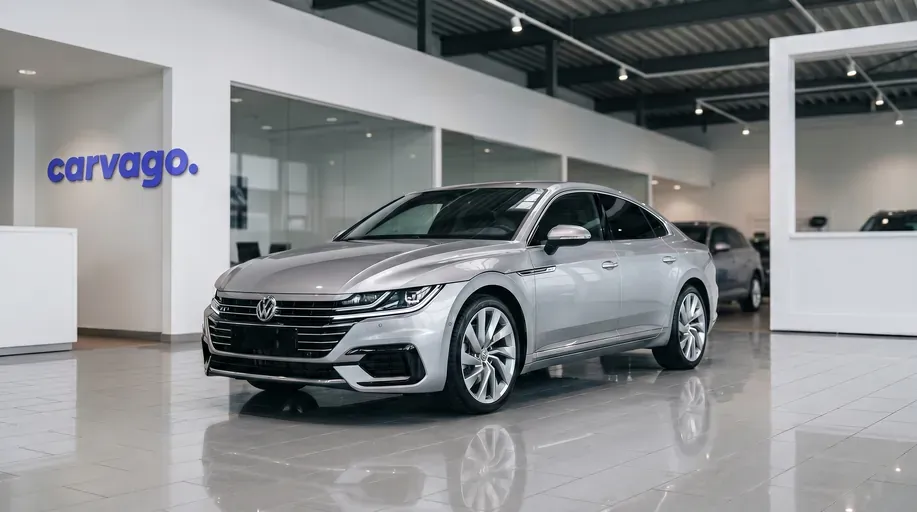
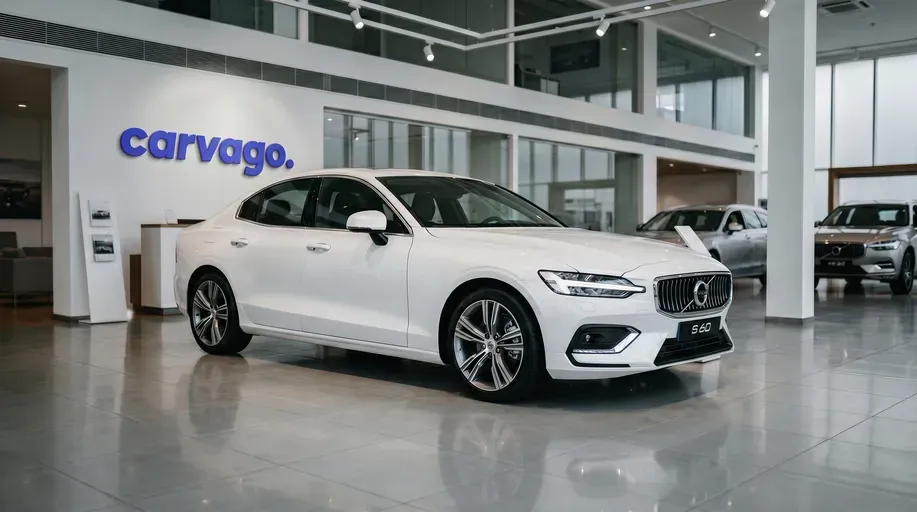
[Volkswagen Arteon](https://carvago.com/en/cars/volkswagen/arteon), also sold as the Volkswagen CC on the Chinese market, is an elegant and spacious car that combines a bold design with modern group technologies. Facing it is the [Volvo S60](https://carvago.com/en/cars/volvo/s60), a premium Swedish sedan with clean Scandinavian lines that traditionally excels in top-tier safety, exceptional comfort, and advanced powertrains. In the following comparison, we will focus in detail on the key differences between these attractive models to help you decide which one is the better choice on the pre-owned car market.
Looking at the exterior dimensions, it is clear at first glance that the [Volkswagen Arteon](https://carvago.com/en/cars/volkswagen/arteon) and [Volvo S60](https://carvago.com/en/cars/volvo/s60) approach their design and proportions with a different philosophy. The Arteon, whether in the liftback version or as a stylish estate labeled Shooting Brake, is overall more robust and longer. With a length reaching up to 4866 mm, it surpasses its Swedish competitor (4778 mm) by a significant 88 mm. A wider stance by 21 mm (1871 mm vs. 1850 mm) gives the German model a more aggressive and dominant appearance on the road. For buyers, this means the Arteon feels a class larger and more majestic, while the Volvo S60 offers a more compact format that you will appreciate more when parking frequently and navigating narrow city streets.
An interesting paradox occurs when looking at the wheelbase, which is a key parameter for interior space. Although the Volvo S60 is shorter overall on the outside, its advanced platform allows it to offer a generous wheelbase of 2872 mm. This is 34 to 37 mm more than the Volkswagen, whose wheelbase ranges between 2835 and 2838 mm depending on the version. The Arteon, on the other hand, counters with a slightly taller body (up to 1460 mm compared to 1431 mm for the Volvo), which helps maintain sufficient headroom despite the sharply sloping roofline. From an everyday use perspective, the Volvo S60 provides more stable driving characteristics on the highway and more generous longitudinal legroom for rear passengers, while the slightly taller and longer Arteon offers a more airy feel in the cabin.
The body concept itself is also worth mentioning. The Volkswagen Arteon uses long overhangs and a wide track to maximize its utility value and trunk volume, aided by frameless windows that enhance its visual appeal. The Volvo S60, on the contrary, maintains traditional Nordic restraint with shorter body overhangs, giving the car a sporty and very balanced athletic stance. When deciding on the used car market, buyers should consider whether they prefer the more practical and representative exterior dimensions of the German model or the more agile and proportionally balanced body of the traditional Swedish sedan.
| Parameter | Volkswagen Arteon Liftback | Volkswagen Arteon Shooting Brake | Volvo S60 Sedan |
|---|---|---|---|
| Length (mm) | 4862 - 4866 | 4866 | 4778 |
| Width (mm) | 1871 | 1871 | 1850 |
| Height (mm) | 1450 - 1460 | 1434 - 1451 | 1431 |
| Wheelbase (mm) | 2835 - 2838 | 2836 - 2838 | 2872 |
When choosing a car with a more premium feel, it's not just design and dynamics that play a role, but also everyday practicality. Trunk capacity is a key parameter for family use, moving larger items, and long holiday trips. The battle between the [Volkswagen Arteon](https://carvago.com/en/cars/volkswagen/arteon) and the [Volvo S60](https://carvago.com/en/cars/volvo/s60) in this regard shows two completely different approaches to body construction, which fundamentally affects their transport capacities and everyday usability.
The Volkswagen Arteon excels in its versatility, regardless of the chosen variant. In its base liftback body style (utilizing a huge tailgate), it offers an above-standard 563 liters, which can be expanded to a generous 1557 liters after folding the rear seats. If you opt for the more stylish and even more practical Shooting Brake (estate) version, you get 590 liters as standard and a massive 1632 liters in a two-seat configuration. This volume easily offers space for several extra suitcases, swallows a stroller without trouble, and is more than sufficient for any long family holiday. A huge advantage here is primarily the excellent access to the trunk, while even the plug-in hybrid versions (eHybrid) maintain the same literage as models with pure internal combustion engines according to the spec sheets.
The Volvo S60, on the other hand, strictly sticks to the classic four-door sedan format in its third generation (sold since 2019) on the used car market. This naturally results in a smaller loading opening and a more modest base volume of 427 liters for common mild-hybrid engines (B4, B5 or T4 and T5). Care should be taken when choosing the very popular plug-in hybrid versions (T8 and T8 Twin Engine), where the placement of the traction battery and electric motor slightly cuts into valuable space and reduces trunk capacity to exactly 390 liters. Although this space is still fully sufficient for a regular weekend shop or a standard set of luggage for a shorter trip, the missing official values for maximum volume after folding the seats and the typically narrower opening clearly show that the Swedish representative is not built for moving large objects. The conclusion here is therefore quite clear: from a volume perspective, the Arteon is the clear winner for families and active drivers, while the S60 will better serve those who prefer the classic elegance of a sedan and do not travel with a large amount of luggage.
| Parameter | Volkswagen Arteon Liftback | Volkswagen Arteon Shooting Brake (Estate) | Volvo S60 Sedan | Volvo S60 Sedan (PHEV) |
|---|---|---|---|---|
| Base volume (liters) | 563 | 590 | 427 | 390 |
| Max. volume with seats folded (liters) | 1557 | 1632 | Not specified | Not specified |
If trunk volume and easy access to luggage are a priority for you, the Volkswagen Arteon completely outshines its Swedish competitor thanks to its giant trunk and practical body styles.
The ability to tow a trailer is often a deciding factor for buyers looking for a practical car not only for daily commuting but also for an active lifestyle. When comparing typical representatives in the four-year-old used car market, we encounter interesting differences between the Volkswagen Arteon and the Volvo S60 that may influence your final choice.
The Volkswagen Arteon (1st generation) provides an exceptionally wide range of braked towing capacity. While standard versions with 2.0 TDI and 2.0 TSI engines safely handle 1800 to 2000 kg, the most powerful variants (stronger diesel models or the top-of-the-line R version with 235 kW) push the maximum braked weight up to an impressive 2200 kg.
The Volvo S60 (3rd generation), on the other hand, follows a path of more stable values. Common engines like the T4, T5, or mild-hybrid B4 and B5 can tow 1800 kg, while the maximum braked trailer weight for the most powerful specifications remains a steady 2000 kg.
An interesting contrast is fully revealed in the specific fuel-efficient versions of both brands:
Volvo S60 in its plug-in hybrid version (T8 Twin Engine) does not compromise on power and easily reaches its maximum of 2000 kg. The hybrid Swede can thus reliably tow a load 400 kg heavier than its German competitor.In both cases, you get a car that can add a generous amount of extra space behind it, safely handle the transport of bulky loads, and whose capacity is fully sufficient for weekend shopping as well as longer holidays with a full-sized caravan. Although official technical tables do not explicitly state values for unbraked trailers for these models, with cars of this size, you can safely count on the usual legal maximum of up to 750 kg.
If you plan to regularly transport the heaviest caravans and boats weighing over two tons, the more powerful variants of the Arteon will be an unbeatable choice for you. However, if you are looking for a powerful and eco-friendly plug-in hybrid with excellent towing strength, the hybrid variant of the Volvo S60 will serve you incomparably better.
| Model and motorization | Braked weight of trailer (kg) | Unbraked weight of trailer (kg) |
|---|---|---|
| Volkswagen Arteon 1.4 eHybrid / 1.5 TSI | 1600 | Not specified |
| Volkswagen Arteon 2.0 TSI | 1800 - 2200 | Not specified |
| Volkswagen Arteon 2.0 TDI | 2000 - 2200 | Not specified |
| Volkswagen Arteon R | 2200 | Not specified |
| Volvo S60 T4 / T5 / B4 / B5 | 1800 | Not specified |
| Volvo S60 T6 / T8 Twin Engine | 2000 | Not specified |
The differences in engine options between the Volkswagen Arteon and Volvo S60 perfectly illustrate the distinct philosophies of both brands in today's market. While Volkswagen sticks to proven tradition with the Arteon (in its single generation from 2017–2024) and continues to benefit from the extremely popular 2.0 TDI diesel engines, Volvo took a radical step with the third generation of the S60 (2019–2024) and completely removed diesel units from the range. Buyers looking for a four-year-old Swedish sedan must therefore choose exclusively between petrol mild-hybrids or extremely powerful plug-in hybrids. The Arteon, on the other hand, offers extraordinary versatility – it will please both motorway mile-munchers with its economical diesel and performance enthusiasts with the sharpened top-of-the-range Arteon R version producing 235 kW. For used car buyers, this means only one thing: if you require low diesel consumption on long journeys, the Arteon is your only choice, while the Volvo excels in refinement, electrification, and rocket-like acceleration in its top versions.
Volkswagen Arteon relies on a wide range of engines covering various driver needs. The base used to be the 1.5 TSI petrol four-cylinder (110 kW), which, however, is rather fading into the background on the used car market for newer models. The backbone of the range in the category of roughly four-year-old vehicles consists of 2.0 TDI diesel engines with outputs of 110 kW and 147 kW. These units are paired almost exclusively with a seven-speed DSG dual-clutch transmission and optionally with 4MOTION all-wheel drive. For petrol fans, there is a 2.0 TSI four-cylinder (most often 140 kW or 206 kW), and environmentally conscious drivers can opt for the 1.4 eHybrid plug-in hybrid (160 kW), which arrived on the market at the end of 2020. The real icing on the cake is the purely sporty Arteon R derivative, whose turbocharged two-litre sends a dazzling 235 kW (320 hp) to all four wheels. Manual transmissions have gradually disappeared from the Arteon range – in cars from 2020 and newer, you will only come across the fast DSG automatic.
| Engine type | Fuel type | Power (kW) | Torque (Nm) | Transmission |
|---|---|---|---|---|
| 1.5 TSI OPF ACT | Petrol | 110 | 250 | 6MT / 7DSG |
| 2.0 TSI OPF | Petrol | 140 / 206 | 320 / 400 | 7DSG |
| 2.0 TDI SCR | Diesel | 110 / 147 | 340 / 400 | 7DSG |
| 1.4 eHybrid | Plug-in hybrid | 160 | 400 | 6DSG |
| 2.0 TSI (R) | Petrol | 235 | 420 | 7DSG |
The engine range of the third-generation Volvo S60 is significantly leaner compared to the German car, but all the more focused on modern electrification. Although the manufacturer initially relied on the classic T4 and T5 turbo petrol engines, around 2020 to 2021 these engines definitively gave way to more modern units designated B4 and B5. These utilize advanced 48V mild-hybrid technology to reduce consumption and ensure imperceptible operation of the start-stop system. An eight-speed Geartronic automatic transmission is standard. If you are looking for true dominance in the left lane of the motorway, Volvo counters with the T8 Recharge plug-in hybrid version (or formerly T8 Twin Engine). This combines a petrol engine with an electric motor, with a system output of a mammoth 288 kW, and in the latest versions, it even exceeds the 330 kW mark. With a massive torque of up to 709 Nm and all-wheel drive, the Volvo easily outruns even the most aggressive Arteon R version.
| Engine type | Fuel type | Power (kW) | Torque (Nm) | Transmission |
|---|---|---|---|---|
| T4 (until 2020) | Petrol | 140 | 300 | 8-speed automatic |
| B4 | Petrol MHEV | 145 | 300 | 8-speed automatic |
| B5 | Petrol MHEV | 184 | 350 | 8-speed automatic |
| T8 Twin Engine/Recharge | Plug-in hybrid | 288 / 335 | 640 / 709 | 8-speed automatic |
If you spend thousands of kilometres a month on motorways, the economical diesel Arteon will be an unbeatable distance-eater. But if you care about a quiet and premium driving experience with a huge reserve of power, the petrol and hybrid engines of the Volvo S60 will win you over immediately.
Choosing the right engine is crucial for long-term satisfaction with a used car, and our recommendations are based on real-world experience, mechanical reliability, and owner ratings. For roughly four-year-old used cars on today's market, you will see a fundamental philosophical difference between the two models. While the Volkswagen Arteon still relies on top-tuned and extremely fuel-efficient diesel engines ideal for long-distance highway cruising, Volvo completely eliminated diesel for the third generation of the S60. Instead, it offers exclusively highly refined gasoline mild-hybrids and powerful plug-in hybrids, which predestines both cars for a completely different type of target customer.
For a roughly four-year-old used Volkswagen Arteon (model years 2020–2024), the absolute best choice is the 2.0 TDI SCR diesel from the modernized EA288 evo family, specifically in its more powerful 147 kW (200 hp) variant. This engine stands out for its perfect compromise between brisk dynamics and real-world fuel consumption, which rarely exceeds 6 liters per 100 km even during highway trips. From a technical standpoint, the engine benefits from excellent torque available at low revs and, thanks to the Twin Dosing system (dual AdBlue injection), does not suffer from previous issues with emission buildup. When choosing a used car, the biggest risk is the condition of the diesel particulate filter (DPF) – avoid cars where the trip computer shows frequent use for short city hops, as this drastically shortens the filter's lifespan. Pay close attention to the test drive as well; the seven-speed dual-clutch DSG transmission must shift smoothly and without jerking. Any hesitation when starting off could mean worn clutches or an expensive mechatronics failure. This powerful diesel is tailor-made for highway travelers and drivers spending long hours on the road, offering a range well over 1,000 kilometers on a single tank.
Since the third-generation Volvo S60 completely lacks diesel engines, the best choice for those interested in an affordable and reliable used car is the B4 gasoline mild-hybrid with 145 kW (197 hp) from 2020 to 2024. Compared to older pure gasoline versions (T4), this engine features a 48V starter-generator that smooths out the power curve at low revs, ensures imperceptible start-stop system operation, and helps bring combined fuel consumption down to a reasonable 7 liters per 100 km. The four-cylinder is mechanically very robust; however, the presence of mild-hybrid technology adds electronic complexity. Therefore, when buying, insist on a complete diagnostic report and check the condition of the auxiliary 48V battery, as a failure of the recuperation system can make servicing expensive. Also focus on the service history of the eight-speed Geartronic automatic transmission – although the manufacturer rarely prescribes oil changes for it, for trouble-free operation, it is crucial that the previous owner had the oil changed roughly every 60,000 km. The B4 model is optimal for drivers with a balanced mix of urban and suburban traffic who do not expect sporty behavior from the car but value maximum acoustic comfort, smoothness, and convenience.
The difference between official paper fuel consumption figures provided by manufacturers and real-world values in everyday operation is often vast. To get the most accurate picture of how much fuel these models actually require, we looked at real-world data directly from drivers. We rely on the renowned community platform Spritmonitor.de, where thousands of owners record their actual refueling over the long term. For a relevant comparison on the used car market, we selected vehicles approximately four years old, which in the case of the Volkswagen Arteon means popular first-generation engines, and for the Volvo S60, the current third generation.
| Model and motorization | Average consumption (l/100 km) |
|---|---|
| Volkswagen Arteon 2.0 TDI (110 kW) | 5.7 |
| Volkswagen Arteon 2.0 TSI (140 kW) | 7.6 |
| Volvo S60 B4 (145 kW) | 7.8 |
| Volvo S60 B5 (184 kW) | 8.2 |
| Volkswagen Arteon 1.4 eHybrid (160 kW) | 4.5 |
| Volvo S60 T8 (288 kW) | 4.5 |
Interesting operational trends clearly emerge from the real-world data. The traditional two-liter diesel in the Volkswagen (2.0 TDI) remains the unbeatably most economical choice for highway mile-munchers, where its long-term consumption stays safely below the six-liter mark. In contrast, the Swedish automaker made a radical cut with the third-generation Volvo S60 and completely removed diesel engines from the lineup. Its petrol mild-hybrids, the B4 and B5, naturally come up short in direct comparison on long trips and show a significantly higher appetite. A very surprising finding is the results of the plug-in hybrid versions (Arteon eHybrid and Volvo T8). Although both manufacturers promise consumption approaching one liter in laboratory settings, the real world shows a different face. These heavy powertrains do not save as much fuel on longer trips as one might expect – once you drive with a depleted battery, their consumption very quickly matches the values of conventional petrol engines.
For typical users, relatively clear recommendations follow from these findings. If you commute long distances daily or spend a lot of time on highways, the diesel Arteon will clearly be the most budget-friendly. The petrol versions of both cars will appeal more to drivers with lower annual mileage, with the Volvo being slightly thirstier on average than the equivalent TSI engines. Plug-in hybrids then make sense from a fuel-saving perspective only if you have the opportunity to diligently charge the vehicle daily at home and at work and complete the vast majority of your trips purely on electricity in an urban environment.
Fuel consumption will undoubtedly play a very crucial role when deciding between these two attractive cars. If you are looking for a reliable partner for economical highway driving, the efficient diesel powertrain of the Volkswagen Arteon offers an unquestionable advantage that the exclusively petrol or electrified Volvo S60 simply cannot match, despite the use of modern mild-hybrid technologies.
When looking at the market for roughly four-year-old used cars (model years 2020–2022), both models represent an extremely attractive alternative to new cars. The significant initial depreciation, typical for mid-size and executive cars, plays into the hands of buyers on the secondary market. By choosing a used car around four years old, you get a modern vehicle with contemporary technology at a fraction of the original price.
Volkswagen Arteon
Thanks to a significantly wider range of engines and two body styles (liftback and the more practical Shooting Brake estate), the price range for the Arteon on the used market is very diverse.
Volvo S60
The Swedish representative is slightly rarer on the secondary market. It is supplied exclusively as an elegant sedan, and under the hood, you will find only petrol engines (often in the form of B4 and B5 mild-hybrids, or as a plug-in hybrid). This raises the minimum purchase price even for the cheapest units.
| Model | Starting price of a used car | Most common price range | Price of top versions |
|---|---|---|---|
| Volkswagen Arteon | from ~ €19,000 | €23,000 – €27,000 | up to €33,000 |
| Volvo S60 | from ~ €21,000 | €22,000 – €27,000 | around €29,000 |
Both vehicles represent an excellent buy at around four years of age. While you will have a much larger selection with Volkswagen, especially regarding diesel engines and body styles, Volvo scores with a narrow but all the more attractive selection of exclusively petrol and hybrid engines, which already had more luxurious equipment as standard.
Both models meet around the €25,000 mark in their most sought-after four-year-old specifications. The Arteon attracts with a wider selection and more affordable entry-level diesel models, while Volvo scores with exclusively powerful petrol derivatives and rich standard equipment without the need to pay extra for the basics.
Both cars, the Volkswagen Arteon and the Volvo S60, boast a maximum five-star rating in the prestigious Euro NCAP safety tests, which is clear evidence of their robust construction. When choosing a used car, however, it is crucial to put these results into the correct context. Euro NCAP test protocols are constantly evolving and becoming stricter every year. While older standards focused mainly on passive safety during the crash itself, newer methodologies place huge emphasis on active accident prevention and advanced warning systems. Percentage results from different years cannot be objectively compared side-by-side.
The Volkswagen Arteon underwent crash tests in 2017. It achieved an excellent 96% in adult occupant protection and 85% for child protection. This model shone particularly in the assessment of vulnerable road user protection, where it earned a great 85% thanks to the standard emergency braking system and active hood. Safety assistance systems were rated at 82% at the time. Although the 2017 methodology was slightly more lenient than today's tests, the Arteon is a structurally exceptionally solid and safe choice.
The Volvo S60 received five stars in 2018, with the results fully adopted from its sister and structurally identical estate, the V60. Testing was conducted according to stricter standards, which for the first time examined reactions to cyclists and braking at intersections in more detail. In adult protection, Volvo maintains its traditionally perfect level with a result of 96%, and it received 84% for child protection. Volvo benefited here primarily from its advanced standard City Safety system, which was among the first on the market with an active braking function to mitigate collisions with oncoming vehicles. The score of 74% for vulnerable road users and 76% for safety assists reflects the more demanding testing conditions, in which it performed more than respectably.
Both models represent very safe cars in the mid-size class, in which you don't have to worry on the roads. The Volkswagen Arteon scores with excellent passive protection and a great score for pedestrian protection from 2017. The Volvo S60, tested under the stricter 2018 requirements, is overall equipped with a slightly more comprehensive active safety package.
| Parameter | Volkswagen Arteon | Volvo S60 |
|---|---|---|
| Year of testing | 2017 | 2018 |
| Adult occupant protection | 96 % | 96 % |
| Child occupant protection | 85 % | 84 % |
| Vulnerable road user protection | 85 % | 74 % |
| Safety assistance systems | 82 % | 76 % |
While both cars provide the absolute top tier in passive safety, the Volvo S60, thanks to its City Safety system and success in stricter tests, offers a step more modern protection and peace of mind.
In addition to standard equipment, each model offers several unique features that can be decisive for the customer and clearly demonstrate the different approaches of both carmakers to premium character.
Exceptionally spacious interior, with generous legroom in the rear seats
Huge and easily accessible luggage compartment thanks to the liftback body style (or Shooting Brake)
Wide range of proven and efficient engines, including the very popular 2.0 TDI diesel unit
Attractive and dynamic exterior design that ages very slowly and turns heads
Excellently tuned optional DCC adaptive chassis, offering an ideal compromise between comfort and sporty stiffness
Dashboard architecture is too similar to the more common Volkswagen Passat and lacks premium differentiation
Touch controls on the steering wheel (on post-facelift models) are distracting and less user-friendly
Reduced suspension comfort on broken roads when choosing the largest 20-inch wheels
Volkswagen Arteon represents an ideal choice for those who desire an attractive sporty look but are unwilling to compromise on everyday practicality. Thanks to the liftback body style or the stylish Shooting Brake estate, it serves perfectly as both an executive car and a spacious family vehicle for long motorway journeys.
Top-tier level of active and passive safety supported by excellent and precisely functioning driving assistants
Premium and minimalist Scandinavian interior with exceptionally orthopedically comfortable seats
Excellent cabin soundproofing ensuring silence and maximum comfort even at high motorway speeds
Powerful and efficient plug-in hybrid versions (Recharge) offering high performance and the possibility of silent city driving
High body rigidity and sure-footed, very stable, and predictable driving characteristics
Significantly smaller and less accessible luggage compartment, as it is a classic sedan with a small opening
Most functions are controlled via the central vertical display, which can be distracting while driving
Electronically limited top speed of 180 km/h (on all cars manufactured from 2020 onwards)
Less headroom for rear-seat passengers due to the sloping roofline
Volvo S60 will appeal to drivers looking for a relaxing ride, original Nordic luxury, and who place absolute emphasis on passenger safety. It is an exceptionally comfortable premium sedan that scores primarily with its overall refinement, top-quality materials, and exceptional care for the driver's body, albeit at the cost of lower luggage compartment practicality compared to its rival.
Based on long-term user experience, service reports, and data provided by the [Comprehensive Car Audit](https://carvago.com/en/caraudit), we have compiled an overview of the most common problems that used car buyers should watch out for.
The Volkswagen Arteon is a generally reliable car, but due to complex electronics and shared technology within the group, it suffers from several specific ailments, especially in models after the recent update.
Independent technical inspection of the car.The Arteon is a mechanically robust car where you have to get used to occasional software quirks of the MIB3 system and strictly monitor timely DSG gearbox service. Neglected maintenance can become very expensive here.
The third generation of the Volvo S60 from around 2020 bets on top-tier safety systems and exclusively two-liter, often electrified powertrains, which on the other hand brings a higher risk of specific electronic errors.
Volvo S60 are subject to unexpectedly fast wear, sometimes even after 30,000 kilometers. This is the price for active interventions of the stability system and the torque vectoring function, which constantly brakes individual wheels.Physical inspection of a used car should include a thorough test of the cooling circuit and its performance.The Volvo S60 mainly suffers from teething problems in connectivity (especially the TCAM module), but the mechanics of the two-liter engines themselves are quite durable. Before buying, it is crucial to thoroughly check the functionality of the onboard system and the wear level of the rear brakes.
When buying a used car, a thorough inspection is key. Here are a few specific points to focus on for these two models, which is why a thorough [physical car inspection](https://carvago.com/en/caraudit) should always take place before the final decision.
When choosing a [Volkswagen Arteon](https://carvago.com/en/cars/volkswagen/arteon):
technical car inspection.When choosing a [Volvo S60](https://carvago.com/en/cars/volvo/s60):
Volvo S60 recuperate significantly during deceleration. While this saves brake pads, the rear brakes are prone to deep corrosion and seizing of the guide pins due to low load, which must be watched for during a used car check.[Volkswagen Arteon](https://carvago.com/en/cars/volkswagen/arteon) is significantly more practical thanks to its liftback body style and offers a basic trunk volume of 563 liters. [Volvo S60](https://carvago.com/en/cars/volvo/s60) is produced exclusively as a classic sedan, whose luggage compartment holds 442 liters (in plug-in hybrid versions, even only 390 liters). Additionally, the Arteon has much better access for loading large items thanks to its large lift-up tailgate.
Volkswagen Arteon offers very popular and economical TDI diesel engines, which are an ideal choice for long distances. Volvo S60 has completely removed diesel engines from its current generation's lineup and relies exclusively on gasoline mild-hybrids and plug-in hybrids. For regular highway travel with high mileage, the Arteon will thus be cheaper to operate and more suitable.
Volvo S60 excels with a smooth and calm ride with an emphasis on maximum comfort and top-tier cabin soundproofing. Volkswagen Arteon with DCC adaptive suspension offers wider adjustment options, thanks to which it can be both comfortable and stiffer and sportier. Overall, the Volvo S60 gives a more relaxed premium impression, while the Arteon brings a slightly more agile driving experience.
Volkswagen Arteon is famous for its above-standard legroom for rear passengers, easily surpassing most competitors including the S60. Volvo S60 offers exceptionally comfortable orthopedic seats, but there is slightly less knee room and headroom in the back. If you often carry adult passengers or large child car seats in the back, the Arteon will provide a more airy environment for them.
Both cars are among the safest on the market and received a maximum five-star rating in Euro NCAP crash tests. However, Volvo S60 traditionally has a slight lead in the area of active safety thanks to its focus on accident prevention and the perfectly tuned Pilot Assist system. Nevertheless, the Arteon lags behind only slightly, and its assistance systems also function completely reliably and at a high level.
The final decision between these two attractive cars depends primarily on your daily needs and preferred driving style. Thanks to its huge trunk, generous interior space, and economical diesel engines, the [Volkswagen Arteon](https://carvago.com/en/cars/volkswagen/arteon) represents an unrivaled choice for families and drivers spending long hours on highways. On the other hand, the [Volvo S60](https://carvago.com/en/cars/volvo/s60) will appeal to those interested in a classic premium sedan who place the highest emphasis on top-tier safety, extraordinary acoustic comfort, and highly refined electrified powertrains. While the German representative excels with uncompromising practicality and highway efficiency, the Swedish model will win you over with its unmistakable Scandinavian luxury and perfectly relaxed ride.
Sources: ADAC, garaz.cz, aktualne.cz, automix.cz, autosalon.tv, carfans.cz
This article was prepared using artificial intelligence tools. The section guarantor is Petr Dušek.
Detailed comparison of Audi A4 vs. Volvo V60. Find out which premium car has better driving characteristics, equipment, and reliability. Read our clear verdict.
May 8, 2026
Detailed comparison of the BMW 3 Series vs. Jaguar XE. We compared real-world experiences, used car reliability, and driving characteristics to make your choice easier.
May 9, 2026
Toyota Camry vs. Honda Accord: Which sedan to choose? Our detailed comparison helps you find the right car based on key differences and our verdict.
Apr 13, 2026