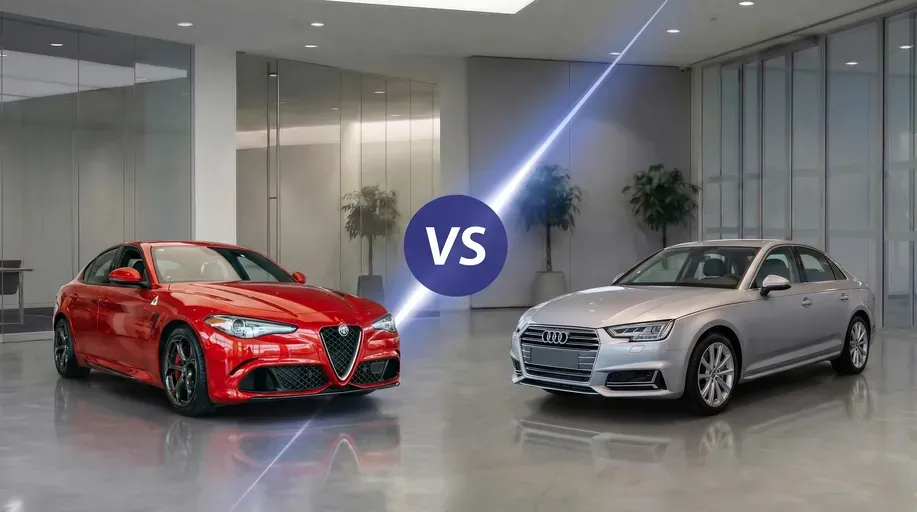
Car battle
Alfa Romeo Giulia vs. Audi A4: Complete comparison 2026
Detailed comparison of Alfa Romeo Giulia vs Audi A4 (B9). Find out everything about engines, equipment, and used car reliability, and read our final verdict!
May 6, 2026
Articles
Car battle
Detailed comparison of the BMW 3 Series vs. Jaguar XE. We compared real-world experiences, used car reliability, and driving characteristics to make your choice easier.
May 9, 2026
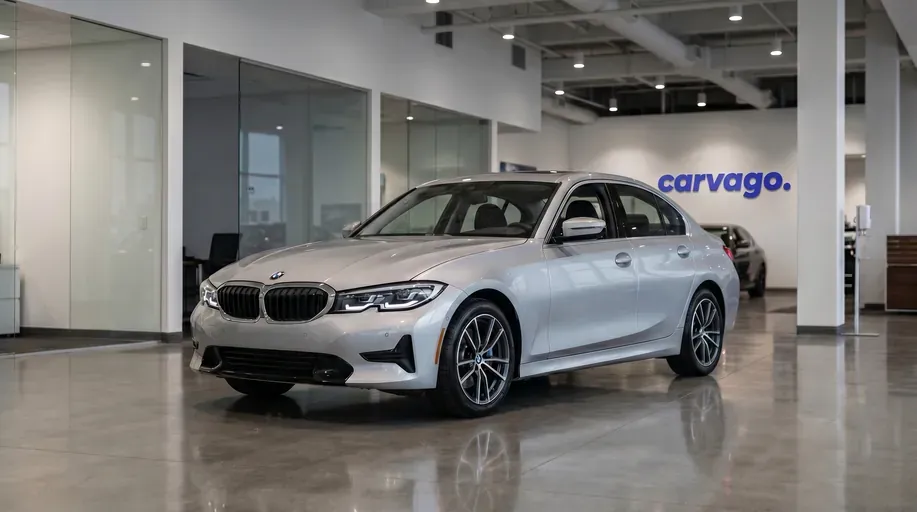

The BMW 3 Series, also known globally by its English name BMW 3 Series, is an iconic Bavarian car and a long-standing benchmark among premium mid-size sports sedans, which perfectly combines precise driving characteristics with everyday luxury. Its bold challenger is the Jaguar XE, a British aristocrat with an athletic spirit, which brings unmistakable British charm, a lightweight aluminum construction, and very aggressive dynamics to the same segment. In the following comparison, we will take a detailed look at which of these two exceptional cars offers a better overall package and emerges from the head-to-head battle as the ideal choice for your next purchase.
When choosing a premium mid-size car on the used car market, especially if we focus on roughly four-year-old models (BMW G20/G21 generation and the facelifted Jaguar XE X760 series from 2020–2022), exterior dimensions play a key role. Both automakers target drivers looking for a sporty experience, but their approach to overall body proportions differs significantly. While BMW bets on gradual growth with each new generation to maximize interior space, the Jaguar XE stubbornly maintains the low-slung and athletic stance of a traditional sports car.
Looking closely at the specific numbers, the BMW 3 Series sedan is up to 4,713 mm long, meaning it is 35 mm longer than its British rival, which measures 4,678 mm. This difference is also directly reflected in the wheelbase, where the Munich model offers 2,851 mm compared to 2,835 mm for the Jaguar. However, a significant contrast can be found in the stated width – the Jaguar XE, with a value of 1,967 mm, significantly exceeds the BMW (1,827 mm). Furthermore, the Jaguar is visibly lower (reaching a height of 1,410 to 1,425 mm compared to 1,435–1,445 mm for the BMW), giving it a very wide and dynamic silhouette.
These dimensional differences have a fundamental impact on the daily usability of both cars. The greater length and longer wheelbase of the BMW 3 Series mean more generous legroom for rear-seat passengers and an overall airier cabin. For those seeking maximum practicality, BMW also has a strong ace up its sleeve – a spacious estate (Touring) body variant, which Jaguar does not offer at all for the XE model. On the other hand, the exceptionally wide and low Jaguar XE visually dominates the road, and the lower build helps lower the center of gravity. However, you pay the price for this attractive design in cramped urban spaces, where the wider body requires much more caution when parking or maneuvering in underground garages.
| Parameter | BMW 3 Series Sedan | Jaguar XE Sedan | BMW 3 Series Estate | Jaguar XE Estate |
|---|---|---|---|---|
| Width (mm) | 1827 | 1967 | 1827 | N/A |
| Length (mm) | 4709 - 4713 | 4678 | 4709 - 4713 | N/A |
| Height (mm) | 1435 - 1445 | 1410 - 1425 | 1440 - 1445 | N/A |
| Wheelbase (mm) | 2851 | 2835 | 2851 | N/A |
When choosing a premium mid-size car, trunk capacity often plays a surprisingly large role, whether you are planning regular family trips or just need enough space to store a stroller or sports equipment. In this regard, the BMW 3 Series and Jaguar XE represent two different approaches to the concept of interior space. While the German representative tries to balance driving dynamics with maximum everyday usability, the British model bets more on a distinctly sporty silhouette and elegant proportions, sacrificing part of its carrying capacity.
If we look at the most sought-after models from around 2022, the differences in numbers are very noticeable. The BMW 3 Series (G20 generation) in the sedan version offers a very solid 480 liters of base capacity, which is a reliable standard guaranteeing space for a few extra suitcases. In contrast, the Jaguar XE (X760) sedan offers a more modest 394 liters for gasoline engines (P250 and P300). For the popular D200 diesel variant, this space drops even further to just 356 liters, mainly due to the placement of mild-hybrid system components. The reduction in volume did not escape the plug-in hybrid versions from Munich either – the BMW 320e has a reduced trunk capacity of 375 liters due to the batteries.
However, the range of body styles itself has a major impact on family usability. The Jaguar XE exists exclusively as a classic sedan. BMW, on the other hand, has long scored points with the popular Touring (estate) variant. In the version with standard internal combustion engines, it provides a base trunk size of 500 liters, which grows to 1,510 liters after folding down the second-row backrests. Such space is easily sufficient for weekend shopping as well as a longer vacation with bulkier luggage. Therefore, if you are looking for a car that can also serve as the main family vehicle, BMW offers an incomparably higher degree of flexibility.
| Parameter | BMW 3 Series Sedan | Jaguar XE Sedan | BMW 3 Series Touring | Jaguar XE Estate |
|---|---|---|---|---|
| Base capacity (l) | 480 | 356 - 394 | 500 | - |
| Max. capacity with seats folded (l) | - | - | 1510 | - |
The BMW 3 Series outperforms the Jaguar XE not only with a larger base trunk in the sedan but primarily through the availability of the more practical estate version, making it a much more versatile choice for family travel.
Although premium mid-size cars are not primarily bought as heavy-duty towing vehicles, trailer weight represents a key practical parameter for many buyers. Especially in the market for roughly four-year-old used cars, people often look for a versatile car that can serve as a representative vehicle during the week and tow a caravan for a family holiday on the weekend. Both models offer more than decent values in this regard, but they approach them somewhat differently.
The Jaguar XE (generation X760) scores primarily with its clarity and consistency. For the vast majority of modern engines, which include the popular P250 and P300 petrol units or the D200 diesel version, it offers a maximum braked trailer weight of exactly 1800 kg. You don't have to painstakingly examine the registration certificate just because you chose a different engine. Only older, fuel-efficient variants labeled E-Performance on the used car market featured a reduced capacity of 1600 kg.
The situation is a bit more varied for the Munich competitor. The BMW 3 Series (in its most popular used generation G20 and G21 estate) can tow braked trailers weighing from 1600 to 1800 kg with traditional 320d and 320i engines, with the highest 1.8-tonne limit often tied to specific specifications and equipment. However, those interested in the modern 320e plug-in hybrid version should take note. Due to the additional weight of the integrated batteries, its braked towing capacity is limited to exactly 1500 kg.
In practice, this means that even the reduced value of 1500 kg for the hybrid BMW represents a perfectly sufficient reserve for normal transport of building materials or towing a smaller caravan. The full 1800 kg, which you get with the Jaguar and common internal combustion versions of the BMW, then opens up completely new possibilities – such a value is ideal for large twin-axle caravans or safe boat transport. Both models can handle an unbraked trailer up to the legal European maximum of 750 kg, which is more than enough for a weekend trip to the hardware store.
While the Jaguar XE overall pleases buyers with its unified towing capacity across the range regardless of engine choice, the BMW 3 Series offers a hard-to-beat advantage in the form of the spacious Touring version. For an active lifestyle and family travel with a trailer, it simply makes the most sense.
| Model and engine | Braked trailer (kg) | Unbraked trailer (kg) |
|---|---|---|
| BMW 3 Series 320d (G20/G21) | 1600-1800 | 750 |
| BMW 3 Series 320i (G20/G21) | 1600-1800 | 750 |
| BMW 3 Series 320e (G20/G21) | 1500 | 750 |
| Jaguar XE D200 (X760) | 1800 | 750 |
| Jaguar XE P250 / P300 (X760) | 1800 | 750 |
| Jaguar XE E-Performance (X760) | 1600 | 750 |
The engine options of both premium sedans perfectly mirror the different approaches of these manufacturers, which has a significant impact on fuel consumption, performance, and daily usability for used car buyers. While BMW relies on an exceptionally diverse and complex range of powertrains including fuel-efficient diesels, reliable petrol engines, and modern plug-in hybrids (PHEV), Jaguar, in its updated version, relies exclusively on performance-oriented modular two-litre four-cylinder engines from the Ingenium family. For drivers, this means a clear choice: with BMW, you can easily find a compromise tailored exactly to your needs and achieve extremely low fuel consumption in the city thanks to hybrids. In contrast, the British Jaguar appeals directly to the emotions – its petrol models start with much higher power than the comparable entry-level models from Munich. The driving dynamics of both cars are further enhanced by excellent eight-speed automatic transmissions and the option of confident all-wheel drive (xDrive systems for BMW and AWD for Jaguar).
In the market for roughly four-year-old used cars, the backbone of BMW 3 Series sales (current G20/G21 generation, on the market since 2019) consists of models from the 320 family. Although BMW's wider range also includes the brutal six-cylinder M340i or the three-cylinder 318i, for the vast majority of buyers, the turbocharged two-litre four-cylinders represent the optimum. The standard for versatile drivers is the very refined 320i petrol model with 135 kW. However, the real sales hit and a favorite motorway express is the 320d diesel (140 kW), which excels with smooth pull and a massive 400 Nm of torque, while fuel consumption easily stays at very low levels. For environmentally conscious drivers, BMW also added the 320e plug-in hybrid version (150 kW) to the range in 2021, which allows you to cover dozens of kilometers in the city with zero emissions. The almost exclusive standard for four-year-old cars is the perfectly tuned eight-speed Steptronic automatic transmission.
| Engine | Fuel | Power (kW) | Torque (Nm) | Transmission |
|---|---|---|---|---|
| 320i | Petrol | 135 | 300 | 8-speed Steptronic |
| 320d | Diesel | 140 | 400 | 8-speed Steptronic |
| 320e | Petrol PHEV | 150 | 350 | 8-speed Steptronic |
With the arrival of the update and the so-called facelift in 2019 (X760 generation), Jaguar chose a much sharper but also significantly leaner strategy for the XE model. Older and slower units like the 20t, 25t, or the popular D180 diesel have gradually disappeared from the market entirely. In the range of four-year-old vehicles, you will now only find the latest generation of all-aluminum Ingenium engines, all of which use the renowned eight-speed automatic transmission. If you are looking for low running costs for commuting, the ideal choice is the updated D200 diesel engine supported by modern 48V mild-hybrid technology (MHEV). It boasts a very respectable 150 kW and a generous 430 Nm of torque. In the petrol world, however, the British cat makes no compromises. Even the entry-level petrol version carries the P250 badge with a high output of 184 kW, easily outperforming the standard entry-level engines of its competitors in terms of dynamics. True connoisseurs will then be interested in the P300 version, delivering a thrilling 221 kW with exclusively all-wheel drive (AWD).
| Engine | Fuel | Power (kW) | Torque (Nm) | Transmission |
|---|---|---|---|---|
| D200 | Diesel MHEV | 150 | 430 | 8-speed automatic |
| P250 | Petrol | 184 | 365 | 8-speed automatic |
| P300 | Petrol | 221 | 400 | 8-speed automatic |
While BMW, with its wider range of highly efficient diesels and plug-in hybrids, will appeal to those seeking thriftiness and a precise balance, Jaguar will impress drivers who prefer strong and confident performance even in the most basic models.
Choosing the right engine is absolutely crucial for your long-term satisfaction, as it affects not only dynamics and real-world fuel consumption but, above all, mechanical reliability and future service costs. Looking at the offerings of both manufacturers, we encounter an interesting technological contrast. For the current generation, BMW relies on its legendary modular engine family, which offers a huge range of variants, is characterized by great efficiency, and maintains above-average reliability across the entire range. Jaguar, on the other hand, decided to drastically slim down its engine lineup after 2020 and focuses almost exclusively on its own refined four-cylinder Ingenium engines with mild-hybrid technology to meet strict emission limits without losing torque. Our recommendation for roughly four-year-old used cars is based on long-term experience from mechanics, real-world consumption data, and owner satisfaction ratings.
This engine, code-named B47, is probably the best and most versatile two-liter diesel currently offered on the used car market. In the G20 generation (available for approximately four-year-old used cars from 2020–2022), it represents the perfect compromise between smooth dynamics and low operating costs. With an output of 140 kW and a massive 400 Nm of torque, combined with the top-tier eight-speed ZF automatic, it offers an absolutely flawless and refined pull. Real-world fuel consumption typically stays below 5.5 liters per 100 km with sensible driving.
Regarding reliability, the B47 engine has long and successfully resolved the historical timing chain issues (known from the older N47 era). However, there remains a certain risk associated with the EGR cooler, which was subject to extensive recalls across the BMW range. How to keep an eye on this problem? When buying a used car, always carefully check the history at an authorized service center and verify if the vehicle has undergone this recall and the cooler has been replaced. During the test drive, focus on clean and smooth operation during a cold start – the RPMs must not fluctuate. Also, remember that exclusively city driving carries a risk of faster diesel particulate filter (DPF) clogging. The 320d engine is thus an ideal choice primarily for drivers who cover long distances and spend time on highways, where it can fully showcase its fantastic talent for efficiently eating up hundreds of kilometers.
For a roughly four-year-old Jaguar XE (models sold since January 2021), the best and most rational choice is the updated Ingenium diesel four-cylinder labeled D200. With 150 kW of power and a generous 430 Nm of torque, it perfectly matches the sporty and masterfully balanced chassis of this British sedan. A major technical advantage of this specific specification is the presence of mild-hybrid technology (MHEV), which smooths out the start-stop system's operation, noticeably helps with smooth take-offs, and realistically brings consumption down safely towards the 6 liters per 100 km mark.
Although Jaguar eliminated most of the teething problems that plagued early versions of the Ingenium engines (e.g., the older 20d or 25d) in the D200 version, the engine still requires a careful owner. The main weakness remains the risk of engine oil dilution with diesel, which occurs during frequently interrupted or unfinished DPF regenerations during short-distance trips. An experienced buyer or mechanic should always check the oil condition and level on the dipstick during inspection – if the level is noticeably above the maximum mark and the oil smells strongly of diesel, it is a warning sign of neglected maintenance and an unsuitable driving regime. To prevent this phenomenon, ignore the unnecessarily long factory intervals and shorten oil changes to a strict 15,000 km or 1 year. During a cold start, also listen to the engine's sound – a rattling noise could indicate a worn timing chain. This engine perfectly suits drivers with a dynamic driving style and high-mileage commuters who want to stand out from the crowd of common German premium cars and enjoy the exceptional driving experience that Jaguar offers.
When choosing a used premium sedan, fuel consumption is one of the key factors for daily operation. Although modern measurement methodology tries to be as accurate as possible, official figures from manufacturers often still sugarcoat reality. Therefore, it is always useful to look at real-world data directly from owners. By analyzing records from the popular community portal Spritmonitor.de and available tabular values, we get a much more accurate picture of how much fuel roughly four-year-old models from the respective generations (BMW 3 Series G20 and facelifted Jaguar XE X760 from 2021–2022) actually consume.
| Model and engine | Average consumption (l/100 km) |
|---|---|
| BMW 320d (140 kW) | 5.4 |
| Jaguar XE D200 (150 kW) | 5.5 |
| BMW 320i (135 kW) | 6.7 |
| Jaguar XE P250 (184 kW) | 8.0 |
| Jaguar XE P300 (221 kW) | 8.7 |
When interpreting real-world data from everyday traffic, a significant difference in the strategies of both brands is apparent, especially in petrol engine options. Diesel units perform very evenly – both the BMW 320d four-cylinder and the Jaguar XE in the D200 version use advanced mild-hybrid technology and, in practice, can be driven without major compromises for an excellent 5.4 to 5.5 liters per 100 kilometers. However, the gap widens dramatically for petrol engines. While the Bavarian base 320i handles brisk driving with great consumption around 6.7 l/100 km, the British P250 and P300 units take at least a liter more from the tank. Despite the transition to smaller turbocharged engines, Jaguar does not bring the expected fuel savings in the real world, partly due to different gearbox tuning and somewhat more cumbersome engine operation in city mode.
What do these values mean for the typical user? If you commute long distances on the highway daily and your annual mileage exceeds 25,000 kilometers, both diesel variants will be a great choice that will reflect positively on your budget. For drivers moving primarily in the city and on suburban routes who prefer petrol due to concerns about DPF filter longevity, the BMW 320i makes much more economic sense. Daily operation of a petrol Jaguar XE will be significantly more expensive; the car is thus intended primarily for buyers with a more flexible budget who do not worry about every liter and appreciate the unique British style instead.
Overall, it can be stated that while in the diesel category, consumption is not a major decision-making factor between these two cars, BMW clearly dominates in petrol models. The Bavarian automaker once again proves its extensive experience in developing highly efficient power units, and if total operating and fuel costs are a priority for you, the BMW 3 Series will be a disproportionately more sensible choice.
Looking at the used car market for vehicles around four years old (model years 2021 and 2022), there is a massive difference in the supply and residual value of these two premium sedans. While one dominates the classifieds, the other is a complete rarity.
BMW 3 Series (G20 generation)
The BMW 3 Series is a complete staple on the Czech and European used car markets, and the selection is huge. You can choose from hundreds of units, from basic fleet specifications to top-equipped models with the M package and powerful six-cylinder engines.
Jaguar XE
The British feline is a true rarity on the used car market. Compared to its German competition, significantly fewer were sold as new, which is directly reflected in the minimal number of listings after a few years. However, a faster percentage drop in value in the first years makes the Jaguar an extremely tempting second-hand purchase.
| Model | Starting Price (from) | Common Price for Well-Maintained Units | Market Availability |
|---|---|---|---|
| BMW 3 Series (G20) | ~ €23,000 | €29,000 - €37,000 | Huge (hundreds of cars) |
| Jaguar XE | ~ €19,000 | €23,000 - €29,000 | Very limited (handful of cars) |
While the German car is a safe bet with excellent liquidity and easy resale, the British representative plays the role of an exclusive vehicle. You can acquire it for surprisingly attractive money, but at the cost of a poorer selection.
While the BMW 3 Series holds its value excellently and offers a huge selection on the market, the Jaguar XE attracts with a steeper price drop, allowing you to get a premium and fresh-looking car for a more affordable amount.
Both models, the BMW 3 Series and the Jaguar XE, achieved the maximum five-star rating in the rigorous Euro NCAP crash tests in their time. When choosing a used car, however, it is crucial to view these results in the context of the time when the testing took place. The Euro NCAP methodology is constantly evolving and becoming more stringent. Today's requirements include complex collision simulations, advanced cyclist detection, and evasive maneuvers at intersections, which means that percentage scores from different years cannot be directly and unreservedly compared.
The British Jaguar XE underwent safety testing in 2015, when it was among the highest-rated cars in its class. Thanks to its rigid aluminium body structure, it earned a respectable 92% for adult occupant protection and a very good 82% for safety assistance systems. Even then, the car came standard with autonomous emergency braking (AEB) and a pop-up active bonnet to minimise pedestrian injuries. However, it is important to mention that due to the significant age of this test, the validity of the five-star certificate for the XE model officially expired in January 2022, as the original technologies no longer fully comply with the latest testing standards.
In contrast, the seventh generation of the BMW 3 Series (G20) underwent Euro NCAP tests in 2019, under much stricter and more modern rules. Its 97% score for adult occupant protection represented one of the absolute best results ever recorded. Furthermore, the Bavarian sedan scored well in the protection of vulnerable road users (87%), primarily thanks to a sophisticated brake assistant that reliably detects cyclists as well as pedestrians, thus preventing collisions in more demanding traffic situations. Although BMW recorded 76% for assistance systems, this result was achieved at a time when Euro NCAP began evaluating significantly more complex system reactions.
In the overall assessment, it is clear that the BMW 3 Series offers noticeably more modern and comprehensive occupant protection from the perspective of today's safety standards. Although the Jaguar was an absolute top performer in its time and remains a safe choice, the BMW benefits from the advantage of an architecture that is several years newer and much more advanced active radars and sensors.
| Parameter | BMW 3 Series | Jaguar XE |
|---|---|---|
| Year of testing | 2019 | 2015 |
| Adult occupant protection | 97 % | 92 % |
| Child occupant protection | 87 % | 82 % |
| Vulnerable road user protection | 87 % | 81 % |
| Assistance systems | 76 % | 82 % |
Even though both cars once earned five stars, the BMW 3 Series benefits from more recent testing and more advanced electronics, making it a demonstrably safer and more modern choice for a used car buyer.
In addition to standard equipment, both models offer much more than just basic comfort features, and each has its own distinct approach to offering maximum added value to the driver.
The G20 generation BMW 3 Series benefits from the Munich automaker's robust technological background and focuses on the perfect connection between driver, car, and the digital world.
Following its modernization, the Jaguar XE targets drivers looking for an alternative to German premium brands, who appreciate exceptional driving characteristics and value clever details that make daily life easier.
Top-tier and highly intuitive iDrive infotainment system
Excellent driving dynamics offering an ideal compromise between comfort and sportiness
Wide range of refined, efficient, and powerful engines (including the popular six-cylinders)
Plenty of space for rear-seat passengers and a larger luggage compartment
Also available as a highly desirable and practical estate (Touring)
Noticeably stiffer ride on versions equipped with the M Sport suspension
Less clear digital instrument cluster with an unconventional counter-clockwise tachometer
Many desirable features were expensive options, making it harder to find an ideally equipped used car
The BMW 3 Series (G20 generation) represents the benchmark of the premium mid-size class, satisfying both enthusiastic drivers and users looking for everyday practicality. Thanks to flawless ergonomics, technological maturity, and the availability of an estate version, it is a rational choice with excellent residual value.
First-class tuned chassis and communicative steering with fantastic feedback
Elegant, sporty, and fresh British exterior design
Significantly higher quality interior materials and fast Pivi Pro infotainment in post-facelift models
High exclusivity on the used car market, allowing you to stand out from the German mainstream
Very cramped rear-seat space in terms of both legroom and headroom
Smaller luggage compartment with a narrow opening and a complete lack of an estate variant
Narrowed range of powertrains after the update, limited only to Ingenium four-cylinder engines
Faster depreciation compared to direct German competitors
The Jaguar XE is an attractive alternative for individualists who prioritize distinctive style and pure driving pleasure on winding backroads over maximum utility. Due to limited interior space, it is more suitable on the used market for couples or as a representative company car rather than a family hauler.
Based on data from our comprehensive car inspection, long-term reliability statistics, and service reports, we have compiled a detailed overview of the most common problems that potential buyers of roughly four-year-old used cars of these models should watch out for.
The current generation BMW 3 Series with the code designation G20 (and G21 estate) is generally considered a very reliable car; however, even here, typical ailments associated with modern technology and emission systems appear.
The G20/G21 generation is among the most reliable representatives of the mid-size class, where it is enough to ensure that EGR valve recalls have been completed and to check for potential coolant leaks. Overall mechanical durability and build quality are at an excellent level.
While the facelifted Jaguar XE eliminated many "teething problems" from the start of production, the British cat still requires much more attentive service care and more cautious selection than its German competitors.
While the petrol versions represent an interesting alternative, the Ingenium diesels require extremely vigilant selection and shortened service intervals due to the delicate timing chains and sensitive DPF filter. An independent condition check is crucial in this case.
When buying a used car, a thorough inspection is key. Here are some specific points to focus on for these two models to avoid unpleasant and expensive surprises.
BMW 3 Series offers a more spacious and practical luggage compartment with a capacity of 480 litres, which also boasts a wider loading opening. The Jaguar XE has a smaller boot with a volume of around 410 litres. Furthermore, the British sedan's boot is limited by a less regular shape, making it more difficult to transport bulkier items.
Both sedans are at the absolute top of their class and offer a great driving experience thanks to perfectly tuned chassis. The Jaguar XE excels with fantastically precise steering and a chassis that provides the driver with excellent feedback. However, the BMW 3 Series feels more balanced overall, and its engines, in cooperation with the automatic transmission, react noticeably sharper.
In terms of long-term reliability and component durability, the BMW 3 Series performs better, mainly thanks to highly rated engines and robust electronics. The Jaguar, with its Ingenium family engines, requires more careful maintenance and shorter oil service intervals. For a buyer of a four-year-old used car, the BMW represents a safer and more predictable choice regarding potential service costs.
In terms of overall cabin spaciousness, the BMW 3 Series is the clear winner, providing significantly more legroom and headroom for rear-seat passengers. Additionally, the German car features the iDrive system, which is considered one of the most intuitive and fastest infotainment systems on the market. While the Jaguar XE impresses with its elegant British design and premium materials, it feels more cramped inside.
The BMW 3 Series provides an excellent compromise between sportiness and daily comfort, especially if the used car is equipped with adaptive dampers. However, the Jaguar XE is often praised by experts for its exceptional ability to absorb city potholes, even when fitted with larger wheels. Conversely, the BMW has a significant advantage in slightly better visibility from the cabin and a more advanced parking assistance system.
The battle between these two premium sedans represents a classic clash of reason and emotion in the used car market, where each car appeals to a completely different group of buyers. BMW 3 Series is a complete all-rounder that, thanks to top-tier technology, a more spacious interior with the option of a practical estate version, and demonstrably higher reliability, represents the most sensible choice for families and daily commuters. In contrast, the Jaguar XE scores with a more affordable purchase price, fresh British design, and a fantastically communicative chassis, making it the ideal car for individualists seeking pure driving pleasure at the expense of a smaller interior. So, if you prefer a safe bet with excellent residual value and a wide selection, go for the German car, while for exclusivity and a purer sporting experience, the Jaguar will be the right choice.
Sources: ADAC, garaz.cz, denik.cz, autoservis.cz, autoexpress.cz, autosystem.cz
This article was prepared using artificial intelligence tools. The section guarantor is Petr Dušek.
Detailed comparison of Alfa Romeo Giulia vs Audi A4 (B9). Find out everything about engines, equipment, and used car reliability, and read our final verdict!
May 6, 2026
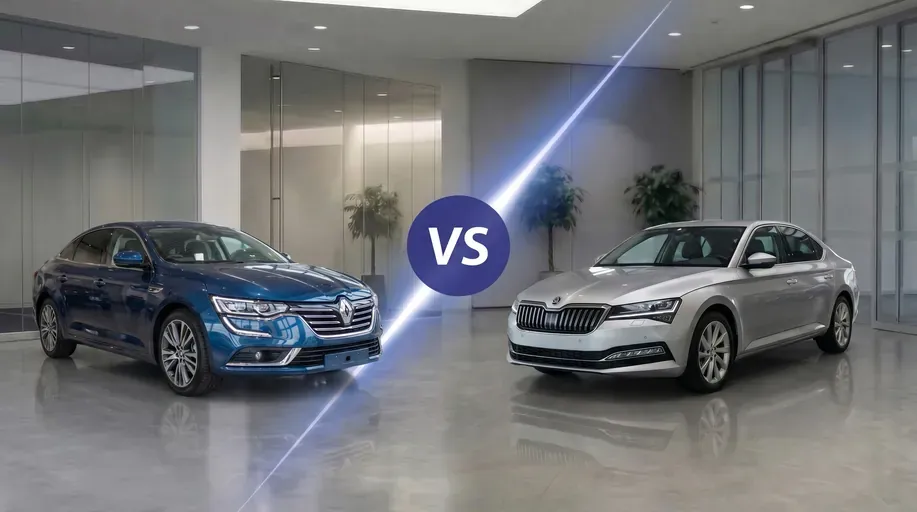
Detailed comparison of Renault Talisman vs. Škoda Superb. Read our used car reviews, comparison of spaciousness, engines, and our final verdict before buying.
Apr 30, 2026
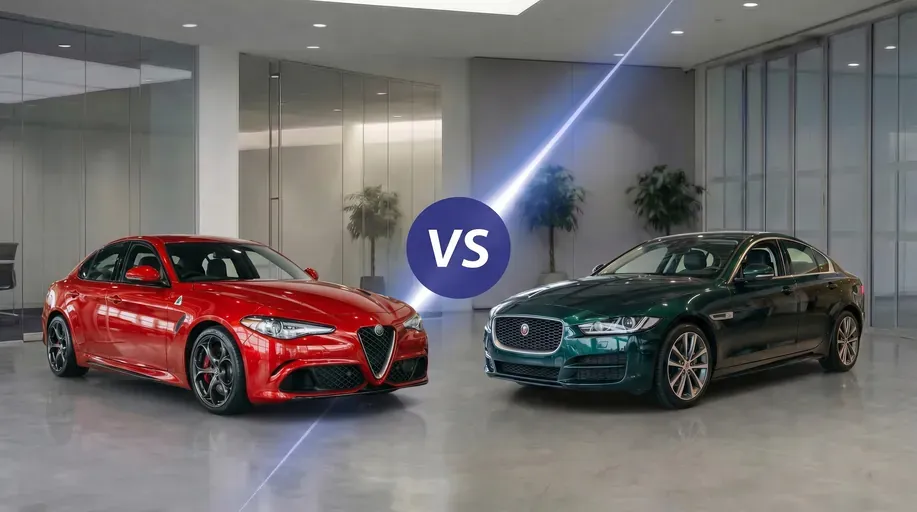
Detailed comparison of Alfa Romeo Giulia vs Jaguar XE. Discover real-world experiences, differences in driving characteristics, and the verdict on which sedan to choose.
Apr 23, 2026