Articles

Car battle

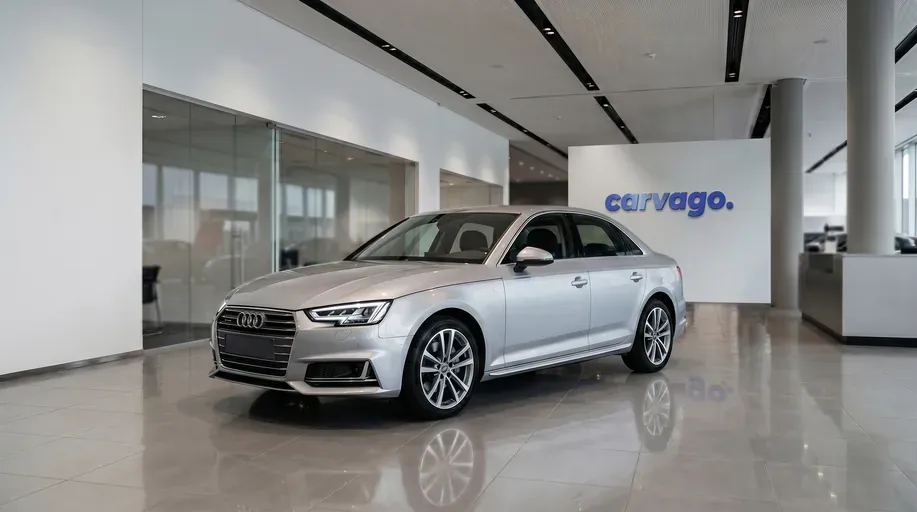
Alfa Romeo Giulia vs. Audi A4: Complete comparison 2026

Detailed comparison of Alfa Romeo Giulia vs Audi A4 (B9). Find out everything about engines, equipment, and used car reliability, and read our final verdict!

May 6, 2026

VS
Alfa Romeo Giulia

Alfa Romeo Giulia

Audi A4

Audi A4

Introduction

Alfa Romeo Giulia is a charismatic Italian sedan that brings strong emotions and unrivaled driving dynamics to the premium mid-size car segment. Standing against it is the popular Audi A4, also available in the popular Avant body style or as the more adventurous allroad quattro model, which represents the benchmark of German precision, technological maturity, and top-tier craftsmanship. Let's take a detailed look at how the direct clash between Italian passion and German reason turns out, and which of these used models will be the smarter choice for your daily journeys.

Comparison of External Dimensions

When comparing the exterior dimensions of these two premium mid-size representatives, we encounter one fundamental difference right at the start – while the Audi A4 offers, in addition to the classic sedan, the very popular estate version (Avant) and a distinct raised variant called Allroad, the Alfa Romeo Giulia is available on the used car market exclusively as an elegant sedan. This naturally narrows the choice for customers looking for family versatility from the Italian brand, but conversely, it underscores the model's sporty focus.

If we place the more recent generations of both sedans (from around 2020 and newer) side by side, we find that the Audi A4, with a length of up to 4762 mm, is a significant 112 mm longer than its Italian competitor, whose length does not exceed 4650 mm. This difference adds to the visual majesty of the German car. On the other hand, the Alfa Romeo Giulia is 13 mm wider (1860 mm compared to 1847 mm for the Audi), which perfectly enhances its muscular proportions, optically lowers the center of gravity, and contributes to better agility on country roads. A very interesting finding is that despite the different overall lengths, both sedans share an identical wheelbase of 2820 mm to the millimeter. The internal longitudinal legroom for passengers is thus conceptually very balanced.

In practice, these dimensions mean that the Italian sedan is somewhat easier to park thanks to its shorter body and feels more agile when maneuvering in tight spaces. The Audi A4, on the other hand, benefits from its greater overall length and the availability of an estate variant, making it a more pragmatic choice for families with children or drivers with higher cargo transport requirements. The choice in this area therefore depends purely on whether you prefer an unrivaled sporty stance or more practical exterior proportions with the option of a more utilitarian body style.

ParameterAlfa Romeo Giulia SedanAudi A4 SedanAudi A4 Estate
Length (mm)4639 - 46504726 - 47624725 - 4762
Width (mm)1860 - 18741842 - 18471842 - 1847
Height (mm)1433 - 14501427 - 14281434 - 1493
Wheelbase (mm)282028202818 - 2820

Trunk Volume

Luggage capacity is often a key parameter when choosing a car, especially if you are looking for a vehicle for family purposes or frequent travel, where maximum practicality plays a major role. In this regard, the approach of the two manufacturers differs quite fundamentally. While the Audi A4 (B9 generation) relies on a wide range of body styles, including the extremely popular estate (Avant) and its off-road derivative (Allroad), the Alfa Romeo Giulia (952 generation) sticks to the traditional silhouette of a sporty sedan without an estate alternative. This naturally significantly affects the overall transport capacity and everyday family usability of these roughly four-year-old used cars.

If we compare the sedan body versions, both models offer a surprisingly balanced duel with very similar values. The Alfa Romeo Giulia has a basic boot capacity of 480 liters for all its engine versions, which is space fully sufficient for weekend shopping or a longer holiday for two. The Audi A4 Sedan counters with a luggage compartment of 460 to 480 liters. The lower value of 460 liters is typical especially for newer models (from 2019/2020) equipped with mild-hybrid technology, where the battery system takes up a small part of the space under the floor. Both sedans can thus easily swallow space for several extra suitcases, however, it is necessary to account for the typical drawback of sedans – a narrower loading opening, which noticeably limits the transport of larger and boxy items.

A major advantage for Audi, however, comes with the Estate version (branded as Avant), to which the Italian competitor has no answer. The Audi A4 Avant offers a very solid basic volume of 495 to 505 liters, which can be increased to a generous 1495 to 1510 liters after easily folding down the rear backrests. It is worth mentioning, however, that even Audi has specific exceptions regarding fuel. If you opt for the alternative Audi A4 Avant 40 g-tron variant powered by compressed natural gas (CNG), expect a reduced volume due to the installation of pressure tanks to 415 liters in the base and 1415 liters after folding the seats.

ParameterAlfa Romeo Giulia SedanAudi A4 SedanAudi A4 Estate (Avant/Allroad)
Basic volume (liters)480460 - 480415 - 505
Maximum volume with seats folded (liters)Not specifiedNot specified1415 - 1510

Practicality vs Style 🧳

While as classic sedans both cars are almost equal in terms of luggage space, the Audi A4 has a clear advantage on the used car market for anyone looking for a full-fledged family car, thanks to the existence of the practical Avant version.

Discover the true condition of the car thanks to an independent inspection

Order CarAudit™

Trailer Weights

The ability to tow a trailer is often not the first parameter that buyers of premium mid-size sedans and wagons consider, but it plays a crucial role in terms of long-term practicality. Whether it's installing a bike rack, moving house, or summer trips with a caravan, the trailer weight determines the car's real utility limits. When comparing roughly four-year-old used cars (the B9 generation for Audi and the 952 generation for Alfa Romeo), we encounter quite fundamental differences in how both manufacturers approach towing capacity.

The Alfa Romeo Giulia is designed primarily with perfect weight distribution and sporty driving characteristics in mind, which is reflected in a simpler range of towing capacities. For common engines, such as the 2.0 Turbo petrol versions (147 and 206 kW) or the 2.2 Diesel (140 or 154 kW), both the standard and maximum braked trailer weight is always a consistent 1,600 kg. The exceptions are the top-tier Quadrifoglio sports models and the limited GTA versions, which completely lack the option for a towing hitch due to structural and aerodynamic reasons. A capacity of 1,600 kg for the standard versions is perfectly sufficient for a weekend trip for building materials or a longer holiday with an average-sized caravan, but it does not reach the top of its class.

The Audi A4 (especially in the sought-after Avant version) approaches towing power much more variably and overall offers higher maximum limits. While basic front-wheel-drive petrol variants, such as the 35 TFSI (110 kW), handle 1,400 to 1,500 kg, the capacity rises steeply for more powerful models. The popular 40 TDI and 45 TDI diesel engines have limits ranging from 1,700 to 1,800 kg. In practice, higher capacity means not only better directional stability for a heavier setup but also provides valuable space for a few extra suitcases when loading a larger family caravan. The absolute pinnacle of the range are the six-cylinder engines like the 50 TDI with quattro drive, where the maximum trailer weight reaches an impressive 1,900 kg. Conversely, a slight limitation can be found in the ecologically focused natural gas variants (g-tron), which can tow a maximum of 1,500 kg due to the installation of specific tanks.

Final Summary: If a towing hitch is only an occasional aid for hauling garden waste or transporting a light caravan, the Alfa Romeo Giulia will serve your needs without any problems. However, if you are looking for a full-fledged workhorse that can handle even heavy multi-axle trailers with absolute confidence, the Audi A4 (ideally in the 40 TDI or 50 TDI versions) is clearly the better and more practical choice in terms of overall variability and maximum load capacity.

Comparison of Trailer Weights (Models 2020–2023)
Model and EngineBraked weight of trailer (kg)Unbraked weight of trailer (kg)
Alfa Romeo Giulia 2.0 Turbo 16V (147 - 206 kW)1600750
Alfa Romeo Giulia 2.2 Diesel (110 - 154 kW)1600750
Alfa Romeo Giulia Quadrifoglio (375 - 382 kW)0 (Towing hitch not available)0
Audi A4 / Avant 35 TFSI (110 kW)1400 - 1500750
Audi A4 / Avant 40 g-tron (125 kW)1500750
Audi A4 / Avant 40 TDI (140 - 150 kW)1700 - 1800750
Audi A4 / Avant 50 TDI (210 kW)1900750

Overview of Most Common Motorizations

Engine Comparison

The Alfa Romeo Giulia and Audi A4 offer completely different approaches to powertrains, reflecting the different target groups of both brands. While the Italian sedan focuses on a pure and emotive driving experience with standard rear-wheel drive and powerful internal combustion engines even in base trims, the Audi A4 emphasizes a wide, technologically advanced range. This benefits from front-wheel drive or the advanced quattro system and extensive integration of mild-hybrid (MHEV) systems to achieve the best possible daily fuel consumption. The Giulia can thrill drivers with its sharp engines ranging from a 2.0-liter petrol (147 kW) to the ferocious Quadrifoglio V6 with 375 kW. In contrast, the refreshed generation of the Audi A4 (B9) builds on the immense variability of exceptionally efficient 2.0 TFSI and 2.0 TDI units, complemented by robust 3.0 TDI V6 diesels, which are perfect for long highway journeys.

Alfa Romeo Giulia

The Alfa Romeo Giulia (952 generation, relevant for the roughly four-year-old models sought after on the used car market) bets on sporting DNA, which is directly reflected in the lineup of offered power units. Petrol engines are represented by the dynamic 2.0 Turbo 16V four-cylinder, available in versions with 147 kW (200 hp) and an uprated 206 kW (280 hp) for the sporty Veloce trim. Diesel proponents can choose all-aluminum 2.2 Diesel engines, which, depending on the production year, appear with outputs of 118 kW (160 hp), 140 kW (190 hp), and a top-tier 154 kW (210 hp) for the Veloce version. A major advantage of this model is that manual transmissions have completely disappeared from the range, and all standard versions now use the fantastically tuned ZF eight-speed automatic transmission as standard. This directs torque either exclusively to the rear axle or, in more powerful variants, via the precise Q4 all-wheel-drive system. At the absolute top of the food chain sits the unique Quadrifoglio version, powered by a twin-turbocharged 2.9 V6 engine with a staggering 375 kW (510 hp).

Engine typeFuelPower (kW)Torque (Nm)Transmission
2.0 Turbo 16VPetrol1473308AT
2.0 Turbo 16V VelocePetrol2064008AT
2.2 DieselDiesel1184508AT
2.2 DieselDiesel1404508AT
2.2 Diesel Veloce Q4Diesel1544708AT
2.9 V6 Bi-Turbo QuadrifoglioPetrol3756008AT

Audi A4

The modernized Audi A4 (B9, focused on vehicles from the 2020 model year onwards) offers a significantly more diverse range of engines, which are now heavily supported by 12V or 48V mild-hybrid technologies to smooth out the start-stop system and provide exemplary fuel economy. The petrol portfolio is based on a modified 2.0 TFSI turbocharged four-cylinder labeled 35 TFSI, 40 TFSI, and 45 TFSI, with these versions covering a power range from 110 kW (150 hp) to 195 kW (265 hp). The range of 2.0 TDI four-cylinder diesels (30, 35, and 40 TDI) is equally systematically categorized, with outputs ranging from an economical 100 kW to a dynamic 150 kW. While its Italian rival limits powerful engines exclusively to petrol, Audi caters to highway travelers with 3.0 TDI V6 diesels sold under the 45 TDI (170 kW) and 50 TDI (210 kW) badges. The Stuttgart-based carmaker pairs most four-cylinders in this age category with a seven-speed dual-clutch S tronic gearbox (manual versions are rare), and for powerful units with extreme torque, it applies the proven eight-speed hydrodynamic tiptronic. Furthermore, the traditional front-wheel drive is standardly replaced by the advanced quattro all-wheel drive as power increases.

Engine typeFuelPower (kW)Torque (Nm)Transmission
35 TFSI (2.0)Petrol1102707-speed S tronic
40 TFSI (2.0)Petrol140 / 1503207-speed S tronic
45 TFSI (2.0)Petrol180 / 1953707-speed S tronic
30 TDI (2.0)Diesel1003207-speed S tronic
35 TDI (2.0)Diesel1203807-speed S tronic
40 TDI (2.0)Diesel140 / 1504007-speed S tronic
45 TDI (3.0 V6)Diesel1705008-speed tiptronic
50 TDI (3.0 V6)Diesel2106208-speed tiptronic

Sharp Italian or Efficient German? 🏎️

While the Alfa Romeo Giulia relies on a classic rear-wheel-drive layout and spirited sports engines, the Audi A4 attracts with a diverse family of exceptionally efficient and refined power units for maximum confidence on the road.

When choosing the right engine, it is crucial to consider the focus of both cars, as the engineering approach of the manufacturers differs significantly. While Alfa Romeo bets on undiluted emotion, lightness, and sporty dynamics – evidenced, for example, by the unique carbon fiber driveshaft supplied as standard across the entire model range – Audi, on the other hand, excels in absolute efficiency, highway refinement, and technological sophistication. For approximately four-year-old used cars (registered around 2022), it makes the most sense to go for a petrol engine with the Alfa, which fully unlocks the potential of its phenomenal chassis, while the Audi is dominated by a perfectly tuned four-cylinder diesel. The recommendations below are based on real-world experience, mechanical reliability, and long-term user satisfaction.

For the Alfa Romeo Giulia, we recommend: 2.0 Turbo 16V (147 kW / 200 hp or 206 kW / 280 hp Veloce)

This 2.0-liter petrol engine is by far the best choice for the 952 generation, perfectly matching the Giorgio sporty architecture. Whether you opt for the standard 200 hp rear-wheel-drive version or the more powerful Veloce with the Q4 system, you get an exceptionally reliable car with a great balance between everyday usability and high dynamics.

  • Technical advantages: The engine has very strong torque even at low revs and works perfectly with the standard fast ZF eight-speed automatic. Compared to the diesel versions (2.2 Diesel), it doesn't put too much weight on the front axle, which fundamentally improves steering sharpness and eagerness to turn. Real-world fuel consumption is around 8 to 9 liters per 100 km, which is a very good result considering the performance offered.
  • Known risks and their solutions: A crucial factor for this engine's reliability is oil maintenance. The MultiAir electro-hydraulic valve timing system is extremely sensitive to carbonized or degraded oil. We strongly recommend shortening the change interval to a maximum of 10,000 to 15,000 km and using only the lubricant specification prescribed by the manufacturer. With this care, the engine will reward you with trouble-free operation for hundreds of thousands of kilometers.
  • Who it's ideal for: For enthusiastic drivers who want to enjoy the legendary steering and dynamics that the Giulia is famous for. The engine is excellent for mixed driving and shorter trips, where diesel variants would inevitably face the risk of DPF clogging.

For the Audi A4, we recommend: 2.0 TDI (labeled 40 TDI, 140 kW / 190 hp or 150 kW / 204 hp)

In the case of the Audi A4 B9 generation (for four-year-old cars, this is already after the significant and very successful facelift), the 2.0-liter diesel is an absolute classic that makes perfect sense in terms of residual value and operating costs. The specification labeled 40 TDI (often paired with quattro all-wheel drive) represents the pinnacle of an economical highway cruiser.

  • Technical advantages: The 150 kW version (deployed since late 2020) is equipped with mild-hybrid technology (MHEV), which significantly smooths out the start-stop system and extends "coasting" phases with the engine off. A huge advantage is the advanced AdBlue injection system (Twin Dosing), thanks to which the engine meets strict emission standards with a high margin and remains mechanically clean. Real-world consumption on highway routes easily drops to values of 5.0 to 5.5 l/100 km.
  • Known risks and their solutions: Like any modern diesel, this unit does not tolerate permanent city hopping with a cold engine – there is a risk of premature clogging of the diesel particulate filter (DPF) and the EGR valve. Mechanically, the engine is a "workhorse," but a key point of inspection when buying a used car is the seven-speed S tronic dual-clutch transmission (code DL382). Unconditionally verify in the service history whether the transmission oil was changed at least every 60,000 km. Neglecting this task leads to the failure of the expensive mechatronics unit.
  • Who it's ideal for: For people who spend most of their time on highways or families going on long vacations. If you are looking for an inconspicuous, maximally comfortable, and incredibly efficient car with massive pull on highway inclines, the 40 TDI will be an unrivaled choice for your needs.

Real Fuel Consumption

Official fuel consumption figures provided by manufacturers are often unattainable in the real world. If you are deciding between these two attractive cars as used vehicles around four years old (generations available around 2020 to 2022), it is much more useful to rely on the experiences of the users themselves. To obtain an objective comparison, we have used real data recorded by long-term owners on the popular independent portal Spritmonitor.de. This clearly shows how catalog promises differ from everyday reality and which engines actually work most efficiently.

Model and engineAverage consumption (l/100 km)
Audi A4 35 TDI (120 kW)5.2
Alfa Romeo Giulia 2.2 Diesel (140 kW)5.8
Audi A4 40 TDI quattro (150 kW)5.9
Alfa Romeo Giulia 2.2 Diesel Q4 Veloce (154 kW)6.8
Audi A4 35 TFSI (110 kW)6.5
Audi A4 40 TFSI (150 kW)7.0
Alfa Romeo Giulia 2.0 Turbo (147 kW)8.2
Alfa Romeo Giulia 2.0 Turbo Q4 Veloce (206 kW)9.3

Looking at the table, clear trends can be identified. Modern four-cylinder diesel engines from both brands clearly prove that they are still the kings of efficiency. The most economical is undoubtedly the Audi A4 with the base 35 TDI diesel, which can run at just over five liters per hundred kilometers. The diesel Giulia is slightly thirstier, but values well below six liters for the rear-wheel-drive version are excellent for such a driver-focused car. Conversely, a very significant difference appears in the petrol engines. A surprising finding is the relatively high appetite of the turbocharged two-liter engines under the hood of the Alfa Romeo. Even the base version commonly asks for more than eight liters of petrol, and if you opt for the more powerful Veloce all-wheel drive, real-world consumption shamelessly climbs above nine liters. In contrast, Audi's TFSI petrol units can save 1.5 to 2 liters of fuel per hundred kilometers, thanks to a different technical setup and the massive use of efficient mild-hybrid technology.

For a typical user, this means clear rules of the game:

  • Highway drivers: If you are a high-mileage driver and spend most of your time on long routes, the diesel versions of both cars (TDI and JTDm diesel) will be the ideal choice for you, with very similar and acceptable operating costs.
  • City drivers: If you are looking for a car for more frequent urban and suburban commutes, where a petrol engine usually makes more sense, you will feel the choice much more significantly in your budget. With the Audi A4 TFSI, fuel bills will remain within reasonable limits, while with the petrol Giulia, you need to expect disproportionately more expensive operation.

In conclusion, fuel consumption can play a decisive role in this duel. If you are looking for maximum efficiency and low operating costs, the Audi A4 (especially in the TFSI petrol versions and more economical diesels) is a much more rational and safer choice. Prospective Alfa Romeo buyers, on the other hand, should view the higher real-world consumption as a standard tax for a sharper character, more agile chassis, and pure driving emotions.

Price Range and Used Car Offerings

Depreciation and the Used Car Market Situation

When comparing roughly four-year-old used cars (typically 2021–2022 models), two completely different worlds face off. At this age, models appear on the market after key updates – both the Audi A4 (B9.5) and Alfa Romeo Giulia (952) have already had their initial teething troubles resolved and feature more modern assistance systems and infotainment, making them ideal targets for used car buyers.

Availability and Choice

  • Audi A4: The used car market is literally flooded with this model. Due to its immense popularity in corporate fleets across Europe, the supply is vast, with the vast majority (often over 80%) being the more practical Avant (estate) body style. Thanks to the massive supply, you can easily choose a specific color, equipment level, and preferred engine.
  • Alfa Romeo Giulia: This model is available exclusively as a classic sedan. The supply of used cars is a fraction of that of its German competitor, making it a much more exclusive commodity. As new cars, Giulias were more often purchased for private ownership by enthusiasts or as executive cars for demanding drivers. Consequently, you often have to wait for a perfectly specified unit to appear on the used market.

Approximate Prices for Four-Year-Old Used Cars (2021–2022)

ModelStarting price (basic fleet versions)Desirable specifications (S line / Veloce, 4x4)Sporting flagships (RS4 / Quadrifoglio)
Audi A4 (B9.5)from approx. €23,000€29,000 – €37,000€66,000+
Alfa Romeo Giulia (952)from approx. €27,000€31,000 – €39,000€62,000+

Audi A4: Reliability and a Pragmatic Choice

Prices for used Audi A4 models decline very smoothly and predictably. A major draw on the market are fleet versions with economical 2.0 TDI diesel engines (labeled as 35 TDI or 40 TDI) and front-wheel drive, whose prices after four years fall to very favorable amounts, commonly starting around the €21,000 mark. However, if you are looking for the more visually attractive S line trim, quattro all-wheel drive, and a more powerful gasoline engine (e.g., 45 TFSI), the purchase price quickly rises toward the upper end of the spectrum. A huge advantage of the Audi is the exceptionally transparent market and the ease of verifying service history thanks to an extensive network.

Alfa Romeo Giulia: Surprisingly Stable Value

On the used market, the Giulia defies old myths about the steep price drop of Italian cars. While the early pre-facelift models (2016–2018) fell quite low in price, the updated models from 2021 and 2022 hold their value with remarkable confidence. The reason is strong interest from car enthusiasts combined with a low number of available cars. Basic Super trims are rare on the market – buyers most often target the attractive Veloce version, whether with the reliable 2.2 JTDm diesel engine (210 hp) or, even better, the 2.0 Turbo gasoline engine (280 hp) and Q4 all-wheel drive. These units don't sit on dealer lots for long, and sellers consistently charge amounts that, for cars in good condition, often exceed €33,000.

💰 German Availability vs. Italian Exclusivity

While the vast supply of the Audi A4 makes it possible to find a solid car at an excellent price, the Alfa Romeo Giulia in the sought-after Veloce trim holds its value surprisingly well due to demand outstripping the narrow supply.

Safety and Euro NCAP Rating

Both compared models, the Alfa Romeo Giulia and the Audi A4, achieved the maximum five-star rating in their independent Euro NCAP safety tests. When choosing a roughly four-year-old used car, however, it is essential to consider the context and the exact year of testing. The Euro NCAP methodology evolves dynamically and becomes stricter with each iteration, meaning that percentage scores from earlier years cannot be directly compared with modern tests. While the protocols at the time focused primarily on passive structural safety and protection during the impact itself, today's requirements demand highly advanced active assistants, such as cyclist detection or intersection collision avoidance. Since currently available four-year-old used cars technically share platforms with generations tested around 2015 and 2016, the original percentage results still represent the best and most relevant safety indicator for them.

Alfa Romeo Giulia: Dominance in Adult Protection

The Alfa Romeo Giulia underwent Euro NCAP tests in 2016, and its results commanded significant respect in the market. The car achieved a phenomenal score of 98% for adult occupant protection, which was one of the absolute highest values ever measured in the entire automotive industry at the time. The passive safety and structural rigidity of the Italian bodywork are thus at an absolute top level. In the child occupant protection category, the Giulia earned a very solid 81%. Given that the tests took place before the introduction of the most comprehensive standards for active safety assistants, the values for vulnerable road user protection (69%) and safety assist systems (60%) fully correspond to 2016 standards. Even then, the Giulia was equipped with autonomous emergency braking (AEB) as standard, although the official validity of this certificate has now expired from the perspective of completely new rules for new cars.

Audi A4: Balance and Better Family Protection

The competing Audi A4 (B9 generation) underwent crash tests a year earlier, in the autumn of 2015. The test results showed an exceptionally balanced level of safety in all monitored aspects. Adult protection was rated at a strong 90%, however, compared to the Alfa Romeo, the Audi offered slightly more convincing protection for child passengers with a result of 87%. Thanks to the integration of the sophisticated Audi pre sense city system and an active hood to cushion impacts, the model received an above-standard 75% for both pedestrian protection and the safety systems themselves. This result makes the Audi A4 an exemplary safe and technologically versatile family car, even considering that the certification took place under an older and slightly more lenient methodology.

ParameterAlfa Romeo GiuliaAudi A4
Year of testing20162015
Adult protection98 %90 %
Child protection81 %87 %
Vulnerable road users protection69 %75 %
Safety systems60 %75 %

Final Safety Evaluation

From the perspective of the used car market, both platforms represent highly safe and well-built vehicles. The Alfa Romeo Giulia is a structurally excellent choice for drivers for whom the maximum possible protection of adult passengers in the front of the cabin is an absolute priority. The Audi A4, on the other hand, scores higher percentages in child protection and better ratings for electronic assistants, offering a more comprehensive and overall slightly more modern-feeling safety package for everyday family use.

Safety without compromise 🛡️

The Alfa Romeo Giulia impresses with phenomenal passive adult protection, while the Audi A4 represents a more versatile and balanced choice packed with assistants for families with children.

Comparison of Interesting Equipment Features

In addition to standard equipment, each of the models offers several unique features that reflect the different philosophies of both brands and can be decisive for the customer in the final selection. While the Italian sedan bets on uncompromising sporty details and mechanical purity, the German representative excels in advanced digitalization and intelligent assistance systems.

Alfa Romeo Giulia: Driving Purity and Sporty Details

The Giulia is designed with a clear focus on the driver, and its equipment features often benefit from sharing technology with the top-of-the-line Quadrifoglio version. Even in standard engine versions, you will find unique solutions that are often completely missing from the competition.

  • Carbon fiber driveshaft: All versions of the Giulia, regardless of the engine, are equipped as standard with a carbon fiber driveshaft. This solution, more typical of supercars, reduces rotating mass and improves the overall dynamics and responsiveness of the car.
  • Start button on the steering wheel: A design element directly inspired by Ferrari cars. Starting with the thumb of the left hand directly on the steering wheel enhances the sporty feeling even before driving off.
  • Aluminum shift paddles: Optional (standard on higher trims) fixed paddles behind the steering wheel are made of solid brushed aluminum. They do not move with the steering wheel, and their mechanical click when changing gears is among the best experiences in the segment.
  • Alfa DNA driving mode selection system: A rotary selector on the center console allows switching between Dynamic, Natural, and Advanced Efficiency modes. On models with adaptive suspension, Dynamic mode also allows for additional softening of the dampers for driving on broken back roads.
  • Veloce sport trim: Significantly distinguishes the offering. It brings more aggressive bumper shapes, excellent sport seats with adjustable side bolsters, and is often paired with a Q2 limited-slip differential or a rear-axle preference in the Q4 all-wheel-drive system.

Audi A4: Technological Sophistication and Precise Digitalization

The Audi A4 (especially after the significant facelift of the B9 generation from 2019) focuses on top-tier on-board electronics, perfect interior craftsmanship, and innovative lighting technology. In everyday use, it offers extraordinary comfort and user-friendliness.

  • Audi Virtual Cockpit Plus: The fully digital 12.3-inch high-resolution instrument cluster has long been among the best on the market. It allows for wide personalization options, including displaying a giant Google Earth navigation map with smooth operation directly in front of the driver's eyes.
  • Matrix LED headlights: Advanced lighting technology that can turn off individual LEDs to precisely mask oncoming vehicles and those in front of you. The result is the ability to drive constantly with high beams without blinding others, which significantly increases safety.
  • quattro with ultra technology: The innovated all-wheel-drive system uses two clutches that can completely disconnect the driveshaft and rear axle in real-time (within fractions of a second). If the system determines that four-wheel traction is not needed, the car operates as a front-wheel drive, reducing friction and saving fuel.
  • Predictive efficiency assistant: Part of Audi's advanced telematics systems. It works with adaptive cruise control, the camera, and map data. The car can slow down on its own before a curve, intersection, roundabout, or the start of a town, significantly facilitating smooth driving.
  • MMI interface with acoustic feedback: A large 10.1-inch touchscreen replaced the rotary controller in newer models. The system excels with fast computing power, smart online navigation reacting to current traffic, and the ability to receive wireless OTA (Over-The-Air) updates or purchase features after buying the car (Functions on Demand).

Key Advantages and Disadvantages

Alfa Romeo Giulia

Pros

Fantastic driving characteristics and top-notch handling thanks to the agile Giorgio platform

Very sharp and precise steering that provides great feedback

Unique and emotional Italian design that is guaranteed to stand out from the crowd

Excellent driving position with low-mounted sports seats

Powerful petrol and diesel engines with a distinctive and characterful performance

Cons

Cramped legroom and headroom in the rear seats

Limited practicality due to a smaller trunk opening and the absence of an estate version

Noticeably slower and graphically outdated infotainment system even in post-facelift models

Faster depreciation on the used car market compared to German competitors

Alfa Romeo Giulia is a clear choice for enthusiast drivers who demand sporty DNA, emotion, and driving joy on backroads. It is a car bought with the heart that rewards you with an unsurpassed driving experience in its class, although it requires minor compromises in everyday practicality.

Audi A4

Pros

Top-notch interior build quality using luxurious and durable materials

Excellent aerodynamic soundproofing of the cabin ensuring high travel comfort

Modern, fast, and highly intuitive MMI multimedia system with perfect connectivity

Wide range of powertrains including efficient mild-hybrid and popular diesel engines

Excellent practicality, especially thanks to the highly sought-after Avant (estate) body style

High residual value and good liquidity for resale

Cons

Colder and more sterile driving feel that doesn't involve the driver much

Occasional hesitation and jerking of the S tronic dual-clutch transmission during slow city starts

Unobtrusive and very conservative exterior design that can seem almost boring

Significantly higher purchase price for well-equipped used examples

The Audi A4 represents the perfect executive or family highway cruiser, betting on flawless ergonomics, modern technology, and unwavering stability. It is ideal for rational buyers looking for a representative and comfortable car for daily trouble-free long-distance travel.

Common Problems and Owner Complaints

Based on failure statistics, service center reports, and detailed outputs provided by our comprehensive used car check, we have compiled an overview of the most common problems that buyers of approximately four-year-old used cars should watch out for.

Alfa Romeo Giulia

Although the Giulia (especially after the 2020 facelift) has much better mechanical reliability than popular reputation suggests, it still struggles with some specific defects, which are mostly electronic in nature.

  • Electronics and infotainment: In earlier model years, the infotainment screen often froze and the start-stop system malfunctioned. Post-facelift cars are noticeably better, but random warning lights may still appear without a real mechanical cause. In most cases, a software update resolves this issue.
  • Engine and fuel system: The 2.0 Turbo petrol units and 2.2 JTDM diesels are exceptionally robust mechanically. However, for 2020 and 2021 models, there was a recall due to a cracking fuel line sensor cover, which posed a risk of fuel leakage. Diesel engines suffer from clogged diesel particulate filters (DPF) and EGR valve problems during frequent city driving and short trips.
  • Transmission: The ZF eight-speed automatic is among the best and most durable on the market. Failures are practically non-existent; it is only important not to neglect the transmission oil change.
  • Brakes and chassis: The phenomenally handling chassis does not show premature wear, but some 2020 and 2021 cars had a faulty ABS hydraulic control unit addressed under warranty, which could fail during emergency braking. Another specific ailment of the same model years was rear brake discs prone to cracking, which the manufacturer also addressed with free replacement.

Alfa Romeo Giulia: Great mechanics, cranky electronics

Mechanically, the Giulia is a surprisingly durable car, but buyers must be prepared for occasional software and electronic quirks. It is important to check the recall history, especially for the braking and fuel systems.

Audi A4

The B9 generation after the facelift (from 2019) is considered a very solidly built car; however, its advanced technology takes its toll if maintenance is neglected or performed incorrectly.

  • Engine and cooling: In the popular 2.0 TFSI (EA888) petrol engines, the plastic housing of the water pump and thermostat is a chronic and relatively common problem. It cracks due to thermal stress and leaks coolant. Furthermore, carbon deposits quickly form on the intake valves of these engines during frequent city use. Conversely, TDI diesel versions suffer from clogged EGR valves.
  • Transmission: The seven-speed dual-clutch S tronic transmission (DL382) is reliable only on the condition of strict adherence to oil changes every 60,000 km. Neglected service leads to expensive mechatronics failures or excessive clutch wear. During a test drive, such wear manifests as noticeable jerking at low speeds and hesitation when downshifting.
  • Electronics and assistance systems: The Audi PreSense safety system is extremely sensitive to the condition of the windshield. If the windshield was replaced with a cheaper non-original part without precise calibration of cameras and radars, the systems report errors and stop working. Owners also point out occasional freezing of the MMI system.
  • Interior and chassis: In cars with mileage approaching 150,000 km, play may appear in the bushings of the aluminum front axle arms. In the interior, users often complain about rattling grilles of premium audio systems and occasional creaking of the center console.

Audi A4: First-class technology requiring careful service

The Audi A4 is a very reliable car if it has an exemplary maintenance history. The key is to avoid cars with neglected automatic transmission service and to keep an eye on the condition of the cooling system in petrol engines.

Tips for Buying a Used Car

When buying a used car, a thorough inspection is key. Both models are mechanically solid in their modern generations, but they have specific weak points that can make future operation expensive. For this reason, an independent technical inspection of the car is absolutely essential before the final decision, as it will reveal hidden defects. Here are some specific points to focus on during a personal inspection and test drive:

When choosing an Alfa Romeo Giulia:

  • Battery and electrical system condition: Giulia is extremely sensitive to even the slightest drop in voltage, which often manifests as random and false warning lights on the dashboard. During the test drive, test all electronic components and check if the infotainment freezes (a common problem with non-updated software versions before the 2020 facelift).
  • Smoothness of the ZF automatic transmission: The eight-speed automatic should shift completely imperceptibly and smoothly. During the test drive, focus on shifting between first and second gear when cold. Jerking, kicking, or noticeable hesitation can indicate a neglected transmission oil change or a worn torque converter.
  • MultiAir system performance (on petrol versions): On the popular 2.0 Turbo engines, listen carefully to the sound during a cold start. Distinct metallic clicking in the upper part of the engine can indicate a problem with the MultiAir electro-hydraulic unit. It is very sensitive to regular and timely changes of clean engine oil.
  • Coolant leaks: After the engine has warmed up, check the engine bay for the typically sweet smell of coolant. On petrol engines, minor leaks often occur around O-rings in the cooling circuit and hoses leading to the turbocharger.
  • Play in the front axle and steering: The Giulia has a structurally specific, very sharp, and precise steering. If you hear knocking from the front wheels while stationary, driving slowly, or over bumps, it could mean a worn steering rack or play in the complex suspension arms.

When choosing an Audi A4:

  • S tronic (DSG) transmission behavior: The seven-speed dual-clutch automatic transmission can show wear on the clutches or mechatronics in used cars. During the drive, try crawling at a walking pace and switching between D and R while stationary. The car must pull away smoothly – any jerking, vibration, or noticeable delays mean an expensive repair is approaching.
  • Water pump and thermostat leaks: On both petrol (TFSI) and diesel (TDI) engines of the B9 generation, the plastic thermostat module combined with the water pump fails quite often. Check the coolant level in the expansion tank and look for traces of dried pink fluid on the front of the engine block.
  • Emission system and AdBlue on TDI engines: On diesel units, pay close attention to error messages regarding the emission system (SCR/AdBlue) during startup. Faults in the delivery pump, lines, or NOx sensors are expensive to repair and usually manifest immediately with a limited range warning on the trip computer display.
  • Condition of the complex aluminum suspension: The Audi A4 uses multi-link suspension at both the front and rear. During the test drive, intentionally drive over several speed bumps, manhole covers, or potholes. Muffled creaking, squeaking, or knocking usually indicates tired bushings in the suspension arms, the replacement of which is time-consuming and costly.
  • MMI system and rear camera functionality: Test the smoothness and responsiveness of the central infotainment display. Also, remember to engage reverse repeatedly – occasionally, the image from the parking camera drops out or freezes, which is usually caused by broken wiring in the tailgate or moisture entering the camera module.

FAQ: Most Frequently Asked Questions

Alfa Romeo clearly has a sportier character, very precise steering, and rear-wheel drive as standard, making it a much more attractive car for drivers. The Audi representative, on the other hand, bets on refinement, the unwavering confidence of the optional quattro all-wheel drive, and overall higher driving comfort. If you are looking for emotion behind the wheel and perfect weight distribution, the Italian car is the clear choice on backroads.

Audi offers significantly more space in the rear seats and an overall airier and more practical cabin for everyday living. Although both sedans have a theoretically identical trunk volume of 480 liters, the German car features a wider opening and a better-shaped space. Furthermore, the German model wins overwhelmingly by offering an estate version (Avant), which the Italian competition does not offer at all for this model.

The model from Ingolstadt benefits from the VW Group's vast service network and the excellent availability of affordable aftermarket spare parts, which facilitates routine maintenance. While the Italian sedan from recent years has pleasantly surprised with its mechanical reliability and shed old prejudices, potential software glitches can be a nuisance. Specific spare parts for the Alfa and the need to seek out a more specialized service center can thus make overall ownership slightly more expensive.

In the field of digital technology and perceived interior quality, Audi leads with its top-tier virtual cockpit and very intuitive MMI system. While the Alfa's cabin is beautifully driver-oriented and offers great seating ergonomics, the infotainment graphics and parking camera resolution lag slightly behind the German standard. Additionally, the German car feels somewhat more premium thanks to the absolutely precise fit and finish of all hard and soft-touch plastics.

The German automaker offers a very wide range of reliable and economical TDI diesel engines, which, after modernization, often use mild-hybrid technology to further reduce consumption. Conversely, the Italian rival strongly attracts buyers on the used market with dynamic two-liter gasoline engines that perfectly suit its sporty character. For true connoisseurs, there is also the top-of-the-line Quadrifoglio version with a Ferrari-derived engine, which standard Audi models cannot match in terms of dynamics.

Conclusion: Which Model to Choose?

Our Verdict

Choosing between the Alfa Romeo Giulia and the Audi A4 is ultimately a classic battle of unbridled driving emotions versus perfect pragmatism and technological sophistication. While the charismatic Italian sedan will clearly thrill car enthusiasts looking for agile driving characteristics, perfect handling, and a fresh style, it requires minor compromises in terms of everyday family practicality. In contrast, the German representative offers a rational and highly versatile choice, which, thanks to the very popular estate body style, top-tier assistance systems, and exceptionally efficient engines, perfectly serves both families and long-distance highway drivers. If pure driving pleasure is your absolute priority, go for the Giulia; however, if you prefer uncompromising comfort, spaciousness, and modern digitalization for your daily journeys, a used Audi A4 will be the smarter and more secure decision.

Find your ideal car

Sources: ADAC, garaz.cz, forbes.cz, techfocus.cz, autotechnik.cz, finmag.cz

This article was prepared using artificial intelligence tools. The section guarantor is Petr Dušek.

Related articles

Car battle

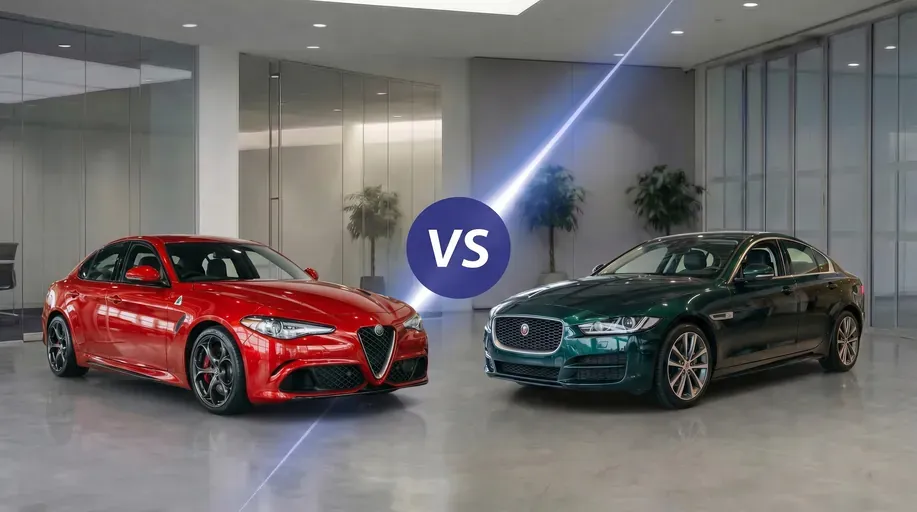
Alfa Romeo Giulia vs. Jaguar XE: Complete comparison 2026

Detailed comparison of Alfa Romeo Giulia vs Jaguar XE. Discover real-world experiences, differences in driving characteristics, and the verdict on which sedan to choose.

Apr 23, 2026

Car battle

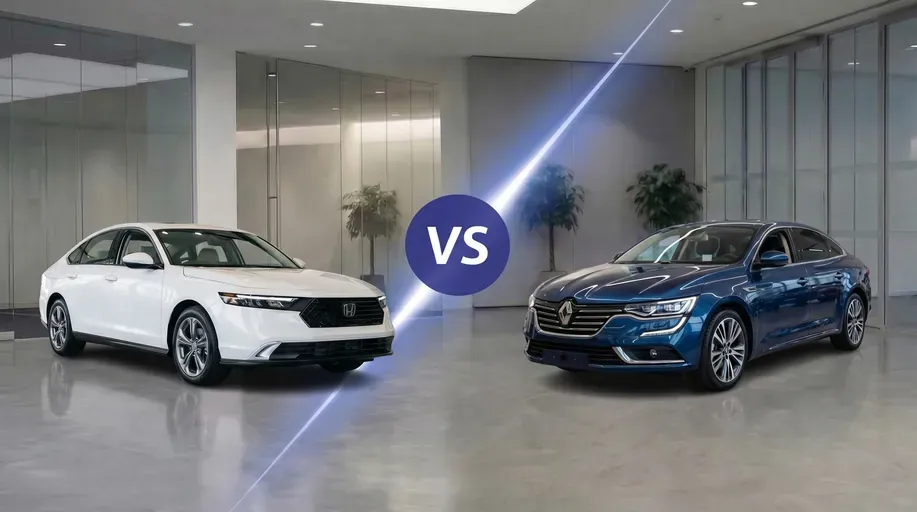
Honda Accord vs. Renault Talisman: Complete comparison 2026

Detailed comparison of the Honda Accord and Renault Talisman. We compared the engines, reliability, and equipment of these used cars. Find out which sedan earns our final verdict!

May 3, 2026

Car battle

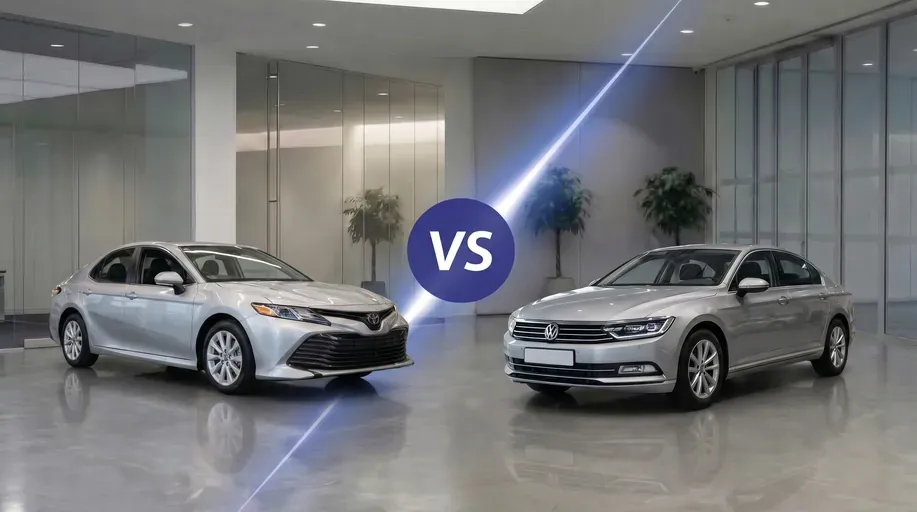
Toyota Camry vs. Volkswagen Passat: Complete comparison 2026

Toyota Camry vs Volkswagen Passat (VW Passat): Detailed comparison of used cars. Discover the differences in equipment and reliability. Read our clear verdict.

May 5, 2026

We accept online card payments as well as wire transfers.

visa payment provider logovisa-electron payment provider logomastercard payment provider logomaestro payment provider logodiners-club payment provider logodiscover payment provider logo