Car battle
Opel Insignia vs. Renault Talisman: Complete comparison 2026
Opel Insignia vs Renault Talisman: A Detailed Comparison. Find out which executive sedan is the better choice. Real data, features, and verdict.
Apr 14, 2026
Articles
Car battle
Toyota Camry vs Volkswagen Passat (VW Passat): Detailed comparison of used cars. Discover the differences in equipment and reliability. Read our clear verdict.
May 5, 2026
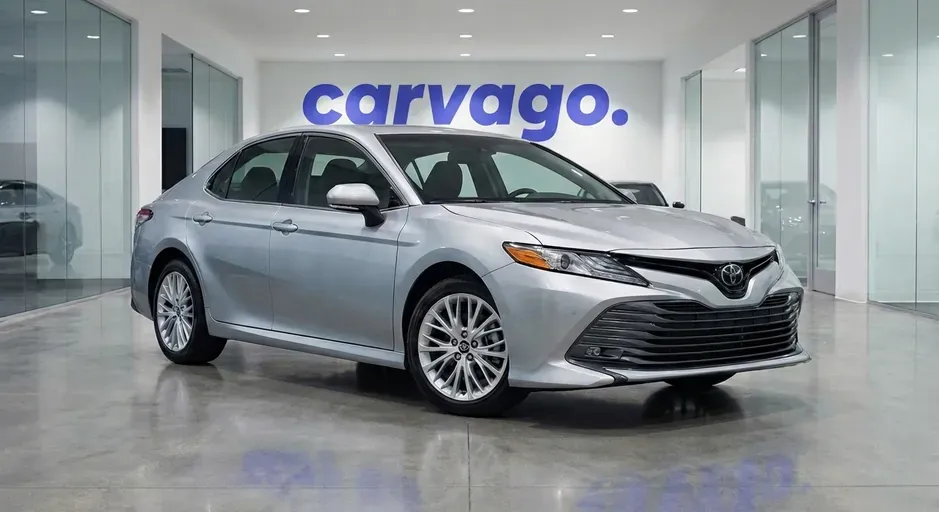
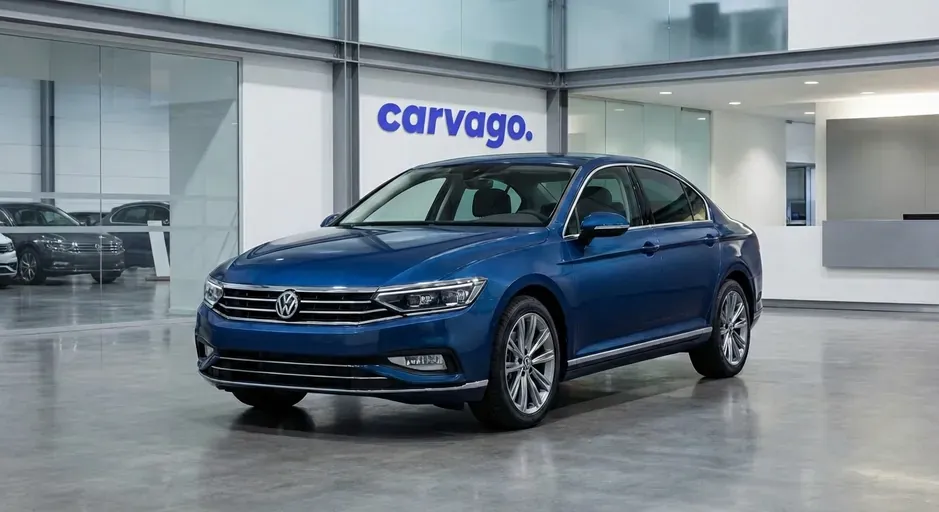
Toyota Camry, also known in selected markets as the Daihatsu Altis, Toyota Aurion, or historically the Toyota Vista, is a globally popular sedan famous primarily for its exceptional comfort and uncompromising reliability. Its main European challenger is the Volkswagen Passat, sold worldwide under names such as Magotan, Santana, Dasher, or Quantum, which has long defined the standards of its class thanks to excellent practicality and precise craftsmanship. Let's take a detailed look at how these two mid-size representatives stand in a direct comparison and which of them represents a more sensible choice when looking for a reliable, approximately four-year-old used car.
When we place the Toyota Camry and Volkswagen Passat side by side, you immediately notice the different approach to exterior proportions. Focusing on models available on the used car market at around four years old (represented by the XV70 generation for Toyota and the popular B8 generation for Volkswagen), the Japanese representative profiles itself as an optically and physically more majestic car. With a length of 4885 mm, it is a significant 110 mm longer than the Passat in its sedan version (up to 4775 mm). This length advantage gives the Camry a more elegant and aerodynamic silhouette of a classic limousine; on the other hand, it will require a bit more caution and maneuvering space when parking in narrow city streets or underground garages.
Another key parameter for interior layout and travel comfort is the wheelbase. Here, the Toyota Camry leads again with a value of 2825 mm, which is 39 mm more than the Volkswagen Passat (2786 mm). In practice, these numbers mean more generous legroom for rear-seat passengers in the Toyota. The Passat, on the other hand, scores with a slightly taller body (1476 mm compared to 1445 mm for the Camry), which taller passengers will appreciate thanks to better headroom and a slightly more comfortable entry angle. The width of both cars is very comparable; at 1840 mm, the Camry is only 8 mm wider than its German competitor.
It is also essential to mention the fundamental difference in the range of body styles. While the Toyota Camry is offered on our market in this generation exclusively as a classic three-box sedan, Volkswagen dominates the market thanks to its extremely popular estate version (Variant). Although this does not represent an extension of the car's overall length compared to the sedan (the length is around 4773 mm), thanks to the extended roof and overall higher rear section, it fundamentally changes the car's practical usability in favor of families and transporting bulkier loads.
| Parameter | Toyota Camry Sedan | Volkswagen Passat Sedan | Volkswagen Passat Estate |
|---|---|---|---|
| Length (mm) | 4885 | 4767 - 4775 | 4767 - 4773 |
| Width (mm) | 1840 | 1832 | 1832 |
| Height (mm) | 1445 | 1456 - 1483 | 1477 - 1521 |
| Wheelbase (mm) | 2825 | 2786 - 2791 | 2786 - 2791 |
In terms of external dimensions and the resulting space, the choice is quite clear and will depend on your priorities. If you are looking for maximum rear legroom and the stately length of a sleek sedan, the Toyota Camry will be an excellent candidate that breathes the atmosphere of the upper-middle class. However, if you struggle daily with tight parking spaces or simply require maximum practicality combined with hauling a family, the Volkswagen Passat offers a slightly more compact and easier-to-judge footprint, which, in the estate body style, brings completely unrivaled transport versatility.
When choosing a used family car or a highway cruiser, the volume and practicality of the luggage compartment often play a key role. In this respect, both models differ significantly in their range of body styles. While the eighth-generation Volkswagen Passat (B8) is available as both a classic sedan and the immensely popular estate (Variant) on the used car market, the Toyota Camry relies exclusively on a representative sedan body for its latest European generation (XV70). For families with children, strollers, and plenty of bags, this logically means that the German representative will be much more flexible and offer better usability.
Toyota Camry in its most widespread hybrid version has a trunk with a basic volume of 524 liters. While this space is more than sufficient for regular weekend shopping and luggage for a longer vacation for a crew of four, the sedan body style simply comes with the penalty of a smaller loading opening. Access is therefore significantly limited when transporting bulkier items. Although the rear seats can be folded down in some trim levels to slide in longer items, the manufacturer does not officially state the maximum loading volume after folding for this model.
Volkswagen Passat, on the other hand, absolutely dominates in terms of hauling capabilities. Even its sedan version provides an excellent 586 liters of basic volume, which in practice means space for one extra large suitcase compared to the Toyota. But the real favorite is the Passat estate, which offers a generous 650 liters in its basic configuration. After folding down the rear backrests, you get a near-van-like 1,780 liters. However, one must keep in mind a catch with the plug-in hybrid Passat GTE variant – the batteries hidden under the floor take up valuable liters, so the basic volume of the estate drops to a more modest 483 liters and the maximum to 1,613 liters.
| Parameter | Toyota Camry Sedan | Volkswagen Passat Sedan | Volkswagen Passat Estate |
|---|---|---|---|
| Basic volume (liters) | 524 | 586 | 650 |
| Max. volume after folding seats (liters) | Not specified | Not specified | 1780 |
While the Toyota Camry offers a more traditional representative trunk sufficient for regular travel, the Volkswagen Passat is the clear choice for active families, to whom its giant estate version will provide incomparably higher utility value.
When choosing a used mid-size car, towing capacity and trailer weight are key parameters for many drivers, fundamentally affecting the car's overall practicality. Whether it's the occasional transport of oversized items or regular towing of a family caravan, there is a vast difference between roughly four-year-old models (generations available around 2021) of the Toyota Camry and the Volkswagen Passat.
The modern Toyota Camry generation XV70 is available on the European market exclusively with the 2.5 Hybrid powertrain. However, to protect the sensitive hybrid system, this model is not homologated for towing trailers at all. Its maximum and standard weight for both braked and unbraked trailers is thus officially 0 kg. Any tow bar on the Camry serves exclusively as a mounting point for a bicycle rack. For this reason, no data for the Camry model is listed in the table below.
Conversely, the eighth-generation Volkswagen Passat (B8) is a renowned all-rounder and an exceptionally capable tow car. Its standard capacity for a braked trailer with basic petrol and diesel engines (e.g., 1.6 TDI or 1.5 TSI) ranges from around 1,500 to 1,600 kg. If you opt for the powerful two-litre versions, the maximum braked trailer weight climbs to an impressive 2,200 kg (especially for the 2.0 TDI and 2.0 TSI versions with all-wheel drive). Interestingly, even the plug-in hybrid Passat GTE variant offers a very solid capacity of 1,600 kg, clearly outperforming Toyota's hybrid technology in terms of utility. An unbraked trailer can then weigh the legislative maximum of 750 kg across all modern Passat versions.
In practice, these values mean that while the Passat offers ideal space for a few extra suitcases in a small trailer and its capacity is perfectly sufficient for weekend shopping of bulky materials or a longer holiday with a large caravan, with the Camry, your hands are unfortunately tied in this regard. If a tow bar and the ability to tow loads are a necessity for you, the Passat represents the only logical choice. The Toyota Camry, on the other hand, will appeal exclusively to drivers who care about a smooth and economical ride without needing to tow anything behind the car.
| Model and motorization | Braked trailer weight (kg) | Unbraked trailer weight (kg) |
|---|---|---|
| Volkswagen Passat 1.6 TDI SCR (88 kW) | 1500 | 750 |
| Volkswagen Passat 1.5 TSI OPF (110 kW) | 1600 | 750 |
| Volkswagen Passat GTE (115 kW) | 1600 | 750 |
| Volkswagen Passat 2.0 TSI OPF (140 kW) | 1800 | 750 |
| Volkswagen Passat 2.0 TDI SCR (110 kW) | 1800 - 2000 | 750 |
| Volkswagen Passat 2.0 TDI SCR (140 - 176 kW) | 2000 - 2200 | 750 |
While the Volkswagen Passat B8 (post-facelift, from 2019) follows a traditional European approach and offers a massive range of petrol, diesel, and plug-in hybrid engines for all types of drivers, the eighth-generation Toyota Camry (XV70, from 2019) has bet everything on a single card in the Old Continent. For the Japanese sedan, only a sophisticated full-hybrid system with a large-capacity naturally aspirated petrol engine is exclusively available here. This completely different strategy plays a key role when choosing a nearly new used car. With its efficient 2.0 TDI diesel engines and DSG dual-clutch transmission, the Passat is an unbeatable express for those swallowing hundreds of highway kilometers, and in the powerful 2.0 TSI petrol versions, it will satisfy fans of dynamics. Conversely, Toyota scores with its legendary reliability, silky smooth operation, and unrivaled fuel economy (especially in heavy city and suburban traffic).
Who is it for? Budget- and eco-conscious drivers who frequently cross the city should reach for the full-hybrid Camry. High-mileage drivers with significant highway travel or, conversely, lovers of dynamics and all-wheel drive will find their favorite in the vast selection of the Passat.
Historically, the Toyota Camry offered a diverse range of engines. From the provided database, it can be seen that in the past, units like the 2.2, 2.4, or the legendary 3.0 V6 were popular. However, these engines had their availability years end deep in the nineties and early 2000s, and they are no longer available for today's buyer interested in a modern four-year-old used car. In the current market (the XV70 generation sold primarily from 2019 to 2021 and above), you will encounter only one advanced engine in the Camry: the 2.5 Hybrid.
This is a naturally aspirated petrol four-cylinder engine operating on the Atkinson cycle, complemented by a powerful electric motor. The combined system output is a respectable 160 kW (218 hp). The system is paired exclusively with an electronically controlled planetary e-CVT gearbox and front-wheel drive (FWD) only. A huge advantage here is the structural simplicity of the hybrid – there is no traditional starter, alternator, or clutch, making the Camry an incredibly reliable workhorse with minimal service costs. On the other hand, a weakness can be the monotonous performance of the e-CVT gearbox during sharp acceleration and the lack of an all-wheel-drive option.
| Engine Type | Fuel | Power (kW) | Torque (Nm) | Transmission |
|---|---|---|---|---|
| 2.5 Hybrid | Hybrid (Petrol) | 160 | 221 (+ 202 el.) | e-CVT |
The range of engines for a four-year-old Volkswagen Passat (facelifted B8 generation, models after 2019) is much wider. Looking at the data of available years, it is evident that previously popular base engines like the 1.4 TSI or the weaker 1.6 TDI ended their era around 2018 and are no longer available in nearly new used cars. Today's offering thus opens with the economical turbocharged petrol 1.5 TSI OPF with cylinder deactivation technology (ACT) producing 110 kW.
For more demanding customers and lovers of fast highway travel, the 2.0 TSI OPF turbo petrol is available, which can be found in 140 kW variants as well as a top-tier 200 kW version, which is also paired with 4MOTION all-wheel drive. The traditional favorite of corporate fleets is, of course, the 2.0 TDI SCR diesel units, offering 110 kW or 147 kW with torque up to 400 Nm, making the Passat an ideal long-distance hauler with low fuel consumption. A very interesting alternative is the 1.4 TSI GTE engine, which is a sophisticated plug-in hybrid with a total output of 160 kW, where the battery can be externally charged for dozens of kilometers of pure electric driving. Most engines use the lightning-fast 7-speed DSG automatic transmission.
| Engine Type | Fuel | Power (kW) | Torque (Nm) | Transmission |
|---|---|---|---|---|
| 1.5 TSI OPF | Petrol | 110 | 250 | 6MT / 7DSG |
| 2.0 TSI OPF | Petrol | 140 / 200 | 320 / 350 | 7DSG |
| 2.0 TDI SCR | Diesel | 110 / 147 | 360 / 400 | 6MT / 7DSG |
| 1.4 TSI GTE | Plug-in Hybrid | 160 | 400 | 6DSG |
While the Passat dazzles with a wide selection for everyone, including powerful highway diesels, the Camry counters by playing it safe – with a single hybrid that is brilliantly efficient in the city and bulletproof in its reliability.
Choosing the right engine is absolutely crucial for your long-term satisfaction with the car. Our recommendations are based on real-world experience, owner feedback, actual fuel consumption, and overall mechanical reliability on the market for used cars approximately four years old. While Toyota is paving the way with a sophisticated gasoline hybrid drive without compromises, Volkswagen continues to benefit from years of experience with efficient diesel engines for long-distance travel in its Passat model. From a technological standpoint, two completely different worlds face each other, each dominating a different driving scenario.
In Europe and on the four-year-old used car market (XV70 generation), this hybrid system (referred to as Dynamic Force) is de facto the only and simultaneously the best possible choice. It combines the above-average dynamics of a large sedan with fuel consumption that, in real combined operation, hovers around a great 5 to 6 liters per 100 km.
For a roughly four-year-old Passat of the B8 generation, the modernized two-liter diesel from the EA288 Evo family is the undisputed king of the used car market. The 110 kW output is an absolutely ideal compromise between a very favorable purchase price, solid highway dynamics, and incredibly low operating costs.
When choosing a used car, fuel consumption is often one of the main decision criteria. However, the official figures provided by manufacturers in promotional materials often differ from everyday reality, which depends heavily on the route profile, vehicle load, and driving style. For maximum objectivity, we have therefore focused on real-world data from long-term users. The source for our comparison of roughly four-year-old used cars (specifically the Toyota Camry generation XV70 and the Volkswagen Passat generation B8 after the facelift) is the popular community platform Spritmonitor.de, where tens of thousands of drivers meticulously record every refueling.
Data source: Spritmonitor.de
| Model and engine | Average consumption (l/100 km) |
|---|---|
| VW Passat 1.5 TSI (110 kW) | 6.5 |
| VW Passat 2.0 TSI (140 kW) | 7.6 |
| VW Passat 2.0 TDI (110 kW) | 5.4 |
| VW Passat 2.0 TDI (147 kW) | 5.8 |
| Toyota Camry 2.5 Hybrid (160 kW) | 5.5 |
| VW Passat GTE PHEV (160 kW) | 4.0 |
From the collected real-world data, it is clearly visible what immense efficiency the full hybrid system from Toyota offers. The Camry model, with its large 2.5-liter naturally aspirated four-cylinder engine working in tandem with an electric motor, achieves an excellent average consumption of 5.5 l/100 km. A surprising, yet typical finding for heavier mid-size cars, is that the modern small-displacement 1.5 TSI turbo engine in the Passat cannot compete with the large Japanese hybrid in terms of real-world economy. It turns out that downsizing (reducing displacement) does not always mean proportionally lower consumption in practice. In contrast, Volkswagen's traditional and sought-after 2.0 TDI diesel confidently stands alongside the Toyota, confirming its long-standing reputation as an unbeatable highway benchmark.
What do these findings mean for the typical user and their daily journeys?
Fuel consumption thus certainly plays a key role when deciding between these two popular models, but it does not determine a global winner. It is more a battle of different technologies for different driving profiles. While the economical diesel Passat is the uncrowned king of long-distance and highway travel, the hybrid Camry naturally dominates the city and country roads, where it offers an exceptionally reliable and efficient gasoline alternative without the need for plug-in charging.
When choosing a roughly four-year-old used car (typically 2021 to 2022 models), both models fall into interesting but different price ranges. The used car market clearly shows the different positioning of both cars – while the Volkswagen Passat (B8 generation facelift) benefits from a massive presence in corporate fleets, the Toyota Camry (XV70 generation) holds its value as an exclusively hybrid sedan thanks to its excellent reputation.
The eighth-generation Toyota Camry has established itself on the European market as a comfortable highway cruiser powered by an efficient 2.5-liter hybrid. This results in its very slow depreciation and a smaller selection of used cars compared to its German competitors.
The updated Volkswagen Passat B8 is an absolute phenomenon of European fleets. The more practical Variant (estate) version completely dominates the used car market, while the car impresses with a huge selection across engine options – from economical 1.5 TSI petrol to popular 2.0 TDI diesels.
From a used car buyer's perspective, the Passat offers substantially more flexibility thanks to its diverse range and often lower entry prices for units with average mileage. The Toyota Camry forms a specific segment – there are significantly fewer used cars on the market and, due to the single available body style (sedan), it won't appeal to everyone. However, Toyota's hybrid drive shows extraordinary reliability even with high mileage, which helps the Camry hold its market value slightly better and depreciate more slowly in the long run.
While the VW Passat attracts buyers with an incredible breadth of choice and lower acquisition costs for high-mileage used cars, the Toyota Camry maintains a higher residual value in the long term thanks to the legendary durability of its hybrid system.
Although premium mid-size cars often receive a maximum five-star safety rating from Euro NCAP tests, it is absolutely crucial to consider the context and the exact year of testing when comparing. The methodology and testing protocols of the independent Euro NCAP organization are constantly evolving and becoming much stricter. This means that earlier five-star results from past years cannot be directly and fairly compared with the latest ones, as modern tests require much more advanced assistance systems and better structural protection.
The eighth-generation Toyota Camry, representing approximately four-year-old cars available on the used car market, unfortunately did not undergo Euro NCAP testing at all during its European production cycle. Although this model boasts a five-star rating in the strict Australian ANCAP program and features the robust Toyota Safety Sense package with a pre-collision system as standard, it lacks official European crash test certification. For this reason, no official European data is available for the Toyota Camry in this regard, which is also reflected in our comparison table.
The Volkswagen Passat, on the other hand, has long demonstrated its dominance in the field of safety. Since we always strive to draw from the latest available data, this model features the testing results of the newest generation from 2024. The car was subjected to the strictest current protocols, which now include advanced frontal impact simulations, improved cyclist detection, demanding intersection crisis scenarios, and an innovative child presence detection system. The Passat excelled and took home the full five stars.
Volkswagen's results show that modern active safety features and the body structure itself provide maximum protection for passengers and the surroundings. The car achieved 93% for adult occupant protection, 87% for child occupant protection, 82% for vulnerable road user protection (pedestrians and cyclists), and 80% in the safety assist category.
If we compare both cars with regard to modern occupant protection standards, the Volkswagen Passat offers a significantly more modern and comprehensive safety package, backed by current and demanding European certification. While the Toyota Camry undoubtedly remains a highly safe and reliable car full of assistants, the lack of data from European laboratories means that for a buyer relying on bulletproof numbers and verified results, the Passat represents a clear and more certain choice.
| Parameter | Toyota Camry | Volkswagen Passat |
|---|---|---|
| Year of testing | Not tested | 2024 |
| Adult occupant protection | - | 93 % |
| Child occupant protection | - | 87 % |
| Vulnerable road user protection | - | 82 % |
| Safety assist | - | 80 % |
Both models rank among above-standard safe cars with rich equipment; however, thanks to excellent results in the latest and strictest Euro NCAP tests, the Volkswagen Passat provides the buyer with proven and documented certainty.
In addition to standard equipment, each model offers several unique features that can be decisive for the customer and demonstrate the completely different approaches of the two automakers to overall added value.
With its executive sedan, Toyota relies primarily on unrivaled hybrid technology and surprisingly rich equipment focused on maximum passenger comfort, especially for those in the rear seats.
The German representative counters with extensive individualization options, top-tier technologies for highway travel, and immense variability in body styles.
Exceptionally reliable and fuel-efficient hybrid powertrain (2.5 Hybrid)
Excellent ride comfort and top-tier cabin soundproofing
Above-average legroom for rear-seat passengers
Very slow depreciation and excellent residual value on the used car market
Generous standard equipment with a strong focus on safety assistants
Available only as a sedan in Europe, which significantly limits the practicality of the luggage compartment
Outdated and slower multimedia system with poorer display graphics
No option for all-wheel drive or alternative engine choices
Limited rear seat folding options on higher trim levels with reclining backrests
The Toyota Camry represents an ideal choice for drivers looking for maximum reliability, low real-world fuel consumption, and a quiet, comfortable ride on long journeys. Its highly focused hybrid powertrain makes great sense even for daily city driving, but the limited practicality of the sedan body style may deter families looking for maximum hauling capacity.
Wide range of efficient and powerful engines (TDI diesel, TSI petrol, and GTE plug-in hybrid)
Availability of the extremely practical estate body style (Variant)
Modern and fast infotainment with a clear digital instrument cluster
Huge and easily accessible luggage compartment (650 liters for the estate version)
Wide availability of all-wheel drive versions (4Motion)
Higher risk of more expensive service interventions compared to Toyota's hybrid technology
Occasional jerking of the DSG dual-clutch automatic transmission during slow crawling
Very conservative and understated design that easily blends into the crowd
Faster depreciation due to the huge number of fleet vehicles on the used car market
The Volkswagen Passat is a long-standing benchmark of practicality, which, thanks to its giant trunk and diverse range of powertrains, meets almost any user need. It is a perfect choice for families and drivers spending hours on highways who appreciate modern technology, precise ergonomics, and swear by the estate body style.
Based on long-term user experience, service reports, recalls, and findings from comprehensive car inspections, we have compiled an objective overview of the most common problems that buyers of roughly four-year-old used cars should watch out for.
The eighth-generation Toyota Camry is generally considered a benchmark for mechanical reliability, and its hybrid powertrain is among the most durable on the market; nevertheless, it does have certain specific shortcomings.
Most problems are limited to more sensitive paint and outdated infotainment; however, mechanically and in terms of the powertrain, it is an exceptionally reliable car with minimal defects.
The Volkswagen Passat B8 generation (after the 2019 facelift) is considered a sophisticated highway cruiser, but given the technological complexity of its systems, it requires a much more careful approach to service history when buying second-hand.
It is a robust and mechanically advanced car, but it does not forgive neglected service, requires regular care for its complex technology, and not infrequently struggles with software quirks.
When buying a used car, a thorough inspection is crucial, and both vehicles have their specifics that you need to watch out for. Here are several specific points to focus on during the test drive and inspection. Remember that before making a final decision, the best step is always an independent car audit, which will reveal defects hidden from the layperson's eye.
Toyota Camry has long been considered the benchmark for reliability, especially thanks to its sophisticated naturally aspirated engine and time-tested hybrid system. Volkswagen Passat is also a solid choice, but its more complex diesel engines and dual-clutch DSG transmissions may require more expensive servicing as mileage increases. If you are looking for worry-free operation with minimal risk of technical faults, the Japanese representative is a safer bet.
The Volkswagen Passat clearly dominates in this regard, especially in the very popular Variant (estate) body style, which offers a massive 650 liters and excellent access. The Toyota Camry is only sold as a sedan on the European market, with a 524-liter trunk and a smaller loading opening. For families who need to frequently transport strollers or bulkier cargo, the Passat is therefore much more practical.
Thanks to its efficient full-hybrid powertrain, the Camry achieves excellent fuel consumption in city and suburban traffic, often staying below 5 liters per 100 km. While the Passat offers a GTE plug-in hybrid version for emission-free driving, it is thirstier in the city cycle with a depleted battery or in classic internal combustion versions. On the other hand, for pure high-speed highway travel, the economical Passat 2.0 TDI remains an unbeatable choice.
The German competitor excels with great ergonomics, precise fitment of more premium materials, and a more modern, significantly faster multimedia system. While the Toyota's interior is built very sturdily and will last for years without rattling, the infotainment and display graphics feel a generation older. If you value modern digital technology and a more luxurious feel in the cabin, the Passat will appeal to you more.
Both cars excel at swallowing hundreds of kilometers with maximum comfort for the occupants, but each goes about it differently. The Camry offers an overall smoother, softer ride and, thanks to the hybrid, extreme acoustic comfort when crawling in traffic jams. However, a Passat equipped with the optional DCC adaptive chassis provides better directional stability at high highway speeds and slightly more effective insulation from wind noise.
Choosing between a roughly four-year-old Toyota Camry and a Volkswagen Passat represents a classic decision between bulletproof Japanese reliability and maximum German practicality. While the majestic Camry, with its sophisticated hybrid powertrain, will dazzle drivers looking for an extremely comfortable, carefree, and economical car for frequent cruising through the city and countryside, it suffers from the lack of a more practical body style and the inability to tow a trailer. In contrast, the Passat, ideally in the spacious estate version with an efficient 2.0 TDI diesel, remains the uncrowned king of the motorways, satisfying the needs of active families requiring a huge boot and top-notch modern technology without compromise. If your absolute priority is long-term maintenance-free operation and a quiet, smooth ride, go for the Toyota; however, if you need everyday family versatility and spend long hours on the motorway, the Volkswagen will clearly be the more sensible choice for you.
Sources: ADAC, forbes.cz, novinky.cz, autoweb.cz, autoservis.cz, carstyle.cz
This article was prepared using artificial intelligence tools. The section guarantor is Petr Dušek.
Opel Insignia vs Renault Talisman: A Detailed Comparison. Find out which executive sedan is the better choice. Real data, features, and verdict.
Apr 14, 2026
Lexus IS vs Volvo S60: A detailed comparison of premium sedans. Discover the key differences in driving characteristics, equipment, and reliability before your purchase.
May 2, 2026
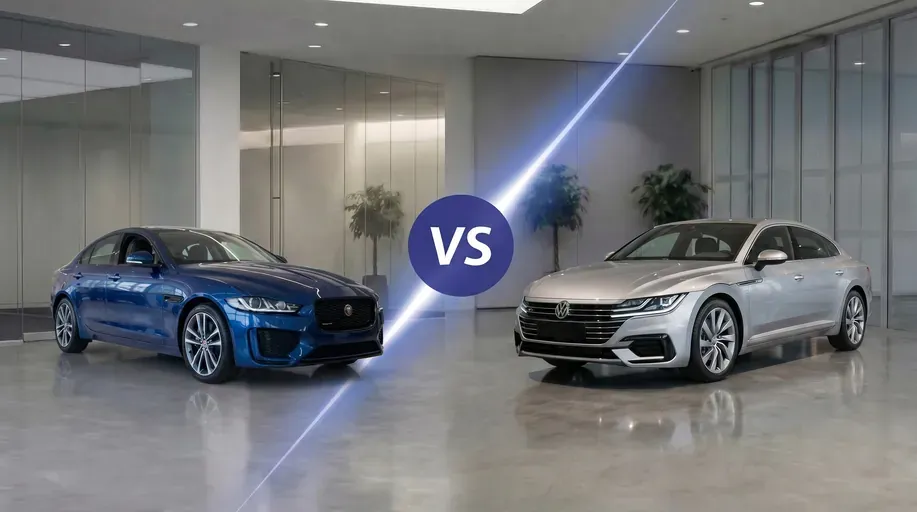
Detailed comparison of Jaguar XE vs Volkswagen Arteon. Discover the differences in driving characteristics, equipment, and reliability, and choose the best used car for you.
Apr 26, 2026