Car battle
Toyota Camry vs. Honda Accord: A Complete 2025 Comparison
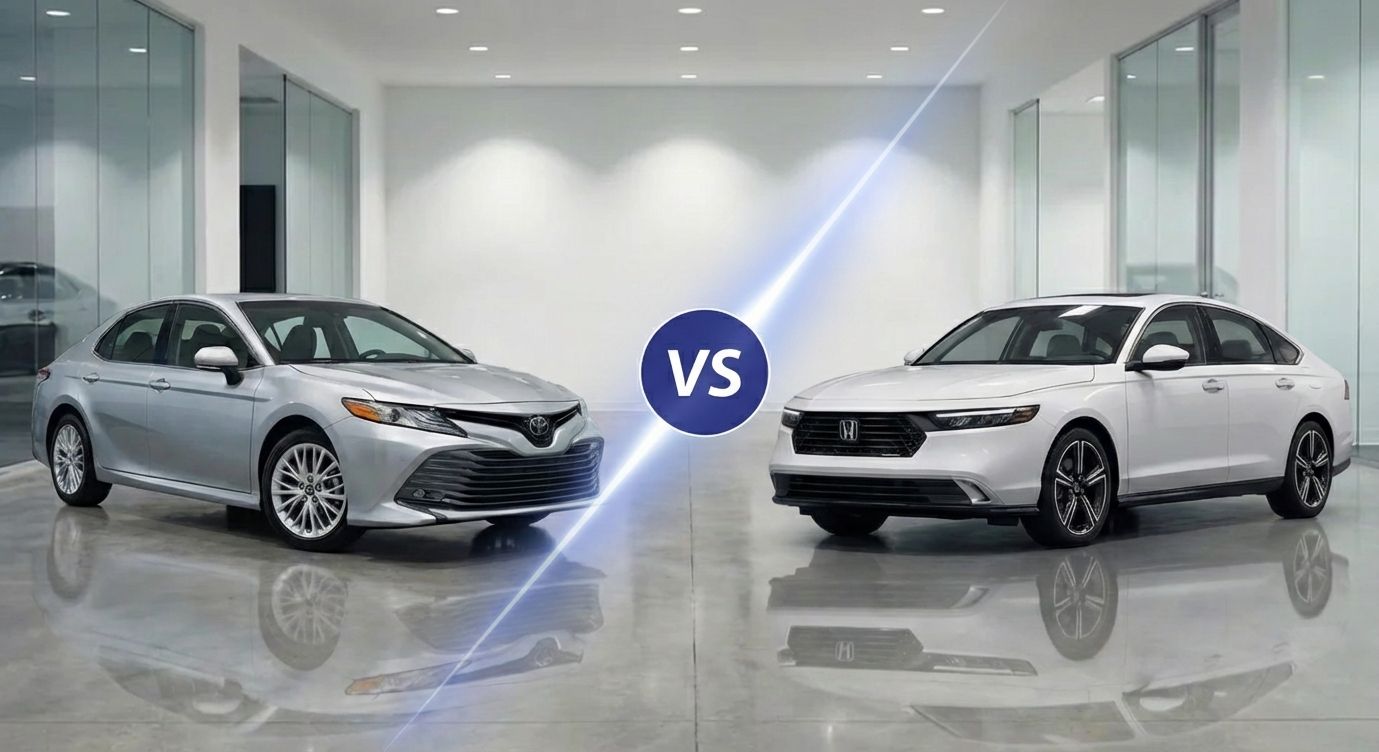
Toyota Camry vs. Honda Accord: Which sedan to choose? Our detailed comparison helps you find the right car based on key differences and our verdict.
Apr 13, 2026
Articles
Car battle
Detailed comparison of Jaguar XE vs Volkswagen Arteon. Discover the differences in driving characteristics, equipment, and reliability, and choose the best used car for you.
April 26, 2026
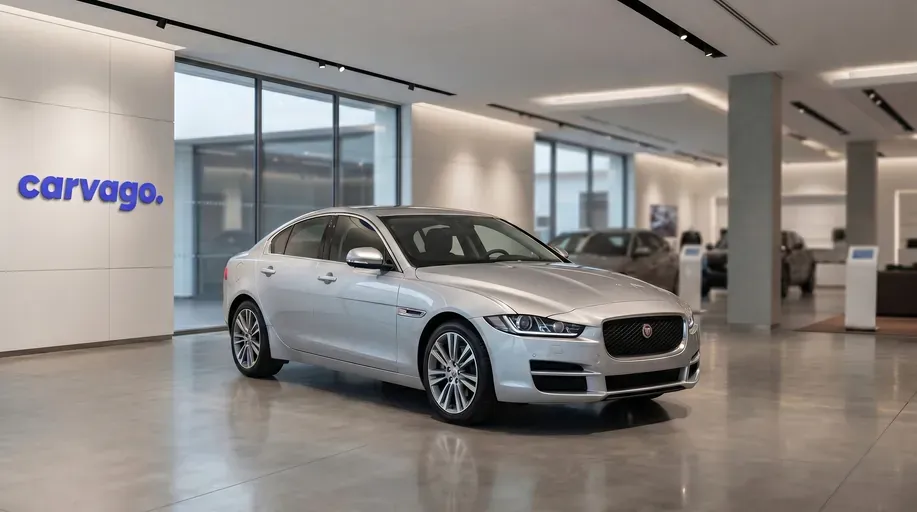
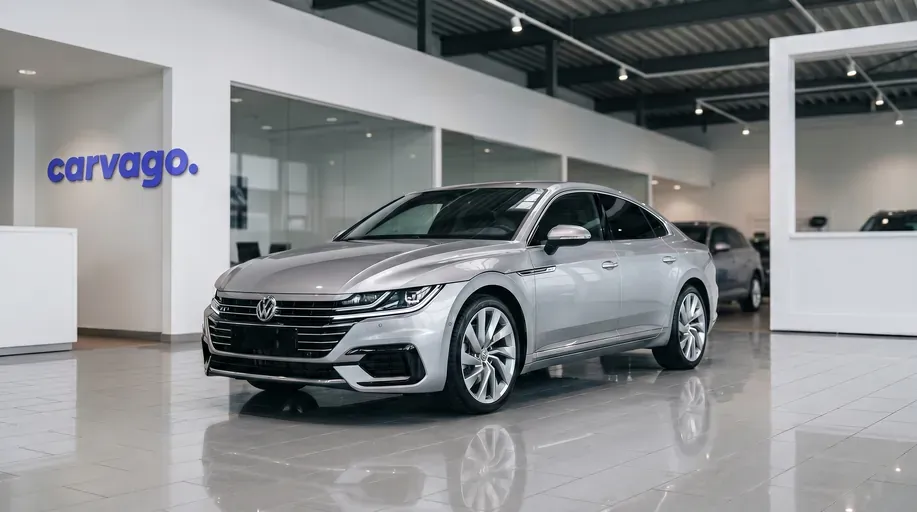
The British Jaguar XE sedan, also known on the Chinese market in an extended version as the Jaguar XEL, represents a sport-oriented choice in the premium mid-size class with an emphasis on excellent driving dynamics and a sophisticated aluminum construction. Its direct rival in this contest is the elegant Volkswagen Arteon liftback, which continues to be sold under the name Volkswagen CC in some markets (such as China), and attracts buyers primarily with its avant-garde design, frameless windows, and superior interior space. Let's take a detailed look at how these two attractive models fare in a direct comparison and which of them represents a more sensible choice for your next used car purchase.
When looking at the exterior dimensions, the completely different approach of both carmakers to the overall concept of the vehicle is fully revealed. The Volkswagen Arteon with its generous proportions almost attacks the boundary of the upper mid-size class, while the Jaguar XE sticks firmly to the traditional athletic cut of a compact sports sedan. The Arteon measures up to 4866 mm in length, which means it is a substantial 188 mm longer than its British challenger, whose versions from recent years reach a length of 4678 mm. In practice, this gives the German car not only a more majestic appearance on the road but also significantly larger rear sections. In terms of choice, this means that if you are looking for maximum transport capacity, the Arteon will be the clear favorite, while the shorter Jaguar will please those who prefer more compact proportions for the city.
An interesting situation arises when comparing the overall width of both cars. According to available figures, the Jaguar XE has an exceptionally wide stance – at 1967 mm, it is a significant 96 mm wider than the Arteon (1871 mm). This above-average dimension gives the Jaguar a very confident look and grants it the advantage of better stability in fast corners. On the other hand, it represents a disadvantage during daily maneuvering, where the British sedan will require more caution in narrow parking spaces or underground garages. The Arteon compensates for this difference with a greater body height (up to 1460 mm compared to a maximum of 1425 mm for the Jaguar), which offers slightly easier entry and more generous headroom for passengers.
But the most interesting detail of all is the comparison of the wheelbase. Although the Volkswagen is noticeably longer, both models share an essentially identical wheelbase of around 2835 mm. For a buyer of a four-year-old used car, this means one very important thing: the longitudinal legroom for passengers inside the cabin itself does not differ much. The additional length of the Volkswagen is cleverly concentrated in the rear overhang. The Arteon (whether as a liftback hidden under the hatchback designation or as an estate with the Shooting Brake suffix) thus confidently dominates in luggage capacity, while the Jaguar with its short rear end maximizes visual dynamics and agility behind the wheel.
| Parameter | Jaguar XE Sedan | Volkswagen Arteon Liftback | Volkswagen Arteon Estate |
|---|---|---|---|
| Width (mm) | 1967 | 1871 | 1871 |
| Length (mm) | 4672 - 4678 | 4862 - 4866 | 4866 |
| Height (mm) | 1410 - 1425 | 1450 - 1460 | 1434 - 1451 |
| Wheelbase (mm) | 2835 | 2835 - 2838 | 2836 - 2838 |
When choosing a used premium mid-size car, the size of the luggage compartment often plays a key role, especially if the car is to serve as a versatile family companion. A comparison of the Jaguar XE and the Volkswagen Arteon in this regard demonstrates completely different design approaches. While the British Jaguar bets on a classic three-box sedan body and focuses primarily on sporty elegance, the German representative combines dynamic design with uncompromising everyday usability. Whether you're heading for a weekend shopping trip or packing for a longer family holiday, you'll feel the difference in the approach of both automakers the first time you open the tailgate.
The basic trunk volume clearly reflects the focus of both models. The Jaguar XE, delivered exclusively as a sedan, provides a standard capacity of 410 liters. Although this figure is sufficient for normal city use and business trips, the handling of larger luggage is limited by the typically narrow loading opening of sedans. Conversely, the Volkswagen Arteon clearly dominates here. In the standard liftback version, it offers a highly accessible 563 liters. If you also opt for the exceptionally stylish estate variant, sold under the name Arteon Shooting Brake, you get a basic volume of 565 liters complemented by an ideally shaped loading area. The only exception in the Arteon's spacious range is the plug-in hybrid eHybrid version, where the installation of the traction battery reduces the basic trunk capacity to 455 liters.
The real gap between the two cars becomes apparent when you need to transport a bulkier load and fold down the rear backrests. The Volkswagen Arteon suddenly transforms into a full-fledged mover – the liftback reaches a maximum capacity of 1,557 liters and the Shooting Brake a respectable 1,632 liters. This creates an easily accessible space for several extra suitcases or bulky sports equipment and bicycles. The Jaguar XE, on the other hand, is not very fond of large transport ambitions. After folding the split backrests, the volume increases to approximately 830 liters, which is enough for safely sliding in longer items such as skis, but the small opening into the cabin and the construction limit the transport of anything bulkier. For family use and travelers, the German car is thus a disproportionately more capable alternative.
| Parameter | Jaguar XE Sedan | Volkswagen Arteon Liftback | Volkswagen Arteon Estate |
|---|---|---|---|
| Basic volume (liters) | 410 | 563 | 565 |
| Max. volume with seats folded (liters) | 830 | 1,557 | 1,632 |
While the Jaguar XE, with its limited transport capacities, will please rather undemanding individuals, the Volkswagen Arteon represents a clear choice for families and active travelers thanks to its huge and easily accessible trunk.
The ability to tow a trailer is often a decisive factor for drivers who regularly set off on holiday with a caravan or need flexibility for transporting heavier loads. When comparing these two models, with an emphasis on used cars from roughly 2020 to 2022, we encounter quite fundamental differences in their towing capacity.
While the British car sticks to a stable standard for its class, the German representative offers greater variety and higher maximum power. Most modern engine versions of the Jaguar XE, including the popular D200, P250, or P300 versions, can tow a braked trailer with a maximum weight of 1800 kg. The only exception was the older, strictly eco-friendly E-Performance variant, where this value was limited to 1600 kg. However, even the standard 1800 kg is a value perfectly sufficient for a weekend purchase of bulky material or a longer holiday with a medium-sized caravan.
The Volkswagen Arteon (even in the popular Shooting Brake body style) is, on the other hand, designed as a more versatile towing vehicle. While the economical 1.4 eHybrid plug-in hybrid handles a basic 1600 kg and the weaker 2.0 TSI (140 kW) petrol versions the same 1800 kg, the Arteon's true strength is revealed in the more powerful engine versions. Common 2.0 TDI diesel engines can tow 2000 to 2200 kg, and the same maximum of 2200 kg is also achieved by the powerful petrol variants (206 kW) or the top-of-the-line Arteon R. In such a large caravan, you can easily gain additional space for several extra suitcases or transport a heavier boat without worry. Both vehicles then have a legislative standard of 750 kg for unbraked trailers.
Final summary: If towing capacity is a priority for you, the Volkswagen Arteon in a more powerful diesel or petrol engine version offers a much larger reserve and is clearly the more suitable choice for heavy trailers. The Jaguar XE does a good job for regular occasional towing, but unlike its German competitor, it is not built for the role of a workhorse.
| Model and engine | Braked trailer weight (kg) | Unbraked trailer weight (kg) |
|---|---|---|
| Jaguar XE D200 / P250 / P300 | 1800 | 750 |
| Jaguar XE E-Performance | 1600 | 750 |
| VW Arteon 1.4 eHybrid OPF | 1600 | 750 |
| VW Arteon 2.0 TSI (140 kW) | 1800 | 750 |
| VW Arteon 2.0 TDI (110 kW) | 2000 | 750 |
| VW Arteon 2.0 TDI (147 kW) / R (235 kW) | 2200 | 750 |
The engine range of both cars beautifully illustrates their different approaches to the premium mid-size segment. The Jaguar XE relies on a classic architecture with longitudinally mounted engines and a preference for rear-wheel drive, making it a purist choice for enthusiastic drivers seeking perfect dynamic balance. The Volkswagen Arteon, built on the modular MQB platform with transversely mounted engines, counters with a much broader and more variable range of powertrains. This includes fuel-efficient diesels ideal for long motorway hauls, an efficient plug-in hybrid version for pure electric city commuting, and an extremely fast all-wheel-drive sports version. While Jaguar now exclusively uses a smooth eight-speed torque converter automatic across all versions, Volkswagen has switched to fast DSG dual-clutch gearboxes.
Jaguar has significantly simplified the XE range following a major update, phasing out not only the powerful supercharged V6s (35t version) but also the original generation of diesels (such as the popular 20d and 25d models from 2015–2019). Today, buyers in the market for roughly four-year-old used cars (with a production date after 2021) will exclusively encounter thoroughly redesigned two-litre four-cylinder engines from the Ingenium family.
The base for high mileage is the D200 diesel version, which received 48V mild-hybrid technology (MHEV). The integrated starter-generator effectively smooths out "turbo lag" at low revs, refines the start-stop system, and reduces real-world fuel consumption. Despite the modest designation, this engine boasts a very solid output of 150 kW and 430 Nm of torque, with a choice of rear-wheel or all-wheel drive. The petrol alternative is the balanced P250 model, which sends its power exclusively to the rear wheels. At the dynamic peak of newer model years sits the P300 version, featuring standard AWD and an impressive 221 kW.
| Engine Type | Fuel | Power (kW) | Torque (Nm) | Transmission |
|---|---|---|---|---|
| 2.0 D200 MHEV | Mild-hybrid diesel | 150 | 430 | 8-speed auto |
| 2.0 P250 | Petrol | 184 | 365 | 8-speed auto |
| 2.0 P300 | Petrol | 221 | 400 | 8-speed auto |
The Gran Turismo representative offers an incomparably richer configuration spectrum on the used car market, focused mainly on four-cylinder units. While the original base 1.5 TSI petrol engine was primarily offered until 2019, in the market for roughly four-year-old post-facelift vehicles, you will exclusively find more powerful two-litre engines and electrified technology.
The most sought-after choice remains the proven and exceptionally reliable 2.0 TDI SCR diesel engine, which in the 2021 model year is mainly found in two power variants: 110 kW and 147 kW (replacing older high-performance versions including the BiTDI). The more powerful diesel is also quite frequently found with 4MOTION all-wheel drive. In response to growing demand for electrification, Volkswagen added the popular 1.4 eHybrid plug-in hybrid to the price list. Paired with a specific six-speed dual-clutch transmission, it boasts a total system output of 160 kW and can cover nearly 50 kilometres on pure electricity. Classic petrol engines are represented by the flexible 2.0 TSI OPF unit with outputs of 140 kW and 206 kW. However, the crown jewel of the Arteon family after the update is the full-blooded Arteon R version tuned to 235 kW (320 hp). Thanks to the sophisticated 4MOTION drive with intelligent torque vectoring on the rear axle, it provides amazing grip and dynamics.
| Engine Type | Fuel | Power (kW) | Torque (Nm) | Transmission |
|---|---|---|---|---|
| 1.4 eHybrid | Plug-in hybrid | 160 | 400 | DSG (6-speed) |
| 2.0 TDI SCR | Diesel | 110 / 147 | 360 / 400 | DSG (7-speed) |
| 2.0 TSI OPF | Petrol | 140 / 206 | 320 / 400 | DSG (7-speed) |
| 2.0 TSI R | Petrol | 235 | 420 | DSG (7-speed) |
The decision between the two cars is largely defined by your driving profile. For budget-conscious drivers and those covering extreme motorway distances, the tireless Volkswagen Arteon 2.0 TDI or the more refined Jaguar XE D200, where mild-hybrid technology excellently dampens any power delivery delays, are very sensible choices.
If you seek driving as an experience and enjoy carving through backroad corners, the purist Jaguar XE in the P250 version with its excellent rear-wheel drive will bring you pure emotions that Volkswagen's front-transverse engine layout cannot match. On the other hand, for managers looking for a quiet city commute with the bonus of electric drive, the Arteon 1.4 eHybrid makes a lot of sense. And in the ultimate battle of top-tier petrols, it is the uncompromising Volkswagen Arteon R that, thanks to more modern torque distribution, acts as an effective weapon for long and fast journeys in any weather.
While the Jaguar XE, with its longitudinally mounted two-litre engines and mild-hybrid technologies, retains the soul of a classic sports sedan for driving enthusiasts, the Arteon attacks with a perfectly curated range of modern, versatile, and exceptionally powerful engines.
Choosing the right power unit is crucial for long-term satisfaction with a car, which is why our recommendations are based on real-world dynamics, fuel consumption, service requirements, and overall feedback from owners in the market for roughly four-year-old used cars. While the Jaguar XE relies on longitudinally mounted engines from its own Ingenium family with an emphasis on rear-wheel drive and sporty handling, the Volkswagen Arteon relies on proven group technology with transversely mounted engines. The Arteon thus excels as a highway cruiser with a massive service base, while the Jaguar targets drivers looking for the premium character and agility of a classic sedan.
Why it's the best choice
While older diesel engines in Jaguars (especially the 20d version) had timing chain issues in the early years of production, the Ingenium four-cylinder petrol engine in the P250 version (available in models from 2019–2024) represents a much safer choice from a mechanical standpoint. It offers a great compromise between performance, reliability, and everyday usability, and furthermore, it perfectly complements the car's excellent sports chassis and the ZF eight-speed automatic transmission.
Technical advantages
The engine uses a twin-scroll turbocharger, which means very fast throttle response and a smooth torque curve (365 Nm) from low revs. In practice, this translates to effortless performance without the need to rev the engine unnecessarily. Real-world fuel consumption during calmer driving is around a very acceptable 7.5 to 8.5 l/100 km.
Known risks and how to prevent them
Who it's ideal for
This engine is perfect for driving enthusiasts looking for an agile premium sedan for winding country roads as well as regular daily driving. It is also suitable for people who spend part of their time in the city, where diesel versions would suffer from DPF clogging.
Why it's the best choice
For a roughly four-year-old Arteon (generation from 2020 onwards), the latest evolution of the EA288 Evo series diesel engine makes the most sense. The Arteon is a grand tourer by nature (especially in the Shooting Brake version), and this more powerful two-litre diesel fits its character perfectly. It offers great dynamics, relentless power on highways, and unrivaled operational efficiency.
Technical advantages
The 200 hp unit boasts a massive 400 Nm of torque, ensuring effortless overtaking even in a fully loaded car. In combination with the seven-speed dual-clutch DSG transmission, it can bring fuel consumption down to values around 5.5 to 6.0 l/100 km during steady highway driving. Furthermore, the Evo version utilizes "Twin Dosing" technology (AdBlue injection upstream of two catalytic converters), which extremely reduces NOx emissions and gives the engine very refined operation.
Known risks and how to prevent them
Who it's ideal for
This engine is the clear choice for people who spend a lot of time on highways, go on longer business trips, or for families with children who often and gladly travel on holiday across Europe. It offers a huge range on a single tank and very relaxed cruising dynamics.
Official fuel consumption figures provided by manufacturers can still differ significantly from everyday reality, even with today's modern WLTP methodology. To give you the most accurate idea of how much fuel these roughly four-year-old cars (from the 2021 and 2022 model years) actually need, we looked at real-world data from drivers themselves. The source for our comparison is the popular German community portal Spritmonitor.de, where owners record their refueling over the long term. For the comparison, we selected the most common engine versions of both models that make the most sense on the used car market.
Data source: Spritmonitor.de
| Model and engine | Average consumption (l/100 km) |
|---|---|
| Plug-in hybrid powertrains | |
| Volkswagen Arteon 1.4 eHybrid OPF | 4.2 |
| Diesel engines | |
| Volkswagen Arteon 2.0 TDI SCR | 5.5 |
| Jaguar XE D200 | 6.0 |
| Petrol engines | |
| Volkswagen Arteon 2.0 TSI OPF | 7.6 |
| Jaguar XE P250 | 9.5 |
Looking at the real-world figures, some fairly clear trends are evident:
What does this mean for the average user considering a roughly four-year-old used car?
In conclusion, fuel consumption can be a completely decisive factor here, especially if you are considering purchasing petrol versions. While the situation between the two cars is relatively balanced for diesel engines, with only a slight lead for Volkswagen, those interested in petrol power must expect significantly higher fuel bills with the dynamically styled Jaguar XE.
When looking at the used car market for vehicles approximately 4 years old (model years 2021 and 2022), you will discover a surprising fact. Although Jaguar, as a premium British brand, starts with a higher price tag for new cars, its faster depreciation means that on the used car market, its price almost directly meets that of the mainstream, yet highly desirable, Volkswagen Arteon.
The Arteon is very widely represented on both the Czech and pan-European used car markets. It benefits from the immense popularity of VW Group vehicles, which brings a diverse selection of equipment, colors, and body styles, but it also means that the car holds its residual value exceptionally well.
The British sedan is a true rarity on the used car market. Compared to the Arteon, it does not offer a practical estate version, and the choice of specific configurations or engines is significantly more limited. However, from the perspective of the price-to-performance and exclusivity ratio, a four-year-old used Jaguar makes a lot of sense.
| Specification / Model | Volkswagen Arteon | Jaguar XE |
|---|---|---|
| Base models (higher mileage) | from approx. €22,000 | from approx. €23,000 |
| Standard price (good condition, mid-trim) | €25,000 – €29,000 | €25,000 – €28,000 |
| Top condition (top trim / powerful engine) | €31,000 – €35,000 | €28,000 – €31,000 |
| Availability on the used car market | Very good (including estate) | Limited (sedan only) |
If a wide selection is important to you and you want to choose from dozens of cars on the market in various colors and engines, the VW Arteon is a safe bet. However, if you long to stand out from the crowd, are looking for more premium materials, and insist on pure driving dynamics (primarily due to rear-wheel drive), a four-year-old Jaguar XE will offer you a piece of genuine British exclusivity for a comparable amount.
While they played in slightly different price leagues when new, after four years on the used car market, the price tags of the Volkswagen Arteon and Jaguar XE surprisingly meet at very similar levels.
Both models, the Jaguar XE and the Volkswagen Arteon, received the maximum five-star rating in Euro NCAP safety tests at the time of their market launch. When comparing used cars, however, it is essential to consider the year the tests were conducted. Euro NCAP's methodology and protocols are constantly becoming more stringent, with increasing emphasis on active safety assistants, simulations of new types of frontal impacts, and more precise detection of cyclists and pedestrians. Percentage results from different years cannot be directly compared, as five stars from earlier years do not meet the same level of overall requirements as ratings under newer rules.
The Jaguar XE underwent Euro NCAP crash tests in 2015, where it demonstrated the excellent rigidity of its lightweight aluminium body and comfortably earned the full number of stars. In adult occupant protection, it achieved a then-top score of 92%, while also recording very good results in child protection (82%) and vulnerable road user protection (81%). Its safety assistance systems were rated at 82%. It is important to mention, however, that the certification for this model officially expired at the beginning of 2022. This does not mean the car is dangerous for a four-year-old used vehicle; rather, it indicates that its technological foundation no longer fully reflects the absolute strictest requirements placed on brand-new cars today.
The Volkswagen Arteon underwent testing in 2017, a time when the methodology was already somewhat stricter, and yet it emerged as one of the highest-rated cars in its class. In adult passenger protection, it earned an impressive 96%, and for child protection, it achieved a solid 85%. Thanks to an advanced emergency braking system, which came as standard with improved pedestrian detection, the Arteon reached an above-average 85% in the vulnerable road user category. Assistance systems received a score of 82%. These figures reflect the brand's overall more modern approach to integrating active safety features.
In conclusion, both cars offer an excellent level of passive occupant protection on the used car market. However, the Volkswagen Arteon provides a more comprehensive and up-to-date safety package overall. Its testing was conducted according to a newer and more demanding methodology, yet it still managed to outperform its British competitor in most percentage metrics.
| Parameter | Jaguar XE | Volkswagen Arteon |
|---|---|---|
| Year of testing | 2015 | 2017 |
| Adult occupant protection | 92 % | 96 % |
| Child protection | 82 % | 85 % |
| Vulnerable road user protection | 81 % | 85 % |
| Safety assistance systems | 82 % | 82 % |
Both cars offer top-tier body rigidity and excellent passive protection, but the Volkswagen Arteon benefits from newer testing protocols and better assistants, making it an overall more modern and safer choice.
In addition to standard equipment, each of the models offers several unique features that can be decisive for the customer, with both cars demonstrating a completely different and distinctive approach to added value.
The British sedan relies on a combination of traditional luxury and modern technological innovations that make everyday life with the car more pleasant.
The Arteon combines an attractive appearance with typical German meticulousness, enormous interior space, and top-tier assistance systems.
Excellent driving dynamics thanks to rear-wheel drive bias and a perfectly tuned chassis
Precise and communicative steering that will delight enthusiastic drivers
Attractive and elegant British design with a strong premium image
Smooth and logical shifting eight-speed ZF automatic transmission
High-quality materials and precise interior craftsmanship (especially in facelifted versions)
Significantly limited space for rear passengers, especially in terms of legroom
Below-average luggage capacity compared to direct competitors
Higher costs for regular servicing, maintenance, and spare parts
Outdated and slower infotainment in older models (before the introduction of the modern Pivi Pro system)
The Jaguar XE is the perfect choice for drivers looking for a premium sports sedan with an emphasis on top-tier driving dynamics and exclusivity. It is a car tailored for individuals or couples for whom absolute practicality and trunk size willingly take a back seat to driving pleasure and exceptional design.
Huge and easily accessible luggage space thanks to the liftback body style (or Shooting Brake estate)
Generous legroom in the rear seats, ideal for long journeys
Wide range of proven and efficient engines (especially the popular 2.0 TDI and 2.0 TSI units)
Very comfortable chassis for highway cruising (especially with DCC adaptive dampers)
Eye-catching and bold exterior design that attractively stands out from the brand's standard production
The dashboard and overall interior concept do not differ much from the cheaper and more common Passat model
The driving experience is safe and stable, but rather detached and less engaging for the driver
Touch-sensitive surfaces on the steering wheel and climate control panel in facelifted versions worsen control ergonomics
Reduced headroom in the rear seats due to the elegantly sloping roofline
The Volkswagen Arteon will appeal to buyers who desire an attractive and representative car but do not want to give up everyday family practicality and a large trunk. It serves perfectly as an exceptionally comfortable highway cruiser that, while not offering the same driving passion as its British rival, excels in versatility and reasonable running costs.
Based on long-term user experience, service bulletins, and findings from our detailed comprehensive car audit, we have compiled an overview of the most common problems that buyers of these four-year-old used cars should watch out for.
Jaguar XE offers excellent driving characteristics and a premium look, but requires a more careful approach to maintenance and a thorough check of the service history.
The British sedan can reward with excellent steering and charisma, but it requires absolutely consistent maintenance. From a long-term reliability perspective, gasoline engines appear to be a safer choice, and a careful check of the car's condition before purchase is an absolute necessity here.
Volkswagen Arteon shares its mechanical basis with the popular Passat, which ensures trouble-free parts availability, but on the other hand, it struggles with some chronic ailments of modern VW Group models.
Mechanically, it is a highly durable and practical car with cheaper service, so its greatest weakness remains the temperamental modern onboard systems and assistance features. A documented history of DSG oil changes is the basis for trouble-free ownership.
When buying a used car, a thorough inspection is key. Here are some specific points to focus on for these two models to avoid unexpected future investments.
The Volkswagen Arteon is significantly more spacious and practical for everyday use thanks to its liftback or estate (Shooting Brake) body style. It offers generous rear-seat space and a huge boot with a capacity of over 560 litres and excellent access. The Jaguar XE has noticeably less legroom in the rear seats, and its 410-litre boot is limited by the smaller loading opening of a classic sedan.
The Jaguar XE is the clear choice for enthusiastic drivers, as it uses a platform with primary rear-wheel drive, ensuring excellent balance, steering feedback, and agility. In contrast, the Arteon is designed as a stable and quiet motorway cruiser that, even with available all-wheel drive, prioritises comfort and confidence over sporty cornering behaviour.
Following its facelift, the Jaguar offers truly luxurious materials, an elegant dashboard with British charm, and the lightning-fast Pivi Pro infotainment system. While the Arteon represents the top of its brand's range with excellent build quality, its interior is still very similar to the more common Passat, which slightly detracts from the feeling of exclusivity.
The Volkswagen Arteon has a significant advantage in lower routine maintenance costs thanks to the wide availability of spare parts and the vast network of both independent and authorised VW Group service centres. With the Jaguar, you have to expect higher hourly rates at premium service centres and more expensive genuine parts, although its Ingenium diesel engines can be very fuel-efficient.
The Arteon is an ideal choice for families and long-distance drivers looking for a bold design combined with maximum utility. The Jaguar XE, on the other hand, will appeal to drivers who don't need to carry a lot of cargo and desire sporty driving characteristics, a premium brand, and want to stand out from the mainstream.
While the Volkswagen Arteon excels on the used car market as an exceptionally practical and spacious highway cruiser ideal for families or frequent travelers, the Jaguar XE appeals primarily to emotions with its purist driving characteristics and British elegance. If you are looking for uncompromising luggage space, fuel-efficient engines for long distances, and the advantage of an extensive service network, a roughly four-year-old Arteon will be a highly rational safe bet for you. The Jaguar XE, on the other hand, represents a fantastic choice for driving enthusiasts who don't mind more modest practicality but long for an agile chassis, a preference for rear-wheel drive, and premium exclusivity, which currently matches its mainstream competitor in price surprisingly well.
Sources: ADAC, mdcr.cz, svetmotoru.cz, techfocus.cz, autorevue.cz, autorskola.cz
This article was prepared using artificial intelligence tools. The section guarantor is Petr Dušek.
Toyota Camry vs. Honda Accord: Which sedan to choose? Our detailed comparison helps you find the right car based on key differences and our verdict.
Apr 13, 2026
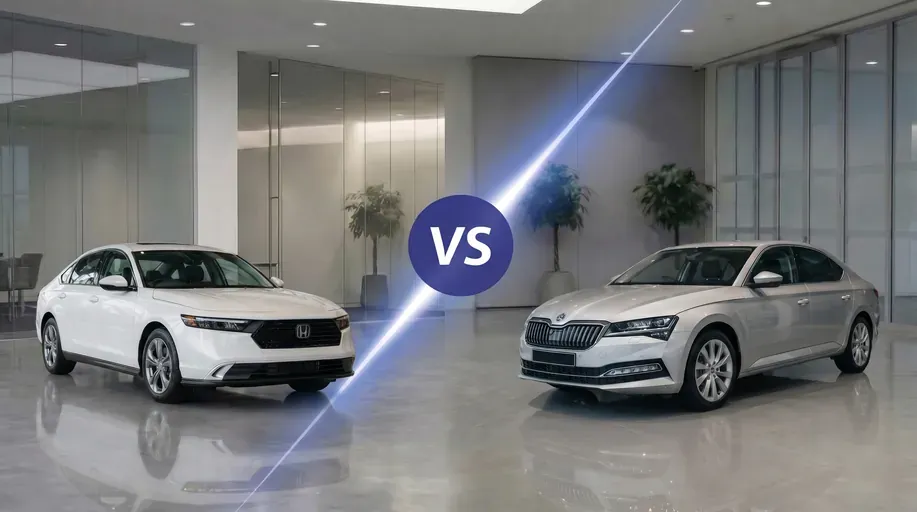
Detailed comparison of Honda Accord vs. Škoda Superb. Discover real-world experiences, equipment and driving characteristics comparisons, and read the verdict for the best choice.
Apr 21, 2026
Detailed comparison of the Audi A4 and Volvo S60. Discover the differences in driving characteristics, equipment, and reliability of used cars. Read our verdict and make the right choice!
Apr 22, 2026