Car battle
Hyundai i30 vs. Kia Ceed: Complete comparison 2026
Detailed comparison of Hyundai i30 vs Kia Ceed. Explore real-world experiences, engine reliability, and a detailed verdict to help you choose the better car.
Apr 25, 2026
Articles
Car battle
Comparison: Toyota Corolla vs Volkswagen Golf (VW Golf). A detailed look at the reliability, fuel consumption, and driving characteristics of used cars. Which hatchback to choose?
May 14, 2026
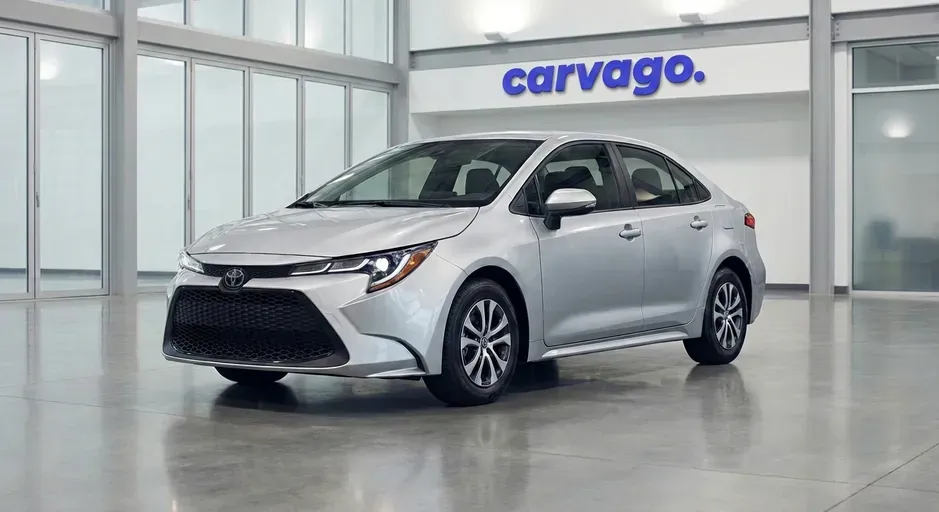
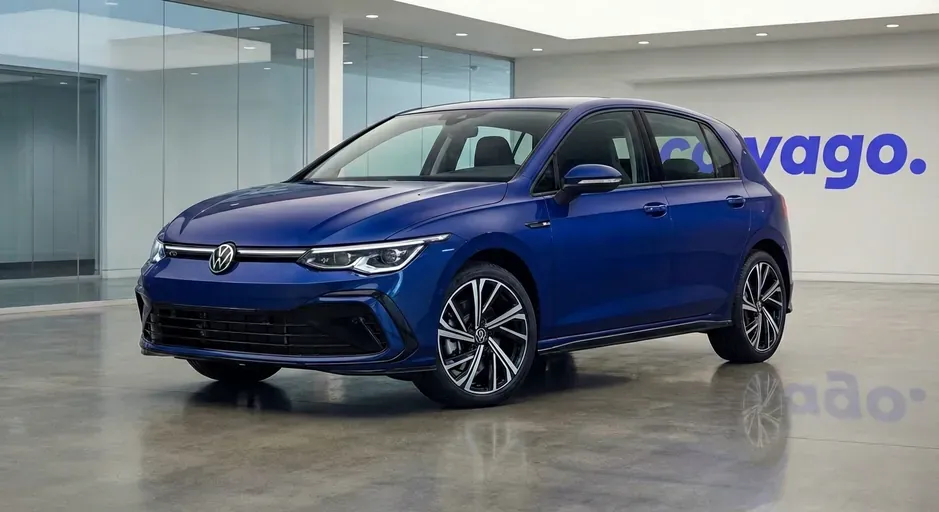
Toyota Corolla, historically the world's best-selling car (also available on the European market as a station wagon under the sister name Suzuki Swace), attracts drivers primarily with its legendary Japanese reliability and years of perfected fuel-efficient hybrid technology. Volkswagen Golf, a long-standing benchmark and the uncrowned king of the European compact class, counters with a more premium interior, advanced digitalization, and precisely tuned driving characteristics. In the following detailed comparison, we will explore the strengths and weaknesses of both these iconic models to help you decide which one represents the smarter choice for your used car purchase.
Looking at the exterior dimensions, the Toyota Corolla (E21 generation) and the Volkswagen Golf (VIII generation) stick to the classic proportions of the C-segment, yet they take slightly different approaches to spatial solutions. If you are looking for roughly four-year-old cars on the used car market, you will quickly find that the Japanese brand's five-door hatchback is, at 4,370 mm, a significant 86 mm longer than the standard Golf. Toyota also benefits from this difference in terms of wheelbase, which is 2,640 mm (21 mm more than the Golf), suggesting a slight advantage in rear legroom. Volkswagen, on the other hand, bets on a taller body construction. With a height of up to 1,491 mm, it towers over the sportier and lower Corolla (1,435 mm) by more than five centimeters, which brings an airier feel and more headroom to the interior. The width of both cars, on the other hand, is almost identical (1,790 mm for the Toyota vs. 1,789 mm for the Volkswagen), so when parking in narrow spaces in shopping centers, they are perfectly matched.
In the extremely popular estate category, the dynamics change slightly, but Toyota maintains its length advantage. The Corolla, with the Touring Sports moniker, reaches a length of up to 4,653 mm, while the Golf Variant measures 4,633 mm. An even more significant difference, however, takes place under the floor. Toyota has extended the wheelbase of its more practical version to an impressive 2,700 mm, while the Golf Variant stops at 2,669 mm. In practice, this means that although both cars offer families top-tier interior space, the Corolla places slightly more emphasis on room for rear passengers. The Golf, conversely, with its slightly shorter but overall taller and boxier rear, excels in maximizing every liter of boot capacity.
When making the final decision between these two benchmarks of the compact class, it primarily depends on your physical proportions and driving preferences. The Corolla's low silhouette and longer wheelbase will please drivers looking for visual dynamics, a lower center of gravity, and a smoother ride over bumps on the highway. The Golf, with its slightly more compact but taller body, scores points with excellent all-round visibility, slightly easier maneuvering in narrow streets, and traditionally masterful interior packaging.
| Parameter | Toyota Corolla Hatchback | Volkswagen Golf Hatchback | Toyota Corolla Estate | Volkswagen Golf Estate |
|---|---|---|---|---|
| Width (mm) | 1790 | 1789 | 1790 | 1789-1795 |
| Length (mm) | 4370 | 4282-4296 | 4650-4653 | 4631-4644 |
| Height (mm) | 1435 | 1454-1491 | 1435 | 1462-1510 |
| Wheelbase (mm) | 2640 | 2619-2630 | 2700 | 2669-2679 |
When choosing a used car with an average age of around four years, trunk volume often plays a decisive role, especially if you are considering a car for family needs. Both the eighth-generation (VIII) Volkswagen Golf and the E21-generation Toyota Corolla offer traditional body styles as well as extended estate versions. The approach to interior space utilization differs slightly between the two rivals, primarily due to the installation of batteries for hybrid and plug-in hybrid powertrains, which can significantly impact trunk capacity.
In the standard hatchback version, the Volkswagen Golf takes a slight lead. Its standard volume is a very solid 381 liters, which is perfectly sufficient for a large weekend shopping trip. Furthermore, after folding the rear seats, the capacity increases to 1237 liters. The competing Toyota Corolla hatchback has a base capacity of 361 liters (up to 1052 liters when folded), but it is important to note the more powerful 2.0 Hybrid version. In this model, the classic 12V battery was moved under the trunk floor, shrinking the usable volume to a more modest 313 liters. However, you will find a similar compromise in the plug-in hybrid versions of the Golf (GTE or eHybrid), where the trunk volume drops to just 273 liters due to the large batteries.
If you are looking for space for a few extra suitcases and need a car primarily for longer vacations, the estate variants will be ideal for you. Here, the Volkswagen Golf Variant dominates, offering a generous base volume of 611 liters, which can be expanded to an excellent 1624 liters with the seats folded. The Toyota Corolla in the Touring Sports (Estate) version lags only slightly behind and is no less practical. The versions with the 1.2T or 1.8 Hybrid engine please with a capacity of 596 to 598 liters (1606 liters when folded). The more powerful 2.0 Hybrid engine again takes a bit of space, offering 581 liters in the base.
In terms of total transport capacity, the Volkswagen Golf is overall a slightly more generous choice. However, the Corolla in the estate version is a great runner-up and offers dimensions that easily cover the needs of the vast majority of families.
| Parameter | Toyota Corolla Hatchback | Volkswagen Golf Hatchback | Toyota Corolla Estate | Volkswagen Golf Estate |
|---|---|---|---|---|
| Base volume (liters) | 313 - 361 | 273 - 381 | 581 - 598 | 611 |
| Max volume with seats folded down (liters) | 1004 - 1052 | 1129 - 1237 | 1591 - 1606 | 1624 |
The Volkswagen Golf wins overall thanks to a slightly larger and better-utilizable trunk space across both body versions. With the Toyota, pay special attention to the hatchback version with the two-liter hybrid, which is quite a compromise for family purposes, while both estate versions will satisfy even the most demanding outdoor enthusiasts and travelers.
Trailer weight is a key parameter for drivers who plan to tow a caravan, transport heavier construction materials, or just occasionally attach a smaller trailer for garden waste. In this regard, there are significant differences between approximately four-year-old models on the used car market – the Toyota Corolla (E21 generation) and the Volkswagen Golf (VIII generation) – which can fundamentally affect the overall practicality and usability of the car.
In practice, this means that with a hybrid Toyota, you can easily tow a light trailer with a half load, which is quite sufficient for weekend shopping for larger items, garden substrate, or transporting smaller appliances. However, if you need to move a heavier caravan for long holidays, which gives you additional loading volume and imaginary space for several extra suitcases, the Volkswagen Golf becomes an incomparably better tool.
In brief conclusion, it can be evaluated that while the Corolla represents a great car for daily use and its towing power is adequate only for undemanding small tasks, the Volkswagen Golf easily takes on the role of a universal and full-fledged workhorse for all family and DIY challenges.
| Model and motorization | Braked weight of trailer (kg) | Unbraked weight of trailer (kg) |
|---|---|---|
| Toyota Corolla 1.2T (E21) | 1300 | 450 |
| Toyota Corolla 1.8 / 2.0 Hybrid (E21) | 750 | 450 |
| Volkswagen Golf 1.0 TSI / eTSI (VIII) | 1100 - 1300 | 600 - 650 |
| Volkswagen Golf 1.5 TSI / eTSI (VIII) | 1300 - 1500 | 650 - 750 |
| Volkswagen Golf 2.0 TDI (VIII) | 1500 - 1600 | 700 - 750 |
| Volkswagen Golf 1.4 / 1.5 eHybrid (VIII) | 1500 - 1700 | 750 |
The approach to engine options shows the biggest difference between these two cars and is key to making the right choice for your needs. The Toyota Corolla focuses on maximum reliability and extreme efficiency in the city thanks to its sophisticated full-hybrid system without the need for external charging. In contrast, the Volkswagen Golf offers immense variability – from small-displacement petrol engines and modern mild-hybrids and plug-in hybrids to classic and highway-unbeatable diesels. While the Corolla will please calmer drivers looking for low operating costs without worries, the Golf is an all-rounder that suits both thrifty commuters and lovers of a sportier drive.
The current generation of the Toyota Corolla (E21), which is most common on the four-year-old used car market, has bet almost all its cards on hybrid power. Although a conventional turbocharged petrol engine 1.2T (85 kW) paired with a manual transmission was available in the early stages of production (between 2019 and 2021), the automaker later removed it from the range entirely. The vast majority of used models thus feature the proven hybrid powertrain with a planetary e-CVT automatic transmission.
Buyers can choose between the standard and very efficient 1.8 Hybrid (90 kW), which is perfectly suited for smooth driving and stop-and-go city traffic. For drivers requiring better dynamics, especially when overtaking or driving on the highway, there is the more powerful 2.0 Hybrid (132 kW). The absence of diesel engines is fully compensated for by the real-world fuel consumption of the hybrids, which commonly stays below 5 liters per 100 km in the city.
| Engine | Fuel | Power (kW) | Torque (Nm) | Transmission |
|---|---|---|---|---|
| 1.2T (2019-2021) | Petrol | 85 | 185 | 6MT |
| 1.8 Hybrid | Petrol + Electric | 90 | 142 + 163 (electric) | e-CVT |
| 2.0 Hybrid | Petrol + Electric | 132 | 190 + 202 (electric) | e-CVT |
The eighth-generation Volkswagen Golf (on sale since 2020) maintains a traditional range of engines that covers almost all needs of the used-car market. For undemanding users, it offers three-cylinder 1.0 TSI (81 kW) units, which were supplemented with mild-hybrid technology (labeled as eTSI) in versions with an automatic transmission. These engines are slowly disappearing from the market after 2024, but in the four-year-old used segment, they serve as an affordable entry point. The golden mean is the highly refined four-cylinder 1.5 TSI / eTSI (96 and 110 kW) with Active Cylinder Technology (ACT) for fuel savings.
The Golf's strong weapon against the Corolla remains its diesel engines. The well-known 2.0 TDI (85 and 110 kW) may be being pushed out of cities today, but for highway mile-munchers, it represents the best choice. The range is further complemented by advanced plug-in hybrids (PHEV) labeled eHybrid or the sporty GTE for those who have the possibility of home charging.
| Engine | Fuel | Power (kW) | Torque (Nm) | Transmission |
|---|---|---|---|---|
| 1.0 TSI / eTSI | Petrol / Mild-hybrid | 81 | 200 | 6MT / 7DSG |
| 1.5 TSI / eTSI | Petrol / Mild-hybrid | 96 / 110 | 200 / 250 | 6MT / 7DSG |
| 2.0 TDI | Diesel | 85 / 110 | 300 / 360 | 6MT / 7DSG |
| 1.4 eHybrid / GTE | Plug-in Hybrid | 150 / 180 | 350 / 400 | 6DSG |
| 2.0 TSI (GTI / R) | Petrol | 180 / 235 | 370 / 400 | 7DSG |
While the Toyota Corolla dominates with the absolute reliability and smoothness of its hybrid in suburban driving, the Volkswagen Golf offers the ideal solution in the form of TDI versions for highway travelers or spirited TSI engines for more demanding drivers.
Choosing the right engine is crucial for long-term satisfaction. Our recommendations are based on real-world performance, actual fuel consumption, owner feedback, and mechanical reliability. When comparing these two models, which appear on the used car market at around four years of age (Corolla generation E21 and Golf VIII), one cannot help but notice the completely different engineering approaches. While Toyota has bet everything on one card, with its range dominated by nearly indestructible, naturally aspirated hybrid units with a smooth e-CVT planetary gearbox, Volkswagen sticks to the classic European recipe for the Golf, offering a wide range of sophisticated turbocharged TSI engines, advanced eTSI mild-hybrids, and proven highway workhorses (TDI).
For the current E21 generation, this more powerful hybrid system is clearly the best choice in the range, as it offers a perfect balance between everyday practicality and dynamics, which the more common but weaker 1.8 Hybrid version sometimes lacks at higher speeds. From a technical standpoint, the system excels with a perfectly smooth torque curve thanks to the immediate support of a powerful electric motor and a real-world combined fuel consumption hovering around an excellent 5 liters per 100 km. The mechanical reliability of this powertrain is legendary – the system does not contain traditional sensitive components such as a conventional starter, alternator, friction clutch, or turbocharger, which eliminates most expensive service nightmares for a used car. The only potential risk is essentially carbon buildup in the internal combustion engine during long-term short-distance city driving with a cold engine; this phenomenon can be easily prevented by regular brisk driving outside the city at higher RPMs or the occasional application of high-quality fuel cleaning additives. This two-liter hybrid is thus the perfect solution for more dynamic drivers who use the car primarily in suburban settings but are not afraid of longer highway journeys, where they will appreciate the unexpected zest and traditional Japanese low-maintenance nature.
In the eighth generation of the Golf, this mild-hybrid gasoline four-cylinder (from the updated EA211 evo family) paired with a seven-speed dual-clutch DSG automatic represents the golden middle path and the most user-friendly choice from a used car perspective. The engine combines great performance with excellent efficiency, while the 48V starter-generator perfectly smooths out any turbo lag and allows the car to frequently and completely imperceptibly "coast" with the engine off, safely bringing real-world consumption below the 6 liters per 100 km mark. The main thing to watch out for when buying a used car with this combination is the DSG gearbox (DQ200), which requires strict oil changes ideally every 60,000 km for the long life of both clutches and the mechatronics – this should be your main point when checking the service history. The Active Cylinder Technology (ACT) system may cause slight resonances under low load, which is a normal acoustic manifestation of this technology, not a defect. It is an exceptionally refined powertrain for universal use, from city traffic to weekend family trips and long highway journeys, tailored for drivers looking for maximum flexibility, quick automatic responses, and top-tier cabin soundproofing.
The difference between the official fuel consumption figures stated by the manufacturer and the real-world figures can often be surprising, which is why it is always better to rely on the actual experiences of owners. For the most objective comparison of used cars approximately four years old (we focused on the current generations, the Volkswagen Golf VIII and Toyota Corolla E21), we analyzed data from an independent community platform where hundreds of thousands of drivers from all over Europe regularly enter their real refueling data. The following table shows the actual average values for the most popular engine variants commonly found on the used car market.
news_site: Spritmonitor.de
| Model and engine | Average consumption (l/100 km) |
|---|---|
| Volkswagen Golf 2.0 TDI (85 - 110 kW) | 4.7 |
| Toyota Corolla 1.8 Hybrid (90 kW) | 4.8 |
| Toyota Corolla 2.0 Hybrid (112 - 135 kW) | 5.2 |
| Volkswagen Golf 1.0 TSI / eTSI (81 kW) | 5.4 |
| Volkswagen Golf 1.5 TSI / eTSI (96 - 110 kW) | 5.8 |
| Toyota Corolla 1.2T (85 kW) | 6.4 |
Looking at these trends, the different technological approaches of the two manufacturers are clearly visible. Toyota clearly excels with its hybrid systems in the Corolla. The entry-level 1.8 Hybrid engine can reduce consumption to nearly four liters in city traffic, and its overall average of 4.8 l/100 km makes it a champion for daily commuting. The more powerful 2.0 Hybrid variant then adds significantly better driving dynamics, while fuel consumption increases only slightly. The fact that Toyota's turbocharged 1.2T petrol four-cylinder lags noticeably behind the hybrids only confirms that the absence of electrification does not translate into savings here. On the Volkswagen Golf side, the hard-to-beat efficiency of the 2.0 TDI diesel engine is still evident, maintaining its lead despite modern trends and being absolutely the most economical on long hauls. The smaller TSI petrol turbo engines and partially electrified eTSI then represent a solid middle ground – they may not dazzle with such dramatic savings as the Japanese full hybrid system in traffic jams, but they can easily run well below the six-liter mark.
These figures very clearly define which drivers each concept suits best. If you spend the vast majority of your time in the city and in suburban traffic jams, the Toyota Corolla with hybrid drive will be a huge relief for both your wallet and your comfort. Conversely, drivers who spend their lives on motorways and regularly clock up hundreds of kilometers across the country should not hesitate to go for the Volkswagen Golf with the 2.0 TDI diesel engine, which completely outperforms its Japanese competition economically in this regard. The compact TSI petrol engines in the Golf then become an ideal and low-maintenance choice for budget-conscious buyers with mixed mileage who do not want to pay extra for hybrid complexity.
In conclusion, fuel consumption should play one of the key roles in this particular duel. Both vehicles can be extremely fuel-efficient, but each reigns supreme in a completely different environment. The Toyota Corolla conquers city streets, while the Volkswagen Golf TDI remains the undisputed ruler of the motorways.
When searching for a reliable compact on the used car market around four years old (around model year 2022), we encounter a direct clash between the twelfth-generation Toyota Corolla (E210) and the eighth-generation Volkswagen Golf (Mk8). Both cars maintain a very strong position in the market, but their price structure and depreciation patterns differ slightly.
While the Volkswagen Golf traditionally benefits from a massive volume of fleet vehicles returning from operational leases, the Toyota Corolla appeals to buyers primarily through its sophisticated and highly sought-after hybrid technology. This makes it one of the best-valued cars on the secondary market.
| Car Category | Toyota Corolla (12th generation) | Volkswagen Golf (8th generation) |
|---|---|---|
| Base trim and engines | €16,000 – €18,000 | €16,000 – €17,000 |
| The sweet spot (most popular) | €18,000 – €23,000 | €18,000 – €21,000 |
| Top-tier and sportier versions | €25,000 and more | €24,000 and more |
Note: The prices listed are approximate for four-year-old used cars with mileage up to 100,000 km.
For Toyotas from this period, hybrid powertrains (the more economical 1.8 Hybrid and the more dynamic 2.0 Hybrid) absolutely dominate the listings; pure petrol versions are extremely rare on the market.
The eighth-generation Golf floods the used market with an incredibly diverse range of engines – from one-liter three-cylinders to balanced 1.5 TSI four-cylinders and motorway staples like the 2.0 TDI diesels.
From the perspective of a long-term investment and value retention, the Toyota Corolla holds a slightly stronger hand, primarily due to high demand for reliable used hybrids. Conversely, the Volkswagen Golf experiences a slightly steeper price drop at the beginning of its life. However, this plays into the hands of buyers of roughly four-year-old used cars – for a favorable amount, they can acquire an exceptionally advanced modern car at a huge discount compared to what the first owner paid for it.
While a used Golf often offers a more favorable purchase price thanks to an endless selection of fleet vehicles and large discounts at the start of the cycle, the Corolla will surely make up for your higher initial investment with its rock-solid price stability upon resale.
Both compared models achieved the maximum five-star rating in independent Euro NCAP safety tests. This is great news for used car buyers; however, for an accurate comparison, it is essential to view these results in the context of the time. Euro NCAP testing protocols are constantly evolving and becoming stricter across the board. More complex frontal crash simulations, stricter requirements for cyclist detection, or new emergency scenarios for assistance systems at intersections are being introduced. For this reason, percentage results from different testing years cannot be simply and directly compared.
The current generation Toyota Corolla (E210) underwent a series of crash tests in 2019. At the time, the car received an excellent rating based on its robust construction and the advanced Toyota Safety Sense package. The results thus reflect the pinnacle of what was the technological standard a few years ago.
On the other hand, the eighth-generation Volkswagen Golf, although also first tested in 2019, underwent a new, much stricter wave of tests in 2022 at the manufacturer's own request. To meet the updated standards, Volkswagen improved the car – a key innovation was the widespread deployment of a center airbag, which prevents dangerous head collisions between the driver and passenger in the event of a side impact.
Below you will find a comparison of their key safety scores:
| Parameter | Toyota Corolla | Volkswagen Golf |
|---|---|---|
| Year of testing | 2019 | 2022 |
| Adult occupant protection | 95% | 88% |
| Child occupant protection | 84% | 87% |
| Vulnerable road user protection | 86% | 74% |
| Safety assistance systems | 77% | 79% |
At a quick glance at the table, it might seem that the 2019 Corolla protects adult passengers or vulnerable road users better. However, this is an optical illusion caused by the evolution of regulations. The Golf achieved its percentage values under much tougher conditions. Its 2022 result in the area of safety assistance systems thus has a higher informational value for current traffic conditions.
An important fact is also the validity of the safety guarantee itself. Euro NCAP certification normally has a limited validity of six years. This means that the Toyota's rating expires at the beginning of 2026, while the Golf benefits from its recent re-certification and meets today's stricter standards. As a result, although both models represent an extremely safe choice on the four-year-old used car market, the Volkswagen Golf offers a generally more modern and slightly more comprehensive protection system thanks to its later technological update and performance in stricter tests.
Although both cars protect their occupants excellently, the updated 2022 Volkswagen Golf rating and the presence of the innovative center airbag make it a slightly more modern and comprehensive choice in terms of safety by today's standards.
In addition to standard equipment, each of the models offers several unique features that can be decisive for the customer and bring a completely different added value to everyday life. While one relies on proven efficiency and driving confidence, the other represents a technological pioneer in the field of digitalization and a wide choice of powertrains.
Extremely reliable and fuel-efficient hybrid powertrains with low operating costs
Comfortable chassis tuning that filters out bumps excellently
Generous standard safety equipment within the Toyota Safety Sense package
High residual value and strong demand on the used car market
Perfectly smooth city driving thanks to the e-CVT planetary gearbox
Limited rear passenger space, especially knee room in the hatchback version
Outdated and slower multimedia system with less attractive graphics
Smaller luggage capacity in the short version (only 313–361 liters depending on the engine)
Increased combustion engine noise during hard acceleration and highway climbs
The Toyota Corolla is an ideal choice for pragmatic drivers who prioritize maximum reliability and low fuel consumption in city or suburban traffic. Its hybrid system excels in efficiency, albeit at the cost of a slight compromise in overall interior spaciousness and the modernity of on-board technologies.
Wide range of powertrains including fuel-efficient TDI diesels, petrol engines, and mild-hybrids
First-class compromise between comfortable suspension and confident handling in corners
Airier cabin and more usable luggage space (381 liters for the hatchback)
Highly modern digital cockpit and more premium finish of the materials used in the interior
Excellent aerodynamic cabin soundproofing suitable for frequent highway travel
Ergonomically problematic touch controls on the steering wheel and unlit climate control bar (in the eighth generation)
Slower response and occasional instability of the infotainment software in models from the first years of production (2020–2021)
More complex technology, which can mean higher service costs in the long run
Shorter warranty and statistically slightly lower overall reliability compared to its Japanese competitor
The eighth-generation Volkswagen Golf will appeal to motorists who demand excellent seating ergonomics, refined highway driving characteristics, and a modern minimalist design. It represents a great all-rounder for everyday use, though one must get used to the fully touch-based concept of operating the on-board systems.
Based on long-term user experience, service reports, and our own data from independent technical inspections, we have compiled a detailed overview of the most common problems you should watch out for in roughly four-year-old used cars of these models.
Toyota Corolla (E210 generation)
The twelfth-generation Toyota Corolla has long been one of the most reliable cars on the market, yet it exhibits several typical, though mostly minor, ailments.
Corolla excels in above-average mechanical durability and longevity of the hybrid powertrain, but requires tolerance from the owner for more sensitive paint, a more delicate 12V battery, and slower infotainment.
Volkswagen Golf (Mk8 generation)
The eighth generation of the Volkswagen Golf brought a revolution in digitalization, which, however, became its biggest stumbling block and source of frequent service visits in the first years of production.
The Golf Mk8 in model years around 2020 to 2022 pays the price for initially unrefined software and sensitive electronics; however, mechanically and with proper servicing, it is a very confident and well-driving car.
When buying a used car, a thorough inspection is key. Here are some specific points to focus on for these two models to avoid expensive surprises.
The Volkswagen Golf in its hatchback version offers a trunk capacity of 381 liters, while the Toyota Corolla is noticeably smaller with 313 to 361 liters (depending on the engine). For the more practical estate variants, the situation is very close, as the Golf Variant holds 611 liters and the Corolla Touring Sports offers a solid 598 liters.
The Toyota Corolla has long been considered the benchmark for reliability, primarily thanks to its time-tested and almost maintenance-free full hybrid systems. The eighth-generation Volkswagen Golf is mechanically very robust, but early model years (around 2020 and 2021) often struggled with freezing infotainment systems and software bugs.
For city and slower suburban traffic, the Toyota Corolla is significantly more efficient, commonly achieving fuel consumption under 4.5 liters per 100 km thanks to the effective use of its electric motor. While the Volkswagen Golf offers excellent eTSI mild-hybrid engines and superb TDI highway diesels, it cannot match Toyota's full hybrid system in stop-and-go city traffic.
The Volkswagen Golf opted for a minimalist interior where most functions, including the climate control, are operated primarily via the central touchscreen and touch-sensitive sliders. In contrast, the Toyota Corolla has retained traditional physical buttons and rotary dials, which many drivers appreciate for easier and safer operation while driving.
The Volkswagen Golf excels with its neutral and versatile suspension tuning, which filters out bumps excellently and offers great sound insulation for long highway journeys. The Toyota Corolla benefits from the rigid TNGA platform, offering surprising agility and confidence in corners, although its e-CVT continuously variable transmission can sound noisier during hard acceleration.
The battle between these two iconic compacts has no clear winner in the four-year-old used car market, as each excels in completely different disciplines. Thanks to its unbeatably reliable and economical hybrid powertrain, the Toyota Corolla represents the ideal choice for drivers looking for a worry-free vehicle for daily urban and suburban commuting who are happy to trade complex digitalization for traditional ergonomics. The eighth-generation Volkswagen Golf, on the other hand, will appeal to motorists requiring a more practical luggage compartment, better aerodynamic soundproofing, and an exceptionally versatile range of engines, where despite initial software teething troubles, you get a top-tier touring car. The final choice thus depends primarily on your driving profile; for smooth and low-cost driving through traffic jams combined with excellent value retention, choose the Japanese safe bet, while for frequent highway cruising or towing heavier trailers, the German benchmark remains the unsurpassed favorite.
Sources: ADAC, garaz.cz, e15.cz, elektromobil.cz, emobility.cz, podnikatel.cz
This article was prepared using artificial intelligence tools. The section guarantor is Petr Dušek.
Detailed comparison of Hyundai i30 vs Kia Ceed. Explore real-world experiences, engine reliability, and a detailed verdict to help you choose the better car.
Apr 25, 2026
Detailed comparison of used Hyundai i30 vs Seat Leon. Find out which hatchback offers better driving characteristics, fuel consumption, and reliability. Read our verdict!
May 9, 2026
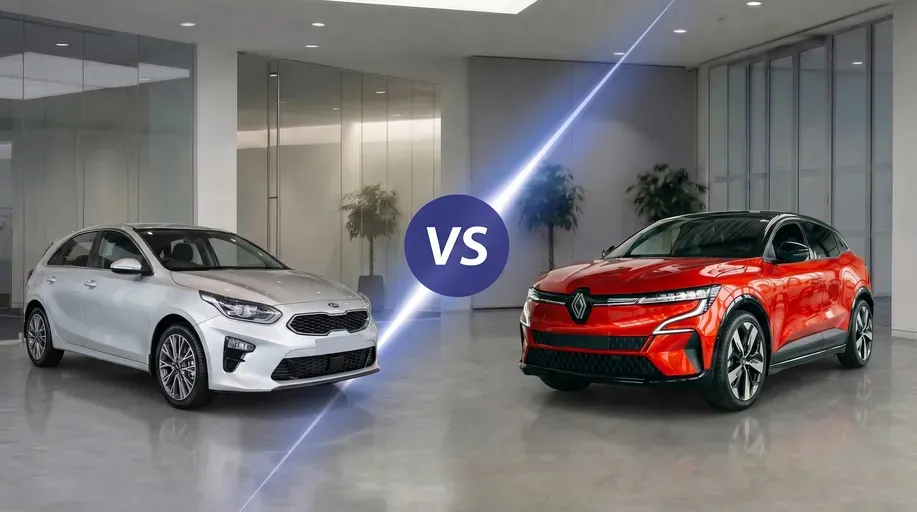
Used car comparison: Kia Ceed vs Renault Mégane. Which hatchback or estate to choose? We compared engines, equipment, and reliability. Read our verdict!
Apr 22, 2026