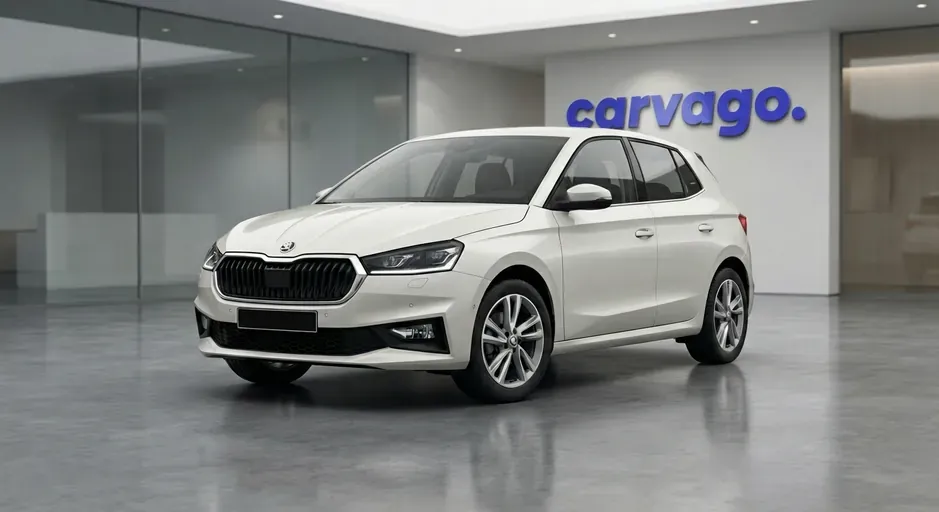
Articles

Car battle

Suzuki Swift vs. Škoda Fabia: Complete comparison 2026

Detailed comparison of Suzuki Swift vs. Škoda Fabia. Find out the real fuel consumption, reliability, and equipment of used cars. Read our verdict and choose the right car for you.

May 19, 2026

VS
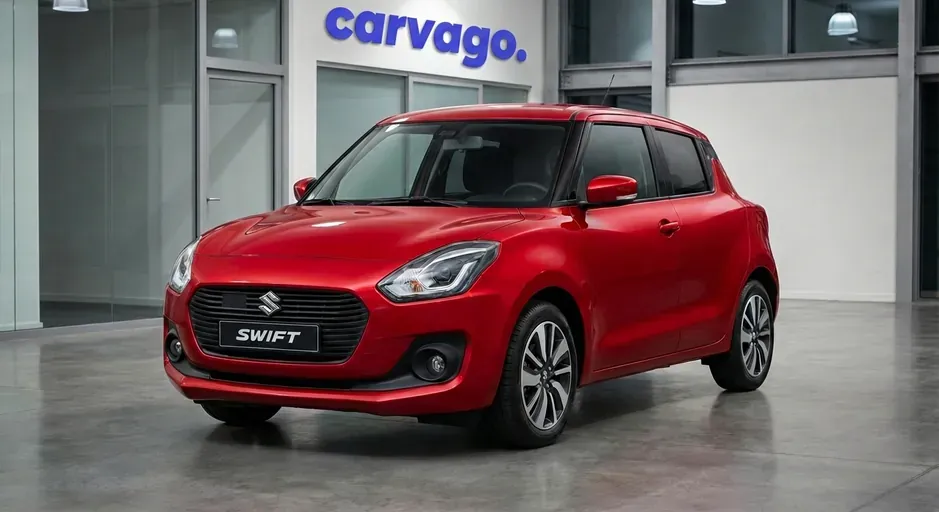
Suzuki Swift

Suzuki Swift

Škoda Fabia

Škoda Fabia

Introduction

The Japanese Suzuki Swift, also known as the Maruti Suzuki Swift in some global markets, is an exceptionally light and agile hatchback that wins over drivers with its playful driving characteristics and favorable operating costs. Its challenger is the domestic benchmark Škoda Fabia, a traditional bestseller on European roads, which, by contrast, has long excelled in its category with above-standard interior space and renowned practicality. Let's take a detailed look at how these two differently tuned representatives of the nearly-new used car market fare in a direct comparison and which of them will be the better choice for your daily journeys.

Comparison of External Dimensions

Looking at the exterior dimensions, the different philosophies of the two carmakers are immediately apparent, which is very evident in the market for roughly four-year-old used cars. While the current fourth generation of the Skoda Fabia in the hatchback version has grown and, with a length of 4,108 to 4,137 mm, is among the largest cars in the B-segment, the Suzuki Swift (6th generation) remains true to compact traditions with a length of just 3,840 to 3,890 mm. This difference, which amounts to nearly 300 mm, represents a huge gap in practice. Thanks to its shorter body, the Swift is an absolute city ninja that you can park in even the smallest gaps, while the Fabia is already eyeing the role of a full-fledged family car that can occasionally substitute for lower-medium class models.

An important factor for interior space and driving stability is the wheelbase and the width of the car. The fourth-generation Skoda Fabia offers a generous wheelbase of 2,549 to 2,564 mm and a width of 1,780 mm, which translates directly into significantly better shoulder and legroom for rear passengers. The Suzuki Swift counters with a wheelbase of 2,450 mm and a width of 1,735 mm, which creates a slightly more intimate atmosphere in the cabin. However, the Japanese model partially compensates for this with its body height (up to 1,505 mm), which is greater than that of its competitor from Mladá Boleslav (1,458–1,461 mm). The Swift's taller build makes entry easier and ensures a decent amount of headroom, which will be especially appreciated by drivers looking for an airy interior on an absolute minimum footprint.

A major advantage of the Mladá Boleslav model on the used car market is the availability of the estate (combi) body style. Although the fourth-generation Fabia no longer offers an estate version, in the market for roughly four-year-old cars, you can still find the popular third generation, which was produced until 2022. With a length reaching up to 4,262 mm, the Skoda Fabia Estate offers an unrivaled luggage capacity that the Swift, as an exclusive hatchback, simply cannot match. So, if you regularly carry bulkier cargo, a stroller, or go on family holidays, the Fabia Estate is the clear choice. But if you are looking for an agile, lightweight, and parking-friendly car for daily weaving through busy streets, the smaller dimensions of the Suzuki Swift will essentially function as an invaluable comfort feature.

Comparison of Exterior Dimensions
ParameterSuzuki Swift HatchbackSkoda Fabia HatchbackSkoda Fabia Estate
Width (mm)1,7351,7801,732
Length (mm)3,840 - 3,8904,108 - 4,1374,257 - 4,262
Height (mm)1,480 - 1,5051,458 - 1,4611,467 - 1,488
Wheelbase (mm)2,4502,549 - 2,5642,470

Trunk Volume

Trunk space is often one of the key factors when choosing a used car, whether you are looking for a car for daily commuting or a practical companion for weekend family trips. When comparing the Suzuki Swift and Škoda Fabia models on the nearly-new used car market (focusing on models roughly four years old), we encounter completely different approaches to the use of interior space. While the Japanese representative focuses on maximum compactness and agility in narrow city streets, the Czech bestseller traditionally plays the card of maximum practicality and generous family utility.

Looking at the specific numbers, the differences between the two cars are striking. The sixth-generation Suzuki Swift (offered exclusively as a hatchback) has a basic trunk volume of 265 liters, which increases to 947 liters after folding the rear backrests. In contrast, the fourth-generation Škoda Fabia hatchback reigns supreme in its class with an excellent basic volume of 380 liters and a maximum capacity of 1,190 liters. An even larger gap occurs if you opt for the third-generation Fabia in the highly sought-after Škoda Fabia Combi body style (also previously referred to as the Estate), which was produced until 2022. It offers an uncompromising 530 liters in the base and a fantastic 1,395 liters with the seats folded. Suzuki Swift does not offer a similar family body variant in its modern generations at all.

In practice, this difference literally means space for several extra suitcases. While the trunk of the Suzuki Swift is fully sufficient for a regular weekend grocery run or two sports bags, with the Škoda Fabia hatchback, you can easily pack for a family of three for a long weekend. The Škoda Fabia Combi version then stands up even as a full-fledged car for a longer summer vacation. An important finding for used car buyers is the fact that the installation of a modern mild-hybrid system in the Suzuki Swift (often referred to as SHVS) does not take away valuable liters from the trunk, and the trunk thus remains identical to the purely internal combustion versions. Even so, Škoda adds extra value thanks to its typical "Simply Clever" solutions, such as massive hooks, nets, and dividers, which make its trunk a perfectly usable space. The decision is thus clear: if you are primarily looking for transport capacity, the Fabia is the clear winner.

Trunk Space Comparison

ParameterSuzuki Swift HatchbackŠkoda Fabia HatchbackŠkoda Fabia Combi
Basic volume (liters)265380530
Max. volume with seats folded (liters)94711901395

The Hauler vs. The City Specialist 📦

In terms of transport capacity, the Škoda Fabia soundly beats the Suzuki Swift across the board, especially if you manage to snag the extremely practical Škoda Fabia Combi version on the used car market.

Discover the true condition of the car thanks to an independent inspection

Order CarAudit™

Trailer Weights

When it comes to towing capacity and trailer weight, the differences between these two cars very accurately reflect their different designs. For those interested in a used car approximately four years old, namely the fourth-generation Škoda Fabia and the sixth-generation Suzuki Swift, the Mladá Boleslav model offers significantly better and more flexible values. The Czech hatchback can tow a braked trailer weighing from 800 kg for the base 1.0 MPI engine up to an excellent 1200 kg for the top 1.5 TSI engine.

In contrast, the lightweight Suzuki Swift has a maximum capacity for braked trailers set across the board at 1000 kg. This applies to the standard internal combustion versions (1.2 Dualjet or 1.0 Boosterjet) as well as those equipped with mild-hybrid technology, whose electrification has not reduced the overall utility value in any way. However, specific versions can be a minor trap for both manufacturers – in the case of the Swift, this typically involves the popular, sharper Swift Sport variant, for which trailer towing is not homologated at all in most cases.

The most significant difference for the average user, however, lies in unbraked trailers, which are encountered most frequently in traffic. While the Swift, due to its low kerb weight, can only tow 400 kg – which can safely handle only a small trailer providing space for a few extra suitcases – the Fabia easily manages a load ranging from 550 to 610 kg depending on the engine and equipment used. In practice, this means that the limits of the more powerful Fabia versions are fully sufficient for a weekend purchase of heavier building materials or for connecting a smaller caravan for a longer holiday.

In terms of overall versatility, the Škoda Fabia is clearly a more certain and practical choice for frequent or more demanding use of a tow bar, while the slender Swift is destined more for light assistance only.

Model and engineBraked trailer (kg)Unbraked trailer (kg)
Suzuki Swift 1.2 Dualjet / Hybrid (61 - 66 kW)1000400
Suzuki Swift 1.0 Boosterjet (82 kW)1000400
Škoda Fabia 1.0 MPI (48 - 59 kW)800550
Škoda Fabia 1.0 TSI (70 - 85 kW)1000 - 1100580 - 590
Škoda Fabia 1.5 TSI (110 kW)1200600 - 610

Overview of Most Common Motorizations

When choosing an engine for roughly four-year-old used cars, the approach of both manufacturers to the powertrain differs significantly. The sixth-generation Suzuki Swift (available for model years around 2022) relies exclusively on engines supported by mild-hybrid technology, which plays a key role in reducing consumption and helping smoothness at low revs. In contrast, the fourth-generation Škoda Fabia (on the market since 2021) completely skips electrification and relies purely on sophisticated internal combustion engines. While the Swift scores with its low weight, excellent city fuel economy, and the completely unique option of all-wheel drive in this segment, the Fabia offers a wider range of turbocharged engines with higher power, a lightning-fast dual-clutch DSG transmission, and, in the form of the 1.5 TSI unit, dynamics suitable for long highway journeys. In line with modern trends, you won't find a diesel engine in either of these models anymore.

Suzuki Swift

Under the hood of the sixth-generation Suzuki Swift, you will practically only encounter mild-hybrid (SHVS) versions in the used car market. The standard and perfectly adequate engine is the naturally aspirated four-cylinder 1.2 Dualjet Hybrid with 61 kW. The system here helps with a 12V starter-generator, which ensures smooth starts and real-world fuel consumption oscillating below the five-liter mark without trouble. Customers can choose between a five-speed manual or a CVT transmission, and a major specialty is the option of all-wheel drive (ALLGRIP). For drivers who want to enjoy the drive to the fullest, there is the Swift Sport model with an excellent turbocharged four-cylinder 1.4 Boosterjet Hybrid. This model features a 48V system, 95 kW of power, and thanks to a punchy torque of 235 Nm and very low vehicle weight (slightly over 1 ton), it guarantees sharp, genuine sporty driving in combination with a six-speed manual.

Engine typeFuelPower (kW)Torque (Nm)Transmission
1.2 Dualjet HybridPetrol / MHEV611075MT / CVT
1.4 Boosterjet HybridPetrol / MHEV952356MT

Škoda Fabia

The range of powertrains for the fourth-generation Škoda Fabia is very carefully graded and more traditional. For undemanding users looking for a simple and cheap-to-service engine for the city, Škoda offers the naturally aspirated three-cylinder 1.0 MPI in 48 kW and 59 kW versions. However, the vast majority of buyers go for the golden middle ground in the form of the turbocharged three-cylinder 1.0 TSI. The weaker variant (70 kW) is paired with a five-speed manual, while the stronger and very flexible version (81 kW) already offers a choice between a six-speed manual or a seven-speed DSG automatic. A real gem for the most demanding drivers is the four-cylinder 1.5 TSI with 110 kW and cylinder deactivation, which makes the Fabia an unexpectedly fast and refined vehicle for long trips. For this most powerful version, the DSG automatic transmission is already standard.

Engine typeFuelPower (kW)Torque (Nm)Transmission
1.0 MPIPetrol48 / 59935MT
1.0 TSIPetrol70 / 81175 / 2005MT / 6MT / 7DSG
1.5 TSIPetrol1102507DSG

Mild-hybrid agility vs. Traditional power ⚡️

The Suzuki Swift is ideal for those looking for lightness, an economical hybrid for the city, and optional 4x4 drive, while the Škoda Fabia will please with a wider range, fast DSG automatic, and a powerful 1.5 TSI for carefree highway travel.

Choosing the right engine is crucial for long-term satisfaction, and our recommendations are based on real-world performance, actual fuel consumption, owner feedback, and mechanical reliability. While the Suzuki Swift, in the case of approximately four-year-old used cars, relies mainly on highly durable naturally aspirated technology enhanced by mild-hybrid systems, the Škoda Fabia dominates the market with very efficient and modern turbocharged three-cylinder engines, which have undergone significant evolution in recent generations and are considered unexpectedly reliable companions.

For the Suzuki Swift, we recommend: 1.2 Dualjet Hybrid (61 kW / 83 hp)

The naturally aspirated 1.2 Dualjet four-cylinder (designated K12D), available after the 6th generation facelift (from 2020), is the ideal compromise for a buyer looking for worry-free operation. In terms of overall reliability and longevity, it has few rivals in its class.

  • Why it's the best in the range: It represents a fantastic balance between exceptional reliability, low operating costs, and everyday practicality. Unlike the turbocharged 1.0-liter three-cylinder Boosterjet (which gradually disappeared from the range), it does not require such meticulous maintenance and its operation is smoother.
  • Technical advantages: The engine uses dual fuel injection (Dualjet) and a lightweight 12V mild-hybrid system (ISG). This electric motor smooths out the torque curve at low revs, and real-world fuel consumption effortlessly hovers around 4.5 l/100 km in normal traffic.
  • Risks and weaknesses: Since it is a naturally aspirated engine, it lacks flexible acceleration on the highway – when overtaking, you shouldn't be afraid to downshift and rev the engine. In terms of faults, only watch out for the condition of the small Li-ion battery under the driver's seat; if the car has been sitting in a used car lot for many months, its capacity may be reduced. We also recommend following the traditional oil change interval of a maximum of 15,000 km.
  • Who it's best for: It's a perfect choice for city and suburban drivers, calmer personalities, and those looking for maximum mechanical durability in a car they plan to own for many years.

For the Škoda Fabia, we recommend: 1.0 TSI (81 kW / 110 hp)

This turbocharged three-cylinder (from the EA211 and more recently EA211 EVO family) is by far the most sought-after and rational choice on the four-year-old used car market. We recommend going for the more powerful 81kW version, which appears massively in both the late 3rd generation and the current 4th generation.

  • Why it's the best in the range: While the basic naturally aspirated 1.0 MPI versions feel very sluggish outside the city, the 1.0 TSI in the 81 kW version provides the car with excellent dynamics. A major advantage of this specification is also its pairing with a six-speed manual gearbox (the weaker version only has a five-speed), which radically reduces noise and fuel consumption on the highway.
  • Technical advantages: The engine scores with great pull from low revs (favorable torque curve of 200 Nm) and very refined operation for a three-cylinder. Real-world fuel consumption can easily be kept between 5.0 and 5.5 l/100 km with a light foot, while the dynamics are fully sufficient even for highway climbs.
  • Risks and weaknesses: Direct-injection engines are prone to carbon buildup on the intake valves during constant short city trips with a cold engine. You can avoid this phenomenon by regularly taking the car on a longer trip (ideally on the highway) and refueling with high-quality additivated fuel with a higher octane rating. Also, don't forget to let the turbo cool down at idle for a while after faster driving.
  • Who it's best for: A great "all-rounder." Ideal for drivers who regularly combine city driving with country roads and longer highway trips, or for families using the trunk of the Škoda Fabia Estate (or the spacious 4th generation Škoda Fabia) for weekend trips.

Real Fuel Consumption

When choosing a used car, such as the Suzuki Swift or Škoda Fabia, there is often a noticeable difference between the paper consumption values declared in official manufacturer materials and the reality on the roads. Catalog fuel consumption measured in laboratory conditions can sometimes be unnecessarily optimistic, which is why it always pays to monitor engine behavior in real-world operation. We focused on the generations most common on the used car market at around four years of age (i.e., the outgoing 3rd and current 4th generation for the Fabia and the 6th generation for the Swift), and for the evaluation, we used long-term user data from crowdsourced platforms such as the popular German portal Spritmonitor.de.

Model and engineAverage consumption (l/100 km)
Suzuki Swift 1.2 Dualjet (incl. MHEV)4.8
Suzuki Swift 1.0 Boosterjet4.9
Suzuki Swift 1.4 Boosterjet Sport5.6
Škoda Fabia 1.4 TDI4.0
Škoda Fabia 1.0 TSI5.3
Škoda Fabia 1.5 TSI5.4
Škoda Fabia 1.0 MPI5.5

A detailed look at the data reveals very interesting trends. In terms of absolute numbers, the 1.4 TDI diesel engine in older 3rd generation Fabias remains the historical champion of efficiency; however, in the segment of four-year-old cars, diesel engines practically no longer feature in this class, and the market is completely dominated by gasoline versions. Among them, the Suzuki Swift excels without competition. Its engines, especially the lightweight naturally aspirated 1.2 Dualjet four-cylinder with a mild-hybrid system, can realistically run on less than five liters per hundred kilometers. A somewhat surprising finding is the fact that the basic naturally aspirated 1.0 MPI three-cylinder in the Škoda Fabia often shows slightly higher real-world consumption than its more powerful turbocharged 1.0 TSI variant. This paradox is due to the fact that the driver must rev the weaker non-turbo engine more frequently to keep up with surrounding traffic. Conversely, the largest 1.5 TSI unit in the newer Fabia scores with its cylinder deactivation system, and its average appetite differs very little from the small one-liter engines.

For a typical used car buyer, this means they should choose a power unit primarily based on the profile of their regular journeys. If you are looking for an agile car for weaving through congested cities and short suburban commutes, the Suzuki Swift with its fuel-efficient mild-hybrid technology will save your wallet every time you pull away from a traffic light. On the other hand, for drivers who commute longer distances and regularly cover highway miles, the Škoda Fabia in the 1.0 TSI or 1.5 TSI version makes much more sense, as it maintains very favorable and stable consumption even under sustained highway loads and offers a better dynamic reserve.

Ultimately, fuel consumption should probably not be the main and only argument to sway you toward one brand or the other. Both vehicles are among the most fuel-efficient options available on today's market for nearly-new used cars. The Suzuki Swift triumphs with its masterful tuning for the city, while the Škoda Fabia strikes back with slightly smoother economy on long routes. The decision will therefore likely depend more on space, design, and driving dynamics.

Price Range and Used Car Offerings

Price range on the used car market

When choosing a roughly four-year-old used car (model years 2021 and 2022), you will encounter interesting differences between the two models caused by equipment levels and generational changes. While the Suzuki Swift was steadily sold in its facelifted sixth generation during this period, the Škoda Fabia was undergoing a transition from the very popular third generation to the brand-new fourth. This logically creates very different price curves on the used car market.

Škoda Fabia (2021–2022)

For roughly four-year-old Fabias, it strongly depends on which generation you come across on the market. You can choose from both the outgoing third generation (the practical estate body style, which was produced longer, was particularly popular) and the more modern fourth-generation hatchback.

  • Entry-level used cars: Start slightly below the €7,000 mark. These are mostly third-generation models with a 1.0 MPI engine or a weaker TSI in the basic Active trim, often cars from company fleets with higher mileage.
  • The sweet spot: Between roughly €9,500 and €11,500, you can find very well-maintained cars from both generations with decent equipment (Ambition or Style) and mileage safely below 60,000 km.
  • Premium versions: Models from the start of the fourth generation's production, which have more powerful engines under the hood (e.g., 1.5 TSI), better equipment, or a DSG automatic transmission, can easily climb above the €14,400 mark on the market.

Suzuki Swift (2021–2022)

The situation is much clearer for the Japanese competitor. During these years, only the modernized sixth generation was offered. A typical representative is the economical 1.2 Dualjet petrol engine supplemented by standard mild-hybrid (MHEV) technology.

  • Entry-level used cars: The cheapest four-year-old Swifts start on the used car market at around €9,000. The cars tend to have slightly higher mileage, but Suzuki's equipment is quite generous even in the base version.
  • The sweet spot: In the range of €10,300 to €11,500, you will find the ideal compromise. You get a car with solid equipment, a proven history, and usually coming directly from the first private owner in the Czech Republic.
  • Premium versions: Top trims (e.g., Elegance), versions equipped with a CVT automatic transmission, or – exceptional for this class – the optional AllGrip all-wheel drive, approach price tags of €12,300 to €13,200.

Quick comparison of indicative prices (4-year-old cars)

ModelStarting priceCommon average (good condition)Top version / New generation
Škoda Fabia (2021–2022)from €7,000€9,500 – €11,500over €14,400
Suzuki Swift (2021–2022)from €9,000€10,300 – €11,500€12,300 – €13,200

Prices may vary slightly depending on the current offer of used car dealerships, documented service history, and the overall condition of the specific vehicle.

Price compromise vs. technological consistency 💰

While the Škoda Fabia provides a cheaper entry point into the world of four-year-old used cars thanks to the outgoing third generation, the Suzuki Swift holds its value more steadily across the range due to the standard use of mild-hybrid technology and high reliability.

Safety and Euro NCAP Rating

Although it may seem at first glance that both model series could have achieved prestigious five-star Euro NCAP ratings in their rich history, it is necessary to highlight the importance of context and the specific year of testing when comparing them. The methodology and testing protocols of the independent Euro NCAP organization are constantly evolving and becoming significantly stricter over the years. Percentage scores from different periods cannot be directly compared. Today's standards add much more demanding requirements to the evaluation, such as modified frontal impact simulations, precise cyclist detection, or crisis scenarios at complex intersections, which older vehicles did not have to face.

The fourth generation of the Škoda Fabia, which represents roughly four-year-old cars on the used car market, underwent these tests in 2021. It was evaluated according to very strict modern methodologies and received a full five-star rating. In adult occupant protection, the Fabia achieved an excellent 85%, and for child protection, it was rated at 81%. In the category of vulnerable road users, it scored 70%. A very strong result of 71% for safety assistance systems confirms that the car features top-level modern active safety elements – for example, the standard lane-keeping assistant and advanced autonomous emergency braking.

In the case of the Suzuki Swift in the same age category on the used car market (the third generation of the vehicle), we are looking at tests conducted back in 2017. In its standard equipment, this model received only three stars with partial results: 83% for adult protection, 75% for child protection, 69% for vulnerable road users, and only 25% in the safety assist evaluation. The Swift only achieved a four-star score at that time in a configuration with the optional Radar Brake Support package. From the perspective of today's buyer, it is important to know that the 2017 certification has already expired, and the structure and electronic equipment of this car would lag significantly behind current strict standards.

ParameterSuzuki SwiftŠkoda Fabia
Year of testing20172021
Adult protection83 %85 %
Child protection75 %81 %
Vulnerable road user protection69 %70 %
Safety assistance systems25 %71 %

In conclusion, it is easy to determine that the Škoda Fabia offers a demonstrably more modern and comprehensive safety package according to current European standards. While the Swift among four-year-old used cars relies on older technological and structural foundations and significantly lacks advanced assistance systems in its standard version, the Fabia provides the crew with a high level of passive and active protection, making it excellently prepared for today's dense and demanding traffic.

🛡️ Fabia clearly dominates in safety

Thanks to its modern platform and sophisticated assistance systems, the Škoda Fabia offers much better and more comprehensive occupant protection than the structurally older Suzuki Swift.

Comparison of Interesting Equipment Features

In addition to standard equipment, each of the models offers several unique elements and specific approaches that can be decisive for the customer during the final selection. While one of the cars focuses on maximum everyday practicality and advanced digitalization, the other scores with unique drive technology and driving character.

Škoda Fabia: Smart solutions and modern technologies

The fourth generation of the Czech staple (the prevailing version among four-year-old used cars) benefits from shared group technology and a traditional emphasis on unrivaled interior space.

  • Simply Clever solutions: The Fabia is literally interwoven with small gadgets that make everyday life easier. You will find the legendary ice scraper in the fuel filler flap (with a tire tread depth gauge), an umbrella hidden in the driver's door trim, a parking ticket holder behind the windshield, or practical mobile phone pockets on the back of the front seats.
  • Advanced digitalization: In higher trim levels (or for an additional fee), the Fabia offers a fully graphic Virtual Cockpit, which allows for customization of the instrument cluster display. The large central display then supports the wireless SmartLink interface (Apple CarPlay and Android Auto).
  • Higher-class assistance systems: The Travel Assist system can combine adaptive cruise control with adaptive lane guidance. The car can thus accelerate, brake, and stay in the middle of the lane by itself in heavy traffic, which significantly reduces fatigue on longer journeys.
  • Monte Carlo trim level: For those interested in a more dynamic look, Škoda offers the traditional Monte Carlo version. While it doesn't change the engine power, it adds attractive black exterior accessories, sports seats with integrated headrests, and a specific dashboard decor.

Suzuki Swift: Unique drive and lightness of being

The Japanese hatchback takes a completely different path. It focuses on agility, low weight, and technical solutions that are an absolute rarity in the small city car segment today.

  • AllGrip all-wheel drive: This is the absolute trump card of the Swift model. In the small car category, a 4x4 drive system is a huge rarity. For drivers in mountainous areas or those who struggle with poor traction in the winter months, this is a crucial and often unrivaled advantage.
  • Standard electrification (SHVS): Suzuki switched to the widespread deployment of mild-hybrid technology very early on. The starter-generator assists the internal combustion engine during acceleration, smoothing its operation and effectively reducing real fuel consumption in city traffic without the need to charge the car from a socket.
  • Extremely low weight: Thanks to the modern HEARTECT platform, the Swift weighs well under one ton in basic specifications. This "flyweight" has a positive effect not only on great maneuverability and playfulness in corners but also on very low wear of brakes and tires.
  • Top-of-the-line Swift Sport model: While the Fabia relies only on appearance for the Monte Carlo version, Suzuki offers a full-fledged "hot hatch". The Swift Sport model with a 1.4 BoosterJet engine, sports suspension, dual exhaust tips, and a more aggressive design represents one of the most affordable and fun cars for driving enthusiasts on the used car market.

Key Advantages and Disadvantages

Suzuki Swift

Pros

Excellent agility and fun driving characteristics thanks to very low curb weight

Standard mild-hybrid system ensuring excellent fuel consumption in the city

Completely unique option of all-wheel drive (AllGrip) in the small car segment

High reliability of naturally aspirated 1.2 DualJet engines with low maintenance costs

Rich safety and comfort equipment even in lower trim levels

Cons

Significantly below-average luggage space with a volume of only 265 liters

Noticeably worse cabin soundproofing at highway speeds

Cheaper hard plastics in the interior and more outdated multimedia system graphics

Limited legroom and headroom in the rear seats for taller passengers

The Suzuki Swift is a perfect choice for individuals or couples looking for an exceptionally agile and economical car primarily for urban environments. Furthermore, the all-wheel-drive version represents a brilliant and affordable solution for residents of mountainous areas, although as a primary family car, the Swift hits its spatial limits.

Škoda Fabia

Pros

Extremely practical luggage space, among the largest in its class (380 liters for the fourth generation)

Excellent chassis soundproofing and a mature, very stable driving performance on the highway

Great interior spaciousness, ergonomics, and "Simply Clever" smart solutions

Refined and dynamically very capable turbocharged 1.0 TSI and 1.5 TSI engines

Excellent service availability and slower depreciation on the used car market

Cons

Higher purchase price on the used car market compared to Asian competitors

Complete absence of any hybrid powertrains or 4x4 options

Basic naturally aspirated engines (1.0 MPI) have very weak dynamics outside the city

Poorer standard equipment in base versions; modern features required an extra charge

The Škoda Fabia makes sense as a full-fledged and versatile car that, thanks to its dimensions and advanced chassis, can easily handle the role of a primary family car for longer trips. It will appeal to rational-minded buyers who require a large trunk, modern technology, and maximum everyday practicality, and are willing to pay a slight premium for them.

Common Problems and Owner Complaints

Based on long-term user experience, service reports, failure statistics, and our own reports from the independent Car Audit service, we have compiled an overview of the most common problems you should focus on when choosing these roughly four-year-old used cars.

Suzuki Swift is renowned for its excellent mechanical durability, yet it may have specific shortcomings mainly related to the quality of exterior materials and the mild-hybrid system.

  • Bodywork and paint: A very common ailment is the thin layer of paint, which is highly susceptible to stone chips and scratches from normal city traffic.
  • Interior: Owners often report creaks and rattles coming from the dashboard or door panels. This is the price for using harder and cheaper plastics in the cabin, which reduces overall acoustic comfort.
  • Powertrain and electronics: The naturally aspirated 1.2 Dualjet engines themselves are extremely reliable. However, for mild-hybrid versions, a comprehensive vehicle inspection is strongly recommended before purchase to rule out wear on the starter-generator (ISG) or expensive degradation of the small lithium-ion battery.
  • Clutch and chassis: In cars with manual transmissions that were operated exclusively in the city, a prematurely worn clutch occasionally appears. At higher mileages, play in the stabilizer links may appear on the chassis.

Suzuki Swift: Reliable foundation with minor compromises

Suzuki Swift excels in the mechanical reliability of its engines, but you must count on more delicate paint and a susceptibility to interior rattles.

Škoda Fabia benefits from the robust technology of the VW Group, but its more modern power units and advanced onboard electronics can bring certain specific complications in used cars.

  • Electronics and infotainment: In newer models, users frequently complain about infotainment freezes (MIB3 system), slow responses after starting, and occasional dropouts of wireless smartphone connections or erroneous messages from assistance systems (Front Assist).
  • Engines (1.0 TSI): The turbocharged one-liter three-cylinder is structurally durable but can suffer from coolant leaks around the water pump. With neglected service or predominantly city driving, there is a risk of carbon buildup on the intake valves.
  • Transmissions (DSG): In versions equipped with the seven-speed DSG automatic transmission with dry clutches (DQ200), jerking, vibrations, and premature wear of the clutch set can occur during frequent driving in traffic jams. A careful physical inspection of the car and a test drive are absolutely essential for these variants.
  • Chassis and brakes: Rear disc brakes have a strong tendency toward deep corrosion with lower annual mileage or very gentle braking, which often leads to the need for their premature replacement.

Škoda Fabia: A robust car sensitive to technical care

The Škoda Fabia is an overall reliable car, which however requires attention when checking the delicate DSG automatic and regular maintenance of TSI engines to prevent carbonization and fluid leaks.

Tips for Buying a Used Car

When buying a used car, a thorough inspection is key. Here are some specific points to focus on for these two models. Before you make a final decision, we highly recommend a comprehensive car inspection to reveal hidden defects.

When choosing a Suzuki Swift:

  • Check the condition and operation of the mild-hybrid system (SHVS): Most modern Swifts use mild-hybrid technology. During the test drive, monitor the energy flow graphics on the dashboard display. Ensure the system regenerates correctly during engine braking and provides electrical assistance during acceleration. A neglected or faulty battery under the passenger seat would be a costly investment.
  • Listen to the manual transmission when shifting: During the test drive, focus on the smoothness of transitions from first to second and second to third gear. If you feel noticeable grinding or hear the sounds of worn synchronizers, it may indicate excessive wear on the clutch or the gearbox itself from city traffic.
  • Focus on thin paint and chassis corrosion: Japanese cars, including the Swift, tend to have relatively soft and thin paint. Thoroughly inspect the front hood and bumper for significant stone chips. At the same time, check the wheel arches and subframes from underneath the car for any signs of beginning surface corrosion.
  • Provoke knocking from the front axle: Take the car on a road with a poor surface or over speed bumps. Listen for dull thuds coming from the front wheels. The Swift often suffers from premature wear of the stabilizer links or the top mounts of the front shock absorbers.
  • Test the stability of the infotainment: The infotainment system in the Swift can sometimes be slower and more prone to freezing. During the drive, try pairing your phone, switching radio stations, or testing the navigation response. Occasional software glitches or a non-functional parking camera may signal the need for a software update.

When choosing a Škoda Fabia:

  • Verify the smoothness of the 1.0 TSI engine when cold: Insist on starting the car with a completely cold engine. After starting, there should be no significant RPM fluctuations or loud metallic rattling. If the engine jerks during subsequent sharp acceleration from low RPMs, it could indicate a problem with carbon-clogged valves or bad spark plugs.
  • Check the behavior of the DSG automatic transmission (DQ200): If you are choosing a version with an automatic transmission, test parking maneuvers, slow crawling in traffic, and hill starts. Jerking, unpleasant vibrations during smooth starts, or clunks when downshifting indicate tired dry clutches or worn mechatronics. Replacement for this 7-speed transmission is usually financially demanding.
  • Look for coolant leaks: On the 1.0-liter three-cylinder TSI engines, open the hood and check the level of the pink coolant in the expansion tank. Also, inspect the area around the water pump on the left side of the engine (from the driver's perspective). Micro-leaks around the thermostat or the water pump itself are common faults.
  • Test the MIB3 software (on newer generations): The multimedia system and infotainment of the fourth generation (or modernized third) were known for their teething problems. Check if the system responds with a delay, crashes to a black screen, or throws error messages about the unavailability of assistance systems (e.g., Front Assist). Check the service book to see if the car has the latest update installed.
  • Monitor play and creaking in the front axle: During sharp braking or when driving onto a curb, focus on creaking and knocking from the front of the Fabia. The rear bushings of the front control arms are classic wear items on used Fabias that wear out relatively early, which negatively affects steering precision and directional stability. For a detailed inspection of the chassis parts, a physical inspection of the used car directly on a lift is ideal.

FAQ: Most Frequently Asked Questions

The Škoda Fabia offers a significantly larger luggage compartment, which in modern generations reaches a volume of up to 380 liters. The Suzuki Swift, on the other hand, has a smaller trunk with a volume of 265 liters, which corresponds to its overall more compact exterior dimensions. The Fabia is thus a much more practical choice for family shopping or carrying larger luggage.

The Suzuki Swift excels with exceptionally low fuel consumption, mainly due to its very low weight and the frequently featured mild-hybrid system. The Swift's real-world fuel consumption is favorably low, while the Škoda Fabia with its popular TSI engines shows a slightly higher average. On the other hand, Škoda compensates for this minor drawback with better turbo pull and higher performance on the highway.

Both cars rank among long-term reliable vehicles, but the Suzuki Swift often benefits from its mechanical simplicity and naturally aspirated engines without complex turbochargers. The Škoda Fabia uses more modern turbocharged TSI engines, which require more careful maintenance, but in turn offers the huge advantage of cheap servicing and ubiquitous spare parts. When buying an approximately four-year-old used car, reliability should be at an excellent level for both models.

Thanks to its shorter body, excellent turning radius, and agility, the Suzuki Swift is an absolutely ideal car for cramped urban environments. The Škoda Fabia, on the other hand, gives a more mature impression, is significantly better soundproofed, and provides much greater directional stability on the highway. If you plan more frequent weekend trips or highway commutes, the Fabia will be a significantly more comfortable companion.

The Škoda Fabia overall dominates in interior spaciousness, both in terms of shoulder width and sufficient legroom for rear passengers. The Suzuki Swift is slightly narrower inside, and taller passengers may feel cramped in the back. Overall, the Fabia is much better suited to the role of a full-fledged car for a family of four.

Conclusion: Which Model to Choose?

Our Verdict

The choice between a roughly four-year-old used Suzuki Swift and a Škoda Fabia ultimately depends primarily on whether you prefer agility in narrow streets or, conversely, are looking for maximum space and universal practicality. The Japanese Suzuki Swift, thanks to its exceptionally lightweight construction, highly reliable mild-hybrid engines, and unique all-wheel-drive option, is an ideal choice for those who need an extremely economical and agile car primarily for urban or mountainous environments. On the other hand, the more mature Škoda Fabia, with its generous interior, unrivaled trunk capacity, and excellently soundproofed chassis, makes sense as a full-fledged family vehicle that, in combination with turbocharged TSI engines, can handle long highway journeys without hesitation. While the Asian representative thus scores absolute points with its masterful tuning for cramped traffic and low operating costs, the Czech bestseller safely wins in overall travel comfort, everyday family usability, and in the field of modern safety technologies.

Find your ideal car

Sources: ADAC, auto.cz, garaz.cz, motorvize.cz, hybrid.cz, roadblog.cz

This article was prepared using artificial intelligence tools. The section guarantor is Petr Dušek.

Related articles

Car battle

Opel Corsa vs. Suzuki Swift: Complete comparison 2026

Detailed comparison of the Opel Corsa vs. Suzuki Swift. Discover real-world experiences, comparisons of equipment and driving characteristics, as well as our final verdict. Which model should you choose?

Apr 27, 2026

Car battle

Suzuki Swift vs. Volkswagen Polo: Complete comparison 2026

The Big Comparison: Suzuki Swift vs. Volkswagen Polo. Which hatchback to choose? We reveal the differences in fuel consumption, equipment, and reliability, and provide a clear verdict.

Apr 23, 2026

Car battle

Hyundai i20 vs. Opel Corsa: Complete comparison 2026

Looking for the ideal used hatchback? A detailed comparison of the Hyundai i20 vs Opel Corsa. Find out the differences in equipment, reliability, and price. Read our verdict!

May 12, 2026

We accept online card payments as well as wire transfers.

visa payment provider logovisa-electron payment provider logomastercard payment provider logomaestro payment provider logodiners-club payment provider logodiscover payment provider logo