Articles

Car battle

Seat Ateca vs. Volkswagen Tiguan: Complete comparison 2026

Seat Ateca vs. Volkswagen Tiguan: Which used SUV is better? Read our detailed comparison of engines, space, and equipment and discover your winner.

May 14, 2026

VS
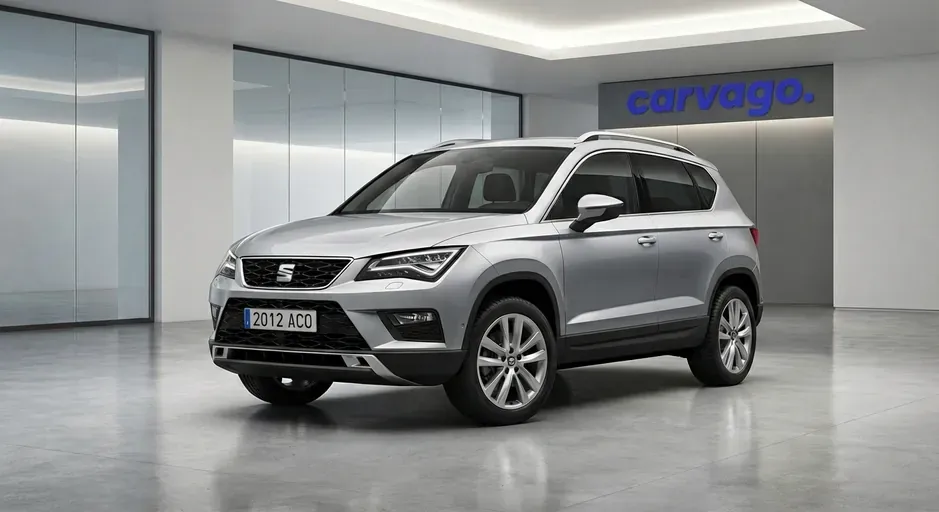
Seat Ateca

Seat Ateca

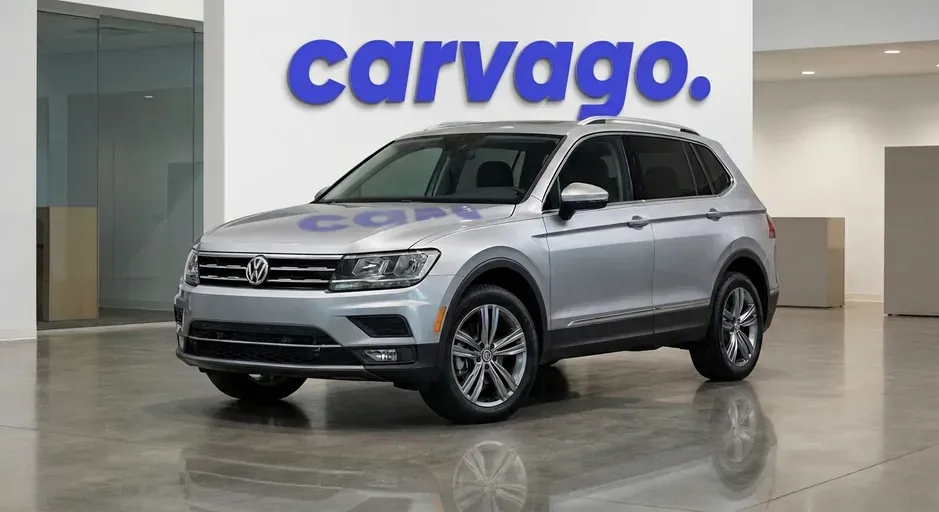
Volkswagen Tiguan

Volkswagen Tiguan

Introduction

Seat Ateca represents an attractive and dynamically tuned Spanish SUV that attracts drivers primarily with its sportier, sharp-edged look and more agile driving characteristics. Standing against it is its more conservative German sibling, the Volkswagen Tiguan (also available in its extended family version as the Tiguan Allspace), which has long been considered an exceptionally versatile benchmark in its class, with a strong emphasis on premium interior craftsmanship and advanced technologies. Let's take a detailed look at which of these closely related models from the VW Group, sharing the same chassis platform, will represent a better choice for your daily journeys on the nearly new used car market.

Comparison of External Dimensions

Although the Seat Ateca and Volkswagen Tiguan share the same MQB modular platform from the Volkswagen Group, a look at their exterior dimensions quickly reveals that each targets a slightly different audience. Focusing on used cars approximately four years old (corresponding to the facelifted versions of the first-generation Seat and second-generation Volkswagen from 2020–2023), the Tiguan is a noticeable 128 to 130 mm longer. While the more family-oriented Tiguan measures 4509 to 4511 mm in length, the Spanish Ateca maintains a significantly more compact footprint with a length of 4381 mm.

This difference in length, further supported by a 40 mm longer wheelbase in favor of Volkswagen (2678 mm compared to 2638 mm for the Seat), translates directly into the daily usability of both cars. Thanks to its larger proportions, the Tiguan offers a more airy cabin and more generous legroom for rear-seat passengers, making it a more confident choice for long-distance family travel. Conversely, the Seat Ateca makes the most of its smaller body overhangs and shorter wheelbase. In cramped city streets, crowded parking lots, or narrow underground garages, it is much easier to maneuver and feels overall more agile behind the wheel.

In terms of body width, both cars are very similar (around 1840 mm), so they occupy essentially the same space in a parking lane. However, a major difference can be found in height. The Volkswagen Tiguan is approximately 65 to 74 mm taller than the Seat Ateca. This not only gives it a slightly more robust and "off-road" look but also provides the driver with a slightly higher seating position, offering a better view of the traffic. The final choice thus depends purely on your priorities: if you are looking for maximum interior space and a more majestic stance, the Tiguan scores. If, however, you prefer agility and easier city parking, the Ateca is the smarter choice.

ParameterSeat Ateca SUVVolkswagen Tiguan SUV
Length (mm)43814509 - 4511
Width (mm)18411839 - 1859
Height (mm)1601 - 16111672 - 1675
Wheelbase (mm)2630 - 26382678 - 2680

Trunk Volume

The luggage compartment often plays a decisive role when choosing a family SUV. Although the Seat Ateca and Volkswagen Tiguan share a common technical basis within the group, the two cars differ quite noticeably in terms of trunk practicality. This difference is crucial especially for families, where every extra liter makes daily logistics easier, whether it's packing a bulky stroller or sports equipment. The Volkswagen Tiguan is the larger and more family-oriented car of the pair, which is directly reflected in its overall transport capacity.

Looking at the generation models appearing on the used car market today as roughly four-year-old vehicles, the Volkswagen Tiguan offers a generous 615 liters in its basic configuration, while the Seat Ateca has a volume of 510 liters. The difference remains noticeable even when you fold down the rear seats – in the Tiguan, this step gives you up to 1655 liters of space, whereas the Ateca offers a maximum of 1604 liters. In practice, this means that the Tiguan easily provides space for several extra suitcases, while its Spanish relative is more than sufficient for weekend shopping and longer holidays, provided you don't need to carry an excess of cargo.

If you opt for a Seat Ateca with 4Drive all-wheel drive, the basic volume shrinks to 485 liters (or 1579 liters with the backrests folded down) due to the different spatial arrangement of the rear axle. You have to make a similar compromise if you are attracted to electrified variants – plug-in hybrid models labeled eHybrid have a significantly reduced capacity due to the placement of the high-voltage traction battery under the trunk floor. Overall, a clear conclusion follows from this comparison: if your primary requirement is uncompromising space, the Volkswagen Tiguan is the safer choice, but for normal daily driving and standard demands, the more compact Ateca will also serve very well.

Comparison of luggage compartment volume

ParameterSeat Ateca SUVVolkswagen Tiguan SUV
Basic volume (liters)510615
Max. volume with seats folded (liters)16041655

Family hauler or a more agile choice? 🧳

While the Seat Ateca offers very solid space for everyday tasks and holidays, the Volkswagen Tiguan is the clear winner for more demanding families who care about every liter of usable volume.

Discover the true condition of the car thanks to an independent inspection

Order CarAudit™

Trailer Weights

In terms of towing capacity, there are noticeable differences between the two models, which can play a crucial role when choosing a four-year-old used SUV. While the Seat Ateca reliably fulfills the role of a standard family car for occasional towing of smaller trailers, its relative, the second-generation Volkswagen Tiguan, positions itself as a significantly more capable workhorse that meets the needs of even very demanding drivers with heavy loads.

For the Seat Ateca, the standard braked trailer weight depends heavily on the chosen engine. The base value for the economical 1.0 TSI three-cylinder engine is exactly 1300 kg. In the case of more popular and powerful versions, such as the 1.5 TSI ACT or 2.0 TDI, the car can easily handle towing between 1600 and 2100 kg. Such capacity is entirely sufficient for a standard family caravan, transporting a small boat, or hauling garden materials to a cottage for the weekend.

The Volkswagen Tiguan goes significantly further in terms of maximum towing capacity. While standard versions with 1.5 TSI engines offer a similar baseline with a limit of 1600 to 1800 kg, the Tiguan truly excels with two-liter units (2.0 TDI and 2.0 TSI) and all-wheel drive. Its maximum braked trailer towing capacity reaches an impressive 2500 kg. However, be cautious with the Tiguan eHybrid plug-in hybrid version – due to the additional weight of the traction batteries, it offers a reduced capacity with a fixed maximum of 1800 kg.

In practice, this means a clear division of roles: if you need to regularly tow heavy horse trailers, construction equipment, or large motorhomes for long holidays, the more powerful Tiguan with a two-liter engine is the clear choice, offering a significant margin. The Seat Ateca, on the other hand, represents an ideal compromise that is fully sufficient for the typical weekend needs of Czech drivers. Data for unbraked trailers are not explicitly stated in the factory specifications; however, for both vehicles in this weight category, the legislative standard with a maximum of 750 kg applies.

Model and engineBraked trailer weight (kg)Unbraked trailer weight (kg)
Seat Ateca 1.0 TSI (81/85 kW)1300-
Seat Ateca 1.5 TSI ACT (110 kW)1600 - 1900-
Seat Ateca 2.0 TDI (110/140 kW)1800 - 2100-
VW Tiguan 1.5 TSI OPF (110 kW)1800-
VW Tiguan 1.4 eHybrid (110 kW)1800-
VW Tiguan 2.0 TDI SCR (110/147 kW)2000 - 2500-
VW Tiguan 2.0 TSI OPF (140/180 kW)2500-

Overview of Most Common Motorizations

Although the SEAT Ateca and Volkswagen Tiguan share the same MQB technical platform from the Volkswagen Group, their range of engines shows the different focus of both models, which is also evident when choosing a roughly four-year-old used car. While the Ateca targets more rationally minded buyers and offers a slightly narrower but highly efficient selection of power units up to 140 kW, the Tiguan covers a much wider spectrum of driving needs. Both family SUVs rely on the popular and economical 1.5 TSI and 2.0 TDI engines as a base; however, the German model adds significantly more powerful specifications, including the uncompromising Tiguan R sports version and a modern plug-in hybrid, which is completely missing from its Spanish sibling. For average drivers looking for a reliable everyday car, however, the standard engines in both vehicles will perform almost identically.

SEAT Ateca Engines

The basis of the range for the facelifted SEAT Ateca (we are selecting from the generation produced since 2020) are proven and efficient units that enjoy great popularity on the market for roughly four-year-old used cars. While older models produced until 2019 featured the popular 1.4 EcoTSI engines and the smaller 1.6 TDI diesel, you will no longer find them in newer model years, as they were completely phased out and replaced by more efficient alternatives as part of the modernization.

  • Base engine: The 1.0 TSI three-cylinder petrol engine is an ideal option for undemanding drivers with a budget oriented towards a lower purchase price and frequent city commutes.
  • Most popular choice: The 1.5 TSI ACT four-cylinder petrol engine with cylinder deactivation technology offers an excellent compromise between smooth dynamics and reasonable fuel consumption.
  • Performance and 4x4 drive: For those interested in all-wheel drive (4Drive system), newer models offer the powerful 2.0 TSI two-liter petrol engine or a more powerful version of the reliable 2.0 TDI diesel.
Engine typeFuelPower (kW)Torque (Nm)Transmission
1.0 TSIPetrol812006-speed manual
1.5 TSI ACTPetrol1102506-speed man. / 7-speed DSG
2.0 TSI 4DrivePetrol1403207-speed DSG
2.0 TDIDiesel853006-speed manual
2.0 TDIDiesel110340 / 3606-speed man. / 7-speed DSG

Volkswagen Tiguan Engines

The second-generation Volkswagen Tiguan (also in the refreshed version after 2020) satisfies a significantly more demanding audience and long-distance motorway drivers thanks to its much wider power range. Although it shares the most popular mainstream engines with the Ateca, it adds attractive variants for specific uses:

  • Powerful units: For more spirited driving, more powerful 2.0 TSI OPF petrol versions (offering up to 180 kW) and robust 2.0 TDI SCR diesel engines with parameters pushed up to an impressive 147 kW are available.
  • Extreme Tiguan R: Specifically for sports-oriented drivers, there is the uncompromising two-liter with 235 kW of power and a massive 420 Nm of torque.
  • Electrified driving: A major advantage over the Ateca is the presence of the 1.4 eHybrid variant. This plug-in hybrid combines a 1.4-liter combustion engine with an electric motor, delivering a total system output of 180 kW and the possibility of quiet, emission-free city driving with external charging.
Engine typeFuelPower (kW)Torque (Nm)Transmission
1.5 TSI OPFPetrol96 / 110220 / 2506-speed man. / 7-speed DSG
2.0 TSI OPF 4MOTIONPetrol140 / 180320 / 3707-speed DSG
Tiguan R (2.0 TSI)Petrol2354207-speed DSG
1.4 eHybrid OPFPlug-in Hybrid1804006-speed DSG
2.0 TDI SCRDiesel903206-speed manual
2.0 TDI SCRDiesel1103606-speed man. / 7-speed DSG
2.0 TDI SCR 4MOTIONDiesel1474007-speed DSG

Family Ideal ⚖️

While the SEAT Ateca with standard 1.5 TSI or 2.0 TDI engines represents an extremely rational choice with an excellent price-to-value ratio, the Volkswagen Tiguan clearly dominates with its offering for very demanding drivers, crowned by high-performance versions and an efficient plug-in hybrid.

Choosing the right engine is crucial for long-term satisfaction, which is why the following recommendations for used cars with an average age of around four years are based on real performance, actual fuel consumption, owner feedback, and mechanical reliability. While the Seat Ateca, thanks to its lighter construction and more agile focus, works best with modern and efficient petrol engines, the larger and significantly heavier Volkswagen Tiguan is tailor-made for powerful diesel engines. Interestingly, although both cars share identical Group technology, the Tiguan offers a much wider range of high-performance engines and all-wheel-drive systems in its model years, while the Ateca's range within the given generation focuses more on rational daily use, with front-wheel-drive vehicles clearly dominating the used car market.

For the Seat Ateca, we recommend: 1.5 TSI ACT (110 kW / 150 hp)

The 1.5 TSI petrol four-cylinder with Active Cylinder Technology (ACT) represents the absolute ideal and best choice for the Seat Ateca among roughly four-year-old used cars. This unit successfully replaced the older 1.4 EcoTSI units (which, according to our data, you will no longer encounter in younger model years) and provides a fantastic compromise between purchase price, mechanical reliability, and everyday practicality. Its main technical advantage is strong torque from low revs and amazing operational efficiency – real-world fuel consumption easily stays around 6 to 6.5 l/100 km thanks to the deactivation of two cylinders under partial load. Regarding risks, it is important to mention that early versions of this engine occasionally exhibited slight jerking when cold, which was usually resolved by a software update, but you should still pay close attention to the smoothness of the cold start and the first pull-away during a test drive. Similarly, it is necessary to check for smooth shifting in the DSG automatic transmission, as neglected service can hide worn clutches, manifesting as unpleasant jerking when crawling. This engine is tailor-made for drivers who use the vehicle primarily in the city and on shorter suburban routes, prefer a calmer driving style, and want to avoid potential problems with the complex emission systems of diesel engines in a used car.

For the Volkswagen Tiguan, we recommend: 2.0 TDI SCR (110 kW / 150 hp)

For the heavier and more robust Volkswagen Tiguan, the proven 2.0 TDI diesel two-liter has long been the best and most sought-after choice. Because the Tiguan has a bulkier body and higher aerodynamic drag, petrol engines can result in significantly higher fuel bills at highway speeds, while the 2.0 TDI offers tireless pull and excellent operating economy with real-world consumption of around 6 liters of diesel per 100 km. A huge technical advantage is the engine's excellent flexibility combined with substantial torque, which excels especially in vehicles with 4Motion all-wheel drive, where you get a more durable wet-clutch DSG transmission as a bonus. The biggest risk with a used diesel is usually a clogged Diesel Particulate Filter (DPF) or a malfunctioning EGR valve due to frequent previous city driving. Therefore, during the inspection, watch for warning lights, connect the vehicle to diagnostics to determine the DPF soot level, and ask about the AdBlue refill history. Also, be sure to thoroughly verify the service history – the oil in the automatic transmission and the Haldex inter-axle coupling should be changed at most every 60,000 km to maintain long-term reliability; otherwise, there is a risk of the AWD pump seizing, which you can identify during a test drive if the rear axle fails to engage on a slippery surface and the car only spins its front wheels. A Tiguan with this engine is an absolutely ideal companion for families and drivers with high annual mileage who frequently travel long distances, head to the mountains, or need a reliable car for trouble-free towing.
Real Fuel Consumption

While the official fuel consumption figures provided by manufacturers look a bit more realistic after the transition to stricter measurement methodologies, the situation in everyday traffic is often quite different. For family SUVs, aerodynamic drag, high body construction, and of course, vehicle weight play a huge role. To get the most objective idea of the actual operating costs of the popular group siblings – the Seat Ateca (generation 5FP) and the Volkswagen Tiguan (generation II) – we focused on used cars around four years old and looked at real-world driving data. Our source was the German community portal Spritmonitor.de, where hundreds of thousands of drivers from all over Europe record their actual refueling over the long term.

Source:

Model and engineAverage consumption (l/100 km)
Petrol engines
Seat Ateca 1.0 TSI (81 kW)6.8
Seat Ateca 1.5 TSI ACT (110 kW)6.9
VW Tiguan 1.5 TSI OPF (110 kW)7.2
Seat Ateca 2.0 TSI 4Drive (140 kW)8.2
VW Tiguan 2.0 TSI OPF 4Motion (140 kW)8.6
Diesel engines
Seat Ateca 2.0 TDI (110 kW)6.1
VW Tiguan 2.0 TDI SCR (110 kW)6.5
VW Tiguan 2.0 TDI SCR 4Motion (147 kW)7.4
Plug-in hybrid engines
VW Tiguan 1.4 eHybrid (180 kW)4.5*

Note: *For the plug-in hybrid version, real-world consumption depends heavily on the frequency of charging from the grid.

Looking at the collected data, several interesting trends clearly emerge. The most surprising is the fact that the small turbocharged three-cylinder 1.0 TSI in the Seat Ateca brings almost no operational savings compared to the larger four-cylinder. The smaller engine logically has to work much harder with a heavy SUV, while the more powerful 1.5 TSI unit benefits very effectively from its power reserve and advanced cylinder deactivation system (ACT). The comparison of the two cars also shows that the Volkswagen Tiguan is always a few tenths of a liter thirstier with identical engines, mainly due to its slightly more robust and heavier body construction. With diesel engines, however, we clearly see that diesel still plays the role of the economy king for larger cars on long journeys – the popular 2.0 TDI engine comfortably manages between 6 and 6.5 liters even with a family load.

For the typical user, this means a clear instruction: choose the engine of a used car strictly according to your most frequent routes. If you are looking for an SUV mainly for suburban driving, school runs, and regular commuting, the best choice in terms of price-performance ratio will be the petrol 1.5 TSI. In both cars, it offers great refinement and sufficient agility, whereas a diesel engine would suffer unnecessarily on short trips and without reaching operating temperature. However, if you spend weekends on motorways or regularly cross the country, the reliable 2.0 TDI diesel will be an excellent and unbeatably economical choice. The plug-in hybrid Tiguan will then find its specific audience, but it only makes financial sense for those users who have the possibility of daily charging at home from a wallbox or at work.

In conclusion, although the Seat Ateca is noticeably more economical in real-world driving than its relative, the Volkswagen Tiguan, thanks to its slightly more compact design, the differences in fuel appetite of identical engines are not so drastic as to be the most important and only factor when choosing a four-year-old used car. Consumption, therefore, does not clearly tip the scales, and the overall choice should depend more on interior space preferences, your budget, and the available equipment of specific units on the market.

Price Range and Used Car Offerings

Used Car Market Situation: Availability vs. Prestige

When looking for a used compact SUV roughly four years old (around the 2022 model year), the Seat Ateca and Volkswagen Tiguan represent two very different price categories, even though they share the same proven MQB group platform under the bodywork. The Tiguan, which underwent an extensive second-generation facelift in 2020, positions itself on the market as a more premium and family-oriented choice. The Seat Ateca, also in its modernized version (2020 facelift), instead targets the wallets of those looking for the maximum price-to-value ratio or a sportier character.

Seat Ateca: The Spanish Recipe for a Bargain

The Seat Ateca is noticeably more affordable on the used car market. Depreciation in the first few years is slightly steeper for the Spanish brand, making it a fantastic target for used car buyers. For 2022 models, the typical price range is mostly between €18,000 and €27,000, depending on the engine, equipment, and mileage history.

  • Entry-level versions and higher mileage: Cars with the 1.0 TSI engine, or older/higher mileage 1.5 TSI units with a manual gearbox, can be found on the market just below the €18,000 mark.
  • The sweet spot: The most sought-after specifications with the 1.5 TSI engine and DSG automatic transmission or the economical 2.0 TDI diesel (Style or Xperience trim levels) most often range between €21,000 and €23,000.
  • Top-tier versions: Sporty FR models or versions with 4Drive all-wheel drive and the 2.0 TDI engine with low mileage climb to amounts around €25,000 to €27,000.

The Ateca thus represents a highly attractive choice for buyers who desire modern VW Group technology but do not want to pay extra for the badge on the hood.

Volkswagen Tiguan: The German Benchmark with a Premium Surcharge

The Volkswagen Tiguan, on the other hand, holds its value much more stubbornly. It is objectively slightly larger, offers more generous space for rear passengers, and the materials in its interior feel more premium and robust. For four-year-old models, you must expect a significantly wider and higher budget, ranging from approximately €23,000 to over €37,000.

  • Entry-level models: Basic trim levels with a manual gearbox and the 1.5 TSI engine (Life trim) start at approximately €23,000, but often for units with mileage approaching 100,000 km.
  • Most popular specifications: The typical fleet and family ideal, the 2.0 TDI (110 kW) with DSG transmission and optional 4Motion drive, usually sells in the range of €27,000 to €31,000.
  • Premium units: Cars in the attractive R-Line package with more powerful engines (e.g., 2.0 TSI or 147 kW TDI), or the extended seven-seater Allspace versions, easily exceed €33,000 and, for very well-preserved examples, confidently attack the €41,000 mark.

Comparison of Typical Prices (Models approx. 4 years old)

The table below clearly shows the usual price difference for comparable engines and vehicle age.

Engine and Trim LevelIndicative Price: Seat AtecaIndicative Price: VW TiguanPrice Difference
Basic petrol (1.5 TSI, mid-trim, manual)~ €20,000~ €24,000+ €4,000 (Tiguan)
Common diesel (2.0 TDI 110 kW, DSG, FWD)~ €22,000~ €28,000+ €6,000 (Tiguan)
Top 4x4 version (FR / R-Line trim)~ €26,000~ €35,000+ €9,000 (Tiguan)

Depreciation and Long-Term Investment

If we look at the purchase through the lens of a long-term investment, both models have their indisputable advantages. The Volkswagen Tiguan is considered the embodiment of security on the used car market. Demand for family SUVs with the VW logo is huge not only here but across all of Europe, which guarantees excellent resale value and an exceptionally slow decline in value in the coming years.

The Seat Ateca plays a different game. The first owner has already absorbed the largest drop in value, so you get a nearly new, reliable car with an identical platform and powertrain at a huge discount. A difference exceeding €4,000 for comparable models can represent enough funds for fuel, insurance, and routine servicing for several years ahead for many drivers.

Logic vs. Prestige 💰

While the Seat Ateca clearly wins in terms of price-to-performance as a used car, saving significant amounts at purchase, the Volkswagen Tiguan can justify its noticeably higher price tag with more premium materials, more generous space, and unrivaled value retention for future resale.

Safety and Euro NCAP Rating

Both vehicles, the Seat Ateca and the Volkswagen Tiguan, comfortably earned the maximum five-star rating in their independent Euro NCAP tests. When choosing a used car, however, it is very important to view these results in a broader context and, above all, to note the year in which the tests themselves were conducted.

The Euro NCAP methodology is constantly evolving and regularly becoming more stringent. Percentage results from different years cannot be compared on the same level. A vehicle that easily achieved five stars years ago would likely not pass today's tests with the same rating. Newer protocols include much more demanding disciplines, such as advanced intersection crash simulations, active cyclist protection, or significantly stricter assessment of electronic driver assistance systems.

The Seat Ateca underwent safety testing in 2016, and this rating also applies to the corresponding used cars on the market today. Under the conditions at the time, it recorded an excellent rating for adult occupant protection (93%) and a solid result for child protection (84%). However, a weaker performance was seen in safety assistance systems (60%), which corresponded to the scope of standard equipment at the time. Although it is a passively very safe car with a rigid body, its five-star certification officially expired in January 2023. From today's perspective, the base models no longer possess the comprehensive range of active safety features required by the strictest current standards.

Similarly, the Volkswagen Tiguan from the years corresponding to the market for roughly four-year-old used cars relies on certification based on 2016 tests. In the detailed results, however, it performed slightly better than its Spanish sibling. Adult protection reached a top-tier 96%, and safety assistance systems received 68%. The Tiguan has the upper hand primarily due to a more robust portfolio of active safety features offered as standard equipment (for example, a more advanced surround monitoring and emergency braking system). Interestingly, in 2021, Euro NCAP conducted supplementary tests that confirmed the validity of the original high level of safety even for newer plug-in hybrid powertrains.

In terms of overall road confidence, both models offer excellent occupant protection, and you can fully rely on them for family travel. However, if you are looking for a more comprehensive safety package in terms of active assistants and require slightly better absolute crash test figures, the Volkswagen Tiguan offers a marginally more advanced technical foundation.

ParameterSeat AtecaVolkswagen Tiguan
Year of testing20162016
Adult occupant protection93 %96 %
Child protection84 %84 %
Vulnerable road user protection71 %72 %
Safety assist systems60 %68 %

Top-notch safety, but the Tiguan has a slight edge 🛡️

Both SUVs offer very good occupant protection backed by a five-star rating; however, the Volkswagen Tiguan features a slightly richer range of assistance systems and stronger adult protection, making it objectively a somewhat safer choice.

Comparison of Interesting Equipment Features

In addition to standard equipment, each of the models offers several unique features that can be decisive for the customer, with both family SUVs approaching added value and technological innovation in their own way.

Seat Ateca: Spanish Temperament and Sporting Flair

  • Infotainment and Connectivity: Around 2020, the model underwent a modernization that introduced a system with a screen diagonal of up to 9.2 inches (MIB3 platform). It supports wireless smartphone mirroring via Apple CarPlay and Android Auto and features voice control that you wake up with the informal greeting "Hola Hola".
  • Smart Design Features: A nice detail for everyday use is the welcome lighting (puddle lights) integrated into the exterior mirrors. When the car is unlocked in the dark, it projects the greeting "Hola!" or the silhouette of the car itself onto the ground next to the door.
  • Chassis and Driving Experience: The Ateca traditionally relies on a stiffer and more engaging chassis setup compared to its group siblings. For better comfort and dynamics, you can often find used examples equipped with the DCC adaptive chassis, which allows you to change the damper characteristics.
  • Trim Levels as an Expression of Style: The model range offers distinct visual differentiation. The FR (Formula Racing) trim brings sporty bumpers, painted wheel arch flares, and a stiffer chassis, while the Xperience trim focuses on a more robust off-road look with aluminum details.
  • Assistance Systems: Higher trims include predictive adaptive cruise control, which actively works with navigation data and the traffic sign recognition camera to automatically adjust speed before corners or roundabouts.

Volkswagen Tiguan: Technological Leader and Master of Spaciousness

  • Advanced Lighting: A significant technological advantage of the Tiguan is the option of top-tier IQ.LIGHT LED Matrix headlights. This system can dynamically turn off individual LEDs to avoid dazzling oncoming vehicles, while the rest of the road remains perfectly illuminated by the high beams.
  • Maximum Interior Versatility: The Tiguan excels in everyday practicality thanks to the standard sliding rear bench. It can be moved longitudinally by up to 18 centimeters. This allows the user to flexibly choose between massive legroom for rear passengers or an above-standard luggage compartment volume (up to 615 liters).
  • Extended Body Variants: Unlike the Ateca, Volkswagen offers the extended Tiguan Allspace version. This adds extra centimeters to the wheelbase and overall length and brings the option of a seven-seat layout, which is a key advantage for larger families.
  • Innovation in Ergonomics and Digitalization: In models after the facelift (from late 2020), we find the fully digital Digital Cockpit Pro instrument cluster and a new automatic climate control panel. It has moved away from traditional rotary controls to modern touch surfaces (sliders), which complete the high-tech atmosphere of the interior.
  • Driving Assistance Systems: In addition to the advanced Travel Assist system (for partially automated driving at highway speeds), the Tiguan offers the unique Trailer Assist system. This significantly simplifies parking and reversing with a trailer – the driver simply sets the desired angle using the mirror control, and the car steers itself.
  • Emphasis on Image and Performance: Among used cars, the R-Line visual package is highly sought after, giving the family SUV an aggressive sporty look. For enthusiasts, there is also the full-blown Tiguan R version, which offers top performance and a sophisticated all-wheel-drive system with torque vectoring on the rear axle.

Key Advantages and Disadvantages

Seat Ateca

Pros

More agile and sportier driving characteristics thanks to a stiffer suspension setup

More affordable purchase price on the used car market

More intuitive interior ergonomics with physical buttons for climate control

More compact exterior dimensions, making maneuvering and city parking easier

Rich standard equipment even in lower trim levels

Cons

Stiffer suspension results in poorer damping comfort on broken roads

Smaller base trunk capacity (510 liters) compared to its German sibling

Lack of rear-row variability; seats cannot be slid longitudinally

Higher proportion of hard plastics and an overall less premium feel in the cabin

The Seat Ateca is an ideal choice for drivers looking for an affordable SUV with a slightly sportier and more driver-focused character. It is perfectly suited for daily suburban commuting, where you will fully appreciate its agility, logical dashboard layout, and easy parking.

Volkswagen Tiguan

Pros

Excellent cabin spaciousness and a larger trunk (up to 615 liters)

Greater interior variability thanks to standard sliding rear seats

Top-tier ride comfort, especially in versions equipped with DCC adaptive dampers

Higher-quality interior craftsmanship with a greater proportion of soft-touch materials

More advanced cabin soundproofing at highway speeds

Cons

Higher purchase price for used cars and slightly more expensive maintenance costs

Impractical touch controls for climate and steering wheel buttons in facelifted versions

More cumbersome and rather detached driving feel in corners

The Volkswagen Tiguan primarily targets families and more demanding travelers requiring maximum practicality, interior space, and ride comfort on long journeys. Despite the higher purchase price, it offers a more premium interior and great variability, making it an exceptionally versatile daily companion.

Common Problems and Owner Complaints

Based on our own CarAudit inspections, breakdown statistics, service reports, and long-term user experiences from sites like Spritmonitor, we have compiled an overview of the most common problems that used car buyers should watch out for.

For the facelifted Seat Ateca model (from 2020), overall reliability is at a high level; however, a physical inspection of a used car and detailed diagnostics often reveal several typical group ailments.

  • Infotainment and electronics: Owners often complain about the MIB3 system freezing, wireless smartphone connection dropouts, and slower touchscreen response. Fortunately, most of these issues are resolved by a timely software update.
  • Engines (1.5 TSI): This popular petrol engine occasionally exhibits jerking during cold starts. In newer models, this problem has been suppressed from the factory with newer software, but at higher mileages, slight metallic noises may appear, indicating a worn and loose timing chain.
  • Transmission (DSG): In 7-speed dual-clutch transmissions, especially the dry-clutch variant, neglected maintenance leads to unpleasant jerking during slow starts and overall rougher shifting.
  • Chassis and suspension: Due to wear, creaking and knocking sounds may be heard from the front axle when driving over bumps. The culprits are usually worn control arm bushings or stabilizer mounts.

Seat Ateca: A reliable but sometimes stubborn companion

The Ateca is a very reliable compact SUV, where you will most often be troubled only by infotainment software bugs or neglected DSG transmission service. If you keep an eye on a documented maintenance history, it will reward you with long and trouble-free operation.

The Volkswagen Tiguan from the post-modernization years (2020–2022) is among the highly durable and sought-after family SUVs; however, a comprehensive pre-purchase inspection is an absolute necessity due to several specific weaknesses.

  • Cooling system (1.5 TSI and 2.0 TDI engines): One of the most common mechanical faults is small but annoying coolant leaks. The cause is usually a faulty water pump seal or a cracked housing, which requires preventive replacement and immediate service intervention.
  • Body and interior: If you are choosing a model equipped with a panoramic sunroof, thoroughly check for any signs of leaks into the interior. Drain channels very often become clogged with debris, water accumulates and can cause not only unpleasant moisture in the cabin but also extensive short circuits in the surrounding electronics.
  • Infotainment and touch controls: Similar to the Ateca, the multimedia system here also suffered from software crashes. Furthermore, in the facelifted Tiguan, users widely criticize the unreliability and excessive sensitivity of the new capacitive touch buttons on the steering wheel.
  • Particulate filters (2.0 TDI): If the previous owner primarily drove short city routes with a cold engine, the DPF filter tends to be prematurely clogged. This usually manifests as an error message, reduced power, increased consumption, and in extreme cases, the car going into limp mode.

Volkswagen Tiguan: A premium standard that requires care

The facelifted Tiguan excels with exemplary craftsmanship and comfort, but when buying a used car, it is crucial to monitor the tightness of the cooling system and the flawless condition of the complex electronics. However, a regularly and carefully serviced unit undoubtedly belongs among the best used family cars on the market.

Tips for Buying a Used Car

When buying a used car, a thorough inspection is key. Although both models share group technology and platform, each has its own specifics and weak points that are worth focusing on during a test drive and inspection. A professional comprehensive car audit can reveal hidden defects, but you should be alert even during the testing itself. Here are some specific points to focus on for these two models.

When choosing a Seat Ateca:

  • Cold engine behavior of the 1.5 TSI: With this very popular engine, especially in the first years of production and in models before software updates, "kangarooing" (jerking when starting from cold) appeared. Insist that the engine be completely cold before your test drive. Start off smoothly and watch if the car hesitates or hops.
  • DSG automatic transmission behavior: Ateca with 1.0 TSI and 1.5 TSI engines uses a dry-clutch gearbox (DQ200), which is more prone to wear in city traffic. During the test drive, focus on starts and crawling at a walking pace. If the transmission noticeably jerks or makes metallic sounds when shifting between first and second gear, the clutches may be due for replacement.
  • MIB3 infotainment stability: In newer model years (approximately from the 2020 facelift), the group deployed the new MIB3 system. Test the response speed, phone connection via Apple CarPlay or Android Auto, and check if the system restarts spontaneously. Problems are often solved by updating to the latest software version.
  • Interior noises and stiffer chassis: By nature, Seat has a sportier and stiffer chassis than the Tiguan. Take the car on a rougher section of road and listen. Focus on knocking from the front axle (often caused by worn silent blocks) and creaking of harder plastics in the interior, where Seat did save a bit compared to Volkswagen.
  • Interior moisture: Thoroughly check the carpets in the rear footwell and at the bottom of the luggage compartment. In some units, leaks occurred through poorly sealing doors or body ventilation flaps.

When choosing a Volkswagen Tiguan:

  • Battery condition and smoothness of the eHybrid (PHEV) version: If you are buying a plug-in hybrid version (which is missing in the Ateca), have the battery degradation (SOH – State of Health) read via diagnostics. During the drive, monitor whether the real electric range is meaningful and how smoothly the car switches between pure electric and hybrid mode with the combustion engine engaged.
  • Leaks and noises from DCC adaptive dampers: Many Tiguans are equipped with an adaptive chassis. During the test drive, switch between Comfort and Sport modes – the difference in stiffness should be immediately noticeable. Visually check if the dampers are leaking oil (their replacement is very expensive) and listen for knocking on bumps.
  • Functionality of the 4Motion all-wheel drive system: For AWD models, try a sharp start on a slippery surface (grass, gravel) so that the Haldex system engages. There should be no bangs or humming from the rear. In the service history, carefully check if the oil in the inter-axle coupling was changed every 3 years or 60,000 km.
  • Faults in touch surfaces and assistants: Facelifted Tiguans received capacitive touch buttons on the steering wheel and climate control. Check if they respond reliably to every touch. A common fault in these model years is also the failure of the SOS module (eCall), which manifests as a yellow error message on the instrument cluster – repair requires replacing the control unit.
  • Panoramic roof drainage channels: If the Tiguan is equipped with a panoramic window, look at the headliner around the A and C pillars. If you see water stains, the drainage channels are most likely clogged, which can lead to expensive damage to the interior wiring. For this reason too, a detailed independent inspection of the car's technical condition before the final signing of the contract is an absolute necessity.

FAQ: Most Frequently Asked Questions

The Volkswagen Tiguan has a significantly larger and more versatile trunk with a basic volume of 615 liters, which it achieves primarily thanks to practical sliding rear seats. The competing Seat Ateca features fixed rear seats and a smaller volume of 510 liters, while for all-wheel drive versions, the capacity drops to 485 liters. For families with children and a large amount of luggage, the German model is a much more practical choice.

Thanks to a shorter wheelbase, lower weight, and stiffer suspension tuning, the Seat Ateca feels much more agile and sporty on the road. The Volkswagen Tiguan, on the other hand, is designed with a greater emphasis on a smooth ride and excellent bump absorption, making it an ideal highway cruiser. If you enjoy driving on winding backroads, the Spanish model will be more fun, while the German car clearly wins in overall touring comfort.

Both models use the same chassis platform and share the same range of group power units. In the four-year-old used car market, you will most often come across very reliable 1.5 TSI four-cylinder gasoline engines or proven 2.0 TDI diesel engines, which do not suffer from any major differences in failure rates. The choice of a specific engine should therefore depend only on whether you prefer frequent shorter city trips or rather longer highway journeys.

The Volkswagen Tiguan feels noticeably more upscale inside thanks to a higher proportion of soft-touch plastics and more advanced cabin soundproofing. The Seat Ateca relies on slightly harder but very durable materials, and furthermore, after the facelift, it retained classic physical buttons for climate control. While the German car will please lovers of modern touch panels, its Spanish sibling scores with drivers who prefer traditional and intuitive ergonomics without having to take their eyes off the road.

On the used car market, the Seat Ateca is typically slightly cheaper than its technically related competitor from Wolfsburg. In practice, this means that for the same price, you can often get a car in a higher trim level, with a more powerful engine, or with lower mileage. The Tiguan, on the other hand, holds its residual value better due to its popularity and can therefore be sold in the future with less financial loss.

Conclusion: Which Model to Choose?

Our Verdict

Although the Seat Ateca and Volkswagen Tiguan share the same technical platform, they represent two differently focused choices for various types of drivers on the used car market. The more compact Seat Ateca primarily attracts with its excellent price-to-value ratio, sportier driving characteristics, and great agility in everyday city traffic. In contrast, the slightly more expensive Volkswagen Tiguan clearly dominates in family practicality, scoring points with its generous and variable interior space, higher-quality materials, and better ride comfort on long journeys. The Spanish model will thus suit more rationally thinking buyers looking for an agile SUV at a more favorable price, while the German benchmark will surely satisfy more demanding families with a larger budget who care about maximum comfort and more stable residual value retention.

Find your ideal car

Sources: ADAC, idnes.cz, garaz.cz, techfocus.cz, automix.cz, podnikatel.cz

This article was prepared using artificial intelligence tools. The section guarantor is Petr Dušek.

Related articles

Car battle

Citroën C3 Aircross vs. Peugeot 2008: Complete comparison 2026

Citroën C3 Aircross vs Peugeot 2008 comparison. Find out which used SUV better suits your needs. We bring you a comparison of engines, equipment, and the final verdict.

Apr 19, 2026

Car battle

Nissan Qashqai vs. Seat Ateca: Complete comparison 2026

Deciding between the Nissan Qashqai and the Seat Ateca? Our detailed comparison of engines, equipment, and prices will help you choose the right SUV for you.

Apr 14, 2026

Car battle

Jaguar E-Pace vs. Mercedes-Benz GLB: Complete comparison 2026

Detailed comparison of Jaguar E-Pace vs Mercedes-Benz GLB. Discover the differences in equipment, driving characteristics, and read our verdict for choosing the best SUV.

Apr 29, 2026

We accept online card payments as well as wire transfers.

visa payment provider logovisa-electron payment provider logomastercard payment provider logomaestro payment provider logodiners-club payment provider logodiscover payment provider logo