Car battle
Toyota Camry vs. Honda Accord: A Complete 2025 Comparison
Toyota Camry vs. Honda Accord: Which sedan to choose? Our detailed comparison helps you find the right car based on key differences and our verdict.
Apr 13, 2026
Articles
Car battle
Detailed comparison of Renault Talisman vs Volkswagen Passat. Discover the differences in equipment and reliability, and read our verdict for choosing the ideal used car.
May 20, 2026
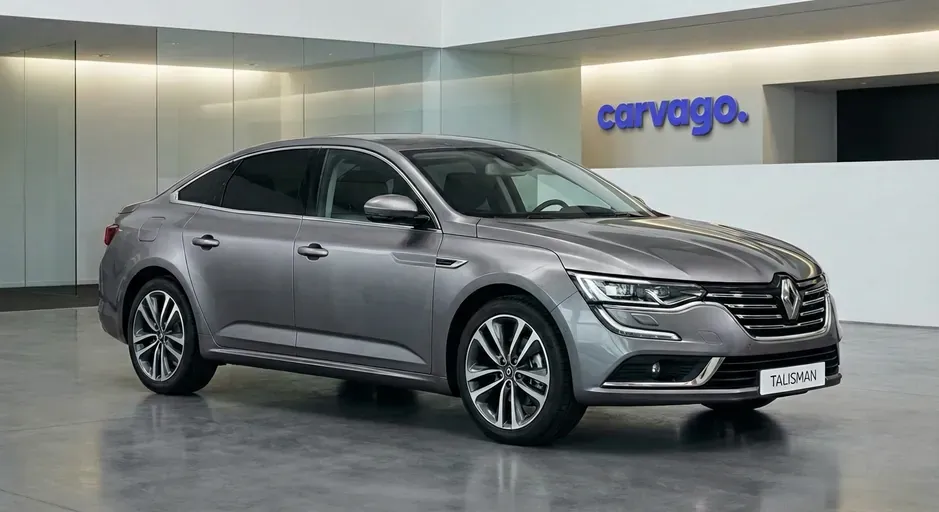
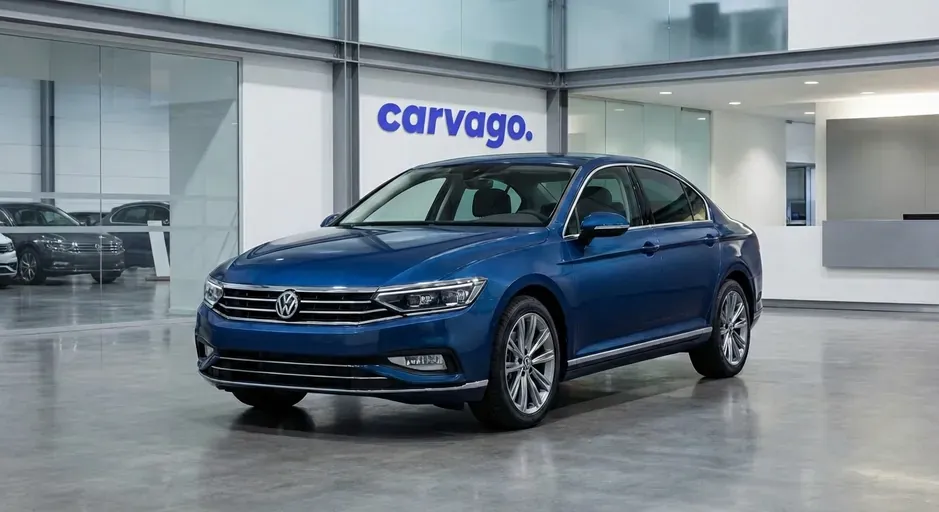
The French Renault Talisman, also known as the Renault Samsung SM6 in some Asian markets, entered the mid-size segment with the ambition to impress with its elegant design and modern technologies. Standing against it is the long-standing benchmark of this category, the German Volkswagen Passat (sold in certain regions under the name Volkswagen Magotan), which has built its unshakable position thanks to its renowned practicality and precise craftsmanship. Let's take a detailed look at how these two different approaches to a family and executive car fare in a direct comparison on the market for nearly new used cars.
When comparing the external dimensions of both cars on the used car market (focusing on models roughly four years old, i.e., the first-generation Renault Talisman and the popular B8 generation Volkswagen Passat), we encounter different philosophies from both brands. The Renault Talisman sedan, with its external proportions, tries to appear like a car from a class above and bets on representative majesty. With a length of 4,849 mm, it is a full 74 to 82 mm longer than a comparable Passat. Even more striking is the difference in width – the Talisman offers a value of 1,868 mm, while the Passat, at 1,832 mm, is 36 mm narrower.
These extra millimeters certainly add to the French car's attractiveness and confident stance on the road, but in everyday life, this represents a minor disadvantage. In narrow underground garages or when parallel parking in crowded city centers, the Volkswagen Passat is easier to maneuver and offers better visibility thanks to its more compact external dimensions. The wheelbase, which is key for longitudinal space in the cabin, technically favors the Renault (22 mm longer), but the Passat is considered a master of space packaging in the automotive world and, despite the shorter wheelbase, can offer a comparably spacious interior.
An interesting perspective is also offered by comparing the height of both body variants, especially in the popular estate versions. While the Renault Talisman Grandtour maintains a rather dynamic and low silhouette (maximum 1,465 mm), the Volkswagen Passat Variant is noticeably taller – reaching up to 1,521 mm. This difference of over 5 centimeters plays into the Passat's hands not only for entry but also means more generous headroom for rear passengers and overall more cubic space for transporting tall objects.
The table below compares the dimensional ranges of both models across engines and equipment for typical used cars approximately four years old (Talisman 1st generation and Passat B8).
| Parameter | Renault Talisman Sedan | Volkswagen Passat Sedan | Renault Talisman Estate | Volkswagen Passat Estate |
|---|---|---|---|---|
| Width (mm) | 1868 | 1832 | 1868 | 1832 |
| Length (mm) | 4849 | 4767 - 4775 | 4865 | 4767 - 4773 |
| Height (mm) | 1456 - 1463 | 1456 - 1483 | 1456 - 1465 | 1477 - 1521 |
| Wheelbase (mm) | 2808 - 2809 | 2786 - 2791 | 2808 - 2809 | 2786 - 2791 |
Luggage compartment volume is often one of the deciding factors for buyers of used mid-size cars. Whether you plan to transport a stroller daily, need to load a large grocery shop, or are packing for a long family holiday, every liter and cleverly used space counts. Looking at cars roughly four years old, this duel pits the French elegance of the first-generation Renault Talisman against the strictly rational approach of the highly popular Volkswagen Passat B8 generation.
An interesting situation arises if you are considering a classic sedan. The Renault Talisman in this body style offers a surprisingly generous space of 600 to 608 liters. In contrast, the Volkswagen Passat sedan (B8) loses out slightly on paper with a base volume of 586 liters. However, it is important to keep in mind that the real-world usability of this deep space is logically limited in both cars by the smaller loading aperture typical of sedan body styles.
The real battle of practicality takes place in the field of estate cars, which are by far the most sought-after among families. Here, the Volkswagen Passat Variant (B8) clearly dominates and maintains its position as the benchmark of its class with a massive base volume of 650 liters. Furthermore, after folding the rear seats completely, you create a cargo space of up to 1780 liters. The Renault Talisman Grandtour lags slightly behind in this comparison, offering 564 to 572 liters as standard and a maximum of 1681 liters with the seats folded. A difference of nearly 80 liters in the boot in its basic configuration means, in practice, trouble-free space for one extra large suitcase. It is worth noting, however, that if you opt for the popular plug-in hybrid version, the Volkswagen Passat GTE, you have to accept a compromise due to the battery placement – the base volume here shrinks to 483 liters and offers 1613 liters when folded.
In conclusion, if raw volume and carrying capacity are your top priorities, the Volkswagen Passat estate is hard to beat. While the Talisman estate might not impress with its total liters, as a whole, it offers more than decent and fully sufficient space for everyday family life, highlighted by its distinctive design.
| Parameter | Renault Talisman Sedan | Volkswagen Passat Sedan | Renault Talisman Estate | Volkswagen Passat Estate |
|---|---|---|---|---|
| Base volume (liters) | 600 - 608 | 586 | 564 - 572 | 650 |
| Maximum volume folded (liters) | - | - | 1673 - 1681 | 1780 |
While the Renault Talisman pleases with a spacious boot in the sedan version, for maximum practicality, big moves, and family travel, the Volkswagen Passat Variant remains the unsurpassed choice, accommodating significantly more luggage.
Towing capacity often plays a key role when choosing a spacious mid-size family car, whether you are planning to mount a tow bar bike rack, transport bulky materials over the weekend, or tow a caravan for a family holiday. The Volkswagen Passat and Renault Talisman approach this discipline slightly differently, which may ultimately decide which one is better suited to your needs.
How do they compare in numbers?
Watch out for hybrids and powerful petrol engines
It is interesting to compare specific engine versions where the rated values drop compared to the usual standard.
What does it mean in practice?
For the vast majority of users, the 1,500 to 1,850 kg limit of the Talisman is more than sufficient. It provides ideal capacity for a few extra suitcases, trouble-free weekend transport of building materials to a cottage, or for towing a standard-sized caravan for a family of four.
However, the capacity of over 2,000 kg for the Volkswagen Passat opens the door to significantly more demanding tasks. It provides a safe and well-dimensioned capacity for heavy twin-axle caravans, large boats, or heavy horse trailers. Regarding unbraked trailers (e.g., light utility trailers), both cars easily handle the technical and legislative maximum of 750 kg, given their curb weight.
In conclusion, while the Renault Talisman will easily fulfill all common family and recreational tasks, the Volkswagen Passat B8 positions itself as an uncompromising workhorse. If you plan to regularly tow heavy loads exceeding 1.8 tonnes, the German model is a much more flexible choice.
| Model and Engine | Braked Trailer Weight (kg) | Unbraked Trailer Weight (kg) |
|---|---|---|
| Renault Talisman 1.3/1.6/1.8 TCe | 1500 - 1800 | 750 |
| Renault Talisman Grandtour Blue dCi | 1800 - 1850 | 750 |
| VW Passat (B8) 1.5 TSI / 1.6 TDI | 1500 - 1600 | 750 |
| VW Passat (B8) GTE (Plug-in Hybrid) | 1600 | 750 |
| VW Passat (B8) 2.0 TDI (110 kW) | 1800 - 2000 | 750 |
| VW Passat (B8) 2.0 TDI / 2.0 TSI (over 140 kW) | 2000 - 2200 | 750 |
Looking at the engine range of both cars, the difference in the approach of the two manufacturers is evident, which fundamentally influences the choice on the used car market. While the Volkswagen Passat appeals to buyers with a wide and diverse range, including petrol and diesel versions, a plug-in hybrid (GTE), and the popular 4MOTION all-wheel drive, the Renault Talisman takes the path of a simplified but very effective range exclusively with front-wheel drive. The absence of all-wheel drive in the French representative is, however, to some extent compensated for by the unique 4Control four-wheel steering system, which significantly improves maneuverability. For those looking for a roughly four-year-old used car (post-facelift models from 2019–2022), this means that the Passat offers greater flexibility for specific needs (such as 4x4 drive for the mountains or a hybrid for the city), while the Talisman scores with reliable and refined units, which in younger models are almost always paired with an automatic dual-clutch transmission.
In roughly four-year-old used Renault Talismans (post-facelift generation), you will encounter a streamlined engine range. The base of the petrol range became the successful 1.3 TCe four-cylinder (listed as TCe 160), which surprises with its flexibility and decent fuel consumption. The pinnacle for performance lovers was the 1.8 TCe 225 engine, whose technology has roots in the Alpine sports model. From the available data, however, it is essential to emphasize that this powerful petrol version was offered mainly only until 2020 and disappeared from the market in newer models.
The diesel engines of the modernized Talisman are dominated by the robust 2.0 Blue dCi unit. Earlier smaller diesels (e.g., 1.7 Blue dCi) phased out of production by 2020, and therefore today's nearly new cars are dominated primarily by two-litre engines with outputs of 118 kW and 140 kW. The vast majority of engines in this period are already exclusively paired with the smooth-shifting EDC dual-clutch transmission.
| Engine type | Fuel | Power (kW) | Torque (Nm) | Transmission |
|---|---|---|---|---|
| 1.3 TCe 160 GPF | Petrol | 118 | 270 | 7EDC |
| 1.8 TCe 225 GPF | Petrol | 165 | 300 | 7EDC |
| 2.0 Blue dCi 160 | Diesel | 118 | 360 | 6EDC |
| 2.0 Blue dCi 190 | Diesel | 140 | 400 | 6EDC |
The facelifted generation of the Volkswagen Passat B8 (focused on model years 2019 to 2023) features a huge variety of powertrains. The petrol base is the 1.5 TSI engine with ACT cylinder deactivation technology to reduce fuel consumption. A more powerful choice is the more dynamic 2.0 TSI, with the 206 kW version with 4MOTION drive at the very top, making the Passat a very fast motorway cruiser. The traditional choice for high-mileage drivers are the 2.0 TDI engines, popular also thanks to the possibility of all-wheel drive and the use of the modern DSG transmission.
Compared to the Talisman, the Passat also offers an advanced GTE plug-in hybrid for efficient city driving with the possibility of electric-only mode. For completeness, the smaller 1.6 TDI (88 kW) diesel unit is also mentioned in the table; however, the database clearly shows that its production ended at the turn of 2019 and 2020. When choosing a four-year-old used car, you will encounter it only very rarely, as its role was fully taken over by weaker versions of the more reliable 2.0 TDI two-litre.
| Engine type | Fuel | Power (kW) | Torque (Nm) | Transmission |
|---|---|---|---|---|
| 1.5 TSI OPF / ACT | Petrol | 110 | 250 | 6MT / 7DSG |
| 2.0 TSI OPF | Petrol | 140 / 206 | 320 / 350 | 7DSG |
| 1.4 TSI GTE | Plug-in Hybrid | 160 | 400 | 6DSG |
| 1.6 TDI SCR | Diesel | 88 | 250 | 7DSG |
| 2.0 TDI SCR | Diesel | 110 / 140 / 147 | 340 / 360 / 400 | 6MT / 7DSG |
The Volkswagen Passat clearly scores with its variety of engines, the availability of 4x4 drive, and the plug-in hybrid version, making it a more versatile choice for demanding families and fleets. The Renault Talisman, on the other hand, bets on simplicity and, even without all-wheel drive, provides a very comfortable driving experience thanks to great two-litre diesels and the above-average agility of the 4Control system.
Choosing the right engine is absolutely crucial for long-term satisfaction, which is why the recommendations below are based on real-world operating experience, actual fuel consumption, owner feedback, and mechanical reliability.
The Renault Talisman and Volkswagen Passat approach powertrain design with different philosophies but a similar goal. During the production of the first-generation Talisman, Renault took a major step toward reliability – from 2018 onwards (which perfectly matches the market for roughly four-year-old used cars), it replaced the earlier complex and sometimes temperamental 1.6 dCi engines with much more robust two-liter diesels from the Blue dCi family. For the eighth-generation Passat (B8 generation, including the facelift sold until 2023), Volkswagen opted instead for the careful and continuous evolution of its legendary 2.0 TDI block. In the four-year-old used car market, you will find highly refined power units in both cars, equipped with modern emission reduction systems that, after overcoming initial teething troubles, are among the best in the mid-size class.
Paper fuel consumption figures provided by manufacturers often differ from reality in real-world driving. While today's stricter methodologies have helped narrow the gap between laboratory measurements and on-road reality, for the most accurate comparison, it is always best to rely on long-term data directly from drivers. We therefore base our findings on real-world user measurements and crowdsourced data platforms (such as the independent German portal Spritmonitor), which accurately reveal how much these roughly four-year-old used cars actually consume in daily use.
| Model and engine | Average fuel consumption (l/100 km) |
|---|---|
| Diesel: Renault Talisman BLUE dCi 160 | 5.0 |
| Diesel: Renault Talisman BLUE dCi 190 | 5.0 |
| Diesel: VW Passat 2.0 TDI SCR (B8) | 5.3 |
| Petrol: Renault Talisman TCe 160 GPF | 5.4 |
| Petrol: VW Passat 1.5 TSI OPF (B8) | 6.2 |
| Petrol: Renault Talisman TCe 225 GPF | 7.1 |
| Petrol: VW Passat 2.0 TSI OPF (B8) | 7.8 |
| Hybrid: VW Passat GTE (PHEV) | 1.1 |
A detailed look at the averaged data shows that diesel engines clearly dominate, which is typical for the mid-size executive car class. The French Renault Talisman demonstrates excellent efficiency with its modern BLUE dCi engines – both power versions (160 and 190 hp) manage to stay at an impressive 5.0 liters per 100 kilometers in real-world combined operation. The rival Volkswagen Passat (B8 generation), with its benchmark 2.0 TDI SCR engine, averages around 5.3 l/100 km. A significant surprise, however, is the base turbocharged petrol TCe 160 in the Talisman, which shows highly above-average economy (5.4 l/100 km). Conversely, the 1.5 TSI unit in the Volkswagen exhibits the well-known shortcoming of smaller turbo engines in large cars – to get the heavier vehicle moving, they more frequently require higher revs, and real-world consumption thus rarely drops below 6 liters, meaning they don't actually save much fuel compared to larger displacements in practice.
For the typical user, these figures provide clear recommendations. If you spend most of your time on the motorway, regularly commute long distances, and are primarily concerned with the family or company budget, the diesel variants of both cars (BLUE dCi and 2.0 TDI) will reliably guarantee a huge range on a single tank and low operating costs. However, if you are choosing a car more for suburban commuting and shorter trips, the petrol Renault Talisman with the TCe 160 engine represents an unexpectedly economical alternative. Volkswagen counters with the GTE plug-in hybrid version, which is an ideal choice for drivers with the possibility of daily home or workplace charging – in such cases, it is possible to drive around town essentially on electricity alone with minimal fuel consumption.
In conclusion, fuel consumption alone is unlikely to be the sole and decisive factor between the two cars, as both the Talisman and the Passat can be extremely efficient with the right engine choice. While Renault may score slightly with its marginally more economical base petrol and powerful diesel engines, the Passat offers a somewhat broader technological reach thanks to the plug-in hybrid. The choice of the ideal candidate must therefore unconditionally reflect your typical daily driving profile.
When choosing a roughly four-year-old used car (focusing on 2021 and 2022 models), the differing depreciation curves of the two manufacturers become fully apparent. For comparison, the updated versions of both models are ideal – the Renault Talisman after its facelift (the so-called Phase 2, produced until production ended in early 2022) and the popular Volkswagen Passat B8 generation after its modernization (produced between 2019 and 2023).
Renault Talisman: A Bargain Second-Hand Buy
Larger French mid-size cars traditionally lose value significantly faster than their German competitors. This makes the Talisman an extremely attractive choice on the used car market. A four-year-old model in excellent condition, very often in the top-tier Initiale Paris luxury trim, can commonly be purchased for amounts well below €21,000. In this price range, you get a very well-equipped car with a comfortable chassis and often with proven 1.3 TCe petrol engines or the powerful 2.0 Blue dCi diesel.
Volkswagen Passat: A Safe Bet with Stable Pricing
The Passat is among the most popular executive and family used cars in the Czech Republic. Huge demand guarantees high liquidity – the car is easy to buy and sell – but at the same time, it keeps purchase prices relatively high. Used cars from 2021–2022 with a verified history trade at significantly higher amounts than the Talisman. For premium versions with all-wheel drive (4Motion), R-Line trim, and the more powerful 2.0 TDI (147 kW) engine, buyers will pay a fairly hefty sum that often approaches a higher price bracket.
| Condition and Equipment | Renault Talisman (Phase 2) | Volkswagen Passat (B8 facelift) |
|---|---|---|
| Basic equipment / higher mileage | €13,000 – €15,000 | €17,000 – €20,000 |
| The middle ground (mileage up to 100k km) | €15,000 – €17,000 | €20,000 – €24,000 |
| Top equipment (Initiale Paris / R-Line) | €17,000 – €21,000 | €24,000 – €28,000 |
When deciding at a used car dealership, a simple equation applies: Renault offers more comfort features and more powerful engines for the same money, while the Volkswagen Passat represents a slightly more expensive entry point, where you have the certainty that it will maintain its value much more stably for eventual resale.
While the Renault Talisman crushes the competition on the used market with its fantastic price-to-luxury ratio, the Volkswagen Passat easily justifies its higher price tag with slower depreciation and lightning-fast resale.
Both models, the Renault Talisman and the Volkswagen Passat, boast a maximum five-star rating in crash tests by the independent organization Euro NCAP. When choosing a used car, however, it is crucial to consider the context and the year of testing. Euro NCAP's methodology and protocols are constantly evolving and becoming stricter, meaning that percentage ratings from different years cannot be directly compared with brand-new cars on today's market. Modern tests now include, for example, advanced cyclist detection, intersection collision simulations, or stricter frontal impact scenarios that were not yet fully required at the time these generations were tested.
The Volkswagen Passat B8 generation underwent crash tests in 2014, benefiting from its exceptionally rigid body and the MQB modular platform. The Renault Talisman was tested a year later, in 2015, according to a slightly updated methodology. Although both cars share a high-quality safety foundation and top-tier passive protection, they show slight differences in a direct comparison of subcategories.
| Parameter | Renault Talisman | Volkswagen Passat |
|---|---|---|
| Year of testing | 2015 | 2014 |
| Adult occupant protection | 86 % | 85 % |
| Child occupant protection | 84 % | 87 % |
| Vulnerable road users protection | 68 % | 66 % |
| Safety assist systems | 76 % | 76 % |
These results clearly show that both vehicles offer a top level of protection in terms of passive safety, corresponding to the time of their creation. The Passat scored a slight lead in child passenger protection, making it a great candidate for families looking for a reliable car for long trips. Conversely, the Talisman outperformed the Passat by one percentage point in adult protection and offered a slightly better score in the protection of pedestrians and other vulnerable road users. In the safety assist rating, both cars achieved an identical 76% – even back then, these models offered automatic emergency braking (AEB) systems and lane departure warnings.
From today's strict perspective, the official validity of both these certifications for the primary new car market has already expired, and the latest active accident prevention systems in current car generations are somewhat more advanced. However, the structural safety, robustness, and reliability of the crumple zones of both representatives remain at a very high level for roughly four-year-old used cars. In terms of a modern safety package for a used car, you won't go wrong with either – both cars meet strict requirements for safe family and executive travel.
Whether you choose a Passat or a Talisman, you will get a robust car with a five-star foundation on the used car market, offering a very solid level of protection for the entire crew without major compromises.
In addition to standard equipment, each of the models offers several unique features and technologies that can be decisive for the customer during the final selection, with both cars taking a completely different approach to added value.
The French mid-size representative scores primarily with its pursuit of maximum comfort and brings technologies to the segment that are usually reserved for much more expensive vehicles.
The Passat has long profiled itself as a managerial and family ideal, relying on cool precision, wide variability, and the absolute top in the field of assistance systems.
Attractive and fresh French exterior design
Exceptional agility and stability thanks to the 4Control four-wheel steering system
Great price-to-equipment ratio on the used car market due to faster depreciation
Highly comfortable seats, often with massage and ventilation functions
Generous interior space and a voluminous trunk (especially in the Grandtour estate version)
Slower and less intuitive multimedia system (especially the older R-Link 2 version)
Slightly cheaper interior details and poorer fit of some plastics
Occasional jerking of the EDC dual-clutch transmission when crawling in traffic jams
Discontinuation of the model without a direct successor, which further reduces its residual value
The Renault Talisman is a great choice for drivers who want to stand out from the crowd and are looking for maximum comfort and elegant style at an affordable price. Thanks to the steeper depreciation of the new car, it represents a very tempting offer on the used car market with rich equipment that you will appreciate especially on long and peaceful journeys.
Top-notch interior craftsmanship with a strong emphasis on ergonomics and durable materials
Exceptionally practical and huge luggage compartment with perfect shaping (especially the Variant)
Excellent cabin soundproofing and exemplary directional stability at highway speeds
A very wide range of proven and economical engines, led by the popular 2.0 TDI
Excellent residual value retention and a huge selection of spare parts and used cars on the market
Strictly conservative design that doesn't offer much emotion on the road and easily blends in
Significantly higher purchase price of a used car compared to French and Asian competitors
Often hesitant reactions of the DSG automatic transmission when starting from a standstill or at intersections
Without the optional DCC adaptive chassis, the ride on larger wheels can be unnecessarily harsh
The Volkswagen Passat represents the undisputed benchmark of the mid-size class, targeting pragmatic buyers, families, and managers who demand reliability and maximum utility value. Although its appearance does not evoke as much emotion as the Talisman, it rewards with thoughtful functionality, minimal loss of value, and absolutely trouble-free daily ownership.
Based on our own CarAudit inspections, long-term user experience, and service records, we have compiled an overview of the most common problems that buyers of roughly four-year-old used cars of these models should watch out for.
Although the Renault Talisman eliminated many "teething troubles" from early production after its facelift, it is still worth focusing on several specific areas in used cars and not neglecting prevention.
The Talisman is a very comfortable and attractively designed car, but it does not forgive neglected service. Before you buy the car, an independent technical inspection is absolutely essential, as it can detect potentially expensive issues with the chassis and automatic transmission in time.
The Volkswagen Passat B8 generation after its facelift is considered a benchmark for reliability in the mid-size class, but even this corporate staple is not entirely immune to typical ailments, most of which concern the onboard electronics and drivetrain.
From a mechanical standpoint, the Passat is very robust, and its biggest weakness is primarily the occasionally temperamental infotainment. When buying, check how diligently the DSG transmission was serviced and ensure a high-quality physical inspection of the used car is performed, focusing on damper tightness and fluid leaks.
When buying a used car, a thorough inspection is key. Both compared models offer great features, but each has its specific weak points you should focus on. Therefore, before the purchase itself, the best choice is always an independent technical inspection of the car, which will help you avoid expensive surprises.
Volkswagen Passat Variant offers a more voluminous luggage compartment with a capacity of 650 liters, making it a clear leader in this class. The Renault Talisman Grandtour lags only slightly behind, providing families with a very solid 572 liters. Additionally, the Passat has a slightly more practical trunk shape and a lower loading sill, which makes handling heavy items easier.
The Renault Talisman stands out thanks to its unique 4Control all-wheel steering system, which significantly improves agility in tight spaces and increases stability in corners. The Volkswagen Passat with the optional DCC adaptive chassis offers more mature and balanced damping of bumps on broken roads. Overall, the Passat is slightly stiffer and more precise, while the Talisman relies on a more relaxed French smoothness.
The 2.0 TDI units in the Volkswagen are time-tested and, with regular servicing, including DSG gearbox maintenance, are considered very reliable workhorses. For newer post-facelift models, Renault introduced improved 2.0 Blue dCi engines, which are also mechanically very durable and boast refined operation. With four-year-old used cars from both brands, there is no risk of major systemic failure, but a verifiable and regular service history is always key.
After its update, Volkswagen uses the MIB3 infotainment system, which is fast, logically structured, and the fully digital instrument cluster offers great customizability. The updated Talisman counters with the vertical Easy Link system, which has sped up significantly compared to the previous generation and brings more modern graphics. Smartphone mirroring via Apple CarPlay and Android Auto works flawlessly in both cars, so the difference ultimately lies mainly in personal preference.
The Passat is considered the uncrowned highway benchmark in Europe thanks to excellent cabin soundproofing, top-tier ergoComfort ergonomic seats, and great aerodynamics. However, the Talisman is a strong contender and can pamper the crew on long journeys with exceptionally comfortable seats featuring a functional massage function. Volkswagen maintains a slight lead thanks to slightly more advanced assistance systems for semi-autonomous driving.
Renault Talisman and Volkswagen Passat represent two different approaches to mid-size cars, where the French representative scores with its fresh design, smooth comfort, and excellent agility thanks to the 4Control system, while its German competitor bets on unrivaled interior space, a wide range of fuel-efficient engines, and precise craftsmanship. If you are looking for the best price-to-luxury equipment ratio with an emphasis on elegance, a nearly new Talisman is an exceptionally advantageous choice due to its steeper depreciation. On the other hand, the Passat, especially in the extremely practical Variant version with the proven 2.0 TDI engine, represents an ideal safe bet for pragmatic families and highway travelers who appreciate top-notch ergonomics, advanced assistance systems, and a more stable residual value for resale.
Sources: ADAC, aktualne.cz, svetmotoru.cz, automagazin.cz, mobilmania.cz, autoguru.cz
This article was prepared using artificial intelligence tools. The section guarantor is Petr Dušek.
Toyota Camry vs. Honda Accord: Which sedan to choose? Our detailed comparison helps you find the right car based on key differences and our verdict.
Apr 13, 2026
Detailed comparison of Renault Talisman vs. Škoda Superb. Read our used car reviews, comparison of spaciousness, engines, and our final verdict before buying.
Apr 30, 2026
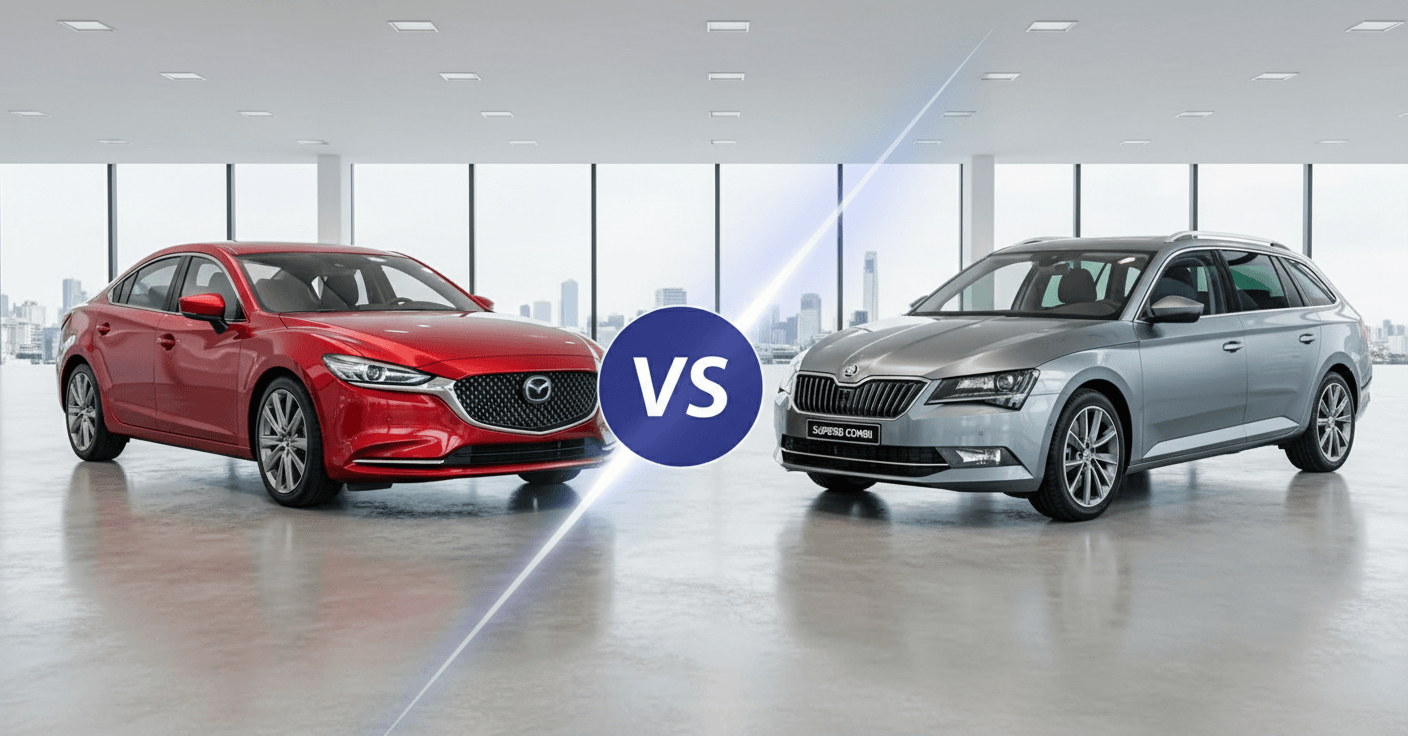
Detailed comparison of used Mazda 6 vs. Škoda Superb. We reveal real-world experiences, fuel consumption, and spaciousness, and provide a clear verdict to help you make the right choice.
Apr 2, 2026