Car battle
Ford Kuga vs. Renault Austral: Complete comparison 2026
Used SUV comparison: Ford Kuga vs. Renault Austral. Find out which model offers better engines, equipment, and real value. Read our final verdict!
Apr 18, 2026
Articles
Car battle
Detailed comparison of Renault Captur vs. Volkswagen T-Cross. Discover the differences in engines, equipment, and reliability, and find out which compact SUV is the better choice.
April 26, 2026
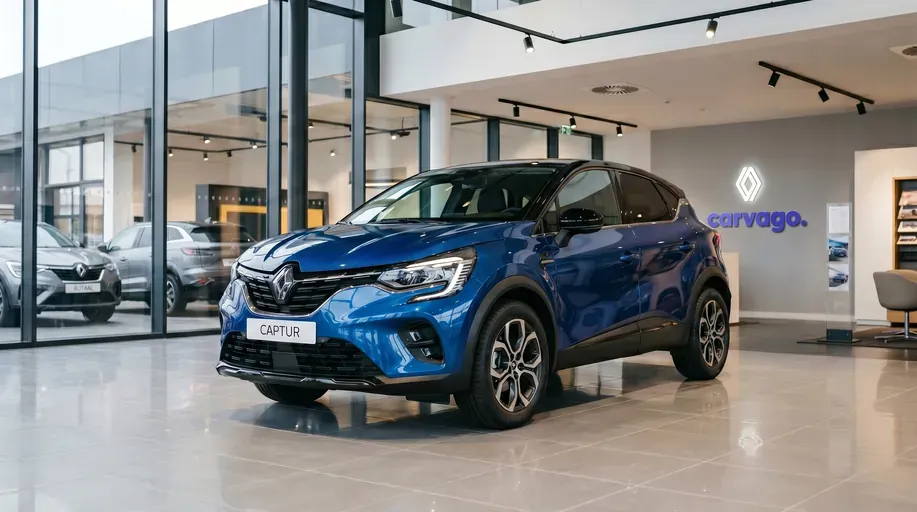
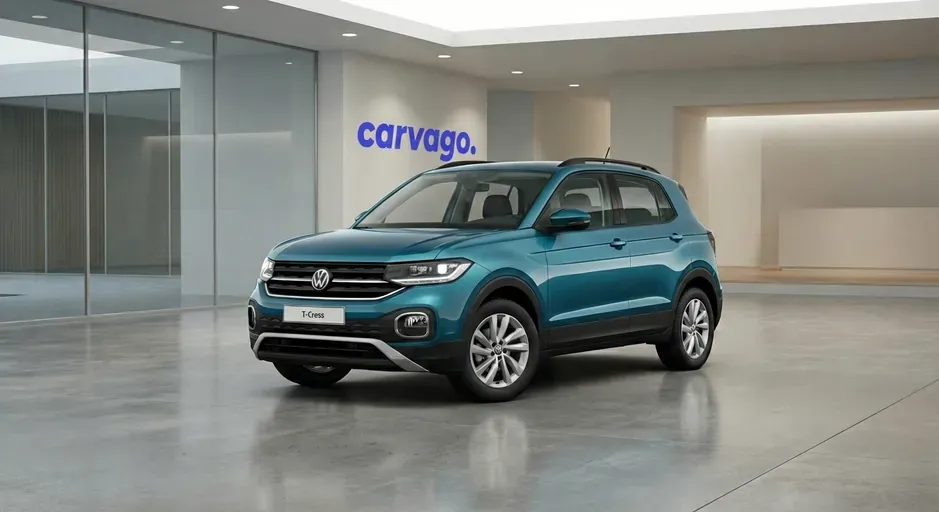
The French Renault Captur, also known as the Renault Kaptur in some markets or sold as the sister model Mitsubishi ASX, represents a design-distinctive and technologically advanced urban crossover. Its challenger today is the German Volkswagen T-Cross, which can also be found in other parts of the world under the names Volkswagen Tacqua or Taigun, and which, on the other hand, bets on excellent ergonomics, more conservative solidity, and an exceptionally practical interior. Read our following detailed comparison, which will reveal the strengths and weaknesses of both popular models and make your final decision easier when choosing on the used car market.
When choosing a city crossover on the used car market – typically targeting models around four years old (around the 2022 model year) – exterior dimensions play a key role. The second-generation Renault Captur and the first-generation Volkswagen T-Cross represent two different approaches to space utilization. While the French representative feels more substantial and targets the very upper limit of the B-SUV segment, its German competitor sticks to more compact proportions, which you will appreciate especially in heavy city traffic.
Renault Captur is, with a length of 4227 mm, a noticeable 119 mm longer than the Volkswagen T-Cross (4108 mm). This difference is positively reflected in the wheelbase, where the Captur offers 2639 mm compared to 2551 mm for the T-Cross. Rear-seat passengers benefit most from this 88 mm lead, having more legroom in the French car. At the same time, the longer wheelbase contributes to a slightly calmer and more stable performance at highway speeds. On the other hand, thanks to its significantly shorter body, the T-Cross excels in agility and is much easier to park in tight parallel spaces in residential areas.
In terms of width, the Captur leads with its 1797 mm by only 15 mm. In practice, this does not represent a huge difference, but it slightly contributes to a better sense of airiness in the cabin. The Volkswagen T-Cross, on the other hand, slightly dominates in body height (1584 mm compared to 1576 mm for the Renault). This slightly taller and boxier build of the T-Cross ensures plenty of headroom and very comfortable, upright entry. Overall, the dimensions predispose the Captur for families looking for more elegance and interior space even for longer trips, while the T-Cross makes sense as a highly pragmatic, agile, and easy-to-handle city car.
| Parameter | Renault Captur SUV | Volkswagen T-Cross SUV |
|---|---|---|
| Width (mm) | 1797 | 1782 |
| Length (mm) | 4227 | 4108 |
| Height (mm) | 1576 | 1584 |
| Wheelbase (mm) | 2639 | 2551 |
When choosing a family crossover, one of the most important parameters is practicality and the size of the luggage compartment. Both the second-generation Renault Captur and the first-generation Volkswagen T-Cross focus on maximum interior variability. Both manufacturers have equipped these compact models with a sliding rear bench, which allows for flexible adjustment of the ratio between passenger space and luggage room. Thanks to this clever solution, both cars are ideal companions with enough space for everything from weekend shopping to longer family holidays.
In terms of space in the basic configuration, the Renault Captur fares slightly better. If you leave the rear seats in their rearmost position, its boot offers a solid 422 litres. By sliding them fully forward, you gain an impressive 536 litres, which instantly creates room for several extra suitcases. After fully folding the rear backrests, the total capacity climbs to an excellent 1275 litres. However, it is important to note that if you opt for the E-Tech hybrid powertrains, the basic volume decreases to 326 litres due to the battery placement, and it offers a maximum of 1149 litres with the seats folded.
Although the Volkswagen T-Cross is slightly more compact in its exterior dimensions, it certainly does not lag behind in terms of boot utility. In the basic seat position, it provides a very useful 385 litres of volume, which is only 37 litres less than the petrol and diesel versions of its French rival in a direct comparison. If you sacrifice some rear legroom and slide the bench forward, the luggage compartment grows to 455 litres. But the surprise comes after folding the rear row of seats – at this point, the T-Cross not only matches its rival but even surpasses it by six litres with an absolute value of 1281 litres, which means a slight advantage when loading boxes or transporting bulkier sports equipment.
| Parameter | Renault Captur SUV | Volkswagen T-Cross SUV |
|---|---|---|
| Basic volume (litres) | 422 | 385 |
| Max. volume with seats folded (litres) | 1275 | 1281 |
In terms of total capacity, both models are unexpectedly close roughly four years after their production, and buying them second-hand makes sense for a wide range of drivers. The Renault Captur is better suited for owners who appreciate a more spacious and variable boot for everyday use. The Volkswagen T-Cross, on the other hand, demonstrates masterful use of interior space and will particularly please active individuals who frequently fold the seats and carry larger, unwieldy loads.
While the Renault Captur scores with a more generous basic boot ideal for regular family duties, the Volkswagen T-Cross surprisingly offers a slightly larger maximum space for moving bulky items once the seats are folded.
Towing capacity for urban crossovers is a surprisingly important parameter for many buyers, as these vehicles often serve not only for city driving but also for towing a small caravan on holiday or a trailer with building materials to a cottage. If we look at roughly four-year-old used cars (generations around the 2021–2022 model years), the second-generation Renault Captur and the first-generation Volkswagen T-Cross offer slightly different approaches to towing capacity.
Standard internal combustion versions of the Renault Captur (such as the popular TCe petrol engines, mild-hybrids, or dCi diesels) handle a maximum braked trailer weight of 1,200 kg across the board. For the Volkswagen T-Cross, the standard value varies according to engine power: the base 1.0 TSI three-cylinder (70 kW) can only tow 1,000 kg, the more powerful versions (81 kW and 85 kW) can handle 1,100 to 1,200 kg, and to guarantee the maximum of 1,200 kg, which would reliably match the Captur, you have to go for the top-of-the-line 1.5 TSI four-cylinder. However, a fundamental difference occurs with the more eco-friendly powertrains. Due to the higher weight of the batteries and the technical limits of the hybrid system, the Renault Captur in E-Tech versions (both Full Hybrid and Plug-in Hybrid) reduces the maximum braked trailer weight to just 750 kg. Precise data for unbraked trailers is not recorded in detail in the standard specifications for all models, which is why it is missing from the table; however, both cars normally range between 620 and 680 kg in this respect, according to legally approved values based on the curb weight of the specific unit.
From a practical standpoint, the 1,200 kg limit for both cars means room for trouble-free towing of a smaller caravan, which is fully sufficient for a longer holiday for two, or a heavier trailer for the cottage. Conversely, the reduced capacity of 750 kg for hybrid Renaults means a limitation more to a light trailer for hauling leaves from the garden or sufficient capacity for a weekend shop of bulkier items.
In conclusion, if towing a trailer is key for you, the standard combustion Captur offers a maximum capacity of 1,200 kg more consistently across the entire range of common engines, while with the T-Cross, you have to carefully choose a more powerful specification for the same value. On the other hand, thanks to the absence of heavy hybrids in this generation, Volkswagen has no version that would slash your towing capacity so drastically.
| Model and motorization | Braked weight of trailer (kg) | Unbraked weight of trailer (kg) |
|---|---|---|
| Renault Captur II (standard TCe and dCi) | 1200 | - |
| Renault Captur II (E-Tech Hybrid / Plug-in) | 750 | - |
| VW T-Cross 1st Gen 1.0 TSI (70 kW) | 1000 | - |
| VW T-Cross 1st Gen 1.0 TSI (81 kW) / 1.6 TDI | 1100 | - |
| VW T-Cross 1st Gen 1.5 TSI (110 kW) | 1200 | - |
Looking under the hood of both models, you will find that they represent two completely different approaches to engine lineups. This is key information for anyone interested in a four-year-old used car, as it significantly affects both operating costs and driving style. While the Volkswagen T-Cross relies on a proven and more conservative range of turbocharged engines without significant electrification, the Renault Captur offers huge variety. With the French representative, you can choose from classic petrol to economical LPG versions and sophisticated mild-hybrid, full hybrid (HEV), and plug-in hybrid (PHEV) systems. What both cars have in common, however, is the absence of all-wheel drive – both the Captur and the T-Cross are exclusively front-wheel drive, designed primarily for urban and suburban traffic.
The second-generation Renault Captur has one of the richest engine ranges on the used car market, especially among roughly four-year-old vehicles. The standard is the 1.0 TCe three-cylinder (66 kW), which also exists in the popular factory version burning LPG (TCe 100 with 74 kW). This is an ideal choice for drivers looking for the lowest possible fuel operating costs. For more dynamic drivers, there are excellent 1.3 TCe four-cylinder engines, developed in cooperation with Mercedes, which have been heavily supported by mild-hybrid technology since 2021 (140 and 160 hp). The technological peak is the E-Tech engines – either as a full hybrid (145 hp) or a plug-in hybrid (160 hp) version with a specific multi-mode clutchless gearbox. The 1.5 Blue dCi diesel engine quickly disappeared from the range and can only be found in used cars from 2020.
| Engine type | Fuel | Power (kW) | Torque (Nm) | Transmission |
|---|---|---|---|---|
| 1.0 TCe 90 | Petrol | 66 | 160 | 6MT |
| 1.0 TCe 100 LPG | Petrol / LPG | 74 | 170 | 6MT |
| 1.3 TCe 130 / 140 MH | Petrol / Mild-hybrid | 96 / 103 | 240 / 260 | 6MT / 7EDC |
| 1.3 TCe 155 / 160 MH | Petrol / Mild-hybrid | 114 / 118 | 270 | 7EDC |
| 1.5 Blue dCi 115* | Diesel | 85 | 260 | 6MT / 7EDC |
| E-Tech Hybrid 145 | Hybrid (HEV) | 105 | 148 + 205 (electric) | Multi-mode auto. |
| E-Tech Plug-in 160 | Plug-in Hybrid | 116 | 144 + 205 (electric) | Multi-mode auto. |
*The 1.5 Blue dCi diesel version was only available during 2020.
Volkswagen does not try to reinvent the wheel with the T-Cross and relies on the proven Group portfolio. If you are looking for a car around four years old (production 2020–2022), you will primarily come across 1.0 TSI three-cylinder engines. The basic version with 70 kW is paired exclusively with a five-speed manual, while more powerful variants (81 kW) offer either a six-speed manual or a lightning-fast seven-speed DSG automatic. If you frequently travel on the motorway or require confident dynamics, the best choice is the top-of-the-range 1.5 TSI ACT four-cylinder with 110 kW (150 hp). This engine features a cylinder deactivation system to save fuel and is a prized, albeit more expensive, commodity on the used car market. The 1.6 TDI diesel engine was discontinued as early as 2020 due to emission standards and declining demand, so you won't come across it at all in younger used cars.
| Engine type | Fuel | Power (kW) | Torque (Nm) | Transmission |
|---|---|---|---|---|
| 1.0 TSI (95 hp) | Petrol | 70 | 175 | 5MT |
| 1.0 TSI (110 hp) | Petrol | 81 | 200 | 6MT / 7DSG |
| 1.5 TSI ACT (150 hp) | Petrol | 110 | 250 | 7DSG |
| 1.6 TDI SCR* | Diesel | 70 | 250 | 5MT / 7DSG |
*The 1.6 TDI diesel version was only available until the second half of 2020.
While the T-Cross will please drivers looking for reliable and dynamic petrol engines without complex electrification, the Captur is absolutely ideal for those who want to minimize operating costs as much as possible thanks to the popular factory LPG installation or advanced hybrid powertrain.
Choosing the right powertrain is absolutely essential for your long-term user satisfaction and protection against unexpected service expenses, which is why we base our recommendations on real-world experience with dynamics, actual fuel consumption, and mechanical durability. The engine range of the two compared crossovers, where we focus on the market for used cars approximately four years old, differs fundamentally in concept. While the Renault Captur boasts variety including excellent petrol four-cylinders or innovative electrified E-Tech technology across the hybrid spectrum, the Volkswagen T-Cross has opted for rational minimalism exclusively with conventional TSI petrol engines. A typical feature of both models in these modern model years is the complete absence of diesel. The originally offered fuel-efficient diesel engines, Renault 1.5 Blue dCi and Volkswagen 1.6 TDI, were withdrawn from sale in both cars due to lack of interest and new emissions regulations as early as the end of 2020, so when choosing a younger used car, it makes sense to focus purely on petrol units.
This 1.3-liter petrol four-cylinder, which Renault developed directly in cooperation with Mercedes-Benz, represents the absolute best possible choice in the second-generation Captur range for a balanced mix of performance and practicality. Compared to the weaker one-liter three-cylinders, the engine offers a much higher level of refinement, does not transmit vibrations into the cabin, and has smooth pull from low revs. With its 140 horsepower (103 kW), it also easily handles a fully loaded car even on demanding highway climbs, while real-world consumption still very reliably hovers around a solid 6 l/100 km. In newer versions labeled Mild Hybrid, an integrated starter-generator also provides a slight boost when starting off, which effectively smooths out stop-and-go traffic in city jams. In terms of mechanical reliability, it is an above-average durable unit, but it has one weak point: inappropriately set factory oil change intervals. If the previous owner drove mainly on short city routes and performed service only after the prescribed 30,000 km, there is a risk of oil dilution with petrol and subsequent premature wear of the timing chain. You can most easily detect this potential problem in a used car by thoroughly checking the service history (where the interval should be shortened to 15,000 km) and listening to the engine when cold – immediately after starting, it must sound smooth, without any rattling metallic noises. This unit is thus the perfect partner for drivers looking for a versatile vehicle for everyday city routines and safe highway travel.
In the case of the first-generation Volkswagen T-Cross, the more powerful specification of the proven 1.0 TSI three-cylinder with 81 kW (110 hp) makes the most sense from the perspective of operating costs, performance, and overall reliability. Unlike the cheapest base variant (70 kW), this more powerful engine is automatically paired from the factory with a much more precise six-speed manual transmission, or the popular seven-speed DSG automatic. The sixth gear significantly reduces RPMs on the highway, which brings quieter operation in the cabin and, ultimately, much more favorable fuel consumption. The structurally light unit from the proven EA211 engine family does not unnecessarily overload the front axle, and in normal combined operation, it is no problem to drive it long-term in the range of 5.5 to 6 liters of petrol per hundred kilometers. Although the engine does not suffer from any fatal design flaws, due to the direct fuel injection technology, there is a risk of gradual carbonization of the intake valves if it is constantly lugged in the city. Therefore, when choosing a specific used car, monitor its behavior very carefully immediately after a cold start – slight idle stumbling, jerking, or reluctance to respond promptly to the accelerator are clear warning indicators of accumulated carbon in the intake. However, problems can be very effectively prevented by regularly refueling with high-quality additivated petrol and occasionally driving the car more dynamically at higher revs outside the city. Thanks to this lack of complexity and great operating economy, the engine is primarily suitable for rationally thinking families and drivers with lower mileage who spend most of their time on suburban routes.
When choosing a used car, it is important to realize that official fuel consumption figures provided by manufacturers can differ significantly from reality on the road. To get the most accurate picture of actual operating costs, we rely on real-world user data. The values in the following comparison come from the independent community portal Spritmonitor.de, where thousands of drivers from across Europe regularly record their actual refueling. We have considered the generations and engine versions of both models that you would most frequently find on the market for approximately four-year-old used cars today, namely the Renault Captur II (produced since 2020) and the 1st generation Volkswagen T-Cross.
Source: Spritmonitor.de
| Model and Engine | Average Consumption (l/100 km) |
|---|---|
| Renault Captur 1.0 TCe 90 (Petrol) | 6.2 |
| Renault Captur 1.3 TCe 140 (Petrol) | 6.4 |
| Volkswagen T-Cross 1.0 TSI OPF (Petrol) | 6.1 |
| Volkswagen T-Cross 1.5 TSI ACT (Petrol) | 6.5 |
| Renault Captur 1.5 Blue dCi 115 (Diesel) | 4.8 |
| Volkswagen T-Cross 1.6 TDI SCR (Diesel) | 5.3 |
| Renault Captur E-Tech Hybrid 145 (Hybrid) | 5.0 |
A closer look at the collected data reveals a very interesting trend. Small turbocharged three-cylinder engines (1.0 TSI for Volkswagen and 1.0 TCe for Renault) do not deliver such dramatic fuel savings in the real world as their small displacement might suggest. Under load or at highway speeds, they have to work harder, which brings their consumption dangerously close to the more powerful four-cylinder engines (1.5 TSI and 1.3 TCe). While four-cylinder engines consume a few tenths of a liter more, they reward you with more refined operation and a much better power reserve. Diesel engines are, as expected, the most economical, with Renault's diesel being exceptionally efficient with values below 5 liters. A special case is the Renault Captur with the E-Tech full hybrid system, which can competently compete with diesel engines in city consumption.
For regular users, several practical recommendations emerge from these findings. If you drive mainly in the city and for shorter distances in suburban mode, the petrol one-liter three-cylinder engines will serve you well, or the hybrid Captur E-Tech, which can make maximum use of electricity in city traffic jams and save the most fuel. For families and drivers who often travel with a fully loaded car or on longer highway routes, the more powerful petrol four-cylinder engines make the most sense. Diesel units, which have practically disappeared from the small crossover market in recent years, are worth specifically seeking out today only for a very specific group of drivers with an enormously high annual mileage.
In conclusion, whether you choose the Volkswagen T-Cross or the Renault Captur, fuel consumption alone will likely not be the only or main deciding factor. Both manufacturers offer very efficient powertrains with similar average fuel requirements for most common petrol versions. Decisions should therefore be based more on your personal preferences regarding the overall dynamics of the car, interior space, and also your budget for purchasing a used car – especially if you are considering the technically more advanced, but usually more expensive to purchase, hybrid version from Renault.
Looking at the market for roughly four-year-old used cars, there is a clear difference in how both models hold their value. While Volkswagen benefits from its traditionally strong reputation and slower depreciation, Renault offers a much more attractive ratio between the purchase price, vehicle age, and rich equipment from the buyer's perspective on the secondary market.
The second generation of the Captur is highly sought after on the used car market. Its design is timeless, and thanks to slightly faster depreciation, it is an excellent choice for buyers with a fixed budget.
The small crossover from Wolfsburg defends its price even after several years with absolute confidence. The decline in residual value is more gradual here, which means a higher initial investment for the buyer, but on the other hand, better protection of money during a potential resale.
| Model | Starting Price (Base / Higher Mileage) | Optimal Version Price (Mid-range Trim) | Top-tier Version Price (R-Line / E-Tech) |
|---|---|---|---|
| Renault Captur II | from ~€11,000 | €14,000 – €16,000 | €18,000 – €19,000 |
| Volkswagen T-Cross | from ~€14,000 | €16,000 – €18,000 | €19,000 – €21,000 |
Note: The prices listed represent average offers on the used car market for model years falling within the ideal four-year age range. The final price of a specific car always depends on its documented service history, exact mileage, and overall technical condition.
While the Renault Captur will please your wallet at the time of purchase thanks to more friendly prices for modern equipment and engines, the Volkswagen T-Cross represents a more conservative investment with slower depreciation, which you will appreciate when it comes time to sell it again.
Both models, the Renault Captur and the Volkswagen T-Cross, earned full five-star ratings in their original Euro NCAP tests, testifying to their excellent basic structural safety. However, it is essential to view these results in a broader context and take the year of testing into account. The methodology and protocols of the independent Euro NCAP association are constantly evolving and becoming stricter. Today, they place much greater emphasis on advanced active assistance systems, crisis scenarios at intersections, and precise detection of cyclists. For this reason, percentage ratings from different years cannot be directly and simply compared.
The second-generation Renault Captur underwent testing in 2019 and earned the maximum five-star rating. The car demonstrated a top level of passive safety with extraordinary results in adult occupant protection and very good functionality of the assistance systems of that time. For those interested in a roughly four-year-old used car, this means that the Captur offers highly reliable and robust protection that meets the standards of its market launch.
The Volkswagen T-Cross was also originally tested in 2019, earning five stars. However, in September 2025, Euro NCAP subjected this model (in its facelifted form) to a stricter re-test according to the latest and much more demanding criteria. Given that the T-Cross has not seen any major hardware upgrades to its assistance systems since its launch, its performance in automatic emergency braking for pedestrians and cyclists fell short of modern standards, and the overall rating dropped to three stars. This downgrade does not mean that the car has physically become less safe. Rather, it clearly shows how dramatically the requirements for electronic assistants and accident prevention have shifted over six years.
| Parameter | Renault Captur | Volkswagen T-Cross |
|---|---|---|
| Year of testing | 2019 | 2025 |
| Adult occupant protection | 96% | 74% |
| Child occupant protection | 83% | 81% |
| Vulnerable road users protection | 75% | 60% |
| Safety assist systems | 74% | 57% |
In terms of passive safety and body rigidity, both cars offer excellent protection in a crash and represent a very safe choice for the used car market. However, the 2025 rating for the T-Cross serves as a reminder that platforms from 2019 can no longer fully compete with brand-new standards in the field of active assistance and accident prevention. In the context of the original tests, the Renault Captur thus maintains a more comprehensive and visually better safety record.
Both cars offer great passive protection for the occupants, but the strict 2025 re-test of the VW T-Cross clearly shows that in the area of modern active assistants, older generations of used cars are slowly falling behind the latest safety standards.
In addition to standard equipment, each model offers several unique features that can be crucial for the customer's final decision. Both compact SUVs approach added value and everyday practicality in their own way.
Sliding rear seats as standard, allowing the boot to be expanded up to 536 litres
High-quality interior workmanship with a large proportion of soft-touch plastics and a premium feel
Wide range of powertrains including fuel-efficient hybrids (E-Tech) and a factory LPG version
Comfortable and supple suspension that filters out urban bumps excellently
More attractive price-to-value ratio on the used car market
Slower response and occasional freezing of the EasyLink multimedia system in older models
Noticeable reduction in boot capacity for hybrid and plug-in hybrid powertrains
Poorer rear and rear-quarter visibility due to massive C-pillars
Detached steering that doesn't offer much confidence during spirited driving on country roads
Renault Captur will appeal to customers looking for a stylish and practical city crossover with a more premium interior feel and excellent everyday versatility. Thanks to a wide range of engines, including full hybrid and LPG versions, it is a great choice for drivers primarily focused on low running costs and maximum suspension comfort.
Exemplary control ergonomics with a logical layout and the retention of physical buttons for the air conditioning
Boxy body shape ensures excellent outward visibility and plenty of headroom for all passengers
Variable interior with a sliding rear bench (boot volume increases from 385 to 455 litres)
Refined, reliable, and surprisingly dynamic 1.0 TSI petrol engines
High price stability on the used car market, ensuring slower depreciation
The interior feels cheaper due to the extensive use of hard and scratch-prone plastics
Stiffer chassis tuning absorbs sharp bumps poorly, especially in combination with larger wheels
Complete absence of any hybrid, diesel, or all-wheel drive (AWD) options
Higher purchase price for a comparably equipped used car compared to French competitors
The Volkswagen T-Cross is a pragmatic choice for buyers who demand flawless ergonomics, a conservative look, and reliable petrol engines. Its more robust design maximizes interior space, making it a perfect small family SUV with the bonus of very good resale value for a potential future sale.
Based on long-term user experience, service center reports, and our independent technical inspection of the car through the CarAudit service, we have compiled an overview of the most common problems that potential buyers of these approximately four-year-old used cars should watch out for.
The second generation of the Renault Captur is an overall reliable vehicle, but it has long suffered from several specific ailments, particularly concerning the on-board electronics and the tuning of more complex powertrains.
The Renault Captur pleases with robust engines, but the driving experience can be marred by unstable on-board system software or less refined tuning of the automatic transmissions. Before buying, it is essential to verify the history of software updates and the condition of the gearbox during a test drive.
The Volkswagen T-Cross relies on well-proven group technology, yet typical faults related to modern software and the sensitivity of dual-clutch transmissions can appear in four-year-old used cars.
The Volkswagen T-Cross is a mechanically tough car whose main weaknesses are a temperamental on-board system and the DSG transmission's susceptibility to wear in city traffic. The price for the model's lower cost is the cheaper plastics in the cabin, which scratch easily.
When buying a used car, a thorough inspection is key. Both models are popular representatives of urban crossovers, but they have their specificities and weak points that are worth focusing on. To avoid hidden problems, an independent technical inspection of the car is highly recommended, such as the one provided by the CarAudit service.
The Renault Captur offers an excellent boot capacity of up to 536 liters thanks to its standard sliding rear bench, although this is less in the plug-in hybrid version due to the batteries. The Volkswagen T-Cross also features sliding seats and provides a space of 385 to 455 liters depending on their position. While the Captur wins in total volume, the T-Cross scores with a more regular boot shape, which makes loading bulky items easier.
Among roughly four-year-old used cars, the Volkswagen T-Cross relies primarily on 1.0 TSI three-cylinder petrol engines, which are considered very reliable and low-maintenance. The Renault Captur offers a wider range, including E-Tech hybrids, but the classic 1.0 and 1.3 TCe petrol engines from this period are also rated as durable and trouble-free. In terms of long-term service costs, the T-Cross is a slightly safer choice as it does not feature technology as complex as that found in Renault's hybrid variants.
Both small crossovers are ideal for heavy traffic; however, at 4.11 meters long, the Volkswagen T-Cross is slightly shorter than the 4.23-meter-long Renault Captur. Thanks to its more compact dimensions and boxier body, the T-Cross offers better visibility and is easier to park in tight spaces. On the other hand, for daily commuting, the Captur offers a slightly more comfortable suspension setup that better absorbs city potholes and bumps.
The second-generation Renault Captur feels more premium inside, as it uses many more soft-touch materials and features a modern vertical infotainment display. In contrast, the interior of the Volkswagen T-Cross consists mainly of hard plastics, which can feel somewhat cheaper. However, Volkswagen balances this with top-notch ergonomics, retaining classic physical buttons for the air conditioning, which is significantly more intuitive while driving than Renault's touch controls.
For a small family, the Renault Captur is generally more suitable because its longer wheelbase provides more longitudinal space and a larger boot for a stroller or bulky luggage. However, the Volkswagen T-Cross can surprise with above-average headroom in the rear seats thanks to its higher and straighter roofline. On longer family trips, you will also appreciate the Renault's more advanced cabin soundproofing and overall more mature driving behavior at highway speeds.
The choice between approximately four-year-old used Renault Captur and Volkswagen T-Cross depends primarily on your daily priorities and budget. The French representative is an ideal choice for families who appreciate a more premium interior, unrivaled spatial variability with a larger trunk, and a wide range of fuel-efficient engines led by the popular LPG or sophisticated hybrids. In contrast, the German competitor excels with flawless ergonomics, excellent agility in tight city traffic, and proven TSI gasoline engines, making it a highly pragmatic car that also holds its value exceptionally well. While the Captur attracts with higher driving comfort and a more favorable purchase price for richer equipment, the T-Cross clearly convinces more conservative drivers looking for proven group reliability, from which they will also benefit during any future resale of the vehicle.
Sources: ADAC, e15.cz, auto.cz, automix.cz, dopravniinfo.cz, finmag.cz
This article was prepared using artificial intelligence tools. The section guarantor is Petr Dušek.
Used SUV comparison: Ford Kuga vs. Renault Austral. Find out which model offers better engines, equipment, and real value. Read our final verdict!
Apr 18, 2026
Opel Mokka vs. VW T-Cross. A detailed comparison of engines, equipment, and price. Find out which compact SUV is right for you in our big test.
Apr 14, 2026
Ford Puma vs Peugeot 2008: Which crossover should you choose? Our detailed comparison, real-world insights, and verdict will help you decide.
Apr 13, 2026