Mercedes-Benz GLA vs. Volvo XC40: Complete comparison 2026
Detailed comparison of the premium SUVs Mercedes-Benz GLA vs. Volvo XC40. We reveal real-world experiences, differences in equipment, reliability, and our clear verdict.
Apr 27, 2026
Articles
Car battle
Complete comparison of Renault Austral vs. Toyota RAV4. Read real-world experiences, equipment comparisons, fuel consumption, and our clear verdict for choosing the ideal SUV.
April 28, 2026


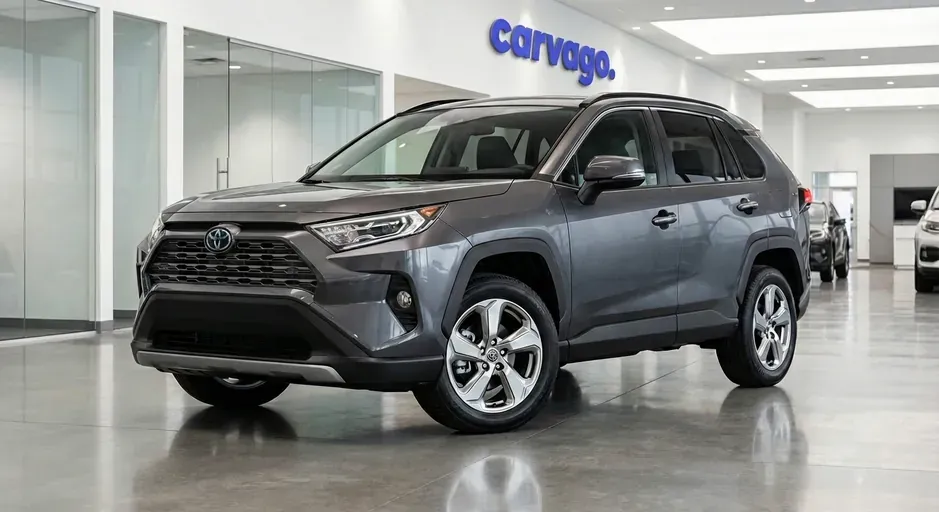
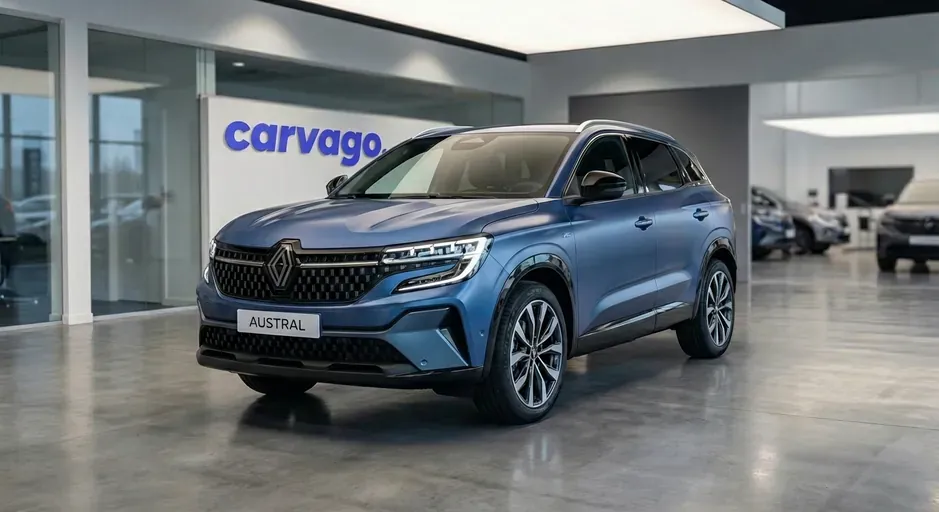
Renault Austral, a modern compact SUV built on a new platform and equipped with top-tier infotainment from Google, entered the market as a confident successor to the older Kadjar model. Its challenger is a true benchmark and historically the world's best-selling SUV, the Toyota RAV4, which you can also find in certain markets under alternative names such as the Suzuki Across or Toyota Wildlander. Let's take a detailed look at how this direct battle between the French technological newcomer and the Japanese hybrid legend turns out, and which vehicle represents the better choice for a second-hand purchase.
Looking at the exterior dimensions of both vehicles, it is clear that although both fall into the highly competitive category of family SUVs, each approaches it with slightly different proportions. For a relevant comparison in the market for nearly new and roughly four-year-old used cars, we focus on the fifth generation of the Toyota RAV4 (XA5 generation) and the first generation of the Renault Austral. The Japanese representative bets on maximizing internal volume and overall makes a more dominant impression on the road. The Austral, on the other hand, chooses a slightly more compact European approach that emphasizes better everyday agility. The choice between the two vehicles from the perspective of exterior proportions thus primarily depends on whether your main priority is uncompromising spaciousness for the family or rather effortless maneuvering through the urban jungle.
In terms of specific numbers, the Toyota RAV4 with a total length of 4600 mm is up to 90 mm longer than the Renault Austral, whose length ranges between 4510 and 4533 mm. A similar difference can be found in width, where the Toyota, with a value of 1855 mm, exceeds the Renault (1825 mm) by exactly 30 mm. The larger footprint of the Japanese SUV in practice means more living space in the shoulder and elbow area inside the cabin, which you will appreciate especially if you often travel fully loaded. On the other hand, the narrower and shorter body of the Renault Austral represents an undeniable advantage for users whose priority is easy parking in tight underground garages or navigating cramped European parking lots.
Significant differences also exist when looking at height and wheelbase, which directly define the overall stance of both vehicles. The Toyota RAV4 stands at a height of 1685 mm, thereby towering up to 67 mm over its more aerodynamically shaped French rival with a height from 1618 to 1645 mm. The wheelbase itself, which is a key figure for longitudinal space in the interior, is 2690 mm for the Toyota, while the Renault offers 2667 mm. The 23-millimeter difference in favor of the Toyota, combined with its taller body construction, guarantees more generous head and knee room for adult passengers in the rear seats. In contrast, the lower silhouette and overall sportier cut of the Austral model will clearly please drivers who prefer a lower center of gravity, resulting in more agile vehicle behavior in corners and better aerodynamics during highway travel.
| Parameter | Renault Austral SUV | Toyota RAV4 SUV |
|---|---|---|
| Width (mm) | 1825 | 1855 |
| Length (mm) | 4510-4533 | 4600 |
| Height (mm) | 1618-1645 | 1685 |
| Wheelbase (mm) | 2667 | 2690 |
When choosing a family SUV, trunk space plays a key role, as it directly affects daily practicality and the car's usability for family vacations. The Toyota RAV4 and Renault Austral approach this task with different philosophies, which are also reflected in their overall interior layout. While the Japanese representative bets on raw volume and massive space, the French challenger counters with clever variability thanks to sliding rear seats. Differences in total capacity can ultimately be the deciding factor for families who often transport strollers, sports equipment, or bulkier luggage.
In terms of specific numbers, the fifth-generation Toyota RAV4 (XA5) proves to be an exceptionally generous hauler. In its standard configuration, it offers an excellent trunk volume of 580 liters, which is space perfectly sufficient for a large weekend grocery run or packing the family for a longer vacation. After folding down the rear backrests, this value increases to a staggering 1,690 liters. The first-generation Renault Austral offers a base volume of 500 liters in its mild-hybrid versions. However, this is where the clever sliding rear bench comes into play, allowing the trunk to be expanded up to 575 liters if needed. With the seats fully folded, the Austral then provides a maximum of 1,525 liters of space. So, if we compare the fixed base configuration without sliding, the RAV4 leads by a significant 80 liters, which in practice means free space for one extra average-sized suitcase.
An important factor for buyers of nearly-new used cars is the differences in fully electrified powertrains. The full hybrid version of the Renault Austral (E-Tech Full Hybrid 200) reduces the base capacity to 430 liters (or 555 liters with the seats moved forward) due to battery placement, and the maximum volume after folding drops to 1,455 liters. A similar loss of space affects the popular plug-in hybrid version of the Toyota RAV4, where the base volume drops to 520 liters. As a result, if you are looking for maximum transport capacity without any compromises, the Toyota RAV4 will be a safe bet. However, the Renault Austral elegantly makes up for the paper loss with its sliding seats, allowing you to flexibly balance between passenger legroom and space for your luggage.
| Parameter | Renault Austral SUV | Toyota RAV4 SUV |
|---|---|---|
| Base volume (liters) | 500 | 580 |
| Max volume with seats folded down (liters) | 1525 | 1690 |
While the Toyota RAV4 offers a giant trunk with massive capacity without the need for compromises, the Renault Austral cleverly bets on high variability thanks to its very practical sliding seats.
When choosing a family SUV, the maximum towing capacity often plays a key role. Whether you plan to tow a caravan for a summer holiday or need to hook up a trailer with building materials for a weekend cottage renovation, the differences between these two models are very noticeable in practice and can make your final decision quite easy.
Toyota RAV4 (in the popular XA5 generation, available since roughly 2019) is a bit of a double-edged sword when it comes to towing. Its conventional 2.0 petrol engine can pull a heavy braked trailer weighing up to a respectable 2000 kg. However, for the hybrid versions, which are highly sought after on the used car market, the situation becomes much more complicated. While the all-wheel-drive hybrid can handle a solid 1650 kg (and the plug-in hybrid 1500 kg), the base front-wheel-drive hybrid drops to just 800 kg.
In contrast, the first-generation Renault Austral (produced since 2022) offers much more consistent performance across its entire portfolio. Its internal combustion mild-hybrid variants (with 140 to 160 hp) can easily handle a braked trailer weighing 1350 to 1800 kg, while the very efficient and technically sophisticated E-Tech 200 full hybrid model has a reliable towing capacity of 1500 kg. For all vehicles examined, they can easily handle a standard unbraked trailer up to 750 kg.
What does this mean in practice? More powerful versions of both cars with a capacity of 1500 kg and more can easily tow a decently sized caravan or a bulky boat trailer, which is perfectly sufficient for a longer holiday. However, if you inadvertently choose a Toyota RAV4 with the "front-wheel-drive" hybrid, you will be very limited by the 800 kg limit for a braked trailer – that is barely enough for a small weekend shopping trip to a DIY store or hauling garden waste, or perhaps for attaching an e-bike rack to the tow bar.
In conclusion, if you are looking for an uncompromising workhorse, the 2.0-litre Toyota RAV4 offers the absolute best of both worlds. But if you are choosing an economical hybrid and occasionally need to tow a medium-weight caravan, the Renault Austral is a safe bet, as you don't have to worry about unpleasant weight restrictions with any of its engine options.
| Model and engine | Braked trailer (kg) | Unbraked trailer (kg) |
|---|---|---|
| Renault Austral Mild Hybrid 140/150/160 | 1350 - 1800 | 750 |
| Renault Austral E-Tech Full Hybrid 200 | 1500 | 750 |
| Toyota RAV4 2.0 (gen. XA5) | 2000 | 750 |
| Toyota RAV4 2.5 Hybrid (gen. XA5) | 800 - 1650 | 750 |
| Toyota RAV4 2.5 Plug-in Hybrid (gen. XA5) | 1500 | 750 |
The engine range of both models clearly shows two completely different technical philosophies, which has a fundamental impact on vehicle choice based on preferences for consumption, dynamics, and reliability. While the first-generation Renault Austral relies exclusively on small-displacement turbocharged petrol engines (e.g., 1.3 TCe) with various levels of electrification and drives only the front wheels, the fifth-generation Toyota RAV4 (XA5) dominates the market with much more robust 2.0 and 2.5 litre naturally aspirated engines. Interestingly, while Renault uses an innovative multi-mode gearbox inspired by the world of F1 for its top model, Toyota relies on a decades-proven and technically bulletproof e-CVT planetary gearbox. A huge difference is also the absence of all-wheel drive in the Renault, which, conversely, represents one of the biggest draws of the RAV4 model range. Renault's strength is its lower weight and great efficiency in city traffic, while its weakness is less versatility. For Toyota, the plus is uncompromising reliability and the sophisticated AWD-i all-wheel drive, while the disadvantage can be poorer engine sound insulation under full throttle and slightly higher purchase prices for used cars. If you are looking for a modern and economical city SUV with smooth operation, the Austral with the E-Tech engine will interest you. For families going to the mountains, drivers with higher motorway mileage, or those interested in towing heavier trailers, the Toyota RAV4 in the 2.5 Hybrid AWD-i version is undoubtedly the better choice.
Under the hood of the Renault Austral, which has been on the market since 2022, you won't find any diesel engine. The core of the used car range consists of the proven 1.3 TCe four-cylinder petrol unit (developed in cooperation with Mercedes-Benz) using 12V mild-hybrid technology. It was originally offered in the 1.3 Mild Hybrid 140 (103 kW) version, but this weaker engine, which also offered a manual gearbox, definitively disappeared from price lists in spring 2024. The 1.3 Mild Hybrid 160 (116 kW) version, supplied exclusively with a smooth CVT automatic, remains significantly more in demand. The pinnacle of the entire model range is the sophisticated 1.2 E-Tech Full Hybrid 200 system with an output of 147 kW. This full-hybrid uniquely combines a new turbocharged three-cylinder with a powerful electric motor and a distinctive multi-mode automatic gearbox that does not use a conventional clutch. All Renault Austral variants are available exclusively with front-wheel drive (FWD).
| Engine type | Fuel | Power (kW) | Torque (Nm) | Transmission |
|---|---|---|---|---|
| 1.3 Mild Hybrid 140 | Petrol (MHEV) | 103 | 260 | 6MT / CVT |
| 1.3 Mild Hybrid 160 | Petrol (MHEV) | 116 | 270 | CVT |
| 1.2 E-Tech Full Hybrid 200 | Petrol (HEV) | 147 | 205 (+ electric) | Automatic (Multi-mode) |
The fifth-generation Toyota RAV4 (XA5 generation) built its global popularity on highly efficient and exceptionally reliable units that are also excellent for buying on the used market. At the very beginning of sales in 2019, a conventional 2.0 naturally aspirated four-cylinder petrol engine (129 kW) was also available, but it completely left the European range in mid-2020, so you will only encounter it exceptionally among newer used cars. The vast majority of the market is quite rightly driven by the phenomenal 2.5 Hybrid, which uses a petrol engine operating in the economical Atkinson cycle. It is available with front-wheel drive (FWD, 160 kW) or as a versatile AWD-i four-wheel drive (163 kW), which uses a dedicated electric motor on the rear axle. From the end of 2020, the uncompromising top-of-the-line 2.5 Plug-in Hybrid version with a massive system output of 225 kW (306 hp) also began to appear. Thanks to a large battery, standard AWD-i drive, and a smooth e-CVT gearbox, it manages not only decent dynamics but can also travel over 70 kilometres on a single charge purely on electricity.
| Engine type | Fuel | Power (kW) | Torque (Nm) | Transmission |
|---|---|---|---|---|
| 2.0 | Petrol | 129 | 208 | 6MT / CVT |
| 2.5 Hybrid | Petrol (HEV) | 160 / 163 | 221 (+ electric) | e-CVT |
| 2.5 Plug-in Hybrid | Petrol (PHEV) | 225 | 227 (+ electric) | e-CVT |
While the Renault Austral offers smoother and quieter operation in city traffic thanks to modern E-Tech technology, the Toyota RAV4, with its immortal naturally aspirated hybrids and AWD-i drive, will clearly win the heart of any driver looking for maximum reliability and versatility for many years to come.
Choosing the right engine is absolutely crucial for your long-term satisfaction with the car, which is why the following recommendations are based on real-world performance, actual fuel consumption, owner feedback, and documented mechanical reliability. Looking at these roughly four-year-old used cars, you'll find that both manufacturers take a completely different approach to what's under the hood. While the Toyota RAV4 relies on years of refined and globally proven full-hybrid technology with a large-displacement naturally aspirated engine, Renault has taken a more radical path with the Austral. The French automaker has completely abandoned diesel engines and relies exclusively on electrified petrol units, ranging from simpler mild-hybrids to a very complex full-hybrid system with an innovative multi-mode gearbox without a traditional clutch.
Although Renault heavily promotes its technologically advanced E-Tech 200 full-hybrid system, from the perspective of a sensible and trouble-free purchase of a roughly four-year-old used car, the more moderate Mild Hybrid 160 version makes the most sense. While the weaker Mild Hybrid 140 variant was already phased out in 2024 and is harder to find, the more powerful "160" forms an ideal and widely available centerpiece. Under the hood lies the excellent 1.3 TCe four-cylinder, developed in collaboration with Mercedes-Benz, which is considered one of the most reliable and best-designed downsizing engines on the market today.
From a technical standpoint, this engine offers a very smooth torque curve, very quiet operation, and in real-world driving, it can reward you with a favorable fuel consumption of around 6.5 liters per 100 km. Furthermore, the CVT transmission is tuned to simulate classic gears very naturally and does not suffer from the so-called "vacuum cleaner" effect. In terms of overall practicality, this version also has a higher towing capacity for trailers than the more complex full-hybrid.
Regarding risks, it is important to realize that the engine uses direct fuel injection. Constant stop-and-go driving in city traffic with a cold engine can lead to carbon deposits on the intake valves. As an effective prevention, we recommend occasionally taking the car for a run on the highway and regularly refueling with premium fuel containing cleaning additives. When buying a used car, also check if the service history records an oil change in the automatic transmission – for long life, this should be done every 60,000 km at the latest.
This engine is an ideal choice for versatile drivers. It will serve families well who combine shorter trips for errands with regular weekend or highway journeys, where they will appreciate the stability, quietness, and overall comfort on board.
In the world of compact SUVs, you would be hard-pressed to find a more robust and reliable powertrain on the used market than the 2.5-liter hybrid (A25A-FXS) in the fifth-generation Toyota RAV4 (XA5). This system represents the absolute benchmark for reliability and low maintenance. Mechanically, it lacks many delicate parts that usually burden owners' wallets in used cars – you won't find a traditional friction clutch, a classic starter, or a conventional alternator, while the e-CVT planetary gearbox used is practically indestructible.
The greatest technical advantage of this powertrain is its incredible efficiency. Despite being a relatively large and spacious SUV, it can achieve fuel consumption below 6 liters per 100 km in real-world combined driving. Furthermore, the AWD-i version uses an independent electric motor on the rear axle for all-wheel drive. This means there is no heavy and maintenance-intensive driveshaft, yet the car maintains excellent traction on snow and wet surfaces.
When buying a roughly four-year-old used car, however, you must watch out for one major and well-known issue nicknamed "Cablegate." This refers to the risk of corrosion on the high-voltage orange cable connector that leads to the rear electric motor and is exposed to road spray, dirt, and road salt. Before buying, it is absolutely essential to have the car lifted and visually inspect this connector. If the cable is fine (or if it has already been replaced with a modified part under warranty), you should have it immediately treated preventively with a special anti-corrosion wax or spray, which will save you from expensive repairs in the future.
This hybrid powertrain is perfect for calmer and pragmatically minded drivers. It completely dominates in urban and suburban traffic, where it can fantastically benefit from regenerative braking, but it also holds its own during highway trips for family vacations.
Official fuel consumption figures often look very tempting in car manufacturers' promotional materials, but the reality on the road can differ significantly. For a more accurate and objective comparison of both vehicles, we have therefore focused on real-world data directly from owners, via the popular crowdsourcing portal Spritmonitor.de. For the most relevant comparison within the used car market, we analyzed vehicles suitable for those interested in a roughly four-year-old car – in the case of the Renault Austral, this is its first (and only) generation, and for the Toyota RAV4, the current generation designated XA5.
| Model and engine | Average consumption (l/100 km) |
|---|---|
| Renault Austral E-Tech Full Hybrid 200 | 6.2 |
| Toyota RAV4 2.5 Hybrid | 6.4 |
| Toyota RAV4 2.5 Plug-in Hybrid | 5.7 |
| Renault Austral Mild Hybrid 140 / 160 | 7.0 |
| Toyota RAV4 2.0 | 7.5 |
Looking at the aggregated data from drivers, some very interesting trends are visible:
For a typical buyer in the used car market, there is a clear lesson to be learned. If you spend a lot of time in the city and on suburban routes with frequent stop-and-go traffic, the full hybrid versions of both brands will be an absolutely ideal choice with an excellent ratio of brisk performance and low operating costs. On truly long highway routes, however, the consumption of hybrids gradually increases to values approaching conventional powertrains, and the difference may partially disappear. Buying a plug-in hybrid Toyota RAV4 makes economic sense only if you are certain and have the possibility to regularly charge the vehicle from a home or company wallbox – otherwise, you are paying extra for heavy technology unnecessarily.
In conclusion, fuel consumption will not be the only decisive factor in the battle between these models. Toyota, with its sophisticated powertrain, remains the benchmark for long-term proven efficiency, but the confident Renault, with its modern E-Tech system, proves that it can very capably and efficiently rival its Japanese competition in the real world. Both SUVs thus represent a very effective choice for drivers looking for a modern and economical family car.
When searching for used cars roughly four years old (production years around 2022), you will encounter two different market approaches to vehicle depreciation. While the Japanese representative is considered one of the top performers on the used car market, the French SUV offers a more attractive entry price thanks to a steeper initial depreciation curve.
Toyota RAV4 (XA50 generation, post-facelift)
This model holds its residual value exceptionally well. The reason is high pan-European demand for its proven and highly reliable hybrid powertrain, which guarantees low service costs even after years of operation.
Renault Austral (early models from 2022–2023)
The Austral, as the modern successor to the Kadjar, experiences a slightly faster price drop in its first years of operation. From the perspective of a smart used car buyer, however, this is a huge advantage, as you get significantly newer technology and a fresh design for a smaller sum.
| Model (2022 model year) | Typical price (from - to) | Depreciation curve | Main used market highlight |
|---|---|---|---|
| Renault Austral | €23,000 – €31,000 | Faster | Maximum equipment and modern features for the price |
| Toyota RAV4 | €27,000 – €35,000 | Slower | Extraordinary residual value stability and reliability |
If you are looking for a safe haven for your money, the Toyota RAV4 will reward you with extremely slow depreciation. However, if you prefer the best possible price-to-equipment ratio, a cheaper used Renault Austral will provide you with maximum modern technology for less money.
Both models, the Renault Austral and the Toyota RAV4, boast a maximum five-star rating in independent safety tests by Euro NCAP. Although it might seem at first glance that both vehicles offer the same level of safety, it is crucial to consider the context and the year the certification was granted. Euro NCAP testing protocols are constantly evolving and becoming stricter every year. While older methodologies focused primarily on passive safety, newer standards place much greater emphasis on advanced active safety systems, more demanding cyclist detection, and handling crisis situations at intersections. For this reason, percentage scores from different years cannot be directly and objectively compared.
The Renault Austral underwent crash tests in 2022, meaning it faced much stricter and more modern criteria. The car achieved an excellent result of 88% in adult protection and 83% for children. However, it significantly shone in the safety assist systems rating with a score of 87%, highlighting the advanced calibration of radars and cameras for autonomous braking and lane keeping. A weaker point with a result of 69% was the protection of vulnerable road users, which is a typical consequence of the new and extremely strict standards for assessing the rigidity of the front grille and A-pillars in modern SUVs.
The Toyota RAV4 completed a series of Euro NCAP tests in 2019. According to the standards of that time, it showed phenomenal performance in passive safety – adult protection reached 93% and child protection 87%. Pedestrian protection also fared very well with a score of 85%. Conversely, it received 77% for assistance systems, which was an excellent result in the context of the time, but when compared to today's cars, it shows that the calibration and functionality of its active assistants do not reach the complexity required by models tested under newer rules.
| Parameter | Renault Austral | Toyota RAV4 |
|---|---|---|
| Year of testing | 2022 | 2019 |
| Adult occupant protection | 88 % | 93 % |
| Child protection | 83 % | 87 % |
| Vulnerable road user protection | 69 % | 85 % |
| Safety assist systems | 87 % | 77 % |
When interpreting this data, it is necessary to realize that Euro NCAP certification has limited validity today. The five-star rating of the 2019 RAV4 is thus considered "expired" from the perspective of official standards, as it does not fully reflect the latest market requirements for preventing collisions with pedestrians or cyclists at night and when turning. In contrast, the Renault Austral's safety systems meet more modern standards, guaranteeing buyers that the car's electronics will function reliably even in the most complex traffic situations.
Overall, thanks to its sophisticated platform, the Toyota RAV4 is an excellent and exceptionally safe family car that collected almost the maximum possible ratings in its time. However, if you, as a used car buyer, are looking for the most technologically advanced accident prevention and the most modern active assistants meeting modern standards, the Renault Austral represents a more up-to-date and overall more sophisticated safety package.
The Renault Austral wins with advanced assistance systems and a more modern certification from 2022, while the Toyota RAV4 relies on excellent structural robustness, which earned it great percentages according to older methodologies.
In addition to standard equipment, each model offers several unique features that can be decisive for the customer and clearly show the different approach of both brands to added value. While the French representative bets on top-notch connectivity and agility, the Japanese competitor benefits from its years of experience with hybrid propulsion and practical solutions for family use.
Top-tier OpenR Link infotainment with built-in Google services and fast response
High-quality interior with premium materials and a high-end look
Excellent maneuverability and agility thanks to the optional 4Control rear-wheel steering system
Practical sliding rear bench that allows for flexible adjustment of passenger and luggage space
Highly efficient E-Tech full hybrid powertrains without the need for plug-in charging
Complete absence of all-wheel drive (all versions are front-wheel drive only)
Stiffer suspension tuning, which, combined with 20-inch wheels, reduces comfort on uneven surfaces
In full hybrid versions, the luggage capacity is reduced due to battery placement
Occasionally inconsistent brake pedal feel caused by the transition between recuperation and mechanical braking
The Renault Austral primarily targets buyers who demand the latest technology, excellent connectivity, and a more premium feel on board. It is ideal for drivers who spend most of their time in the city or on highways and can do without all-wheel drive.
Renowned reliability of the hybrid system and overall very slow depreciation on the used car market
Exceptionally generous interior space for passengers and luggage (580-liter trunk capacity)
Option for the smart and reliable AWD-i all-wheel drive, which adds confidence in poor weather
Great real-world fuel economy despite the car's larger dimensions, especially in suburban traffic
Possibility to obtain the Toyota Relax extended warranty for up to 10 years with regular authorized servicing
Outdated graphics and slower infotainment response (especially in models produced before 2023)
Significant engine noise at high RPMs due to the e-CVT gearbox during hard acceleration
Interior design feels more utilitarian and contains harder plastics compared to modern European competitors
The Toyota RAV4 is a pragmatic and exceptionally rational choice for families looking for maximum space, unrivaled reliability, and low operating costs. Thanks to the available all-wheel drive and more robust build, it represents a more versatile family car for all types of journeys.
Based on data from our practice, where every car undergoes a comprehensive car audit before its sale, and taking into account breakdown statistics, service reports, and long-term user experiences, we have compiled a detailed overview of the most common faults of both models.
The Renault Austral only entered the market in 2022, so with roughly four-year-old used cars, we mainly encounter so-called teething troubles related to software and the completely new, highly complex hybrid powertrain.
The Austral attracts with modern technology and an efficient hybrid, but as a completely new model, one must expect software ailments and occasional errors in the management of the complex powertrain.
The fifth generation of the Toyota RAV4 has long been considered one of the most reliable SUVs on the market; however, as the hybrid versions age, several characteristic weak points have emerged that require your attention when buying a used car.
Mechanically, the RAV4 is extremely robust, and its hybrid system can easily last hundreds of thousands of kilometers; however, for used all-wheel-drive models, a thorough inspection of the condition of the rear axle high-voltage cable is absolutely essential.
When buying a used car, a thorough inspection is key. Whether you opt for a modern European crossover or a proven Japanese SUV, both models have their specifics that need to be watched out for. For absolute peace of mind before buying, the best step is always a physical inspection of the used car by an experienced expert.
Toyota RAV4 offers a significantly larger and more practical luggage space with a basic volume of 580 liters. Renault Austral has a volume ranging from 430 to 500 liters depending on the chosen engine, as the full hybrid version takes up some space under the floor. Toyota is thus a much better choice for families with high demands for luggage transport.
Both models offer excellent full hybrid powertrains, achieving very similar and economical results in real-world driving. The Toyota RAV4 benefits from its years of experience with hybrids and consistently drives around 5.5 l/100 km in all modes. The Renault Austral E-Tech, on the other hand, excels especially in heavy city traffic, while Toyota has a slight edge on the highway.
The Renault Austral has a clear advantage in this area thanks to the top-tier OpenR Link system, which is fully integrated with Google services. The infotainment in the Toyota RAV4 feels noticeably outdated even in newer used cars, and its graphics or response are not as smooth. Furthermore, the Austral scores overall with a more premium-finished dashboard and a more modern digital display layout.
Intelligent all-wheel drive (AWD-i) is only offered by the Toyota RAV4, making it a much more capable vehicle in winter conditions or when traveling to the mountains. The Renault Austral is sold exclusively with front-wheel drive, and you won't find a classic 4x4 in its price list. However, Renault offers the optional 4Control system with rear-axle steering, which reduces the turning radius and makes parking easier.
The Toyota RAV4 has long been considered a benchmark for reliability, and its durable hybrid system handles high mileage without problems. As a roughly four-year-old used car, the Renault Austral is still a relatively new model, which so far shows no major or chronic defects. However, if you are looking for the ultimate safe bet with proven longevity, Toyota remains the clear favorite.
While the Toyota RAV4 represents a proven family benchmark with unrivaled reliability and extraordinary spaciousness, the Renault Austral brings a breath of modern technology and great everyday agility to this duel. The Japanese representative is an ideal choice for pragmatic drivers and families who require a massive trunk volume, the availability of all-wheel drive, and very slow depreciation. In contrast, the French challenger will primarily appeal to users who frequently drive in urban environments and appreciate top-tier infotainment with Google services, versatile sliding rear seats, and an overall more favorable purchase price on the nearly-new car market. Toyota remains the safe bet for long-term reliability and versatility in all weather conditions, but if you are looking for a more technologically advanced and affordable hybrid SUV without the need for 4x4, the Austral serves as an excellent and fresh alternative.
Sources: ADAC, e15.cz, lidovky.cz, autoexpress.cz, automix.cz, e-auto.cz
This article was prepared using artificial intelligence tools. The section guarantor is Petr Dušek.

Detailed comparison of the premium SUVs Mercedes-Benz GLA vs. Volvo XC40. We reveal real-world experiences, differences in equipment, reliability, and our clear verdict.
Apr 27, 2026

Detailed comparison of the Hyundai Kona and Volkswagen T-Cross. Discover real-world experiences, equipment comparisons, and a clear verdict to help you choose a used SUV.
Apr 15, 2026

Detailed comparison of Peugeot 3008 vs Toyota RAV4. Discover real-world experiences with used cars, a comparison of fuel consumption, reliability, and a verdict that will make your choice easier.
Apr 2, 2026