Car battle
Hyundai i10 vs. Toyota Aygo X: Complete comparison 2026
Hyundai i10 vs. Toyota Aygo X: A detailed comparison, real-world insights, and a verdict to help you choose the right small city car.
Apr 2, 2026
Articles
Car battle
Detailed comparison of used Peugeot 208 and Škoda Fabia cars. We compared engines, equipment, practicality, and reliability. Which city hatchback should you choose?
May 11, 2026
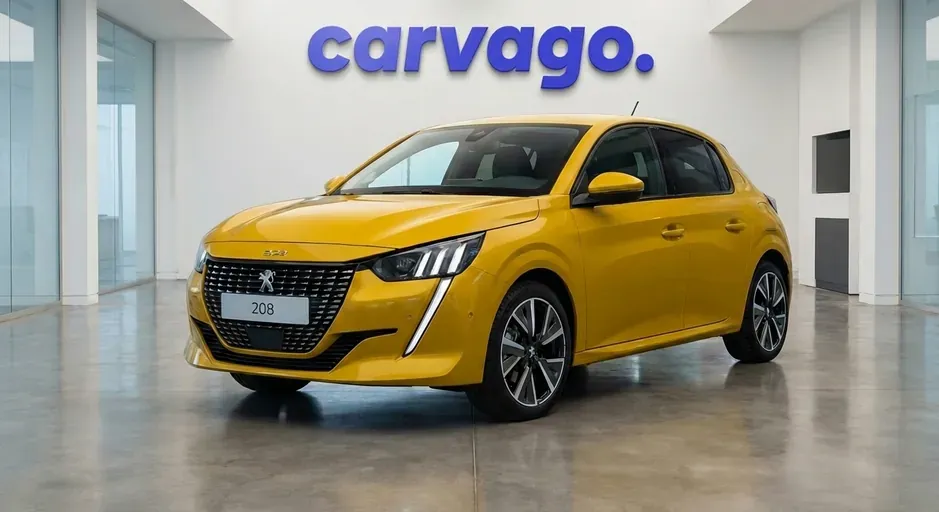
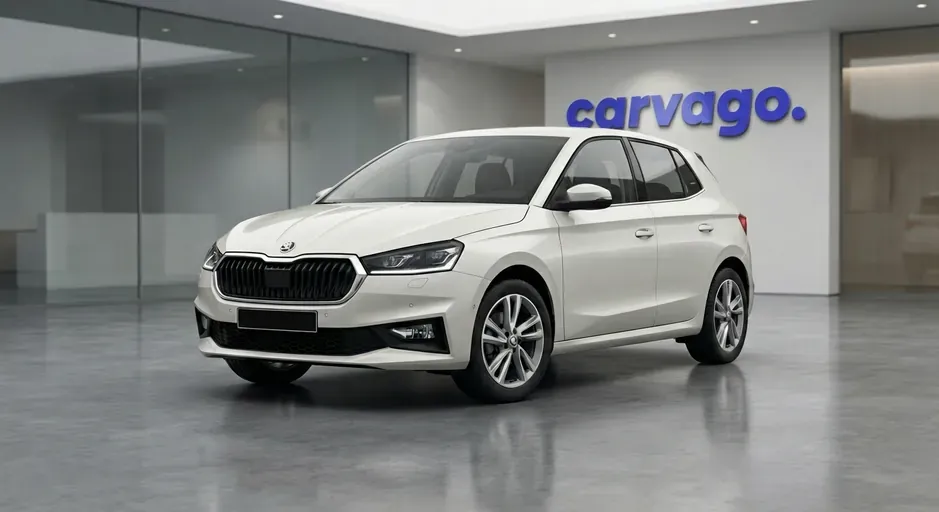
The French Peugeot 208, which is also available on the market in its popular all-electric variant known as the e-208, charms used car buyers primarily with its attractive avant-garde design and futuristically styled interior featuring the i-Cockpit layout. Standing against it is the local staple, the Škoda Fabia, which has long held its position as one of the most sought-after cars thanks to its uncompromising practicality, top-tier interior space, and proven technology from the parent Volkswagen Group. Let's take a detailed look at how these two differently conceived subcompact hatchbacks fare in a direct comparison and which of them represents a more tempting choice for your daily journeys.
When comparing the exterior dimensions of these two popular models, we encounter interesting differences that clearly define their character. Focusing on used cars around four years old—specifically the second generation of the Peugeot 208 and the emerging fourth generation of the Škoda Fabia—the Czech representative makes a noticeably more mature and robust impression. The Škoda Fabia hatchback measures 4108 to 4137 mm in length, meaning it is at least 53 mm longer than the French lion, whose length has settled at a compact 4055 mm. At the same time, the Mladá Boleslav model is 35 mm wider with its 1780 mm width. In practice, this means the Fabia offers a perceptibly airier interior with more shoulder room for the occupants. Conversely, you will appreciate the Peugeot's smaller and more compact dimensions when frequently weaving through city streets and searching for a parking spot.
Another key parameter is the wheelbase, which is crucial for longitudinal cabin space and the car's directional stability. The fourth-generation Škoda Fabia hatchback boasts a value of up to 2564 mm, surpassing the 2540 mm of the Peugeot 208. Combined with an overall taller body construction (1458–1461 mm for the Škoda compared to 1400–1430 mm for the Peugeot), the Fabia provides rear passengers with more generous head and knee room. The Peugeot 208 relies more on a lower and wider silhouette, giving it a sportier, crouched stance. Furthermore, it should not be overlooked that among approximately four-year-old used cars, the Škoda was also offered in the more practical Estate body style (the outgoing third generation), which, with a total length of 4262 mm and a taller build, appeals to families seeking the absolute maximum utility value—Peugeot has no direct answer to this version in the current generation.
From the perspective of exterior proportions, you get a clear picture of who the car is primarily intended for. While the Peugeot 208 represents an agile and design-attractive city hatchback that is great for maneuvering in tight spaces, the Škoda Fabia plays the role of a space magician, confidently eyeing cars from a class above with its size and easily handling longer weekend trips with four adults.
| Parameter | Peugeot 208 Hatchback | Škoda Fabia Hatchback | Škoda Fabia Estate |
|---|---|---|---|
| Width (mm) | 1745 | 1780 | 1732 |
| Length (mm) | 4055 | 4108–4137 | 4257–4262 |
| Height (mm) | 1400–1430 | 1458–1461 | 1467–1488 |
| Wheelbase (mm) | 2540 | 2549–2564 | 2470 |
When it comes to everyday usability, luggage compartment volume plays a key role for many buyers. Whether it's transporting family groceries, a baby stroller, or luggage for a weekend trip, having enough space in the trunk means less stress when packing. In the small city car segment, manufacturers' approaches often differ – while some models bet primarily on style and agility, others try to offer maximum practicality that can partially replace cars from higher classes.
Looking at the second-generation Peugeot 208 (from 2019), it's clear that design played a crucial role in its development. Nevertheless, it offers a solid basic volume of 309 liters for most conventional engines, a value that easily suffices for a normal daily routine. The latest hybrid versions have improved slightly, offering up to 352 liters. After fully folding the rear seats, the usable space increases to 1,004 to 1,163 liters. However, it's important to remember that the fully electric e-208 variant has its capacity reduced to 265 liters in the base, or 960 liters with the seats folded, due to the battery placement in the floor, which may require some compromises when transporting larger items.
On the other hand, there is the Škoda Fabia, which has long been considered the class leader in terms of spaciousness. Looking at roughly four-year-old used cars, you'll encounter the transition between the third and fourth generations. While the third-generation hatchback offers a very respectable 330 liters, the fourth (from 2021) brings a confident 380 liters, directly challenging models from the compact class. Folding the seats gives you a generous 1,190 liters. A huge advantage for families and those with active lifestyles is the availability of the Fabia Combi version (sold until 2022). It offers a gigantic 530 liters in the base and an unrivaled 1,395 liters with the seats folded. In practice, this means space for several extra suitcases, a capacity perfectly sufficient for a large weekend shopping trip or a longer family vacation.
| Parameter | Peugeot 208 Hatchback | Škoda Fabia Hatchback | Škoda Fabia Combi |
|---|---|---|---|
| Basic volume (liters) | 265 - 352 | 330 - 380 | 530 |
| Maximum volume with seats folded (liters) | 960 - 1163 | 1150 - 1190 | 1395 |
While the Peugeot 208 offers a decent and stylish trunk for individuals or couples, the Škoda Fabia clearly wins in raw space, with the Combi version remaining an entirely unrivaled choice for families and transporting larger loads.
Towing capacity for small city hatchbacks has long ceased to be a negligible parameter. For many used car buyers, towing capacity is an important figure that determines the daily practicality and leisure utility of the car. The ability to pull a trailer is appreciated not only when hauling garden waste or small construction materials, but primarily provides space for a few extra suitcases or a reliable base for installing a heavier e-bike rack. A correctly chosen car in this class can offer sufficient flexibility and is perfectly adequate for weekend shopping as well as a longer holiday for two.
If we focus on roughly four-year-old used cars, namely the Skoda Fabia 4th generation (produced since 2021) and the Peugeot 208 2nd generation (since 2019), we find a different approach to maximum towing capacity in both brands. The Skoda Fabia offers a tiered braked trailer capacity that grows with the power of the selected engine. The basic naturally aspirated 1.0 MPI versions can tow 800 kg, the weaker turbocharged 1.0 TSI (70 kW) engines can handle 1000 kg, and the popular stronger 1.0 TSI (81 and 85 kW) variants increase the capacity to 1100 kg. The maximum value of 1200 kg is achieved in the Fabia exclusively by the top-of-the-line, but less common on the used market, 1.5 TSI engine.
Conversely, the Peugeot 208 is more generous with towing capacity even from much more affordable engines. If we set aside the purely urban base 1.2 PureTech 75 (55 kW), which has a capacity strictly limited to only 500 kg, practically all other internal combustion variants can tow a braked trailer weighing a respectable 1200 kg. This value thus applies to the popular 1.2 PureTech petrol engines (100 and 130 hp) as well as the economical 1.5 BlueHDi diesel. A major benefit of the Peugeot is also the fact that even the newer hybrid variants (1.2 Hybrid) maintain the full 1200 kg capacity without compromise and are not penalized in any way by the presence of the battery. The unbraked trailer weight for both cars stays within the usual limits of the small car class, most often ranging between 500 and 610 kg depending on the specific equipment and the car's kerb weight.
In terms of practical implications, this means that with the Skoda Fabia, you have to think carefully about the future use of the car at the time of purchase. If you plan to tow heavier trailers approaching the 1200 kg limit or a heavier caravan, you must specifically look for the most expensive four-cylinder. The Peugeot 208, on the other hand, gives you more freedom and can handle the same heavy work even with a more common three-cylinder engine.
Summary:
If maximum towing capacity in a small car is a key parameter for you and you don't want to pay extra for the most powerful models in a used car, the Peugeot 208 is a surprisingly stronger and more flexible workhorse in this regard. However, the Skoda Fabia will suffice with complete ease and safety for standard domestic use, trips with a light trailer, and transporting bicycles on a tow bar.
| Model and engine | Braked trailer weight (kg) | Unbraked trailer weight (kg) |
|---|---|---|
| Skoda Fabia 4th gen (2021–present) | ||
| Skoda Fabia 1.0 MPI (48/59 kW) | 800 | 580 |
| Skoda Fabia 1.0 TSI (70 kW) | 1000 | 580–600 |
| Skoda Fabia 1.0 TSI (81/85 kW) | 1100 | 600–610 |
| Skoda Fabia 1.5 TSI (110/130 kW) | 1200 | 610 |
| Peugeot 208 2nd gen (2019–present) | ||
| Peugeot 208 1.2 PureTech 75 (55 kW) | 500 | 500 |
| Peugeot 208 1.2 PureTech 100/130 (74/96 kW) | 1200 | 580 |
| Peugeot 208 1.5 BlueHDi 100 (75 kW) | 1200 | 580 |
| Peugeot 208 1.2 Hybrid (74/100 kW) | 1200 | 580 |
The approach of both carmakers to the range of engines differs fundamentally, which is a key factor for those interested in a roughly four-year-old used car. The Škoda Fabia bets on a more conservative, yet precisely tuned pure petrol range that covers everything from economical commutes to more dynamic driving with excellent efficiency. In contrast, the Peugeot 208 uses a so-called multi-energy platform. As a result, the French hatchback offers not only classic petrol engines but also a rare and economical diesel for its class, and even a fully electric variant. The decision for buyers will thus largely depend on the type of routes they most frequently travel and whether they have charging options.
The second-generation Peugeot 208 (from 2019) pleases with a very diverse range of powertrains. The standard for city driving is the naturally aspirated 1.2 PureTech three-cylinder with 55 kW. The golden middle ground, which is most in demand among used cars, is the turbocharged version with 74 kW. This could be purchased with a six-speed manual transmission or the excellent EAT8 eight-speed automatic. The top of the petrol range is the agile 96 kW version. For drivers with high motorway mileage, Peugeot prepared a refined and extremely economical 1.5 BlueHDi diesel engine. A completely specific alternative for city traffic is the electric Peugeot e-208 with 100 kW. Note: Newer mild-hybrid variants (100 and 136 hp) or the more powerful electric motor (115 kW) arrived on the market only at the end of 2023, so you will only encounter them exceptionally among four-year-old used cars.
| Engine type | Fuel | Power (kW) | Torque (Nm) | Transmission |
|---|---|---|---|---|
| 1.2 PureTech 75 | Petrol | 55 | 118 | 5MT |
| 1.2 PureTech 100 | Petrol | 74 | 205 | 6MT / 8AT |
| 1.2 PureTech 130 | Petrol | 96 | 230 | 8AT |
| 1.5 BlueHDi 100 | Diesel | 75 | 250 | 6MT |
| e-208 136 | Electric | 100 | 260 | 1AT |
The fourth generation of the Škoda Fabia (on the market since 2021) says goodbye to diesel engines and focuses exclusively on proven petrol units, which will be appreciated by drivers looking for long-term reliability and low service costs. The base is the naturally aspirated 1.0 MPI three-cylinder (48 kW or 59 kW), which is ideal for calm suburban driving. The mainstream consists of turbocharged 1.0 TSI engines, available in two power versions (70 kW and 81 kW). The more powerful one-litre engine offers great dynamics and could be paired with the lightning-fast seven-speed dual-clutch DSG transmission. The top engine, which makes the Fabia a motorway all-rounder, is the 1.5 TSI four-cylinder with 110 kW and an active cylinder deactivation system to reduce fuel consumption.
| Engine type | Fuel | Power (kW) | Torque (Nm) | Transmission |
|---|---|---|---|---|
| 1.0 MPI | Petrol | 48 / 59 | 93 | 5MT |
| 1.0 TSI | Petrol | 70 | 175 | 5MT |
| 1.0 TSI | Petrol | 81 | 200 | 6MT / 7DSG |
| 1.5 TSI | Petrol | 110 | 250 | 7DSG |
While the Škoda Fabia excels with proven petrol engines ideal for regular daily driving, the Peugeot 208 attracts with a wider range of powertrains, including the now rare diesel and a fully electric version for modern city drivers.
Choosing the right engine is a key factor for long-term satisfaction with a used car. While the second-generation Peugeot 208 focuses on a stylish appearance with French elegance and even offers fully electric versions on the used car market, the fourth-generation Škoda Fabia remains faithful to traditional yet highly efficient internal combustion engines without any electrification. In the four-year-old used car segment, both manufacturers rely primarily on turbocharged three-cylinder engines, albeit each with a different technical approach. Our recommendations are based on real-world user experience, proven service reliability, and overall user-friendliness.
This turbocharged three-cylinder represents the absolute user ideal in the second-generation model range (available since 2019). It offers an excellent compromise between purchase price, dynamics, and daily operating costs. The 74 kW output combined with a maximum torque of 205 Nm ensures very smooth and agile acceleration, not only in city traffic but also during highway commutes. Real-world fuel consumption easily stays around 5.5 liters per 100 km during normal driving. From a user perspective, a huge plus is that this engine can often be found on the used market paired with a well-tuned eight-speed automatic with a hydrodynamic torque converter (EAT8), which provides top-tier comfort.
The fourth generation of the Škoda Fabia (on the market since mid-2021) has made a huge generational leap toward becoming a more mature vehicle. The turbocharged one-liter three-cylinder from the EA211 evo family, in its more powerful 81 kW version, is the most logical and highly recommended choice for this car. Unlike the basic naturally aspirated MPI versions (which lack the dynamics for overtaking and struggle outside the city), the 1.0 TSI provides confident pull thanks to 200 Nm of torque. A significant advantage of the more powerful version is also the presence of a six-speed manual gearbox (the weaker version only has a five-speed), which reduces RPMs and noise during highway driving. Alternatively, it is also available on the market with a seven-speed DSG automatic. Real-world fuel consumption is excellent and often drops below 5 liters per 100 km. Mechanically, it is also one of the most reliable small engines today.
Official fuel consumption figures that car manufacturers confidently state in their brochures often raise exaggerated expectations. In everyday real-world driving, full of frequent starts, city traffic jams, and motorway journeys, these laboratory values become difficult to achieve. For an objective comparison, it is therefore absolutely crucial to rely on the long-term experiences of the drivers themselves. For the purposes of this comparison – logically focused on approximately four-year-old used cars, the second-generation Peugeot 208 and the fourth-generation Škoda Fabia (vehicles from 2021 and 2022) – we have used real user data from the well-known community portal Spritmonitor.de. It collects detailed records of real-world refuelling from hundreds of motorists, providing the most accurate picture of the actual appetite of individual engines.
| Model and engine | Average consumption (l/100 km) |
|---|---|
| Peugeot 208 1.5 BlueHDi 100 (diesel engine) | 4.4 |
| Škoda Fabia 1.0 MPI 59 kW (naturally aspirated petrol) | 5.4 |
| Peugeot 208 1.2 PureTech 75 (naturally aspirated petrol) | 5.5 |
| Škoda Fabia 1.0 TSI 81 kW (turbocharged petrol) | 5.6 |
| Škoda Fabia 1.5 TSI 110 kW (turbocharged petrol) | 5.8 |
| Peugeot 208 1.2 PureTech 100 (turbocharged petrol) | 5.9 |
A closer look at the averaged data reveals several interesting trends that quite successfully debunk myths about modern engines. The biggest surprise for many buyers is the fact that basic naturally aspirated three-cylinder engines (1.0 MPI and the weaker 1.2 PureTech 75) do not save fuel as significantly as is often claimed. Given their more modest performance, it is necessary to rev them higher in normal traffic, which paradoxically makes their real-world consumption almost equal to the more powerful turbocharged variants. Small turbo engines (1.0 TSI and the more powerful 1.2 PureTech), on the other hand, benefit from a much better torque curve, thanks to which they don't have to work as hard and, with a light foot, easily keep consumption below six litres. Remarkably great results are achieved by the top-of-the-range 1.5 TSI four-cylinder in the Fabia. Although it offers incomparably the best dynamics, the Active Cylinder Technology (ACT) system brings its average down to a pleasant 5.8 l/100 km. However, the undisputed king of fuel economy is the diesel Peugeot 208 1.5 BlueHDi. Its average of 4.4 l/100 km clearly shows that diesel still has its unquestionable place in the small car segment.
For a typical buyer of a four-year-old used car, these values lead to clear recommendations. If you are one of those drivers who drive mainly in the city or on short commutes to work and for shopping, the basic petrol versions (1.0 MPI or PureTech 75) will do an excellent job with reasonable consumption and, above all, a low risk of expensive repairs. However, if you often head out of town and expect versatility from your car, the golden mean in the form of the turbocharged 1.0 TSI from Škoda will serve you best. For a narrow group of drivers who cover huge distances on the motorway or commute very far, the 1.5 BlueHDi diesel engine in the Peugeot is the only one that makes sense – the investment in it will pay off at the petrol station the fastest of all models.
In conclusion, it can be said with certainty that unless you have extreme annual mileage, fuel consumption should not be the main and only deciding factor between these two cars. The real differences between comparable and most popular petrol engines for Škoda and Peugeot are only in the range of tenths of a litre, which represents negligible amounts in monthly fuel costs. The choice should therefore focus primarily on personal preference, interior space, user-friendliness of the on-board systems, and the driving comfort of both B-segment representatives.
When looking for vehicles roughly four years old (manufactured around 2022), both cars fall into very similar price ranges, but the used car market works a bit differently for each model. While the Škoda Fabia has long held its value very firmly in the Czech market, the Peugeot 208 can offer very rich equipment for more attractive money in the used car market thanks to a slightly steeper price drop. Both models are available on the four-year-old used car market in their current and very modern generations (fourth generation for the Fabia and second for the 208).
| Model (m.y. ~2022) | Estimated price (Base trim) | Estimated price (Higher trim / more powerful engine) |
|---|---|---|
| Peugeot 208 (2nd generation) | €9,000 – €10,700 | €12,300 – €15,600 |
| Škoda Fabia (4th generation) | €9,500 – €11,500 | €11,900 – €16,000 |
On the used car market, you will most often come across the Peugeot 208 equipped with the popular 1.2 PureTech three-cylinder petrol engine.
The fourth generation of the Fabia model (since 2021) is traditionally in high demand on the used car market. Local buyers seek out proven technology en masse, which guarantees exceptionally stable car prices and a very slow loss of value.
While the Peugeot 208 offers a slightly more tempting price-to-attractive-equipment ratio in used cars due to a slightly faster decline in original value, the Škoda Fabia represents certainty in the form of unrivaled residual value, which will generously reward you upon its resale.
Both cars boast a reputation for being safe vehicles that, in their class and top specifications, aim for a five-star Euro NCAP rating. Right at the start, however, it is absolutely essential to emphasize the importance of context and the specific year of testing. The methodology and protocols of Euro NCAP safety tests are constantly evolving over time and becoming significantly stricter, so percentage scores from different years cannot be fairly and directly compared. While earlier tests primarily assessed basic structural resilience and simple systems, newer test protocols include more complex frontal impact simulations with a moving barrier, highly demanding cyclist detection, and also take into account emergency scenarios at intersections.
The Peugeot 208 underwent Euro NCAP crash tests in 2019. In terms of passive safety, it showed great results and confirmed excellent body rigidity – scoring 91% for adult occupant protection and 86% for child protection. The cabin structure remained fully stable after the impact and provided the crew with excellent protection. A weaker point at the time (which led to four stars for the basic equipment) was the protection of vulnerable road users with a result of 56%. The standard autonomous emergency braking (AEB) system relied exclusively on a camera back then, which could not reliably react to faster-moving cyclists. Safety assistance systems, which were not as comprehensive as they are today, earned a rating of 71%.
The fourth generation of the Škoda Fabia, on the other hand, headed to the Euro NCAP test track in 2021, when significantly tougher standards were already in place. The Škoda Fabia excelled in these more demanding conditions, earning a full five stars, and the independent organization even declared it the safest car in its class for that year ("Best-in-class 2021"). The car achieved 85% for adult protection and 81% for child protection. Even though these percentages may seem nominally slightly lower than those of the Peugeot, they were earned in significantly tougher and more complex tests. The deployment of the latest evolution of the MQB-A0 platform allowed for the implementation of better radar technologies, thanks to which the Fabia scored a high 70% in the protection of vulnerable road users, as its standard safety assistants (also rated 71%) can already fully detect pedestrians and cyclists in the vast majority of critical situations.
From the perspective of today's standards and requirements, the Škoda Fabia offers a more modern and comprehensive safety package. While the Peugeot 208 is still at a top level in terms of structural strength and passive occupant protection, its standard assistance equipment conceptually corresponds to 2019 and lags behind in accident prevention. The Fabia, on the other hand, benefits massively from tests conducted according to newer rules and provides more reliable active safety, making it a slightly more advanced choice for used car buyers for family travel and driving in busy cities.
| Parameter | Peugeot 208 | Škoda Fabia |
|---|---|---|
| Year of testing | 2019 | 2021 |
| Adult occupant protection | 91% | 85% |
| Child protection | 86% | 81% |
| Vulnerable road user protection | 56% | 70% |
| Safety assistance systems | 71% | 71% |
Although both models score well with excellent passive safety and a rigid body, the Škoda Fabia, thanks to testing under the stricter 2021 methodology, provides more advanced and reliable protection in critical situations, especially for pedestrians and cyclists.
In addition to standard equipment, each of the models offers several unique features that can be decisive for the customer. Both carmakers bring much more than just basic transport, and each shows its own, very different approach to added value and user comfort.
With the current generation, Peugeot has focused primarily on emotions, original style, and modern technologies that visually and emotionally draw the driver into the action.
The fourth generation of the Fabia model bets on a rational approach, maximizing interior space and clever details that make everyday life with the car exceptionally easy.
Attractive and unmistakable exterior design with a distinctive light signature
Higher quality of materials used in the interior, evoking more premium vehicles
Wide range of powertrains including a fully electric version (e-208)
More comfortably tuned chassis that filters out urban bumps excellently
Innovative digital instrument cluster with 3D display
Specific i-Cockpit ergonomics with a small steering wheel do not suit all body types
Significantly less space for rear-seat passengers
Limited luggage compartment volume compared to class leaders
More tedious climate control exclusively via a slower touchscreen
The Peugeot 208 is an ideal choice for drivers looking for a stylish, emotional, and modern city car with the option of a purely electric powertrain. It will primarily appeal to those for whom original design and a premium interior feel are more important than maximum interior space.
Unrivalled luggage space in its class (380 litres)
Excellent overall spaciousness and ergonomics, retaining physical buttons for climate control
Mature and stable driving characteristics that rival cars from a category above
A wealth of useful and practical features from the "Simply Clever" program
Very high residual value and easy resale on the used car market
Relatively conservative exterior and interior design that does not stand out visually
Complete absence of hybrid or electric powertrains (only petrol engines are available)
Cheaper-looking hard plastics appear in lower trim levels
Higher purchase price on the used car market compared to most direct competitors
The Škoda Fabia represents a highly rational choice that will please small families and practical-minded drivers looking for maximum utilization of interior space. Its extraordinary everyday usability, great ergonomics, and low depreciation make it one of the safest purchases in its segment.
Based on long-term user feedback, service reports, failure statistics, and our own experience provided by a comprehensive car audit, we have compiled a detailed overview of the most common problems you should watch out for when choosing roughly four-year-old used cars of these models.
In the second generation of the Peugeot 208, typical faults are primarily concentrated on the on-board electronics and the mechanics of the popular petrol engines.
The greatest risk with a used Peugeot 208 with the 1.2 PureTech engine is the crumbling timing belt, which requires strict adherence to oil servicing and a careful initial inspection. Other faults are mostly limited to electronic quirks, which can usually be resolved through software updates.
Roughly four-year-old used cars of the Škoda Fabia model range fall into the end of the third-generation production and the beginning of the fourth generation, with problems here mainly concerning software and clutches.
With a manual transmission, the Fabia is a benchmark of reliability for everyday use, but the version with the DSG gearbox requires increased caution. Before buying, we strongly recommend a used car inspection focused specifically on the condition of the clutches and hidden software faults.
When buying a used car, a thorough inspection is key, and both of these popular automotive choices have their specifics that need careful attention during selection. Furthermore, a thorough used car check can save you from many future unpleasant surprises and financial expenses.
The fourth-generation Škoda Fabia reigns supreme in its class with an impressive trunk volume of 380 liters. The Peugeot 208 offers a slightly more modest 309 liters, which is a rather average value in this category. For family shopping or weekend travel, the Czech representative is much more practical.
Yes, the French representative is also sold in a fully electric e-208 version, which offers locally emission-free operation and an ideal range for the city. The Škoda Fabia relies exclusively on traditional internal combustion engines, benefiting from efficient three-cylinder and four-cylinder gasoline engines. If you are looking for a small electric car, the Peugeot is the clear choice in this regard.
The Peugeot excels with softer suspension and the specific i-Cockpit layout with a small steering wheel, which significantly facilitates maneuvering in narrow streets. The Fabia has a slightly stiffer and more mature chassis, which you will appreciate especially at higher speeds or on the highway. For heavy city traffic, the French model is slightly more pleasant thanks to its playfulness.
The Czech model traditionally benefits from a very dense service network and excellent availability of affordable spare parts. For the PureTech engines in the French car, it is also necessary to strictly adhere to timely oil changes due to the specific design of the timing belt. Long-term service costs thus turn out slightly more favorable for the Škoda brand vehicle.
Peugeot bets on an extravagant and modern design with raised 3D digital dials and premium-looking materials. The Fabia, on the other hand, chooses a much more conservative approach with great ergonomics, logical placement of physical buttons, and many practical "Simply Clever" accessories. While the French car impresses with style, the Czech one clearly wins in overall user-friendliness.
While the French Peugeot 208 scores points primarily with its extravagant design, innovative interior with the i-Cockpit layout, and a wide range of powertrains including a purely electric variant, the domestic Škoda Fabia bets on unrivaled interior space, exemplary ergonomics, and exceptionally stable residual value. Choose the Peugeot if you are looking for an agile, stylish, and emotive hatchback primarily for the city, which offers a full-fledged solution even for fans of locally emission-free driving. Conversely, the fourth generation of the Škoda Fabia represents an ideal and highly rational choice for smaller families or practically-minded drivers who require mature driving characteristics, a huge luggage compartment, and proven internal combustion engines from a four-year-old used car. The final decision thus depends purely on your priorities, whether you prefer attractive French charm with modern technologies or unbeatable everyday Czech practicality.
Sources: ADAC, aktualne.cz, auto.cz, autosalon.tv, techfocus.cz, nabijecka.cz
This article was prepared using artificial intelligence tools. The section guarantor is Petr Dušek.
Hyundai i10 vs. Toyota Aygo X: A detailed comparison, real-world insights, and a verdict to help you choose the right small city car.
Apr 2, 2026
Detailed comparison of Opel Corsa vs. Volkswagen Polo (VW Polo). Discover real-world experiences, differences in equipment, and the verdict for choosing the ideal used hatchback.
May 5, 2026
Detailed comparison: Kia Rio vs Seat Ibiza. Discover the differences in driving characteristics, reliability, and space. Read the verdict before choosing a used car!
Apr 15, 2026