Car battle
Kia Stonic vs. Seat Arona: Complete comparison 2026
Kia Stonic or Seat Arona? We compare their engines, reliability, and practicality. Find out which used SUV is a better fit for you.
Apr 8, 2026
Articles
Car battle
Peugeot 2008 vs Renault Captur comparison. Discover real-world experiences, differences in equipment, and our clear verdict to help you choose the right SUV.
May 17, 2026
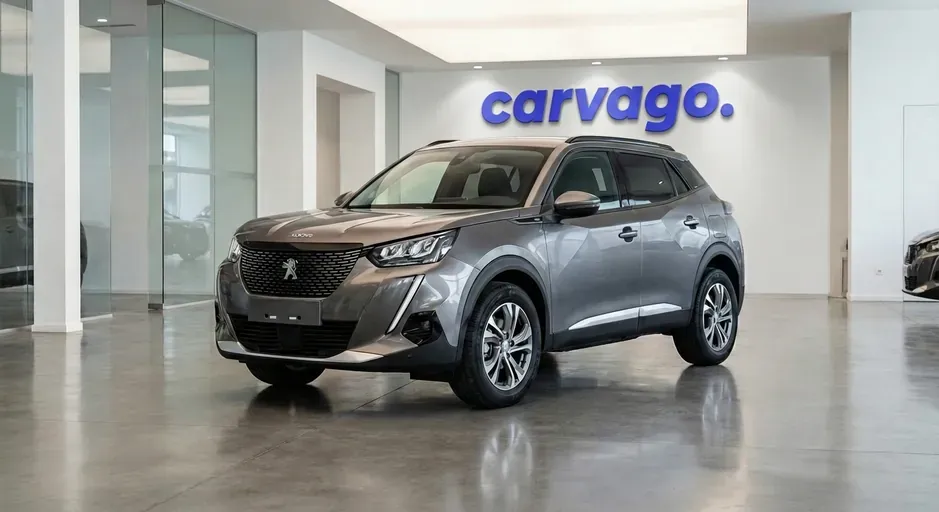
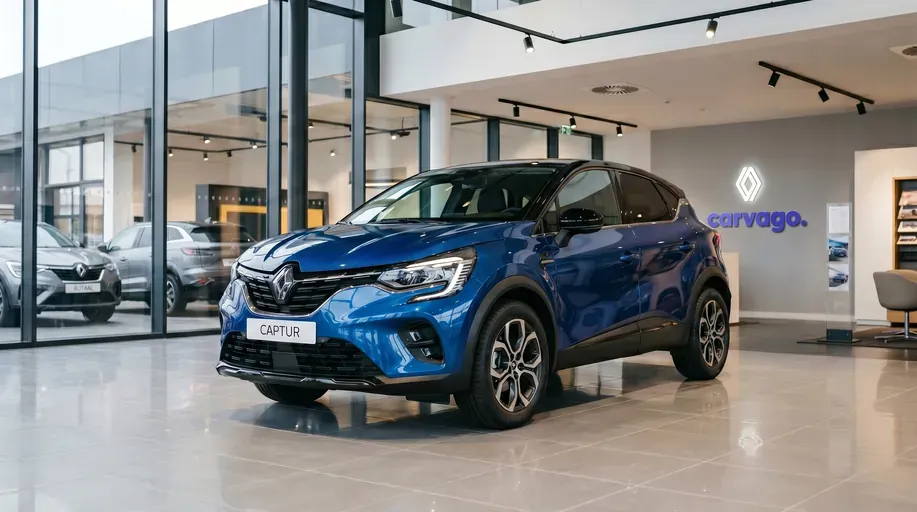
Peugeot 2008, which is also available on the market in its fully electric variant under the designation e-2008, attracts drivers with its very bold design and futuristic interior layout featuring the i-Cockpit architecture. Its main French competitor, the Renault Captur, which is also famous in some non-European markets under alternative names such as Renault Kaptur or Renault Samsung QM3, instead bets on a sleeker charm combined with maximum versatility and everyday comfort. The following comparison will provide a detailed look at the strengths and weaknesses of both these exceptionally popular city crossovers and help you find out which one will be the right choice for your needs.
When comparing the exterior dimensions of these two popular city crossovers – focusing on their second generations, which are currently most relevant for the market of roughly four-year-old used cars – we encounter very different approaches to design and proportions. The Peugeot 2008 is, with its length of 4300 to 4304 mm, up to 77 mm longer than the Renault Captur (4227–4239 mm). This additional length gives the Peugeot a more dynamic silhouette and brings the advantage of a slightly longer luggage compartment loading area, which makes loading bulkier items easier.
However, the Renault Captur makes up for the loss in overall length with a more efficient use of its footprint. It is 27 mm wider (1797 mm vs. 1770 mm) and roughly 50 mm taller than its French rival. However, an even more important figure for interior spaciousness is the wheelbase. Although the Captur is shorter overall, its wheelbase is 2639 mm, which is 34 mm more than that of the 2008 model (2605 mm). In practice, this means better space packaging, more legroom for rear-seat passengers, and an overall airier feel in the cabin, aided by the higher roof.
The final choice largely depends on the environment in which you will move most often. If you prefer a car with a narrower body that can more easily squeeze through narrow streets and you like the elegantly elongated design, the Peugeot 2008 is a great candidate. However, if you are looking for a master of space packaging, the Renault Captur offers easier parallel parking thanks to its shorter length, while providing an airier and more generous space for the occupants inside due to its longer wheelbase.
| Parameter | Peugeot 2008 SUV | Renault Captur SUV |
|---|---|---|
| Width (mm) | 1770 | 1797 |
| Length (mm) | 4300–4304 | 4227–4239 |
| Height (mm) | 1523–1530 | 1575–1576 |
| Wheelbase (mm) | 2605 | 2639 |
When choosing a roughly four-year-old city crossover (generations launched around 2020), trunk capacity is one of the key factors. These cars very often serve as the primary family vehicle. The practicality and usability of the trunk largely determine how easily the car can handle a folded stroller, sports equipment, or luggage for longer trips. The differences between the two French competitors are evident not only in the spec sheet values but also in how the specific engine choice affects the usable space.
The second-generation Peugeot 2008 offers a generous and very accessible trunk with a base volume of 405 liters in most of its conventional internal combustion versions. However, the true highlight of this model is the capacity after folding down the rear seatbacks. This reaches an impressive 1467 liters. In practice, this means a huge transport capacity, providing valuable space for several extra suitcases, which you will definitely appreciate when moving larger items or traveling on a longer vacation.
On the other hand, the second-generation Renault Captur offers a slightly higher base value of 422 liters for standard gasoline engines. This space is perfectly sufficient for weekend shopping and everyday family needs. However, the situation reverses after folding the seats, where the Captur offers a maximum of 1275 liters, losing out significantly to the Peugeot. It is also important to pay attention to the chosen powertrain. If you opt for one of the electrified E-Tech versions, you must expect a reduction in space due to battery storage. The full hybrid version reduces the base trunk volume to 326 liters, and the plug-in hybrid variant offers only 265 liters in the base (and 1118 liters with the seats folded).
| Parameter | Peugeot 2008 SUV | Renault Captur SUV |
|---|---|---|
| Base volume (liters) | 405 | 422 |
| Max. volume with seats folded (liters) | 1467 | 1275 |
While the internal combustion Renault Captur pleases with a slightly larger base trunk, the Peugeot 2008 clearly wins with its superior total capacity after folding the seats. Watch out for the hybrid versions of the Captur, where you have to make compromises at the expense of practicality.
The towing capacity of compact crossovers often determines how much the vehicle truly becomes a versatile family helper. Whether you plan to tow a smaller caravan or just need to occasionally transport a full trailer of building materials, both the Peugeot 2008 and Renault Captur in generations current for the used car market (around 4 years old) offer very solid capacities. However, you will encounter several important differences here, especially if you are considering electrified powertrains.
With conventional internal combustion engines, both models are on equal footing:
In practice, the 1,200 kg value represents a capacity that is easily sufficient for a weekend purchase of bulky materials at a DIY store as well as for a longer holiday with a smaller caravan. However, a major turning point comes when a buyer considers full hybrid versions with lower capacities:
Final Summary: With standard conventional engines, the strengths of both crossovers are perfectly balanced, and the vehicles stand up as practical all-rounders. However, if a tow bar is an indispensable necessity for you and you desire a hybrid powertrain, the Peugeot 2008 retains much greater utility value for towing. With the hybrid Captur, you must carefully consider how heavy the loads you realistically plan to transport are.
| Model and Engine | Braked Trailer Weight (kg) | Unbraked Trailer Weight (kg) |
|---|---|---|
| Peugeot 2008 1.2 PureTech / 1.5 BlueHDi | 1,200 | 600 - 680 |
| Peugeot 2008 1.2 Hybrid | 1,100 | 600 - 680 |
| Renault Captur TCe / dCi / Mild Hybrid | 1,200 | 630 - 715 |
| Renault Captur E-Tech Hybrid / Plug-in Hybrid | 750 | 630 - 715 |
The engine range of both these French crossovers clearly shows the different approaches of the manufacturers, which is a key factor for those interested in an approximately four-year-old used car. While the Peugeot 2008 relies on traditional and proven internal combustion engines from the PureTech and BlueHDi families, boldly complementing the range with the fully electric e-2008 variant, the Renault Captur has bet all its cards on modern technology and a very wide range of hybrid powertrains. For buyers, this means a clear choice: if you are looking for a reliable diesel engine for long motorway journeys or desire a pure electric car for the city with zero local emissions, the Peugeot will satisfy your requirements without a problem. Conversely, the Renault Captur scores significantly with budget-oriented drivers, offering an exceptionally economical and cheap version with factory LPG, and with tech enthusiasts looking for a transition to electrification through smooth mild-hybrid or plug-in hybrid systems.
The engine range for the second-generation Peugeot 2008 is based on the popular turbocharged three-cylinder 1.2 PureTech petrol engines. The standard version offers 74 kW (100 hp), while the more versatile and dynamic mid-range choice has 96 kW (130 hp). The top of the petrol range was the relatively powerful 1.2 PureTech 155 specification with 114 kW, but it is good to know that it was phased out of production in mid-2022. A similar fate gradually befell the 1.5 BlueHDi diesel engines with 74 kW and 96 kW. While these represent a great choice for high-mileage drivers (the more powerful variant offers torque up to 300 Nm and a smooth eight-speed automatic), they are rarely seen on the used car market for vehicles after 2022 and 2023. Lovers of quiet city driving, on the other hand, will appreciate the fully electric e-2008 (136) model with 100 kW, instant torque of 260 Nm, and the absence of any engine vibrations.
| Engine type | Fuel | Power (kW) | Torque (Nm) | Gearbox |
|---|---|---|---|---|
| 1.2 PureTech 100 | Petrol | 74 | 205 | 6-speed manual |
| 1.2 PureTech 130 | Petrol | 96 | 230 | 6-speed man. / 8-speed automatic |
| 1.2 PureTech 155 | Petrol | 114 | 240 | 8-speed automatic |
| 1.5 BlueHDi 100 | Diesel | 74 | 250 | 6-speed manual |
| 1.5 BlueHDi 130 | Diesel | 96 | 300 | 8-speed automatic |
| e-2008 136 | Electricity | 100 | 260 | 1-speed automatic |
The engine range for the second-generation Renault Captur is extremely attractive for those interested in low operating costs. It opens with the TCe 90 (67 kW) three-cylinder petrol and its highly sought-after TCe 100 LPG (74 kW) derivative. Thanks to its trouble-free factory LPG installation, it promises unrivaled savings at the filling station for drivers on a tighter budget. However, more powerful and refined four-cylinders play a crucial role in the price list. The standard TCe 130 was gradually replaced in the range by modernized mild-hybrid variants TCe 140 (103 kW) and the brisker TCe 160 (116 kW), both optionally or standard with a dual-clutch EDC automatic. For those interested in a higher level of electrification, the clever full-hybrid E-Tech Hybrid 145 (105 kW) and the plug-in E-Tech Plug-in Hybrid 160 (116 kW) are available. If you were looking for a diesel Captur in the used car market, the search will be very difficult – the BLUE dCi 115 diesel unit with 85 kW stayed in the range only during 2020 and soon after gave way to the expanding range of hybrids.
| Engine type | Fuel | Power (kW) | Torque (Nm) | Gearbox |
|---|---|---|---|---|
| TCe 90 | Petrol | 67 | 160 | 6-speed manual |
| TCe 100 LPG | Petrol / LPG | 74 | 170 | 6-speed manual |
| TCe 130 | Petrol | 96 | 240 | 6-speed man. / 7-speed EDC automatic |
| TCe 140 Mild Hybrid | Petrol (MHEV) | 103 | 260 | 6-speed man. / 7-speed EDC automatic |
| TCe 160 Mild Hybrid | Petrol (MHEV) | 116 | 270 | 7-speed EDC automatic |
| E-Tech Hybrid 145 | Petrol (HEV) | 105 | 205 | Multi-Mode |
| E-Tech Plug-in 160 | Petrol (PHEV) | 116 | 205 | Multi-Mode |
| BLUE dCi 115 | Diesel | 85 | 260 | 6-speed man. / 7-speed EDC automatic |
Renault Captur wins with consumption-oriented customers thanks to its wide range of economical hybrids and cheap LPG, while the Peugeot 2008 attracts with zero-emission local operation in the e-2008 version and the hard-to-replace characteristics of the now-discontinued BlueHDi diesel engines.
Choosing the right engine is absolutely crucial for long-term satisfaction, reliability, and maintaining reasonable operating costs. Both manufacturers have approached the engines in their modern crossovers differently. While Peugeot relies almost exclusively on its award-winning but technically specific 1.2 PureTech three-cylinder for the second generation of the 2008 model (since 2020), Renault scores with an unusually wide range for the second generation Captur – from one-liter three-cylinders (often factory-fitted for LPG) to excellent four-cylinders developed in cooperation with Mercedes-Benz. Our recommendation for roughly four-year-old used cars is based on real-world experience from mechanics, owner feedback, and verifiable mechanical reliability.
This turbocharged three-cylinder represents the golden middle ground in Peugeot's range and is the most sensible choice for a roughly four-year-old used car. While the base 100 hp version can lose breath on the highway when fully loaded, the more powerful 130 hp (96 kW) variant offers a much more confident performance and plenty of torque (230 Nm) even at low revs. Real-world fuel consumption during normal driving ranges between a pleasant 6 to 6.5 liters per 100 km. You will often come across units paired with the excellent EAT8 eight-speed automatic, which keeps the engine in the optimal rev range, making the drive very comfortable.
For the Renault Captur, the choice is surprisingly clear – the 1.3 TCe four-cylinder gasoline engine with 140 hp (103 kW), which seamlessly transitioned into the Mild Hybrid 140 version after 2022. This is an exceptionally successful unit developed in cooperation with Mercedes-Benz. In a flood of three-cylinders in this class, the four-cylinder feels like a balm for the soul – it is quiet, completely free of vibrations, and has a beautifully smooth pull (260 Nm). Despite the higher power and displacement, in practice, it only asks for 6 to 6.5 liters of gasoline per 100 km. Combined with the seven-speed EDC dual-clutch automatic, it turns the Captur into a mature car suitable even for long highway journeys.
When choosing a used car, it is important to keep in mind that official fuel consumption values provided by manufacturers based on laboratory measurements often differ significantly from the reality of everyday driving. To obtain the most accurate comparison for roughly four-year-old used cars (i.e., second-generation models from 2020–2022, which currently make the most sense on the used car market), we focused on aggregated data from drivers themselves. The source is independent community platforms such as the globally recognized portal Spritmonitor.de. This data reliably reflects the common experiences of thousands of motorists and provides a realistic picture of how fuel-efficient the Peugeot 2008 and Renault Captur models truly are.
Source: Spritmonitor.de and
| Model and engine | Average consumption (l/100 km) |
|---|---|
| Diesel engines | |
| Renault Captur 1.5 Blue dCi 115 (85 kW) | 4.8 |
| Peugeot 2008 1.5 BlueHDi 130 (96 kW) | 5.0 |
| Petrol engines | |
| Peugeot 2008 1.2 PureTech 100 (74 kW) | 5.4 |
| Renault Captur 1.0 TCe 90 (66 kW) | 6.2 |
| Renault Captur 1.3 TCe 140 (103 kW) | 6.3 |
| Peugeot 2008 1.2 PureTech 130 (96 kW) | 6.5 |
| Hybrid engines | |
| Renault Captur E-Tech Hybrid 145 (105 kW) | 5.1 |
Several interesting trends clearly emerge from the collected data. Traditionally, diesel engines remain the most fuel-efficient on long journeys, where both the French 1.5 Blue dCi four-cylinder from Renault and the 1.5 BlueHDi from Peugeot maintain an excellent real-world average of around five liters per hundred kilometers. However, the look at petrol units is much more surprising. Here, practice shows that small turbocharged three-cylinder engines – in this case, the 1.0 TCe in the Captur and the 1.2 PureTech in the 2008 – do not bring the fuel savings in the heavier and taller bodies of modern SUVs that a user might expect from their small displacement. The more powerful version of the 1.2 PureTech three-cylinder in the Peugeot requires an average of 6.5 liters in real conditions, which is even slightly more than the larger and more refined 1.3 TCe four-cylinder in the competing Renault.
What do these findings mean for typical users, and which specific engines will please whom the most?
In conclusion, although both compared models are among the fuel-efficient compact SUVs, overall fuel consumption can become a deciding factor if you have a clearly defined driving profile. The Renault Captur wins slightly here with a wider and more sophisticated range of engines in its second generation – it impresses with the very efficient 1.3 TCe four-cylinder and a full hybrid. The Peugeot 2008, on the other hand, benefits from the reliably low consumption of its refined diesel and good results from the basic, less powerful version of the three-cylinder. However, the differences in consumption between direct competitors often range only in the tenths of a liter per 100 kilometers, and therefore, for the average motorist with an annual mileage of up to 15,000 km, this parameter should not be the only reason to choose one car over the other.
When looking for a roughly four-year-old used car (vehicles manufactured between 2021 and 2022), we focus on the popular second generations of both French models. These brought a significant generational leap in material quality, technology, and overall space. However, pricing policy in the used car market clearly shows slight differences in how both cars hold their value.
The Renault Captur has long scored as a more affordable choice. Its depreciation is slightly steeper in the first few years, making it an excellent opportunity for second-hand buyers to get a lot of car for less money.
The Peugeot 2008 from 2021 and 2022 benefits from its very dynamic, confident design and original i-Cockpit interior. Thanks to its high popularity across Europe, it holds its value significantly better than its competitor.
| Model (2021–2022 models) | Lower limit (base equipment) | Average price (higher equipment) | Hybrid / Electric |
|---|---|---|---|
| Renault Captur | from €14,000 | €16,000 – €17,000 | €16,000 – €18,000 |
| Peugeot 2008 | from €16,000 | €17,000 – €19,000 | €19,000 – €21,000 |
When deciding between these cars, there is a fairly clear correlation. Renault caters to buyers with a more strictly limited budget who still want a modern and safe family car. Peugeot primarily targets emotions and style, for which the market is clearly willing to pay a slight premium.
The Renault Captur represents a more rational choice with a very favorable price-to-equipment ratio, while with the Peugeot 2008, you will pay a slight premium on the used car market for its attractive appearance and slower depreciation.
Both compared cars boast a maximum five-star rating in independent Euro NCAP safety tests, which is excellent news for those interested in a roughly four-year-old used car. However, the correct context is crucial when evaluating safety. Euro NCAP's methodology and testing protocols are constantly evolving and becoming stricter over time, so percentage scores from older tests cannot be directly compared with tests of the latest models. Both the Peugeot 2008 and Renault Captur underwent testing in the same year, 2019. These tests already reflected more modern and stringent standards that placed significant emphasis on active safety, including improved autonomous emergency braking (AEB) systems with pedestrian and cyclist detection.
The second generation of the Peugeot 2008 underwent crash tests in 2019 with very good results, but there is one crucial detail. The car achieved the maximum five-star rating only when equipped with the optional "Safety Plus" package. This package complements the standard camera system with a radar, significantly improving the car's ability to prevent collisions. With this equipment, the Peugeot achieved an impressive 93% in adult occupant protection and 84% in child protection. Protection of vulnerable road users and the reliability of safety assistants were both rated at 73%. Base models without the radar earned four stars in the tests. Therefore, when buying second-hand, it is always worth verifying what safety equipment a specific unit has.
The second-generation Renault Captur also underwent Euro NCAP tests in 2019, but it earned a full five stars right in its standard equipment without the need to pay extra for additional safety features. The car showed excellent structural integrity of the cabin with an outstanding result of 96% in adult passenger protection. Child protection, at 83%, is at an almost identical level to its rival. However, the Captur slightly outperforms its French competitor in the categories of vulnerable road user protection (75%) and assistance systems (74%), where it benefited from advanced standard technologies such as lane keeping or traffic sign recognition.
Although both compact SUVs provide a top level of passive and active safety corresponding to the standards of their time, the Renault Captur offers an overall more comprehensive and modern safety package. Because its comprehensive range of assistance systems and full five-star rating are available as standard, it represents a slightly more certain choice on the used car market, where you don't have to search laboriously for optional packages.
| Parameter | Peugeot 2008 | Renault Captur |
|---|---|---|
| Year of testing | 2019 | 2019 |
| Adult occupant protection | 93 % | 96 % |
| Child occupant protection | 84 % | 83 % |
| Vulnerable road user protection | 73 % | 75 % |
| Safety assistance systems | 73 % | 74 % |
Although both compact SUVs can achieve five stars, the Renault Captur offers comprehensive assistance systems and a top level of safety already in its standard equipment, making it a more certain choice on the used car market.
Both models offer much more than just basic equipment, and each approaches the user experience and added value in its own, completely distinct way. While one attracts with fresh futurism and driving experience, the other scores with thoughtful practicality and interior variability.
Peugeot 2008 focuses primarily on visual impression, a premium feel in the interior, and technological innovations aimed at the driver.
For its second generation, the Renault Captur bet on proven strengths and added features from higher-class vehicles. Its main weapon is huge flexibility and smart layout.
Attractive and bold exterior design that stands out in a crowd even after years
High-quality interior with a premium feel and soft-touch materials
Decent interior space and a solid base trunk capacity (405 liters)
Availability of the fully electric e-2008 version, which is a great zero-emission alternative
Excellent cabin soundproofing and very comfortable suspension tuning on rough roads
The specific ergonomics of the i-Cockpit won't suit everyone (the small, low-set steering wheel can obscure the instrument cluster)
Control of air conditioning and other functions exclusively via an occasionally slower touchscreen
Higher purchase price on the used car market compared to most direct competitors
Absence of a sliding rear bench, which limits overall interior variability
Peugeot 2008 is an ideal choice for drivers who value expressive style, premium interior craftsmanship, and are looking for a highly comfortable city SUV. Its concept will appeal to buyers who don't mind a slightly higher purchase price and can easily adapt to the unconventional driver's workspace layout.
Excellent interior variability thanks to the standard sliding rear bench (trunk from 422 to 536 liters)
Very favorable price-to-value ratio on the used car market
More user-friendly ergonomics with the retention of classic physical air conditioning controls
A wide range of efficient engines, including very successful E-Tech full hybrids and plug-in hybrids
Overall comfortable and refined ride suitable for daily commuting through the city and on country roads
Less communicative steering and slightly more pronounced body roll during more dynamic cornering
A larger proportion of cheaper-looking hard plastics in the lower part of the dashboard and door panels
Basic three-cylinder engines can feel somewhat breathless when the car is fully loaded
Occasional slower and jerkier reactions from the EDC dual-clutch automatic transmission when pulling away
Renault Captur will primarily appeal to rational buyers and small families who require maximum interior space, clever variability, and an excellent price-performance ratio. It is an exceptionally practical and comfortable vehicle for everyday use, where user-friendliness and flexibility clearly triumph over sporting ambitions.
Based on long-term user feedback, service reports, and findings regularly brought by our independent car technical condition inspection, we have compiled an overview of the most common problems that used car buyers should watch out for.
In the second generation of the Peugeot 2008, owners most often face specific difficulties associated with selected engines and onboard electronics.
The Peugeot 2008 is a design-attractive car, but it requires strict adherence to service intervals, especially for petrol engines with problematic timing belts. However, with cautious selection and thorough maintenance, it is a solid car.
The second generation of the Renault Captur is generally considered more reliable mechanically than its predecessor, yet it has several areas that require attention.
The Captur scores with very well-made and durable petrol engines; its weakness lies more in the occasional striking of the onboard electronics and infotainment. However, most of these ailments are reliably solved by software updates.
When buying a used car, a thorough inspection is key. Here are several specific points to focus on for these two models, while the ideal solution for uncovering hidden defects is always a comprehensive car inspection before purchase.
Renault Captur offers a more versatile luggage compartment thanks to its sliding rear bench, which allows the volume to be increased from 422 to an impressive 536 liters. Peugeot 2008 has a fixed base volume of 405 liters, which is still a very respectable figure for everyday needs. This makes the Renault a more practical choice for families with ever-changing transport capacity requirements.
The Renault Captur is generally tuned more for comfort, and its softer suspension filters out common bumps excellently, making it an ideal choice for poorer city streets. The Peugeot 2008 has slightly stiffer suspension and a specific i-Cockpit layout with a small steering wheel, giving it a more agile and sporty feel on the road. The choice therefore depends on whether you prefer a smooth ride or a more dynamic driving sensation.
In the Renault, the 1.3 TCe four-cylinder petrol engine is highly rated, offering excellent dynamics, quiet operation, and very good mechanical reliability. Peugeot relies mainly on 1.2 PureTech three-cylinder engines, where it is absolutely crucial to change the oil regularly and on time due to the specific timing belt design. Overall, Renault's range of power units is perceived as more robust and slightly less demanding in terms of preventative maintenance.
Both cars offer very generous interior space for small city SUVs. The Renault benefits from the aforementioned sliding rear seats, which allow you to easily prioritize either passenger legroom or trunk volume. The Peugeot, on the other hand, scores with a slightly wider cabin, although its sloping roofline may slightly limit headroom for people taller than 185 cm.
The Renault Captur stands out for its overall better ergonomics thanks to the retention of physical buttons and rotary dials for climate control settings. The Peugeot 2008 relies almost exclusively on a central touchscreen, which, according to some drivers' experience, can be more distracting from driving. While the Peugeot's futuristic interior with raised dials is visually very attractive, it requires some time to get used to and to find the optimal driving position.
Although the Peugeot 2008 and Renault Captur represent the top of the used urban crossover market, each targets completely different driver needs. The Peugeot 2008 is an ideal choice for those who desire a bold, expressive design, a premium futuristic interior, and appreciate more agile driving characteristics along with a huge amount of space when the seats are folded down. In contrast, the Renault Captur represents a more rational and affordable alternative, scoring points with unrivaled everyday practicality thanks to its sliding rear bench, more intuitive ergonomics, and reliable four-cylinder or fuel-efficient hybrid powertrains. While fans of unusual style and modern technology will enthusiastically reach for the more dynamically tuned Peugeot, small families and practical-minded buyers will clearly appreciate the unmatched flexibility and overall better value for money of the Renault.
Sources: ADAC, garaz.cz, mdcr.cz, techfocus.cz, chytreauto.cz, autosport.cz
This article was prepared using artificial intelligence tools. The section guarantor is Petr Dušek.
Kia Stonic or Seat Arona? We compare their engines, reliability, and practicality. Find out which used SUV is a better fit for you.
Apr 8, 2026
Detailed comparison of Toyota RAV4 vs Volkswagen Tiguan. Real data, differences in equipment, fuel consumption, and a clear verdict to help you choose the best SUV.
May 4, 2026
Are you torn between the Hyundai Kona and the Suzuki Vitara? Our detailed comparison of used SUVs reveals the differences in engines, features, and fuel consumption. Find out which one to choose!
Apr 15, 2026