Car battle
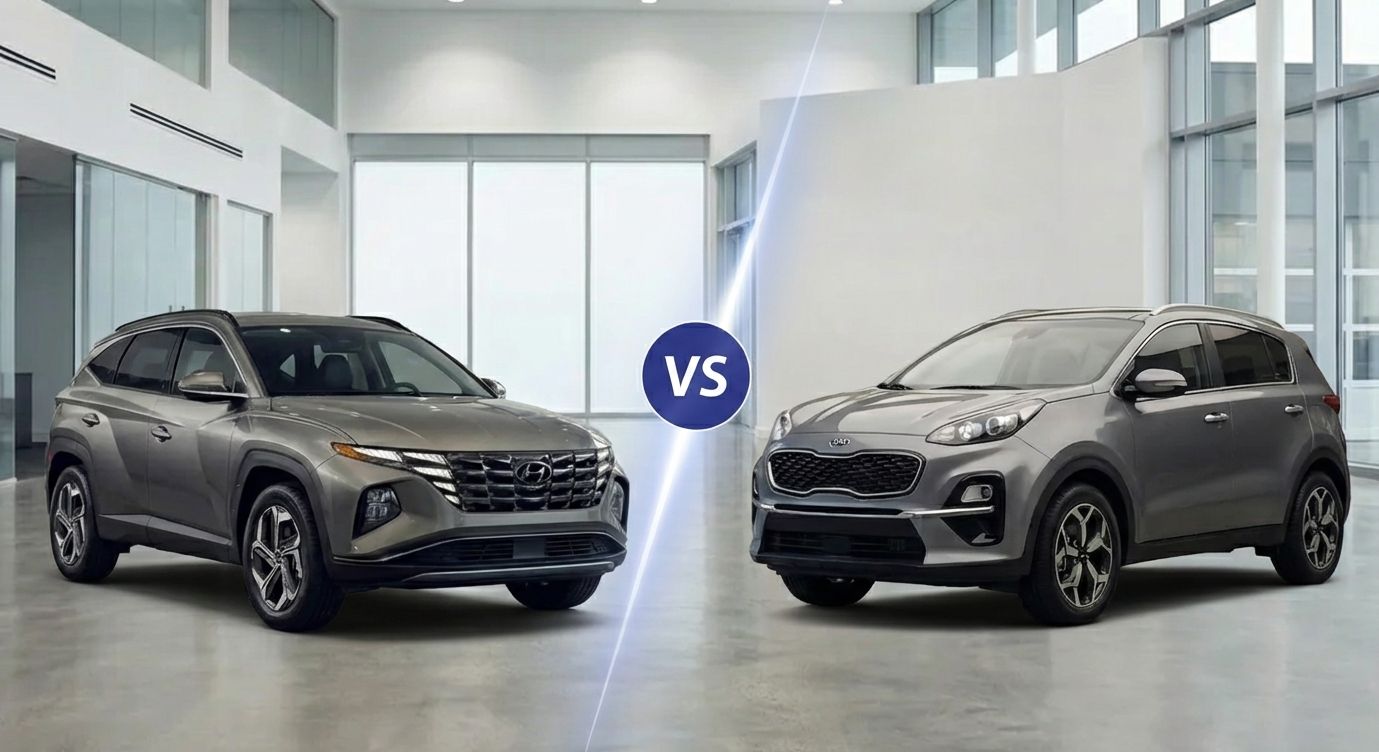
Hyundai Tucson vs. Kia Sportage: A Complete 2025 Comparison
Hyundai Tucson vs. Kia Sportage: A detailed comparison of design, engines, and practicality to help you choose. Read our final verdict.
Apr 13, 2026
Articles
Car battle
Are you torn between the Hyundai Kona and the Suzuki Vitara? Our detailed comparison of used SUVs reveals the differences in engines, features, and fuel consumption. Find out which one to choose!
April 15, 2026
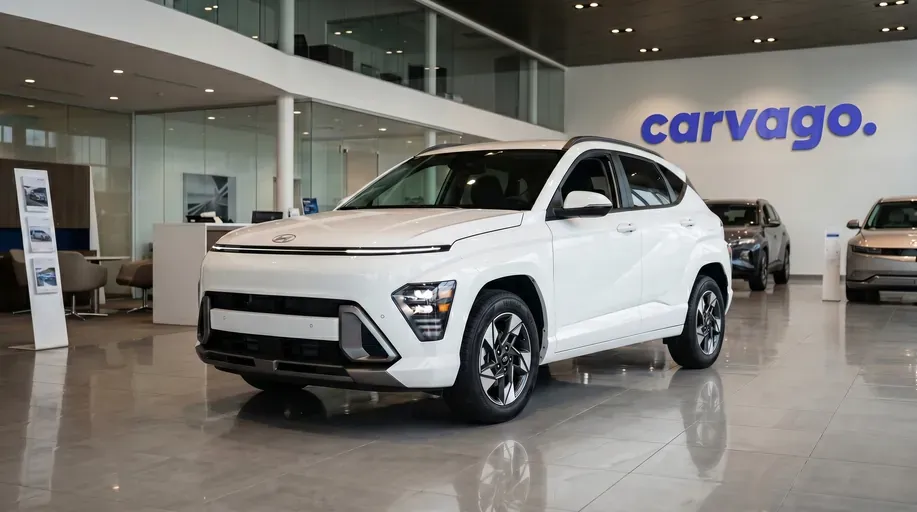
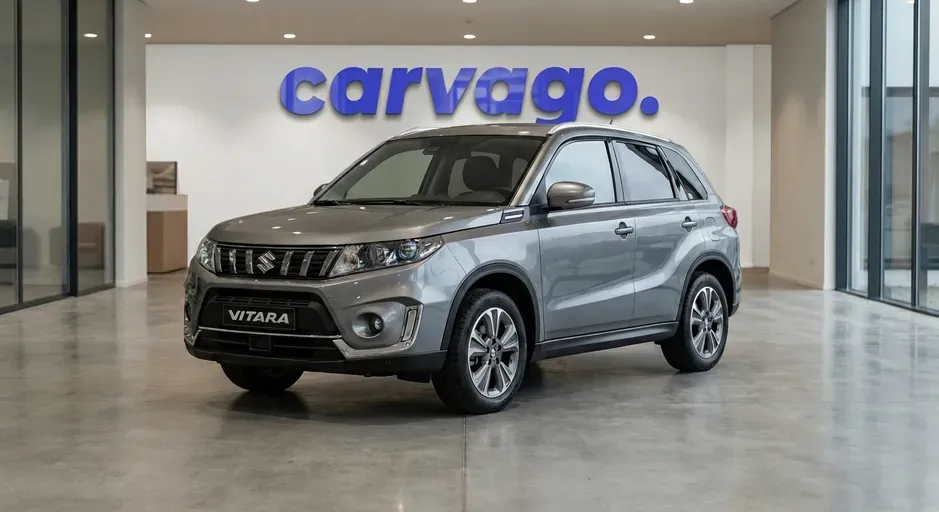
Hyundai Kona, also known as the Hyundai Kauai or Hyundai Encino in some foreign markets, is a boldly designed subcompact SUV that impresses primarily with its distinctive design, modern technologies, and a wide range of powertrains. In contrast, the Suzuki Vitara, which is sold in its home market of Japan under the traditional Suzuki Escudo name, relies more on a conservative look, proven reliability, and very solid all-wheel-drive capabilities off-road for its class. Let's take a detailed look at how these two popular representatives of urban crossovers stand in a direct comparison and which of them represents a better and more rational choice on the market for nearly-new used cars.
When looking at the market for used cars around four years old, the first-generation Hyundai Kona (after the 2021 facelift) and the second-generation Suzuki Vitara rank among the most sought-after representatives in the compact city SUV segment. Although both cars target a similar audience, their approach to exterior dimensions differs quite fundamentally, which has a direct impact on interior space and the overall appearance of the vehicles.
Hyundai Kona gives a wider and more planted impression on the road. With a width of 1800 mm, it exceeds the Vitara by 25 mm, which, combined with its lower body structure (1550 to 1570 mm), gives the Korean model a sportier and more dynamic look. In contrast, the Suzuki Vitara follows a more traditional boxy shape of classic SUVs. It is narrower (1775 mm), but with a height of up to 1610 mm, it provides a higher driving position and makes getting in easier. Its slightly more compact footprint also means that the Suzuki Vitara is a bit easier to maneuver in the tight spaces of underground garages.
However, the biggest and most important difference is found in the wheelbase. The Hyundai Kona has a wheelbase of 2600 mm, while the Suzuki Vitara offers only 2500 mm. This 10-centimeter difference plays a significant role – thanks to it, the Kona can offer more confident directional stability at highway speeds and more longitudinal legroom for rear-seat passengers. Conversely, the overall length of these roughly four-year-old used cars differs only minimally, with both models hovering just below or slightly above the 4.2-meter mark.
From the perspective of everyday usability, the choice depends on your preferences. If you are looking for a classic SUV shape with a higher seating position and good spatial awareness for easier city parking, the Suzuki Vitara is an ideal companion. However, if you prefer a sportier styling, better highway stability, and more space for the rear passengers due to the longer wheelbase, the Hyundai Kona will be the better choice.
| Parameter | Hyundai Kona SUV | Suzuki Vitara SUV |
|---|---|---|
| Length (mm) | 4165 - 4215 | 4170 - 4175 |
| Width (mm) | 1800 | 1775 |
| Height (mm) | 1550 - 1570 | 1595 - 1610 |
| Wheelbase (mm) | 2600 | 2500 |
(Note: The values in the table reflect models available on the market for roughly four-year-old used cars, i.e., the 1st generation of the Hyundai Kona and the 2nd generation of the Suzuki Vitara. The latest 2nd generation Kona from 2023 significantly increased its exterior dimensions, but for comparison on the used car market, its predecessor is more relevant.)
When choosing a roughly four-year-old used car in the small SUV category, trunk volume is one of the most important parameters for daily family usability and overall practicality. Whether you plan to regularly transport a stroller, sports equipment, or bulky groceries, every extra liter can play a crucial role. Both the Hyundai Kona and Suzuki Vitara primarily target customers with their attractive design and agility in city traffic, yet both models represent capable and sufficiently spacious companions for smaller families or active individuals.
If we focus on standard versions with an internal combustion engine or mild-hybrid (generations sold around 2021 and 2022), the cars have almost nothing to reproach each other for in terms of paper values. The first-generation Hyundai Kona after its facelift offers a standard trunk volume of 374 liters. When the rear seats are fully folded, however, this space can expand to a very good 1156 liters. The second-generation Suzuki Vitara brings a practically identical starting space of 375 liters in this regard. After folding the rear backrests, however, its maximum capacity reaches a slightly lower value of 1120 liters. The difference of just one liter in the base is negligible and for most users does not represent the tipping point in decision-making.
From a daily practice perspective, the storage space in both models is completely sufficient for weekend shopping and longer vacations for two people; however, with electrified powertrains, the situation becomes slightly more complicated. For example, the purely electric version of the Hyundai Kona Electric has a reduced basic trunk of 332 liters (1114 liters after folding) due to battery installation, resulting in the loss of space for a smaller travel bag. For the Suzuki Vitara, the popular mild-hybrid version retains the original 375 liters, but in the case of the full-hybrid variant (so-called Strong Hybrid), the trunk shrinks dramatically to 289 liters, losing valuable space for several extra suitcases. In conclusion, although both models are very similar in volume, the Kona offers slightly more space for bulky cargo after folding the seats, while the Vitara scores with a slightly more practical trunk shape and a double floor.
| Parameter | Hyundai Kona SUV | Suzuki Vitara SUV |
|---|---|---|
| Basic volume (liters) | 374 | 375 |
| Max. volume with folded seats (liters) | 1156 | 1120 |
Both compact SUVs offer a practically identical and fully sufficient trunk for everyday life in their basic configuration; you will only feel significant differences in spaciousness when choosing fully electrified powertrains.
A car's ability to tow a trailer plays an important role when choosing a compact SUV and often determines its overall practicality for family life and leisure. Whether it's transporting bulky items or traveling for experiences, both models can offer solid capacities, although there are significant differences across engine versions. The first-generation Hyundai Kona, which is an ideal representative of roughly four-year-old cars on the used car market, can handle towing a braked trailer weighing 1200 to 1250 kg in standard petrol and diesel engine versions. The second-generation Suzuki Vitara in the same category also starts with a value of 1200 kg for common or older internal combustion units. As for towing lighter unbraked trailers, Hyundai usually allows exactly 600 kg for conventional versions, while for Suzuki the limit is 400 to 600 kg depending on the chosen engine.
However, significant gaps appear in electrified and special variants. While the popular all-electric version of the Kona is technically limited to a very modest 300 kg (which is more suitable for installing a bicycle carrier on the tow bar), the full hybrid version already offers a decent 1300 kg and the sporty Kona N derivative can tow a record 1600 kg. In contrast, the Vitara offers an exceptionally strong point in its now most widespread mild-hybrid engine, the 1.4 Boosterjet Hybrid. This pushes the model's normal utility capabilities up to a highly attractive 1500 kg. In practice, these parameters mean space and variability sufficient for a weekend purchase of building materials as well as a longer holiday with a smaller caravan. Overall, both cars serve well for occasional towing; however, the mild-hybrid Vitara represents a more versatile choice for families with greater certainty for heavier loads, while with the Hyundai, you will encounter steeper compromises between the powertrain and towing power when choosing.
| Model and engine | Braked trailer weight (kg) | Unbraked trailer weight (kg) |
|---|---|---|
| Hyundai Kona 1.0 T-GDI (88 kW) | 1200 | 600 |
| Hyundai Kona 1.6 CRDi (85 - 100 kW) | 1200 - 1250 | 600 |
| Hyundai Kona 1.6 GDI Hybrid (77 kW) | 1250 - 1300 | 600 |
| Hyundai Kona 1.6 T-GDI (130 - 146 kW) | 1250 | 600 |
| Hyundai Kona N Performance (206 kW) | 1600 | 600 |
| Hyundai Kona Electric (39.2 / 64 kWh) | 300 | 300 |
| Suzuki Vitara 1.0 Boosterjet (82 kW) | 1200 | 400 |
| Suzuki Vitara 1.4 Boosterjet (103 kW) | 1200 | 400 |
| Suzuki Vitara 1.4 Boosterjet Hybrid (95 kW) | 1500 | 600 |
| Suzuki Vitara 1.5 Dualjet Hybrid (75 kW) | 1200 | 400 |
| Suzuki Vitara 1.6 DDiS (88 kW) | 1200 - 1500 | 600 |
| Suzuki Vitara 1.6 (88 kW) | 1200 | 400 |
When comparing the engine options of the Hyundai Kona and Suzuki Vitara, we encounter two completely different philosophies that have a fundamental impact on the choice of the ideal used car. While the Hyundai Kona offers an exceptionally wide range of powertrains satisfying almost every driver – from economical turbocharged three-cylinder 1.0 T-GDI engines, through efficient full hybrid and electric versions, to sharp sport derivatives with immense power – the Suzuki Vitara bets on maximum simplification and proven technology. Focusing on roughly four-year-old used cars (generations sold in 2021–2022), the Vitara concentrates exclusively on electrified petrol four-cylinders. For potential buyers, this means a clear profiling of both cars: variety in the Hyundai means that both performance hunters and proponents of electromobility will find something here, while the Vitara will appeal to more conservative buyers who prefer durable internal combustion engines supported by the excellent AllGrip all-wheel-drive system available across the range.
The first-generation Hyundai Kona after its facelift (relevant for roughly four-year-old used cars from 2021–2023) offers one of the richest selections of powertrains on the market. The standard engine is the turbocharged three-cylinder 1.0 T-GDI with 88 kW, which was also available as a 48V mild-hybrid. For more dynamic driving, the powerful four-cylinder 1.6 T-GDI with 146 kW is available. The previously popular diesel versions were represented by the agile 1.6 CRDi 48V (100 kW) unit, but the data clearly shows that this diesel engine was permanently withdrawn from the range during 2021. You will therefore only rarely encounter it on the nearly new used car market. Those looking for maximum efficiency can opt for the 1.6 GDI Hybrid (104 kW) variant or the popular fully electric versions with battery capacities of 39,2 kWh or 64 kWh. For true enthusiasts, the top-of-the-line Kona N Performance version with a turbocharged two-liter and a breathtaking 206 kW of power was on sale until 2023. The weakness of such an extensive range can be more complex market navigation and the fact that all-wheel drive is tied only to certain more powerful variants.
| Engine type | Fuel | Power (kW) | Torque (Nm) | Transmission |
|---|---|---|---|---|
| 1.0 T-GDI (incl. MHEV) | Petrol / MHEV | 88 | 172 | 6MT / 6iMT / 7DSG |
| 1.6 T-GDI | Petrol | 146 | 265 | 7DSG |
| 1.6 CRDi 48V MHEV | Diesel | 100 | 280 - 320 | 6iMT / 7DSG |
| 1.6 GDI Hybrid | Petrol / HEV | 104 | 265 | 6DCT |
| Electric (39,2 kWh) | Electricity | 100 | 395 | 1AT |
| Electric (64 kWh) | Electricity | 150 | 395 | 1AT |
| 2.0 T-GDI N Performance | Petrol | 206 | 392 | 8DCT |
*Note: The 1.6 CRDi diesel engine ended production in 2021 and is only minimally represented on the four-year-old used car market.
With the second-generation Suzuki Vitara (specifically for facelifted cars sold around 2021 and 2022), the situation is much more straightforward. On the market for roughly four-year-old used cars, you will primarily encounter the 1.4 Boosterjet Hybrid petrol mild-hybrid with 95 kW. This turbocharged four-cylinder is highly praised by drivers for its liveliness, refinement, and consistently low fuel consumption. In 2022, Suzuki then added the 1.5 Dualjet Hybrid full-hybrid powertrain to its range. This relies on a naturally aspirated unit combined with an electric motor for a total output of 85 kW and exclusively an AGS automated manual transmission. Compared to earlier production years, when naturally aspirated petrol engines (1.6 VVT) or diesel units (1.6 DDiS) were available – though these ended as early as 2018 and 2019 – today's used car market is entirely dominated by hybrid technology. The greatest advantage of the Vitara's engines is their straightforwardness and the possibility to pair both hybrid versions with the proven 4x4 system. The disadvantage remains the absence of a truly powerful variant that could compete with the stronger versions of the Hyundai Kona.
| Engine type | Fuel | Power (kW) | Torque (Nm) | Transmission |
|---|---|---|---|---|
| 1.4 Boosterjet Hybrid | Petrol / MHEV | 95 | 235 | 6MT / 6AT |
| 1.5 Dualjet Hybrid | Petrol / HEV | 85 | 138 + 60 (elec.) | 6AGS |
Who is each model for? Customers focused on a tighter budget, long-term reliability, and using the car off paved roads will appreciate the Suzuki Vitara with its durable 1.4 Boosterjet engine and AllGrip drive. Drivers longing for above-average performance, lovers of sporty driving, and tech enthusiasts preferring modern electromobility should instead reach for the Hyundai Kona.
While the Hyundai Kona scores with its stunning variety, from economical three-cylinders to pure electric vehicles and sharp sport versions, the Suzuki Vitara wins over pragmatic buyers thanks to its proven mild-hybrid four-cylinders and available all-wheel drive.
Choosing the right engine is crucial for long-term satisfaction, especially with roughly four-year-old used cars, where mechanical durability and real-world wear come into play. While the first-generation Hyundai Kona after its facelift offered an unusually wide range of powertrains, from three-cylinder units to powerful petrol turbo engines and pure electric vehicles, Suzuki focused on the gradual refinement of electrified petrol engines for the Vitara during the same period. An interesting point is the different approach to ecology – Hyundai scores with a sophisticated full-hybrid system with a dual-clutch transmission for maximum fuel savings, whereas Suzuki won the hearts of drivers with a brilliantly simple and lightweight mild-hybrid system that doesn't complicate maintenance and maintains the car's excellent agility.
The full-hybrid 1.6 GDI powertrain (from 2019–2023) represents an absolutely ideal choice on the used car market, perfectly balancing dynamics, exceptional reliability, and low operating costs. The technical strength of this setup is the combination of a robust naturally aspirated four-cylinder engine and an electric motor through a responsive six-speed dual-clutch transmission (DCT). Thanks to this, the car does not suffer from the "vacuum cleaner" effect typical of competing CVT transmissions and offers a natural driving feel with real-world fuel consumption between 4.5 and 5 liters per 100 km. In terms of risks, it is important to watch out for oil degradation – if you only drive very short routes around town (1–2 km), the petrol engine does not have time to warm up, which can lead to engine oil dilution by fuel. Prevention involves timely oil changes every 10,000 km and occasionally taking the car for a longer run. This engine is absolutely perfect for urban and suburban drivers or families looking for a highly economical, comfortable, and low-maintenance SUV for daily commuting.
The turbocharged 1.4 Boosterjet four-cylinder, supplemented by a 48V mild-hybrid system (designated as K14D, available from 2020–2024), is a mechanical gem and the best thing you can have under the hood of a used Vitara. Unlike the full-hybrid 1.5 Dualjet version, which uses a somewhat hesitant automated manual transmission, the 1.4 Boosterjet offers precise manual shifting and a linear torque curve. The starter-generator here fills the so-called turbo lag at low revs, so the engine pulls smoothly and strongly from the bottom, while real-world consumption easily stays around 5.5 to 6 liters of petrol with a light foot. The only known weakness of modern direct-injection engines is the gradual buildup of carbon on the intake valves. As a mechanic, I therefore recommend exclusively refueling with premium fuel containing cleaning additives and regularly using the full rev range on an open road, which reliably burns off carbon deposits. It is the ultimate choice for versatile drivers and weekenders – especially in combination with the excellent AllGrip all-wheel drive, you get a dynamic, reliable, and nimble car for highways, the city, and snowy mountain passes.
Most drivers are well aware that official fuel consumption figures provided by car manufacturers often differ significantly from real-world driving. While on-paper figures represent a slightly more accurate picture than in previous years thanks to today's stricter measurement methodology, only long-term practice reveals the true appetite of individual engines. For an objective comparison of both models as used cars roughly four years old (i.e., generations from 2020 to 2022), we analyzed real-world data from thousands of owners from the reliable consumer portal Spritmonitor.de. We focused on the most common engine versions you'll encounter most frequently in local used car dealerships in this age category.
| Model and engine | Average consumption (l/100 km) |
|---|---|
| Hyundai Kona 1.6 GDI Hybrid 104 kW | 5.5 |
| Suzuki Vitara 1.5 Dualjet Hybrid 85 kW | 5.9 |
| Suzuki Vitara 1.4 Boosterjet Hybrid 95 kW | 6.3 |
| Hyundai Kona 1.0 T-GDI 88 kW | 6.8 |
| Hyundai Kona 1.6 T-GDI 146 kW | 7.5 |
The collected data clearly shows that the on-paper assumptions of small turbocharged engines may not always translate into fuel savings in reality. While the basic 1.0 T-GDI three-cylinder in the Hyundai model promises consumption just above 6 liters, in normal traffic it tends to demand values closer to 7 liters, especially if the owner heads onto the highway more often. Conversely, Hyundai's 1.6 GDI Hybrid full-hybrid powertrain is exceptionally efficient in practice and completely outperforms the trend of small gasoline engines. Particularly in urban and suburban traffic, it fully benefits from recuperation and can easily run at an excellent 5.5 liters. During the period under review, the Suzuki Vitara relies almost exclusively on electrification. Its widespread 1.4 Boosterjet four-cylinder mild-hybrid maintains a very respectable average of 6.3 l/100 km. This is an excellent result considering that a huge percentage of these vehicles feature the proper AllGrip all-wheel drive, whose components naturally add some weight. The full-hybrid, but also slightly less powerful, 1.5 Dualjet version then brings consumption down to the 5.9-liter mark, though its design primarily benefits people with a high proportion of slower stop-and-go city driving.
For a typical used car buyer, this leads to fairly clear recommendations. If you are looking for a stylish compact SUV intended mainly for the city or daily shorter commutes and your primary goal is to keep fuel bills to a minimum, it makes the most sense to go for the Hyundai Kona 1.6 GDI Hybrid. In contrast, for drivers who more regularly venture off paved roads or live in areas where they can fully utilize 4x4 drive, the Suzuki Vitara with the 1.4 Boosterjet Hybrid engine emerges as the ideal economical all-rounder. Fuel consumption can thus ultimately be the main and deciding factor between these two cars. While the Korean model impresses with its advanced hybrid for uncompromising city savings, the Japanese challenger proves it can combine very reasonable consumption with the invaluable capabilities of a classic 4x4.
When choosing a roughly four-year-old used car, an interesting contrast emerges between the approaches of the two manufacturers, which is directly reflected in the purchase prices. While one car focuses more on a variety of powertrains, the other holds its value thanks to its reputation as an indestructible workhorse with all-wheel drive.
You can purchase a Hyundai Kona from 2021 and 2022 in a relatively wide price range, primarily due to the extremely rich variety of versions. Basic engines with the one-liter three-cylinder 1.0 T-GDI usually start on the market at around €13,000 to €16,000. However, if you opt for the more powerful 1.6 T-GDI variant, the fuel-efficient full hybrid model (HEV), or the visually attractive N-Line sports package, expect to pay roughly €17,000 to €23,000.
Furthermore, the Kona model enriches the used car market with the high-performance internal combustion version, the Kona N, and the all-electric Kona Electric. Both of these specifications push the price level higher and can easily exceed the €23,000 mark, depending on the traction battery capacity and the vehicle's mileage.
The Suzuki Vitara (with turbocharged 1.4 BoosterJet engines and later mild-hybrid technology) holds its price surprisingly well as a used car. The main reason is the stable demand for relatively simple vehicles, very often in the sought-after combination with the proven AllGrip all-wheel drive. The cheapest units from the 2021–2022 period with higher mileage start at roughly €16,000. Nice cars with 4x4 drive, better equipment, and lower mileage then commonly sell in the range of €17,000 to €20,000. Although the Vitara was often cheaper as a new car than the more powerful versions of the rival Kona, the drop in its price has significantly slowed down on the used car market.
| Model (2021–2022 years) | Starting price (base engines/higher mileage) | Typical price (better equipment, average mileage) | Price ceiling (special versions, EV, 4x4) |
|---|---|---|---|
| Hyundai Kona | from €13,000 | €16,000 – €20,000 | €23,000 and more (Kona N, Electric) |
| Suzuki Vitara | from €16,000 | €17,000 – €20,000 | around €21,000 |
Key Insights for Buyers:
While the Hyundai Kona offers a cheaper entry point and a wide selection of alternative powertrains thanks to its rich range of engines, the Suzuki Vitara is a used car market phenomenon with a slow decline in value and very good availability of the desired all-wheel drive.
Both models, the Hyundai Kona and Suzuki Vitara, originally received the maximum five-star rating in independent Euro NCAP crash tests. In terms of overall passive safety, both cars represent a reliable choice for used car buyers. However, it is extremely important to interpret these results in the context of the year the testing actually took place.
Euro NCAP methodology and protocols are constantly evolving and become significantly stricter every year. While older tests focused mainly on passive safety and structural body strength during impact, newer ones place considerable emphasis on advanced active safety systems, such as intersection collision simulations or sophisticated detection of cyclists and pedestrians. For this reason, percentage results from different years cannot be compared equally. Furthermore, rating certifications have limited validity, after which cars are viewed through the stricter lens of current standards.
The Suzuki Vitara LY generation (on which roughly four-year-old used cars are based) underwent Euro NCAP tests in 2015. In the context of the standards at the time, the car excelled, achieving a great 89% for adult occupant protection and an above-standard 76% for vulnerable road user protection. However, it must be added that the requirements for active assistance systems were much more lenient then. Today, the original certification of this rating has expired, and in terms of modern active assistants, the Vitara does not represent the technological peak on today's market.
The Hyundai Kona was tested in its first generation slightly later, specifically in 2017. It also received five stars, but already faced somewhat stricter methodology requirements. It scored 87% for adult protection and 85% for child protection. Precisely because of the tightening of the rules, it achieved seemingly lower numbers in the area of active assistants (60%) and protection of vulnerable participants (62%). To illustrate how extremely fast Euro NCAP requirements are increasing, the fact that the brand new, second-generation Kona model received "only" four stars in 2023 according to the latest strict methodologies, primarily due to sophisticated requirements for accident prevention at intersections, serves as an example.
| Parameter | Hyundai Kona | Suzuki Vitara |
|---|---|---|
| Year of testing | 2017 | 2015 |
| Adult occupant protection | 87 % | 89 % |
| Child occupant protection | 85 % | 85 % |
| Vulnerable road user protection | 62 % | 76 % |
| Safety assistance systems | 60 % | 75 % |
Safety Comparison Conclusion
Although the Suzuki Vitara has slightly higher percentage gains "on paper" in most categories, it is necessary to keep in mind that these results come from a more lenient testing protocol from 2015. The 2017 Hyundai Kona had to withstand more demanding limits and, in terms of real-world operational safety, offers a slightly more modern design and better overall integration of assistance systems. Within the used car market, both cars are structurally safe, but the Kona provides a step more up-to-date protection standard.
Both cars offer excellent passive safety with a five-star foundation; however, the Hyundai Kona benefits from newer development and stricter contemporary tests, making it a slightly more modern choice in terms of safety.
In addition to standard equipment, each model offers several unique features that can be decisive for the customer during the final selection, with both cars showing their own distinctive approach to added value and everyday usability.
* Wide range of reliable powertrains, including successful hybrid and fully electric versions
* Modern infotainment with fast response, high-quality graphics, and excellent connectivity
* More fun and confident driving characteristics on paved roads thanks to a more sophisticated chassis
* Distinctive and original design that ages very slowly
* Rich safety and assistance equipment even in lower trim levels
* More cramped space in the rear seats, especially for the heads and knees of adult passengers
* Stiffer chassis tuning, which worsens comfort when driving over bumps on larger wheels
* Rather average luggage space (374 liters) limiting family use
Hyundai Kona is an ideal choice for individuals, couples, or small families looking for a stylish and technologically advanced city crossover. Its strengths are excellent driving characteristics on the road and great equipment, so it will be most appreciated by drivers who prefer modern connectivity and an original look over maximum interior space.
* Excellent and proven AllGrip all-wheel drive, which is hard to find competition for in this class
* Low curb weight ensuring great dynamics and low fuel consumption with 1.4 BoosterJet engines
* Excellent visibility from the cabin thanks to a higher seating position, large windows, and thinner pillars
* Exemplary reliability and durability of mechanical parts that can withstand rougher handling
* Intuitive ergonomics with classic physical controls for air conditioning and basic functions
* Noticeably more outdated graphics and speed of the infotainment system
* Higher proportion of hard and cheap-looking plastics in the interior
* Poorer cabin soundproofing, which manifests as increased noise at highway speeds
* Less advanced assistance systems compared to more modern Korean competitors
Suzuki Vitara is an honest and robust crossover that will appeal more to practical and more conservative buyers. It represents an absolutely perfect choice for drivers from mountainous areas or those who often drive on unpaved roads and will realistically use the capable all-wheel drive at the expense of the latest digital technologies.
Based on our own CarAudit inspections, breakdown statistics, and expert reports, we have compiled an overview of the most common problems that buyers of roughly four-year-old used cars should watch out for.
The compact crossover from Hyundai is considered a relatively reliable car; however, modern power units and electronic systems may require increased attention after several years of operation.
The Kona is a mechanically robust vehicle with a distinctive design, but it requires careful selection. A jerking automatic transmission and sudden 12V battery discharge are among the most common risks worth checking in used units.
The Vitara maintains its position on the market as one of the most reliable small SUVs, yet specific minor shortcomings appear in approximately four-year-old used cars.
The Vitara has long benefited from the exceptionally durable 1.4 BoosterJet engine, which promises a long service life. However, the price for overall reliability is a thinner layer of paint, more prone hard plastics in the interior, and an occasionally glitchy onboard system.
When buying a used car, a thorough inspection is key. Here are some specific points to focus on for these two models, although the greatest certainty and peace of mind before purchase will always be provided by an Independent technical inspection of the vehicle.
Both vehicles are very similar in their base configuration, offering roughly 374 liters for standard internal combustion and mild-hybrid versions. However, the Suzuki Vitara reduces the trunk space to 289 liters in the full-hybrid specification due to the battery placement. The Hyundai Kona is thus more consistent in terms of luggage space across various powertrains, including the fully electric one.
The Suzuki is clearly the better choice for adverse conditions and light off-roading thanks to its very capable AllGrip all-wheel-drive system, which can be combined even with less powerful engines. While Hyundai also offers 4x4 drive for this model, it is usually only available in combination with the most expensive and powerful gasoline engines. Additionally, the Vitara benefits from a slightly higher ground clearance and better visibility from the cabin.
The Hyundai Kona has a clear advantage in this regard, as it offers classic gasoline engines, fuel-efficient hybrids, and a highly sought-after fully electric version with a long range on the used car market. For approximately four-year-old vehicles, its Japanese competitor focuses almost exclusively on gasoline engines with mild-hybrid or full-hybrid technology. Therefore, if you are looking for a pure electric vehicle, the Korean representative is the only option of the two.
Suzuki traditionally excels with its robust, mechanically durable construction and is among the most reliable used cars with very low regular service costs. Hyundai, on the other hand, attracts buyers with its generous five-year unlimited mileage warranty, meaning that roughly four-year-old used cars may still be covered by the factory guarantee. In general, however, both models are considered above-average reliable vehicles without serious chronic defects.
The Hyundai interior feels significantly more modern and offers a more advanced infotainment system with a larger screen and better system fluidity. The Vitara has a more conservatively styled cabin and uses a higher proportion of hard plastics, which it balances perfectly with flawless ergonomics and the retention of physical buttons for the air conditioning. For lovers of the latest digital technologies and displays, the Korean car will be much more attractive.
Choosing between these two popular crossovers on the used car market depends primarily on your daily needs and preferred lifestyle. The Hyundai Kona represents the ideal choice for tech-oriented drivers who appreciate top-tier connectivity, modern design, a diverse range of efficient engines including fully electric versions, and overall more confident highway handling. Conversely, the Suzuki Vitara will appeal to pragmatically-minded buyers looking for a mechanically exceptionally durable and practical car, whose greatest weapon is the advanced AllGrip all-wheel drive, perfectly suited for mountainous areas and frequent trips off paved roads. While the Korean model thus scores full marks as a stylish urban companion packed with assistance systems, the Japanese challenger remains an honest, low-maintenance, and economical all-rounder that also holds its value exceptionally well in the long term.
Sources: ADAC, e15.cz, aktualne.cz, dopravniinfo.cz, autozive.cz, ceskyautoblog.cz
This article was prepared using artificial intelligence tools. The section guarantor is Petr Dušek.
Hyundai Tucson vs. Kia Sportage: A detailed comparison of design, engines, and practicality to help you choose. Read our final verdict.
Apr 13, 2026
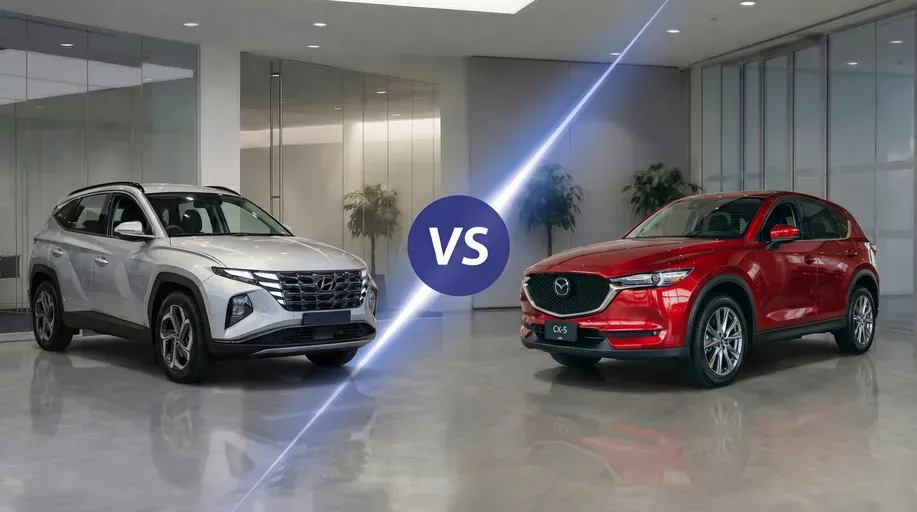
Detailed comparison of used Hyundai Tucson and Mazda CX-5. Real-world experience, equipment comparison, and a detailed verdict to help you choose the right SUV.
Apr 14, 2026
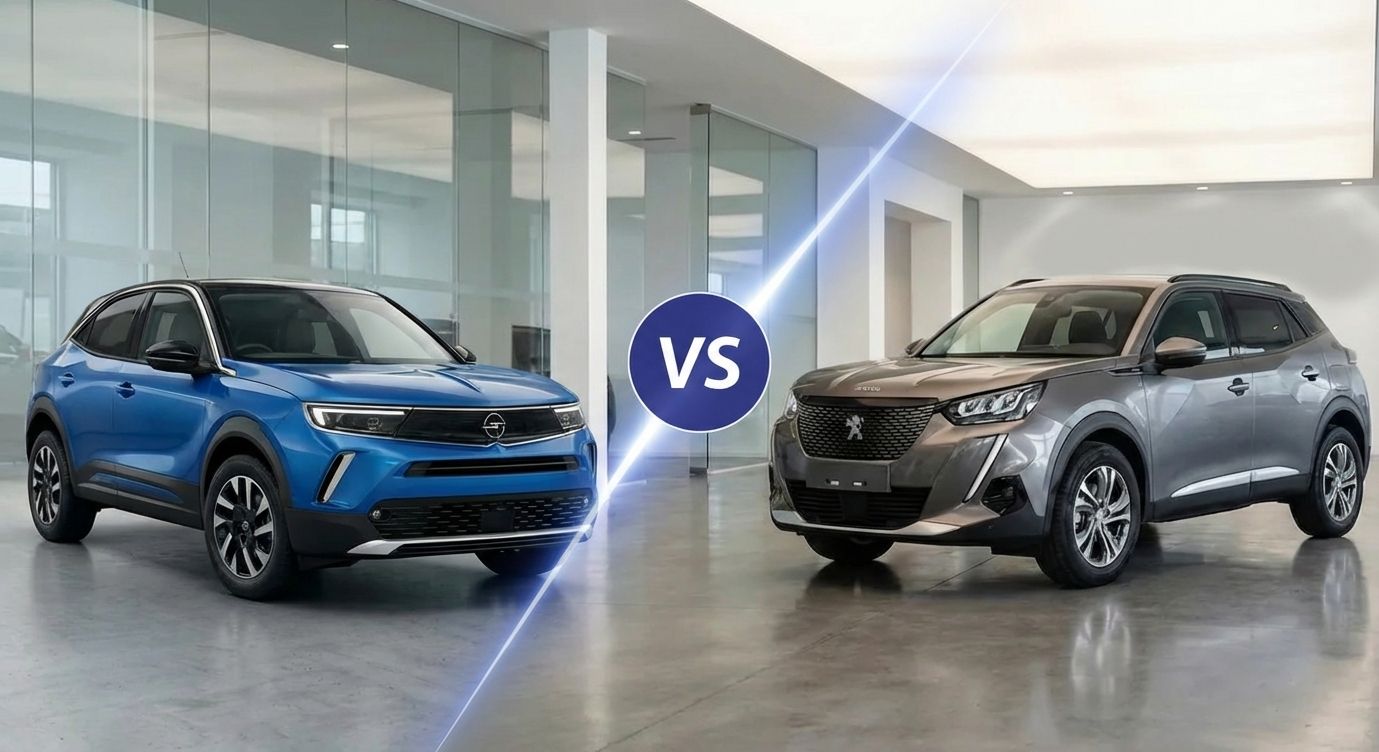
Opel Mokka vs Peugeot 2008. A detailed comparison of engines, design, and practicality. Find out which stylish SUV is the best choice for you.
Apr 14, 2026