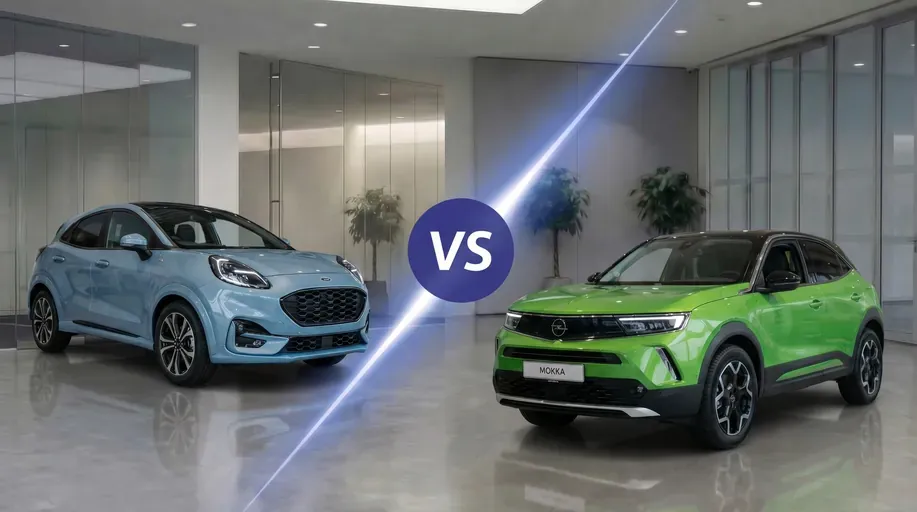
Car battle
Ford Puma vs. Opel Mokka: Complete comparison 2026
Ford Puma vs Opel Mokka: City SUV comparison. Read a detailed evaluation of engines, space, and driving characteristics and choose your ideal used car.
Apr 14, 2026
Articles
Car battle
Detailed comparison of used Hyundai Tucson and Mazda CX-5. Real-world experience, equipment comparison, and a detailed verdict to help you choose the right SUV.
April 14, 2026
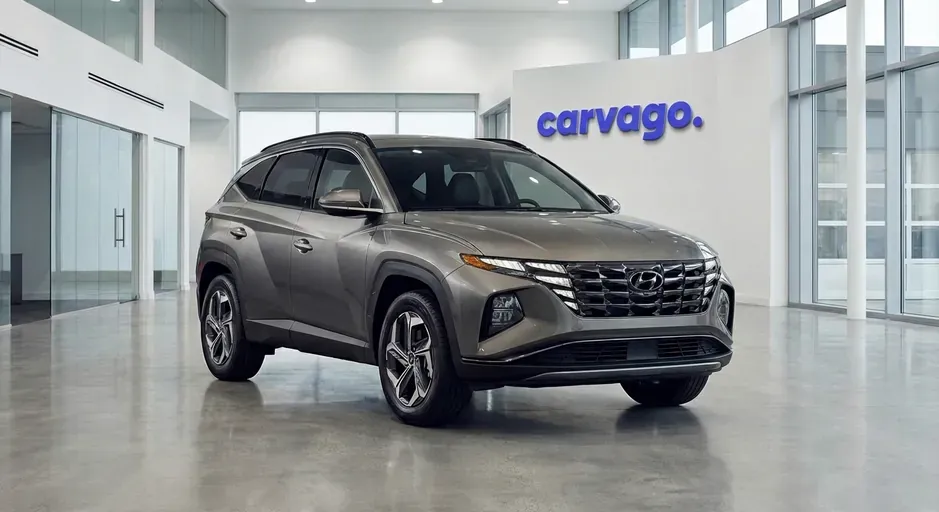
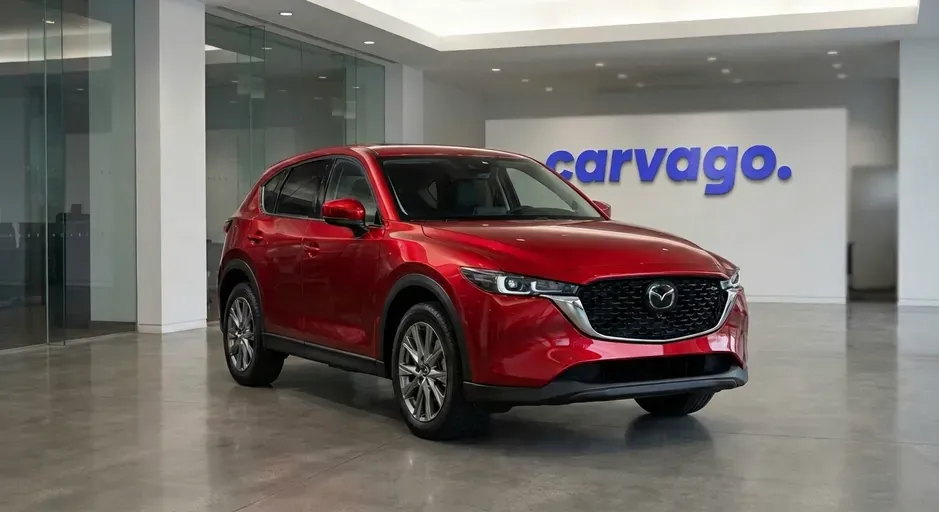
The Hyundai Tucson, which was also known as the ix35 in some markets in its previous generation, represents a boldly designed and exceptionally practical SUV that has gained immense popularity thanks to its innovative technologies and generous interior space. In contrast, the Mazda CX-5 appeals to drivers looking for a more premium interior finish, the elegant Kodo design language, and excellent driving characteristics, which have long made it one of the best-handling cars in its class. Let's take a detailed look in this direct comparison at how these two exceptionally popular representatives of the compact SUV category stack up against each other and which one represents the ideal choice for your needs.
When comparing the exterior dimensions of these two popular family cars from approximately four years ago, we encounter several important differences. The Mazda CX-5 (in the generation designated as KF from 2021–2022) dominates with its overall length, which ranges from 4550 to 4575 mm. In contrast, the Hyundai Tucson (3rd generation from the same period) is 40 to 75 mm shorter, with a length of 4500 to 4510 mm. The wheelbase is closely related to this, where the Japanese representative, with its 2700 mm, surpasses its Korean rival by 20 mm (the Tucson offers 2680 mm). For a used car buyer, this means that while the Mazda can offer a slightly smoother ride on long highway stretches thanks to its marginally longer wheelbase, you will appreciate the Tucson's shorter dimensions as an advantage in terms of agility and easier parallel parking in crowded city streets.
An interesting contrast is provided by the comparison of width and height, where the balance of power shifts. The Hyundai Tucson has an overall width of 1865 mm, clearly surpassing the Mazda CX-5 (1840 to 1845 mm). On the other hand, with a height of 1650 mm, the Tucson is exactly 30 mm lower than its Japanese counterpart, whose roof sits at a height of 1680 mm. This different approach to body proportions has a fundamental impact on how both models actually function. The wider and lower build gives the Tucson a more dynamically pleasing appearance, a subjectively more stable center of gravity in corners, and more space at elbow and shoulder level, while the taller Mazda better suits traditionally-minded drivers who require a classic upright seating position, a better view over the hood, and a slightly more generous headroom.
| Parameter | Hyundai Tucson SUV | Mazda CX-5 SUV |
|---|---|---|
| Length (mm) | 4500 - 4510 | 4550 - 4575 |
| Width (mm) | 1865 | 1840 - 1845 |
| Height (mm) | 1650 | 1680 |
| Wheelbase (mm) | 2680 | 2700 |
When it comes to choosing a roughly four-year-old family SUV, luggage capacity often plays a decisive role for buyers in the used car market. The Hyundai Tucson and Mazda CX-5 represent two different philosophies regarding interior space. While the Korean representative, in the generation produced since 2020, focused on maximizing the use of interior space and impresses with a generous trunk for its class, the Mazda CX-5 (KF generation) prioritizes an elegant sporty profile with a slightly sloping rear. For potential buyers, this means that although both vehicles are great for everyday family use, there is a clear favorite in the used car market in terms of raw transport capacity.
In terms of specific numbers, the Hyundai Tucson noticeably dominates, offering a generous base trunk volume of 620 liters for standard internal combustion engines. However, it is important to note that electrified variants take their toll on this space – with full hybrid (HEV) versions, the volume drops slightly to 616 liters, and with the very popular plug-in hybrids (PHEV) with a larger battery, you have to settle for 558 liters. In contrast, the Mazda CX-5 offers a noticeably smaller base trunk volume of 506 liters for most versions around four years old (for some specifications after the 2022 facelift, the manufacturer states 522 liters). After fully folding the rear seats, the space in the Tucson increases to an impressive 1799 liters, while the Mazda ends at 1620 liters. The Japanese representative, however, scores points with its clever 40:20:40 rear seat split (available in many trim levels), which significantly facilitates the transport of long items such as skis even when passengers are sitting in the back.
In real life, these spreadsheet differences mean quite a lot. Those more than 110 extra liters in favor of the South Korean SUV represent, in practice, reliable space for one extra large suitcase, or much easier loading of a bulky and folded stroller without having to play a tedious game of Tetris with other luggage. While the Mazda CX-5's trunk is perfectly sufficient for a regular weekend grocery run or a longer vacation for an average family, the Tucson is a purebred family hauler by nature. If uncompromising space is your priority when choosing a used SUV, the Hyundai will clearly be the more practical choice.
| Parameter | Hyundai Tucson SUV | Mazda CX-5 SUV |
|---|---|---|
| Base volume (liters) | 620 l | 506 l |
| Maximum volume with seats folded (liters) | 1799 l | 1620 l |
The Hyundai Tucson clearly wins with its overall transport capacity and will delight larger families, while the Mazda CX-5 will suit everyone for whom an average-sized trunk is a fair trade-off for an attractive sporty design.
Towing capacity is a key parameter for all drivers who plan to use their SUV to the maximum – whether it's towing a family caravan, transporting horses, or weekend trips to the cottage with a loaded trailer. Looking at cars approximately four years old (Hyundai Tucson 3rd generation and Mazda CX-5 generation KF), we find quite fundamental differences between the two models. The Japanese Mazda clearly profiles itself here as a much stronger workhorse.
While the Hyundai Tucson in most of its standard internal combustion and mild-hybrid powertrains (1.6 T-GDI and 1.6 CRDi) can tow a braked trailer with a maximum weight of 1650 kg, the Mazda CX-5 offers a much larger margin. Its petrol versions 2.0 and 2.5 SKYACTIV-G can handle a braked trailer weighing 1800 to 2000 kg. In the case of the robust 2.2 SKYACTIV-D diesel engines, the limit even moves up to 2100 kg. Regarding smaller loads without their own brakes, the standard European limit for an unbraked trailer of 750 kg applies to both cars across all powertrains.
A significant difference occurs with modern electrified versions, where the influence of battery placement and higher curb weight of the car is evident. In the Hyundai Tucson model, the classic full-hybrid (HEV) still maintains a decent capacity of 1650 kg. However, if you choose the Plug-in Hybrid (PHEV) variant, the maximum permitted weight of a braked trailer drops to 1350 kg. During the comparable period, the Mazda CX-5 relies purely on proven larger-displacement internal combustion engines, thanks to which it maintains top-tier towing power across its entire model range.
In practice, these values mean that the Hyundai Tucson is perfectly sufficient for common needs – you can easily transport building materials from a DIY store or hitch up a lighter family caravan for a summer holiday. However, the Mazda CX-5 offers a completely different league. It provides confidence and stability even to those who need to regularly tow heavy twin-axle trailers, transport boats, or handle large caravans on longer routes.
Summary: If the ability to tow large and heavy loads is an absolute priority for you, the Mazda CX-5 is the clear choice thanks to its powerful diesel engines and overall higher capacity. For everyday family use and occasional towing of lighter loads, however, the parameters of the Hyundai Tucson – even considering the modern hybrid drive – are perfectly adequate.
| Model and motorization | Braked weight of trailer (kg) | Unbraked weight of trailer (kg) |
|---|---|---|
| Mazda CX-5 2.2 SKYACTIV-D | 2000-2100 | 750 |
| Mazda CX-5 2.5 SKYACTIV-G | 2000 | 750 |
| Mazda CX-5 2.0 SKYACTIV-G | 1800-2000 | 750 |
| Hyundai Tucson 1.6 CRDi | 1650 | 750 |
| Hyundai Tucson 1.6 T-GDI | 1650 | 750 |
| Hyundai Tucson 1.6 T-GDI Hybrid | 1650 | 750 |
| Hyundai Tucson 1.6 T-GDI Plug-in-Hybrid | 1350 | 750 |
When choosing an approximately four-year-old used car, you will encounter completely different technical approaches in these two vehicles, which has a fundamental impact on fuel consumption, driving feel, and future maintenance. The Hyundai Tucson in its third generation (sold since late 2020) bets on technology-packed "downsizing." The vast majority of its range relies on a turbocharged 1.6-liter four-cylinder engine, offered in a wide variety from standard internal combustion versions to mild-hybrids (MHEV), advanced full hybrids (HEV), and plug-in hybrids (PHEV). This provides drivers with great flexibility thanks to the turbocharger and excellent on-paper efficiency. In contrast, the Mazda CX-5 (in its facelifted second generation) persistently rejects small turbo engines and firmly sticks to the "right-sizing" philosophy. For petrol versions, you will find large-displacement naturally aspirated four-cylinder engines (2.0 and 2.5 liters), which require higher revs for more dynamic performance, but the reward is a perfectly linear power delivery, refined operation, and, above all, an excellent reputation for reliability. The decision thus primarily depends on whether you prefer modern electrified assistance for city driving (Hyundai) or seek the peace of mind and uncomplicated longevity of traditional Japanese mechanics (Mazda).
Under the hood of the Hyundai Tucson (3rd generation), the automaker has completely abandoned larger engines and built its entire range on an efficient 1.6-liter block. The petrol base is formed by the 1.6 T-GDI unit, while the economical 1.6 CRDi diesel is the alternative. From a used car market perspective, the variants enhanced with 48V mild-hybrid technology are particularly interesting, as they help smooth out torque delivery and reduce consumption. However, Hyundai went even further and prepared a full-hybrid version (1.6 T-GDI HEV) with 169 kW and a top-of-the-line Plug-in hybrid (1.6 T-GDI PHEV) producing up to 195 kW, which can drive without local emissions. Power is mostly handled by a fast 7-speed dual-clutch transmission (DCT), while hybrids feature a 6-speed automatic; manual transmissions supplemented by an electronic clutch (iMT) are also available.
| Engine type | Fuel | Power (kW) | Torque (Nm) | Transmission |
|---|---|---|---|---|
| 1.6 T-GDI | Petrol | 110 | 250 | 6MT |
| 1.6 T-GDI 48V-Mildhybrid | Petrol | 110 / 132 | 250 / 265 | 6iMT / 7DCT |
| 1.6 CRDi | Diesel | 85 | 280 | 6MT |
| 1.6 CRDi 48V-Mildhybrid | Diesel | 100 | 320 | 7DCT |
| 1.6 T-GDI Hybrid (HEV) | Hybrid (Petrol) | 169 | 350 | 6AT |
| 1.6 T-GDI PHEV | Plug-in Hybrid (Petrol) | 195 | 350 | 6AT |
The engine range of the Mazda CX-5 will particularly please conservative drivers and anyone who fears complex modern systems. The petrol base is represented by a rev-happy, naturally aspirated 2.0 SKYACTIV-G four-cylinder with 121 kW. For those who require more confident acceleration and frequently drive with a fully loaded vehicle, the large 2.5 SKYACTIV-G unit with 143 kW is the clear choice. Both engines were slightly updated in vehicles from approximately 2022 and equipped with mild electrification under the e-SKYACTIV-G designation. Fortunately, Mazda has not given up on diesel either. Its powerful 2.2 SKYACTIV-D diesel (available with 110 kW or 135 kW) is literally a highway express. With torque up to 445 Nm in the more powerful version, it is the perfect tool for drivers with high annual mileage or owners of heavy trailers.
| Engine type | Fuel | Power (kW) | Torque (Nm) | Transmission |
|---|---|---|---|---|
| 2.0 (e-)SKYACTIV-G 165 | Petrol | 121 | 213 | 6MT / 6AT |
| 2.5 (e-)SKYACTIV-G 194 | Petrol | 143 | 258 | 6AT |
| 2.2 SKYACTIV-D 150 | Diesel | 110 | 380 | 6MT / 6AT |
| 2.2 SKYACTIV-D 184 | Diesel | 135 | 445 | 6MT / 6AT |
If you are looking for modern, exceptionally flexible engines with an emphasis on hybrid technology and urban fuel consumption, the Hyundai Tucson will impress you. The Mazda CX-5, on the other hand, clearly wins with drivers who value traditional mechanics, long-term reliability, and honest large-displacement naturally aspirated or diesel engines.
Choosing the right engine is crucial for long-term satisfaction with a used car, as it directly affects not only dynamics and real-world fuel consumption but, above all, mechanical reliability and service costs. Looking at the market for roughly four-year-old used cars, we see a beautiful contrast between two engineering approaches. While Hyundai, with the third generation of the Tucson model (available since late 2020), bets on small-displacement turbocharged engines supported by smart electrification, Mazda stubbornly sticks to honest, large-displacement naturally aspirated engines with its popular KF generation. Our recommendation is based on real-world experience, service statistics, and daily usability from the perspective of both the average driver and a mechanic.
This full hybrid powertrain (HEV), widely represented in the third generation since December 2020, represents the most rational choice for a modern SUV in the current used car market. Compared to pure gasoline versions or mild hybrids with a dual-clutch transmission, the full hybrid relies on a reliable classic six-speed torque converter automatic, which is smoother for the user and more resistant to wear in the long run.
The 2.5-liter naturally aspirated four-cylinder is literally a technical phenomenon and an absolute certainty in today's market for four-year-old used cars. It avoids complex and expensive components such as turbochargers and the prone emission systems of diesel engines (which, moreover, had a problematic reputation in Mazda's early years). From a longevity perspective, this engine is considered one of the most robust units on the market.
Paper fuel consumption values provided by manufacturers often differ significantly from reality on the road. To get an accurate picture of operating costs, it is therefore essential to monitor long-term data from real-world use. For the purposes of this comparison of roughly four-year-old used cars (the current generation Hyundai Tucson NX4 and the popular Mazda CX-5 generation KF), we are basing our findings on the real-world experiences of thousands of drivers on European community portals, such as the popular Spritmonitor.de. These figures best reflect the daily use of vehicles in various driving modes and climatic conditions.
| Model and engine | Average consumption (l/100 km) |
|---|---|
| Diesel engines | |
| Hyundai Tucson 1.6 CRDi 48V Mild-hybrid | 5.6 |
| Mazda CX-5 2.2 SKYACTIV-D 150 | 6.4 |
| Hybrid engines | |
| Hyundai Tucson 1.6 T-GDI Hybrid (HEV) | 6.1 |
| Petrol engines | |
| Hyundai Tucson 1.6 T-GDI | 6.9 |
| Mazda CX-5 2.0 SKYACTIV-G 165 | 7.1 |
| Mazda CX-5 2.5 SKYACTIV-G 194 | 7.8 |
When interpreting the real-world figures, interesting differences emerge between the different engineering approaches of the two carmakers. In the diesel engine category, the South Korean model is the winner. The Tucson, equipped with a small-displacement 1.6 CRDi diesel and mild-hybrid technology, achieves excellent results, managing to keep consumption safely well below six litres. The larger Japanese 2.2 SKYACTIV-D power unit shows a slightly higher appetite, which is, however, an excusable trade-off for the larger displacement, smoother operation, and solid torque.
The situation is specific for petrol engines. Traditional large naturally aspirated four-cylinder engines from Mazda may look outdated on paper, but in the real world, they fully justify their existence. The small turbocharged 1.6 T-GDI engine in the Tucson can run economically if the driver has a light foot. However, as soon as you put it under more load or head out onto the motorway, consumption shoots up steeply and the expected savings vanish. Conversely, the naturally aspirated engines in the Mazda maintain much more stable consumption regardless of how dynamically you are driving. A separate chapter is the full hybrid version of the Tucson (HEV), which can push consumption down to fantastic values, especially in heavy city traffic.
For the average user, a clear division emerges from this data. If you spend most of your time driving around town and in suburban traffic jams, the hybrid Hyundai Tucson makes the most sense, as it can maximise the benefits of energy recuperation. On the other hand, drivers who typically undertake long motorway journeys or often drive with a fully loaded car will appreciate the classic approach of the Mazda CX-5. The larger naturally aspirated petrol engines and the large-displacement diesel from Mazda guarantee that you won't be surprised by an unexpected "whirlpool in the tank" on the motorway.
Fuel consumption should not be the sole and absolute deciding factor for these two cars, but it serves as a great filter for choosing the right engine. It is a clash of two worlds – the Korean bet on modern hybridisation and small displacement with a turbo versus the Japanese path of refined large displacements without a turbocharger. Each solution has its optimal environment in which it dominates.
When choosing a used SUV around 4 years old (i.e., production years 2021 and 2022), the bold fourth-generation Hyundai Tucson meets the proven and continuously updated second-generation Mazda CX-5 on the market. Both cars represent a very rational choice, but their pricing and rate of depreciation differ slightly on the used car market.
The Mazda CX-5 is famous for holding its residual value excellently. Customers have long appreciated the absence of complex turbocharged engines in favor of durable naturally aspirated units. As a buyer, you will pay slightly more at purchase, but the car will not lose value as quickly.
However, the current generation Hyundai Tucson has made a huge leap compared to its predecessor. Depreciation has slowed thanks to its exceptionally popular design and rich modern equipment. An advantage for buyers of the Korean model is the significantly wider selection. The Tucson is a frequent choice for corporate fleets, so more cars with a clear service history appear on the market, offering slightly better room for potential price negotiation.
| Model | Typical starting price | Price of better-equipped units | Most common engines in used cars |
|---|---|---|---|
| Hyundai Tucson | From €18,000 | €27,000 – €35,000 | 1.6 T-GDI (incl. MHEV), 1.6 CRDi, 1.6 T-GDI HEV |
| Mazda CX-5 | From €22,000 | €27,000 – €33,000 | 2.0 Skyactiv-G, 2.5 Skyactiv-G (AWD) |
While the Hyundai Tucson offers a wider range of used cars and a lower entry price for modern hybrid engines, the Mazda CX-5 counters with very stable residual value supported by the reliability of traditional naturally aspirated units.
Both models, the Hyundai Tucson and Mazda CX-5, boast a maximum five-star rating in independent Euro NCAP crash tests. When choosing a used car, however, it is absolutely crucial to take the year of testing into account. The Euro NCAP methodology is constantly evolving and becomes significantly stricter every year. Percentage results from different years cannot be directly compared, as achieving a high rating several years ago was noticeably easier than achieving a similar result under newer and stricter rules.
The Hyundai Tucson (NX4) generation, which is current on the market for roughly four-year-old used cars, underwent testing in 2021. The car thus had to comply with very strict modern protocols. These included, among other things, a new simulation of a frontal impact into a moving barrier, far-side impact tests, and a thorough check of assistance systems, including cyclist detection or emergency braking at intersections. The Tucson scored well in this regard also thanks to the presence of a modern center airbag, which protects against the collision of the front passengers' bodies.
For a comparably old Mazda CX-5 (KF generation from around 2021 to 2022), the 2017 certification applies, which is when this generation was originally launched. Although the car earned a great 95% for adult protection, it did so according to an older and significantly less demanding methodology. Passive safety is at an excellent level in the Mazda, but the car's structure did not yet account for some of the latest features, such as the aforementioned center airbag. The 59% score for assistance systems then clearly shows how much the requirements for active electronic assistants and automatic accident prevention have tightened since 2017. (Note: The completely new generation of the Mazda CX-5 underwent tests in 2025, but for the four-year-old used car market, the 2017 result is relevant).
| Parameter | Hyundai Tucson | Mazda CX-5 |
|---|---|---|
| Year of testing | 2021 | 2017 |
| Adult occupant protection | 86 % | 95 % |
| Child occupant protection | 87 % | 80 % |
| Vulnerable road users protection | 66 % | 78 % |
| Safety assist systems | 70 % | 59 % |
While both SUVs provide very solid occupant protection and are good choices in terms of safety, the Hyundai Tucson offers a noticeably more modern and comprehensive safety package. It corresponds to current market standards, primarily in the advancement of active assistance systems and the modern structure of internal airbags.
Although both cars are five-star, the Hyundai Tucson benefits from much newer testing and, thanks to the center airbag and advanced assistants, offers a noticeably more modern level of safety than the generationally older Mazda CX-5.
In addition to standard equipment, each model offers several unique features that can be decisive for a customer's choice. While the South Korean representative bets on bold technological innovations and distinctive style, its Japanese competitor focuses on traditional driving values, ergonomics, and premium craftsmanship.
Bold and innovative exterior design with front lights integrated into the radiator grille
Above-average spacious interior and a large luggage compartment (up to 620 liters depending on the engine)
Wide range of powertrains including fuel-efficient full-hybrid and powerful plug-in hybrid versions
Rich technological equipment and modern safety assistance systems as standard
Advantageous five-year factory warranty with unlimited mileage
Excess of touch surfaces on the center console impairs intuitive climate control operation while driving
Driving performance is focused more on isolated comfort and lacks significant steering feedback
Glossy black plastics in the interior are prone to scratches and fingerprints
The fourth-generation Hyundai Tucson is an ideal choice for families and tech enthusiasts looking for an exceptionally spacious, safe, and visually striking SUV. Thanks to a diverse range of hybrid powertrains and a huge trunk, it serves perfectly as a versatile, economical, and highly modern car for everyday use.
Excellent and engaging driving characteristics with precise steering and a perfectly tuned chassis
Near-premium interior craftsmanship using soft-touch and high-quality materials
Reliable naturally aspirated Skyactiv-G gasoline engines with linear power delivery without complex turbochargers
Excellent ergonomics thanks to physical buttons and safe infotainment control via a rotary dial
Great cabin soundproofing and refined operation even at higher highway speeds
Smaller luggage compartment volume and more cramped legroom in the rear seats
Older technological foundation of the vehicle (the current generation entered the market back in 2017)
Absence of modern full-hybrid or plug-in hybrid powertrains limits fuel savings in the city
The traditional six-speed automatic transmission is reliable but shifts slower compared to more modern competitors
The Mazda CX-5 primarily targets more demanding drivers who want to enjoy the drive and appreciate premium materials and honest, long-lasting mechanics. Although it doesn't offer as much overall interior space or hybrid technology as the Tucson, it rewards with a timeless elegant design, exemplary reliability, and perfect ergonomics without distracting touchscreens.
Based on the results of our CarAudit service, long-term user experience, service reports, and breakdown statistics, we have compiled an overview of the most common issues that buyers of both these used cars should watch out for.
The fourth-generation Hyundai Tucson (NX4) is considered a very popular and reliable SUV, yet specific faults have emerged during its first years of operation, primarily concerning the onboard electronics and powertrain behavior.
The Tucson is mainly troubled by infotainment software glitches and occasional jerking of the dual-clutch transmission in traffic; otherwise, it is a robust vehicle. The mechanics are reliable, but when choosing a used car, make sure it has the latest system updates installed.
The Mazda CX-5 (KF generation) relies on proven naturally aspirated technology, which makes it excel mechanically, but even this Japanese staple has a few typical weaknesses that a thorough physical inspection of a used car can easily reveal.
The Mazda CX-5 scores points for the excellent reliability of its petrol engines and solid craftsmanship, but you have to accept the more delicate paint and the risk of mirror motor failure. Avoid diesel engines when searching the used car market unless you plan on regular long-distance trips.
When buying a used car, a thorough inspection is key. Especially with modern SUVs full of advanced electronics and complex powertrains, it pays to leave nothing to chance. Here are a few specific points to focus on for these two models before you decide to purchase or order a professional service, such as a comprehensive car audit.
Hyundai Tucson has a significantly larger luggage compartment, which, depending on the engine and level of hybridization, reaches a volume of 546 to 620 liters. Mazda CX-5 offers a more modest, yet still very practical 522 liters (or 510 liters for older versions). For families with high demands on transport capacity, the Hyundai is the better candidate.
The Mazda CX-5 has long been considered one of the best-driving SUVs in its class thanks to its excellent chassis, precise steering, and naturally aspirated engines. The Tucson offers a more comfortable, quiet, and smooth ride, which is ideal for calm family trips and city driving. If you require a sportier response and driving pleasure from a car, the Mazda will clearly be the better choice.
The fourth-generation Hyundai Tucson excels with a rich range of electrified powertrains, including mild-hybrid, classic full-hybrid (HEV), and powerful plug-in hybrid (PHEV). The Mazda CX-5 appears on the used car market primarily with classic gasoline engines without advanced hybrid technology, which can mean higher fuel consumption in city traffic. Those interested in modern fuel-saving technologies and electric driving should therefore choose the Tucson.
The Hyundai interior bets on a futuristic look, dominant displays, and touch control for most onboard functions. Mazda, on the other hand, offers a more traditional, driver-oriented layout with excellent ergonomics, physical buttons, and high-quality materials evoking luxury cars. The choice depends purely on personal preference – whether you desire digital modernity (Tucson) or conservative elegance (CX-5).
Both vehicles are among the more reliable representatives of the mid-size SUV segment on the used car market. Mazda's Skyactiv gasoline engines are renowned for their exceptional longevity and mechanical durability. The Hyundai Tucson does not show any major chronic defects; however, the presence of more complex hybrid systems may pose a risk of more expensive service in the long run.
Choosing between a four-year-old used Hyundai Tucson and a Mazda CX-5 represents a classic battle of modern innovation versus traditional mechanical integrity. Thanks to its above-average luggage space, futuristic technological equipment, and fuel-efficient hybrid engines, the South Korean representative is an ideal choice for modern families and daily city driving. In contrast, the Japanese Mazda will appeal to more demanding drivers who appreciate top-tier driving characteristics, premium interior craftsmanship, excellent towing capacity, and the absolute reliability of classic naturally aspirated engines. While the Tucson makes the most sense on the used car market as a highly practical family hauler full of advanced assistants, the CX-5 remains a perfect, driver-oriented SUV with an emphasis on longevity and timeless elegance.
Sources: ADAC, garaz.cz, denik.cz, motorvize.cz, autoservis.cz, autosystem.cz
This article was prepared using artificial intelligence tools. The section guarantor is Petr Dušek.
Ford Puma vs Opel Mokka: City SUV comparison. Read a detailed evaluation of engines, space, and driving characteristics and choose your ideal used car.
Apr 14, 2026
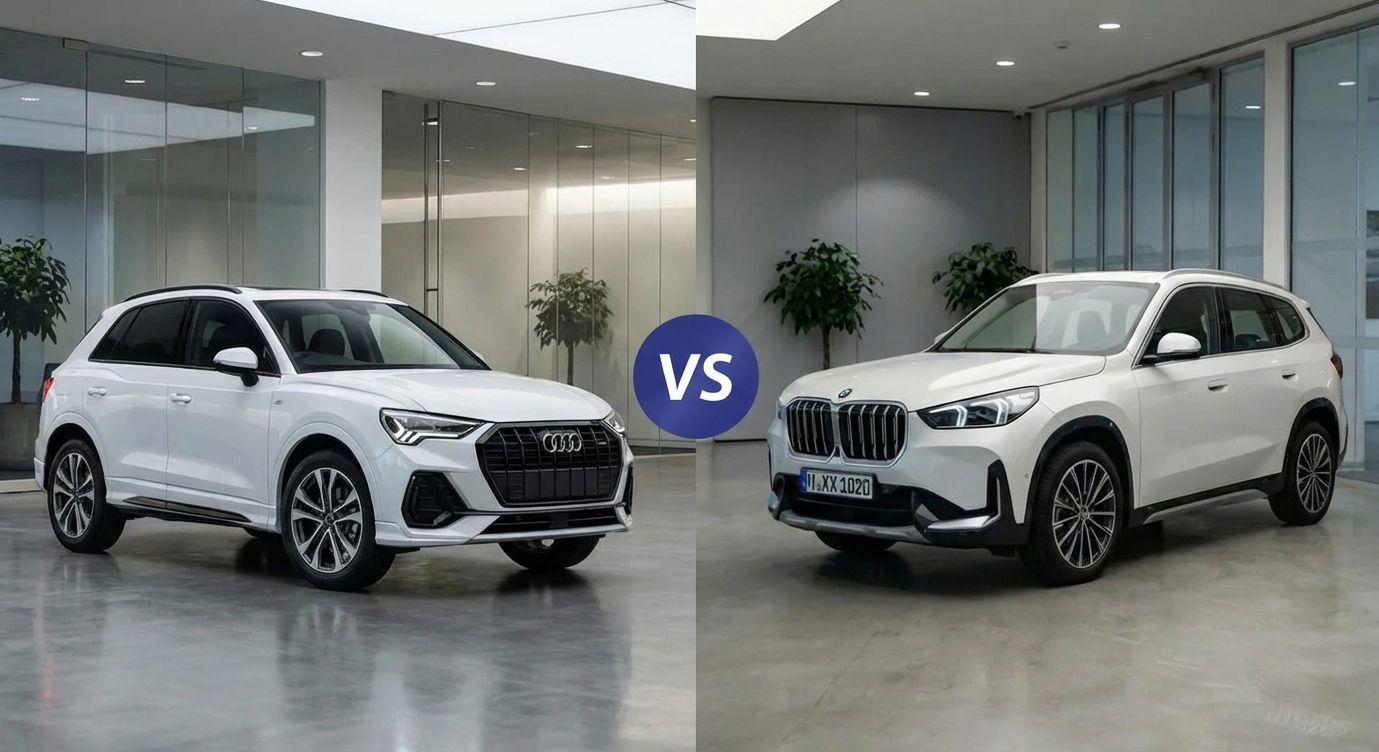
Audi Q3 vs BMW X1: Detailed comparison of design, performance, and practicality. Find out which premium SUV is the right choice for you in our verdict.
Apr 14, 2026
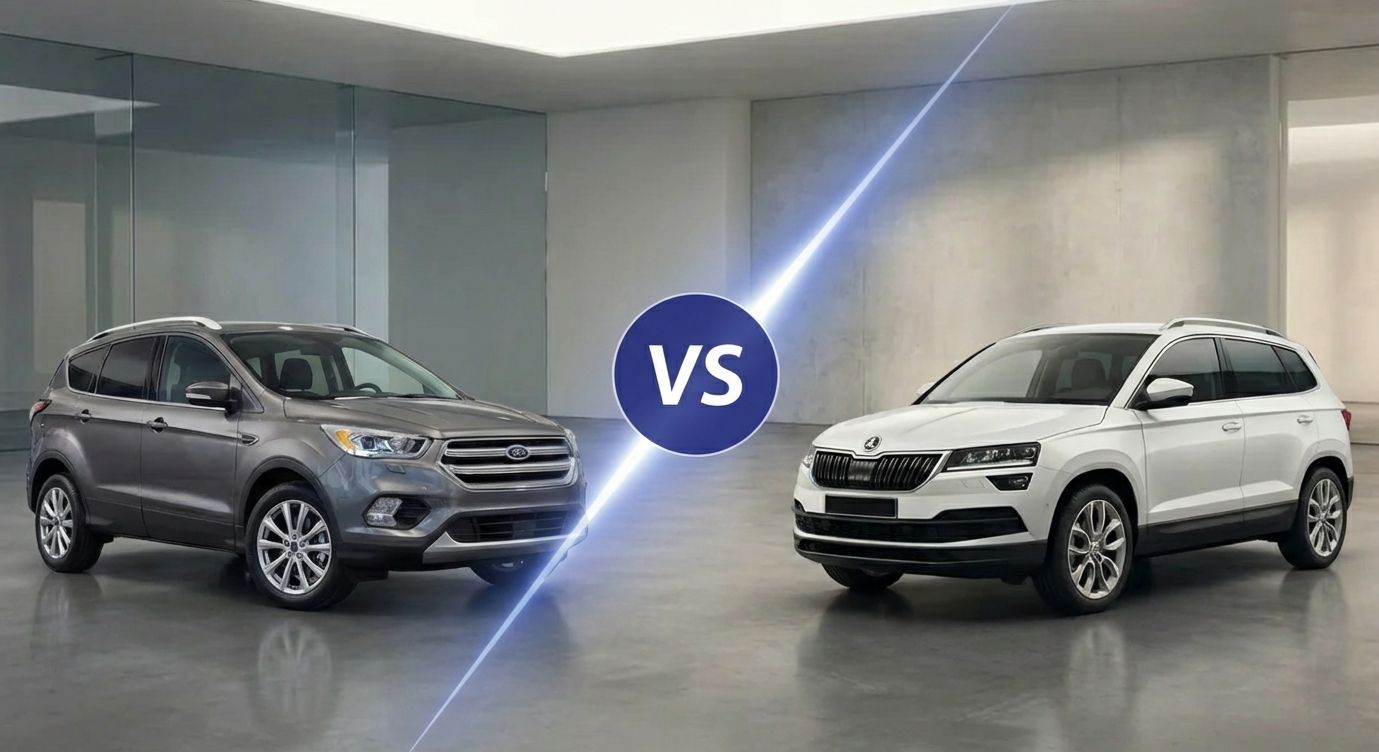
Ford Kuga vs. Škoda Karoq: Which SUV is better? A detailed comparison, tests, and a clear verdict will help you choose the right car for you.
Apr 13, 2026