Car battle
Peugeot 508 vs Škoda Superb: Complete Comparison 2025
Peugeot 508 vs. Škoda Superb: Detailed comparison, real-world experiences, and the verdict to help you choose the best executive car.
Apr 13, 2026
Articles
Car battle
Detailed comparison: Opel Insignia vs. Škoda Superb. Find out which car offers better space, reliability, and driving characteristics. Read our verdict!
May 20, 2026
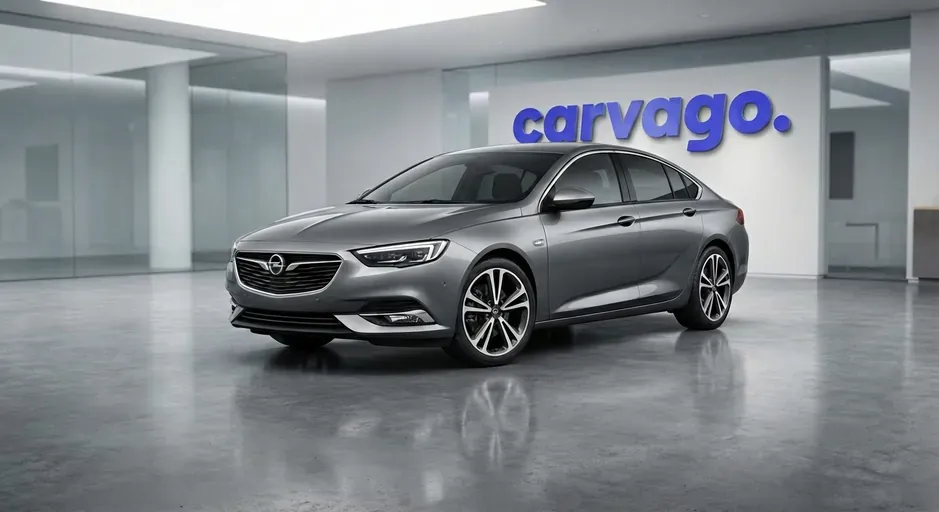
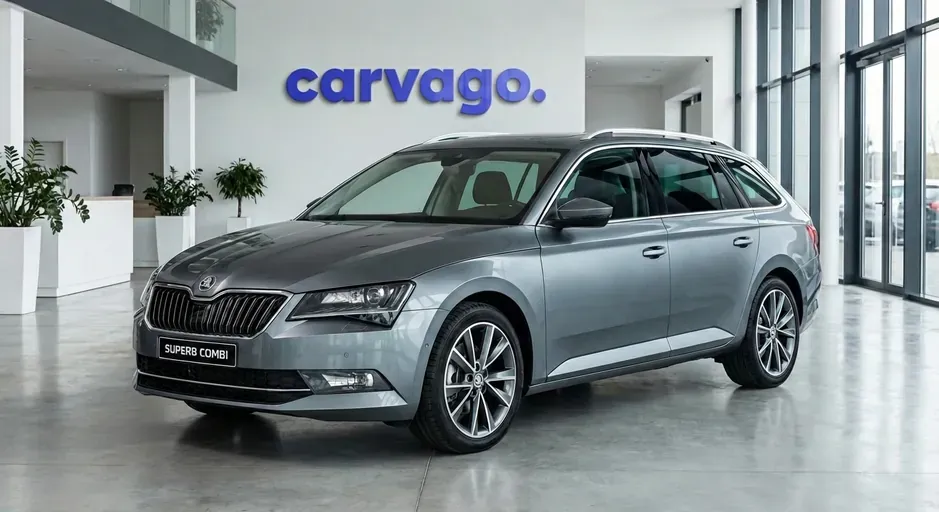
The Opel Insignia, also sold in some global markets under the names Vauxhall Insignia, Buick Regal, or Holden Commodore, represents an attractive and dynamically tuned choice that appeals to drivers with its sporty design and advanced technologies. On the other side of the fence stands the Škoda Superb, a traditional benchmark for spaciousness in the mid-size class, which has long won over customers with its unrivaled practicality, high comfort, and representative appearance. Let's take a detailed look at which of these two exceptionally popular family and executive cars fares better in our direct comparison and offers a more attractive overall package.
External dimensions often determine how easy a car is to maneuver in city garages, but also how majestic it appears on the road. Focusing on models suitable for the used car market around four years old, we compare the second-generation Opel Insignia (referred to as Generation B) and the third-generation Škoda Superb. The first and most striking difference is the overall length. The Opel Insignia estate (Sports Tourer) has grown to an impressive 4,986 mm (up to 4,998 mm in the GSi version), making it one of the longest cars in its class. In contrast, the Škoda Superb Combi is approximately 130 mm shorter (measuring 4,856–4,863 mm), which you will undoubtedly appreciate especially when parallel parking in crowded streets.
Looking at the width, both cars are practically identical – the Insignia measures 1,863 mm and the Superb 1,864 mm. However, a fundamental difference can be found in the proportions and wheelbase. Despite being shorter overall, the Škoda Superb offers a slightly longer wheelbase (2,839–2,841 mm compared to 2,829 mm for the Opel). This engineering triumph by Škoda means that the Czech model has made the absolute most of its footprint, with the wheels pushed further to the corners of the body. The result is legendary and de facto unrivaled legroom for rear passengers. The Opel Insignia, on the other hand, bets on a long and more aggressive silhouette with a lower body structure.
The choice between these two popular cars thus depends on your personal priorities and the conditions in which you primarily use the car. The Škoda Superb is the absolute master of space packaging – on a smaller external footprint, it offers a more airy and better-utilized cabin, making it a more pragmatic choice for the city. The Opel Insignia (whether as the Grand Sport liftback or the Sports Tourer estate), by contrast, appeals more to the emotions. The long front hood and elegantly sloping roofline create a sporty, almost highway-cruiser look, though you pay for it with slightly higher space requirements when maneuvering in underground garages.
| Parameter | Opel Insignia Hatchback / Liftback | Škoda Superb Sedan / Liftback | Opel Insignia Estate | Škoda Superb Estate |
|---|---|---|---|---|
| Length (mm) | 4897 - 4910 | 4861 - 4869 | 4986 - 4998 | 4856 - 4863 |
| Width (mm) | 1863 | 1864 | 1863 | 1864 |
| Height (mm) | 1445 - 1455 | 1453 - 1476 | 1490 - 1500 | 1453 - 1496 |
| Wheelbase (mm) | 2829 | 2839 - 2841 | 2829 | 2841 |
When it comes to choosing a mid-size used car from around 2022, trunk capacity is often one of the main deciding factors. Whether you're planning a family holiday, regular weekend shopping, or frequent transport of sports equipment, every extra liter counts. In this regard, two very different approaches face off – while the Opel Insignia plays more on elegant curves and a sportier body style at the expense of absolute transport capacity, the Škoda Superb has long held the status of an unbeatable hauler that practically has no competition in its class.
Looking at the base versions (hatchback/liftback), the difference is literally vast. The Škoda Superb in the liftback version offers a kingly 625 liters, which means you can easily pack luggage for a family of four for a two-week holiday with plenty of room to spare. The Opel Insignia Grand Sport, on the other hand, has a volume of 490 liters. The difference of 135 liters in practice represents space for several extra suitcases or a folded stroller, where you won't have to worry about removing the wheels. However, it is necessary to mention that if you go for the plug-in hybrid version, the Škoda Superb iV, the trunk capacity drops to 485 liters due to the batteries, making both cars surprisingly equal in base volume.
The difference is even more noticeable in the very popular estate variants, which dominate among four-year-old used cars. The Škoda Superb Combi impresses with a base volume of 660 liters, which increases to a cavernous 1950 liters after fully folding the rear seats – a value sufficient for transporting bulky furniture, appliances, or even emergency overnight stays for two adults. The Opel Insignia Sports Tourer counters with solid but more modest values of 560 liters in the base and 1665 liters after folding. Although the Insignia's trunk is perfectly sufficient for most situations, from weekend shopping to longer holidays, the Superb is simply the master of maximizing the use of interior space. For the Superb Combi iV (plug-in hybrid) version, you again have to accept a compromise – the base volume drops to 510 liters.
| Parameter | Opel Insignia Hatchback | Škoda Superb Liftback | Opel Insignia Estate | Škoda Superb Estate |
|---|---|---|---|---|
| Base volume (liters) | 490 | 625 | 560 | 660 |
| Max volume with seats folded down (liters) | 1450 | 1760 | 1665 | 1950 |
In terms of trunk volume, the clear winner of this duel is the Škoda Superb, which with its parameters will satisfy even the most demanding and active families. However, the Opel Insignia is no disgrace, and its smaller capacity is simply an understandable trade-off for a more dynamic body silhouette, which for many drivers may outweigh the need to carry extra air.
If you are looking for the absolute maximum space for family, strollers, or bulky hobbies, the Škoda Superb is unbeatable in its class. But the Opel Insignia offers perfectly sufficient space for everyday life for those who prefer a sportier look over maximum hauling capabilities in a used car.
The ability to tow heavy trailers is absolutely crucial for many people looking for a spacious family car. Whether it's transporting building materials or towing a family caravan, you'll find significant differences between these models in the market for roughly four-year-old used cars (3rd generation Škoda Superb and generation B Opel Insignia). While both vehicles cover common needs, their limits depend heavily on the chosen engine.
Standard Engines and Basic Limits
Top and Hybrid Versions
If you plan to carry heavy loads on the tow bar, you will have to choose two-liter engines for both models, which offer an identical maximum:
However, increased attention must be paid to alternative powertrains. For example, the plug-in hybrid variant Škoda Superb 1.4 TSI iV (115 kW) has its towing capacity reduced to 1600 kg due to the installation of heavy battery modules. The Opel Insignia did not offer a full hybrid version in the generation under review.
Practical Implications on the Road
A capacity of around 1400 to 1600 kg is perfectly sufficient for weekend shopping and longer holidays with a smaller cargo trailer or a light caravan. However, if you get a more powerful two-liter engine, you can be sure that connecting a two-ton caravan or a heavy tow bar mounted cargo box will significantly ease family travel. You safely and legally gain space for several extra suitcases without risking damage or overloading your car.
Note on unbraked trailers: Values for unbraked trailers are not directly specified by the manufacturer in the database for these models; however, for cars of this size, the standard legislative maximum of 750 kg applies.
Mini Verdict
For average drivers who choose weaker or mid-range engines, the Škoda Superb is a much safer choice – it tows several hundred kilograms more on average. But if you reach for the top 2.0-liter engines, the strengths of both competitors are completely equal and offer maximum pull for demanding tasks.
| Model and engine | Braked trailer weight (kg) | Unbraked trailer weight (kg) |
|---|---|---|
| Škoda Superb 1.5 TSI (110 kW) | 1600 - 1800 | Not specified |
| Škoda Superb 2.0 TDI (110–147 kW) | 2000 - 2200 | Not specified |
| Škoda Superb 2.0 TSI (140–206 kW) | 1800 - 2200 | Not specified |
| Škoda Superb 1.4 TSI iV PHEV (115 kW) | 1600 | Not specified |
| Opel Insignia 1.5 DI Turbo (103–121 kW) | 1405 | Not specified |
| Opel Insignia 1.6 Diesel (81–100 kW) | 1300 - 1405 | Not specified |
| Opel Insignia 2.0 Diesel (125–128 kW) | 1550 - 2200 | Not specified |
| Opel Insignia 2.0 DI Turbo (125–191 kW) | 2000 - 2200 | Not specified |
Both models are primarily aimed at highway mile-munchers and corporate fleets, which is reflected in the range of powertrains. While Škoda, as part of the third-generation Superb facelift, bet on a wide spectrum of efficient petrol (TSI) and diesel (TDI) engines and added the popular plug-in hybrid (iV), Opel took a more straightforward approach with its modernized Insignia, opting for a more robust, conventional approach without hybrid technologies. An interesting point is the differing philosophy regarding automatic transmissions – Škoda relies exclusively on lightning-fast DSG dual-clutch gearboxes, whereas Opel caters to those seeking a more traditional solution by deploying very smooth-shifting eight- and nine-speed torque converter automatics. Both manufacturers also didn't forget top-tier all-wheel-drive versions for more demanding, dynamically oriented drivers. Regarding suitability for specific users, the Opel, with its larger-displacement engines and classic automatics, targets calmer drivers on long routes, while the Superb appeals to a wider spectrum of buyers, from frugal drivers seeking the benefits of a plug-in hybrid in suburban traffic to sportier individuals requiring the quick reactions of DSG transmissions.
The engine range of the Opel Insignia from 2020 to 2022 (after the Generation B facelift) underwent significant optimization in light of tightening emission standards. Given the market for roughly four-year-old used cars, it is crucial to note that previously popular units such as the 1.5 DI Turbo and 1.6 DI Turbo petrol engines or the 1.6 Diesel and the complex 2.0 BiTurbo Diesel were phased out around 2020 and will not be found in newer model years. The entry-level diesel thus became the exceptionally efficient 1.5 Diesel three-cylinder with 90 kW. However, for such a massive car, the powerful 2.0 Diesel four-cylinder with 128 kW and a generous 380 Nm of torque is a far more confident and frequent choice. On the petrol side, the Insignia offered potent 2.0 DI Turbo four-cylinders with outputs of 125 kW and 147 kW. The absolute pinnacle is the sport-tuned GSi model with 169 kW, which uses the sophisticated Twinster all-wheel-drive system as standard and, like the other two-liter petrols, a nine-speed automatic transmission.
| Engine Type | Fuel | Power (kW) | Torque (Nm) | Transmission |
|---|---|---|---|---|
| 2.0 DI Turbo | Petrol | 125 / 147 | 350 | 9AT |
| GSi 2.0 DI Turbo | Petrol | 169 | 350 | 9AT |
| 1.5 Diesel | Diesel | 90 | 300 | 6MT / 8AT |
| 2.0 Diesel | Diesel | 128 | 380 | 6MT / 8AT |
The Škoda Superb satisfies practically everyone on the used car market. Models from around 2021 to 2022 are characterized by a modernized engine lineup; if you are looking for earlier 1.4 TSI (non-hybrid), 1.8 TSI, or 1.6 TDI units, you will no longer find them in these younger used cars, as the third-generation Superb has bid them a final farewell. The entry-level and widely sold engine became the efficient 1.5 TSI unit with 110 kW featuring ACT cylinder deactivation. More demanding users will be fully satisfied by the 2.0 TSI petrol (140 kW), while its top specification boasts a breathtaking output of 200 to 206 kW (depending on the specific model year) with torque up to 400 Nm and standard 4x4 drive. A chapter of its own is the plug-in hybrid variant, the 1.4 TSI iV, with a total system output of 160 kW, presenting a strong argument for environmentally conscious drivers who have the option to charge. However, the backbone of fleet sales has always remained the diesels. The proven 2.0 TDI offers either 110 kW or a noticeably more dynamic 147 kW, which can also be paired with all-wheel drive.
| Engine Type | Fuel | Power (kW) | Torque (Nm) | Transmission |
|---|---|---|---|---|
| 1.5 TSI | Petrol | 110 | 250 | 6MT / 7DSG |
| 2.0 TSI | Petrol | 140 / 200–206 | 320 / 350–400 | 7DSG |
| 1.4 TSI iV | Plug-in Hybrid | 160 (system) | 400 (system) | 6DSG |
| 2.0 TDI | Diesel | 110 / 147 | 340–360 / 400 | 6MT / 7DSG |
While the Opel Insignia appeals with its robust two-liters and smooth torque converter automatic, perfect for calmly tackling long-distance routes, the Škoda Superb leads with a wider selection and a modern plug-in hybrid ideal for regular city commuting.
Choosing the right engine is key for long-term satisfaction, with both cars relying on slightly different philosophies from their manufacturers. While the 3rd generation Škoda Superb bets on the Volkswagen Group's finely-tuned engine range, led by the phenomenal 2.0 TDI and highly popular TSI petrol engines, the Opel Insignia Generation B (available from 2017–2022) benefits from development under General Motors. It can thus offer the excellent and sophisticated Twinster all-wheel drive, but due to its robust and heavier build, the classic 2.0-litre diesel is often the most sensible and reliable solution. The following recommendations are based on real-world service experience, mechanical durability, and actual fuel consumption for cars approximately four years old.
This 2.0-litre diesel is by far the best and most sought-after choice for the second-generation Insignia (commonly available on the used market from 2017 to 2022). By mid-size class standards, the Insignia is a large and solidly built car, and the more powerful diesel provides the necessary dynamics without a negative impact on your wallet.
In the case of the 3rd generation Škoda Superb (widely represented in the used car market from 2015–2023), the most logical and safest choice is the proven 2.0 TDI diesel engine with 110 kW. This unit is a sought-after "holy grail" on the market and is hard to beat in its class in terms of operating costs and durability.
The difference between the official fuel consumption figures provided by the manufacturer and real-world values from daily operation is often significant. For used car buyers, typically looking at vehicles around four years old, data directly from drivers is much more relevant than laboratory tables. We therefore rely on long-term user measurements, primarily from the popular European crowdsourcing portal Spritmonitor.de, which accurately reflects actual road conditions. In this comparison, we focus on models that populate the modern used car market – specifically the third-generation Škoda Superb (from 2015) and the second-generation Opel Insignia (Generation B, from 2017).
The following table provides an overview of real-world fuel consumption for the most common engines on the used car market, sorted by fuel type and measured efficiency:
| Model and engine | Engine type | Average consumption (l/100 km) | Source (news_site) |
|---|---|---|---|
| Opel Insignia 1.5 Diesel (90 kW) | Diesel | 5.0 | Spritmonitor.de |
| Škoda Superb 1.6 TDI (88 kW) | Diesel | 5.3 | Spritmonitor.de |
| Škoda Superb 2.0 TDI (110 kW) | Diesel | 5.7 | Spritmonitor.de |
| Opel Insignia 2.0 Diesel (125 kW) | Diesel | 6.3 | Spritmonitor.de |
| Škoda Superb 1.5 TSI (110 kW) | Petrol | 6.5 | Spritmonitor.de |
| Opel Insignia 1.5 DI Turbo (103/121 kW) | Petrol | 7.4 | Spritmonitor.de |
| Škoda Superb 2.0 TSI (140 kW) | Petrol | 7.8 | Spritmonitor.de |
| Opel Insignia 2.0 DI Turbo (147 kW) | Petrol | 8.5 | Spritmonitor.de |
When interpreting these real-world trends, it is clear that diesel engines still maintain a significant lead in efficiency for both of these large and relatively heavy mid-size cars. The most economical choice overall is the entry-level Opel Insignia 1.5 Diesel, though it is closely followed by the exceptionally efficient engines from Škoda, specifically the 1.6 TDI and the popular 2.0 TDI. For petrol engines, a common shortcoming of turbocharged units is confirmed – smaller displacements (such as the 1.5 DI Turbo in the Opel) often fail to save as much fuel in the real world as the tables promise, as they have to struggle with the car's weight. While the petrol Superb benefits from its Active Cylinder Technology (ACT) in the 1.5 TSI version and comes out better in a comparison of entry-level petrol engines, it still has a natural deficit compared to diesel.
What do these findings mean for the average buyer? If you mostly drive long distances on motorways as a "mileage eater," or easily cover more than 20,000 kilometres a year, the more powerful diesel variants – 2.0 TDI (Superb) or 2.0 Diesel (Insignia) – are the most logical choice. They ensure both safe overtaking and reasonable travel costs. Conversely, budget-oriented, calm drivers will greatly appreciate the less powerful diesel derivatives. Choosing a solid petrol engine makes more sense for city and suburban drivers with lower annual mileage. In such cases, the absence of complex emission systems can easily compensate for the fact that you will consume roughly one to two litres more fuel per hundred kilometres on petrol.
In the final assessment, fuel consumption plays its part, but it should not be the sole determining factor for (not) buying one of these cars. The Škoda Superb with the proven two-litre diesel shows slightly better efficiency and running effectiveness than the similarly sized diesel Insignia. However, the average customer can often easily compensate for these differences of a few tenths of a litre thanks to the slightly more favourable purchase prices on the used car market that Opel models usually feature compared to Škoda. Real-world figures make both models very economical companions for long journeys.
When looking for a roughly four-year-old executive car from the 2022 model year, you will encounter one of the most profound price differences in this automotive class. While one model is considered an investment certainty with a slow decline in value, the other represents a hidden gem on the used car market with an unrivaled price-to-equipment ratio.
The third-generation facelifted Škoda Superb holds its value extremely well on both the Czech and European markets. As a nearly new or four-year-old used car, it is immensely popular, which keeps its resale prices very high.
The Opel Insignia B (also facelifted) suffers from faster depreciation on the used car market. Since production of this flagship ended at the turn of 2022 and 2023 without a direct successor, it represents an absolutely fantastic buying opportunity for used car buyers.
| Parameter | Škoda Superb (2022) | Opel Insignia (2022) |
|---|---|---|
| Estimated used car price | €21,000 – €37,000 | €14,000 – €25,000 |
| Value loss (Depreciation) | Very slow | Faster (significant advantage for the buyer) |
| Most common engine on the market | 2.0 TDI (110 kW / 147 kW) | 2.0 CDTI (128 kW) |
| Availability on the used market | Very high (huge selection) | Medium to lower |
While the Škoda Superb is an absolute safe bet that will hold its value well for resale, the Opel Insignia is a much more financially attractive choice from the perspective of a four-year-old used car buyer, often offering richer premium equipment for less money.
Both cars, the Opel Insignia and the Škoda Superb, boast a maximum five-star rating in independent Euro NCAP crash tests. When choosing a four-year-old used car, however, it is crucial to correctly interpret the context and the year these models passed through the testing laboratories. Euro NCAP test methodologies and protocols are constantly evolving and becoming stricter. Over the years, more complex types of frontal impacts, stricter cyclist detection, and advanced assistance for junction crisis scenarios have been gradually integrated. Therefore, percentage scores from different years cannot be compared as absolute and equivalent values, because a full star rating in 2015 represented a significantly different technological challenge for car manufacturers than in 2017 or later.
The second generation of the Opel Insignia (internally designated as Generation B) underwent testing in 2017 and showed excellent results according to the stricter and more modern rules of the time. The car strongly dominated in adult occupant protection, where it achieved an excellent 93%. It also demonstrated a very reliable level of protection for children in car seats, scoring 85%. For its time, the Insignia also scored highly in the protection of vulnerable road users (78%). This was mainly due to the standard-fit active bonnet, which lifts up in the event of a collision with a pedestrian, significantly cushioning the impact of the head against hard engine blocks. The range of active safety assistants, including autonomous braking with pedestrian detection, recorded a score of 69%.
The popular Škoda Superb underwent crash tests at the time of the launch of its very successful third generation in 2015. It is worth noting that the manufacturer had the brand-new fourth generation tested in 2024, but for the market of roughly four-year-old used cars, the results of the Generation III vehicle are the determining factor. In its time, the Superb took home a full five stars with very balanced scores across all categories. Structural protection for adult occupants and safety for child passengers both stood at 86%. In pedestrian protection, the car gained 71%, and it received an above-average 76% for modern electronic systems, significantly aided by the then-new multi-collision brake and Crew Protect Assist proactive occupant protection.
In terms of what is available on the used car market, in both cases you get large and robust cars that you can fully rely on in a crisis. The Opel Insignia offers an objectively slight advantage due to its somewhat more recent testing date (2017), which reflected stricter requirements, and it features the very effective active bonnet. In contrast, despite its older 2015 test certification, the Škoda Superb provides an immensely balanced and solid structure that has historically held a slight lead in the standard approach to child passenger protection and assistant functionality. Although formally, according to today's extremely strict standards, the certification of both vehicles may be considered expired from a modern perspective, they still represent a high safety standard on the roads.
| Parameter | Opel Insignia | Škoda Superb |
|---|---|---|
| Year of testing | 2017 | 2015 |
| Adult occupant protection | 93 % | 86 % |
| Child occupant protection | 85 % | 86 % |
| Vulnerable road user protection | 78 % | 71 % |
| Safety assistance systems | 69 % | 76 % |
While the Opel Insignia benefits from a more recent testing date and advanced innovations such as the active bonnet protecting pedestrians, the Škoda Superb offers exceptionally balanced results even with its older certification. In both cases, you are buying one of the best-protecting used cars in its class.
In addition to generous standard equipment, both models offer more than just basic functions, and each has its own distinctive approach to added value that can significantly enhance daily life with the car.
Excellent ergonomic seats with AGR certification (ideal for long highway journeys)
Top-of-the-line IntelliLux LED Matrix adaptive headlights
Attractive, aerodynamic, and sporty design
More favorable purchase price for used cars with very rich equipment
More confident driving characteristics with better steering feedback
Smaller luggage compartment volume relative to the car's large exterior dimensions
Significantly less legroom in the rear seats compared to the Superb
Faster decline in residual value
The model was discontinued without a direct successor, which may affect the future availability of some specific parts
Opel Insignia is a great choice for drivers who spend a lot of time on highways and appreciate the top-notch comfort of ergonomic seats as well as excellent adaptive headlights. Thanks to a steeper drop in value, it also offers an excellent price-to-equipment ratio on the market for nearly-new used cars for those who do not need to transport excessive loads and are looking for a slightly sportier ride.
Unrivaled interior space, king-size room for rear-seat passengers
Huge and easily accessible luggage compartment (up to 660 liters for the Combi version)
Wide range of proven engines including reliable 2.0 TDI and the iV plug-in hybrid version
Excellent residual value retention and huge liquidity on the used car market
Well-thought-out interior ergonomics with popular "Simply Clever" details
Higher purchase price on the used car market compared to direct competition
Less engaging driving experience, which is strictly comfort-oriented
Occasional software glitches and slower responses of the newer generation infotainment (MIB3)
Possible jerking of the DSG dual-clutch transmission when crawling in traffic jams or during parking
Škoda Superb represents the absolute benchmark for practicality and space in the mid-size class, making it an unbeatable family and representative executive car. It holds its value excellently and, thanks to a trouble-free service background and a wide range of fuel-efficient engines, represents a very rational and safe investment in a used car.
Based on our own statistics, reports from the service network, long-term user experience, and results regularly revealed by our independent car technical condition inspection, we have compiled an overview of the most common problems that buyers of roughly four-year-old used cars should watch out for.
The second-generation Opel Insignia (so-called Insignia B, especially after the facelift) is considered a mechanically durable and overall very reliable car, however, it also shows certain characteristic weaknesses, primarily in the area of modern electronics.
The Opel Insignia is a mechanically robust car where the greatest financial risk is represented by neglected automatic transmission service and expensive Matrix LED headlights. With documented maintenance, however, it is an above-average reliable car.
The third generation of the Škoda Superb model, typically in its facelifted versions from 2019, is a sought-after market staple. Its very advanced technology and more complex electronic architecture may, however, require increased attention after years.
The Škoda Superb occasionally troubles its owners with unrefined infotainment software and a riskier water pump in the popular diesels. More expensive problems can be successfully avoided by thoroughly checking the DSG transmission history and regular system updates.
When buying a used car, a thorough inspection is key. Here are some specific points to focus on for these two models, which is why we always recommend using an independent used car inspection before purchase to uncover any hidden defects.
Škoda Superb is unbeatable in this class, offering a trunk capacity of 625 liters for the liftback version and 660 liters for the estate. The Opel Insignia lags significantly behind with a volume of 490 liters for the Grand Sport version and 560 liters for the Sports Tourer variant. For families and drivers with maximum demands on transport capacity, the Czech model is the clear choice.
The Opel Insignia is characterized by more confident and sportier handling, contributed to by a perfectly tuned chassis and more precise steering. The Škoda Superb, on the other hand, is tuned more for maximum smoothness and softer suspension, which excels during calm highway travel. If you enjoy dynamic driving, the Opel will please you more; for absolute relaxation of the crew, the Škoda is better.
Both cars are considered relatively reliable cruisers, but the Škoda Superb significantly benefits from a more accessible service network and cheaper spare parts on our market. The Opel Insignia has very robust diesel engines, but more complex chassis components or electronics can mean slightly more expensive repairs. In terms of overall maintenance costs for a used car, the Superb comes out slightly more favorably.
The Škoda Superb feels more luxurious in the cabin thanks to greater attention to detail, spaciousness in the rear seats, and advanced infotainment. The Insignia's interior, on the other hand, scores with excellent driver ergonomics and optional AGR orthopedic seats, which are absolute top-tier for long distances. Overall, the Superb's interior is more modern, while the Insignia bets on a more conservative but highly functional layout.
The popular two-liter diesel engines are very balanced in both cars and achieve real-world consumption between 5.5 and 6 liters per 100 km during normal driving. However, the Škoda Superb has the advantage of a wider range of engines, which in newer used cars also includes the economical iV plug-in hybrid. The Insignia counters with top-of-the-line all-wheel drive with torque vectoring, which you will appreciate on slippery surfaces.
The battle between these two popular highway cruisers has no clear loser, as each model targets different priorities. Škoda Superb represents the ultimate rational choice and an unrivaled benchmark of practicality, offering families and managers royal interior space, excellent residual value retention, and a wide range of efficient engines. On the other hand, the Opel Insignia scores with an exceptionally attractive price-to-equipment ratio on the used car market, a more dynamic design, and superb orthopedic seats, making it the perfect companion for long hours behind the wheel. If you are looking for the ultimate hauler and a total safe bet, go for the Superb, while the Insignia will delight those who prefer rich premium equipment for less money and a more emotional driving experience.
Sources: ADAC, aktualne.cz, garaz.cz, fdrive.cz, autoservis.cz, autoperiskop.cz
This article was prepared using artificial intelligence tools. The section guarantor is Petr Dušek.
Peugeot 508 vs. Škoda Superb: Detailed comparison, real-world experiences, and the verdict to help you choose the best executive car.
Apr 13, 2026
Detailed comparison of Honda Accord vs. Škoda Superb. Discover real-world experiences, equipment and driving characteristics comparisons, and read the verdict for the best choice.
Apr 21, 2026
Opel Insignia vs Renault Talisman: A Detailed Comparison. Find out which executive sedan is the better choice. Real data, features, and verdict.
Apr 14, 2026