Car battle
Kia Rio vs. Seat Ibiza: Complete comparison 2026
Detailed comparison: Kia Rio vs Seat Ibiza. Discover the differences in driving characteristics, reliability, and space. Read the verdict before choosing a used car!
Apr 15, 2026
Articles
Car battle
Opel Corsa vs. Seat Ibiza: A detailed comparison of popular hatchbacks. Discover the differences in engines, equipment, and reliability, and choose your ideal used car.
May 16, 2026
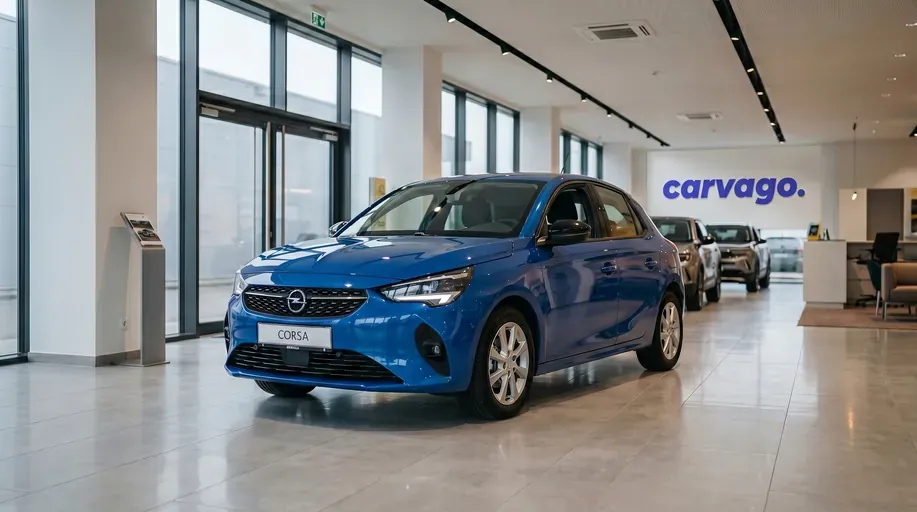
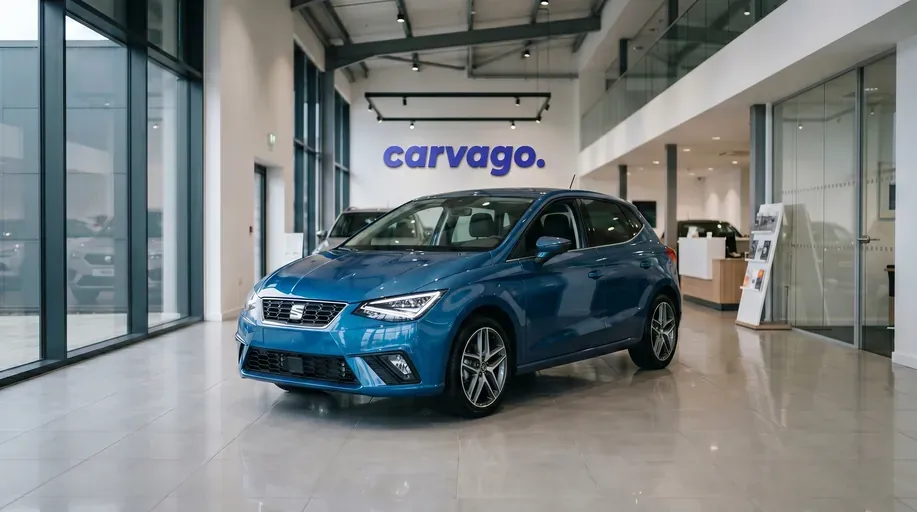
In today's battle of popular city hatchbacks, we take a look at the popular Opel Corsa, which is also known as the Vauxhall Corsa on the British market and has long been a proven choice for everyday driving. Its confident challenger will be the spirited Seat Ibiza, which successfully combines reliable Volkswagen Group technology with attractive Spanish design and a more sportily tuned chassis. Let's find out together in detail which of these sought-after cars offers a better combination of practicality, driving comfort, and overall value for money on the market for roughly four-year-old used cars.
Expectations for modern small cars (B-segment) have changed significantly in recent years. Both the Opel Corsa (current F generation) and the Seat Ibiza (KJ generation) are clear proof of this. On the used car market, both cars around four years old confidently exceed the four-meter mark, meaning they have matured and no longer look like tiny city shopping bags from the outside. While they are almost identical in length to the millimeter (the Corsa measures 4060 to 4061 mm, the Ibiza 4059 mm), looking at the width, height, and wheelbase reveals more interesting structural differences.
The Seat Ibiza bets on a wider and more planted stance. With a total width of 1780 mm, it is a significant 15 mm wider than its German competitor (1765 mm), which gives it not only a more aggressive look on the road but also has a positive effect on interior shoulder room. However, the wheelbase is a crucial parameter. The Spanish model, built on the MQB A0 platform, offers a wheelbase of 2564 mm, which is 26 millimeters more than the Opel Corsa (2538 mm). Rear-seat passengers benefit most from this extension. The Corsa, in turn, counters with a slightly lower body height (1433 to 1435 mm vs. 1444 to 1447 mm for the Ibiza), which aids aerodynamics and visually enhances the car's sporty nature with a lower center of gravity.
What do these dimensions mean for everyday use and who should they appeal to? If you regularly carry adult passengers in the back and are looking for a car with proportions that are slowly approaching those of a family hatchback, the Seat Ibiza will offer a slightly airier interior and a more stable feel on the highway thanks to its wider body and longer wheelbase. The Opel Corsa, on the other hand, will please drivers who prefer a lower, more dynamic silhouette and a sportier driving position, which perfectly complements its more agile urban character. Nevertheless, both cars handle parking in tight streets excellently, as their compact footprint remains very reasonable and easy to judge from the driver's perspective.
| Parameter | Opel Corsa Hatchback | Seat Ibiza Hatchback |
|---|---|---|
| Width (mm) | 1765 | 1780 |
| Length (mm) | 4060 - 4061 | 4059 |
| Height (mm) | 1433 - 1435 | 1444 - 1447 |
| Wheelbase (mm) | 2538 | 2564 |
Luggage compartment capacity is often a deciding factor for small city cars, especially if the vehicle serves as the only car for a small family. While any trunk is sufficient for a normal daily commute, every saved liter counts on weekends, during larger shopping trips, or when packing luggage for a vacation. In this regard, the Opel Corsa and Seat Ibiza, two popular representatives of the B-segment, differ quite significantly and thus appeal to slightly different target customer groups.
Looking at the current generations of these cars (roughly four-year-old used cars corresponding to the Corsa F and Ibiza KJ generations), the Seat Ibiza emerges as the clear favorite in terms of transport capacity. Its standard five-door hatchback offers an excellent basic volume of 355 liters, a value that ranks among the absolute best in its class. After folding the rear seats, this space increases to a generous 1,165 liters. In contrast, the Opel Corsa provides a basic 309 liters and a maximum volume of 1,081 liters in standard versions with internal combustion engines. In practice, this difference of over 40 liters in the base means that you get space for several bags or an extra small suitcase in the Ibiza. This difference makes the Spanish car easily sufficient for weekend shopping and longer vacations for two, while its German competitor better suits more modest urban requirements.
It is also important to note that both manufacturers offer alternative powertrains that limit the usable trunk capacity. If you opt for the fully electric Opel Corsa Electric variant, you will have to settle for a trunk reduced to just 267 liters (1,042 liters with the seats folded) due to the placement of the traction batteries. For mild-hybrid Corsa engines, its maximum volume drops to 1,004 liters. While the Seat Ibiza does not offer a purely electric version in this generation, the TGI variant burning compressed natural gas (CNG) sees its trunk volume drop to 262 liters, or 1,072 liters after folding the backrests, due to the installation of pressure tanks. In the overall evaluation of standard versions, this means only one thing – if you like to travel packed, the Seat will clearly be the better companion.
| Parameter | Opel Corsa Hatchback | Seat Ibiza Hatchback |
|---|---|---|
| Basic volume (liters) | 309 | 355 |
| Max. volume with seats folded (liters) | 1081 | 1165 |
In its current generation, the Seat Ibiza clearly wins with its record-breaking trunk capacity, which allows it to easily handle the role of a smaller family car, while the Opel Corsa scores with its dimensions primarily for individuals and couples looking for a more compact car for the city.
Towing capacity for small city hatchbacks is an often overlooked but very important parameter that defines their daily usability and overall practicality. Although they are not typical towing vehicles, the ability to attach a trailer is extremely useful for hauling garden waste or gaining extra space – typically as room for a few extra suitcases in the form of a light trailer.
Base and maximum capacities
When comparing generations roughly four years old (Opel Corsa F and Seat Ibiza KJ), we find fundamental differences, especially in the base naturally aspirated engines. While the cheapest Opel Corsa 1.2 (55 kW) can tow a braked trailer weighing only 500 kg, the Seat Ibiza with the base 1.0 MPI engine offers a full 800 kg. However, if you opt for more powerful turbocharged engines, the differences level out. The 1.2 DI Turbo units in the Corsa and the 1.0 TSI or 1.5 TSI in the Ibiza both offer a solid maximum capacity of up to 1,200 kg for a braked trailer. In the case of smaller unbraked trailers, the Ibiza ranges from 540 to 610 kg, while the Corsa standardly tows 500 to 580 kg.
Restrictions for alternative powertrains
For both models, there are versions where towing a trailer is completely prohibited and the homologated capacity is reduced to zero. For the Opel Corsa, the fully electric Corsa Electric variant (formerly Corsa-e) is not allowed to tow anything from the factory. In the case of the Seat Ibiza, this restriction applies to the eco-friendly 1.0 TGI version powered by compressed natural gas (CNG). For this reason, both of these specifications are intentionally missing from the overview table.
Final evaluation
Both cars confirm with their technical parameters that more powerful engines are sufficient for weekend shopping as well as longer holidays with a lighter caravan. However, the Seat Ibiza emerges from this comparison as a slightly more versatile choice, as it provides usable towing capacity even with the weakest engines. For the Opel, those interested in towing a trailer must necessarily pay extra for a turbocharger.
| Model and engine | Braked trailer (kg) | Unbraked trailer (kg) |
|---|---|---|
| Opel Corsa 1.2 (55 kW) | 500 | 500 |
| Opel Corsa 1.2 DI Turbo (74–96 kW) | 1200 | 580 |
| Opel Corsa 1.5 Diesel (75 kW) | 1200 | 580 |
| Seat Ibiza 1.0 MPI (48–59 kW) | 800 | 540–560 |
| Seat Ibiza 1.0 TSI / EcoTSI (70–85 kW) | 1000–1200 | 570–590 |
| Seat Ibiza 1.5 TSI (110 kW) | 1200 | 610 |
When comparing the engine ranges of the Opel Corsa and Seat Ibiza, we encounter different philosophies from both groups, which have a direct impact on daily operation, fuel consumption, and overall vehicle dynamics. The Opel Corsa (F generation) relies primarily on French technology from the Stellantis group, with a basic naturally aspirated 1.2 three-cylinder and the popular 1.2 DI Turbo engine, while the Seat Ibiza (KJ generation) uses the platform and powertrains from the Volkswagen family, where the used car market is dominated by 1.0 TSI turbocharged three-cylinders and the more powerful 1.5 TSI four-cylinders. While the Ibiza will please drivers seeking dynamics thanks to its top-of-the-line 1.5 TSI with 110 kW combined with a fast DSG dual-clutch transmission, the Corsa counters with the advanced option of a fully electric drive (Corsa Electric), which is completely missing from its Spanish competitor in this class. In terms of eco-friendly alternatives, the Ibiza offered compressed natural gas (1.0 TGI), but the Corsa focuses more on new mild-hybrid technology in its latest iterations. If you have a tighter budget and are looking for a simple city car, you will appreciate the reliable naturally aspirated base engines in both cars. For motorways and long distances, on the other hand, the more powerful 1.5 TSI in the Ibiza or one of the exceptionally efficient diesels is a great choice, though these have completely disappeared from both brands' lineups in recent years due to emission limits.
The engine range for the sixth-generation Opel Corsa covers a very wide spectrum of needs, from cheap city commutes to fully locally emission-free electric driving. In used cars around four years old, you will most often encounter the 1.2 petrol three-cylinder in the standard naturally aspirated version with 55 kW or in the more agile 1.2 DI Turbo version (74 kW and 96 kW). The more powerful turbocharged versions benefit from being paired with a highly comfortable eight-speed automatic transmission with a torque converter, which is a premium feature in this class. Until 2023, it was also possible to purchase the economical 1.5 Diesel engine, but this was gradually phased out in favor of more modern technologies and is now a sought-after rarity on the market for high-mileage drivers. A modern specialty of the Corsa is the fully electric Corsa-e variant (subsequently renamed Corsa Electric), which in available older model years delivers 100 kW paired with a 50 kWh battery. If you come across cars from 2024 and newer, you will also find the innovative 1.2 DI Turbo Hybrid 48V mild-hybrid unit in the price list.
| Engine type | Fuel | Power (kW) | Torque (Nm) | Transmission |
|---|---|---|---|---|
| 1.2 | Petrol | 55 | 118 | 5MT |
| 1.2 DI Turbo | Petrol | 74 | 205 | 6MT / 8AT |
| 1.2 DI Turbo | Petrol | 96 | 230 | 8AT |
| 1.2 DI Turbo Hybrid 48V | Petrol / Mild-hybrid | 74 / 100 | 205 / 230 | 6-eDCT |
| 1.5 Diesel | Diesel | 75 | 250 | 6MT |
| Corsa Electric (50 kWh) | Electricity | 100 | 260 | 1AT |
The fifth-generation Seat Ibiza relies exclusively on proven VW Group units, which have earned a great reputation for their balanced ratio of agility and low fuel consumption. The core of the used car market consists of the 1.0 TSI turbocharged three-cylinder, which scores points with its constant willingness to keep consumption below five liters and solid dynamics. These engines were standardly paired not only with manuals but also with the lightning-fast seven-speed DSG dual-clutch transmission. Customers looking for maximum simplicity for city driving often choose the basic naturally aspirated 1.0 MPI, albeit naturally at the expense of dynamics. The true pinnacle of the Ibiza range is the advanced 1.5 TSI four-cylinder (110 kW), exclusively combined with the DSG automatic, which gives the small car unexpected confidence on the motorway. A specific feature of the Ibiza was the interesting 1.0 TGI variant designed to run on compressed natural gas (CNG). Like the aforementioned 1.6 TDI diesel unit, previously intended for longer routes, this gas version quietly left the production program between 2020 and 2023, and is therefore rarely encountered in nearly new used cars.
| Engine type | Fuel | Power (kW) | Torque (Nm) | Transmission |
|---|---|---|---|---|
| 1.0 MPI | Petrol | 48 / 59 | 95 / 93 | 5MT |
| 1.0 TSI | Petrol | 70 | 175 | 5MT |
| 1.0 TSI | Petrol | 81 / 85 | 200 | 6MT / 7DSG |
| 1.5 TSI | Petrol | 110 | 250 | 7DSG |
| 1.0 TGI | CNG / Petrol | 66 | 160 | 6MT |
| 1.6 TDI | Diesel | 59 / 70 / 85 | 230 / 250 / 250 | 5MT / 7DSG |
While the Seat Ibiza attracts with its dynamic TSI engines and the superb smoothness of the DSG transmission, the Opel Corsa counters with the option of a fully electric drive and a top-tier eight-speed torque converter automatic for the petrol versions.
Choosing the right engine is absolutely critical for long-term satisfaction with a used car. The recommendations below are based on real-world vehicle behavior, actual fuel consumption, owner feedback, and documented mechanical reliability. While the Seat Ibiza (KJ generation, from 2017) relies on exceptionally reliable and efficient Group technology in the form of TSI units, the Opel Corsa (F generation, from 2020) benefits from technology sharing with the Stellantis Group and scores points with agile three-cylinder engines, which, however, require a slightly more cautious approach to servicing on the used car market. Both cars primarily target efficient operation, but from the perspective of long-term durability, they require a slightly different type of care.
This turbocharged three-cylinder represents the ideal compromise in the Corsa F generation lineup. Compared to the weaker naturally aspirated version, it offers much better dynamics with significant pull, while remaining a more affordable and rational choice than the top-spec version. The engine is very refined and perfectly suited for full-fledged daily use.
The turbocharged one-liter three-cylinder with direct injection is a total bullseye under the hood of the Seat Ibiza KJ generation. In practice, it has proven to be one of the most successful and reliable small engines of today. We specifically recommend the more powerful variant (81 kW, or the older 85 kW), as it is usually paired with a six-speed manual transmission on the used car market, which gives the car a much more mature character.
Official fuel consumption figures provided by manufacturers themselves often differ diametrically from what drivers experience in everyday traffic. Although the more modern WLTP measurement methodology has brought more realistic numbers, for a true picture of the demands of individual engines, it is always best to look at data directly from users. We have therefore used the extensive database of the independent community portal Spritmonitor, where tens of thousands of motorists record their fuelings over the long term. For this comparison, we focused on approximately four-year-old vehicles (Opel Corsa F and Seat Ibiza KJ generations produced around 2022), which currently represent the most common choice on the used car market.
| Model and engine | Average consumption (l/100 km) |
|---|---|
| Opel Corsa 1.2 55 kW | 5.9 |
| Seat Ibiza 1.0 MPI 59 kW | 5.7 |
| Seat Ibiza 1.0 TSI 70/81 kW | 5.2 |
| Seat Ibiza 1.5 TSI 110 kW | 5.9 |
| Opel Corsa 1.2 DI Turbo 74 kW | 6.0 |
| Opel Corsa 1.5 Diesel 75 kW | 4.2 |
| Seat Ibiza 1.6 TDI 70 kW | 4.6 |
A detailed look at the data reveals several important trends. A surprising finding is the behavior of the turbocharged three-cylinder 1.2 DI Turbo under the hood of the Corsa. Although it is a modern small-displacement turbo engine from which maximum efficiency is expected, in the real world it requires an average of 6.0 liters per 100 kilometers. It does not save fuel to the extent that many customers would expect from such a concept. Similarly disadvantageous in terms of savings are the basic naturally aspirated engines (1.0 MPI and 1.2) – due to the lack of torque, it is necessary to rev them higher to maintain dynamics. The true standout among the petrol engines is the Seat Ibiza with the 1.0 TSI unit, which proves that a well-tuned small turbo can realistically achieve excellent consumption of around 5.2 l/100 km. Regarding the comparison of diesel versus petrol, diesel units remain clearly the most economical choice, with the 1.5 Diesel engine in the Opel Corsa beating the older 1.6 TDI design in the Ibiza in overall efficiency.
What does this mean in practice for typical users? If you are choosing a car primarily for the city, shopping, or shorter suburban commutes, petrol versions are a more reliable choice because they do not carry the risk of the particulate filter clogging from incomplete regenerations. For budget-conscious buyers, the Ibiza 1.0 TSI is an absolutely ideal compromise from this perspective. Conversely, you should avoid the basic naturally aspirated units if you often fully load the car or plan regular motorway trips – the lack of power will manifest not only in discomfort but also in unnecessarily increased consumption. Although diesel is slowly disappearing from the small car segment, for drivers who commute long motorway distances daily, the diesel Opel Corsa 1.5 Diesel makes huge economic sense.
In conclusion, it can be stated that fuel consumption plays a relatively fundamental role in the battle between these two used cars and can be a major deciding factor. If you prefer petrol power, which dominates the market in the small hatchback category, the Seat Ibiza emerges as the clear winner of this duel. Its turbocharged one-liter engine offers a significantly better balance between running costs and performance than the equivalent petrol unit from Opel. However, the Corsa still has something to offer those who insist on diesel – its diesel engine is the epitome of efficiency for motorway travelers.
When choosing an approximately four-year-old city car (2021–2022 models), both the Opel Corsa and Seat Ibiza represent rational and popular choices. However, on the used car market, their price levels and the factors determining final residual value differ slightly. Both cars of this age belong to their current generations – for the Corsa, it is Generation F (since 2019), and for the Ibiza, the fifth generation (for 4-year-old cars, often already after the 2021 facelift).
A four-year-old Opel Corsa of the current generation most commonly sells on the Czech used car market in the range of €9,000 to €13,000.
The Seat Ibiza from 2021–2022 holds its value slightly better in the long run than its German competitor. The price range for four-year-old used cars with adequate mileage ranges from approximately €9,000 to €14,000.
| Model | Estimated Used Price | Most Common Engines | Trim with Best Residual Value |
|---|---|---|---|
| Opel Corsa (Gen F) | €9,000 – €13,000 | 1.2 (55 kW), 1.2 Turbo (74 kW) | GS Line |
| Seat Ibiza (Mk5) | €9,000 – €14,000 | 1.0 MPI (59 kW), 1.0 TSI (81 kW) | FR |
Note: The prices listed are indicative and reflect average offers on the Czech used car market for 4-year-old models with mileage typical for that age (approx. 40,000 - 60,000 km).
While the Opel Corsa represents a more affordable option on the used car market with a reliable foundation and a wide selection, the Seat Ibiza scores with a slightly better residual value, which relies primarily on the desirable TSI turbocharged engines and the highly popular FR sports trim.
Although both of these popular models are often mentioned in connection with earning a five-star Euro NCAP rating, when choosing a used car, it is absolutely crucial to put specific results into context and the year of testing. The methodology and protocols of independent crash tests are constantly evolving and becoming much stricter over time. Therefore, percentage results from different years cannot be directly compared. What was enough for a top rating a few years ago might not be nearly enough today due to the introduction of modern frontal impact simulations with a moving barrier, stricter cyclist detection, or testing of crisis scenarios at intersections.
The Seat Ibiza underwent modernized and very strict Euro NCAP tests in 2022, where it successfully defended an excellent full five-star score. This result reflects current standards, as the certification already included tougher body structure tests and a more detailed evaluation of driver assistance system reactions. In contrast, the current generation of the Opel Corsa underwent testing in 2019. With standard safety equipment, the car earned a very solid four stars, missing the magical five-star mark by just a single percent in the safety assist category, where the difference in the basic equipment of the time became apparent.
Looking closer at the percentage scores, the 2019 Opel Corsa offers excellent passive protection – it scored 84% for adult passengers and a very high 86% for child protection. In its significantly newer and more demanding 2022 test, the Seat Ibiza achieved practically identical values (83% for adults and 82% for children), which, however, given the use of a mobile deformable barrier, means realistically more robust structural protection for both rows of seats. Protection of vulnerable road users (pedestrians and cyclists) was rated identically at 66% for both cars. The Ibiza thus gains a slight edge in safety assistance systems (70% compared to 69% for the Opel), where it benefits from a more sophisticated standard package.
In terms of current passive and active safety, both cars represent an excellent and reliable choice for every day. However, thanks to successfully passing the stricter 2022 testing protocol, the Seat Ibiza offers a more comprehensive and modern safety standard. Although the Opel Corsa provides a great level of mechanical protection during the impact itself, the Seat's certification better reflects the latest demands for active accident prevention in complex urban traffic.
| Parameter | Opel Corsa | Seat Ibiza |
|---|---|---|
| Year of testing | 2019 | 2022 |
| Adult occupant protection | 84 % | 83 % |
| Child occupant protection | 86 % | 82 % |
| Vulnerable road user protection | 66 % | 66 % |
| Safety assist | 69 % | 70 % |
Although both cars provide an excellent level of passive protection, the Seat Ibiza, thanks to its success in the stricter 2022 tests, represents an overall more advanced choice for a used car in terms of modern assistance systems.
In addition to standard equipment, each model offers several unique features that can be decisive for the customer, and both approach added value in their own way. While the German representative bets on high-tech features from higher classes and electrification, the Spanish competitor scores with sophisticated ergonomics, sporty flair, and well-thought-out interior details.
Attractive and dynamic exterior design
Availability of a fully electric version (Corsa-e)
Efficient and flexible 1.2 Turbo petrol engines
Option for advanced IntelliLux LED Matrix headlights (unique in this class)
Low overall operating costs and favorable fuel consumption
More cramped space in the rear seats in terms of both legroom and headroom
Smaller luggage compartment volume (309 liters) compared to the Ibiza
Slower and graphically more outdated multimedia system
Higher proportion of hard plastics in the interior in lower trim levels
The Opel Corsa will primarily appeal to drivers looking for a stylish city hatchback with the option of a fully electric powertrain and modern technologies, such as top-tier matrix lights. Thanks to its more compact cabin, it is better suited for individuals or couples who appreciate economical operation during daily city driving.
Above-average interior spaciousness, even for rear passengers
Generous luggage compartment with a volume of 355 liters
Excellent and fun driving characteristics thanks to the advanced MQB A0 platform
Modern, smooth, and intuitive infotainment (especially after the 2021 facelift)
Very good ergonomics and a clear dashboard layout
Stiffer suspension tuning, which reduces comfort on broken roads in sporty trims (FR)
Complete absence of electrified and hybrid powertrains in the range
Increased levels of aerodynamic and tire noise at highway speeds
The Seat Ibiza represents an ideal choice for those who appreciate a sportier driving experience, top-tier interior spaciousness, and everyday practicality. It is a mature-feeling small car that, thanks to its dimensions, can easily serve as a full-fledged vehicle for a young family, provided you are comfortable with purely internal combustion engines.
Based on long-term user experience, service reports, recalls, and findings from comprehensive vehicle inspections, we have compiled an overview of the most common problems you should watch out for when buying these used cars.
The Opel Corsa generation F (since 2019) shares its technology with the Stellantis group (e.g., Peugeot 208), which brought modern engines and technologies, but also some specific group-wide ailments.
The biggest risk with the Corsa is the maintenance of petrol engines with a specific timing belt. However, if the car received regular and careful service, it will reward you with reliable operation and a long service life.
The fifth-generation Seat Ibiza stands on the robust MQB A0 platform, which is famous for its overall mechanical durability, yet several typical faults occur.
The Ibiza scores with robust 1.0 TSI engines and a sturdy chassis, but its biggest weakness is the troublesome infotainment software and the sensitive DSG automatic transmission in predominantly city traffic.
When buying a used car, a thorough inspection is key. Here are some specific points to focus on for these two models to avoid unpleasant surprises and costly repairs. While you can carefully test the car yourself, the greatest certainty always remains an independent technical inspection of the car by experts. The comprehensive CarAudit service checks the car in hundreds of points and reveals even hidden defects.
Seat Ibiza offers one of the largest luggage compartments in its class with a total volume of 355 litres. The Opel Corsa lags slightly behind in this regard, as its boot holds only 309 litres. The Spanish model is also more generous when it comes to legroom and headroom for rear-seat passengers.
Both models benefit from the reliable technology of their parent groups, but they have their specifics. With the Opel Corsa equipped with the 1.2 PureTech engine, it is necessary to pay closer attention to the condition of the timing belt, which requires careful maintenance. The Seat Ibiza is generally rated as above-average in terms of reliability; however, for 1.0 TSI engines, check the correct operation of the clutch during a test drive.
The Seat Ibiza has long been considered one of the best-driving small cars on the market thanks to its precise steering and perfectly tuned chassis. In contrast, the Opel Corsa is rather stiffer and stable, which you will appreciate during calmer motorway travel. For more enthusiastic drivers who prefer a more dynamic drive on country roads, the Ibiza is the better choice.
The Seat Ibiza relies primarily on proven petrol three-cylinder and four-cylinder TSI engines from Volkswagen, while diesel and electricity are completely absent in this generation. The Opel Corsa offers a significantly wider choice, as in addition to petrol and diesel, you can also find the fully electric Corsa-e version on the used car market. In standard petrol variants, both cars have very similar and economical fuel consumption.
The Seat Ibiza underwent a facelift in 2021, which significantly improved the dashboard materials and introduced a higher-quality free-standing infotainment display. While the interior of the Opel Corsa is ergonomically well-thought-out and driver-oriented, it contains slightly more hard plastics. Therefore, once inside, the Ibiza feels overall more premium and airy.
The final decision between these two attractive used cars depends primarily on your daily needs and preferred way of using the vehicle. Thanks to its generous interior space, record-breaking trunk volume, and exceptionally efficient TSI engines, the Seat Ibiza represents a more mature choice that can easily handle the role of a smaller family car with fun and confident driving characteristics. On the other hand, the Opel Corsa will appeal to those looking for a more compact and stylish car for daily city commuting, scoring points with premium technologies led by matrix headlights and the option of a locally emission-free electric or diesel powertrain. While the Spanish hatchback makes the most sense for drivers seeking maximum practicality and spaciousness with excellent residual value, the German representative will please individuals and couples longing for a technologically advanced and more affordable stylish car.
Sources: ADAC, garaz.cz, idnes.cz, techfocus.cz, autosalon.tv, autoemotion.cz
This article was prepared using artificial intelligence tools. The section guarantor is Petr Dušek.
Detailed comparison: Kia Rio vs Seat Ibiza. Discover the differences in driving characteristics, reliability, and space. Read the verdict before choosing a used car!
Apr 15, 2026
Detailed comparison of used Peugeot 208 and Škoda Fabia cars. We compared engines, equipment, practicality, and reliability. Which city hatchback should you choose?
May 11, 2026
Detailed comparison: Renault Clio vs. Toyota Yaris. Which city hatchback should you choose? We evaluated fuel consumption, features, and reliability. Discover our verdict!
May 2, 2026