Car battle
Peugeot 308 vs. Renault Mégane: Complete comparison 2026
Detailed comparison of the Peugeot 308 and Renault Mégane. Compare engines, equipment, and the reliability of used cars. Read our verdict and choose the best car!
Apr 15, 2026
Articles
Car battle
Detailed comparison of used Opel Astra vs Volkswagen (VW) Golf. We compared engines, reliability, and equipment. Read our verdict and make the right choice!
May 11, 2026
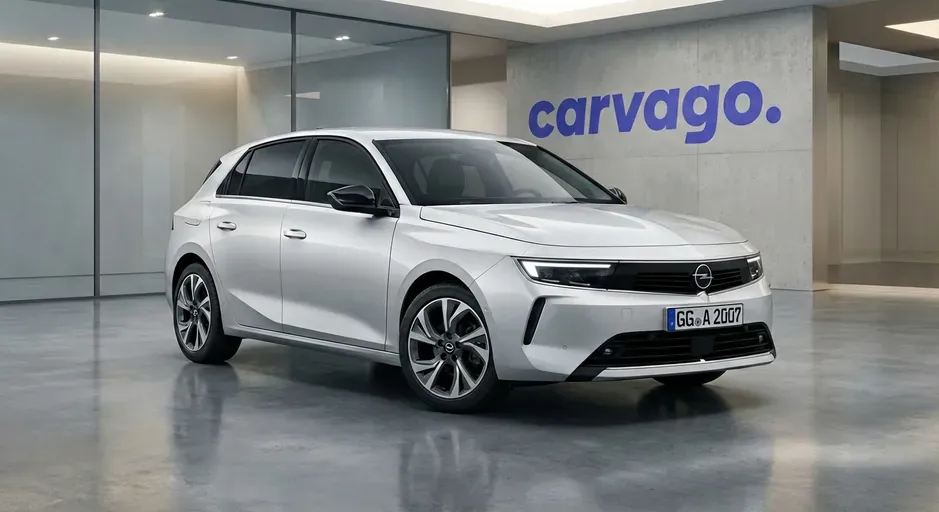
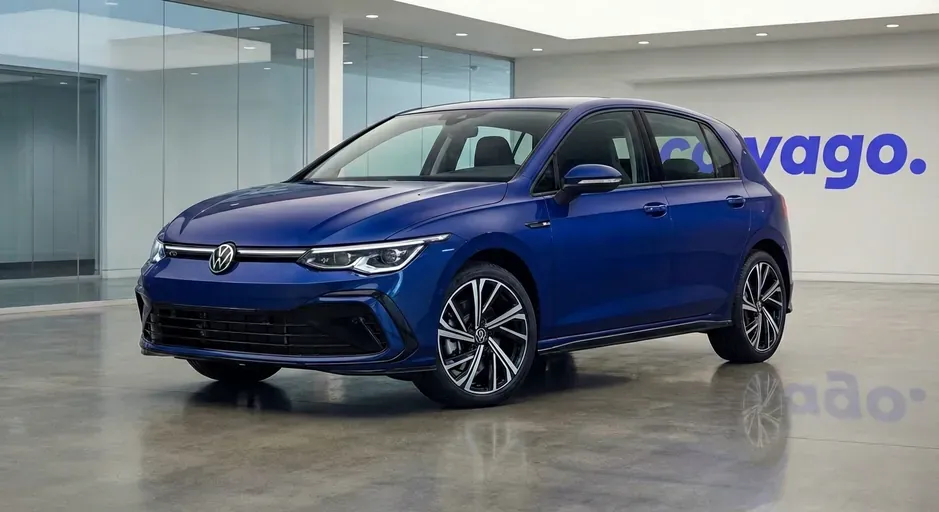
The Opel Astra, also known as the Vauxhall Astra in some markets, represents a traditional and popular member of the compact class, betting on dynamic design and accessible modern technologies. Facing it is the Volkswagen Golf, often described as the absolute benchmark of the compact hatchback segment, which attracts customers with its balanced driving characteristics, sophisticated ergonomics, and renowned German precision. In this comparison, we will take a detailed look at the key differences between these two eternal European rivals to help you decide when choosing the ideal car for your daily travels.
When looking at the exterior dimensions of both current generations, which are typical representatives of the nearly-new used car market (Opel Astra L and Volkswagen Golf VIII), we quickly find that the Astra takes up a bit more space on the road. In the hatchback body style, the Astra is a significant 90 mm longer (4374 mm compared to approximately 4284 mm for the standard Golf) and, more importantly, a substantial 71 mm wider. This difference in width (1860 mm for the Astra vs. 1789 mm for the Golf) gives the Opel not only a more dynamic and planted stance but also promises more shoulder room inside the cabin. On the other hand, the Golf's more compact dimensions make it a slightly more agile companion for narrow city streets and tight parking spaces, where every centimetre can count.
A comparison of the wheelbase, which is key for the longitudinal space for the occupants, offers an interesting perspective. The Astra hatchback boasts a wheelbase of 2675 mm, which is 56 mm more than the Golf (around 2619 mm). This difference is even more pronounced in the practical estate versions (Sports Tourer for the Astra and Variant for the Golf), where Opel offers a generous 2732 mm compared to 2669 mm for the Volkswagen. In the Astra's case, the longer wheelbase theoretically brings a slightly smoother ride on the motorway and more generous legroom for rear passengers. The Golf, on the other hand, benefits from a subjectively better agility in corners thanks to its shorter wheelbase. For a buyer whose priority is maximum longitudinal interior space and straight-line stability, the extra millimetres of the Opel will be a very strong argument.
As for the estate bodies, both cars are very close to the 4.65-metre mark in total length, and the differences here are minimal (the Astra measures 4642 mm, while the Golf ranges from 4631 to 4651 mm depending on the version). The height of both models is also quite comparable, although the Golf tends to be slightly taller in some variants (especially the plastic-clad Alltrack version), which can make entry slightly easier or offer a fraction more headroom. Overall, it can be said that if you often park in narrow underground garages, the Volkswagen Golf will be a slightly more user-friendly choice in terms of manoeuvrability. However, if you prefer a more muscular design, more physical space in the shoulder area, and the feeling of driving a car that pushes a class higher in its proportions, the Opel Astra emerges as the more interesting candidate from the battle of exterior dimensions.
| Parameter | Opel Astra Hatchback | Volkswagen Golf Hatchback | Opel Astra Estate | Volkswagen Golf Estate |
|---|---|---|---|---|
| Width (mm) | 1859–1860 | 1789 | 1859–1860 | 1789–1795 |
| Length (mm) | 4374 | 4282–4296 | 4642 | 4631–4651 |
| Height (mm) | 1432–1488 | 1454–1492 | 1443–1498 | 1462–1510 |
| Wheelbase (mm) | 2675 | 2619–2630 | 2732 | 2669–2679 |
Luggage capacity is a key parameter for many buyers, especially if they are looking for a versatile family car. Whether you're heading out for daily errands or packing for a trip, every extra litre counts. In the battle between two of the most popular European models on the market for roughly four-year-old used cars – the Opel Astra (generation L) and the Volkswagen Golf (generation VIII) – we find surprising differences that could fundamentally influence your final decision. Both manufacturers have approached the interior layout slightly differently, which is significantly reflected in the practicality of the individual body styles.
Looking at the classic five-door layout, the situation clearly develops in favour of the lightning bolt logo. Astra Hatchback offers a generous 422 litres as standard, while the Golf Hatchback has to make do with a volume of 381 litres. This paper difference of over 40 litres means, in practice, space for a few extra suitcases or much easier loading of a folded pram. After folding the rear seats, the Astra's lead becomes even more pronounced, as it can provide a total of 1339 litres compared to 1237 litres in the Golf. However, it is necessary to keep in mind that the battery installation takes its toll. If you opt for the increasingly popular plug-in hybrid powertrain, the boot shrinks noticeably – for the Astra, it drops to a still acceptable 352 litres, but for the Golf in the eHybrid or GTE version, it shrinks to a very modest 273 litres.
But the tables turn if your favourite is the popular and more practical estate body style. The Volkswagen Golf Estate (Variant) excels with a base volume of 611 litres, creating a boot sufficient for weekend shopping and longer holidays without the need for compromises. The Opel Astra Estate (Sports Tourer) lags only slightly behind its rival, offering a very solid 597 litres. Interestingly, however, after folding the rear backrests, the Opel offers a larger and more usable cavern overall with its 1634 litres, slightly exceeding the maximum transport capacity of the Golf (1624 litres). Also, for family estates with a plug-in hybrid system, expect a reduction in space; for the Astra, the volume drops to 516 litres.
In conclusion, it can be simply summarized that for those interested in a compact five-door car, the Astra makes much more sense in terms of luggage transport; conversely, for families who absolutely require a large estate and a full-sized basic boot for their lives, the Golf serves a tad better.
| Parameter | Opel Astra Hatchback | Volkswagen Golf Hatchback | Opel Astra Estate | Volkswagen Golf Estate |
|---|---|---|---|---|
| Base volume (litres) | 422 | 381 | 597 | 611 |
| Max volume with seats folded down (litres) | 1339 | 1237 | 1634 | 1624 |
While the Opel Astra completely dominates in terms of space in its hatchback version, the Volkswagen Golf is slightly more generous in its practical estate variant, making both representatives strong players for different types of drivers and families.
When choosing a used car, the trailer weight (towing capacity) is often a key parameter. Whether you plan to regularly transport heavy construction materials or are just looking for a car sufficient for weekend shopping and longer holidays with a family caravan, the vehicle's ability to safely tow a load plays a major role. Looking at models roughly four years old (Opel Astra generation L and Volkswagen Golf VIII generation), we encounter several interesting differences that can make your decision easier.
For the more recent Opel Astra L (produced since 2022), the standard braked towing capacity for common 1.2 Turbo petrol engines ranges from 1,200 to 1,400 kg. If you are looking for a stronger workhorse, the 1.5 Diesel version can handle a maximum of up to 1,550 kg. Opel also offers modern electrified versions, where slight differences must be taken into account: while the 1.6 Turbo Hybrid plug-in hybrid can handle a solid 1,330 to 1,450 kg, for mild-hybrid variants (Astra 1.2 DI Turbo Hybrid 48V), the capacity drops to 1,100 to 1,150 kg due to the additional weight of the batteries and drivetrain modifications. Fully electric versions are not homologated for towing heavy trailers.
The Volkswagen Golf VIII generation (on the market since 2020) is traditionally somewhat more versatile in this discipline. Standard 1.5 TSI and eTSI petrol engines can tow 1,300 to 1,500 kg. However, a major advantage of the Golf is its 2.0 TDI diesel units, which consistently provide a capacity of 1,500 to 1,600 kg. An interesting paradox compared to the Astra is the approach to hybrids. Volkswagen has dimensioned its plug-in hybrids (eHybrid and the sporty GTE) very generously, offering a maximum braked trailer weight of 1,500 to an impressive 1,700 kg. For specific needs, there is also the raised Golf Alltrack (generations VII and VIII), where the capacity for selected diesel engines reaches up to 2,000 kg.
Practical use and conclusion
In practice, higher towing capacity means not only room for a few extra suitcases in the form of a small trailer but, above all, confidence when towing heavier braked trailers. While the Opel Astra offers values fully sufficient for normal domestic and recreational use, the Volkswagen Golf has a slight edge thanks to stronger diesels and better-dimensioned hybrids. If towing a family caravan or heavy load is a priority for you, the Golf will be the more flexible choice.
Note on unbraked trailers: Exact technical specifications focus primarily on braked trailers. The weight of an unbraked trailer is limited by legislation and design for these vehicles – for most versions, it reaches a maximum permitted 700 to 750 kg depending on the kerb weight of the specific unit.
| Model and engine | Braked trailer (kg) | Unbraked trailer (kg) |
|---|---|---|
| Opel Astra L 1.2 Turbo (81 - 96 kW) | 1200 - 1400 | max. 750 |
| Opel Astra L 1.5 Diesel (96 kW) | 1500 - 1550 | max. 750 |
| Opel Astra L 1.6 Turbo Hybrid (110 kW) | 1330 - 1450 | max. 750 |
| VW Golf VIII 1.5 TSI / eTSI (96 - 110 kW) | 1300 - 1500 | max. 750 |
| VW Golf VIII 2.0 TDI (85 - 110 kW) | 1500 - 1600 | max. 750 |
| VW Golf VIII 1.4 eHybrid / 1.5 eHybrid / GTE | 1500 - 1700 | max. 750 |
When choosing a roughly four-year-old used car, which for today's market means the current generations of the Opel Astra (generation L) and the Volkswagen Golf (generation VIII), you will encounter two very different powertrain philosophies. Both automakers provide efficient solutions, but their approach to driver satisfaction differs. While Volkswagen traditionally sticks to a wide and sophisticated range of four-cylinder engines for the Golf (including the popular TSI and TDI units) supplemented by mild-hybrid technology (eTSI), Opel utilizes shared technologies from the Stellantis Group. Under the Astra's sharp-edged hood, you will primarily find reliable and lightweight three-cylinder petrol engines that give the car unexpected agility. Both platforms reflect modern trends by offering powerful plug-in hybrids (PHEV); however, the Golf targets more sport-oriented drivers with its iconic GTI and R versions, while the Astra has also included a fully electric variant in its lineup. Whether you prefer low-cost maintenance or daily motorway cruising, there is an ideal powertrain for every type of driver.
The engine range for the Opel Astra generation L is relatively narrow but rationally structured to cover the needs of most typical users. The petrol foundation consists of a very successful and lightweight 1.2 Turbo three-cylinder in 81 kW and 96 kW versions. This unit warms up quickly and does not unnecessarily weigh down the front axle. If you frequently travel long distances, you will certainly appreciate the proven 1.5 Diesel four-cylinder engine, whose 300 Nm of torque offers a relaxed drive with excellent fuel economy. The Astra has undergone significant modernization in terms of electrification – in addition to the mild-hybrid version (1.2 DI Turbo Hybrid 48V), the Astra also offers advanced 1.6 Turbo Hybrid plug-in hybrids and the purely battery-powered Astra Electric model. Alongside six-speed manuals, comfort is primarily handled by very smooth and logically shifting eight-speed torque converter automatics.
| Engine Type | Fuel | Power (kW) | Torque (Nm) | Transmission |
|---|---|---|---|---|
| 1.2 Turbo | Petrol | 81 / 96 | 205 / 230 | 6MT / 8AT |
| 1.2 DI Turbo Hybrid 48V | MHEV (Petrol) | 100 | 230 | 6-eDCT |
| 1.5 Diesel | Diesel | 96 | 300 | 6MT / 8AT |
| 1.6 Turbo Hybrid | PHEV (Petrol) | 132 / 165 | 360 | 8AT |
| Electric | Electricity | 115 | 270 | 1AT |
Compared to the Astra, the Volkswagen Golf's engine palette feels like an open menu for automotive connoisseurs. Until recently, the entry-level for the undemanding consisted of 1.0 TSI three-cylinder engines (though their production gradually ended around 2024), while the uncrowned king of the petrol range is the sophisticated 1.5 TSI four-cylinder equipped with a cylinder deactivation system. The Golf was one of the pioneers in combining a petrol engine with a 48V mild-hybrid system (engines designated eTSI), which is supplied exclusively with a seven-speed dual-clutch DSG automatic. The 2.0 TDI diesel engines remain immensely popular on the used car market, equipped with an innovative twin-dosing urea injection system that radically reduces nitrogen oxide emissions. For enthusiasts, there are the 2.0 TSI units (GTI and R versions), as well as the eco-friendly 1.5 TGI variant running on compressed natural gas, which was offered until roughly 2022.
| Engine Type | Fuel | Power (kW) | Torque (Nm) | Transmission |
|---|---|---|---|---|
| 1.0 TSI / eTSI | Petrol / MHEV | 66 / 81 | 175 / 200 | 6MT / 7DSG |
| 1.5 TSI / eTSI | Petrol / MHEV | 96 / 110 | 200 / 250 | 6MT / 7DSG |
| 2.0 TSI (incl. GTI/R) | Petrol | 140 / 180 / 235 | 320 / 370 / 420 | 7DSG |
| 1.4 eHybrid / GTE | PHEV (Petrol) | 150 / 180 | 350 / 400 | 6DSG |
| 1.5 TGI | CNG (Petrol) | 96 | 200 | 7DSG |
| 2.0 TDI (incl. GTD) | Diesel | 85 / 110 / 147 | 300 / 360 / 400 | 6MT / 7DSG |
When choosing a roughly four-year-old used car, the right choice of power unit is absolutely crucial for long-term satisfaction. The engine determines not only the dynamics and real-world fuel consumption but, above all, mechanical reliability and future service costs. In the case of both compared models, we see different engineering approaches. While the Opel Astra in its current generation L (available since 2022) has largely bet on turbocharged three-cylinder engines and French technology after joining the Stellantis group, the eighth-generation Volkswagen Golf (on the market since 2020) still offers a wide range of proven four-cylinder engines, increasingly utilizing eTSI mild-hybrid technology to reduce consumption and smooth out operation.
The 1.2 Turbo turbocharged petrol three-cylinder is the most rational choice in the lineup for a four-year-old Astra (Generation L).
In the case of the Golf VIII, the "golden mean" is the more powerful version of the proven 1.5 TSI four-cylinder, or its mild-hybrid eTSI version (standard with the DSG automatic transmission).
When it comes to choosing a roughly four-year-old used car, fuel consumption is undoubtedly one of the key parameters for many buyers. Official laboratory values provided by manufacturers often differ quite significantly from what the trip computer shows in everyday operation. To get the most accurate picture of the real appetite of both compared models – the eighth-generation Volkswagen Golf and the Opel Astra on the cusp of the outgoing K generation and the incoming L generation (model years around 2021 and 2022) – we used independent data from drivers themselves from the community portal Spritmonitor.de.
| Model and Engine | Average Consumption (l/100 km) | news_site |
|---|---|---|
| Volkswagen Golf 2.0 TDI (85/110 kW) | 4.9 | Spritmonitor.de |
| Opel Astra 1.5 Diesel (90/96 kW) | 5.0 | Spritmonitor.de |
| Volkswagen Golf 1.0 eTSI (81 kW) | 5.6 | Spritmonitor.de |
| Volkswagen Golf 1.5 TSI (96/110 kW) | 6.1 | Spritmonitor.de |
| Opel Astra 1.4 DI Turbo (110 kW) | 6.1 | Spritmonitor.de |
| Opel Astra 1.2 Turbo (96 kW) | 6.3 | Spritmonitor.de |
Looking at the real-world data, several clear trends are apparent that can facilitate the final decision when buying on the used car market:
In conclusion, fuel consumption should not be the only or necessarily the deciding factor when choosing between these two cars, as both competitors offer very economical and efficient units for their age. However, thanks to more advanced mild-hybrid technology (eTSI) and the traditionally exceptionally efficient 2.0 TDI diesel, the Volkswagen Golf holds a slight lead for specific user profiles. But if the Opel Astra overall suits your driving nature better, the potential differences in measured consumption for most engines are only in the range of tenths of a litre. This will not significantly burden your wallet with average annual mileage.
In the category of approximately four-year-old used vehicles (models around 2021 and 2022), the differing market positions of both models are fully evident. The Volkswagen Golf traditionally and consistently maintains a very high residual value on the market, positioning itself as a more premium representative of the mainstream class. In contrast, the Opel Astra represents an interesting turning point in this age range – on the market, you will find both exceptionally affordable cars from the outgoing fifth generation (Astra K) and modern, significantly more expensive units from the incoming sixth generation (Astra L).
While the German bestseller from Wolfsburg requires a more generous initial budget, Opel can offer significantly cheaper alternatives.
| Model and Generation | Base Petrol Engines | More Powerful Petrol / Diesel (2.0 TDI / 1.5 CDTi) | Depreciation |
|---|---|---|---|
| VW Golf VIII (from 2020) | €16,000 – €18,000 | €18,000 – €23,000 | Very low |
| Opel Astra L (from 2021/22) | €16,000 – €17,000 | €17,000 – €20,000 | Average |
| Opel Astra K (until 2021/22) | €10,000 – €12,000 | €11,000 – €14,000 | Higher |
From the perspective of value retention, the Volkswagen Golf is the undisputed king, with its price on the secondary market declining only very slowly. You will appreciate this especially when you decide to sell the car after a few years. The Opel Astra generation K experienced a somewhat steeper drop in new car price during its production period, which, however, currently makes it a fantastic, family-oriented used car where you get the maximum for your money. The position of the newer Astra L is stronger; the sharing of French platforms and engines, along with a very modern approach, ensures that the drop in value has slowed down between generations, allowing the car to compete better with the stable position of Volkswagen.
While the Volkswagen Golf VIII confidently and long-term maintains a high residual value and requires a higher budget, the outgoing Opel Astra K is the clear choice on the used car market for bargain hunters; however, if you opt for the visually more impressive new Astra L, the differences in used car prices practically disappear.
Although a five-star Euro NCAP rating has become almost standard for many modern cars in this class, when comparing the safety of used cars, it is extremely important to take into account the overall context and the year of testing. Crash test protocols evolve over time and are constantly becoming stricter. New and more demanding frontal impact simulations are introduced, advanced detection of cyclists or pedestrians is tested, and the reactions of assistance systems in complex intersection scenarios are evaluated. For this reason, percentage scores from different years cannot be directly compared, as newer tests are much more uncompromising towards vehicles.
The eighth-generation Volkswagen Golf underwent its original tests in 2019, but the manufacturer improved its safety during production with a center airbag, lap belt pretensioners, and more advanced intersection assistants. As a result, the Golf could be reassessed in 2022 according to the latest strict standards and confidently defended its maximum five-star rating. The competing Opel Astra generation L also underwent crash tests in 2022 and demonstrated excellent body rigidity. However, the result is an overall four-star rating, primarily due to the lack of a center airbag (which prevents injuries from the bodies of the driver and passenger colliding during a side impact) and a slightly narrower standard range of certain active safety systems.
| Parameter | Opel Astra | Volkswagen Golf |
|---|---|---|
| Year of testing | 2022 | 2022 |
| Adult occupant protection | 80 % | 88 % |
| Child occupant protection | 82 % | 87 % |
| Vulnerable road users protection | 67 % | 74 % |
| Safety assistance systems | 66 % | 82 % |
Looking at these detailed results from the same year, it is clear what they mean in practice. The Volkswagen Golf features a significantly more advanced package of active and passive safety, which is clearly reflected in the safety assistance score and better torso protection for adult occupants. The Opel Astra, on the other hand, represents a structurally very safe car; its platform is exceptionally stable and protects children in the rear seats excellently, though the absence of some of the latest features represents a minor technological compromise.
Ultimately, both cars provide a high level of safety and can protect the whole family very well in everyday traffic and emergency situations. However, if you require the most comprehensive occupant protection complemented by highly sophisticated assistance technologies according to current and very strict standards, the Volkswagen Golf emerges from this comparison as the more modern and a step better-equipped choice.
Thanks to its updated equipment, the Volkswagen Golf defended its five-star rating even in the stricter 2022 tests, thereby slightly surpassing the otherwise very stable four-star Opel Astra in terms of safety assistants and passive protection features.
Both models offer much more than just basic equipment, with each choosing its own, completely different approach to added value and technological innovation. In addition to standard equipment, they offer several unique features that can be decisive for the customer when making the final vehicle choice.
With the current generation, Opel focused on a sleek design and user comfort, prioritizing intuitiveness over excessive digitalization at any cost.
The eighth generation of the Volkswagen Golf represents a technological milestone where connectivity, digitalization, and an exceptionally wide variety of powertrains play the leading role.
Attractive and modern exterior design with the characteristic Opel Vizor grille
Retention of classic physical buttons for key functions (especially climate control)
Top-tier ergonomic front seats with AGR certification
More favorable purchase price and attractive price-to-equipment ratio on the used car market
Successful and efficient plug-in hybrid powertrains
Less legroom in the rear seats compared to the Golf
Smaller luggage compartment volume in plug-in hybrid versions due to battery placement
Less communicative steering and a driving character that is more comfortable than sporty
Infotainment response and user interface occasionally lag behind segment leaders
The Opel Astra is an ideal choice for drivers looking for a bolder look, great seating ergonomics, and a user-friendly interior that doesn't distract with unnecessarily complex controls. It represents a more affordable and very rational alternative for daily commuting and longer trips.
Excellently tuned chassis combining high travel comfort and confidence in corners
Wide range of reliable and economical powertrains (from eTSI to diesel TDI)
Stable and very high residual value for resale
Advanced and reliable assistance systems available even from lower trim levels
Spacious interior with more generous space for rear passengers
Frustrating touch-based infotainment controls and the lack of backlighting for the climate control slider
Higher average purchase price for used cars
A slight decline in the quality of some interior plastics compared to the previous generation
The eighth-generation Volkswagen Golf remains the benchmark of the compact class, relying on perfect versatility, a top-tier chassis, and a rich palette of engines. It serves families and individuals looking for a reliable car with high value well, provided they can get used to the fully touch-based dashboard concept.
Based on long-term user experience, service reports from recall campaigns, and insights provided by our thorough independent technical inspection, we have compiled an overview of the most common problems of both cars for buyers on the used car market.
The current generation Opel Astra uses proven Stellantis Group technology, yet it still exhibits specific ailments and design solutions that require increased caution.
The Astra is a technologically advanced car, but it requires strict adherence to service intervals, especially for petrol engines with a timing belt in oil. If you give the car honest service, it will reward you with above-standard reliability.
The eighth-generation Volkswagen Golf brought extensive digitalization, which, however, became a source of numerous so-called teething problems in the first years of production, joined by several traditional mechanical weaknesses.
While the mechanical foundation and chassis architecture of the Golf are of high quality, the overall impression is heavily undermined by software deficiencies and striking assistance systems. A thorough check of the service history and installed updates is an absolute necessity before purchase.
When buying a used car, a thorough inspection is key. Here are some specific points to focus on for these two models:
In the hatchback version, the Opel Astra offers a slight advantage with a trunk volume of 422 liters compared to 381 liters for the Volkswagen Golf. However, if you are looking for a more practical station wagon, the Golf Variant wins with a volume of 611 liters, while the Astra Sports Tourer has 597 liters. For both cars, it is important to note that plug-in hybrid versions have significantly smaller trunk volumes due to the batteries.
The eighth-generation Volkswagen Golf initially suffered from software bugs and slower infotainment, which has improved in newer model years after updates, but the fully touch-based controls may not suit everyone. The Opel Astra offers a more user-friendly environment because it has retained classic physical buttons for the air conditioning and basic functions. For many drivers, the ergonomics and adjusting functions while driving are more intuitive in the Astra.
Both cars offer highly efficient gasoline and diesel engines with real combined fuel consumption around 5 to 6 l/100 km. The Volkswagen Golf has a slight advantage thanks to its eTSI mild-hybrid versions, which can coast with the engine off and reduce consumption especially in city traffic. If you have the option to charge at home, both models are also available as plug-in hybrids with a purely electric range of around 50 to 60 kilometers.
The Volkswagen Golf has long been considered the benchmark of the compact class thanks to its excellent compromise between smooth comfort and confidence in corners. The current generation Opel Astra is built on the Stellantis group platform and offers a slightly stiffer, more sportily tuned chassis. Overall, the Golf dampens sharp bumps a bit better, while the Astra feels more dynamic and stable on smooth asphalt.
For four-year-old used Volkswagen Golfs, owners complain most about occasional software glitches, driver assistance system failures, and freezing of touch surfaces. For Opel Astra gasoline engines (1.2 Turbo), it is absolutely crucial to check the oil change history, as a degrading timing belt immersed in oil can clog the lubrication system and damage the engine. The mechanical durability of the chassis, gearboxes, and corrosion protection are at a very good level for both competitors.
Choosing between the Opel Astra and the Volkswagen Golf depends primarily on whether you prefer traditional ergonomics in a roughly four-year-old used car, or if you instead require maximum technological sophistication and advanced connectivity. The Opel Astra in its current L generation will appeal to drivers looking for an attractive design, top-tier orthopedic seats, and the retention of physical buttons for key functions, making it a very user-friendly choice that excels in trunk capacity in the hatchback version. The eighth-generation Volkswagen Golf, on the other hand, remains a phenomenal all-rounder; although it requires getting used to fully touch-based controls and a higher purchase budget, it rewards you with a perfectly tuned chassis, exceptionally refined four-cylinder engines, and a more stable residual value. If your priority is a more spacious family estate and highway travel with an economical diesel engine, the proven Golf makes slightly more sense, while for daily commuting with an emphasis on bold style and a better price-to-equipment ratio, the Astra represents an excellent and rational alternative.
Sources: ADAC, denik.cz, e15.cz, autojournal.cz, auto-mania.cz, finmag.cz
This article was prepared using artificial intelligence tools. The section guarantor is Petr Dušek.
Detailed comparison of the Peugeot 308 and Renault Mégane. Compare engines, equipment, and the reliability of used cars. Read our verdict and choose the best car!
Apr 15, 2026
Detailed comparison: Mazda 3 vs. Renault Mégane. We reveal real-world experiences, differences in equipment, and reliability. Find out which hatchback is the better choice!
May 3, 2026
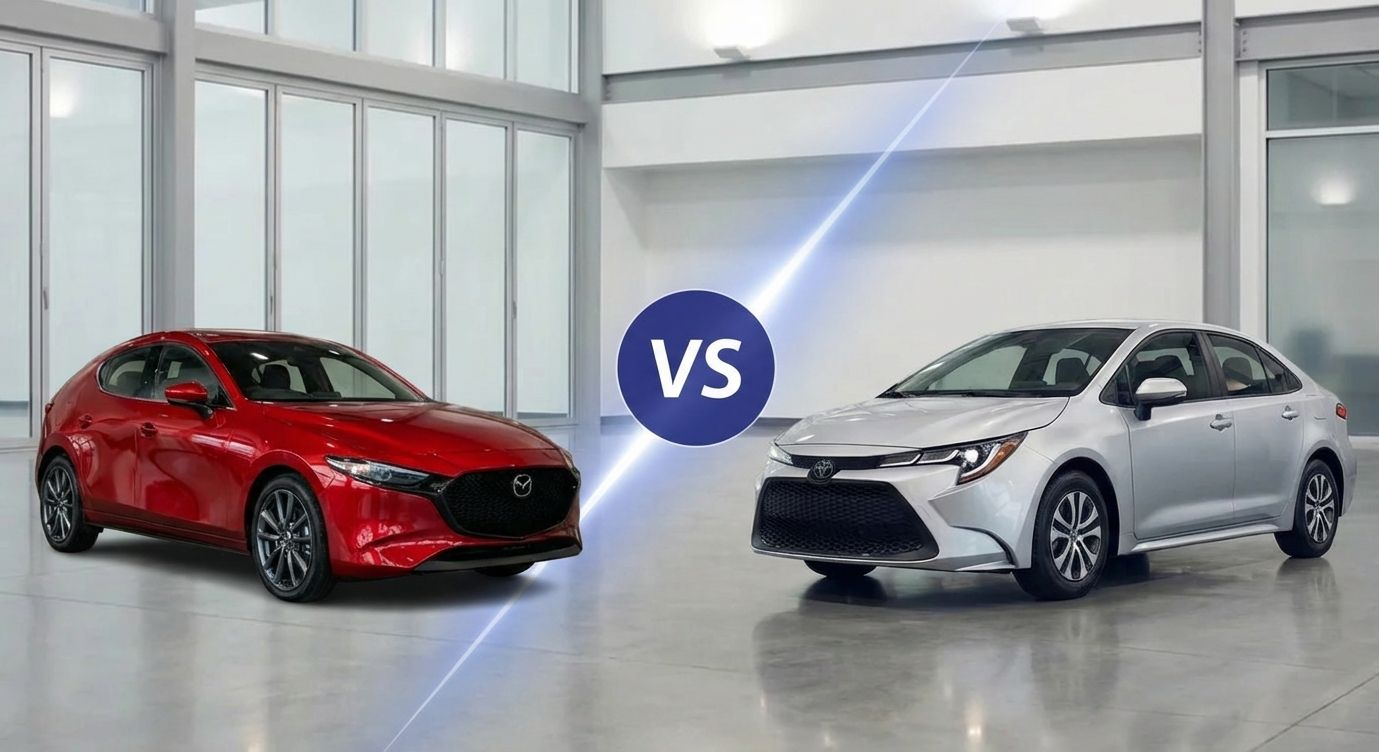
Mazda 3 vs. Toyota Corolla: Which bestseller is better? Our detailed comparison of engines, features, and handling will help you make your final choice.
Apr 13, 2026