Car battle
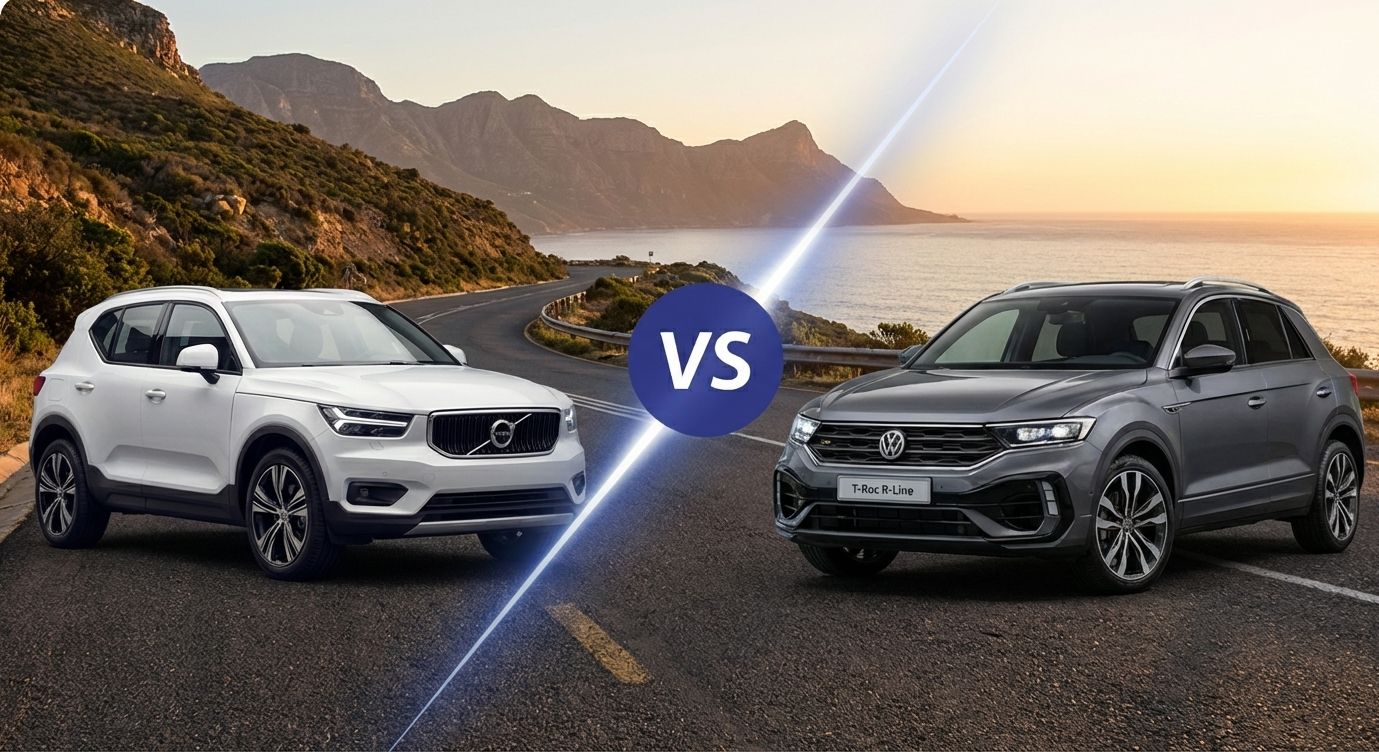
Volvo XC40 vs. Volkswagen T-Roc: Complete comparison 2026
Undecided between a Volvo XC40 and a VW T-Roc? Our comparison will help you choose. Discover the main differences, real-world impressions, and a clear verdict.
Apr 14, 2026
Articles
Car battle
Detailed comparison of Nissan Ariya vs Volkswagen ID.4. Find out the real range, interior quality, and driving characteristics of both electric SUVs. Which one to choose?
May 17, 2026
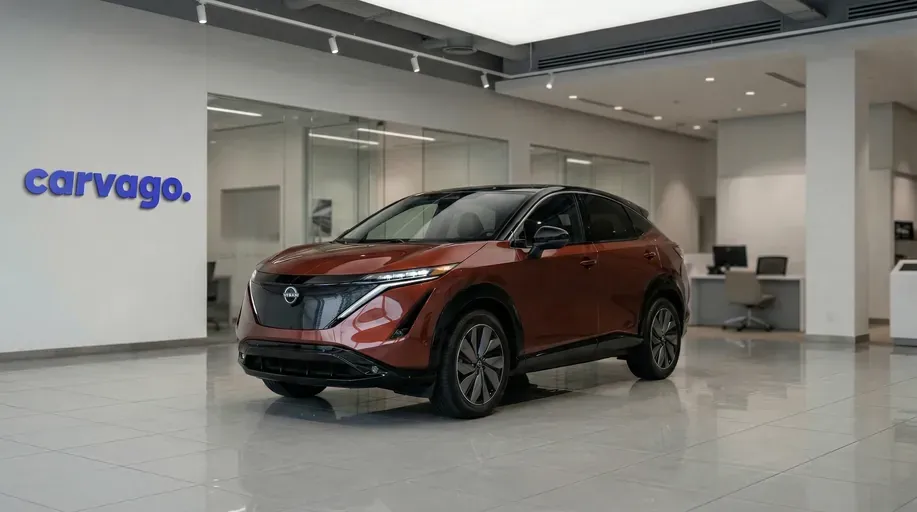
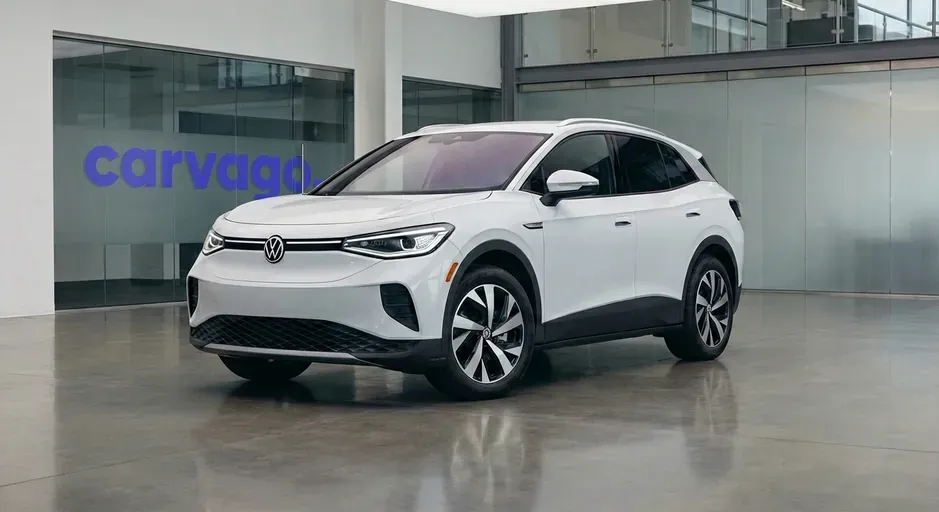
The Nissan Ariya brings a fresh Japanese futurism to the fully electric family SUV segment, impressing with its bold exterior design and a premium-finished interior in the style of a modern lounge. Standing against it is the Volkswagen ID.4, also available in some global markets under the alternative names ID.4 Crozz or ID.4 X, which appeals to customers primarily with its proven German practicality, generous interior space, and neutral, balanced driving characteristics. Let's take a detailed look at how these two competitors fare in a direct head-to-head on the used car market and which of them represents a more sensible choice for your daily travels.
Nissan Ariya and Volkswagen ID.4 compete in the popular category of fully electric family SUVs not only with their technologies but also with their dimensions. Looking at their proportions, it is clear that both cars rely on the advantages of dedicated electric vehicle platforms. These allow designers to create an exterior whose dimensions do not overly complicate parking and maneuvering in tight city streets, while simultaneously providing a generous and airy space inside the cabin.
In terms of overall length, the Nissan Ariya, at 4,595 mm, is a slight 11 to 13 mm longer than the Volkswagen ID.4 (4,582 – 4,584 mm). The width is practically identical for both vehicles – the German representative, at 1,852 mm, is wider by a mere 2 millimeters. The most significant difference can thus be found in the height of the body. The Ariya measures 1,650 mm in height, while the Volkswagen is overall lower (1,619 to 1,640 mm depending on the chosen equipment or drivetrain, with the lowest values achieved by the sportier GTX versions). As a result, the Nissan can appear somewhat more robust and traditional as an SUV on the road, while the ID.4 relies on a slightly more aerodynamic and sleeker silhouette.
A crucial parameter for practical usability and interior spaciousness is the wheelbase. Here, both models perform above average. Nissan offers a wheelbase of 2,775 mm, while the Volkswagen ID.4 has just negligible millimeters less (2,769 – 2,773 mm). In practice, this means that whichever of these roughly four-year-old models you choose from a used car dealer, you will get excellent legroom in the rear seats, the kind previously offered by cars a class larger. In the final selection, personal preference will play the main role in terms of proportions – whether you prefer the slightly taller build and a hair longer body of the Nissan, or rather the somewhat lower, aerodynamic profile of the Volkswagen.
| Parameter | Nissan Ariya SUV | Volkswagen ID.4 SUV |
|---|---|---|
| Width (mm) | 1850 | 1852 |
| Length (mm) | 4595 | 4582-4584 |
| Height (mm) | 1650 | 1619-1640 |
| Wheelbase (mm) | 2775 | 2769-2773 |
When choosing a family electric car, luggage space is often one of the deciding factors for the overall usability of the vehicle. Although both the Nissan Ariya and the Volkswagen ID.4 belong to the popular mid-size SUV segment and are direct competitors in the market for roughly four-year-old used cars, their approach to interior layout differs significantly. While the German representative bets on maximum practicality, the Japanese model sacrifices some space for a sloping roof design and a more complex drivetrain installation. In practice, this difference means space for several extra suitcases, which you will appreciate especially when packing for longer family trips.
The Volkswagen ID.4 clearly dominates in this discipline and provides families with steady reliability. Across all offered versions – whether you are looking for the standard Pure and Pro versions or the sporty GTX variant – the car offers the same generous base volume of 543 liters. This space is more than sufficient for a weekend grocery run or a longer holiday with a bulky stroller. Furthermore, after easily folding down the rear seats, the transport capacity increases to an excellent 1575 liters, making the ID.4 a perfect companion even for moving larger items.
The Nissan Ariya, on the other hand, requires more careful selection from potential buyers, as its trunk volume fluctuates significantly depending on the chosen drivetrain. The standard front-wheel-drive version provides a decent 468 liters, which is still an acceptable value for normal family use. However, if you opt for the more powerful versions with the e-4ORCE all-wheel-drive system (often with the larger 87kWh battery), the installation of the rear electric motor reduces the trunk to a below-average 415 liters. In such a case, you lose a staggering 128 liters compared to the Volkswagen. With the seats folded down, the Ariya offers a maximum of 1280 to 1350 liters. The conclusion is therefore clear: while the Volkswagen accommodates maximum luggage without compromise, the Nissan will better suit drivers who are satisfied with average space and prioritize the car's design over absolute hauling capacity.
| Parameter | Nissan Ariya SUV | Volkswagen ID.4 SUV |
|---|---|---|
| Base volume (liters) | 415 - 468 | 543 |
| Max. volume with seats folded (liters) | 1280 - 1350 | 1575 |
The Volkswagen ID.4 offers a significantly larger trunk that remains equally huge across all versions, while with the Nissan Ariya, you have to expect noticeably less space for your luggage in the better-equipped all-wheel-drive models.
The ability to tow a trailer is a frequently discussed topic for electric vehicles, and between the Nissan Ariya and Volkswagen ID.4 models, we find interesting differences in this regard that can fundamentally affect the daily usability of the car. The weight of an unbraked trailer is limited to the standard 750 kg for both representatives. This is a value that represents a perfectly sufficient limit for the routine weekend transport of garden waste or moving smaller pieces of furniture on a light trailer. However, fundamental differences appear with braked trailers, where the chosen battery capacity and drive type play a key role.
The front-wheel-drive Nissan Ariya (in versions with 63 kWh and 87 kWh batteries) offers a maximum towing capacity of only 750 kg, which is a rather modest value within this class. But the situation changes dramatically with the top-of-the-line e-4ORCE all-wheel-drive version (87 kWh), which can tow a respectable 1500 kg. In practice, this means much broader possibilities for use and the convenient attachment of even a medium-sized caravan for a longer family holiday.
In contrast, the Volkswagen ID.4, if we focus on cars from 2021 to 2023, which are the most relevant for the used car market, offers much more stable baseline values across its model range. While the more affordable Pure or Pro Performance versions can tow 1000 kg, the Pro variants and the sporty GTX model from this period push the limit up to 1200 kg.
Although the Volkswagen ID.4 represents a better choice in the case of basic engines, where it offers 250 kg more towing power than the basic Nissan version, the roles are reversed for the top specifications. The Nissan Ariya in the all-wheel-drive version is, thanks to its generous maximum, the clear favorite for those drivers who require uncompromising flexibility for towing heavier loads.
| Model and powertrain | Braked trailer weight (kg) | Unbraked trailer weight (kg) |
|---|---|---|
| Nissan Ariya (63 kWh) | 750 | 750 |
| Nissan Ariya (87 kWh) | 750–1500 | 750 |
| Volkswagen ID.4 Pure / Pro Performance | 1000 | 750 |
| Volkswagen ID.4 Pro / GTX (2021–2023) | 1200 | 750 |
Both models, the Nissan Ariya and the Volkswagen ID.4, rely exclusively on pure electric powertrains, but they approach them with a different layout philosophy. While the Volkswagen ID.4, built on the proven group MEB platform, uses classic rear-wheel drive (RWD) as standard, the Nissan Ariya on the CMF-EV architecture unconventionally features front-wheel drive (FWD) for its single-motor versions. For those interested in a used family car, this represents a fundamental difference in driving characteristics and the overall steering feel. If you are looking for maximum traction not only in winter, both cars also offer advanced all-wheel drive provided by two electric motors – under the e-4ORCE designation for Nissan and as 4MOTION or GTX for Volkswagen. Generally speaking, Nissan attracts with significantly higher power even in its base specifications, whereas Volkswagen counters with a wider selection of power levels that will appeal to both calmer drivers seeking maximum efficiency and individuals preferring stronger acceleration.
The range of powertrains for the Nissan Ariya is logically structured and firmly tied to the battery size (63 or 87 kWh). Even the base version with front-wheel drive and the smaller battery offers a very solid output of 160 kW, which increases to 178 kW for the variant with the larger battery. Both of these specifications have the same torque of 300 Nm. A completely different dynamic league is represented by the advanced e-4ORCE all-wheel-drive system, which, thanks to a pair of motors, offers 225 kW in the standard configuration, while the earlier Evolve+ package pushed the limit up to 290 kW. For true enthusiasts of dynamic driving, Nissan also introduced the top-of-the-line Nismo specification for cars from 2025 onwards, with a massive output of 320 kW. A single-speed automatic transmission (reduction gear) is standard across all powertrains, ensuring a completely smooth pull.
| Engine type | Fuel type | Power (kW) | Torque (Nm) | Transmission |
|---|---|---|---|---|
| 63 kWh (FWD) | Electricity | 160 | 300 | 1-speed automatic |
| 87 kWh (FWD) | Electricity | 178 | 300 | 1-speed automatic |
| 87 kWh e-4ORCE (AWD) | Electricity | 225 | 600 | 1-speed automatic |
| 87 kWh e-4ORCE Evolve+ (AWD) | Electricity | 290 | 600 | 1-speed automatic |
| Nismo (AWD) | Electricity | 320 | 600 | 1-speed automatic |
The powertrain portfolio for the first generation of the Volkswagen ID.4 is significantly richer, although it may be slightly confusing at first for those interested in a second-hand car due to the gradual replacement of units. The base Pure and Pure Performance models were designed primarily for shorter routes and relied on a 52 kWh battery with outputs of 109 and 125 kW, respectively. However, the Pure Performance variant (125 kW) disappeared from the range as early as mid-2022. Among used cars roughly four years old, the Pro Performance variant with a 77 kWh battery clearly dominates, offering an optimal output of 150 kW and 310 Nm of torque. However, production of this popular specification definitively ended in October 2023, making way for the modernized Pro version, where engineers deployed a much more efficient motor with 210 kW of power and a massive 545 Nm of pull. The flagships are the all-wheel-drive versions – whether it's the standard 4MOTION or the sport-tuned GTX derivative, whose power was also increased from the original 220 kW to an impressive 250 kW in newer model years. Power transmission across the model range is handled exclusively by a smooth single-speed reduction gear.
| Engine type | Fuel type | Power (kW) | Torque (Nm) | Transmission |
|---|---|---|---|---|
| Pure 52 kWh (RWD) | Electricity | 109 | 220 | 1-speed automatic |
| Pure Performance 52 kWh (RWD) | Electricity | 125 | 310 | 1-speed automatic |
| Pro Performance 77 kWh (RWD) | Electricity | 150 | 310 | 1-speed automatic |
| Pro 77 kWh (RWD) | Electricity | 210 | 545 | 1-speed automatic |
| Pro 4MOTION 77 kWh (AWD) | Electricity | 195 | 425 | 1-speed automatic |
| GTX 4MOTION 77 kWh (AWD) | Electricity | 220 - 250 | 460 - 545 | 1-speed automatic |
While the Nissan Ariya scores with significantly higher base power and unconventional front-wheel drive, the Volkswagen ID.4 counters with a more diverse range of RWD and AWD variants, from which both a budget-conscious family and a more demanding driver can choose on the used car market.
Choosing the right motorization for electric vehicles is critical for long-term satisfaction, as it affects not only dynamics but, above all, real-world range, charging speed, and the overall reliability of the powertrain. Both compared SUVs, which as used cars will target buyers looking for approximately four-year-old vehicles, offer a fundamentally different structural approach. While the Nissan Ariya relies primarily on front-wheel drive for its more economical and affordable versions and attracts with a large battery with a usable capacity of 87 kWh, the Volkswagen ID.4 bets on a rear-wheel drive concept for its most popular specifications. Thanks to the unladen front axle, this gives such a large car an unexpectedly small turning radius of around 10.2 meters, which facilitates maneuvering. Our recommendation for the ideal compromise between reliability, real-world range, and user-friendliness for both models therefore points to proven variants with larger batteries.
From the relatively wide range of the Nissan Ariya model, which entered the market in the fall of 2022, the version with the large battery (87 kWh) and front-wheel drive makes the most sense from the perspective of a four-year-old used car. This motorization represents an absolutely ideal balance for daily driving and holiday trips. The basic 63 kWh battery could limit you on highways due to its lower capacity, while the top-of-the-line e-4ORCE all-wheel drive is extremely dynamic but significantly heavier, which takes its toll on electricity consumption. The recommended FWD variant with an output of 178 kW (242 hp), on the other hand, offers excellent efficiency and a real-world range safely exceeding 400 km. The technical advantage of this front-wheel drive is the very smooth delivery of 300 Nm of torque and the fact that its externally excited synchronous motor does not require problematic rare earths for its production. In terms of risks, it is essential to carefully check the condition of the suspension components and the degree of wear on the front tires on these older vehicles. Transferring all the power and regenerative braking force of a car weighing over two tons exclusively to the front axle causes higher mechanical stress on the chassis components. You can safely identify a potential problem by unevenly worn tire tread (indicating misaligned geometry) or vibrations and shocks to the steering wheel during sharp acceleration out of a corner. This specification is an ideal choice for drivers looking for maximum driving comfort, quiet operation, and a reliable partner for longer distances without the need to pay extra for all-wheel drive.
For the Volkswagen ID.4 from the first years of production, specifically for the 2021 to 2022 model years, the Pro Performance version is the clear and proven favorite. The weaker 52 kWh variants from the range at that time often lack the highway versatility needed for a massive family SUV weighing over two tons, while the sportier GTX all-wheel-drive versions disproportionately increase consumption and bring no fundamental benefit for normal family driving. The Pro Performance model features a larger battery with a usable capacity of 77 kWh and a single electric motor with an output of 150 kW (204 hp) located on the rear axle. This classic layout provides the car with completely trouble-free traction and very solid range and flexibility. Technical assets include the excellent driving stability of the rear-wheel drive and a mechanically durable powertrain. However, the biggest risk and weakness of the early ID.4 model years used to be unrefined software, which plagued owners' lives with occasional screen freezes or slow responses. When buying a four-year-old used car, it is therefore absolutely crucial to verify directly in the infotainment (in the System Information section) whether the car has software version 3.0 or newer installed (obtained through OTA updates and service recalls). If the system is jerky and slow even during the test drive, the car may suffer from poorer battery management, especially in freezing weather, and will require a longer visit to an authorized service center for a complete reflash. Otherwise, this motorization is perfectly suited for family use, where you will fully appreciate the carefree smooth operation, huge interior space, and highway versatility without anxiety about missing kilometers in the battery.
For electric vehicles, it is perhaps even truer than for internal combustion engine vehicles that official consumption figures provided by manufacturers according to the WLTP methodology can differ significantly from everyday reality. Actual electricity consumption is heavily dependent on outdoor temperature, highway speed, and the overall route profile. To get an objective picture of how approximately four-year-old models perform on the used car market (Nissan Ariya generation FE0E from 2022 and Volkswagen ID.4 first generation from 2021–2023), one cannot rely solely on catalogs. We therefore drew information directly from real-world operation based on extensive data from drivers themselves, primarily from the independent community portal Spritmonitor.de, supplemented by aggregated data from our comparative tests.
| Model and powertrain | Average consumption (kWh/100 km) |
|---|---|
| Volkswagen ID.4 Pure / Pure Performance (52 kWh) | 16.7 |
| Volkswagen ID.4 Pro / Pro Performance (77 kWh) | 17.5 |
| Volkswagen ID.4 GTX (77 kWh) | 17.6 |
| Nissan Ariya (63 kWh) | 17.7 |
| Nissan Ariya (87 kWh) | 19.3 |
When interpreting the real-world data, a fairly clear trend is evident: the Volkswagen ID.4 emerges from this comparison as the more energy-efficient car. The German model benefits significantly from the excellent aerodynamics of its rounded, almost teardrop-shaped body. Thanks to this, even the more powerful Pro version with the heavier 77kWh battery can maintain a very favorable 17.5 kWh/100 km in practice. Even the sporty GTX model with all-wheel drive consumes only a minimal amount of extra energy. In contrast, the Nissan Ariya is an overall taller and more massive SUV, which inevitably results in higher air resistance and consumption. While the base variant with the 63kWh battery holds its own at 17.7 kWh/100 km, the popular version with the large 87kWh battery approaches the 19.3 kWh/100 km mark in real-world combined driving.
For typical users, several key takeaways emerge from these figures. If you plan to use your electric car primarily for suburban commuting, daily school runs, and occasional weekend trips, both base versions with smaller batteries (ID.4 Pure and Ariya 63 kWh) will serve you well. In city traffic, the differences in consumption are negligible. However, if you are a driver who spends a lot of time on the highway and frequently travels long distances, the Volkswagen ID.4 Pro makes much more sense from an operating cost perspective. Due to its poorer aerodynamics at higher speeds, the Nissan Ariya will lose energy faster, which, combined with the higher consumption of the 87 kWh version, can mean more frequent stops at charging stations.
In conclusion, energy consumption should definitely play an important role in this particular comparison. Although the Nissan Ariya scores points with its fresh design and premium-feeling interior, the Volkswagen ID.4 clearly has the upper hand in terms of electric powertrain efficiency. For pragmatically minded buyers of an approximately four-year-old used electric car who keep an eye on charging bills and demand maximum range without unnecessary losses, the German car is the more rational and economical choice.
The Volkswagen ID.4 and Nissan Ariya represent two different paths in the category of electric family SUVs, which is clearly reflected in the used car market. If we focus on models roughly 4 years old (primarily the 2021 to 2022 model years), we can observe a significant price difference, influenced by different market launch dates and the initial pricing strategies of the manufacturers.
The German SUV entered the market a bit earlier, which means there is a much wider selection in dealerships today. A faster depreciation in the first years of operation means that the ID.4 has become a very affordable and rational choice for families on the secondary market.
The Ariya reached customers a bit later with a clear ambition to move the Japanese brand closer to the premium segment. Its higher purchase price and more generous standard equipment mean that it maintains a significantly higher price tag on the used car market.
| Model | Typical used year | Approximate price (EUR) | Market availability |
|---|---|---|---|
| VW ID.4 | 2021 - 2022 | €22,000 – €31,000 | Very high |
| Nissan Ariya | 2022 - 2023 | €33,000 – €45,000 | Lower |
The decision between these two second-hand electric vehicles logically depends primarily on the set budget. While the Volkswagen ID.4 is a great choice for families with a tighter budget due to its earlier market launch and massive sales, the Nissan Ariya will appeal to buyers who are happy to pay extra for a more exclusive design, richer equipment, and a slightly newer model year.
While the Volkswagen ID.4 attracts buyers on the used market with a very affordable price tag and a huge selection, the Nissan Ariya maintains a more premium position for those who are happy to pay extra for a newer model with lower mileage and a fresh design.
Both models under consideration, the Nissan Ariya and the Volkswagen ID.4, boast a maximum five-star rating in the prestigious Euro NCAP tests. However, when assessing the safety of used vehicles, it is essential to consider the context and the year the tests were conducted. Euro NCAP's methodology and testing protocols are constantly evolving and becoming stricter year by year. For this reason, percentage scores from different years cannot be simply compared directly. Newer standards introduce much more rigorous frontal impact simulations, more complex testing of autonomous braking systems at intersections, and more advanced detection of vulnerable road users.
Nissan Ariya was evaluated in 2022 according to the standards in force at the time and passed with an excellent result. This Japanese crossover completely dominated the safety assist systems category, where it achieved an impressive 93%. This score proves that its assistance technologies were at the absolute top of the market at the time. The car features comprehensive structural protection and is equipped as standard with a center airbag, which prevents the heads of front-seat occupants from colliding during a severe side impact.
On the other hand, the Volkswagen ID.4, although originally tested at its market launch in 2021, subsequently underwent a reassessment in 2025 according to the strictest modern protocols. Even in this much more demanding testing environment, it easily maintained its five-star safety shield. The slightly lower percentage result in the assistance systems category from 2025 reflects the extreme difficulty of the new criteria; however, the ID.4 still demonstrates extraordinary body resilience in terms of adult protection and the effectiveness of sensors for protecting vulnerable road users.
| Parameter | Nissan Ariya | Volkswagen ID.4 |
|---|---|---|
| Year of testing | 2022 | 2025 |
| Adult occupant protection | 86 % | 89 % |
| Child occupant protection | 89 % | 87 % |
| Vulnerable road user protection | 74 % | 84 % |
| Safety assist systems | 93 % | 76 % |
In conclusion, it can be stated that in terms of both passive and active safety, both electric vehicles represent a highly sophisticated and reliable choice. The Nissan Ariya benefits from an exceptionally tuned and generous package of assistance features from 2022, which reliably focuses on accident prevention. The Volkswagen ID.4, on the other hand, benefits from its German robustness, which allowed it to maintain its status as the safest family SUV even in the face of drastically tightened criteria and tests from 2025. From the perspective of current testing, it thus provides a somewhat more up-to-date and very comprehensive protection package according to the latest standards.
Both models guarantee maximum five-star protection, with the Volkswagen ID.4 demonstrably defending its resilience and structural strength even in the strictest tests of 2025.
Beyond standard equipment, each model offers more than just basic electric propulsion and features, with both cars bringing their own distinct approach to value added, innovation, and the overall user experience.
Premium interior craftsmanship with a unique minimalist design and haptic buttons
Excellent cabin soundproofing and exceptionally comfortable chassis tuning
Advanced and reliable ProPILOT Assist driver assistance system
Innovative e-4ORCE all-wheel-drive system with very smooth power distribution
More accurate and reliable real-world range estimation on the trip computer
Slower maximum fast-charging speed at DC stations (only up to 130 kW)
Sloping roofline limits rear headroom and reduces trunk volume
Slightly dated-looking graphics and slower infotainment response
Higher average purchase price on the used car market compared to competitors
The Nissan Ariya stands out primarily for its luxuriously designed interior in the style of modern Japanese minimalism and exceptional acoustic comfort. It is an ideal choice for drivers looking for a stylish, quiet, and premium-feeling electric SUV who are willing to accept slightly slower charging on longer trips.
Great use of interior space and a more practical, larger trunk
Excellent maneuverability and a very small turning radius (especially in rear-wheel-drive versions)
Balanced and comfortable chassis ideal for daily family travel
Wider availability and generally more favorable prices on the four-year-old used car market
Solid and robust construction with a high level of passive safety
Frustrating touch control ergonomics, including unlit sliders under the display
Slow and occasionally glitchy infotainment software in older model years (before updates)
Impractical combined control for front and rear window operation using only two switches
Duller and more conservative design that may not appeal to everyone
The Volkswagen ID.4 is an exceptionally practical and spacious electric SUV that scores high as a reliable family hauler with a favorable price-to-value ratio. It will be most appreciated by pragmatic buyers looking for spaciousness and easy maneuverability in the city, provided they are willing to get used to the controversial touch ergonomics in the interior.
Based on our own CarAudit inspections, for which a detailed comprehensive car check is the standard, breakdown statistics, and expert reports, we have compiled an overview of the most common problems that buyers of used cars around 4 years old should watch out for.
Nissan Ariya from the first years of production (2022–2023) is proving to be an above-average reliable electric car, but even it has not completely avoided some initial "teething troubles."
Nissan Ariya is a mechanically robust car whose greatest weakness remains occasional software errors and the lifespan of the conventional 12V battery, which are relatively easily solvable shortcomings in a service center.
Volkswagen ID.4, especially from the first two years of production (2021–2022), recorded below-average results in independent reliability surveys, and its initial shortcomings resulted in several large-scale recalls.
The Volkswagen ID.4 from the first years of production is mainly troubled by immature software and problems with the 12V network, and therefore it is absolutely crucial to verify the completion of all recalls and the deployment of new software before buying.
When buying a used car, a thorough inspection is key, and an Independent technical inspection of the car is always worth it. Here are some specific points to focus on for these two models.
Volkswagen ID.4 offers a significantly larger luggage compartment with a base capacity of 543 liters. Nissan Ariya provides only 415 to 468 liters depending on the drive (front-wheel or all-wheel drive). For family travel and transporting bulkier loads, the German representative is the more practical choice.
Both vehicles are very similar in real-world range and, with larger batteries, can easily handle over 400 km on a single charge. Nissan with the 87kWh battery states a WLTP range of up to 533 km, while Volkswagen with the 77kWh battery reaches approximately 520 km. Differences in practice depend primarily on your driving style, route profile, and outside temperature.
Volkswagen has a slight advantage on paper thanks to support for faster DC charging with a power of up to 135 kW (even more with newer software versions). Nissan supports a maximum of 130 kW, but on the other hand, it excels with a very stable and flat charging curve. Recharging from 10 to 80% thus takes roughly a comparable 30 to 35 minutes for both cars.
Nissan bets on a premium interior in the spirit of a modern living room with luxury materials, touch buttons integrated into wood, and a pair of 12.3-inch displays. Volkswagen chooses strict minimalism; however, its infotainment and unlit touch sliders faced frequent user criticism in older model years. If you are looking for a more luxurious and user-friendly cabin, the Japanese car usually has the upper hand.
The base version of the ID.4 with rear-wheel drive has an extremely small turning radius, making it a highly maneuverable car for tight city streets. The Ariya with primary front-wheel drive is slightly more cumbersome in corners but offers exceptional acoustic insulation and a highly comfortable chassis. On the highway, you will appreciate the comfort and silence of the Nissan more, while in the city, the agility of the Volkswagen.
The duel between these two fully electric SUVs clearly shows that while the Volkswagen ID.4 bets on rational family practicality, the Nissan Ariya aims for emotions and overall comfort. Thanks to its generous luggage space, efficient powertrain with lower consumption, and more affordable prices on the market for roughly four-year-old used cars, the German representative represents an ideal choice for pragmatically-minded families. In contrast, the Japanese model will appeal to more demanding buyers who are happy to pay extra for a luxuriously crafted and quiet interior, original design, or an exceptionally comfortable chassis. Whether you prefer the uncompromising hauling capacity of the Volkswagen or the futuristic premium style of the Nissan, with both cars you get a mature electric vehicle with a safe range for everyday carefree travel.
Sources: ADAC, auto.cz, lidovky.cz, autoweb.cz, dopravniinfo.cz, carfans.cz
This article was prepared using artificial intelligence tools. The section guarantor is Petr Dušek.
Undecided between a Volvo XC40 and a VW T-Roc? Our comparison will help you choose. Discover the main differences, real-world impressions, and a clear verdict.
Apr 14, 2026
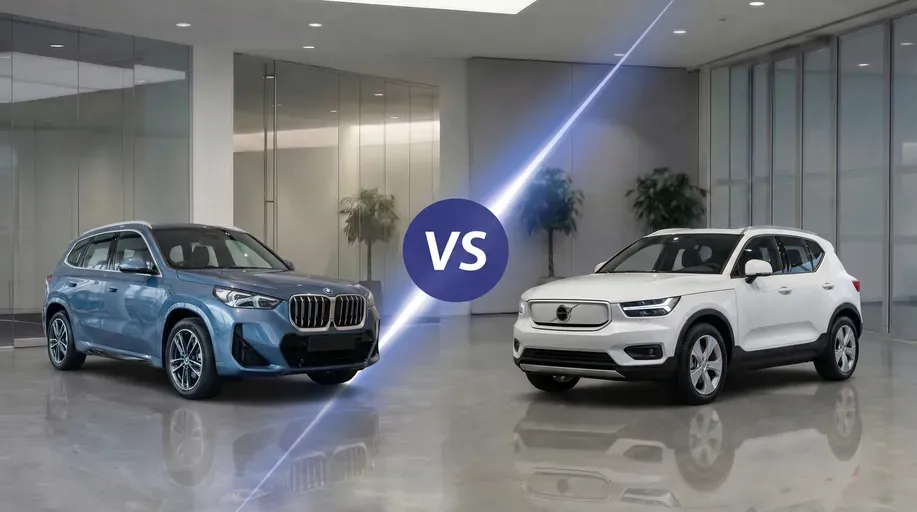
Detailed comparison of BMW iX1 vs Volvo XC40 Recharge (EX40). Which electric SUV has better range, equipment, and features? Read our clear verdict.
May 12, 2026
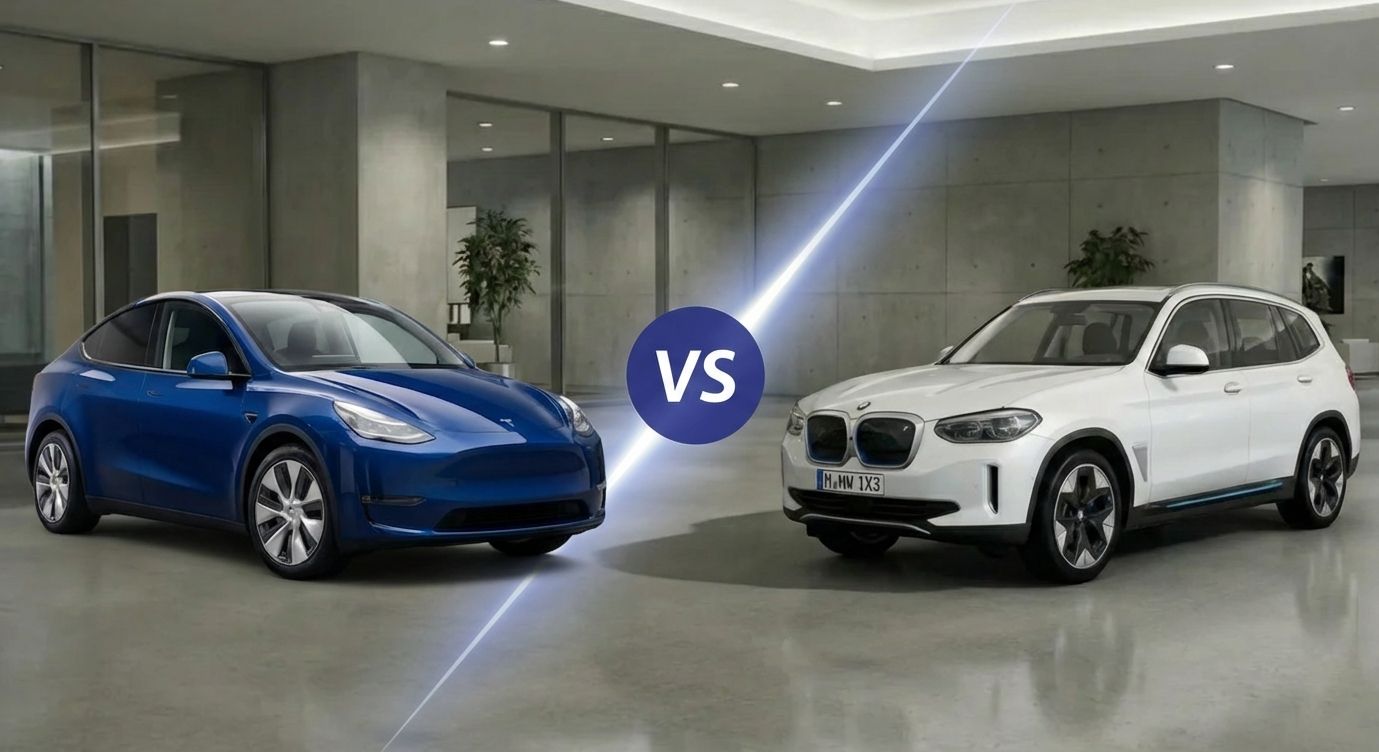
Tesla Model Y vs. BMW iX3: A detailed test of real-world range, features, and a verdict to help you choose the right electric SUV.
Apr 14, 2026