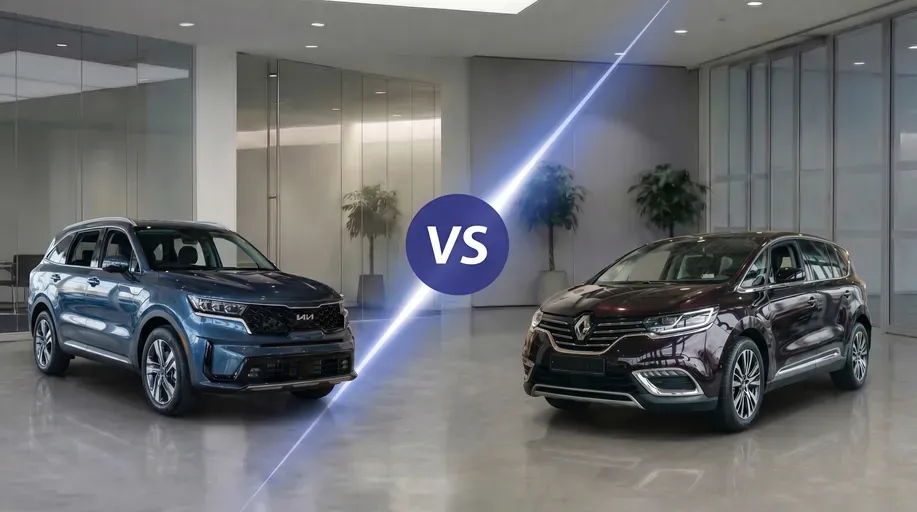
Car battle
Kia Sorento vs. Renault Espace: Complete comparison 2026
Detailed comparison of popular family cars: Kia Sorento vs Renault Espace. Discover real-world experiences, differences in equipment, and our verdict before you buy.
May 1, 2026
Articles
Car battle
Detailed comparison of Mercedes-Benz GLC vs Volvo XC60. Discover the differences in equipment and driving characteristics, and read our verdict on choosing a premium SUV.
May 6, 2026
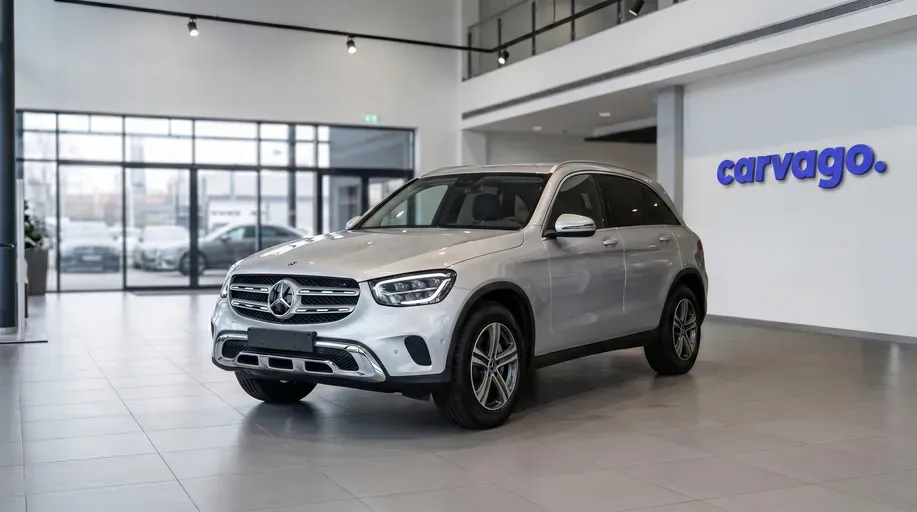
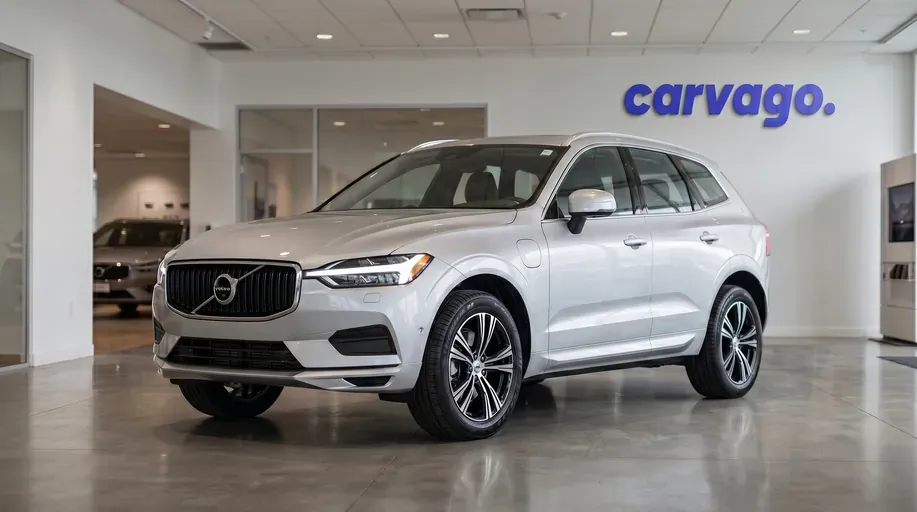
Mercedes-Benz GLC represents the epitome of German luxury and precision engineering, which has long set the standards in the premium mid-size SUV segment. On the other hand stands the Volvo XC60, a Scandinavian symbol of maximum safety, minimalist elegance, and innovative technologies. Dive into our detailed comparison, in which we find out which of these sought-after competitors better suits your daily needs and becomes the ideal choice for your next car.
When choosing a premium mid-size SUV, exterior dimensions play a key role, as they directly affect not only interior spaciousness but also daily maneuverability in the city. The second-generation Volvo XC60 and the Mercedes-Benz GLC (represented by both the very popular X253 generation and the newer X254) compete directly on the market for roughly four-year-old used cars, yet they approach overall proportions and space utilization somewhat differently.
While the Swedish Volvo appears slightly more robust at first glance, Mercedes-Benz opts for a slightly more aerodynamic and, in the newer generation, more elongated build.
Width and Height: Robustness vs. Aerodynamics
With a width of 1902 mm, the Volvo XC60 is 12 mm wider than the Mercedes-Benz GLC (1890 mm) and also about 2 centimeters taller (1658 mm compared to 1639–1640 mm). In practice, this means the XC60 offers a slightly airier feel in the head and shoulder area, which taller passengers will appreciate. On the other hand, the slightly narrower and lower Mercedes feels a bit more agile when moving in the tight spaces of underground garages, and its lower silhouette contributes to better aerodynamics on the highway.
Length and Wheelbase: A Game of Millimeters in the Interior
An interesting battle takes place in body length and wheelbase. Across its versions, the Volvo XC60 consistently maintains a length of 4688 mm and a wheelbase of 2865 mm. The older generation Mercedes-Benz GLC (produced until 2022) was slightly shorter at 4655 mm, but with the arrival of the newer generation in 2022, it stretched significantly to 4716 mm. In terms of wheelbase, however, the GLC has the upper hand in all modern versions – values of 2873 to 2888 mm mean that Mercedes managed to push the wheels a bit further into the corners of the body. The result is slightly more generous legroom for rear-seat passengers.
In terms of overall utility, both cars represent an ideal compromise. They are spacious enough for family travel, yet maintain reasonable dimensions for city traffic. While the Volvo is the embodiment of a solid, more robustly built family cruiser, the Mercedes will appeal to drivers who prefer a longer wheelbase and more dynamic proportions at the rear.
| Parameter | Mercedes-Benz GLC SUV | Volvo XC60 SUV |
|---|---|---|
| Width (mm) | 1890 | 1902 |
| Length (mm) | 4655 - 4716 | 4688 |
| Height (mm) | 1639 - 1640 | 1658 |
| Wheelbase (mm) | 2873 - 2888 | 2865 |
When choosing a premium family SUV, luggage compartment volume often plays a key role, as it directly affects the car's daily usability and practicality. Whether you're planning regular weekend trips to the cottage or long family holidays, the difference in trunk capacity can easily mean the line between comfortable packing and having to make unwanted compromises. In this regard, both competitors, although belonging to the same class, differ quite fundamentally and appeal to a slightly different type of user.
If we look at models on the used car market around four years old (around production year 2022), the Mercedes-Benz GLC has a clear upper hand over its Swedish rival. The outgoing generation (code 253) offers a solid 550 liters in the basic configuration, while the newer generation (254), which entered the market during 2022, boasts a superior volume of 620 liters. After folding the rear backrests, you get an impressive 1,600 to 1,680 liters. The second-generation Volvo XC60, on the other hand, is more modest. For standard mild-hybrid engines, it provides 483 liters and 1,410 liters after folding. It's also important to keep in mind that if you opt for the popular plug-in hybrid versions (Recharge T6 and T8), the basic capacity of the Volvo drops to 468 liters (1,395 liters after folding) due to the battery modules being placed under the floor.
In real life, these differences mean that the Mercedes-Benz GLC easily offers generous space for several extra suitcases or a folded pram, which you'll especially appreciate when packing for long trips. While the Volvo XC60's trunk is fully sufficient for weekend shopping and standard family holidays, it requires a bit more discipline and more thoughtful packing for bulkier items. Furthermore, the German SUV pleases with noticeably better utilization of maximum transport capacity when carrying large loads, such as small furniture or sports equipment.
| Parameter | Mercedes-Benz GLC SUV | Volvo XC60 SUV |
|---|---|---|
| Basic volume (liters) | 550 – 620 | 468 – 483 |
| Max. volume with seats folded (liters) | 1600 – 1680 | 1395 – 1410 |
The Mercedes-Benz GLC from 2020–2022 offers a significantly larger luggage compartment, which much better meets demanding family needs and long-distance travel. While the Volvo XC60's trunk is slightly smaller – especially in plug-in hybrid versions – it remains reasonably sufficient for common daily tasks.
When choosing a premium SUV, towing capacity often plays a key role, especially if you plan to regularly tow a heavy caravan, boat, or horse trailer. Both vehicles offer excellent values in this regard, but a closer look at approximately four-year-old models on the used car market reveals several important differences between the Mercedes-Benz GLC and the Volvo XC60.
The Mercedes-Benz GLC is a true towing all-rounder and workhorse in this respect. If we look at the extremely popular GLC 220 d diesel engine, it consistently maintains a standard and maximum permitted braked trailer weight of 2,500 kg. This limit applies across the board to previous generation (253) vehicles as well as the latest models (254) from recent years.
The 2nd generation Volvo XC60 (from 2017) lags only slightly behind the Mercedes. Its standard internal combustion and mild-hybrid versions (such as the D4 and D5 diesels, or the newer B4 and B5) can tow 2,300 to 2,400 kg, depending on the specific model year. However, a more significant difference occurs with plug-in hybrid powertrains. If you choose the more eco-friendly Volvo XC60 in T8 Twin Engine versions, or the newer XC60 T6 and T8 Recharge, the maximum braked trailer weight drops to 2,100 to 2,250 kg. The reason is the additional weight of the built-in batteries, which logically reduces the overall capacity for safe towing.
What it means in practice:
Summary: If maximum towing capacity is your absolute priority and you refuse to compromise, the Mercedes-Benz GLC represents the more robust choice and the clear winner in this discipline. The Volvo XC60 offers a very decent and fully sufficient standard, but if you are considering its popular plug-in hybrid variants, you must account for the reduced limits, which could be insufficient when towing the heaviest trailers.
| Model and motorization | Braked weight of trailer (kg) | Unbraked weight of trailer (kg) |
|---|---|---|
| Mercedes-Benz GLC 220 d (Gen. 253 and 254) | 2500 | 750 |
| Volvo XC60 B4 / B5 (2nd Gen) | 2300 - 2400 | 750 |
| Volvo XC60 D4 / D5 (2nd Gen) | 2300 - 2400 | 750 |
| Volvo XC60 T6 / T8 PHEV (2nd Gen) | 2100 - 2250 | 750 |
When choosing a premium SUV approximately four years old (around 2021), you will encounter different powertrain philosophies in these two models, which significantly impacts their character. The Mercedes-Benz GLC (post-facelift X253 generation) and Volvo XC60 (2nd generation) offer a wide range of engines, but with completely different focuses. While the Swedish brand focused fully on electrification and safety – all its engines are at most two-liter four-cylinders with mild-hybrid (B) or plug-in hybrid (Recharge) technology, and the cars' top speed was even software-limited to 180 km/h – the German automaker took the path of immense diversity and raw power. Mercedes retained pure internal combustion engines of large displacements and, alongside unique diesel plug-in hybrids, offered full-blooded six-cylinder diesels and petrol V8 AMG versions. Common to both cars is the emphasis on advanced automatic transmissions; Volvo uses the eight-speed Geartronic system, while Mercedes relies on its own nine-speed 9G-TRONIC automatic.
The engine range of the Mercedes GLC from around 2021 is incredibly diverse and will satisfy both economical highway cruisers and sports driving enthusiasts. The foundation consists of proven diesel and petrol four-cylinders (from the GLC 200 d and GLC 200 versions). A completely unique phenomenon on the used car market is the range of plug-in hybrids, where customers could choose not only the classic combination of an electric motor with a petrol unit (GLC 300 e) but also with a highly efficient diesel (GLC 300 de). However, the highlights of the range are models you won't find with the competition – the powerful six-cylinder diesel GLC 400 d and the AMG division models. These were among the last in this class to offer a twin-turbocharged V8 (GLC 63 and 63 S) with a brutal output of over 500 hp. Most versions are paired with 4MATIC all-wheel drive as standard.
| Engine | Fuel | Power (kW) | Torque (Nm) | Transmission |
|---|---|---|---|---|
| GLC 200 d | Diesel | 120 | 360 | 9AT (9G-TRONIC) |
| GLC 220 d | Diesel | 143 | 400 | 9AT (9G-TRONIC) |
| GLC 300 d | Diesel | 180 | 500 | 9AT (9G-TRONIC) |
| GLC 400 d | Diesel | 243 | 700 | 9AT (9G-TRONIC) |
| GLC 200 | Petrol | 145 | 320 | 9AT (9G-TRONIC) |
| GLC 300 | Petrol | 190 | 370 | 9AT (9G-TRONIC) |
| GLC 300 de | Diesel / PHEV | 225 | 700 | 9AT (9G-TRONIC) |
| GLC 300 e | Petrol / PHEV | 235 | 700 | 9AT (9G-TRONIC) |
| AMG GLC 43 | Petrol | 287 | 520 | 9AT (9G-TRONIC) |
| AMG GLC 63 | Petrol | 350 | 650 | 9AT (9G-TRONIC) |
| AMG GLC 63 S | Petrol | 375 | 700 | 9AT (9G-TRONIC) |
In the Volvo XC60, you will find a modernized engine range on the used car market that strictly adheres to a two-liter four-cylinder base without any larger-displacement exceptions. All standard versions gradually shed the old T and D designations and switched to mild-hybrid technology denoted by the letter "B". Whether you choose petrol (B4, B5, B6) or diesel (B4, B5) variants, you always get an integrated starter-generator with a 48V system, which helps reduce consumption and smooth out the start-stop system's operation. The top of the Swedish range consists of plug-in hybrids labeled Recharge (T6 and T8), which combine a powerful internal combustion engine with an electric motor located on the rear axle. This creates an intelligent all-wheel-drive system, and with power approaching the 400 hp mark, they do not lag behind German competitors; furthermore, they allow for daily pure electric emission-free commuting.
| Engine | Fuel | Power (kW) | Torque (Nm) | Transmission |
|---|---|---|---|---|
| B4 | Petrol (MHEV) | 145 | 300 | 8AT (Geartronic) |
| B5 | Petrol (MHEV) | 184 | 350 | 8AT (Geartronic) |
| B6 | Petrol (MHEV) | 220 | 420 | 8AT (Geartronic) |
| B4 Diesel | Diesel (MHEV) | 145 | 420 | 8AT (Geartronic) |
| B5 Diesel | Diesel (MHEV) | 173 | 480 | 8AT (Geartronic) |
| T6 Recharge | Petrol / PHEV | 251 | 590 | 8AT (Geartronic) |
| T8 Recharge | Petrol / PHEV | 288 | 640 | 8AT (Geartronic) |
| T8 Polestar | Petrol / PHEV | 298 | 670 | 8AT (Geartronic) |
The final evaluation depends heavily on driving style. The Volvo XC60 is the clear choice for rational, safety-oriented drivers and families who prefer an economical, smooth-running, and quiet four-cylinder with hybrid assistance – and for city driving, the plug-in Recharge version makes great sense. Conversely, the Mercedes-Benz GLC is a haven for more demanding motorists who appreciate the best of the internal combustion engine world. If you have thousands of highway kilometers ahead of you, the powerful six-cylinder in the GLC 400 d has no equivalent in the Volvo, and for those seeking pure driving joy with a soundtrack, the V8 AMG is simply irreplaceable.
While the Volvo XC60 bets on efficient electrified four-cylinders and absolute serenity, the Mercedes-Benz GLC wins with a wider selection of engines, including highway six-cylinders and brutal V8s for true enthusiasts.
Choosing the right engine is crucial for long-term satisfaction with the vehicle. Our recommendations are based on real-world experience, performance in everyday traffic, actual fuel consumption, owner feedback, and mechanical reliability. While Mercedes-Benz relies on its proven modular engine family for the GLC, emphasizing longitudinal mounting and a rear-axle preference, the second-generation Volvo XC60 exclusively uses transversely mounted two-liter four-cylinder engines from the Drive-E family. For roughly four-year-old used cars of both brands, it historically and practically makes the most sense to opt for diesel engines, which best suit the character and higher weight of these premium SUVs.
For models from 2019–2022 (facelifted X253 generation), the two-liter diesel labeled 220 d represents the absolutely ideal choice. In this generation, Mercedes-Benz switched to the new OM654 family of aluminum engines, which is significantly more refined and reliable than the older and noisier OM651 units.
In the case of the second-generation Volvo XC60—and especially for used cars around four years old (2020–2023 models)—we recommend choosing the B4 Diesel AWD mild-hybrid engine. This gradually replaced the pure internal combustion D4 version in the lineup and brought several user improvements.
When choosing a roughly four-year-old premium SUV, one of the key aspects is real-world fuel consumption, which often differs significantly from the laboratory values stated by manufacturers (whether according to older or newer standards). The biggest differences are traditionally found in plug-in hybrids, where paper values often promise consumption even below two liters per hundred kilometers, but practice is usually quite different. For an objective comparison, we therefore rely on real data from users of the established community portal Spritmonitor.de, where hundreds of drivers record their actual refueling over the long term.
Data source: Spritmonitor.de
| Model and engine | Average consumption (l/100 km) |
|---|---|
| Mercedes-Benz GLC 220 d 4MATIC | 6.6 |
| Volvo XC60 B4 Diesel AWD | 6.8 |
| Volvo XC60 B4 Petrol AWD | 8.5 |
| Mercedes-Benz GLC 300 4MATIC | 8.9 |
| Mercedes-Benz GLC 300 e 4MATIC | 5.5 |
| Volvo XC60 T6 Recharge | 5.8 |
Several interesting trends emerge from the interpretation of this data. Despite the growing popularity of electrification, traditional diesel engines remain the most economical choice for large and heavy SUVs on longer routes. The entry-level diesel Mercedes-Benz GLC 220 d and the competing Volvo XC60 B4 Diesel easily stay below the 7-liter mark in real-world traffic. It may come as a slight surprise that although Volvo heavily deployed mild-hybrid technology (the "B" designation) in the relevant model years, it does not bring any dramatic fuel savings compared to Mercedes' classic diesel drive, and both cars perform very similarly. For petrol engines, consumption naturally rises towards the 8.5 to 9-liter mark, which is the standard tax for high curb weight and all-wheel drive. Plug-in hybrids (PHEV) are a chapter of their own. Although official materials promise consumption approaching zero for the GLC 300 e and XC60 T6 Recharge models, the real average is between 5.5 and 6 liters. The reason is that once the battery is depleted, the vehicle pulls the heavy electrical system using only the power of the internal combustion engine.
For a typical buyer of a used premium SUV, clear recommendations follow. If you spend a lot of time on highways, regularly drive long distances, or are simply a driver who watches the budget, the entry-level diesel engines (220 d and B4 Diesel) will be the unrivaled best choice for you in terms of operating costs. If, on the other hand, you are a typical city driver who also has the option to charge the vehicle daily at home or at work, plug-in hybrid versions make huge sense and will help you cut fuel bills to an absolute minimum. Purely petrol versions, on the other hand, can be recommended more to those who have a lower annual mileage, appreciate absolute refinement, and do not seek more complex plug-in hybrid systems.
In conclusion, fuel consumption itself is unlikely to be the main deciding factor between the Mercedes-Benz GLC and Volvo XC60 models. Both manufacturers offer very similar efficiency in comparable engines, and real differences are only in the range of tenths of a liter. Your final choice should therefore depend more on preferred design, overall comfort, driving feel, or the range of specific safety features.
When searching for a used premium SUV with an average age of around four years (primarily vehicles from 2021 and 2022), both models represent very strong players in the used car market. In this age category, you encounter the Volvo XC60 after a slight facelift (which brought Google-based infotainment) and the Mercedes-Benz GLC, which in 2022 was at the turning point between the extremely popular outgoing X253 generation and the incoming, technologically more advanced X254 generation.
On the used car market, the Volvo XC60 from 2021 to 2022 is generally the more budget-friendly option. Prices for the cheapest units with higher motorway mileage and basic mild-hybrid engines (usually the B4 diesel) start at approximately €31,000. The sweet spot of the range consists of very well-maintained cars with a price tag between €35,000 and €43,000. For this money, you most often get the Momentum or the more luxurious Inscription trim levels.
Compared to its German competition, the Swedish brand initially faces slightly faster depreciation. For a buyer of a four-year-old used car, however, this is a huge advantage – for less money, you often get much more generous optional equipment that cost the first owner thousands of euros (for example, premium Harman Kardon audio systems or top-of-the-line Bowers & Wilkins). The price ceiling is represented by the sought-after plug-in hybrids (T6 and T8 Recharge) in the R-Design sport package, which consistently range from €49,000 to €55,000.
The automaker with the three-pointed star, on the other hand, dictates much more confident terms in the used car market, and the GLC maintains its residual value with iron-clad regularity. Four-year-old cars start just below €37,000, but this usually only covers basic diesel variants (200 d) with sparser equipment and higher mileage.
If you are aiming for the ideal combination – the popular, more powerful 300 d diesel, 4MATIC all-wheel drive, and the attractive AMG Line visual package – you will be looking for cars in the price range of €41,000 to €53,000. More expensive models, such as the efficient 300 de plug-in hybrids or used cars from the very beginning of the brand-new X254 generation's production (launched in late 2022), often approach or slightly exceed €62,000.
| Type of used car | Volvo XC60 | Mercedes-Benz GLC |
|---|---|---|
| Entry-level offer (basic, higher mileage) | from €31,000 | from €37,000 |
| Sweet spot (good equipment and engine) | €35,000 – €43,000 | €41,000 – €53,000 |
| Top versions and Plug-in hybrids | €49,000 – €55,000 | €55,000 – €62,000+ |
Prices are based on current market conditions, engine choice, and documented service history.
When choosing, also focus on long-term maintenance costs:
While the Volvo XC60 impresses on the used car market with a more favorable price-to-equipment ratio thanks to faster initial depreciation, the Mercedes-Benz GLC holds its value more confidently and requires a higher initial investment. For a pragmatic buyer, Volvo offers significantly more for the money, but Mercedes remains a rock-solid bet regarding future residual value.
Both the Mercedes-Benz GLC and Volvo XC60 earned the maximum five-star rating in Euro NCAP safety tests. However, when evaluating used vehicles, it is essential to consider the broader context, particularly the year of testing. Euro NCAP test methodology is constantly evolving and becoming more stringent; while older tests focused primarily on structural integrity during impact, newer protocols require advanced assistance systems and the ability to handle complex traffic situations. For this reason, percentage scores from different years cannot be directly compared as absolute values.
The Mercedes-Benz GLC underwent Euro NCAP crash tests in 2022. It was therefore evaluated according to very strict modern standards, which already fully include testing with a new mobile barrier for frontal impacts, advanced cyclist detection, and automatic braking tests in demanding intersection scenarios. The GLC excelled in these modern tests. A highly above-average score of 84% for safety assistance systems shows that the vehicle possesses the latest level of active safety. This is all supported by very solid protection for adults (92%) and children (90%). The results thus guarantee that the car's electronics and passive safety correspond to today's traffic conditions without compromise.
The Volvo XC60 was tested by Euro NCAP in 2017, when it completely dominated thanks to its results and even became the safest car of that year across all classes. At the time, it achieved an almost unbelievable 98% for adult protection and 95% for assistance systems, being one of the first cars with a 100% success rate in autonomous city braking tests. In the context of the used car market, however, it must be taken into account that a test according to the 2017 methodology would formally have expired by now. Simply put, the car was not tested against newer simulations for avoiding intersection collisions or according to the latest pedestrian protection criteria. Despite this time gap, the XC60 remains one of the most robust vehicles you can buy in terms of both passive and active safety.
Although the Volvo XC60 can boast exceptionally high percentages from its testing year and its rigid body was ahead of its time, the Mercedes-Benz GLC offers an overall more modern and comprehensive safety package. For a buyer of a used car around four years old, this means that with the Mercedes, they are getting assistance technologies and systems that were certified according to current, significantly stricter European standards.
| Parameter | Mercedes-Benz GLC | Volvo XC60 |
|---|---|---|
| Year of testing | 2022 | 2017 |
| Adult occupant protection | 92 % | 98 % |
| Child occupant protection | 90 % | 87 % |
| Vulnerable road users protection | 74 % | 76 % |
| Safety assistance systems | 84 % | 95 % |
Both SUVs offer a top-tier level of occupant protection, but while the Volvo XC60 benefits from its exceptionally robust, time-tested construction, the Mercedes-Benz GLC scores with more modern active assistants that have successfully passed the latest and strictest Euro NCAP tests.
In addition to standard equipment, each of the models offers several unique features that can be decisive for a customer when choosing a used car. Both models go beyond common standards, and each approaches premium added value in a completely distinctive way.
The Stuttgart SUV is a benchmark in the field of innovative assistants and personalization options. Its equipment focuses primarily on isolating the occupants from external noise and providing the driver with maximum technological support.
The Swedish representative bets on a different philosophy. Its goal is to calm the mind, offer minimalist luxury without an excess of buttons, and provide the best possible passive and active safety.
Top-tier suspension comfort, especially on units equipped with optional air suspension
Advanced and user-friendly MBUX multimedia system with excellent voice control
Wide range of refined engines, including silky-smooth six-cylinders and very efficient diesels
High-quality interior craftsmanship with premium materials
Confident driving characteristics that can also offer a slightly sporty ride
Higher purchase price on the used car market and more expensive regular servicing
Significantly reduced and less practical luggage space in plug-in hybrid versions due to battery placement
Stiffer and less compliant ride on models with the AMG Line sport suspension
Mercedes-Benz GLC is an ideal choice for drivers looking for a prestigious premium SUV with a perfect balance between luxurious comfort and confident driving dynamics. The wide range of excellent engines and top-tier technology will appeal even to very demanding buyers for whom the higher purchase price is not an obstacle.
Unrivaled level of active and passive safety and a well-tuned Pilot Assist system
Exceptionally comfortable ergonomic seats that minimize fatigue on long journeys
Elegant and calming Scandinavian interior design with an emphasis on clean lines
Powerful plug-in hybrid versions (Recharge) with above-average pure electric range
More favorable ratio of purchase price to rich equipment on the used car market
Limited engine range consisting exclusively of four-cylinders, which lack the prestige and refinement of German six-cylinders
Less precise steering and an overall more detached driving feel that does not favor sportier driving
Newer infotainment based on the Android Automotive system can suffer from occasional software lags
On optional large wheels (without air suspension), the ride on broken roads is unnecessarily harsh
The Volvo XC60 will appeal to buyers who prioritize absolute safety, maximum tranquility on board, and minimalist style over sporty performance. It is a perfect family SUV for relaxed long-distance travel, which also offers a significantly better price-to-equipment ratio as a four-year-old used car.
Based on our own CarAudit inspections, breakdown statistics, and expert databases, we have compiled an overview of the most common problems that buyers of roughly four-year-old used cars should watch out for. To avoid unpleasant surprises, a detailed independent inspection of the car's technical condition is always essential.
Mercedes-Benz GLC (X253 facelift)
In the updated version of the X253 generation (from 2019 onwards), faults of a predominantly electronic nature appear, but occasionally the chassis or emission systems in diesel units can also cause trouble.
The Mercedes-Benz GLC is overall a very robust premium SUV, which in four-year-old used cars is most often troubled by infotainment software quirks, worn axle bushings, and NOx sensor faults in diesel versions.
Volvo XC60 (2nd generation, SPA platform)
Even though the Swedish SUV is synonymous with safety and robustness, its more complex architecture and modern technology occasionally take their toll on both internal combustion and mild-hybrid engines.
The Volvo XC60 occasionally pays the price for a sensitive particulate filter during shorter trips and surprisingly fast wear of the rear brakes. In more modern mild-hybrids, a rapidly draining battery represents a frequent complication.
When buying a used car, a thorough inspection is key. Here are some specific points to focus on for these two popular premium SUVs. Furthermore, a professional independent technical car inspection will give you peace of mind before the purchase and can reveal hidden defects that an average driver might easily overlook.
The Mercedes-Benz GLC offers a basic trunk capacity of around 550 liters depending on the engine, which is slightly more than the Volvo XC60 with approximately 483 liters. However, for plug-in hybrid versions of both cars, a more significant reduction in this space must be expected due to the battery placement. If every liter for family packing is a priority for you, Mercedes comes out better in this comparison.
The Mercedes-Benz GLC is generally considered a leader in ride comfort, especially if a model with the optional air suspension is chosen. The Volvo XC60, on the other hand, counters with fantastic and exceptionally ergonomic seats, but its chassis can be slightly stiffer and more jittery on larger wheels. For maximum ride smoothness on broken roads, Mercedes is the better choice.
The Volvo brand is perceived worldwide as a benchmark for safety, and the XC60 model confirms this with top-tier assistance systems and a robust construction. However, the Mercedes-Benz GLC does not lag behind in any way and also holds a maximum five-star rating in independent Euro NCAP tests. In terms of protecting adult occupants and children, both cars represent the absolute top of the used car market, and you won't make a mistake with either.
Both premium SUVs are among the above-average reliable cars, but they require regular and professional servicing, which is not usually the cheapest. For older used Mercedes models, potential repairs to the air suspension can be costly, while for Volvos, it is advisable to thoroughly check the functionality of the central display and onboard electronics. In the long run and with a proven maintenance history, both models will serve you very well.
The Volvo XC60 in its Recharge versions offers very high combined power and an exceptionally smooth transition between the electric and gasoline engines. The Mercedes-Benz GLC, on the other hand, scores on the used car market by being one of the few manufacturers to offer plug-in hybrid technology in an efficient combination with a diesel engine. It therefore depends primarily on whether you prefer the dynamic performance of the Volvo or the efficient highway driving with the diesel hybrid from Mercedes.
Choosing between these two premium SUVs depends primarily on your driving style and daily priorities. Volvo XC60 represents an ideal choice for rational families looking for an excellent price-to-equipment ratio on the used car market, who value maximum safety and appreciate exceptionally comfortable seats for peaceful travel. On the other hand, the Mercedes-Benz GLC will appeal to more demanding motorists who prefer top-tier chassis comfort, a larger luggage compartment, greater towing capacity, and a wider range of refined engines, including powerful highway six-cylinder units. While the Swedish representative is a perfect and safe oasis of calm, its German competitor offers a more versatile and dynamic driving experience, albeit at the cost of a slightly higher initial investment.
Sources: ADAC, forbes.cz, auto.cz, autoexpress.cz, fdrive.cz, portalridice.cz
This article was prepared using artificial intelligence tools. The section guarantor is Petr Dušek.
Detailed comparison of popular family cars: Kia Sorento vs Renault Espace. Discover real-world experiences, differences in equipment, and our verdict before you buy.
May 1, 2026
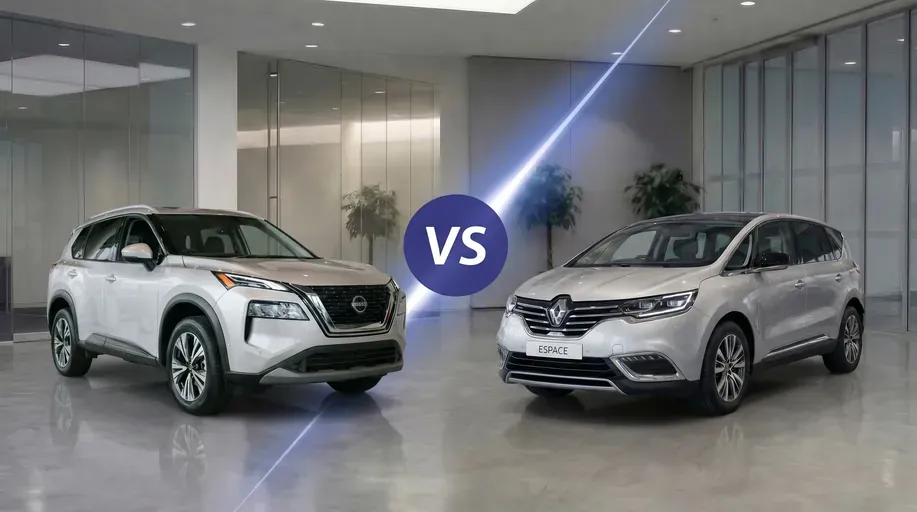
Detailed comparison of the Nissan X-Trail and Renault Espace. Discover the differences in space, fuel consumption, and equipment, and read our verdict. Which family SUV is better?
Apr 18, 2026
Ford Edge vs. Volkswagen Tayron: Which SUV to choose? A detailed comparison of equipment, driving characteristics, and real-world experiences. Read our final verdict.
Apr 20, 2026