Articles

Car battle

Ford Edge vs. Volkswagen Tayron: Complete comparison 2026

Ford Edge vs. Volkswagen Tayron: Which SUV to choose? A detailed comparison of equipment, driving characteristics, and real-world experiences. Read our final verdict.

April 20, 2026

VS
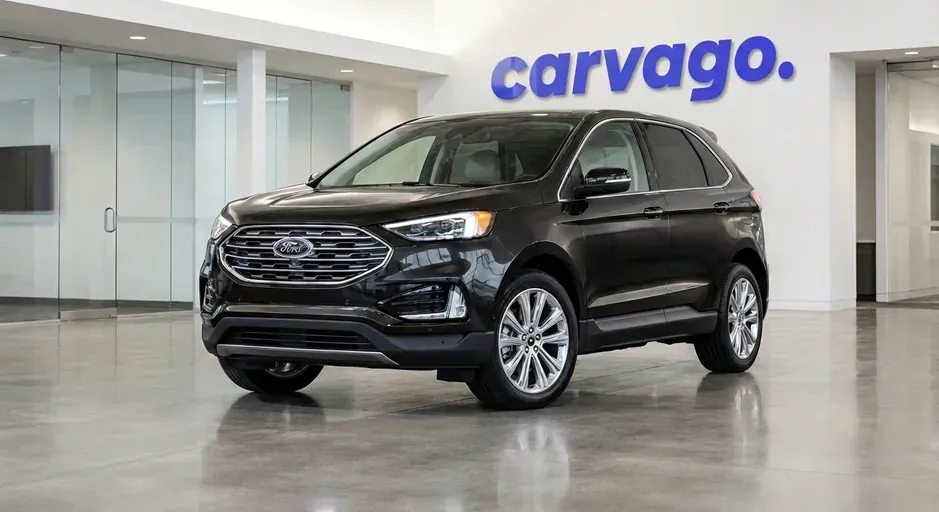
Ford Edge

Ford Edge

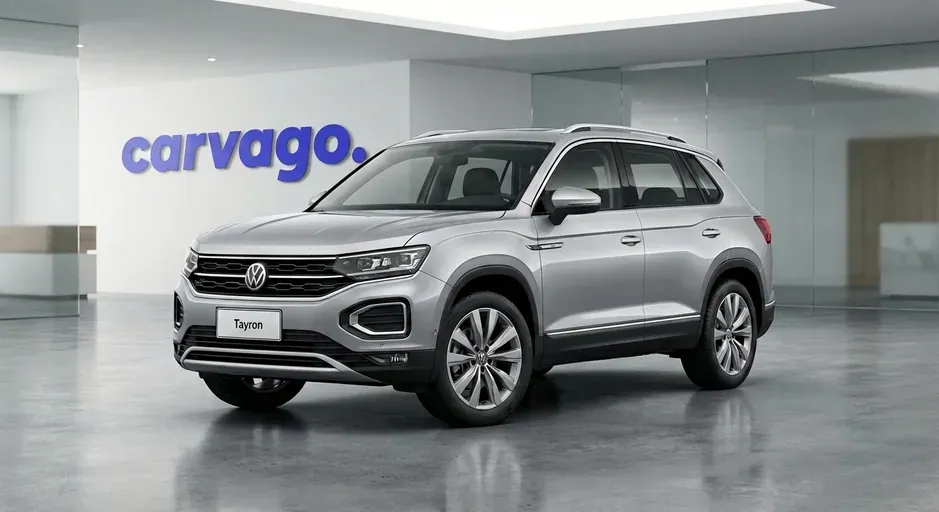
Volkswagen Tayron

Volkswagen Tayron

Introduction

Ford Edge, a robust SUV also known as the Ford Endura in some markets, has established a stable position among family cars thanks to its high driving comfort and generously designed interior space. Standing against it is the Volkswagen Tayron, a model with original roots in the Chinese market (where it is also available in body styles or extended versions such as the Tayron X and Tayron L), which logically follows the outgoing Tiguan Allspace within the automaker's global lineup and takes on the Tiguan name itself in the North American market. The following comparison will guide you in detail through all the key differences between these two attractive mid-size representatives and help you find out which of them represents a better choice for your daily needs when choosing a nearly new used car.

Comparison of External Dimensions

Looking at the exterior dimensions, the different approach to design and targeting of both vehicles is immediately apparent. The Ford Edge does not deny its American roots and brings a massive body construction. With a length reaching up to 4827 mm, it is 35 mm longer than the Volkswagen Tayron (4792 mm). However, a fundamental difference exists in width, where the Ford, with a value of 1928 mm, surpasses the Volkswagen by a noticeable 62 to 75 mm. In practice, this dimension means that the Edge provides exceptionally generous shoulder room for the crew, but on the other hand, it becomes significantly less maneuverable when navigating narrow city streets and underground garages. From this perspective, the narrower and more compact Tayron is much better adapted to European parking standards.

The differences also continue with the wheelbase and the overall height of the vehicle. The Ford Edge stands on a wheelbase of up to 2850 mm, while the Volkswagen Tayron reaches a maximum of 2790 mm. These extra 60 mm in favor of the Ford have a direct impact on more confident directional stability at highway speeds and provide slightly more longitudinal legroom for rear passengers. The American representative is also noticeably taller (up to 1751 mm compared to a maximum of 1668 mm for the VW). While the greater height makes entry easier and enhances the car's majestic appearance on the road, it also brings the disadvantage of a slightly higher center of gravity and poorer aerodynamics.

Overall, it can be said that the dimensions of these two SUVs clearly determine their ideal use. While the Ford Edge benefits from its massive body and is a great choice for drivers who spend most of their time on highways or require above-standard interior width for child car seats, the Volkswagen Tayron represents modern European efficiency. It offers a great compromise, where despite a slightly smaller footprint, it maintains a high level of spaciousness, yet remains agile enough for daily weaving through heavy city traffic.

ParameterFord Edge SUVVolkswagen Tayron SUV
Width (mm)19281853 - 1866
Length (mm)4808 - 48274792
Height (mm)1686 - 17511666 - 1668
Wheelbase (mm)2848 - 28502788 - 2790

Trunk Volume

Luggage capacity plays a key role when choosing a family car, as it directly affects daily practicality and usability for longer trips. When comparing these two models from the perspective of the used car market, two completely different automotive generations clash. While the Ford Edge represents older and more affordable model years (produced between 2016 and 2020) and relies on a robust American approach to interior space, the Volkswagen Tayron is a European newcomer from 2025, arriving as the direct successor to the Tiguan Allspace model. For families, this means weighing the choice between a proven, spacious cruiser at a more favorable price and a state-of-the-art interior layout with maximum flexibility.

As for the exact figures, the traditional five-seater Ford Edge offers a base luggage capacity of 602 liters. This value represents ample space for several extra suitcases and is perfectly sufficient for weekend shopping or longer holidays. After folding down the rear seats, the Edge's transport capacity increases to a generous 1,847 liters. However, the difference in luggage volumes between the two cars is quite significant in favor of the German vehicle. The Volkswagen Tayron, thanks to its modern architecture, sets the bar significantly higher. In the standard five-seater version with an internal combustion engine, it boasts a massive base volume of 885 liters, which is 283 liters more than the Ford. If you opt for the more practical seven-seater variant of the Tayron, this capacity decreases to 850 liters with the third row folded, and with all seven seats upright, there is still a very respectable 345 liters left. The maximum volume of the Volkswagen after folding down all rear rows can then climb to an impressive 1,949 liters.

Another fundamental difference in modularity can be found in specific engine versions, which those interested in electrified used cars should pay particular attention to. It is important to highlight, in particular, the plug-in hybrid models of the Volkswagen Tayron (eHybrid version). Due to the placement of the traction battery directly under the luggage compartment floor, these variants offer a reduced base volume of 705 liters, and it is not possible to order a third row of seats from the factory at all. Although this is a noticeable reduction in space, in practice, it is still a highly above-standard volume for any conceivable family gear. Ultimately, this key dimension leads to a clear conclusion for selection: if your absolute priority is a giant luggage compartment with the possibility of transporting seven people and the latest technology, the Tayron emerges as the winner of this duel. However, the Ford Edge still successfully defends its place on the used car market as a traditional, wide, and very comfortable five-seater SUV.

ParameterFord Edge SUVVolkswagen Tayron SUV
Base volume (liters)602885
Max volume with seats folded down (liters)18471949

Volkswagen wins on space 🏆

While the Ford Edge offers above-average and easily accessible space for five passengers on the used car market, the generation-newer Volkswagen Tayron confidently overshadows it with its base volume of 885 liters and the option of a seven-seat layout.

Discover the true condition of the car thanks to an independent inspection

Order CarAudit™

Trailer Weights

Towing capacity is a key parameter for many people interested in a spacious SUV, whether you plan to tow a heavy caravan for a family holiday or frequently transport construction materials or horses. When comparing the Ford Edge and the Volkswagen Tayron, we encounter an interesting contrast. While the American representative, popular primarily on the used car market, bets on uniformity across the entire range, the German newcomer brings a much wider range of towing power, which significantly depends on the chosen engine. Both vehicles, however, fall into the category of strong workhorses.

The first-generation Ford Edge (based on model years 2016 to 2020) maintains complete consistency. Regardless of which engine you choose from the range, including the powerful 2.0 TDCi Bi-Turbo or newer 2.0 EcoBlue versions, the maximum braked trailer weight is always exactly 2000 kg. The unbraked trailer weight is at the legislative maximum of 750 kg for all versions. This capacity provides sufficient confidence and is fully adequate for towing medium-sized caravans or heavier utility trailers.

The Volkswagen Tayron (first generation arriving from 2025), on the other hand, offers much more diverse values. The base version with the 1.5 eTSI engine and the weaker plug-in hybrid variant 1.5 eHybrid (110 kW) can tow a braked trailer weighing 1800 kg – here, the higher weight of the car itself and the installed batteries takes its toll on the hybrids. However, if you choose a more powerful plug-in hybrid or the base diesel engine 2.0 TDI (110 kW), the capacity matches the standard 2000 kg. The real top performers are the more powerful conventional engines. The 2.0 TSI petrol versions can tow an excellent 2300 kg, and the top-of-the-line 2.0 TDI (142 kW) diesel can even handle an impressive 2400 kg. An unbraked trailer can weigh the traditional 750 kg for all Tayron versions.

In terms of practicality, this means that if you need to tow truly above-standard loads, such as large twin-axle caravans or heavy boats, the more powerful versions of the Volkswagen Tayron will provide you with a much greater safety margin and stability. The Ford Edge, on the other hand, offers the advantage of predictability – regardless of which specific used unit you choose, you always get a reliable two-ton capacity. In conclusion, for both common purposes and more demanding recreation, both cars will serve excellently, but the Tayron in its top specifications pushes the boundaries of towing capacity even significantly further.
Model and engineBraked trailer weight (kg)Unbraked trailer weight (kg)
Ford Edge 2.0 TDCi / 2.0 EcoBlue2000750
Volkswagen Tayron 1.5 eTSI / 1.5 eHybrid (110 kW)1800750
Volkswagen Tayron 1.5 eHybrid (130 kW) / 2.0 TDI (110 kW)2000750
Volkswagen Tayron 2.0 TSI OPF (150 - 195 kW)2300750
Volkswagen Tayron 2.0 TDI SCR (142 kW)2400750

Overview of Most Common Motorizations

When looking at the engine options of both these SUVs, we encounter a vast difference given not only by the different philosophies of the manufacturers but primarily by the generational shift and the age of both models. While the Ford Edge relied exclusively on massive two-liter diesel units (2.0 TDCi and later 2.0 EcoBlue) during its European life cycle, appealing to drivers looking for raw power and reliability on long hauls, the Volkswagen Tayron enters the market with a modern range of electrified powertrains. Its lineup includes fuel-efficient mild-hybrids (1.5 eTSI), highly efficient plug-in hybrids (1.5 eHybrid OPF), and classic internal combustion engines, including the powerful 2.0 TSI OPF petrol and the proven 2.0 TDI SCR diesel. This difference is absolutely crucial for used car buyers: you can no longer buy a new Ford Edge today, as its production ended in 2020. For drivers looking for a proven and robust diesel engine with all-wheel drive on the used car market, the Edge is a safe bet. The Tayron, on the other hand, embodies the current technological peak – aiming to maximize fuel savings and quiet city operation; however, as a hot new arrival from 2025, its availability in the more affordable used car segment is currently zero.

Engine options: Ford Edge (1st generation)

Under the hood of the Ford Edge, we find exclusively four-cylinder diesel engines. As mentioned, this model has not been produced in Europe since 2020, so if you are interested, you are purely dependent on the secondary market. Over the years, the range was divided into older TDCi engines and later modernized EcoBlue units. The standard variant was initially the 2.0 TDCi with 132 kW, while the top of the range was the boosted 2.0 TDCi Bi-Turbo with 154 kW and a PowerShift dual-clutch transmission. After the facelift, the baton was taken over by significantly more refined and quieter 2.0 EcoBlue engines. The base role was filled by a 110 kW version (exceptionally available as a front-wheel drive with an 8-speed automatic), the middle of the spectrum was a 140 kW variant with a manual, and the absolute performance peak became the potent 2.0 EcoBlue Bi-Turbo. This boasts 175 kW and a massive 500 Nm of torque, tamed by a modern 8-speed automatic. Most used cars for sale feature intelligent all-wheel drive (AWD), making the Edge a great highway cruiser and a safe workhorse. However, the complete absence of petrol or hybrid powertrains is an obvious weakness for those who use the car mainly for short city hops.

Engine TypeFuelPower (kW)Torque (Nm)Transmission
2.0 EcoBlueDiesel110 / 140390 / 4008AT / 6MT
2.0 EcoBlue Bi-TurboDiesel1755008AT
2.0 TDCiDiesel1324006MT
2.0 TDCi Bi-TurboDiesel1544506-speed PowerShift

Engine options: Volkswagen Tayron (1st generation)

The Volkswagen Tayron, which entered the market in 2025, brings an exceptionally diverse range of powertrains fully reflecting modern emission and user trends. The great news is that all engines in the range are without exception paired with a very fast DSG automatic transmission. The role of the standard fuel-efficient engine is filled by the 1.5 eTSI petrol mild-hybrid with 110 kW, ideal for normal family use. However, the main technological draw of the model is the advanced 1.5 eHybrid OPF plug-in hybrid. It is available in two power versions (150 and 200 kW), and its large battery with a capacity of 19.7 kWh allows for a pure electric range exceeding the 100-kilometer mark, which will satisfy even the most demanding city drivers. Traditional high-mileage drivers, on the other hand, will swear by the innovated 2.0 TDI SCR diesel unit (available with 110 or 142 kW), and for fans of sharp dynamics, the top-of-the-line 2.0 TSI OPF petrol engine (up to 195 kW) with standard 4MOTION all-wheel drive is available. The entire model range is thus excellently put together – from the economical and most affordable base to very fast and complex all-wheel drives.

Engine TypeFuelPower (kW)Torque (Nm)Transmission
1.5 eTSIPetrol (Mild-hybrid)1102507DSG
1.5 eHybrid OPFPetrol (PHEV)150 / 200350 / 4006DSG
2.0 TSI OPFPetrol150 / 195320 / 4007DSG
2.0 TDI SCRDiesel110 / 142360 / 4007DSG

Diesel vs. Hybrid ⚡

While the older Ford Edge remains a proven diesel powerhouse that truly shines when towing trailers and on long hauls, the brand-new Volkswagen Tayron appeals to today's families with its sophisticated plug-in hybrids and uncompromising fuel versatility.

Choosing the right engine is crucial for long-term satisfaction, with our recommendations based on real-world experience, fuel efficiency, user feedback, and mechanical reliability. When comparing the engine lineups for these two models, however, we encounter a massive generational leap. While the Ford Edge ceased sales in Europe at the end of 2020, meaning you'll only find older vehicles powered exclusively by pure American-style combustion diesels on the used market, the Volkswagen Tayron is a brand-new 2025 model replacing the extended Tiguan Allspace. Consequently, the Tayron does not yet feature in the typical four-year-old used car market and is only available as a new or nearly-new car. In addition to classic powertrains, it brings the latest mild-hybrid and advanced plug-in hybrid systems. Nevertheless, for both large family SUVs, a classic more powerful diesel combined with an automatic transmission and all-wheel drive makes the most sense in terms of long-term viability and dynamics.

For the Ford Edge, we recommend: 2.0 EcoBlue Bi-Turbo (175 kW / 238 hp)

This top-tier four-cylinder diesel, primarily offered between 2018 and 2020 (as part of the facelifted version, which is closest to the ideal of a nearly-new used car), is by far the best choice for this majestic SUV weighing over two tons. It offers the necessary power reserve thanks to twin-turbocharging and a generous 450 Nm of torque, ensuring the heavy car doesn't lose pull or the power for safe overtaking even when fully loaded with family and luggage.

  • Technical advantages and efficiency: The engine works excellently with the smooth-shifting eight-speed automatic, while highway or combined fuel consumption for such a large and aerodynamically massive vehicle can reliably stay between 8 and 9 liters of diesel per 100 km.
  • Weak points and how to address them: The main concern for this generation of engines is the timing belt running in oil, along with the risk of engine oil dilution with diesel during frequent interruptions of the diesel particulate filter (DPF) regeneration. Both complications can be reliably prevented: the absolute foundation is shortening the oil change interval to a maximum of 15,000 km (or 1 year) and strictly using the precisely specified factory oil that does not degrade the belt.
  • Who it's for: It is the perfect companion for highway cruisers and drivers who prefer long, steady routes. Conversely, this engine is completely unsuitable for exclusively urban "stop-and-go" driving and short trips with a cold engine.

For the Volkswagen Tayron, we recommend: 2.0 TDI SCR 4MOTION (142 kW / 193 hp)

Although the brand-new Tayron arrives on the market with technically advanced plug-in hybrids capable of a pure electric range of over 100 kilometers, for the universal use of a robust family SUV, we recommend betting on the top-tier diesel classic. Since these are the latest nearly-new models, you get the current evolution of the engine (with 400 Nm of torque) equipped with sophisticated Twin Dosing emission control.

  • Technical advantages and efficiency: Its absolute strongest point is its phenomenal efficiency. Even with a fully loaded and exceptionally spacious Tayron, it can travel long highway stretches with consumption oscillating around 6.5 liters. Another major advantage is the robust seven-speed dual-clutch transmission and the ability to tow a braked trailer weighing up to 2,300 kg.
  • Weak points and how to address them: Given the age (or rather "youth") of these vehicles, mechanical wear currently plays no role. From a preventive standpoint, however, it is necessary to keep in mind that the complex emission system working with double AdBlue injection requires high-quality fluids, and consistently failing to reach operating temperature during city driving will lead to rapid DPF clogging.
  • Who it's for: The ideal choice for families regularly traveling to the sea or the mountains, for drivers towing heavy caravans or trailers, and for owners with high annual mileage who require bulletproof highway economy and confident all-wheel drive.

Real Fuel Consumption

Official fuel consumption figures provided by manufacturers often differ significantly from what drivers experience in daily operation. Especially with large and heavy SUVs like the Ford Edge and Volkswagen Tayron, real-world aerodynamics and weight play a huge role. Therefore, it is much more reliable to base assessments on real-world data from users themselves. In our comparison, we used information from the popular crowdsourcing portal Spritmonitor.de, where drivers diligently record every refueling. The Ford Edge (1st generation) represents the classic market for robust used cars in the 4 to 8-year-old category, while the brand-new Volkswagen Tayron demonstrates the efficiency of the latest technologies in a comparable class.

Here is an overview of the average real-world consumption for the most common engines of both models, sorted by drive type and fuel demand:

Model and EngineAverage Consumption (l/100 km)
Plug-in hybrid engines
Volkswagen Tayron 1.5 eHybrid OPF1.5*
Diesel engines
Volkswagen Tayron 2.0 TDI SCR5.9
Ford Edge 2.0 TDCi Start/Stop7.5
Ford Edge 2.0 EcoBlue7.8
Ford Edge 2.0 TDCi Bi-Turbo Start/Stop8.2
Ford Edge 2.0 EcoBlue Bi-Turbo8.5
Petrol engines
Volkswagen Tayron 1.5 eTSI6.2
Volkswagen Tayron 2.0 TSI OPF8.0

\ The value for the plug-in hybrid applies only in ideal conditions with regular charging. During longer trips with a discharged battery, consumption rises to approximately 6 liters.*

Interpretation of this data clearly shows that in the category of large family SUVs, diesel still reigns supreme when it comes to consistent operating economy without the need for charging. Thanks to excellent aerodynamics and the modern 2.0 TDI engine, the Volkswagen Tayron pushes the average below the 6-liter mark, which is a fantastic result for such a large vehicle. The base 1.5 eTSI petrol mild-hybrid in the Tayron also performs surprisingly well, proving that modern downsizing can save fuel even in bulkier cars. In contrast, the older and more robust Ford Edge pays the price for its American roots and massive build – although it was available exclusively with diesel engines in Europe, in reality, you have to expect consumption between 7.5 and 8.5 liters. While the results for the plug-in hybrid Tayron look like a fairy tale on paper, do not expect the heavy battery to save fuel consumption on long highway routes.

For typical users, this means a clear division of roles. If you spend most of your time in suburban traffic and have the option to charge the car daily at home or at work, the plug-in hybrid Tayron, or its economical 1.5 eTSI petrol version, will be the best choice. For drivers who regularly devour hundreds of highway kilometers, the stage still belongs to powerful diesel engines. Here, the Volkswagen Tayron offers a more modern and noticeably more economical ride, while the Ford Edge will please lovers of grand American space in exchange for a significantly higher bill at the gas station.

In conclusion, fuel consumption will be a key factor when deciding between these two vehicles. While the Ford Edge appeals to emotions with its distinctive look and generous dimensions, the Volkswagen Tayron counters with a more modern and significantly more efficient range of powertrains. The difference of nearly two liters of diesel per 100 kilometers to the disadvantage of the older Ford represents a strong argument for potential buyers, clearly speaking in favor of Volkswagen's more economical and advanced technology.

Price Range and Used Car Offerings

Searching for a roughly four-year-old used car reveals a fundamental generational difference between the two models. Choosing between the Ford Edge and the Volkswagen Tayron on the current market means deciding between an older, more affordable model at the end of its life cycle and a nearly new car full of the latest technology.

Ford Edge: Large and affordable SUV

The Ford Edge officially ceased sales in Europe during 2021. If you are looking for roughly four-year-old models today (around the 2022 model year), you will be choosing from the very last cars registered as part of the sell-off of European stock.

  • Price range: Commonly ranges from €21,000 to €33,000 depending on mileage, documented history, and technical condition.
  • Market characteristics: Used car dealerships are dominated by fully equipped models with the powerful 2.0 EcoBlue diesel engine, all-wheel drive, and premium trim levels such as the luxurious Vignale or the sporty ST-Line.
  • Availability: The selection on the local market is relatively narrow. However, thanks to a steeper initial depreciation, a used Edge offers a huge amount of car for a very attractive price.

Volkswagen Tayron: Nearly new premium alternative

While Ford withdrew from the European mainstream large SUV market, Volkswagen launched the Tayron as a global novelty only at the turn of 2024 and 2025. It serves as a direct and more modern replacement for the Tiguan Allspace. For obvious reasons, you won't physically find a classic "four-year-old Tayron" in European used car lots.

  • Price range: Cars currently available on the used market are at most 1 to 2 years old. These are nearly new or recent demonstrator cars with prices usually from €39,000 to €66,000.
  • Market characteristics: The offer primarily covers cars with minimal mileage. You can choose from modern plug-in hybrids (eHybrid), 1.5 eTSI engines, and the extremely popular 2.0 TDI diesel versions with intelligent 4MOTION drive.
  • Equivalent alternative: If your budget is strictly set to the price of a four-year-old used car and you don't require a brand-new model, it makes sense to look at the Tayron's direct predecessor at Volkswagen – the Tiguan Allspace. You can get roughly four-year-old cars (2022 model year) for very similar money to the Ford Edge, most often in the range of €25,000 to €35,000.

Market price comparison overview

Model and approximate ageTypical used car priceMarket availability
Ford Edge (~4 years old)€21,000 – €33,000Low (mostly full equipment)
VW Tayron (1–2 years old)€39,000 – €66,000Gradually growing (nearly new cars)
VW Tiguan Allspace (~4 years old)€25,000 – €35,000High (direct predecessor to Tayron)

Generational battle of the wallets 💰

While a used Ford Edge represents a very affordable entry ticket into the world of giant and luxuriously equipped SUVs, with the Volkswagen Tayron, you will pay extra for the latest technology and the condition of a practically new car due to its recent introduction to the European market.

Safety and Euro NCAP Rating

Both compared models, the Ford Edge and the Volkswagen Tayron, earned the maximum five-star rating in independent crash tests by Euro NCAP. However, when choosing a vehicle, it is absolutely essential to place these results in the correct temporal context.

The Euro NCAP testing methodology is constantly evolving and becomes significantly stricter every year. While in the past, excellent performance in physical crashes was sufficient to earn five stars, today's protocols place huge emphasis on active accident prevention, cyclist detection, emergency scenarios at intersections, and advanced autonomous braking. For this reason, percentage results from different years cannot be directly compared.

The Ford Edge underwent evaluation in 2016. Its five-star result at the time confirmed an above-average solid construction; however, according to current Euro NCAP rules, the validity of this certificate formally expired after six years. Conversely, the Volkswagen Tayron underwent the latest and toughest testing protocols in 2025. Its results thus reliably reflect the strictest standards of today and cover the most modern safety technologies available on the market.

ParameterFord EdgeVolkswagen Tayron
Year of testing20162025
Adult occupant protection85 %87 %
Child occupant protection76 %85 %
Vulnerable road users protection67 %83 %
Safety assist systems89 %80 %

A closer look at the data reveals a clear generational shift. Although the older Ford Edge scored high in the area of assistance systems (89%), this figure corresponds to significantly milder requirements from nearly a decade ago. Thanks to the latest MQB Evo platform, the Volkswagen Tayron scores very balanced results and excels particularly in the much more strictly evaluated child protection (85%) and protection of vulnerable road users (83%), which today includes, among others, pedestrians and cyclists in complex urban situations.

In terms of the overall level of protection, the Volkswagen Tayron represents a much more modern and comprehensive safety package. While the Ford Edge remains a massive and safe SUV from today's perspective, it does not possess the sophisticated sensors and reactive assistants required by today's strictest safety standards.

🛡️ Generational leap in safety

Although both SUVs carry a five-star rating, the significantly more modern Volkswagen Tayron offers a noticeably more comprehensive level of real-world protection than the older Ford Edge, thanks to the latest assistance systems and stricter 2025 standards.

Comparison of Interesting Equipment Features

In addition to standard equipment, each model offers several unique features that can be decisive for the customer, and both cars demonstrate their distinct approach to added value.

Ford Edge: American Comfort and Technological Confidence

  • Infotainment and Connectivity: The interior is dominated by a vertically oriented 12-inch touchscreen with the SYNC 4A system. It provides a very clear user interface, cloud connectivity, and wireless support for both Apple CarPlay and Android Auto. A striking and space-saving detail is also the elegant rotary gear selector for the automatic transmission on the center console.
  • Comfort and Quiet on Board: Edge models boast excellent cabin soundproofing. The standard acoustic windshield contributes to absolute peace behind the wheel by effectively reducing aerodynamic noise. The interior offers generous space for five passengers and an exceptionally wide cabin in the shoulder area.
  • Advanced Assistants (Ford Co-Pilot360): A rich set of safety systems reliably assists in daily traffic. It includes adaptive cruise control with Stop-and-Go, a lane-centering system, and evasive steering assist. For a vehicle of this size, the blind-spot monitor with Cross-Traffic Alert is very practical.
  • Sporting Genes with the ST Version: While civilian versions rely on a smooth and efficient turbocharged two-liter engine, the top-tier ST version positions the Edge as a purely sporty SUV. With a 2.7 EcoBoost V6 generating an impressive 335 horsepower and a specifically tuned stiffer chassis, it will also appeal to drivers who prefer a more dynamic ride.

Volkswagen Tayron: Family Flexibility and Modern Innovation

  • Infotainment and Digitalization: The digital experience is provided by a massive, up to 15-inch horizontal touchscreen. A smart and very practical innovation is the Driving Experience Control rotary dial located on the center console. It features its own integrated OLED display and allows for intuitive changes to driving modes, audio volume, or the cabin's ambient lighting without having to hunt through menus.
  • Space and Family Versatility: The Tayron scores points with its immense interior practicality and versatility. It is offered in both five-seat and optional seven-seat configurations. The five-seat variant delights with a massive trunk capacity of up to 885 liters. Furthermore, the rear doors open at an exceptionally wide angle, which significantly facilitates the installation of child seats and entry.
  • Comfortable Atmosphere: For maximum comfort on long journeys, the vehicle can be equipped with premium ergoActive front seats. In addition to heating and ventilation, these offer sophisticated pneumatic massage with several relaxation programs. Travel for children and adults in the back is made more pleasant by the independently adjustable third zone of the automatic climate control.
  • Iconic Design and Lighting: On the road, the Tayron is easily recognizable thanks to its top-tier IQ.Light HD Matrix headlight technology. The car's typical modern signature is a prominent LED light bar crossing the front grille and an eye-catching, brightly backlit Volkswagen logo on both the front and rear of the vehicle.

Quick Comparison of Exceptional Features

FeatureFord EdgeVolkswagen Tayron
Basic ConceptExclusively 5-seat configurationUp to 7-seat family configuration
Interior Highlight12" vertical display (SYNC 4A)Up to 15" floating horizontal display
Unique Control ElementRotary gear selectorDriving Experience Control with display
Luggage CompartmentFocused on width and easy accessFocused on extreme depth and volume
Premium Technology OptionSport suspension and V6 engine (ST version)Advanced massage seats and AR Head-Up display

Key Advantages and Disadvantages

Ford Edge

Pros

Exceptionally spacious interior and top-tier comfort on long journeys

Excellent cabin soundproofing thanks to the Active Noise Control system

Powerful and reliable 2.0 EcoBlue diesel engine with all-wheel drive, ideal for highway travel

Very generous standard equipment, especially in the top-tier ST-Line and Vignale trims

Distinctive American design with a dominant road presence and great visibility

Cons

Large exterior dimensions and a larger turning circle make parking in narrow city streets difficult

Higher fuel consumption and weight compared to more modern and efficient competitors

Official sales in Europe ended in 2021, which may negatively impact residual value in the long term

More cumbersome and less communicative driving dynamics in sharper corners

The Ford Edge is built for drivers looking for a massive, safe, and maximally comfortable five-seater SUV for long trips. Its American character with generous interior space will be appreciated by families and highway mile-munchers alike, but for frequent city driving, its dimensions and weight are a clear disadvantage.

Volkswagen Tayron

Pros

Optional third row of seats for flexible transport of up to seven passengers

Availability of a highly efficient plug-in hybrid version (eHybrid) with a pure electric range of over 100 km

State-of-the-art technological equipment and a wide range of advanced driving and safety assistants

Availability of the innovated DCC Pro adaptive chassis, which ensures a great compromise between comfort and dynamics

Straightforward and logical family space with a huge trunk volume (up to 885 liters in a five-seat configuration)

Cons

Noticeably higher purchase price on the used car market, given that it is a much younger and more modern model

When all seven seats are deployed and in use, the luggage compartment volume shrinks to an absolute minimum

A strong focus on touch controls for displays and bars may not suit more conservative drivers

It lacks the overall bulk and extraordinary interior shoulder-level width that the Ford Edge offers

As the successor to the popular Tiguan Allspace, the Volkswagen Tayron scores primarily with its practical versatility, economical electrified powertrains, and advanced onboard technologies. It is an ideal choice for modern families who require reliable seven-seat flexibility and top-tier connectivity, and don't mind paying extra for a generationally newer vehicle.

Common Problems and Owner Complaints

Based on service reports, long-term user experience, and defects regularly uncovered by our comprehensive car audit, we have compiled an overview of the most common problems that buyers of both used cars should watch out for.

Ford Edge

For Ford Edge cars around four years old, most reported issues revolve around the more delicate automatic transmission and occasional confusion in the onboard electronics.

  • Transmission: With the 8-speed automatic transmission, owners quite often complain about jerky shifting, hesitant reactions, or shuddering during slow driving. Often, this ailment is resolved by reflashing the software of the control unit (PCM), but for neglected units, it can lead to more expensive mechanical repairs.
  • All-Wheel Drive (AWD): A known weak point is the Power Transfer Unit (PTU) and the rear differential, especially if the previous owner neglected maintenance. Degraded oil manifests as thumping sounds or vibrations from the rear axle during sharp turns from a standstill. Prevention and a frequent solution is regular oil changes at least every 60,000 km.
  • Engines and Fluid Leaks: A common ailment of this generation is oil seepage around the oil pan, where only sealant was used from the factory, which eventually gives way. In the 2.0 EcoBlue diesel versions, frequent short trips lead to rapid clogging of the diesel particulate filter (DPF) and problems with emission system sensors.
  • Electronics and Infotainment: The SYNC 3 system suffers from occasional screen freezing, slow touch responses, and parking camera failures. Usually, having an authorized dealer install the latest software update is sufficient.
  • Chassis: The heavy body takes its toll on chassis components. In many units, excessive wear of the drive shafts (CV joints) appears around the 80,000-kilometre mark, manifesting as audible clicking when turning.

Ford Edge: Emphasis on Regular Service

Most problems with the Edge model can be eliminated by careful and timely oil changes in both the automatic transmission and the AWD system. If these tasks are not neglected, it is a robust and mechanically durable family SUV.

Volkswagen Tayron

The Volkswagen Tayron shares its technical foundation with other newer VW Group SUVs, so it suffers from similar teething troubles, primarily related to complex software and sensitive assistance systems.

  • Safety Assistants (ADAS): An extremely common and user-frustrating problem is the reverse emergency braking assistant. Onboard sensors tend to be overly sensitive to small and harmless obstacles (such as low curbs) and can unexpectedly stop the car with a sharp and uncomfortable jolt. The only temporary solution is a tedious manual deactivation in the infotainment menu before every complex parking maneuver.
  • Software and Electronics: Owners often report failures of the entire onboard system, sudden freezes of the center display, false warnings from various sensors, and occasional spontaneous discharge of the 12V battery when stationary. The manufacturer tries to tune these issues continuously via over-the-air (OTA) updates, however, system stability can be unpredictable in early model years.
  • DSG Transmission: In the 7-speed dual-clutch automatic transmission, non-smooth crawling and occasional jerking at low speeds are not uncommon. Long periods of standing in city traffic jams without shifting to neutral can lead to faster wear and overheating of the clutch plates.
  • Engines and Particulate Filter: Both petrol and diesel engines do not handle long-term city operation with frequent shutdowns of a cold engine well. This leads to rapid clogging of the particulate filters (OPF/GPF and DPF). If the car is not given the opportunity to regenerate on longer and smooth routes, it manifests as stifled acceleration and a drastically increased fuel consumption.

Volkswagen Tayron: Software Ailments in the Lead Role

Mechanically, the Tayron benefits from the reliable and years-perfected MQB platform. The greatest test of patience for used car owners is therefore primarily frequent software errors and oversensitive safety assistants.

Tips for Buying a Used Car

When buying a used car, a thorough inspection is key. Here are some specific points to focus on for these two models. A professional physical car inspection through the CarAudit service will give you peace of mind and reveal any hidden defects in time.

When choosing a Ford Edge:

  • Automatic transmission and AWD system: With the eight-speed automatic, focus on shifting smoothness. Ensure there are no jolts or delays when shifting from P to D or R. For all-wheel-drive models, also thoroughly check for oil leaks from the power transfer unit (PTU) – this is best revealed by a comprehensive inspection of the car on a lift, as a neglected leak gradually leads to the destruction of the drive system.
  • Engine behavior and cold starts: During the test drive (especially with 2.0 EcoBlue units), watch for any hesitation, rough running, or fluctuating RPMs immediately after a cold start. This could indicate clogged injectors or excessive carbon buildup. If the car jerks under load, it points to a possible problem with the DPF filter or EGR valve.
  • SYNC 3 Infotainment: Thoroughly test the responsiveness of the entire system and Bluetooth pairing. Ensure the touchscreen responds quickly. Older software versions tend to freeze unexpectedly or disconnect phones, which can only be resolved with a targeted update.
  • Chassis and steering noises: On the test drive, specifically look for bumps and try maneuvering at full lock. If you hear clicking from the front wheels or dull thuds from the suspension, it indicates play in the control arms, bushings, or worn wheel bearings. An independent technical inspection of the car will show exactly which components on a heavy SUV require early replacement.

When choosing a Volkswagen Tayron:

  • Software version and infotainment stability: Since this model is built on the latest group architecture (MIB4), test all touchscreen functions and the central rotary controller during the drive. Look for freezing, long loading times at startup, or random system restarts. Check if any unexpected error messages appear on the dashboard, which is a typical weakness of software from the first years of production.
  • DSG transmission and clutch behavior: With the dual-clutch automatic transmission, test for smoothness when crawling in a simulated traffic jam. The transmission must not jerk, and the clutches should engage smoothly without audible clicking or jolting. Jerking when shifting into reverse or a delayed response to the accelerator pedal indicates worn clutch linings or a necessary recalibration of the mechatronics.
  • Battery health for the eHybrid version: If you are considering the plug-in hybrid variant, look in the infotainment menu for the estimated electric range after a full charge. During the drive, try a kickdown (pressing the pedal to the floor) to test the immediate connection of the internal combustion engine to the electric one. The transition between drives must be completely smooth, without jolts or a noticeable loss of power.
  • Assistance systems on the test drive: Test the Travel Assist function on a highway or multi-lane road. The sensors on the steering wheel must respond to a mere touch, not to applied force. Any false steering interventions, collision warnings in empty space, or assistant failures require complex sensor calibration. For this reason, a detailed inspection of a used car with diagnostics before purchase is absolutely essential.

FAQ: Most Frequently Asked Questions

The Volkswagen Tayron has the advantage in this regard, especially in the five-seater version, where it offers a generous trunk with a volume of up to 885 liters. The Ford Edge lags slightly behind with a standard volume of 602 liters, but it still provides a very usable and wide space. Thus, the Tayron is more practical for transporting an above-standard amount of luggage.

Yes, the Volkswagen was designed from the start as the successor to the spacious Tiguan Allspace model and can optionally be purchased with a third row of seats. In contrast, the Ford was sold on the European market exclusively as a comfortable five-seater SUV with an emphasis on passenger space in both rows. Therefore, if you often transport a larger family, the German car is a more suitable choice.

The American model is found on the used car market in Europe almost exclusively with powerful 2.0 EcoBlue diesel engines, which are ideal for long highway journeys. Volkswagen, on the other hand, benefits from its generational novelty and offers gasoline mild-hybrids, proven TDI diesels, and also advanced plug-in hybrids with a pure electric range of over 100 kilometers. The range of engines for the Tayron is thus significantly wider and adapted to current emission trends.

Both vehicles represent an excellent choice for towing caravans or trailers thanks to powerful engines and available all-wheel drive. Volkswagen boasts an above-standard maximum towing capacity of up to 2,500 kg in its most powerful versions. Ford has a homologated towing capacity set at 2,000 kg, which is nevertheless perfectly sufficient for most regular users.

The Edge excels with a typically American approach to travel, emphasizing excellent cabin soundproofing, armchair-like seats, and an exceptionally smooth chassis that irons out bumps perfectly. The Tayron counters with a European setup featuring more precise steering, modern adaptive dampers, and significantly more advanced assistance systems. For maximum silence and isolation from the surroundings, the Ford makes sense, while for agility and top-tier digital technologies, the Volkswagen scores points.

Conclusion: Which Model to Choose?

Our Verdict

Choosing between these two robust SUVs is primarily a matter of your financial means and preferences regarding the age of technology. While the more affordable Ford Edge represents the epitome of American comfort and offers a proven diesel powertrain with an exceptionally wide and excellently soundproofed cabin for five passengers, the generationally newer Volkswagen Tayron targets those interested in absolute innovation. The German car clearly wins with its interior variability, including the option of a seven-seat layout, a huge luggage compartment, and an advanced range of efficient engines led by sophisticated plug-in hybrids. If your priority is an unbeatable price-to-highway-comfort ratio for long journeys, the massive Edge will thrill you, but for families requiring maximum daily flexibility, top efficiency, and the latest safety standards, the modern Tayron represents a better long-term choice.

Find your ideal car

Sources: ADAC, idnes.cz, e15.cz, autoweb.cz, autozive.cz, podnikatel.cz

This article was prepared using artificial intelligence tools. The section guarantor is Petr Dušek.

Related articles

Car battle

Nissan X-Trail vs. Renault Espace: Complete comparison 2026

Detailed comparison of the Nissan X-Trail and Renault Espace. Discover the differences in space, fuel consumption, and equipment, and read our verdict. Which family SUV is better?

Apr 18, 2026

Car battle

Nissan X-Trail vs. Peugeot 5008: Complete comparison 2026

Nissan X-Trail vs. Peugeot 5008 SUV comparison. We compared real-world fuel consumption, family space, and the equipment of used models. Read our detailed verdict before buying!

Apr 14, 2026

Car battle

Peugeot 5008 vs. Renault Espace: Complete comparison 2026

Detailed comparison of Peugeot 5008 vs Renault Espace. We reveal real-world experiences, equipment details, and a clear verdict. Find out which 7-seater car to choose.

Apr 13, 2026

We accept online card payments as well as wire transfers.

visa payment provider logovisa-electron payment provider logomastercard payment provider logomaestro payment provider logodiners-club payment provider logodiscover payment provider logo