Articles

Car battle

Mercedes-Benz GLB vs. Volvo XC40: Complete comparison 2026

Detailed comparison of Mercedes-Benz GLB vs Volvo XC40. Find out which premium SUV offers better space, engines, and equipment. Read our final verdict!

April 19, 2026

VS
Mercedes-Benz GLB

Mercedes-Benz GLB

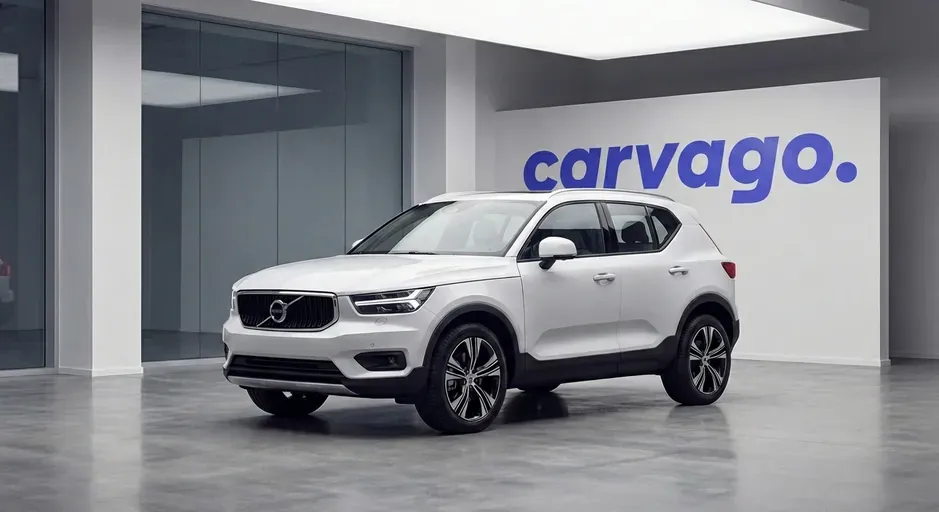
Volvo XC40

Volvo XC40

Introduction

Mercedes-Benz GLB represents an exceptionally practical and spacious compact SUV that stands out in its class with an optional third row of seats, while its purely electric version is known on the market under the different designation EQB. Its main challenger is the Volvo XC40, an extremely popular Swedish crossover renowned for its uncompromising safety and characteristic Nordic design, whose electrified variants from previous years bore the Recharge moniker and have been renamed EX40 for the latest model years. The following detailed comparison will clearly show you the strengths and weaknesses of both models and help you find out which of these popular premium cars will be the best choice for your lifestyle on the used car market.

Comparison of External Dimensions

Although the Mercedes-Benz GLB and Volvo XC40 fall into the premium compact SUV category, their approach to overall exterior proportions and body size differs quite fundamentally. The Mercedes-Benz GLB takes on the role of a highly practical family car with a length of 4634 mm, making it 209 mm longer than its Swedish rival. With a length ranging from 4425 to 4440 mm, the Volvo XC40 represents a much more compact choice. In practice, this means the Volvo is significantly more agile in narrow city streets and easier to maneuver into tight parking spaces, while the Mercedes bets on a more majestic and conservative appearance.

The wheelbase is another key parameter that clearly defines the different character of both cars. The Mercedes-Benz GLB boasts a generous wheelbase of 2829 mm compared to 2702 mm for the Volvo XC40. This noticeable difference of 127 mm in favor of the German SUV is the main secret why the GLB can offer so much legroom in the second row or even satisfy families with an optional third row of seats. On the other hand, the Volvo XC40 can rely on a slightly wider stance. With a width of 1863 mm, it is 29 mm wider than the narrower GLB (1834 mm), giving it a more muscular, planted look and contributing to a sense of confidence and stability on the road.

As for height, the purposeful boxy silhouette of the Mercedes GLB reaches up to 1692 mm in some versions, slightly exceeding the Volvo XC40 with its maximum height of 1652 mm. The choice between these two cars on the used car market thus largely depends on your daily use from the perspective of exterior dimensions. If your priority is maximum interior space and you don't mind a slightly longer body when parking, the Mercedes-Benz GLB clearly has the upper hand. However, if you are looking for a more agile and fashionable car that is easy to live with in heavy city traffic, the shorter and wider Volvo XC40 will be a more pleasant choice for you.

ParameterMercedes-Benz GLB SUVVolvo XC40 SUV
Length (mm)46344425 - 4440
Width (mm)18341863
Height (mm)1658 - 16921647 - 1652
Wheelbase (mm)28292702

Trunk Volume

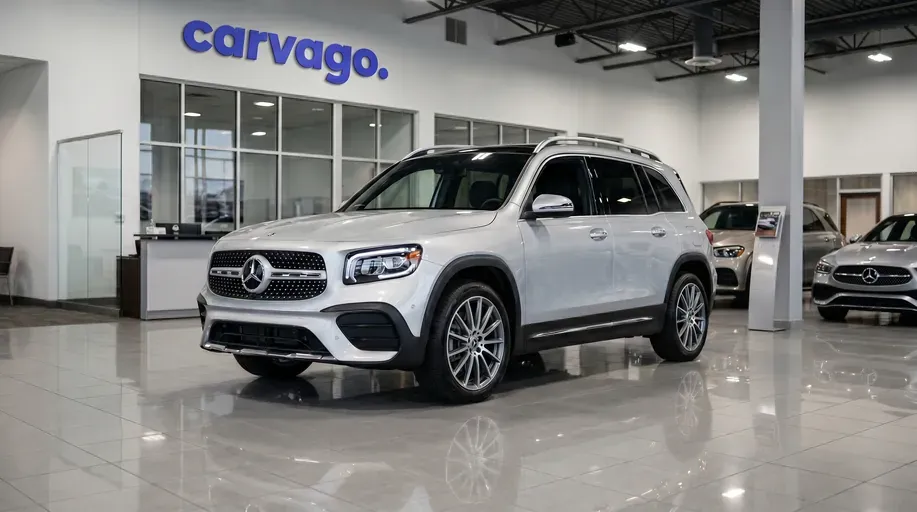
Luggage capacity is one of the key parameters when choosing a family car, as it directly affects daily practicality and the vehicle's usability for longer trips. When comparing the Mercedes-Benz GLB (X247 generation) and the Volvo XC40 (1st generation), which represent typical examples of roughly four-year-old used cars on the market, the different approach of both manufacturers is evident at first glance. While Mercedes-Benz benefits from its boxy body and offers generous space with a focus on maximum utility, Volvo focuses more on clever solutions and more compact dimensions that facilitate maneuvering in the city. For those interested in a used car, this means a choice between uncompromising space and stylish compactness.

In terms of numbers, the difference between these two popular SUVs is quite significant. Mercedes-Benz GLB boasts a luggage compartment with a basic volume of 570 liters in its standard five-seater version, which is easily enough for a family holiday. Furthermore, after folding the rear seats, the capacity increases to a staggering 1,805 liters, giving you space for several extra suitcases or the transport of truly bulky items. Volvo XC40, on the other hand, offers 452 liters in its standard configuration. Although this volume is perfectly sufficient for a regular weekend shopping trip or a shorter excursion, packing for longer family trips may already require some compromises. With the seats folded, users of the Swedish SUV reach a maximum of 1,328 liters.

It is also important to note that the trunk volume may vary slightly depending on the specific engine or interior configuration. In the Mercedes GLB, the optional third row of seats (in seven-seater versions) reduces the basic trunk volume to approximately 500 liters when these seats are folded into the floor. In the case of the Volvo XC40, you may encounter a slightly smaller capacity (around 413 liters) in the plug-in hybrid and fully electric Recharge versions due to the batteries being stored under the floor, although the electric variants partially compensate for this loss with a small front trunk (so-called frunk) with a volume of 31 liters. Overall, however, the German representative is much more generous when it comes to transporting luggage.
ParameterMercedes-Benz GLB SUVVolvo XC40 SUV
Basic volume (liters)570452
Maximum volume with seats folded (liters)18051328

📦 Trunk Battle: Does raw volume or compactness win?

If a huge trunk is a priority for you and you often transport the whole family with a pile of luggage, the Mercedes-Benz GLB is the clear choice of the two; the Volvo XC40, on the other hand, offers a smaller but perfectly sufficient space for daily city life and weekend trips.

Discover the true condition of the car thanks to an independent inspection

Order CarAudit™

Trailer Weights

The ability to tow a trailer is a key parameter for many compact SUV buyers, whether they plan to transport building materials or go on summer trips with a family caravan. Looking at roughly four-year-old used examples of both compared cars, we encounter interesting differences in total towing capacity. The Mercedes-Benz GLB (generation 247) offers an excellent and stable value for its popular internal combustion version, the GLB 250 (165 kW) – the maximum braked trailer weight is exactly 2000 kg. The unbraked trailer weight then reaches a standard 750 kg for this class. The Swedish Volvo XC40 (first generation) shows a much wider range on the used car market depending on the chosen powertrain. The standard weight for the base petrol and mild-hybrid engines (T2, T3, B3) is 1600 kg. However, if you opt for more powerful internal combustion versions such as the D4, T5, or B5, the maximum possible braked trailer weight jumps to an impressive 2100 kg. It is important, however, to keep in mind the electrified models – the fully electric (Recharge) and plug-in hybrid variants of the Volvo XC40 have a reduced capacity due to the higher weight of the battery system, ranging only between 1500 and 1800 kg.

In practice, this means that while the weaker and electrified versions offer ideal space for a few extra suitcases in a lighter trailer—a capacity perfectly sufficient for weekend shopping or a longer camping holiday—the top internal combustion variants of both models represent full-fledged towing workhorses. With a towing capacity of 2000 kg for the Mercedes and 2100 kg for the powerful Volvo versions, you can safely tow even a heavy boat trailer or a large family caravan. The Mercedes-Benz GLB will thus please customers looking for a guarantee of high towing power without the need to study tables, while the Volvo XC40, although offering the absolute market maximum in its top engine versions, requires much more careful checking of the selected specification when choosing a used car.

Model and engineBraked trailer weight (kg)Unbraked trailer weight (kg)
Mercedes-Benz GLB 250 (165 kW)2000750
Volvo XC40 T2 / T3 / B3 (95–120 kW)1600750
Volvo XC40 D3 (110 kW)1600–2000750
Volvo XC40 B4 / T4 (140–145 kW)1800–2100750
Volvo XC40 B5 / D4 / T5 (140–184 kW)2100750
Volvo XC40 Recharge / PHEV (T4, T5)1500–1800750

Overview of Most Common Motorizations

Overall Engine Comparison

Both models approach their powertrain offerings from opposite ends of the spectrum, which is key to the final choice based on your driving style and daily use. While the Mercedes-Benz GLB relies on exceptionally economical and efficient traditional internal combustion engines with a strong emphasis on long-distance highway cruising, the Volvo XC40, in the context of roughly four-year-old used cars, reflects the Swedish brand's very rapid transition to electrification. Base engine options for both cars start at similar power levels (Volvo T2 with 95 kW and Mercedes GLB 180 with 100 kW), but with the top-tier versions, you encounter a vast difference in the approach to dynamics. The most powerful family GLB 35 AMG offers a sporty 225 kW from a turbocharged 2.0-liter engine, while Volvo counters at the top of the range with the fully electric Recharge Twin Motor version with a staggering 300 kW output. Regarding the drivetrain layout, Mercedes offers its agile 4MATIC all-wheel-drive system on almost all mid-range and more powerful versions across the lineup. In contrast, the Volvo XC40 reserves all-wheel drive primarily for the more powerful mild-hybrids (B4, B5) and electric versions. For families with high annual mileage, the GLB's economical fleet of diesel engines makes clear sense, while for frequent school runs and suburban commuting, you will fully appreciate the zero-emission range and flexibility of Volvo's plug-in hybrids or pure electric vehicles.

Mercedes-Benz GLB (X247 generation)

The engine range for the Mercedes-Benz GLB benefits from the successful collaboration with Renault on the base 1.33-liter turbocharged four-cylinder engines (180 and 200 versions), which are characterized by unexpected flexibility and favorable fuel consumption. However, the true highway dominance is handled by the now almost legendary two-liter diesel units of the OM654 series (in 180 d, 200 d, and 220 d versions), which are hard to beat in the segment in terms of range and overall efficiency. A major advantage for used cars is that most of the more powerful petrol engines and practically all diesel variants use a robust, comfort-tuned eight-speed automatic (8G-DCT), which keeps the engine in the ideal RPM range in every situation.

EngineFuelPower (kW)Torque (Nm)Transmission
1.3 GLB 180Petrol1002007DCT
1.3 GLB 200Petrol1202507DCT
2.0 GLB 250Petrol1653508DCT
2.0 GLB 35 AMGPetrol2254008DCT
2.0 GLB 180 dDiesel852808DCT
2.0 GLB 200 dDiesel1103208DCT
2.0 GLB 220 dDiesel1404008DCT

Volvo XC40 (1st generation)

Under the hood of the Volvo XC40 on the used car market, you will witness a technological transformation in real-time. If you are a traditional diesel fan, you must take into account that Volvo discontinued the classic diesel units labeled D3 and D4 in the second half of 2020, making them practically non-existent among typically four-year-old models. Their place has been fully taken by highly sophisticated petrol mild-hybrids labeled B (typically B3 and B4), which significantly assist the combustion engine during pull-away and ensure smoother maneuvering. However, if you are looking for a modern compromise and low operating costs on daily routes, Volvo's most interesting attractions are the widely available Recharge series plug-in hybrids (T4 and T5) or the increasingly popular powerful fully electric versions.

EngineFuelPower (kW)Torque (Nm)Transmission
1.5 T2 / T3Petrol95 / 120245 / 2656MT / 8AT
2.0 B3 / B4Mild-hybrid petrol120 / 145265 / 3007DCT / 8AT
2.0 D3 / D4Diesel110 / 140320 / 4006MT / 8AT
1.5 Recharge T4 / T5PHEV155 / 193405 / 4257DCT
Recharge Single MotorElectric1703301-speed
Recharge Twin MotorElectric3006601-speed

Electrification vs. Honest Diesel ⚡

While Volvo scores with sophisticated plug-in hybrids and powerful electric vehicles ideal for the city and its surroundings, Mercedes, with its resilient and exceptionally economical diesels, is the clear choice for trouble-free long journeys.

Choosing the right engine is crucial for long-term satisfaction with the vehicle. The following recommendations are based on real-world experience, driving dynamics, actual fuel consumption, and mechanical reliability.

Both premium compact SUVs approach powertrains slightly differently. While Mercedes-Benz benefits from its flexible platform, which managed to fit up to a seven-seat interior into such a compact footprint (placing higher demands on engine performance under full load), Volvo underwent a very early and radical electrification with the XC40 model. An interesting fact is that Volvo definitively ended the production of diesel engines (D3 and D4 designations) in the XC40 model range as early as 2020. Therefore, if you are looking for a roughly four-year-old used car, you will no longer find diesel versions in the offer, and the market is dominated by mild-hybrid or plug-in hybrid petrol units.

For the Mercedes-Benz GLB, we recommend: 250 4MATIC (165 kW / 224 hp)

Given that the GLB very often serves as a full-fledged family car and can feature a third row of seats, the two-liter turbocharged four-cylinder petrol engine (internal designation M260) in the 250 version is an absolutely ideal compromise. Data from available used car databases shows that this engine is widely represented in models from 2019 to 2023 (pre-facelift generation 247). While the base GLB 200 engine (using a smaller 1.3-liter engine) can feel slightly breathless when fully loaded, the 250 version offers confident performance and premium refinement.

  • Why it's the best choice: It provides an excellent balance between utility and dynamics. The engine is quiet, does not suffer from the shortcomings of small displacements, and in combination with 4MATIC all-wheel drive, makes the GLB a very confident car regardless of weather or surface.
  • Technical advantages: The engine generates a robust torque of 350 Nm available from as low as 1800 rpm. It is paired as standard with a smooth eight-speed dual-clutch transmission (8G-DCT), thanks to which real combined fuel consumption usually stays at an acceptable 8 to 9 liters per 100 km.
  • Known risks and how to avoid them: The engine itself is considered mechanically durable, but the dual-clutch transmission system and 4MATIC drive require meticulous care. The absolute basic step when buying a used car is to verify in the service history that the oil in the gearbox and the 4x4 system transfer case has been changed every 60,000 km. Neglecting this task usually leads to very expensive mechatronics failures.
  • Who it's for: A perfect choice for families with children, drivers spending a lot of time on the highway, or those who drive mostly short city routes and want to absolutely avoid the risks associated with DPF filter clogging in diesel variants.

For the Volvo XC40, we recommend: B4 (145 kW / 197 hp)

In the context of roughly four-year-old used cars, we clearly recommend going for the B4 petrol mild-hybrid two-liter four-cylinder. As the data suggests (versions like Momentum from 2020–2021 or Core equipment from 2022–2024), this unit very effectively replaced the older T4 units. A large portion of used car buyers originally consider the cheaper T3 three-cylinder (1.5 l, 120 kW), but in the long run and with a vehicle weight of around 1.7 tons, the larger two-liter makes much more sense. It feels more mature and provides the car with the composure you expect from a premium SUV.

  • Why it's the best choice: The B4 version offers exactly the right amount of power reserve. The additional 10 kW and 40 Nm from the 48V starter-generator perfectly mask any turbo lag and guarantee exceptionally smooth and brisk starts from intersections.
  • Technical advantages: The power curve is beautifully linear thanks to the mild-hybrid assistance. The upgrade from the original T4 version to B4 also brought a significant reduction in real fuel consumption – with a light foot on the accelerator, it's easy to stay around 7 to 7.5 liters per 100 km. A technological point of interest is that older B4 versions used a classic Geartronic automatic with a torque converter (until the end of 2021), while newer model years switched to a dual-clutch DKG transmission, which reacts slightly more promptly.
  • Known risks and how to avoid them: The mild-hybrid system means a bit more electronics on board and a small 48V battery. During a test drive, you should primarily focus on whether the petrol engine starts up perfectly smoothly when the start-stop system is deactivated or when transitioning from so-called "coasting" to load. Any unpleasant jerking or delays may indicate future problems in the system's electrical network.
  • Who it's for: Ideal for more defensive and comfort-oriented drivers who value quiet travel and safety. It handles heavy city traffic excellently, but at the same time has enough power for comfortable overtaking outside the city.

Real Fuel Consumption

The difference between officially stated fuel consumption and reality on the road is often a subject of much discussion among motorists. Although the modern WLTP measurement methodology has brought more accurate paper figures than older standards, in practice, values can still differ by 10 to 20 percent depending on driving style, vehicle load, or route profile. For the most accurate picture, we analyzed user data from the well-known independent portal Spritmonitor.de, where drivers themselves record their actual fuelings over the long term. We focused primarily on engines from the years that are currently most in demand on the market for roughly four-year-old used cars, i.e., models available approximately from the 2020–2022 production period.

Model and engineAverage consumption (l/100 km)
Mercedes-Benz GLB 200 d 110 kW (Diesel)6.2
Volvo XC40 D3 110 kW (Diesel)6.4
Mercedes-Benz GLB 220 d 140 kW (Diesel)6.5
Volvo XC40 B3 120 kW (Petrol / Mild-Hybrid)7.5
Mercedes-Benz GLB 200 120 kW (Petrol)7.8
Volvo XC40 B4 145 kW (Petrol / Mild-Hybrid)8.0
Volvo XC40 T4 140 kW (Petrol)8.4
Mercedes-Benz GLB 250 165 kW (Petrol)8.5

One fundamental trend is immediately apparent from the table. Although both carmakers have bet heavily on petrol engines and petrol mild-hybrids in recent years (represented by the popular B series at Volvo), in the real world, traditional diesel units sovereignly maintain their lead in efficiency. Basic diesel versions like the Mercedes-Benz GLB 200 d and the older, yet very popular on the used car market, Volvo XC40 D3 can easily drive with an average only slightly above the six-litre per hundred kilometres mark, which is an excellent result for relatively large SUVs with poorer aerodynamics. A certain surprise for some buyers may be the higher consumption of modern petrol engines. Despite sophisticated mild-hybrid technology in the XC40 B3 and B4 versions or the small-displacement 1.3-litre engine in the GLB 200, real-world consumption commonly ranges between seven and a half to eight litres. More powerful petrol versions without significant hybrid assistance, such as the older T4 from Volvo or the GLB 250, easily exceed the eight-and-a-half-litre mark in normal traffic.

What does this found difference mean for a typical user and future owner of a used car? If you are looking for a reliable vehicle primarily for long motorway routes or frequent intercity commuting, diesel engines like the GLB 200 d and 220 d will save you significant financial resources annually and ensure a significantly longer range on a single tank. On the other hand, if you are buying a car that will spend most of its time in heavy city traffic and on very short trips where the engine does not have time to fully warm up, petrol and mild-hybrid engines (e.g., Volvo XC40 B3) make more sense despite higher fuel consumption. You will save yourself potential future problems with a clogged diesel particulate filter (DPF) and the urea injection system, the repairs of which can often exceed the savings from cheaper diesel refueling in older cars.

Overall, it can be summarized that average fuel consumption alone should not be the absolute deciding factor in this specific battle. Both Mercedes-Benz and Volvo offer very similarly efficient, or conversely thirstier, alternatives entirely depending on the chosen fuel and power class. The decision will therefore be more about your personal driving profile – whether you prefer the quiet and smooth operation of petrol mild-hybrids with a Nordic pedigree, or whether you would rather reach for the more traditional, yet exceptionally efficient diesel classic with the star on the hood. In the context of the used car market, choosing the right engine concept is much more important for the budget than the car brand itself.

Price Range and Used Car Offerings

When searching for a premium compact SUV on the used car market – with a focus on vehicles approximately four years old (2021–2022 models) – both the Mercedes-Benz GLB and Volvo XC40 offer a completely different value-for-money ratio. While Mercedes benefits from a unique offering of space, Volvo scores with a more attractive entry price. Both cars come from current or recent generations, which make the most sense on the used car market in terms of modern technology.

Mercedes-Benz GLB (X247 generation, 2021–2022 models)

Used GLB models hold their value exceptionally well. The reason is a combination of premium status and the fact that in the compact luxury SUV category, the model with an optional third row of seats has no direct competition.

  • Price range: Four-year-old vehicles most often range from €31,000 to €45,000 depending on the engine and mileage.
  • Influence on price: Models equipped with 4MATIC all-wheel drive, the popular AMG Line visual package, and the optional seven-seat configuration are found in the upper half of the price spectrum.
  • Engines: The most sought-after and most frequently listed are the economical diesel versions GLB 200 d and 220 d, which significantly contribute to the slow depreciation of the vehicle.

Volvo XC40 (1st generation, 2021–2022 models)

The Swedish representative is often slightly more affordable as a used car. Its more compact dimensions and wide range of engines make it an excellent choice for buyers looking for a stylish SUV primarily for the city who do not need to carry a family in a seven-seat layout.

  • Price range: Common used cars from these years start at roughly €27,000 and reach up to €39,000.
  • Influence on price: Basic versions with three-cylinder petrol engines (T2, T3) represent the most attractive entry point into the premium segment. Higher prices are maintained by R-Design trims (or the more modern Plus/Ultimate Dark designations) and more sophisticated mild-hybrid units (B3, B4).
  • Engines: Unlike Mercedes, petrol engines and plug-in hybrids (Recharge T4/T5) dominate the secondary market for Volvo, and their value tends to drop slightly faster than that of traditional diesels.

Evaluation of Price/Performance Ratio

When comparing four-year-old representatives of these models, there are clear differences in what the buyer is paying extra for:

Compared ParameterMercedes-Benz GLB (2021–2022)Volvo XC40 (2021–2022)
Starting price of a used carHigher (from ~€31,000)Lower (from ~€27,000)
Value retention (Depreciation)Very slowAverage for the premium class
Key feature increasing the price7 seats, AMG package, 4MATICR-Design, Plug-in hybrid
Most common drivetrain in listingsDiesel engine (2.0 l)Petrol / Mild-hybrid (1.5 l - 2.0 l)

From the perspective of initial investment, the Volvo XC40 is a more advantageous premium purchase. On the other hand, the Mercedes-Benz GLB reliably justifies its higher prices with absolute superiority in interior versatility and remains a "safe haven" for those looking for a luxury family car with minimal further price drop.

Price Battle 💰

While the Volvo XC40 scores on the used car market with a significantly more friendly purchase price, the Mercedes-Benz GLB justifies its higher price tags with slower depreciation and unique seven-seat practicality.

Safety and Euro NCAP Rating

Both models, the Mercedes-Benz GLB and the Volvo XC40, earned the maximum five-star rating in crash tests by the independent organization Euro NCAP. However, it is crucial to view these results in the correct context. Euro NCAP testing methodology and protocols are constantly evolving and becoming stricter every year, which means that percentage ratings from different years cannot always be directly and fully compared. While modern tests place increasing emphasis on complex intersection scenarios and advanced cyclist detection, older protocols may not have tested these elements as rigorously. However, since both cars underwent testing in a similar period—and thus fall into the era when these modern elements were being introduced—their results reflect the safety level of today's four-year-old used cars very well.

The Mercedes-Benz GLB underwent Euro NCAP testing in 2019 according to the then-current and stricter methodologies. The results confirmed the high safety standard expected of a family SUV. The vehicle offered very good protection for adult occupants, with the cabin remaining fully stable during a frontal impact. Significant emphasis was placed on pedestrian protection; the GLB utilizes an active hood system that lifts slightly upon detecting a collision with a pedestrian, cushioning the impact and significantly reducing the risk of injury. In terms of assistance systems, the standard autonomous emergency braking (AEB) performed reliably in both city traffic and at higher speeds.

The Volvo XC40 was evaluated a year earlier, in 2018, when Euro NCAP introduced demanding challenges in the form of cyclist detection and lane-keeping assist evaluations. At the time, the XC40 achieved the highest score ever recorded under these new rules. Particularly impressive is the 97% score for adult occupant protection, which ranks the car among the absolute best in terms of structural strength and crew protection during a crash. The emergency braking systems were able to effectively recognize both pedestrians and cyclists and prevent collisions. Regarding the 2018 tests, it should be noted that Euro NCAP certification tends to formally expire after six to seven years due to the constant advancement of industry standards. However, for those interested in a used car, this does not change the fact that the XC40 platform and its assistance technologies are exceptionally robust.

ParameterMercedes-Benz GLBVolvo XC40
Year of testing20192018
Adult occupant protection92 %97 %
Child occupant protection88 %87 %
Vulnerable road users protection78 %71 %
Safety assist systems74 %76 %

Overall, both cars offer excellent, modern, and comprehensive safety equipment that fully meets the standards of premium family SUVs. The Volvo XC40 offers slightly better passive protection for adults inside the vehicle thanks to its massive body, while the Mercedes-Benz GLB counters with a more modern pedestrian protection architecture (including the active hood), which earned it a higher percentage rating in the vulnerable road users category. Choosing either of these models is a safe bet.

Safety first 🛡️

Both cars represent the absolute top of their class, with the Volvo impressing with its structural cabin strength and the Mercedes providing better pedestrian protection thanks to its active hood.

Comparison of Interesting Equipment Features

In addition to standard equipment, each model offers several unique features that can be decisive for the customer, with both cars having their own distinct approach to added value.

Mercedes-Benz GLB: A space magician with advanced artificial intelligence

  • Variability and interior space: As one of the few SUVs in this compact class, the GLB offers an optional seven-seat configuration. Furthermore, the second row of seats is longitudinally adjustable (by up to 140 mm) and offers adjustable backrest inclination, allowing for flexible changes between passenger space and luggage compartment volume.
  • Infotainment and connectivity: The MBUX (Mercedes-Benz User Experience) multimedia system is among the absolute top on the used car market. It impresses with its typical widescreen connection of digital instruments and the central display. However, its greatest strength is the smart voice control that responds to natural speech after the prompt "Hey Mercedes" and the innovative navigation with augmented reality (AR), which projects directional arrows directly onto the image from the front camera.
  • Driving technology: For versions with 4MATIC all-wheel drive, the Off-Road Engineering package is often available. This adds Downhill Speed Regulation (DSR), special tilt animations on the display, and adjusts engine power delivery and ABS operation for driving on unpaved surfaces.
  • Sport variants: For more demanding drivers who want a practical SUV with uncompromising performance, the AMG division offers full-fledged sport versions, the GLB 35 and GLB 45. These differ not only in high performance and AMG Performance all-wheel drive but also in a more aggressive design, sharper steering, and a specifically tuned adaptive suspension.

Volvo XC40: Scandinavian cleverness and innovative storage spaces

  • Smart interior design: With this model, Volvo focused on maximum practicality in everyday life. For example, engineers moved the bass speakers from the doors to the dashboard, creating a huge space in the door panels for storing a laptop or large PET bottles. There is also a removable waste bin in the center console, a small fold-out hook for a shopping bag on the glove compartment, or a cleverly divisible luggage compartment floor.
  • Materials and style: The interior is characterized by the use of unconventional and sustainable materials. A typical feature of higher trim levels is, for example, floor carpeting made from recycled plastics (often in a striking Lava orange color) or luxury seats upholstered in a natural wool blend. The exterior is very often livened up by two-tone paint with a contrasting roof color.
  • Connectivity and safety: The heart of the dashboard is a vertically oriented display with the Sensus system, which resembles tablet operation. Advanced Volvo On Call telematics allows for complete remote vehicle management via a mobile app. In terms of assistance systems, the XC40 is equipped with the top-tier City Safety package and the Pilot Assist semi-autonomous driving system, which confidently handles lane-keeping and stop-and-go traffic.
  • Electrification and trim lines: While the base consists of proven internal combustion engines, the used car market is also rich in plug-in hybrid versions and the fully electric Recharge variant (often offering an innovative operating system based on the Google platform). A sportier spirit is represented by the popular R-Design visual package with sports seats and a stiffer suspension setup, while the Inscription trim focuses on maximum luxury and elegance.

Key Advantages and Disadvantages

Mercedes-Benz GLB

Pros

Option for a seven-seat layout, which is a great rarity in the compact SUV segment

Excellent interior space and plenty of headroom thanks to the practical boxy shape

Advanced and fast MBUX infotainment system with precise voice control

Sliding second row of seats significantly increases the daily variability of the interior and luggage compartment

Very comfortable chassis tuning, which is ideal for long family trips

Cons

The third row of seats is very cramped and in practice usable only for smaller children

Higher purchase price of used cars and traditionally more expensive service tasks of a premium brand

Some plastic parts in the lower parts of the interior do not match the car's high price tag

Poorer body aerodynamics bring slightly higher wind noise at highway speeds

The Mercedes-Benz GLB is the perfect choice for families looking for maximum interior space, flexibility, and prestige in a relatively compact package. Thanks to the option of up to seven seats and top-notch onboard technologies, it will appeal to demanding drivers who need a practical car but don't want to get behind the wheel of a giant SUV.

Volvo XC40

Pros

Top-tier level of active and passive safety supported by an excellent Euro NCAP rating

Exceptionally comfortable front seats with excellent ergonomics and a great driving position

Thoughtful interior practicality including large door pockets, hidden compartments, and bag hooks

Unmistakable Scandinavian design and high quality of materials used in the cabin

More compact external dimensions, which make maneuvering and parking in the city much easier

Cons

Smaller basic luggage compartment volume in direct comparison with the GLB model

The vertical infotainment system (Sensus/Android) can sometimes require a longer response time

Stiffer chassis tuning, especially if the car is equipped with larger wheels on the R-Design version

Higher real-world fuel consumption for older conventional gasoline engines without hybrid assistance

The Volvo XC40 primarily targets couples or smaller families for whom safety, stylish design, and top-notch interior craftsmanship play a major role. It represents an ideal companion for everyday city life and weekend escapes, where its smart storage solutions and Scandinavian charm fully stand out.

Common Problems and Owner Complaints

Based on long-term owner experience, service reports, recalls, and insights from the Independent Car Inspection service, we have compiled a detailed overview of the most common problems that buyers of roughly four-year-old used cars should watch out for.

Mercedes-Benz GLB

The Mercedes-Benz GLB attracts with its generous interior space and premium character, but when choosing a used one, it is advisable to focus on several specific areas.

  • Engine and Drivetrain: In gasoline variants (especially the GLB 250 version), engine running problems can occur, manifesting as rough idling and loss of power. According to owner experience, this is often caused by excessive wear of the cylinder head, which is a known problem requiring more expensive intervention. Occasional and unexpected illumination of the Check Engine light is also not uncommon.
  • Transmission: Dual-clutch transmissions (7G-DCT and 8G-DCT) in this model sometimes suffer from jerky shifting and slight hesitation when starting at low speeds. In many cases, uploading new software helps, but for cars with higher mileage, it may be due to noticeable wear of the clutch plates.
  • Electronics and Sensors: Repeated failures of wiper motors have been recorded, which can cause wipers to unexpectedly stop working in the rain. Another ailment is occasional false error messages from various assistance sensors and failures of the MBUX onboard infotainment.
  • Body and Glass: Due to the steeper angle of the windshield, the GLB is more prone to damage. Drivers quite often report cracks caused by small stones on the highway.

Mercedes-Benz GLB: Increased attention to transmission and engine operation

Although the GLB is a practical and premium-finished SUV, for used units we recommend thoroughly checking the smooth operation of the dual-clutch transmission and paying maximum attention to any hesitation or irregular operation of gasoline engines.

Volvo XC40

The Swedish Volvo XC40 offers excellent safety and a distinctive design, however, according to service statistics, it has characteristic weaknesses mainly related to the onboard system and electronics.

  • Infotainment and Onboard Systems: Clearly the most common and most discussed problem is freezing, slow, or completely blacking out central infotainment screens. These software and hardware errors often require a restart or, in some cases, a complete replacement of the main unit.
  • Electronics and Battery: A frequent nuisance is that the vehicle suddenly does not recognize the key, even though it has a fully functional battery. Many owners also struggle with unexpected and rapid discharge of the 12V battery in a parked car, which can lead to the inability to start the car.
  • Body and Comfort Features: Problems with the electric operation of the tailgate are known, where closing becomes problematic over time and usually requires replacement of the relevant motor or calibration. In some units, the fuel filler cap opening system also fails or the air conditioning compressor fails.
  • Transmission and Brakes: As with competitors from Germany, some owners complain about occasional slipping or jerking of the automatic transmission. There are also reports of brake pedal vibrations, which worsen braking performance and require early replacement of brake components.

Volvo XC40: Mainly troubled by sensitive electronics

The Volvo XC40 is considered a very safe and attractive car, but for roughly four-year-old used cars, it is absolutely crucial to thoroughly test the stability of the onboard infotainment and the trouble-free functioning of all comfort electronics.

Tips for Buying a Used Car

When buying a used car, a thorough inspection is key, as even premium compact SUVs have their specifics and weak points worth focusing on. To ensure you're not buying a pig in a poke, a comprehensive car audit before the purchase itself is always an ideal step.

When choosing a Mercedes-Benz GLB:

  • Dual-clutch transmission behavior (8G-DCT): During the test drive, focus on the smoothness of shifting, especially with a cold engine and when crawling in traffic. Hesitation, jerky starts, or jolts when shifting can mean worn clutches or the need for a control unit software update.
  • MBUX system stability: The pair of infotainment displays looks impressive, but older software versions can be prone to freezing. Test the screen response speed, voice assistant functionality, and the smoothness of the parking camera display.
  • Chassis condition and axle play: The GLB is a relatively heavy car (especially in the seven-seater version), and on larger wheels, the suspension components take a beating. Listen for dull thuds when driving over bumps or speed bumps. These most often reveal worn control arm bushings or stabilizer links, which a detailed physical inspection of the used car on a lift will reliably uncover.
  • Interior noises and sunroof: Listen for cabin noises when driving on poor surfaces. In some units, creaking plastics from the dashboard or door panels may appear. If the car has a panoramic sunroof, check if it opens smoothly and without sticking, and look for signs of moisture on the headliner.
  • DPF condition in diesel versions: Most used GLBs are equipped with a diesel engine. If the car was driven primarily on short city routes, the particulate filter may be prematurely clogged. Reach into the exhaust tip with a finger (after it has cooled down) or a white tissue – it should be clean and without a layer of black soot.

When choosing a Volvo XC40:

  • Sensus system speed: The vertical touchscreen controls almost all car functions, including the air conditioning. In older models, the system tends to be slow immediately after starting. Check the screen boot time and test whether the system responds promptly to touch, which can reveal missing software updates.
  • Smoothness of the automatic transmission (Geartronic): The classic eight-speed Aisin automatic should shift silky smooth and imperceptibly. Although "lifetime" fill is often mentioned, an oil change after about 60,000 km is ideal. If you feel kicking during downshifts or starts, it indicates neglected service.
  • Battery condition in plug-in hybrids (Recharge): If you are considering the T4 or T5 Recharge versions, ask to see the trip computer at full charge. The indicated electric range should not drop dramatically immediately after starting. A rapid decrease in percentage during mild acceleration points to traction battery degradation.
  • Brake wear and steering play: The XC40 invites more dynamic driving, but its high weight takes its toll on the brakes and front axle. During a safe test drive, brake more sharply from a higher speed – vibrations in the steering wheel indicate warped brake discs. Even the slightest inaccuracies in steering then suggest that a thorough technical inspection of the car is necessary due to worn joints.
  • Cold starts of two-liter engines: Listen carefully from both outside and inside during a cold start of both petrol and diesel engines. Any metallic clicking or rattling in the first seconds of operation can be a symptom of a stretched timing chain or, in earlier models, a worn accessory belt tensioner.

FAQ: Most Frequently Asked Questions

Mercedes-Benz GLB is the clear winner in this regard, as the standard five-seater version has a luggage compartment with a volume of 570 liters. In contrast, Volvo XC40 offers a class-average 452 liters of cargo space. The German representative thus provides much more practicality and flexibility for family travel.

Yes, the Mercedes-Benz GLB is unique among compact premium SUVs in that it offers the option of an additional third row of seats for a total of seven passengers. The Volvo XC40, on the other hand, is designed exclusively as a classic five-seater. However, it should be added that the third row in the German model is primarily suitable for children or people of smaller stature.

Mercedes-Benz uses the advanced MBUX system with two visually connected screens, which excels with great graphics, speed, and very smart voice control. The Volvo XC40 relies on a vertically oriented central display, which in newer model years (from roughly 2021) uses the excellent Android operating system with integrated Google services. Both solutions are among the absolute top on the market, but the Swedish system may feel slightly more intuitive for daily navigation.

With a total length of 4.42 meters, the Swedish representative is noticeably more compact, giving it a clear advantage when parking and maneuvering in narrow streets. The competitor with the three-pointed star measures 4.63 meters in length, making it a significantly larger car with a longer wheelbase. Therefore, if you spend most of your time in the city, the more agile and smaller model will be more pleasant to drive.

Both cars are at the absolute top and received a full five-star rating in strict independent Euro NCAP tests. Volvo traditionally excels in standard safety equipment, which already includes advanced systems for protection against collisions with obstacles or pedestrians in the base version. The competing model from Mercedes is not far behind, but some of the most advanced assistance features may be part of the optional equipment.

Conclusion: Which Model to Choose?

Our Verdict

Choosing between these two premium compact SUVs on the used car market depends primarily on your space requirements and daily use. The Mercedes-Benz GLB represents an ideal choice for larger families and highway travelers, offering unmatched variability with the option of seven seats, a huge trunk, and exceptionally efficient diesel engines. The Volvo XC40, on the other hand, is the perfect companion for couples or smaller families looking for a safe, agile, and stylish city car, where you will fully appreciate the advanced hybrid powertrains and more affordable purchase price. Both cars absolutely excel in their specific disciplines, so you just need to decide whether uncompromising spatial practicality or compact Scandinavian elegance is more important to you.

Find your ideal car

Sources: ADAC, garaz.cz, mdcr.cz, autohome.cz, techfocus.cz, autohit.cz

This article was prepared using artificial intelligence tools. The section guarantor is Petr Dušek.

Related articles

Car battle

Škoda Kamiq vs. Toyota Yaris Cross: Complete comparison 2026

Detailed comparison of Škoda Kamiq vs Toyota Yaris Cross. Discover the differences in space, fuel consumption, and equipment. Our verdict will help you choose the right city SUV.

Apr 14, 2026

Car battle

Ford Puma vs. Opel Mokka: Complete comparison 2026

Ford Puma vs Opel Mokka: City SUV comparison. Read a detailed evaluation of engines, space, and driving characteristics and choose your ideal used car.

Apr 14, 2026

Car battle

Renault Austral vs. Seat Ateca: Complete comparison 2026

Detailed comparison of Renault Austral vs Seat Ateca. Discover the differences in equipment, driving characteristics, and fuel consumption. Our verdict will make it easier for you to choose the right SUV!

Apr 13, 2026

We accept online card payments as well as wire transfers.

visa payment provider logovisa-electron payment provider logomastercard payment provider logomaestro payment provider logodiners-club payment provider logodiscover payment provider logo