Articles

Car battle

Mercedes-Benz EQA vs. Mercedes-Benz EQB: Complete comparison 2026

Detailed comparison of the Mercedes-Benz EQA and Mercedes-Benz EQB. Find out which electric SUV offers better range, space, and equipment. Read our verdict!

May 21, 2026

VS
Mercedes-Benz EQA

Mercedes-Benz EQA

Mercedes-Benz EQB

Mercedes-Benz EQB

Introduction

Mercedes-Benz EQA represents an attractive entry point into the world of fully electric SUVs with the three-pointed star, and as the equivalent of the GLA model, it combines compact dimensions with premium comfort. Standing against it is its slightly larger sibling, the Mercedes-Benz EQB, which is a zero-emission alternative to the GLB model that, thanks to its more robust shape, offers excellent practicality and the highly sought-after option of a seven-seat layout for families. Let's take a detailed look at how these related representatives stand in direct comparison on the used electric vehicle market and which of them represents the smarter choice for your daily journeys.

Comparison of External Dimensions

Looking at the external dimensions on the used car market from roughly 2021 to 2023, it is obvious at first glance that although both models share the same technical platform and the exact same width of 1834 mm, their overall proportions and focus differ significantly. Mercedes-Benz EQB plays the role of a more family-oriented and robust representative, which is clearly confirmed by its total length of 4684 mm. It is thus exactly 221 mm longer than its more compact sibling EQA, which measures 4463 mm in length. In everyday traffic, this means that while the EQA model will weave through narrow city streets more easily and be easier to park thanks to its shorter overhangs and more compact dimensions, the EQB requires a slightly more experienced eye when maneuvering. However, the longer body gives the EQB a more majestic appearance and the feel of a full-fledged family car.

Differences can also be found in height and wheelbase, which fundamentally define the interior spaciousness of both electric vehicles. The boxier EQB, at 1691 mm, is a noticeable 71 mm taller than the more dynamically styled EQA (1620 mm). This body construction, together with an extended wheelbase of 2829 mm (which is exactly 100 mm more than the EQA), allows the EQB to offer significantly more headroom and even an optional third row of seats. So if you are looking for an agile and stylish city SUV for couples or smaller families, the more aerodynamic profile of the EQA will suit you perfectly. Conversely, the Mercedes-Benz EQB represents the ideal choice for used car buyers who require maximum interior flexibility, a more regular trunk shape, and space for a larger number of passengers.

ParameterMercedes-Benz EQA SUVMercedes-Benz EQB SUV
Width (mm)18341834
Length (mm)44634684
Height (mm)16201691
Wheelbase (mm)27292829

Trunk Volume

When choosing a premium compact electric car, the size of the luggage compartment often plays a decisive role, especially if you plan to use the vehicle as your primary family car. Although the Mercedes-Benz EQA and EQB models share the same technical platform and fall into the same generation on the used car market (for example, four-year-old cars from 2021 and 2022), their approach to interior space is diametrically different. While the more compact EQA relies on a sportier silhouette with a sloping rear, the boxier shape of the EQB is designed with maximum emphasis on everyday practicality and transport capacity.

If we look at the exact numbers, the differences are absolutely fundamental. The Mercedes-Benz EQA offers a base luggage capacity of 340 liters, which is a value sufficient for a standard weekend shopping trip or luggage for two passengers. If you fold down the rear seats, the space increases to a maximum of 1320 liters. In contrast, the Mercedes-Benz EQB provides a very generous 495 liters even in its base configuration. After folding the rear bench, you get a huge cargo space with a volume of 1710 liters.

In practice, this difference of 155 liters in the base configuration means space for several extra suitcases, trouble-free storage of a stroller, or simply enough room for a longer family vacation. Thanks to the EQB's taller body construction, bulky items are also much easier to load into the trunk. The conclusion is clear: if you are looking for a stylish electric car primarily for the city, the EQA's dimensions will suit you. However, for families and drivers with higher space requirements, the EQB is a disproportionately more sensible and usable choice.

ParameterMercedes-Benz EQA SUVMercedes-Benz EQB SUV
Base volume (liters)340495
Maximum volume with seats folded (liters)13201710

Family space vs. city style 📦

While the Mercedes-Benz EQA with 340 liters is sufficient for everyday city trips or excursions for two, the EQB, thanks to its boxy shape and 155 liters larger trunk, represents a full-fledged and much more practical family car.

Discover the true condition of the car thanks to an independent inspection

Order CarAudit™

Trailer Weights

Trailer weight, or towing capacity, plays a key role for many buyers when choosing a practical car, whether it's for attaching a small trailer or towing a heavy caravan. When comparing used cars around four years old (model years 2021 to 2023), we encounter a vast difference between these two compact electric SUVs. While the Mercedes-Benz EQA was prepared for towing from the very beginning, you will look for towing capacity in vain with the Mercedes-Benz EQB from these years. The car from 2021–2023 was not officially approved for towing a trailer (this option was only offered by newer, modernized models from 2024 onwards), and therefore any technical data is missing for this generation.

Furthermore, for the EQA model, the parameters vary significantly depending on which powertrain you choose. The standard braked trailer weight for the basic front-wheel-drive variants (EQA 250 and EQA 250+) is a more modest 750 kg. Even this basic figure easily provides space for a few extra suitcases in a smaller travel trailer. Conversely, the maximum braked trailer weight for the more powerful all-wheel-drive versions (EQA 300 and EQA 350) reaches an impressive 1,800 kg. Such capacity is absolutely sufficient for weekend shopping as well as longer holidays with a large caravan or heavier load. The unbraked trailer weight is then a standard 750 kg for all versions. The conclusion when buying a four-year-old used car is therefore quite clear: if a tow bar is a necessity for you, the EQA model in its more powerful specification has no competition in this duel, while the older EQB will only suit those who can reliably do without the possibility of towing.

Model and powertrainBraked trailer weight (kg)Unbraked trailer weight (kg)
Mercedes-Benz EQA 250 / 250+750750
Mercedes-Benz EQA 300 / 3501800750

Overview of Most Common Motorizations

Both compact electric models, the Mercedes-Benz EQA and EQB, share the same platform (MFA2) and the complete range of powertrains. In terms of motorization, they are complete twins, although the identical parameters manifest differently on the lighter and more aerodynamic EQA compared to the larger and boxier EQB, which can accommodate up to seven passengers. Both vehicles are available in front-wheel-drive versions (250 and 250+ series) or as dual-motor all-wheel drives (300 4MATIC and 350 4MATIC). From the perspective of a user in the market for approximately four-year-old used cars, the 250+ version plays a key role. Although it does not offer such overwhelming dynamics as the more powerful variants, it features a slightly larger battery (70.5 kWh usable compared to the standard 66.5 kWh in other versions) and the best range in the entire lineup. The performance of both cars covers a wide spectrum from a reasonable 140 kW for the front-wheel drives to an excellent 215 kW for the top-of-the-line all-wheel drive. The electric motors are always paired with a single-speed automatic transmission, which ensures a trouble-free and silky-smooth ride.

Mercedes-Benz EQA

The compact crossover EQA (generation 243) offered four available power variants on the used car market. The range opens with the standard EQA 250, which was available immediately from its debut in early 2021. Its single front electric motor delivers 140 kW and 375 Nm of torque, making it an ideal and sufficiently agile companion for urban and suburban traffic. During 2022, the highly sought-after long-range EQA 250+ version was added to the range, which, while maintaining the same power output, brought slightly higher torque (385 Nm) and, above all, the aforementioned larger battery. For customers looking for more pronounced dynamics, the dual-motor EQA 300 4MATIC (168 kW) and EQA 350 4MATIC (215 kW) versions, sold since the second half of 2021, are intended. The top specification in particular guarantees massive acceleration thanks to 520 Nm of torque and flawless traction in all weather conditions.

Engine typeFuelPower (kW)Torque (Nm)Transmission
EQA 250Electric1403751-speed automatic
EQA 250+Electric1403851-speed automatic
EQA 300 4MATICElectric1683901-speed automatic
EQA 350 4MATICElectric2155201-speed automatic

Mercedes-Benz EQB

The more family-oriented Mercedes-Benz EQB fully mirrors the powertrain palette of its smaller sibling, but its higher curb weight and boxy shape with worse aerodynamic drag slightly shorten the real-world range and dampen the perceived sharpness of the car. The base EQB 250 motorization and the long-range EQB 250+ version entered the market around the beginning of 2022. Despite a respectable 140 kW of power, these front-wheel drives can feel slightly more reserved under full family load and on highway inclines. Conversely, the more powerful EQB 300 4MATIC and the top-of-the-line EQB 350 4MATIC all-wheel drives have been in the price list since late 2021, and there is a solid selection of them from this period on the used car market. It is the dual-motor variants that make the most sense for the more robust EQB model – thanks to an output of up to 215 kW, they provide the necessary confidence and safety margin when overtaking, even when you fill all seven seats.

Engine typeFuelPower (kW)Torque (Nm)Transmission
EQB 250Electric1403751-speed automatic
EQB 250+Electric1403851-speed automatic
EQB 300 4MATICElectric1683901-speed automatic
EQB 350 4MATICElectric2155201-speed automatic

Overall, when choosing the ideal motorization from this generation, it pays to consider the primary purpose of the vehicle. Budget-oriented and more defensive drivers will appreciate the efficiency of the base 250 motorizations. Drivers who frequently cross the country on highways should clearly prefer the 250+ variants, which are the best choice across the range for longer range. However, if you love dynamics, live in mountainous areas, or plan to frequently use the full transport capacity of the EQB model, the 300 4MATIC or the sharp 350 4MATIC with the more premium performance of two electric motors seems like the ideal choice.

⚡ Twins with different personalities

While the smaller Mercedes EQA is perfectly fine with the more economical front-wheel drives, for the heavier and more family-oriented EQB, it makes sense to look for the more powerful 4MATIC all-wheel drives in the listings.

Choosing the right motorization for electric vehicles is crucial for long-term satisfaction, as it directly affects real-world range, daily consumption, and future residual value. Although the Mercedes-Benz EQA and EQB share the same floor platform (MFA2) originally designed for internal combustion engine vehicles, their daily use differs fundamentally. While the EQA was conceived as a stylish and relatively light city crossover, the EQB, with its boxy body and the option of up to seven seats, represents a significantly heavier and aerodynamically more demanding vehicle. For this reason, for each of these approximately four-year-old used electric vehicles, it is ideal to reach for a different drive concept. Our recommendations reflect real-world operating efficiency, dynamics, and the experience of owners to date.

For the Mercedes-Benz EQA, we recommend: EQA 250 or EQA 250+ (140 kW)

For most people interested in a roughly four-year-old Mercedes-Benz EQA (available mainly since 2021), the most rational choice is clearly the base motorization with a single electric motor.

  • Why it's the best choice: The 250 and 250+ versions provide the best possible balance between purchase price, solid dynamics, and exemplary energy consumption. The 140 kW (190 hp) output is fully sufficient for the smooth and brisk movement of the compact vehicle. More powerful all-wheel-drive models unnecessarily increase consumption, which doesn't make sense for a primarily urban crossover.
  • Technical advantages: In 2021 models, you will commonly encounter the EQA 250 version with a battery capacity of 66.5 kWh. However, if you look for units manufactured after spring 2022, the EQA 250+ version also began to appear on the market, which received a larger 70.5 kWh battery. In the real world, it adds several valuable tens of kilometers, making it the most efficient model with the longest range in the entire EQA lineup.
  • Risks and what to watch out for: Due to torque being transmitted only to the front wheels, the EQA can occasionally lose traction on wet or slippery surfaces, which typically manifests as faster wear of the front tires. In older models, watch out for software "teething problems," such as infotainment errors and occasional inaccuracies in winter range estimation. To eliminate risks, ask the dealer for a software update report and don't forget to have the battery's state of health (SOH) measured at an authorized service center.
  • Who it's for: Ideal for commuters, typical suburban traffic, and for calmer drivers who appreciate long range and a smooth ride.

For the Mercedes-Benz EQB, we recommend: EQB 300 4MATIC (168 kW)

For the family-oriented EQB model, which entered the market at the end of 2021, a completely different approach makes sense. Given the tall body and significantly greater load, all-wheel drive is almost a necessity.

  • Why it's the best choice: The EQB 300 4MATIC version with 168 kW (228 hp) is the ideal "golden mean." For a massive, up to seven-seater vehicle with a full load of family and luggage, the front-wheel-drive version can occasionally feel breathless. Conversely, the top-of-the-line 350 4MATIC version is unnecessarily aggressive and puts more strain on the battery.
  • Technical advantages: The 4MATIC system using two electric motors takes excellent care of perfect traction, directional stability, and refinement. Thanks to all-wheel drive, the car moves very smoothly, and even with the standard 66.5 kWh battery, it maintains an acceptable level of efficiency without a significant impact on range.
  • Risks and what to watch out for: Owners of EQB models from 2022 and 2023 have faced a relatively serious problem in the past concerning high-voltage batteries (often from supplier Farasis), where a risk of internal short circuit and even fire appeared in certain series. Crucial mechanic's advice: Never buy a used EQB without verifying via the VIN in the authorized Mercedes-Benz network whether the car falls into the affected series and whether it has undergone a warranty solution (battery replacement or BMS system update). Furthermore, visually inspect the wear of chassis components (especially suspension), which suffer more in such a heavy and loaded car.
  • Who it's for: An ideal choice for families looking for a comfortable and safe highway cruiser for trips, as well as for people who often travel with full occupancy on mountain trips and require maximum stability from all four wheels.

Real Fuel Consumption

Real Energy Consumption: Aerodynamics Plays a Key Role

With electric vehicles – much like with conventional internal combustion engine cars – it is not uncommon for official laboratory figures from the catalog to not fully correspond to everyday reality. Actual electricity consumption and the resulting real-world range depend on the route profile, driving style, and significantly on the outside temperature. To get the most accurate picture possible, we analyzed user data collected on the popular portal Spritmonitor.de in combination with our own database records. To ensure the comparison best matches the current used car market with models approximately four years old, we focused exclusively on vehicles from production years 2021 to 2023.

Model and EngineAverage Consumption (kWh/100 km)
Mercedes-Benz EQA 25016.8
Mercedes-Benz EQA 250+15.2
Mercedes-Benz EQA 300 4MATIC17.7
Mercedes-Benz EQA 350 4MATIC17.7
Mercedes-Benz EQB 25016.8
Mercedes-Benz EQB 250+16.5
Mercedes-Benz EQB 300 4MATIC18.5
Mercedes-Benz EQB 350 4MATIC18.5

A closer look at the real-world data clearly reveals several important trends:

  • One motor means efficiency: Although we don't deal with the dilemma between gasoline and diesel in electric vehicles, the comparison of the number of electric motors is key. The 250 and 250+ models with front-wheel drive clearly dominate in efficiency. The "250+" version, which focuses on maximum range, shows the lowest consumption of both compared families in the EQA model.
  • The price of all-wheel drive: The more powerful 300 and 350 versions equipped with all-wheel drive (4MATIC) consume an average of 1 to 2 kWh more energy per 100 km. Interestingly, there is practically no difference in consumption between the 300 and 350 power versions in real-world operation.
  • Body shape in the leading role: The boxier and overall taller EQB logically has worse aerodynamic drag. While this difference is slightly blurred for front-wheel drive city models, for the more powerful all-wheel drive models, the difference between the rounded EQA and the boxier EQB averages 0.8 kWh for every 100 kilometers.

For the average user and future buyer, this provides a fairly clear guide. If you are primarily a city driver, commute to work daily, and care about the lowest possible charging costs, the Mercedes-Benz EQA 250+ will be the most economical choice. The aerodynamic shape of this crossover works great. Conversely, the EQB is primarily aimed at families who often need to load a stroller, lots of luggage, or will use the optional third row of seats. If you take the larger EQB on a longer highway trip, expect the battery to disappear a bit faster than with its sister model due to higher frontal air resistance.

Will consumption decide the purchase?
In the final choice between a four-year-old EQA and EQB, energy consumption itself will likely not be the main deciding factor. The slightly increased electricity consumption of the EQB model is a perfectly adequate price to pay for its immense practicality and huge interior space. For those whose priority is long range and more agile movement around the city, the sleeker EQA is the logical choice. However, those who need a full-fledged family car will gladly accept the slightly higher operating costs of the EQB model.

Price Range and Used Car Offerings

Used Car Price Comparison: Mercedes-Benz EQA vs. EQB

Looking at the market for roughly four-year-old used cars (focusing on the 2021 and 2022 model years), it is clear that both the compact Mercedes-Benz EQA and the more spacious EQB offer a very interesting entry into the world of premium electromobility at much more attractive prices than new vehicles. Although both cars share the same technological foundation, their different focus and construction are directly reflected in their second-hand price ranges.

Price Level of the Mercedes-Benz EQA Model

The Mercedes-Benz EQA, as a more compact city crossover with a shorter wheelbase and a more dynamic look, is logically the more affordable choice. In terms of total costs, it is one of the most accessible electric models from the brand with the three-pointed star.

  • Base version (EQA 250): Well-maintained cars from 2021 with an average mileage of around 50,000 km start on the used market at approximately €27,000.
  • Higher equipment and all-wheel drive: If you go for the more powerful EQA 300 4MATIC engines or cars in the attractive AMG Line styling package with a panoramic roof, the price most often ranges between €31,000 and €35,000.
  • Value for money: Thanks to the natural initial depreciation, a four-year-old EQA is a great opportunity for those interested in a stylish, easy-to-park premium car that works perfectly in suburban traffic.

Price Level of the Mercedes-Benz EQB Model

The larger and boxier Mercedes-Benz EQB targets practicality much more. Its more robust SUV design, larger luggage compartment, and the option of a seven-seat layout mean that it understandably holds slightly higher price tags on the secondary market.

  • Base version (EQB 250): Used units about four years old for this model start at approximately €30,000. This represents a surcharge of roughly €3,000 to €4,000 compared to a comparable EQA model.
  • Stronger versions and 4MATIC: The EQB model is much more frequently sought after by customers with all-wheel drive and higher power. Used EQB 300 4MATIC or EQB 350 4MATIC variants from 2022 most often cost between €33,000 and €39,000, depending on equipment and mileage. Significantly cheaper cars can only be purchased if their mileage has exceeded 100,000 kilometers.
  • Value for money: For families, the EQB is a much more usable car despite the initial surcharge. The possibility of a variable interior and a third row of seats also means that the model does not lose its attractiveness very quickly as a used car and finds its buyers more easily.

Indicative Overview of Used Car Prices (2021–2022 Models)

ModelVersionTypical MileageAverage Price (€)
Mercedes-Benz EQAEQA 25040,000 – 60,000 km27,000 – 30,000
Mercedes-Benz EQAEQA 300/350 4MATIC30,000 – 50,000 km31,000 – 35,000
Mercedes-Benz EQBEQB 25050,000 – 70,000 km30,000 – 33,000
Mercedes-Benz EQBEQB 300/350 4MATIC40,000 – 60,000 km33,000 – 39,000

While the Mercedes-Benz EQA makes the most economic sense as a luxury compact companion for one or two passengers, the EQB requires an additional rational investment. However, it easily justifies this with its family-friendly features, significantly better headroom and luggage space, and overall flexibility.

Decision in the Wallet 💸

If you are looking for a compact premium electric car at the best possible price, a roughly four-year-old EQA will save you a significant amount, while the larger EQB will require a surcharge of about €4,000 for the necessary family space and variability.

Safety and Euro NCAP Rating

Both models, the Mercedes-Benz EQA and EQB, boast a maximum five-star rating in independent Euro NCAP crash tests. When comparing the safety of used cars, however, it is essential to consider the overall context and the specific year these tests took place. The Euro NCAP methodology is constantly evolving and becoming more stringent. For this reason, percentage results from different years cannot be directly and simply compared – newer testing protocols place disproportionately greater emphasis on advanced active safety systems, sophisticated cyclist detection, and complex vehicle behavior scenarios at intersections.

The smaller Mercedes-Benz EQA earned its five-star rating according to 2019 testing standards, with its certification based on the results of the structurally related B-Class and GLA models. In the area of passive safety, the car absolutely excels – adult occupant protection was rated at an impressive 97%, and child protection reached 90%. Protection of vulnerable road users (pedestrians and cyclists) scored a solid 81%. In the safety assist systems evaluation, the car achieved 75%. This score fully reflects the level of active features at the time, which, while reliably preventing many collisions, may no longer respond to today's highly strict requirements for enhanced hazard detection.

The larger family SUV, the Mercedes-Benz EQB, is almost identical in terms of safety. Its 2021 rating falls organizationally and methodologically under the same 2019 testing protocols, as Euro NCAP confirmed structural similarity with the GLB model. From the crash tests, the EQB took away an excellent 95% for adult protection and 91% for child protection. Pedestrian and cyclist protection was rated at 78%, and for safety assistants, the EQB achieved a result of 74%. For both models, it should be noted that the certification comes from the 2019 protocol and its official validity has already expired on the current market according to the strict rules of the Euro NCAP organization. However, the physical passive safety and the strength of their bodies remain at an absolutely first-class level from the perspective of someone interested in a roughly four-year-old used car.

ParameterMercedes-Benz EQAMercedes-Benz EQB
Year of testing20192019
Adult occupant protection97 %95 %
Child occupant protection90 %91 %
Vulnerable road user protection81 %78 %
Safety assist systems75 %74 %

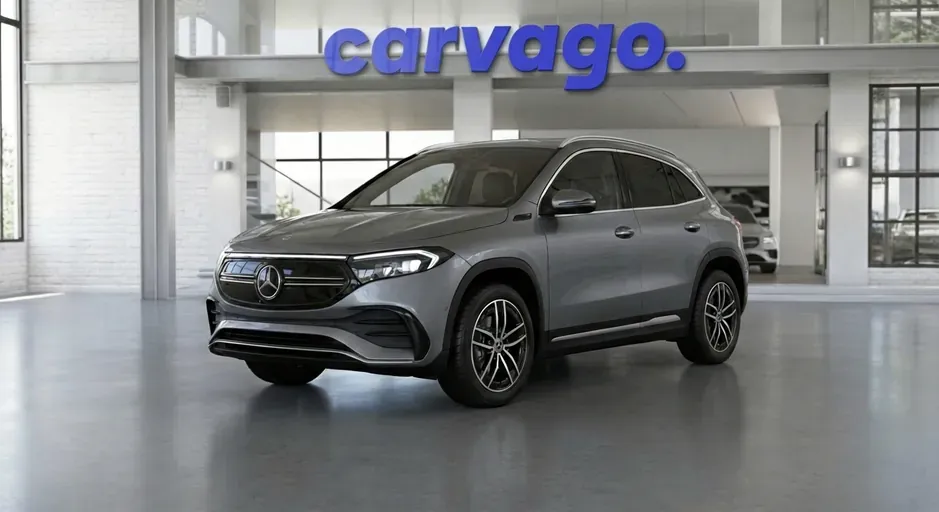
The overall comparison shows that whether you choose the more compact EQA or the more spacious EQB, you will get a very safe car. Since both cars share the same technological foundation and year of testing standards, their ability to protect the occupants during the impact itself is essentially identical. The EQB leads slightly in child protection, while the EQA has a slight edge in adult and pedestrian protection. However, the differences are so minimal that in everyday traffic, both models offer an equally confident and comprehensive safety standard that certainly does not need to be ashamed of, even by today's standards.
Reliable safety assurance 🛡️

Although their active assistant tests reflect the milder standards of 2019, in terms of body rigidity and overall passive occupant protection, both models offer top-tier family safety.

Comparison of Interesting Equipment Features

In addition to standard equipment, each model offers several unique features that can be decisive for customers in daily use and on long journeys. Both electric SUVs share a premium technological foundation, but their focus differs significantly in the details.

Mercedes-Benz EQA: Urban Extravagance and Smart Technologies

  • Advanced MBUX Infotainment: The heart of the interior in models from these years is the acclaimed MBUX (Mercedes-Benz User Experience) system with two large displays under a common glass cover. It offers excellent voice control responding to the command "Hey Mercedes" and the often-sought optional augmented reality navigation, which projects directional arrows directly onto the real image from the front camera.
  • Electric Intelligence Navigation: This intelligent system plans the route based on current range, topography, weather, and real charging speeds at individual stations along the way. It can thus optimize the journey and relieve the driver of any range anxiety.
  • Characteristic EQ Design and Details: At first glance, the EQA impresses with its specific light signature featuring a continuous LED strip at the front and rear. In the interior, you can find unique details and air vents in rose gold or specially backlit trims that clearly emphasize the car's electric identity.
  • Heat Pump as Standard: A huge advantage for operation in colder months is the standard heat pump. It uses waste heat from the electric drive and battery to heat the cabin, significantly reducing consumption and helping to maintain a long real-world range even in winter.
  • Sporty AMG Line: In used car listings, you will very often come across the AMG Line trim, which gives the EQA more aggressive bumpers, sports seats, a flat-bottomed steering wheel, and a specific aerodynamic wheel design. This package visually breaks up the car's smooth shape and gives it a distinct sporty touch.

Mercedes-Benz EQB: Space Miracle and Family Flexibility

  • Unique Seven-Seater Configuration: The EQB is one of the very few compact electric SUVs on the used car market to offer an optional third row of seats. According to the manufacturer, the two rear seats in the trunk are ideal for people up to 1.65 meters tall or for child car seats.
  • Extreme Variability and ISOFIX: In the five-seater version, the second row of seats can be slid longitudinally by up to 140 mm. Families will greatly appreciate the presence of up to four ISOFIX mounts in the second and third rows (plus a child seat can also be placed in the passenger seat), making the EQB arguably the most practical family electric car in its class.
  • Maximizing Luggage Space: Thanks to its "boxy" body shape, the car offers above-standard headroom and a huge trunk. Its volume after folding all rear seats exceeds an impressive 1,700 liters, allowing for the transport of even very bulky items.
  • Robust Design and Shared Technologies: Despite its primary focus on space and practicality, the EQB does not lag behind in technology. It shares the top-tier MBUX system, digital assistants, and intelligent EV navigation with its smaller sibling, the EQA. However, its boxier and more robust appearance, complemented by protective plastics, shows that it is not afraid of unpaved roads.
  • 4MATIC All-Wheel Drive: A large portion of popular engine versions (such as the EQB 300 and EQB 350) come standard with the intelligent 4MATIC all-wheel drive system with two electric motors. This ensures completely confident traction and stability during family trips to the mountains or in poor weather conditions.

Key Advantages and Disadvantages

Mercedes-Benz EQA

Pros

More compact dimensions making maneuvering and parking easier in urban environments

Slightly higher real-world range thanks to better aerodynamics and lower weight

More elegant and sportier body shape

Lower average purchase price on the used car market compared to the EQB model

Cons

Significantly smaller luggage compartment with a higher loading sill (volume only 340 liters)

More cramped legroom and headroom in the rear seats, especially for adult passengers

Absence of sliding rear seats and any possibility of a seven-seat configuration

The Mercedes-Benz EQA is an ideal choice for individuals or couples looking for a stylish and premium electric car primarily for urban and suburban use. Thanks to its compact dimensions, it offers more agile driving performance, but at the cost of compromises in overall practicality and interior space.

Mercedes-Benz EQB

Pros

Excellent overall interior spaciousness and plenty of headroom thanks to the boxy shape

Optional third row of seats, making it a rare seven-seater compact electric car

Significantly larger and more usable luggage compartment (495 liters in the five-seater version)

Sliding seats in the second row increasing interior variability

Cons

Higher purchase price on the used car market

Increased aerodynamic drag shortens the real-world highway range compared to the EQA model

The boxy and strictly functional exterior design may not suit everyone

The Mercedes-Benz EQB is primarily aimed at families and active drivers who require maximum flexibility, above-average spaciousness, and occasionally use the seven-seat configuration. It is an exceptionally practical SUV, where the higher purchase price and slightly lower efficiency are more than compensated for by its everyday family utility value.

Common Problems and Owner Complaints

Based on service data, reliability statistics, and information from extensive recall campaigns, we have compiled an overview of the most common problems that buyers of used EQA and EQB electric vehicles should watch out for. Both vehicles share the same platform, and as a result, very similar faults appear in roughly four-year-old used cars. To detect these in time, the CarAudit service—a thorough, comprehensive vehicle inspection before purchase—is an excellent tool.

Mercedes-Benz EQA

The EQA electric crossover (internal designation H243) scores points for its interior quality and comfort, but its early model years (approximately 2021 and 2022) did not escape several significant teething problems.

  • Battery and Charging: The most prominent issue is a large-scale recall of high-voltage batteries (particularly affecting 250+ versions with Farasis cells from 2021 to 2024). There is a risk of an internal short circuit and an associated fire hazard. Because of this, many vehicles had to undergo a complete eight-hour battery module replacement at an authorized service center. Owners also frequently complain about software bugs that arbitrarily stop charging at, for example, 50% capacity.
  • Electronics and Infotainment: Occasionally, faults occur with the onboard 12V battery, which can drain quickly and immobilize the car if it is not in regular use. Minor glitches in the MBUX multimedia system are also known, though these are fortunately usually resolved by over-the-air (OTA) updates.
  • Steering: In the past, the manufacturer issued a recall for faulty software that could cause a sudden loss of power steering while driving.
  • Drivetrain and Cooling: On several units from the first years of production, minor coolant leaks into the battery compartment were recorded. Given these specifics of the high-voltage architecture, a professional physical inspection of the car is absolutely crucial.

Mercedes-Benz EQA: Watch the battery history

The Mercedes EQA offers a very comfortable and luxurious ride, but its early model years are marred by serious problems with the high-voltage system. When buying a used one, it is absolutely vital to verify with an authorized service center whether the vehicle has undergone all important recalls and that the battery is in perfect condition.

Mercedes-Benz EQB

The more spacious EQB model (internal designation X243) shares its basic technology with the EQA, which means it suffers from almost identical problems, compounded by the specifics of a heavier and bulkier body.

  • Battery and Recalls: Just like the EQA, EQB models manufactured between 2021 and 2024 face a recall due to the risk of an internal short circuit and ignition of the high-voltage battery. For thousands of vehicles worldwide, the automaker had to replace entire battery packs across the board. Checking the complete service history is an absolute necessity for roughly four-year-old used cars.
  • Brakes and Chassis: Due to the high curb weight, which easily exceeds 2.5 tons in the case of the fully occupied seven-seater version, there is excessive wear on brake components and suspension elements. Squeaking or noises from the front axle can indicate play in the ball joints or damaged bushings.
  • Electronics and Assistants: Owner forums often discuss error messages from driving assistants and occasional issues with the Mercedes me mobile app, which sometimes inappropriately delays scheduled charging from a home wallbox. A shortened lifespan of the standard 12V battery is also a very common problem with the EQB.
  • Pyrofuse and Wiring: In several production series (especially around the turn of 2023 and 2024), a risk of cable damage appeared due to a loose casing on the pyrotechnic detonator, which required a safety service intervention. A detailed technical inspection of the car will reveal these specific shortcomings before you have to pay for them out of your own pocket after the warranty expires.

Mercedes-Benz EQB: A family car under pressure

The same critical warnings regarding the traction battery apply to the EQB as to its smaller sibling, but due to the much higher weight, faster wear of chassis parts and brakes must also be expected. However, if you come across a unit with carefully resolved recalls, it will reward you with unprecedented practicality.

Tips for Buying a Used Car

When buying a used car, a thorough inspection is key, and a comprehensive car audit is always worth it, as both electric models have their specifics and points that require special attention.

When choosing a Mercedes-Benz EQA:

  • Battery capacity and health (SOH): For electric vehicles around four years old, the most important step is verifying the degradation of the high-voltage battery using professional diagnostics. A significant drop in capacity (State of Health) means a shorter real-world range and, in extreme cases, the risk of astronomical future costs for module replacement.
  • MBUX system behavior: Check the responsiveness of the infotainment, the smoothness of the navigation, and the functionality of the rear parking camera. Early software versions sometimes suffer from freezing or screen restarts while driving. A software update usually helps, but testing will reveal if the previous owner addressed it.
  • Front axle component wear: The EQA is a relatively heavy car due to its batteries (weighing over 2 tons). During the test drive, turn off the audio system and listen for any dull thumping from the front axle when driving over speed bumps. This often points to prematurely worn control arms, ball joints, or worn-out bushings.
  • Charging port lock functionality: At a charging station, try connecting and especially disconnecting the cable. Some units have issues with the connector's locking mechanism, which can stick or refuse to release the cable after charging is complete.
  • Heat pump noise: Turn the heating and air conditioning to maximum and listen to the compressor sound from the outside. Excessively noisy operation or vibrations transmitted to the steering wheel can signal a refrigerant leak or an impending failure of the thermal management system.

When choosing a Mercedes-Benz EQB:

  • Rapid and uneven tire wear: Due to the electric motor's instant torque and high weight (especially in the front-wheel-drive EQB 250 version), the front tires suffer from extremely rapid wear. Always check the tread depth and wheel alignment – worn inner or outer edges indicate the need for immediate service intervention.
  • Third-row seat mechanism: If you are considering the popular seven-seater variant, thoroughly test the folding and unfolding of both rear seats in the trunk. Look for any sticking, jammed latches, or loose plastics. These areas take a beating in family use, and repairing them is not the cheapest.
  • Interior creaks and resonances: The EQB body is boxier and more spacious, which can lead to occasional noises. Take the car for a test drive over cobblestones and focus on creaks from the center console area, door panels, or around the optional panoramic roof.
  • Software errors in control units: An independent technical inspection of the car's condition is essential for a deep reading of the fault memory. Although the electric motors themselves are very reliable, error messages regarding high-voltage network insulation or assistance system sensors can appear in older models.
  • Door seals and soundproofing: The EQB's body shape creates more air resistance. Check the condition of the rubber seals around the windows and doors. If you hear significant wind whistle at highway speeds (above 110 km/h), it may be due to a deformed seal or poorly fitting non-framed parts of the interior trim.

FAQ: Most Frequently Asked Questions

Mercedes-Benz EQB offers a significantly larger and more practical luggage space thanks to its boxy body. In the five-seater version, the EQB has a volume of 495 liters, while the smaller EQA offers only 340 liters due to the shape of its rear. After folding the rear seats, the difference in total usable space is even more profound in favor of the EQB.

No, the seven-seater interior layout is exclusive to the larger EQB model. The third row of seats is available for an extra charge and, according to the manufacturer, is intended primarily for passengers up to 165 cm tall. The smaller EQA model is designed exclusively as a classic five-seater compact SUV.

The EQA model has slightly better consumption and range thanks to better aerodynamics and lower curb weight. For comparable engines from around 2022, the EQA travels on average 10 to 30 kilometers further than the heavier and taller EQB. However, for normal daily use, both cars offer a real-world range comfortably exceeding 350 kilometers.

The EQA is slightly more suitable for busy city traffic because it is 22 centimeters shorter, which significantly facilitates parking and maneuvering. On the other hand, the boxier EQB offers a slightly better rear-quarter view thanks to its more vertical rear and higher seating position. However, both models share smooth electric drive and modern assistance systems that make city driving easier.

The range of powertrains and battery capacities are almost identical for both models on the used car market. You will most often encounter the 250 versions (front-wheel drive), or the more powerful 300 4MATIC and 350 4MATIC variants with all-wheel drive. The fundamental difference in driving dynamics is only that the lighter EQA accelerates slightly more briskly with the same engine.

Conclusion: Which Model to Choose?

Our Verdict

Although both electric SUVs share the same technical platform and premium equipment, their focus on the market for roughly four-year-old used cars differs diametrically. The smaller and more aerodynamic Mercedes-Benz EQA impresses with a lower purchase price, a slightly longer real-world range, and better agility, making it an ideal choice for couples or individuals looking for a stylish electric car primarily for urban and suburban use. In contrast, the more robust Mercedes-Benz EQB requires a financial surcharge and acceptance of slightly higher energy consumption, but it more than compensates for these trade-offs with a huge trunk and a seven-seat configuration option that is unique in this class. While the EQA thus represents an excellent and rational entry into the world of electric luxury for regular daily commuting, the EQB is the uncompromising winner for active families who need maximum interior space and flexibility for their lifestyle.

Find your ideal car

Sources: ADAC, e15.cz, novinky.cz, motorvize.cz, autosalon.tv, autobox.cz

This article was prepared using artificial intelligence tools. The section guarantor is Petr Dušek.

Related articles

Car battle

Mercedes-Benz EQB vs. Volvo C40 Recharge: Complete comparison 2026

Comparison of the Mercedes-Benz EQB and Volvo C40 Recharge (EC40) electric cars. A detailed analysis of range, space, and our verdict. Which premium SUV should you choose?

Apr 19, 2026

Car battle

Nissan Ariya vs. Škoda Enyaq iV: Complete comparison 2026

Nissan Ariya vs. Škoda Enyaq iV Comparison: Which electric SUV is better? We reveal real-world range, spaciousness, and equipment. Read our final verdict!

Apr 14, 2026

Car battle

Audi Q4 e-tron vs. Volvo XC40 Recharge: Complete comparison 2026

Detailed comparison of the Audi Q4 e-tron and Volvo XC40 Recharge. Which premium electric SUV has better range and real-world consumption? Read our clear verdict.

Apr 22, 2026

We accept online card payments as well as wire transfers.

visa payment provider logovisa-electron payment provider logomastercard payment provider logomaestro payment provider logodiners-club payment provider logodiscover payment provider logo