Car battle
Kia EV6 vs. Nissan Ariya: Complete comparison 2026
Detailed comparison of Kia EV6 vs. Nissan Ariya. A detailed look at range, performance, and real-world experience. Find out which electric crossover is the right one for you.
Apr 14, 2026
Articles
Car battle
Comparison of the Mercedes-Benz EQB and Volvo C40 Recharge (EC40) electric cars. A detailed analysis of range, space, and our verdict. Which premium SUV should you choose?
April 19, 2026
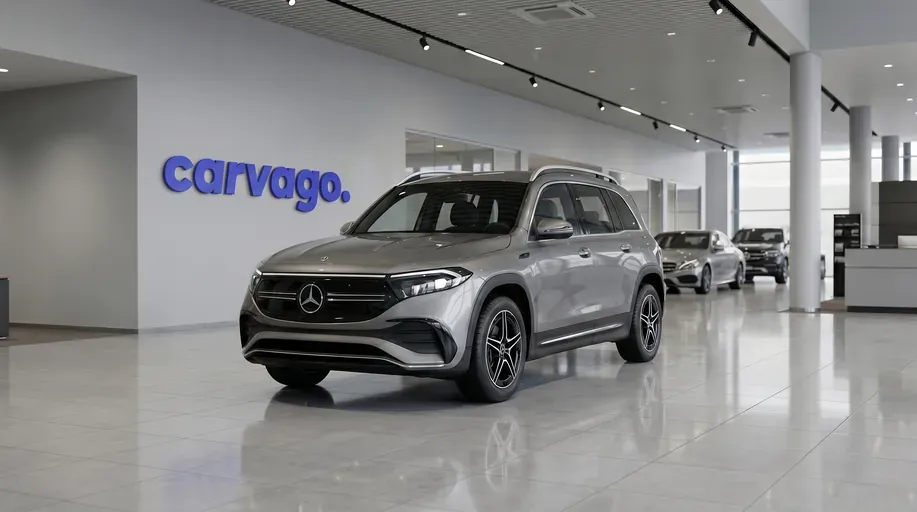
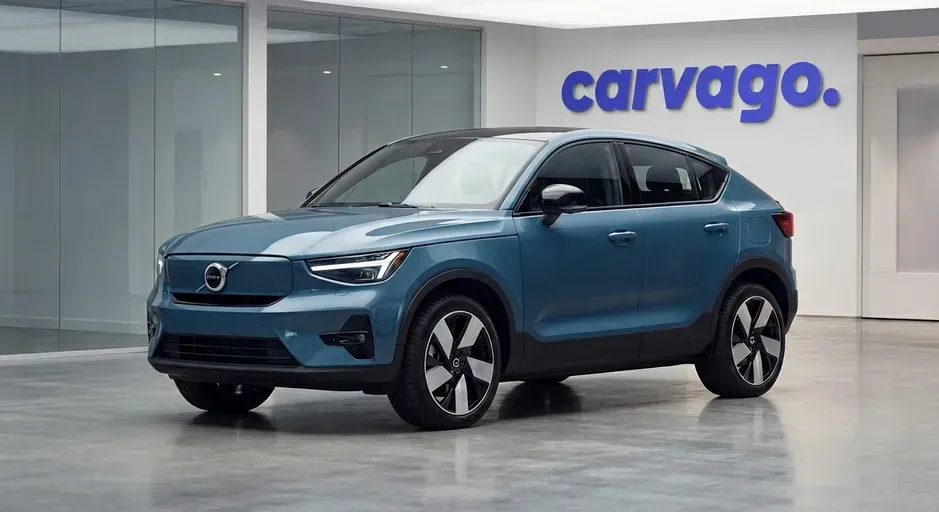
The Mercedes-Benz EQB is a premium fully electric compact SUV that brings unusual practicality to its segment in the form of an optional seven-seat interior layout based on the related GLB model. Its attractive challenger is the Volvo C40 Recharge, also known as the Volvo EC40 in newer model years, which instead bets on a distinctive aerodynamic coupe-SUV silhouette and sophisticated Swedish minimalism. Let's take a detailed look at how these two premium approaches to modern electromobility differ in practice and which of these roughly four-year-old models represents a more sensible choice on the used car market.
Looking at the external dimensions of both electric models, the different approach of both carmakers to the concept of a family car is evident at first glance. The Mercedes-Benz EQB is, with a length of 4684 mm, a significant 244 mm longer than the Volvo C40 Recharge, which measures 4440 mm in length. This difference is also significantly reflected in the wheelbase, where the Mercedes offers a generous 2829 mm compared to 2702 mm for the Volvo. In practice, this means that the EQB offers substantially more longitudinal space for passengers and even allows for the installation of a third row of seats, while the more compact Volvo will navigate tight city streets noticeably better and offer easier parking.
Another significant difference that shapes the overall character of both cars is their height. The Mercedes-Benz EQB measures 1691 mm in height, which underlines its boxier and maximally practical shape typical of traditional family SUVs. Conversely, the Volvo C40 Recharge, with its height of 1591 mm (a difference of exactly 100 mm) and sloping roofline, proudly belongs to the category of stylish SUV-coupes. The lower height and sportier silhouette of the Volvo slightly limit headroom for adult passengers in the rear seats, but at the same time contribute to significantly better aerodynamics, which has a direct positive impact on energy consumption at highway speeds for an electric vehicle.
An interesting comparison is then provided by looking at the overall width of both cars. Although the Volvo C40 Recharge is overall a shorter and lower car, with a width of 1873 mm, it exceeds the Mercedes-Benz EQB (1834 mm) by 39 mm. This wider stance gives the Swedish crossover a visually more stable and robust appearance. From a user perspective, this difference means that the Volvo can offer slightly more interior space in the shoulder and elbow area, while on the other hand, the Mercedes with its narrower body will facilitate maneuvering in narrow underground garages and older parking structures.
| Parameter | Mercedes-Benz EQB SUV | Volvo C40 Recharge SUV |
|---|---|---|
| Width (mm) | 1834 | 1873 |
| Length (mm) | 4684 | 4440 |
| Height (mm) | 1691 | 1591 |
| Wheelbase (mm) | 2829 | 2702 |
When it comes to practicality and trunk space, both cars represent completely different philosophies, which plays a key role for those interested in a roughly four-year-old used electric car. The Mercedes-Benz EQB bets on a boxy shape and maximum family utility, while the Volvo C40 Recharge is a typical representative of stylish SUV-coupes with its sloping roofline. For buyers, this means a fundamental choice between uncompromising spaciousness for large family vacations and an elegant design that necessarily takes its toll on overall cargo capacity.
The Mercedes-Benz EQB (generation 243) is a true champion of space in its class. In the standard five-seat configuration, it offers a generous base volume of 495 liters, which, thanks to the strictly angular body and vertical rear, easily accommodates bulky items, a stroller, or even space for several extra suitcases. If you fold down the second row of seats, you get a van-like 1710 liters. Furthermore, the EQB scores points with a sliding rear bench with a range of 14 centimeters. A specialty of this model on the used car market is the option of a seven-seat configuration. However, it is worth remembering that if you occasionally use all the seats, the luggage space shrinks to a symbolic 130 liters (and the maximum capacity after folding both rear rows is 1620 liters for this version).
The Volvo C40 Recharge, on the other hand, has a base volume of 413 liters in the rear. Although this value is sufficient for weekend shopping or a longer vacation for two to three passengers, due to the coupe silhouette, you will very quickly hit the limits when transporting taller items above the parcel shelf. After folding the rear backrests, the capacity increases to 1205 liters. However, unlike the Mercedes, the Swedish model has one huge practical trump card – the so-called "frunk" (front trunk) under the hood with a volume of 31 liters. This is absolutely ideal for storing dirty charging cables, which therefore do not take up space in the main trunk.
In terms of overall utility value, the choice is therefore very straightforward. The Mercedes-Benz is designed as a genuine family hauler, while the stylish Volvo is much more suitable for smaller families and users who care less about liters of volume than about a sportier-looking exterior.
| Parameter | Mercedes-Benz EQB SUV | Volvo C40 Recharge SUV |
|---|---|---|
| Base volume (liters) | 495 | 413 |
| Max. volume with seats folded (liters) | 1710 | 1205 |
While the Mercedes-Benz EQB clearly dominates with its massive interior space and seven-seat option, the Volvo C40 Recharge plays the card of dynamic design with the bonus of a cleverly designed front trunk for cables.
Towing capacity is a frequently discussed topic for electric vehicles, and for those interested in towing a caravan, transporting heavier loads, or just family bicycles, this specific parameter can be a deciding factor. Between the Mercedes-Benz EQB and Volvo C40 Recharge models, there are fundamental differences to be found on the used car market in this regard.
If we focus on cars about four years old (2021 to 2023 models), the Mercedes-Benz EQB comes up short. During these years, the manufacturer did not offer a tow bar for standard trailers at all; only a preparation for a bicycle rack was available, which is why towing capacity data for these older model years is missing. A change occurred only with the newer models from 2024 and 2025. For these, standard variants with a single electric motor (EQB 250+) can tow 1,400 kg, while the maximum value is represented by the more powerful all-wheel-drive versions (EQB 300 and EQB 350), which can handle up to 1,700 kg for a braked trailer.
The Volvo C40 Recharge, on the other hand, has been excellently prepared for towing since the beginning of its production (2021 and 2022 models) and offers very respectable values. The standard version with a single electric motor (Single Motor) offers a maximum braked trailer weight of 1,500 kg. If you opt for the more powerful Twin Motor variant with all-wheel drive, your Volvo will tow an impressive 1,800 kg. For all variants of both models that are adapted for towing, the capacity for an unbraked trailer remains at the legislative maximum of 750 kg.
In practice, these differences mean that while with a four-year-old used Volvo C40 Recharge you have a full-fledged towing vehicle whose capacity is perfectly sufficient for a weekend trip to a hardware store or a longer holiday with a heavier caravan, with a Mercedes EQB of the same age, you have to make do with just bikes on the tow bar. If you required similar practicality and space for a few extra suitcases in the form of a utility trailer for the EQB, you would necessarily have to reach for significantly newer and more expensive cars from 2024.
Conclusion: If the ability to tow a standard trailer is a key priority for you and you are looking for a used car around four years old, the Volvo C40 Recharge is clearly the more practical and safer choice. For the EQB model, to obtain this capability, it is necessary to carefully choose from only the youngest cars from recent production.
| Model and powertrain | Braked trailer (kg) | Unbraked trailer (kg) |
|---|---|---|
| Mercedes-Benz EQB 250+ (2024 - 2025) | 1400 | 750 |
| Mercedes-Benz EQB 300 / 350 (2024 - 2025) | 1700 | 750 |
| Volvo C40 Single Motor (2022 - 2024) | 1500 | 750 |
| Volvo C40 Twin Motor (2021 - 2024) | 1800 | 750 |
The approach of both carmakers to powertrains shows clear differences in who they are targeting with their electric vehicles. While the Mercedes-Benz EQB bets on family smoothness, reasonable range, and sufficient power without performance extremes, the Volvo C40 Recharge brings surprisingly aggressive dynamics and performance approaching sports cars to the market. Both models are available exclusively as battery electric vehicles (BEV). Mercedes offers a proven and stable range with front-wheel drive for base versions (250 and 250+) or all-wheel drive for dual-motor variants (300 and 350 4MATIC). Volvo, on the other hand, managed an interesting technical revolution in its first generation (around four years old). Over the years, it changed the drive concept from front-wheel drive (FWD) to rear-wheel drive (RWD) for single-motor versions, which improved traction and efficiency – something rarely seen within a single generation. For used car buyers, this means they have to monitor the production year and specific configuration more carefully with Volvo, while Mercedes offers more consistent technology under the hood throughout the production period.
The range of engines for the Mercedes-Benz EQB (generation 243, available on the used car market since approximately late 2021) is built on a reliable and smooth-functioning architecture with one or two electric motors. The base consists of the EQB 250 and 250+ versions with front-axle drive, which achieve an output of 140 kW and a torque of 385 Nm. The "Plus" version, introduced at the turn of 2022 and 2023, focused primarily on extending the range thanks to a slightly larger usable battery capacity. If you are looking for more confident traction and all-wheel drive, the dual-motor 4MATIC versions come into play. The weaker EQB 300 4MATIC provides 168 kW (390 Nm), while the top specification EQB 350 4MATIC boasts 215 kW and a robust torque of 520 Nm, which is more than sufficient for a family SUV. All variants use a single-speed automatic transmission. From the perspective of 4-year-old used cars, these powertrains are consistently available on the market, with all-wheel drive models dominating the initial sales phase.
| Engine type | Fuel | Power (kW) | Torque (Nm) | Transmission |
|---|---|---|---|---|
| EQB 250 / 250+ | Electricity | 140 | 385 | Automatic (1-speed) |
| EQB 300 4MATIC | Electricity | 168 | 390 | Automatic (1-speed) |
| EQB 350 4MATIC | Electricity | 215 | 520 | Automatic (1-speed) |
The engine range of the first-generation Volvo C40 Recharge (from 2021) brings significantly more aggressive parameters and has undergone interesting technological development. In four-year-old cars from the start of production (2021–2022), you will encounter the Single Motor version with front-wheel drive (FWD) with an output of 170 kW and a torque of 330 Nm. At the end of 2023, however, Volvo made an unexpected turn and switched these versions to rear-wheel drive (RWD) with a slightly increased output of 175 kW and a significantly stronger torque of 420 Nm. At that time, an efficient Extended Range version (185 kW) was also added to the range. However, the true highlight of the entire price list is the dual-motor Twin Motor version with all-wheel drive. It has an impressive output of 300 kW (408 hp) and a mammoth torque of 660 Nm (even 670 Nm in newer model years due to the switch to asymmetric motors). With this drive, the C40 can sprint from zero to one hundred in 4.7 seconds, significantly overshadowing even the top-of-the-line Mercedes EQB 350 in terms of pure dynamics.
| Engine type | Fuel | Power (kW) | Torque (Nm) | Transmission |
|---|---|---|---|---|
| Single Motor (FWD) | Electricity | 170 | 330 | Automatic (1-speed) |
| Single Motor (RWD) | Electricity | 175 | 420 | Automatic (1-speed) |
| Single Motor ER (RWD) | Electricity | 185 | 420 | Automatic (1-speed) |
| Twin Motor (AWD) | Electricity | 300 | 660 / 670 | Automatic (1-speed) |
While the Mercedes-Benz EQB offers a harmonious and balanced performance ideal for comfortable family travel, the Volvo C40 Recharge will appeal to drivers who demand thrilling acceleration and sportier dynamics from an electric car.
Choosing the right motorization for electric vehicles is crucial not only for daily dynamics but primarily for overall efficiency, real-world range, and long-term satisfaction with the car. While the Mercedes-Benz EQB focuses on smoothness, family comfort, and the security of all-wheel drive for its heavier body, the Volvo C40 Recharge offers an interesting choice on the used car market between an extremely powerful dual-motor version and a more rational single-motor variant, which also underwent a very rare and fundamental change in drive concept from front-wheel to rear-wheel drive during production.
For a heavier, boxy family SUV, which the EQB undoubtedly is, the EQB 300 4MATIC (168 kW / 228 hp) version represents the absolute ideal. The base EQB 250 (140 kW) model with front-wheel drive only can have traction issues in the wet or when fully loaded with a seven-member crew, while the top-of-the-line EQB 350 (215 kW) is unnecessarily powerful for the car's calm family character and significantly more expensive on the used market. The 300 4MATIC variant combines an asynchronous motor at the front and a synchronous motor at the rear, ensuring excellent stability and traction in all conditions. The 168 kW output offers an ideal compromise for safe overtaking and smooth driving. Technically, the 4MATIC system is robust and cleverly manages energy recuperation between both axles. The main risk with this model is not mechanics but aerodynamics – the upright body shape means that highway consumption easily exceeds 22 kWh/100 km and the range drops noticeably in winter months. Fortunately, this can be mitigated by consistent use of the integrated heat pump and preheating the battery from the grid before departure. This motorization, which is most available from the years 2021 to 2023, is perfect for families and drivers looking for a spacious, safe, and stable vehicle for safe combined operation.
For the stylish Swedish crossover, the most sensible choice for the vast majority of buyers is the Single Motor (170 kW / 231 hp) version. Although Volvo often attracts buyers on the used market with the Twin Motor variant boasting a brutal 300 kW (408 hp), it comes at the cost of significantly higher consumption and faster tire wear. The single-motor variant offers much friendlier efficiency for daily driving and can squeeze the maximum out of the battery. The 170 kW output is more than sufficient for a compact car and offers a very brisk ride. However, for buyers of roughly four-year-old used cars, an important fact must be emphasized: 2022 Single Motor models are exclusively front-wheel drive. While they function reliably, there can be slight torque steer and wheel spin during sharp acceleration. It wasn't until the turn of 2023 and 2024 (typically models available from 10/2023 in databases) that Volvo switched this version to a completely new, more efficient rear-wheel drive. Mechanical reliability and battery degradation remain at an excellent level for both model years. The most common "problem" reported by owners is not hardware, but occasional freezing of the infotainment system built on Google Automotive – always check before buying a used car if the previous owner performed regular software (OTA) updates. This motor is the ideal choice for urban and suburban drivers who prefer modern style and smooth efficiency over extreme, but more expensive to operate, sporty dynamics.
The difference between official figures and real-world consumption is often even more significant for electric vehicles than for internal combustion engine cars. Actual range and energy demand depend heavily on driving style, route profile, and ambient temperature. To get an objective picture of real-world consumption (in this case, given in kWh/100 km), we rely on long-term data directly from owners on platforms such as Spritmonitor.de. Given the situation in the used car market, we focused primarily on models and powertrains from 2021 to 2023, which represent typical four-year-old cars today.
| Model and powertrain | Average consumption (kWh/100 km) |
|---|---|
| Mercedes-Benz EQB 250 (2022–2023) | 16.8 |
| Mercedes-Benz EQB 250+ (2022–2023) | 16.5 |
| Mercedes-Benz EQB 300 4MATIC (2021–2023) | 18.5 |
| Mercedes-Benz EQB 350 4MATIC (2021–2023) | 18.5 |
| Volvo C40 Single Motor (FWD, 2022) | 18.7 |
| Volvo C40 Single Motor (RWD, 2023–2024) | 16.2 |
| Volvo C40 Twin Motor (AWD, 2021–2022) | 20.7 |
From the perspective of real-world figures, one fundamental and surprising trend is evident. Although the Mercedes-Benz EQB has a significantly boxier and visually less aerodynamic body, its powertrain from 2021–2023 is highly efficient. The base EQB 250 and 250+ versions with single-axle drive can, in practice, drive with an average under 17 kWh per 100 km, which is an excellent result for a seven-seater family SUV. Conversely, the Volvo C40 Recharge from the same period (especially older versions from 2021–2022) suffered from a relatively high appetite, and the top-of-the-line Twin Motor version commonly exceeded the 20 kWh/100 km mark. The expected turnaround for the Swedish brand came only with a major update in 2023, when the Single Motor version switched from front-wheel drive to rear-wheel drive (RWD), bringing a massive leap in efficiency and pushing the average consumption down to an excellent 16.2 kWh/100 km.
For the average user in the used car market, this means that the year of manufacture is absolutely key when choosing. When buying a car from 2021 and 2022, the Mercedes-Benz EQB is a surprisingly more economical choice despite its family-oriented build. The powerful older Volvo C40 Twin Motor loses energy relatively quickly on highways, which, despite its stylish sloping rear, makes it more suitable for dynamic suburban driving where recuperation offsets consumption. Mercedes, on the other hand, offers much more consistent consumption, making it a more predictable partner for longer trips, even for those watching their budget.
Ultimately, energy consumption is a very strong decision-making factor for this pair. If you are looking for a reliably economical electric car at a good price and are considering roughly four-year-old vehicles, the Mercedes-Benz EQB offers more efficient operation. From the perspective of total electricity costs, the Volvo C40 only makes sense with slightly newer, albeit more expensive, units from 2023, where the new motor layout finally brought the desired efficiency.
Looking at the market for roughly four-year-old used electric cars, we find that both the Mercedes-Benz EQB and the Volvo C40 Recharge represent very interesting buying opportunities thanks to a steep depreciation curve. The initial loss of value (depreciation) of luxury electric cars is often more pronounced than that of internal combustion engine equivalents, which naturally favors second-hand buyers.
Mercedes-Benz EQB
Volvo C40 Recharge
| Model (2021–2022) | Common price on the used market | Estimated depreciation | Most common specifications on the market |
|---|---|---|---|
| Mercedes-Benz EQB | €30,000 – €39,000 | 40 – 45 % | 250 / 300 4MATIC |
| Volvo C40 Recharge | €31,000 – €37,000 | 45 – 55 % | Twin Motor (AWD) |
Key fact for buyers: Both manufacturers provide a factory warranty on the high-voltage battery for 8 years or 160,000 km. For four-year-old examples with average mileage, you still have half of the warranty period left, covering the most sensitive and expensive equipment in the car.
While the Mercedes-Benz EQB holds its value slightly better thanks to its practical seven-seat configuration and family focus, the used Volvo C40 represents a secret tip for those who want a huge portion of style and the brutal performance of the dual-motor versions for their money.
As is customary for premium family electric vehicles, both the Mercedes-Benz EQB and the Volvo C40 Recharge achieved the maximum five-star rating in crash tests by the independent organization Euro NCAP. However, it is crucial to put these results into the correct context. Euro NCAP testing protocols are constantly evolving and becoming stricter every year – especially regarding active safety features and protection against impact with an obstacle. Percentage scores from different years cannot be simply and directly compared, as newer tests represent a significantly more demanding trial for vehicles.
The Mercedes-Benz EQB relies on a certification issued in 2021, which is based on data from its sister model, the GLB, tested under the milder 2019 methodology, supplemented by additional crash tests of the EQB itself. The car absolutely excelled in passive safety in these tests, as evidenced by an excellent 95% for adult protection and 91% for child protection. Active safety systems and assistance features received a score of 74%, and protection of vulnerable road users 78%. Although these values are excellent even by today's standards, they reflect older standards where junction crisis scenarios or advanced cyclist monitoring were not as strictly scored.
In contrast, the Volvo C40 Recharge underwent testing in 2022, following significantly stricter and more modern rules. These already incorporated new frontal collision simulations with a mobile deformable barrier, more detailed accident prevention testing, and stricter requirements for post-accident rescue systems. The result is an outstanding 92% for adult protection and 89% for child protection. Special attention is deserved by the top rating of 89% in the safety assistants category, which confirms the technological maturity of the automatic emergency braking (AEB) and lane-keeping systems. The 70% protection for vulnerable road users is primarily due to the specific shape and aerodynamics of the front part of SUV-coupe type vehicles.
The overall comparison shows that while the Mercedes-Benz EQB scores with massive structural rigidity and offers absolutely exemplary passive protection for families with children, the Volvo C40 Recharge possesses a more comprehensive and modern active safety package. The high score for assistance systems under the more demanding newer methodology means that Volvo ranks among the current technological leaders in the field of accident prevention.
| Parameter | Mercedes-Benz EQB | Volvo C40 Recharge |
|---|---|---|
| Year of testing | 2019 / 2021 | 2022 |
| Adult occupant protection | 95 % | 92 % |
| Child protection | 91 % | 89 % |
| Vulnerable road user protection | 78 % | 70 % |
| Safety assistance systems | 74 % | 89 % |
While the Mercedes-Benz EQB excels in passive safety and child protection, the Volvo C40 Recharge offers slightly more advanced accident prevention protection thanks to its more recent testing year and more sophisticated assistance systems.
In addition to standard equipment, each of the models offers several unique features and approaches added value in a completely different way. While the representative with the three-pointed star excels in family versatility and sophisticated assistance software, the Swedish competitor bets on Nordic minimalism, sustainability, and top-tier digital integration from Google.
Option for up to a seven-seat interior layout (truly unique in the compact electric SUV segment)
Boxy body ensures excellent overall spaciousness, especially in terms of headroom
Highly comfortable chassis tuning that smooths out bumps excellently
Top-tier and fast MBUX infotainment with advanced voice control
Premium materials and overall very high-quality cabin build quality
Poorer aerodynamics of the boxy shape shortens real-world range at highway speeds
Slower maximum DC fast charging power (around 100 kW for older model years)
Significantly high purchase price for used cars with better equipment
Mercedes-Benz EQB is an ideal choice for families looking for a maximally practical and comfortable electric SUV without compromises in interior space. Thanks to the unique option of a seven-seat version and a luxurious interior, it serves perfectly in daily operation for those users who don't mind a slightly shorter highway range and slower charging.
Attractive and sporty aerodynamic SUV-coupe body design
Excellent dynamics and lightning-fast acceleration, especially in the Twin Motor version
Integrated Android Automotive system with unrivaled built-in Google Maps navigation
Traditionally top-tier level of active and passive safety
Faster DC charging (up to 150 kW) compared to the German competitor
Sloping roofline significantly limits headroom for rear-seat passengers
Limited rear visibility and a less practical trunk shape
Stiffer chassis tuning, which transmits more jolts into the cabin, especially on large wheels
Higher average electricity consumption and poorer powertrain efficiency
Volvo C40 Recharge will primarily appeal to drivers who prefer distinctive style, dynamic driving characteristics, and intuitive technology. It is a perfect car rather for couples or smaller families with older children who don't mind sacrificing a bit of interior spaciousness in exchange for an attractive look and above-average performance.
Based on long-term user experience, service reports, recalls, and insights from our independent car condition audit, we have compiled an overview of the most common problems that buyers of roughly four-year-old electric vehicles should watch out for.
The Mercedes-Benz EQB offers practical interior space and premium craftsmanship, but models from the first years of production (mostly 2021–2022) face several specific ailments, the most serious of which concern the high-voltage system.
Although the EQB is a solidly built family SUV, it is absolutely crucial to verify before purchase whether all high-voltage battery recalls have been carried out on the given unit. This part is the main source of concern in the first years of production.
The Swedish coupe-SUV attracts with its stylish design and excellent dynamics, but its pitfalls in the first years mostly revolve around software tuning and the connectivity of the Android Automotive platform.
The basic mechanical and powertrain components work very reliably, but the first years suffered from "teething troubles" in the area of connectivity. Regular operating system updates are an absolute necessity for this electric vehicle.
When buying a used car, a thorough inspection is key, and for modern electric vehicles like the Mercedes-Benz EQB and Volvo C40 Recharge, this is doubly true. Here are some specific points to focus on for these two models to ensure a good investment.
The Mercedes-Benz EQB stands out with its boxy body, which provides much more space for passengers and luggage. Due to its sloping coupe-style roof, the Volvo C40 Recharge not only has a smaller trunk (413 liters compared to 495 liters for the EQB) but also less headroom in the rear seats. For family use, the Mercedes is therefore a significantly more practical choice.
Yes, the EQB model is one of the few compact electric SUVs on the market that can be equipped with a third row of seats for a total of seven passengers. While these rear seats are primarily suitable for children or smaller individuals, Volvo does not offer this configuration option at all. If you have a large family and often transport more people, the choice is very simple.
The Swedish representative, especially in the Twin Motor version with two electric motors, offers an impressive 408 horsepower and acceleration from 0 to 100 km/h in just 4.7 seconds. Even in its top 350 4MATIC specification, the Mercedes reaches 292 horsepower, which is perfectly sufficient for normal driving, but it cannot match the dynamics of its rival. The C40 Recharge thus clearly has a sportier character.
Volvo uses a system built directly on the Google Automotive platform, which brings great integrated Google Maps navigation and excellent voice control. Mercedes, on the other hand, relies on its own sophisticated MBUX system, which offers excellent graphics, wide personalization, and very smooth operation. Both systems are among the best on the market, but the Google solution is often rated as more intuitive for everyday use.
Both vehicles have similar battery capacities and promise a range of around 400 to 430 kilometers in the WLTP cycle, while in real-world operation, expect values closer to 330 to 350 kilometers. However, there is a difference in charging speed, as the Volvo supports fast charging up to 150 kW, while the EQB handles a maximum of 100 kW. As a result, you will spend slightly less time at a fast-charging station with the Swedish car.
Choosing between a used Mercedes-Benz EQB and Volvo C40 Recharge on the market for roughly four-year-old electric vehicles represents a classic decision between uncompromising family utility and dynamic Nordic style. With its boxy body, excellent spaciousness with the rare option of seven seats, and smooth comfort, the Mercedes-Benz clearly appeals to larger families looking for a maximally practical vehicle for daily travel. In contrast, the aerodynamic Volvo, sloping into a coupe-SUV shape, confidently targets drivers and smaller families who are willing to sacrifice trunk space in exchange for attractive design, an intuitive native Google ecosystem, and stunning sporty acceleration in more powerful versions. While the EQB excels in overall interior variability and the efficiency of its base versions, the Swedish competitor adds faster charging as a valuable bonus and, in older model years, the highly sought-after ability to tow a heavy trailer, allowing both premium models to confidently defend their place among buyers with completely different mindsets.
Sources: ADAC, denik.cz, lidovky.cz, dopravniinfo.cz, autoweb.cz, motoristickydenik.cz
This article was prepared using artificial intelligence tools. The section guarantor is Petr Dušek.
Detailed comparison of Kia EV6 vs. Nissan Ariya. A detailed look at range, performance, and real-world experience. Find out which electric crossover is the right one for you.
Apr 14, 2026
Kia EV6 vs. Volkswagen ID.4: A detailed comparison of range, charging, and performance. Find out which electric SUV is the better choice for you.
Apr 13, 2026
Detailed comparison of the Nissan Ariya vs. Toyota bZ4X electric SUVs. Discover the real-world range, equipment, and a clear verdict to help you with your choice.
Apr 14, 2026