Car battle
Jaguar XE vs. Volvo S60: Complete comparison 2026
Detailed comparison of the Jaguar XE vs Volvo S60. Learn all about the features, reliability, and driving dynamics of these used cars, and read our verdict before you buy.
May 4, 2026
Articles
Car battle
Used car comparison: Mercedes-Benz C-Class vs. Volvo S60. Read a detailed comparison of engines, driving characteristics, and a clear verdict for the right choice.
May 7, 2026
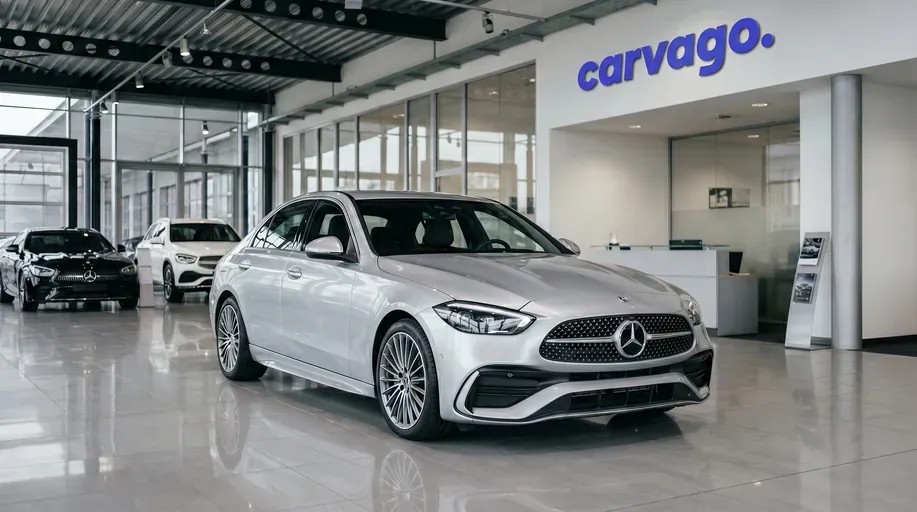
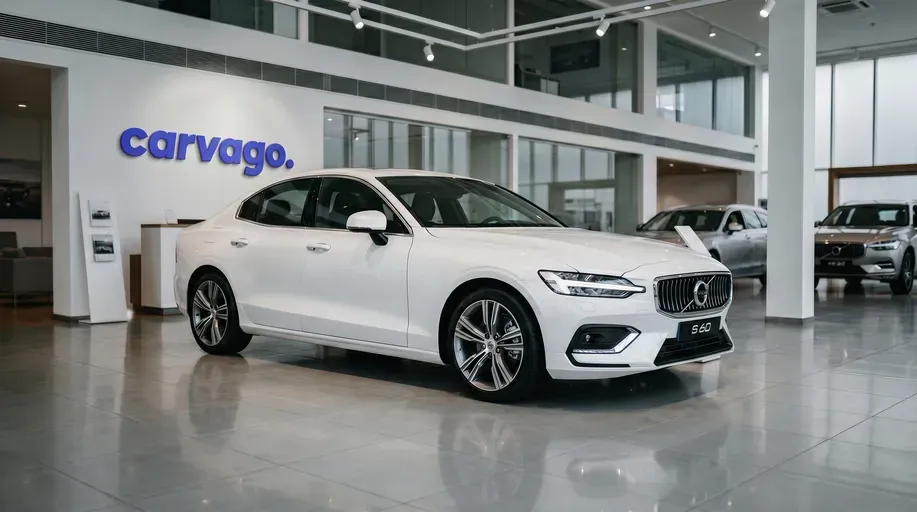
Mercedes-Benz C-Class, long recognized on the market as a technological and luxury benchmark of the premium segment, brings timeless prestige and precise driving characteristics inspired by the flagship S-Class. Its confident challenger is the Swedish Volvo S60, which, as an attractive alternative to the established German competition, bets on elegant minimalist design, an unrivaled level of passive and active safety, and maximum travel comfort. In the following comparison, we will pit both of these exceptional sedans against each other in detail to make your decision easier and show which one will be the ideal choice for your needs.
When comparing the exterior dimensions of both premium mid-size representatives, focusing on cars roughly four years old (i.e., the current W206 generation for Mercedes and the 3rd generation Volvo S60), we find that the Swedish representative makes a slightly more dominant impression on the road. Volvo S60 measures 4778 mm in length, surpassing the Mercedes-Benz C-Class, which has a length of 4751 mm, by 27 mm. The difference in overall width is also more pronounced, with the Volvo (1850 mm) offering a body 30 mm wider than its German competitor (1820 mm). In practice, this means the Volvo evokes slightly sportier and more planted proportions, which can translate positively into slightly more generous shoulder room for the occupants.
An important parameter for interior spaciousness, especially for the comfort of rear-seat passengers, is the wheelbase. In this discipline, the contest is unexpectedly close. The Volvo S60 boasts a wheelbase of 2872 mm, which is a negligible 7 mm more than the C-Class (2865 mm). Thanks to a similarly generous distance between the axles, both cars offer very comparable longitudinal space that easily accommodates adult passengers. Conversely, the Mercedes is a slight 7 mm taller (1438 mm compared to 1431 mm for the Volvo). This minor difference may slightly ease entry into the vehicle or provide valuable millimeters of headroom, although in real-world use, you likely won't notice the difference.
In terms of everyday usability, the slightly more compact Mercedes-Benz has a slight advantage. The smaller overall width and length prove to be a significant plus when maneuvering and parking in narrow city streets or older underground garages. A fundamental differentiator when choosing a car on the used market is the range of body styles available. While Mercedes-Benz traditionally offers its C-Class also as a highly sought-after family estate (Estate), Volvo positions its S60 model on a modern platform exclusively as an elegant sedan – if you are looking for a comparable estate from the Swedish brand, you must look at the separate V60 model.
| Parameter | Mercedes-Benz C-Class Sedan | Volvo S60 Sedan | Mercedes-Benz C-Class Estate | Volvo S60 Estate |
|---|---|---|---|---|
| Width (mm) | 1820 | 1850 | 1820 | - |
| Length (mm) | 4751 | 4778 | 4751 | - |
| Height (mm) | 1438 | 1431 | 1454-1455 | - |
| Wheelbase (mm) | 2865 | 2872 | 2865 | - |
When choosing a premium mid-size car, practicality and trunk capacity play a surprisingly important role. Whether you're planning weekend shopping, transporting strollers, or long family vacations, a difference of a few dozen liters can be a deciding factor for daily use. In the nearly-new used car market, focusing on approximately four-year-old vehicles, the Mercedes-Benz C-Class (current W206 generation) and the Volvo S60 (3rd generation) are very strong competitors, but they approach interior space quite differently. The fundamental difference lies in the range of body styles offered. While the Swedish automaker focuses exclusively on the traditional sedan shape for the S60, its German rival offers the extremely popular estate alongside the sedan, which takes family utility to a much higher level.
Looking at the exact figures, it turns out that Mercedes-Benz has a slight advantage. The C-Class Sedan offers 455 liters in its standard version, which is a very pleasant compromise for both executive and family use. The competing Volvo S60, in versions with a standard internal combustion engine or mild-hybrid (e.g., B4 and B5 designations), provides a slightly more modest trunk capacity of 427 liters. Although the Swedish trunk is very accessible and precisely upholstered, the difference of nearly 30 liters in favor of the Mercedes represents exactly that space for a few extra bags or small items that you would otherwise struggle to fit into the cabin. However, if you opt for the Mercedes estate variant, you get completely different possibilities. The basic 490 liters can be increased to an excellent 1,510 liters by simply folding down the rear backrests. This capacity is then more than sufficient for weekend shopping and longer vacations with bulky equipment.
We must not forget the plug-in hybrid powertrains, which are in high demand on the market, where minor compromises must always be expected due to the placement of battery cells. If you choose the Volvo S60 in the electrified T8 version, the basic volume shrinks to 390 liters, which is already a limit that deserves careful consideration before purchasing a family car. The conclusion from comparing these dimensions is quite clear: if you regularly fight for every centimeter, transport long and bulky objects, and insist on absolute flexibility, the Mercedes-Benz C-Class estate has no competition in this duel. If, however, an elegant sedan is enough for you, both cars will do a solid job, albeit with a slight volume bonus on the "C-Class" side.
| Parameter | Mercedes-Benz C-Class Sedan | Volvo S60 Sedan | Mercedes-Benz C-Class Estate | Volvo S60 PHEV Sedan |
|---|---|---|---|---|
| Base volume (liters) | 455 | 427 | 490 | 390 |
| Max volume with seats folded down (liters) | Not specified | Not specified | 1510 | Not specified |
If maximum volume and transport flexibility are your priorities, the Mercedes-Benz estate is the logical winner, while the Volvo S60 is a great choice for those who are satisfied with a clean-cut sedan with solid basic space.
Towing capacity is a feature that significantly enhances a car's overall practicality for many buyers – whether you need to attach a sturdier bike rack or plan to tow a caravan for a summer holiday. When comparing approximately four-year-old models on the used car market, specifically the Mercedes-Benz C-Class (on the cusp of the 205 generation and the latest 206) and the Volvo S60 (3rd generation), we find very solid figures that provide a generous margin for most drivers.
Standard engine options for the Mercedes-Benz C-Class, such as the popular C 200 or the diesel C 200 d from that period, maintain very consistent values and can safely tow a braked trailer with a maximum weight of 1,800 kg (in older model years of the previous generation, a limit of 1,600 kg could be found in rare cases of specific body styles). The Swedish Volvo S60 set exactly the same starting point, where common petrol and mild-hybrid units (such as the B4, B5, or older T4) also tow a standard 1,800 kg.
However, the most interesting difference arises with the most powerful Volvo variants. While some manufacturers see towing capacity reduced by the presence of a heavy battery, Volvo's powerful plug-in hybrids (T6 and T8 Twin Engine powertrains) actually increase their maximum to an impressive 2,000 kg. The practical impact on everyday life is noticeable: a weight of 1,800 kg is perfectly sufficient for weekend trips to buy bulky materials or for a family caravan on longer holidays. However, the increased capacity of the hybrid Volvo versions provides a comfortable margin for heavier horse trailers or medium-sized boats.
In the final assessment, both cars confidently hold their own as towers in the premium mid-size class. Mercedes-Benz offers certainty and reliably balanced values across its standard portfolio, but the Volvo S60 earns valuable extra points for its top electrified specifications thanks to superior pulling power and greater versatility.
| Model and motorization | Braked weight of trailer (kg) | Unbraked weight of trailer (kg) |
|---|---|---|
| Mercedes-Benz C 200 / C 200 d (Generation 205/206) | 1600 - 1800 | 750 |
| Volvo S60 B4 / B5 / T4 (3rd Generation) | 1800 | 750 |
| Volvo S60 T6 / T8 Twin Engine (3rd Generation) | 2000 | 750 |
The engine range for both models clearly shows the different philosophies of the two carmakers in their approach to electrification, even though they share the same goal – higher efficiency and dynamics. In the current generation of the C-Class (W206), Mercedes-Benz has switched exclusively to four-cylinder engines, which are always supplemented by mild-hybrid technology (EQ Boost). At the same time, the German brand maintains a very strong position on the market with a wide range of excellent diesel units.
In its third generation, the Volvo S60 took a major step and became the brand's first modern model to say a definitive goodbye to diesel engines. It relies purely on petrol and advanced plug-in hybrid systems. For a buyer of a roughly four-year-old used car, the choice is somewhat simpler from the start – if you specifically desire a diesel, the Volvo is automatically out of the running.
Under the hood of the Mercedes C-Class, you will find exclusively advanced turbocharged four-cylinder engines in terms of 4-year-old vehicles. All engines are paired as standard with the smooth-shifting nine-speed 9G-Tronic automatic transmission and a 48V starter-generator, which covers turbo lag and adds immediate pull from low revs.
The basis for the petrol versions is the popular C 200 with a 1.5-litre displacement, or the more powerful two-litre C 300. However, the vast majority of customers on the used car market go for diesels. The C 200 d version (also 2.0 l) represents an economical compromise with 120 kW of power, but the favorite for both pull and longer routes is clearly the more powerful C 220 d. The C 300 e plug-in hybrid is also worth significant attention; thanks to an above-standard traction battery with a capacity of over 25 kWh, it boasts a real electric range approaching the magic 100-kilometre mark.
| Engine type | Fuel | Power (kW) | Torque (Nm) | Gearbox |
|---|---|---|---|---|
| C 180 | Petrol (MHEV) | 125 | 250 | 9A |
| C 200 | Petrol (MHEV) | 150 | 300 | 9A |
| C 300 | Petrol (MHEV) | 190 | 400 | 9A |
| C 200 d | Diesel (MHEV) | 120 | 380 | 9A |
| C 220 d | Diesel (MHEV) | 147 | 440 | 9A |
| C 300 d | Diesel (MHEV) | 195 | 550 | 9A |
| C 300 e | Plug-in Hybrid (Petrol) | 230 | 550 | 9A |
The representative from Sweden offers a much more straightforward engine range consisting exclusively of two-litre petrol units. In used cars from the beginning of the third generation's production (before 2020), you will find the classic T4 and T5 versions. In four-year-old vehicles (i.e., from model year 2021), you will encounter the newer B4 and B5 designations. These letters signify the transition to petrol mild-hybrids (MHEV). Furthermore, the more powerful B5 is very often found in combination with reliable AWD all-wheel drive.
The true dominant force in the Volvo S60 range is the T8 Recharge version. This plug-in hybrid combines turbocharging and supercharging with a powerful electric motor. Models until the end of 2021 offer 288 kW (390 hp), while those from 2022 in the version with a larger battery even exceed 330 kW (455 hp), making the S60 an incredibly fast yet understated sedan. All versions work with a finely tuned eight-speed Geartronic automatic.
| Engine type | Fuel | Power (kW) | Torque (Nm) | Gearbox |
|---|---|---|---|---|
| B4 | Petrol (MHEV) | 145 | 300 | 8A |
| B5 / B5 AWD | Petrol (MHEV) | 184 | 350 | 8A |
| T4 (older version) | Petrol | 140 | 300 | 8A |
| T5 (older version) | Petrol | 184 | 350 | 8A |
| T8 Recharge | Plug-in Hybrid (Petrol) | 288 - 335 | 640 - 709 | 8A |
The final recommendation is primarily based on your driving style and needs. If you spend long hours on the motorway and want to swallow miles with the absolute lowest fuel costs, the Mercedes-Benz C-Class (ideally in the C 220 d version) will be the clear winner, also considering the absence of diesels in the Volvo brand. Conversely, for shorter daily drives and suburban commuting, you will appreciate the petrol versions of the Volvo B4 and B5 for their unparalleled refinement and quiet operation. Acceleration enthusiasts will be blown away by the massive torque of the Volvo T8, while those interested in commuting purely on electricity without a drop of petrol will reach for the superior electric range of the Mercedes C 300 e hybrid.
If your annual mileage justifies a diesel engine, you'll go for the Mercedes. However, if you're looking for a flexible and powerful petrol or hybrid, both cars hide first-class technology under the hood.
Choosing the right engine is crucial for long-term satisfaction with the car. Our recommendations are based on real-world experience from mechanics, performance, actual fuel consumption, and overall mechanical reliability. The market for nearly new used cars around four years old currently shows two completely different approaches by manufacturers. While Mercedes-Benz (current W206 generation) continues to confidently offer top-tuned diesel engines, Volvo has made an uncompromising cut with its third-generation S60. According to available production data, we no longer encounter the once-popular diesels (such as the legendary D3, D4, and D5 versions, last available in the previous generation around 2018) in the current S60 at all. The Swedish carmaker has switched exclusively to advanced mild-hybrid and plug-in hybrid petrol units. At Mercedes, on the other hand, we must say goodbye to the old simple diesels like the C 200 CDI at this age, as clean engines supported by mild-hybrid assistance now reign supreme here as well.
| Parameter | Mercedes-Benz C 200 d (W206) | Volvo S60 B4 (3. Gen) |
|---|---|---|
| Engine type | Diesel mild-hybrid (MHEV) | Petrol mild-hybrid (MHEV) |
| Power | 120 kW (163 hp) + EQ Boost | 145 kW (197 hp) |
| Transmission | 9G-TRONIC (9-speed auto) | Geartronic (8-speed auto) |
| Ideal use | Long highway commutes | City and suburban mix |
Although you will come across various versions in used car dealerships, for the market of roughly four-year-old vehicles (W206 generation), the C 200 d engine represents an exceptionally smart and reliable choice that ideally represents modern Stuttgart diesel technology from the OM654m family. Older, purely diesel engines without electrification from the previous generation no longer feature in this age segment, so mild-hybrid assistance is standard here.
Given that Volvo has completely abandoned diesel engines for nearly new used cars of the third generation (from 2019/2020 onwards) and focuses only on petrol and hybrid units, the B4 mild-hybrid engine becomes the most versatile choice. It forms the ideal middle ground between the older, less efficient T4 engines and the much riskier-to-maintain and very expensive plug-in hybrids T8.
The difference between the official fuel consumption figures that car manufacturers like to boast about in catalogues and real-world consumption in everyday traffic is often vast. To find out the true appetite of both premium cars, we looked at real data directly from drivers. We are using the community platform Spritmonitor.de, where owners record every refuelling and the kilometres driven over the long term. Since we are targeting used cars around four years old, we focused on the third generation of the Volvo S60 (produced since 2019) and, for the Mercedes C-Class, primarily on the current generation designated W206 (available since 2021).
| Model and engine | Average consumption (l/100 km) | Source |
|---|---|---|
| Diesel engines | ||
| Mercedes-Benz C 200 d | 5.5 | Spritmonitor.de |
| Petrol and mild-hybrid engines | ||
| Mercedes-Benz C 200 | 7.2 | Spritmonitor.de |
| Volvo S60 B4 | 7.8 | Spritmonitor.de |
| Volvo S60 B5 | 8.2 | Spritmonitor.de |
| Plug-in hybrids | ||
| Volvo S60 T8 Recharge | 4.5* | Spritmonitor.de |
*Plug-in hybrid consumption depends heavily on the regularity of battery charging.
Looking at the data, several clear trends can be observed across the engine options. Traditional diesel engines from Mercedes (C 200 d) remain an absolutely unbeatable choice for long distances. Although modern trends are pushing diesels out, at highway speeds, the average for the C-Class easily stays around a fantastic five and a half litres. In contrast, the Volvo S60, which took a radical step with its third generation and completely removed diesel engines from its range, relies on petrol mild-hybrids (designated B4 and B5) for its conventional versions. However, as the numbers show, the fuel savings from the assistance of a small electric motor are not as significant as many customers might hope. In practice, the Swedish sedan requires about eight litres, and the petrol mild-hybrid Mercedes C 200 has a similar, though slightly lower, average. A surprising finding is that even these sophisticated petrol systems cannot reduce highway consumption to the level of a diesel.
The top-of-the-line plug-in hybrid Volvo S60 T8 is a chapter of its own. Although catalogue data often reports nonsensically low values below two litres, the real-world average of around 4.5 l/100 km only applies to those users who conscientiously and frequently charge the car. With a depleted battery on a longer trip, the S60 T8 behaves more like a heavy and extremely powerful petrol car, where consumption soars and easily exceeds the nine-litre mark.
For a typical used car buyer, clear recommendations emerge from this data. If you are a long-distance driver who regularly travels long distances and cares about low operating costs, a diesel Mercedes-Benz C-Class makes much more sense from a budget perspective. Conversely, for suburban driving or users who drive shorter distances with the possibility of regular home or office charging, the plug-in hybrid versions of the Volvo represent a fantastic and highly comfortable alternative.
In conclusion, fuel consumption will play a decisive role when choosing between these two cars. While Mercedes offers proven and worry-free operating economy thanks to its reliable diesel, the Volvo is significantly more sensitive to the route profile and charging discipline. For long-distance drivers, the absence of a diesel engine in the Volvo S60 may be a clear factor in ultimately choosing the "C-Class".
Looking at the used car market for vehicles around four years old (model years 2021 to 2022), we encounter an interesting contrast. Both cars target the premium segment, but their price development and overall availability differ significantly. While Mercedes-Benz maintains a high residual value and dominates in terms of the number of listings, the Volvo S60 benefits from a faster initial price drop, making it an unexpectedly rational choice for second-hand buyers.
The third generation of the Volvo S60 (produced since 2019) is a somewhat more exotic commodity on the Czech and European used car markets than its German competitors. For roughly four-year-old models from 2021 and 2022, prices most often range from €23,000 to €37,000.
At around four years of age, you encounter an important generational shift for the C-Class. The years 2021 and 2022 mark the transition from the extremely popular W205 generation (post-facelift) to the technologically revolutionary W206 generation. Prices for these used cars are noticeably higher, usually ranging from €29,000 to €53,000 (excluding extremely expensive top-tier AMG variants).
| Parameter | Volvo S60 (2021–2022) | Mercedes-Benz C-Class (2021–2022) |
|---|---|---|
| Approximate Used Car Price | €23,000 – €37,000 | €29,000 – €53,000 |
| Generations on the Market | 3rd Generation (Pre- and Post-Facelift) | W205 (End of Production) / W206 (Introduction) |
| Most Common Engines | Petrol Mild-Hybrid (B4) | Diesel Mild-Hybrid (C 220 d) |
| Diesel Availability | No | Yes (Very High) |
| Depreciation | Faster (Better for Buying Used) | Slower (Better for Resale) |
The Volvo S60 represents an excellent price-to-equipment ratio on the four-year-old used car market, while the more expensive Mercedes-Benz C-Class will be appreciated by lovers of efficient diesel engines and those looking for a slower long-term decline in vehicle value.
Although both models earned the maximum five-star rating from independent Euro NCAP crash tests, it is crucial to consider the year of the testing itself when comparing their safety. Testing methodology constantly evolves and becomes stricter over the years. Due to differing requirements, percentage scores from older tests cannot be directly compared with newer ones. Modern protocols place much greater emphasis not only on passive protection but primarily on advanced active assistants, improved cyclist detection, or simulation of critical scenarios at intersections.
The Volvo S60 was tested (and subsequently received certification based on the identical results of the V60 estate version) back in 2018. The results then showed a phenomenal 96% protection for adult occupants, clearly confirming the Swedish brand's excellent reputation in the field of passive safety. However, the evaluation of assistance systems and the protection of vulnerable road users was designed according to older, more benevolent rules, and the certification of this model within Euro NCAP has already expired from today's perspective. Nevertheless, it remains a structurally uncompromisingly rigid and very safe car.
The Mercedes-Benz C-Class (W206 generation), on the other hand, underwent testing significantly later, in 2022, when substantially tougher standards were already in place. It earned its five-star rating not only thanks to its stable bodywork but especially due to a comprehensive army of modern technologies. It had to pass stricter autonomous emergency braking tests, which included pedestrian and cyclist detection even during more complex maneuvers. The C-Class shone with very good results in the protection of vulnerable road users, aided by an innovative active bonnet. This lifts up in the event of a collision with a pedestrian, thereby mitigating the risk of serious head injuries.
While the Volvo S60 still impresses with its exceptionally strong structure and excellent passive occupant protection, the Mercedes-Benz C-Class brings a more modern and comprehensive approach to safety from the perspective of today's standards, thanks to its more recent testing date. Its active safety assistants are designed for more sophisticated accident prevention, making it a more advanced choice that takes into account the strictest current standards.
| Parameter | Mercedes-Benz C-Class | Volvo S60 |
|---|---|---|
| Year of testing | 2022 | 2018 |
| Adult occupant protection | 93 % | 96 % |
| Child occupant protection | 89 % | 84 % |
| Vulnerable road users protection | 80 % | 74 % |
| Safety assist | 82 % | 76 % |
Although both cars guarantee a high level of safety on the road, the Mercedes-Benz C-Class represents more comprehensive protection in terms of active assistance thanks to newer technologies and its success in the stricter 2022 tests.
Both vehicles offer much more than just basic equipment, with each model having its own distinct approach to added value. In addition to standard equipment, each model offers several unique features that can be decisive for the customer and fundamentally define daily life with the car.
The German representative builds on innovations taken from the flagship S-Class. It focuses on the digital experience, advanced mechanics, and maximum personalization of comfort.
The Swedish sedan takes the path of elegance, clean design, and seamless connectivity with the digital world, all with a traditional emphasis on absolute safety.
Top-tier interior inspired by the S-Class flagship
Excellent chassis comfort and great cabin soundproofing
Advanced assistance systems and lightning-fast MBUX infotainment
Wide range of exceptionally efficient diesel mild-hybrids and plug-in hybrids with long range
More fun and agile driving characteristics thanks to primary rear-wheel drive
Noticeably higher purchase price on the used car market and more expensive servicing
Almost exclusive control via the central touchscreen can distract from driving
Smaller luggage space in plug-in hybrid versions due to battery placement
Occasionally cheaper hard plastics in the lower part of the interior that don't match the premium price tag
Mercedes-Benz C-Class represents the pinnacle of luxury and technology in the mid-size segment, satisfying even the most demanding drivers. It is an ideal choice for those looking for a representative appearance, state-of-the-art innovations, maximum comfort on long journeys, and who are willing to pay extra for this premium experience.
Timeless Scandinavian design with an elegant and minimalist approach
Traditionally unrivaled level of passive and active occupant safety
Exceptionally comfortable orthopedically shaped seats, absolutely ideal for long highway journeys
Very powerful plug-in hybrid versions (Recharge) with great straight-line dynamics
Significantly more attractive price-to-equipment ratio on the four-year-old used car market compared to German competitors
Significantly less sporty driving performance and less steering feedback
Electronically limited top speed of 180 km/h (applies to all models from 2020 onwards)
Older infotainment versions may feel slower and outdated compared to the MBUX system
Limited practicality due to the narrower opening of the smaller trunk (the estate version is sold as the V60)
Volvo S60 is a perfect alternative for drivers who want to stand out from the crowd and prefer a calm, safe, and travel-oriented ride. It offers great value for money on the used car market and is an ideal sedan for managers or families who appreciate subtle Nordic luxury without unnecessary aggressiveness.
Based on our own data from comprehensive car inspections, long-term tests, breakdown statistics, and service reports, we have compiled a detailed overview of the most common problems that potential buyers of these roughly four-year-old used cars should watch out for.
The current generation C-Class (W206) is a technologically exceptionally advanced car, which is directly reflected in the types of faults that owners of higher-mileage units most frequently deal with.
With the C-Class, owners primarily face software glitches in the MBUX system and occasional hiccups in the 48V mild-hybrid network. From a mechanical standpoint, however, the engines and transmissions are highly reliable when service intervals are followed.
The third-generation Volvo S60 bets on minimalist Nordic design and maximum safety; however, even this sedan struggles with several specific ailments that need to be focused on during selection.
The main weakness of the updated S60 models is the problematic TCAM module, while the heavier Recharge versions chronically suffer from rapid brake lining wear. A carefully maintained service history and a fully functional infotainment system are absolutely essential when buying this Volvo.
When buying a used car, a thorough inspection is key. A professional physical car inspection, such as the comprehensive CarAudit service, is an absolute necessity for these modern and technologically advanced premium vehicles. Here are some specific points you should focus on when choosing between these two models:
Mercedes-Benz offers a slightly more spacious trunk with a base volume of 455 liters for the sedan version. The Volvo S60 has a trunk capacity of 427 liters, which is a rather below-average value in this premium class. Access to the trunk is limited in both cars by a smaller opening, which is typical for sedan body styles.
The C-Class provides a much wider range of engines, including very efficient diesel units, which the Swedish competitor has completely phased out. For the S60 model, Volvo relies exclusively on gasoline mild-hybrids and powerful Recharge plug-in hybrid versions. Therefore, if you are looking for an efficient diesel engine for long highway journeys, the German representative is the only possible choice between the two.
The plug-in hybrid Mercedes-Benz from roughly four-year-old production dominates thanks to its large battery and a real-world electric range of around 100 kilometers. The competing S60 Recharge from a similar period offers a significantly shorter range, although updated versions from 2022 onwards have improved significantly with a larger battery. Furthermore, unlike its Swedish competitor, the German car supports fast DC charging, which fundamentally increases its usability in the city.
The C-Class interior feels very futuristic with the large displays of the MBUX system and offers top-tier cabin soundproofing while driving. In contrast, the Nordic competitor bets on minimalist Scandinavian design and is world-renowned for its exceptionally comfortable orthopedic seats. While the German car scores with visual technologies and ambient lighting, Volvo attracts with a calming and highly ergonomic environment without unnecessary distractions.
For newer used cars, the Swedish representative has switched to a system built on the Android Automotive platform, which offers unrivaled native Google Maps and simple operation. The competitor from Stuttgart counters with the sophisticated MBUX system featuring a giant vertical display, smooth responses, and an excellent voice assistant. The choice thus depends entirely on whether you prefer the familiar minimalist Google environment or the technologically advanced and graphically rich Mercedes ecosystem.
The decision between an approximately four-year-old Mercedes-Benz C-Class and a Volvo S60 depends primarily on your driving habits and preferred style. If you are looking for a car packed with technology, rely on extremely fuel-efficient diesel engines for long motorway journeys, or require the more practical estate body style, the German representative is a clear safe bet. The Swedish sedan, on the other hand, represents a much more attractive purchase on the used car market due to a steeper initial depreciation, offering an unrivalled price-to-equipment ratio. The Volvo S60 thus perfectly appeals to those drivers who want to stand out and prefer calming Scandinavian minimalism, maximum travel comfort, and refined petrol or extremely powerful plug-in hybrid powertrains.
Sources: ADAC, novinky.cz, aktualne.cz, autoweb.cz, automix.cz, e-auto.cz
This article was prepared using artificial intelligence tools. The section guarantor is Petr Dušek.
Detailed comparison of the Jaguar XE vs Volvo S60. Learn all about the features, reliability, and driving dynamics of these used cars, and read our verdict before you buy.
May 4, 2026
Jaguar XE vs. Mercedes-Benz C-Class comparison. Read a detailed comparison of used cars, driving characteristics, and equipment to find out which one to choose.
Apr 22, 2026
Detailed comparison of Renault Talisman vs. Toyota Camry. Discover the real differences in reliability, equipment, and fuel consumption. Find out which car to choose based on our verdict.
Apr 8, 2026