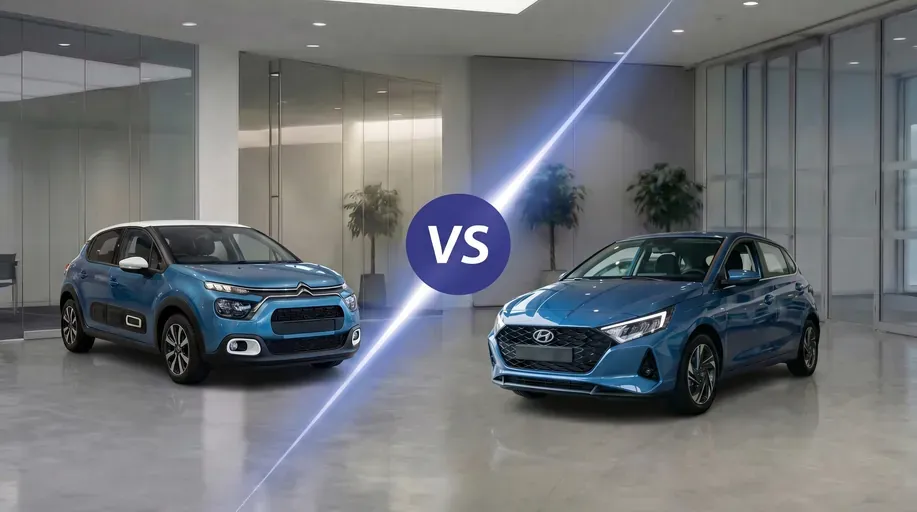
Car battle
Citroën C3 vs. Hyundai i20: Complete comparison 2026
Citroën C3 vs. Hyundai i20 Comparison: Which hatchback is better? Read a detailed comparison of equipment, engines, and driving characteristics with a final verdict.
Apr 15, 2026
Articles
Car battle
Detailed comparison of used Mazda 2 vs Peugeot 208 cars. Find out the differences in reliability, equipment, and fuel consumption. Read our verdict and make the right choice!
May 5, 2026
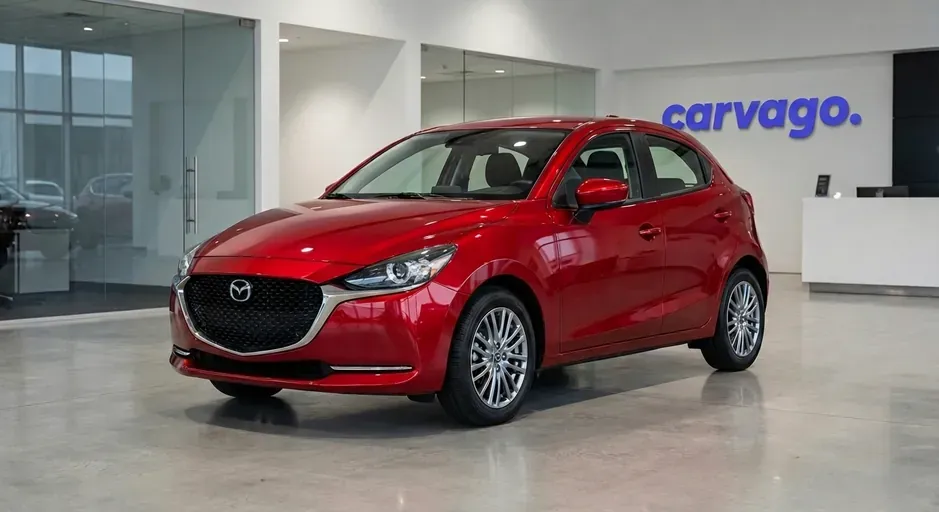
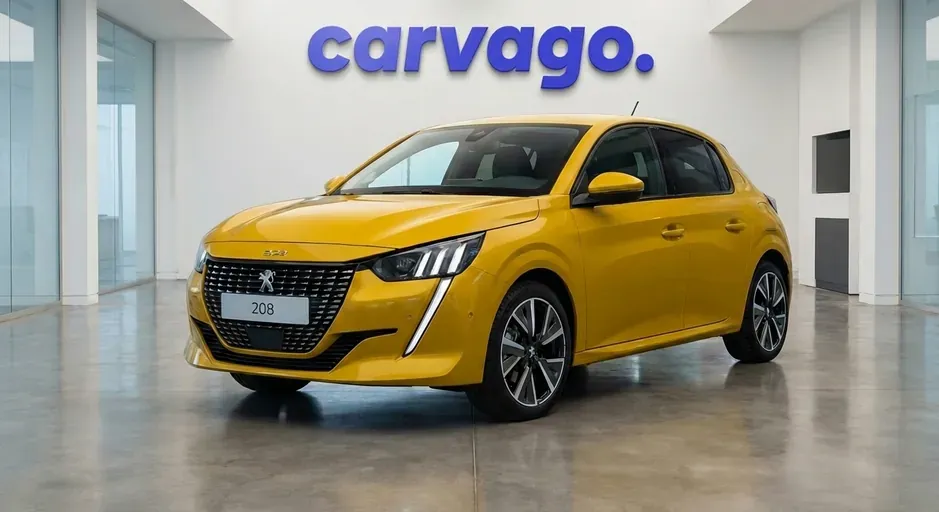
Mazda 2, also known as the Mazda Demio in some markets and in its older generations, is an agile Japanese hatchback that wins drivers over with its low weight, precise handling, and reliable engines. Standing against it as a proud rival is the Peugeot 208, which in its fully electric variant bears the specific designation e-208, and which instead bets on aggressive French design, a high level of comfort, and the futuristic i-Cockpit interior concept. Let's take a look in this detailed comparison at how these two very different philosophies of a modern city car fare in a head-to-head battle and which of them represents the smarter choice for your daily journeys.
When choosing an approximately four-year-old used car in the small car segment (B-segment), you will encounter two completely different approaches to body construction with these two models. While both cars hover around the four-meter mark in total length, their proportions exude a different character. The second-generation Peugeot 208 embodies the modern trend of wider and lower cars, while the standard Mazda 2 (DJ generation) sticks to a more classic, rather taller and narrower silhouette.
The most striking and practically most noticeable difference can be found in width and height. With its 1745 mm, the Peugeot 208 is quite wide for its category, and thanks to its low roof (1430 mm), it looks very sporty and "planted" on the road. A wider body means significantly more shoulder room for passengers and a more mature-feeling interior. The Mazda 2, on the other hand, opts for a narrow profile (1695 mm) complemented by a roughly 70 to 80 mm taller build. This choice makes the Mazda a phenomenal companion for weaving through narrow city streets and confidently facilitates parking in tight spaces. Additionally, the higher roof makes getting in slightly easier.
An interesting situation arises with the wheelbase. Although the standard Mazda 2 has a narrower build, it boasts a longer wheelbase (2570 mm) than the Peugeot 208 (2540 mm). Wheels pushed further to the corners of the body not only provide confidence and stability at higher speeds but also help cleverly maximize longitudinal legroom for the occupants.
In terms of overall external dimensions, the choice depends on your daily territory. If you often park in crowded city centers or have a narrow garage, the more compact and narrower profile of the Mazda 2 will be a lifesaver for you. Conversely, if you spend more time on country roads and appreciate a more robust and wider-feeling car, the Peugeot 208 will suit you better.
Note on the table: For the Mazda 2, a wider range of values is listed, as both the classic model (DJ generation) and a specific full-hybrid version (a technological twin of the Toyota Yaris) are offered on the market during this period, which has a shorter (3940 mm) and wider (1745 mm) body.
| Parameter | Mazda 2 Hatchback | Peugeot 208 Hatchback |
|---|---|---|
| Width (mm) | 1695 - 1745 | 1745 |
| Length (mm) | 3940 - 4080 | 4055 |
| Height (mm) | 1495 - 1515 | 1430 |
| Wheelbase (mm) | 2560 - 2570 | 2540 |
When choosing a used city car, trunk capacity is often a surprisingly important factor. Even though these hatchbacks primarily serve for navigating narrow city streets, the ability to accommodate a larger weekly grocery shop, sports equipment, or luggage for a weekend trip out of town significantly increases their daily usability. A well-designed trunk can easily decide whether a car stands up as a primary vehicle for couples or small families, or whether it remains merely in the role of a stylish second family car.
Looking at used models approximately four years old (generations sold on the market around 2022), it turns out that both competitors approach the space offering slightly differently. The traditional Mazda 2 (the popular DJ1 generation) has a standard volume of 280 liters, while its full-hybrid sibling (ZV generation) adds a few extra liters for a total of 286 liters. The rival second-generation Peugeot 208 fares noticeably better in its standard internal combustion versions, boasting a solid 309 liters. However, you must be careful when choosing the fully electric e-208 variant, where the base capacity drops to a leaner 265 liters due to the placement of traction batteries under the floor.
In practice, this means that with the internal combustion Peugeot, you gain valuable space that is sufficient for weekend shopping and longer holidays. The difference of nearly 30 liters in favor of the French model means trouble-free space for a few extra suitcases, or at least for one stuffed sports bag that you simply couldn't fit into the Mazda. After folding down the rear seats, the Peugeot 208 (for petrol and diesel engines) can offer a total of 1,004 liters, once again maintaining its lead over the Mazda 2, whose limit stops at 950 liters (or 935 liters for the latest hybrid). However, if you are considering an electric used Peugeot, the roles are reversed – at that point, despite its compact dimensions, the Mazda retains a more voluminous and usable trunk.
| Parameter | Mazda 2 Hatchback | Peugeot 208 Hatchback |
|---|---|---|
| Base volume (liters) | 280 - 286 | 265 - 309 |
| Max. volume with seats folded (liters) | 935 - 950 | 960 - 1004 |
The internal combustion versions of the Peugeot 208 offer a significantly more generous luggage space than the Mazda 2, but for fully electric used cars, the tables turn in favor of the consistently more spacious Mazda due to battery placement.
When choosing a compact city hatchback, towing capacity might not be the first parameter you look at, but for many buyers, it is a key factor affecting the car's overall practicality. Differences in towing capacity directly determine whether the car will serve only for commuting or if it can also handle a trailer with materials or a small caravan. When comparing modern used cars around four years old (the current generations of both models), quite fundamental differences emerge in this regard.
For the vast majority of common internal combustion and mild-hybrid engines (e.g., 1.5 SKYACTIV-G and e-SKYACTIV-G), the Mazda 2 (DJ1 generation) can tow a braked trailer with a maximum weight of 900 kg. A standard unbraked trailer is limited to 500 kg for these versions. However, a specific situation arises with the full-hybrid version, the Mazda 2 Hybrid (ZV generation, sold since 2022). Due to the shared platform and technical limitations, it offers a significantly reduced towing capacity – a maximum of 450 kg, for both braked and unbraked trailers.
Conversely, the second generation of the Peugeot 208 (produced since 2019) delivers very impressive figures for a small hatchback. Most popular engines, such as the 1.2 PureTech petrol versions with 100 or 130 hp and the 1.5 BlueHDi diesel engine, can easily handle a braked trailer weighing up to 1200 kg. An unbraked trailer can weigh up to 580 kg for these versions. A notable exception in the range is the entry-level, weakest 1.2 PureTech 75 engine, where the maximum permitted weight for both braked and unbraked trailers is reduced to just 500 kg.
In terms of practicality, this means that the more powerful variants of the Peugeot 208 can easily handle a small caravan, giving you space for several extra suitcases or a base for a longer holiday. The 900 kg value for standard versions of the Mazda 2 represents a reasonable middle ground, which is fully sufficient for weekend shopping for bulky materials or the occasional transport of heavier loads. The reduced capacity of 450 to 500 kg, found in the hybrid Mazda 2 and the base Peugeot 208, limits you mainly to installing a bike rack on the tow bar or pulling a very light garden trailer.
A brief summary in conclusion: If you require maximum flexibility and workhorse qualities from a small car, the Peugeot 208 (except for the base engine) will serve much better with its 1200 kg limit. The Mazda 2 represents a reliable standard for everyday duties, but those interested in full-hybrid technology from either brand must be prepared for reduced utility capacity.
| Model and engine | Braked trailer weight (kg) | Unbraked trailer weight (kg) |
|---|---|---|
| Mazda 2 1.5 SKYACTIV-G / e-SKYACTIV-G | 900 | 500 |
| Mazda 2 Hybrid | 450 | 450 |
| Peugeot 208 1.2 PureTech 100 / 130 | 1200 | 580 |
| Peugeot 208 1.5 BlueHDi 100 | 1200 | 580 |
| Peugeot 208 1.2 PureTech 75 | 500 | 500 |
While the Mazda 2 and Peugeot 208 target a similar group of drivers looking for a stylish and agile B-segment car, their approach to powertrains differs fundamentally, which has a direct impact on daily usability and running costs. From the perspective of roughly four-year-old used cars, the Mazda 2 primarily bets on proven 1.5-liter naturally aspirated four-cylinder engines, characterized by long-term reliability, linear power delivery, and, in the mild-hybrid version, excellent fuel economy. Furthermore, you can find a full-hybrid variant on the market, which is de facto a rebadged Toyota Yaris with a technically advanced planetary gear system. In contrast, the second-generation Peugeot 208 offers a much wider and more diverse range of powertrains in terms of fuel. In addition to the turbocharged 1.2 PureTech three-cylinder engines and the economical 1.5 BlueHDi diesel, which will please drivers with high motorway mileage, a fully electric e-208 version is also available. Thanks to its 260 Nm of torque, it offers the most dynamic driving experience in the entire range. If you are looking for bulletproof reliability and smoothness for city driving, the Japanese approach with naturally aspirated engines will be ideal. However, if you crave a significant turbo punch, diesel efficiency on longer trips, or want to switch to electromobility, Peugeot offers exactly what you need.
The range of engines for the Mazda 2 from around 2021 and 2022 revolves primarily around the 1.5 e-SKYACTIV-G naturally aspirated petrol four-cylinder. This is available in several power variants (55 kW, 66 kW, and 85 kW), most of which are supplemented by mild-hybrid technology (often referred to as M Hybrid) to reduce consumption and smooth out the start-stop system's operation. These engines rely on a precise six-speed manual gearbox, although the mid-power version could be optionally paired with a six-speed torque converter automatic. An interesting model is the Mazda 2 Hybrid, which entered the market in the spring of 2022. It is a full hybrid with an e-CVT automatic transmission and technology borrowed from Toyota, making it the absolute king of city fuel economy. Historically, the Mazda 2 also offered 1.5 SKYACTIV-D diesel variants (produced until 2018), but these gradually disappeared from the range and you will no longer encounter them on the market for four-year-old used cars.
| Engine | Fuel | Power (kW) | Torque (Nm) | Transmission |
|---|---|---|---|---|
| 1.5 (e-)SKYACTIV-G 75 | Petrol / Mild-hybrid | 55 | 135 | 6MT |
| 1.5 (e-)SKYACTIV-G 90 | Petrol / Mild-hybrid | 66 | 151 | 6MT / 6AT |
| 1.5 (e-)SKYACTIV-G 115 | Petrol / Mild-hybrid | 85 | 151 | 6MT |
| 1.5 Hybrid (Mazda 2 Hybrid) | Petrol / Full-hybrid | 85 (system) | 120 (ICE) / 141 (electric) | e-CVT |
Under the hood of the second-generation Peugeot 208, you will find a much more diverse selection covering all available fuel types. The basis is the 1.2 PureTech petrol three-cylinder engines. While the weakest naturally aspirated version with 55 kW has to make do with a five-speed manual, the more powerful turbocharged variants (74 kW and 96 kW) already work with a six-speed manual or a very smooth-shifting eight-speed EAT8 automatic. In the small car category, a diesel engine is a huge rarity nowadays, but Peugeot offers a 1.5 BlueHDi four-cylinder with 75 kW (available until roughly 2023), which boasts strong pull with 250 Nm of torque and excellent motorway fuel economy. A big draw is the purely electric e-208 model with 100 kW (and 115 kW in newer model years) and instant torque of 260 Nm, providing very brisk driving in complete silence both in and out of the city. On the market for nearly new used cars, you may also come across the newly introduced mild-hybrid powertrains (Hybrid 100 and Hybrid 136), but these only appeared for sale at the end of 2023.
| Engine | Fuel | Power (kW) | Torque (Nm) | Transmission |
|---|---|---|---|---|
| 1.2 PureTech 75 | Petrol | 55 | 118 | 5MT |
| 1.2 PureTech 100 | Petrol | 74 | 205 | 6MT / 8AT |
| 1.2 PureTech 130 | Petrol | 96 | 230 | 8AT |
| 1.5 BlueHDi 100 | Diesel | 75 | 250 | 6MT |
| e-208 (136hp / 156hp) | Electricity | 100 / 115 | 260 | 1AT |
While the Mazda 2 will delight lovers of traditional naturally aspirated four-cylinder engines with exceptional reliability, the Peugeot 208 is the ideal choice for drivers who require the strong torque of turbocharged engines, or are considering a switch to economical diesel or pure electromobility.
Choosing the right engine is absolutely crucial for long-term satisfaction with a used car, and our recommendations are based on real-world experience, mechanical reliability, actual fuel consumption, and owner feedback. The battle between these two approximately four-year-old used cars offers an interesting generational and technological contrast – while the Mazda 2 (DJ1 generation) stubbornly sticks to traditional, mechanically robust, larger-displacement naturally aspirated four-cylinders, the second-generation Peugeot 208 has fully embraced the downsizing trend with agile, turbocharged three-cylinders.
This naturally aspirated four-cylinder is a true gem among small cars and represents the best compromise in the entire range. Compared to the weaker 75-hp version, it offers much better flexibility for safe overtaking while maintaining the exact same low maintenance requirements. In roughly four-year-old units, you will also often come across the mild-hybrid version (M Hybrid), which further smooths out the operation of the stop-start system.
In the case of the second-generation Peugeot 208, the 100-hp turbocharged three-cylinder is the absolute ideal choice. It provides the car with excellent dynamics that the smaller and weaker naturally aspirated version (75 hp) lacks at highway speeds. Furthermore, it pairs perfectly with both the precise manual and the exceptionally comfortable EAT8 eight-speed automatic transmission.
Official fuel consumption figures provided by manufacturers often differ from reality, which is why it is much more useful to look at real-world data from actual driving when choosing a used car. For the purposes of this comparison, we focused on relevant generations from the used car market around four years old (second-generation Peugeot 208 and the corresponding Mazda 2) and used information from drivers themselves on the independent community portal Spritmonitor.de. These user statistics more accurately reflect daily driving in various conditions and allow for a fair and objective comparison.
Source:
| Model and engine | Average consumption (l/100 km) |
|---|---|
| Mazda 2 1.5 SKYACTIV-G 75 (Petrol) | 4.8 |
| Peugeot 208 1.2 PureTech 100 (Petrol) | 5.2 |
| Peugeot 208 1.2 PureTech 75 (Petrol) | 5.3 |
| Mazda 2 1.5 SKYACTIV-G 90 M (Petrol) | 5.4 |
| Peugeot 208 1.2 PureTech 130 (Petrol) | 5.4 |
| Mazda 2 1.5 e-SKYACTIV-G 90 M (Mild-Hybrid) | 4.7 |
| Mazda 2 1.5 Hybrid ZV (Full hybrid) | 4.0 |
| Peugeot 208 1.5 BlueHDi 100 (Diesel) | 4.1 |
Looking closely at the data, some interesting trends emerge. In the case of the Peugeot 208, a common ailment of small three-cylinder engines is evident in practice: the basic naturally aspirated 1.2 PureTech 75 version saves almost no fuel in the real world compared to the more powerful turbocharged variants. On the highway or under heavier loads, you have to rev the weaker engine more, which is why the average consumption across purely petrol versions of the Peugeot remains steady at around 5.3 liters. The Mazda 2, on the other hand, scores points with its larger naturally aspirated SKYACTIV-G four-cylinder engines. These prove that a classic non-turbo design can be even slightly more economical in a compact car than French downsizing.
When it comes to pushing operating costs to the absolute minimum, two completely different concepts rule the table. The first is the diesel Peugeot 208 1.5 BlueHDi with a fantastic average consumption of 4.1 l/100 km. The second is the Mazda 2 Hybrid (a technological twin of the Toyota Yaris sold under the ZV designation), which realistically manages to drive for as little as 4.0 liters per hundred kilometers.
For the typical driver whose territory is primarily heavy city traffic and the surrounding area, the full-hybrid or mild-hybrid Mazda 2 makes the most economic sense, as the car can benefit from constant energy recovery. Conversely, drivers commuting dozens of kilometers daily or regularly cruising on the highway should include the diesel Peugeot 208 in their selection. For buyers with a tighter budget looking for a more affordable used car, the standard petrol versions will serve well, where the basic Mazda promises a slightly more peaceful sleep when paying at the gas station.
In conclusion, for these specific models, fuel consumption alone should not be the primary deciding factor. The differences between comparable petrol engines of both brands amount to at most half a liter per hundred kilometers, which won't ruin your wallet. It is much more important to choose the type of powertrain (naturally aspirated, turbo, hybrid, or diesel) that exactly matches your driving style and the type of routes you travel most often. Both cars prove in their specific disciplines that they can be exemplarily economical.
Looking at the market for used cars approximately four years old (models from 2021 to 2022), we encounter a relatively different situation for these two B-segment representatives. While the French representative benefits from its extraordinary sales popularity and an unrivaled wide range on the market, the Japanese model scores with its long-term reputation as a reliable car, which is logically reflected in its higher residual value.
| Model (approx. 4 years old) | Starting price of a used car | Average price of better-equipped units | Most expensive versions (EV / hybrid / top trim) |
|---|---|---|---|
| Mazda 2 (DJ) | from €11,000 | approx. €14,000 | up to €16,000 |
| Peugeot 208 (P21) | from €10,000 | approx. €13,000 | up to €18,000 (fully electric e-208) |
The Japanese Mazda 2 in its third generation (code name DJ) is not among the most widespread cars in European used car dealerships. For the buyer, this means a certain specificity – you might wait a while for your dream unit in a specific color or trim. On the other hand, this car holds its residual value excellently. Thanks to the naturally aspirated 1.5 Skyactiv-G four-cylinder engines, which are renowned for their durability and mechanical reliability, the prices of four-year-old models stay surprisingly high. The cheapest and most high-mileage units start just below €12,000, but for carefully serviced vehicles with lower mileage, you will commonly pay around €14,000 to €16,000.
The second generation of the Peugeot 208, on the other hand, is considered an absolute sales hit and stays at the top of the sales charts across Europe. The result is a huge selection on the used car market. Prices for the cheapest, often former fleet vehicles with the basic 1.2 PureTech engine, drop to around a pleasant €10,000. However, if your preference is for a more powerful turbocharged engine with a successful automatic transmission, or if you desire the attractive GT Line visual trim with LED headlights in the shape of "lion claws", expect prices between €12,000 and €14,000. A completely separate category is the fully electric Peugeot e-208 variant, whose used units usually range around €16,000 to €18,000 depending on the capacity and health of the battery pack.
While the Peugeot 208 attracts with a slightly lower entry price and a huge selection of used cars on the market, the less available Mazda 2 stubbornly holds its price even after four years thanks to bulletproof Japanese reliability.
Although the names of both cars are often associated with prestigious five-star Euro NCAP ratings in the world of automotive safety (for example, with the hybrid derivative of the Mazda or the previous generation of the Peugeot), when choosing a roughly four-year-old used car, it is absolutely crucial to understand the context and the year of testing. The test protocols of the independent organization Euro NCAP are constantly evolving and becoming dramatically stricter over time. While a robust body was once enough to earn a full score, today, advanced active safety systems and the vehicle's ability to prevent collisions with pedestrians or cyclists are strictly required. Percentage scores from different years can therefore definitely not be directly and fairly compared. Both generations we are looking at earned a very solid four stars in their respective test years.
The Mazda 2 (DJ generation) underwent Euro NCAP testing in 2015. It should be noted that its original safety certification has already formally expired according to the association's current rules. The car excelled in excellent body rigidity and protection in frontal and side impacts, but the overall rating suffered slightly due to the absence of some advanced assistance systems at the time. For example, the autonomous emergency braking (AEB) system, which works reliably even at higher intercity speeds, was not standard for Mazda back then, which lowered the result in the safety assist category.
The Peugeot 208 (P21 generation) completed safety tests in 2019, following a significantly stricter and more modern methodology. This already evaluated more complex automatic braking scenarios and stricter criteria for the protection of vulnerable road users in much greater detail. In its basic equipment, the Peugeot relied on a camera system that was slightly less effective at detecting fast-moving cyclists, which was reflected in a lower score for vulnerable road users. On the other hand, the car's platform proved its technological maturity, with adult occupant protection reaching an excellent 91% and child protection also performing excellently.
| Parameter | Mazda 2 | Peugeot 208 |
|---|---|---|
| Year of testing | 2015 | 2019 |
| Adult occupant protection | 86 % | 91 % |
| Child occupant protection | 78 % | 86 % |
| Vulnerable road user protection | 84 % | 56 % |
| Safety assist systems | 64 % | 71 % |
From the perspective of today's standards, the Peugeot 208 clearly offers a more modern and comprehensive package of active prevention. Although the Mazda 2 can still reliably protect its occupants in terms of passive safety thanks to its robust construction, its electronic architecture from 2015 simply cannot fully compete with the assistance systems of its French rival, which are better prepared for complicated situations in modern heavy traffic.
Although both cars provide strong passive protection for the occupants, the roughly four-year newer design of the Peugeot 208 brings more modern electronic assistants, making it a safer and more comprehensive choice for today's urban traffic.
In addition to standard equipment, each model offers several unique features that can be decisive for the customer and clearly demonstrate the completely different approach of both manufacturers to the overall concept of the car and added value.
Great driving characteristics with precise steering and chassis
Highly reliable naturally aspirated Skyactiv-G four-cylinder engines
Excellently crafted interior with high-quality materials
Top-notch manual transmission with short and precise throws
Intuitive ergonomics with physical buttons for air conditioning preserved
Less space for rear-seat passengers
Below-average luggage compartment volume (only 280 liters)
Outdated graphics and multimedia system functions
More limited selection of powertrains on the used car market
Mazda 2 is an ideal choice for drivers who want to enjoy every drive and appreciate reliable traditional technology without unnecessary turbochargers. It fits perfectly for individuals or couples who don't mind the smaller interior space but demand precise craftsmanship and trouble-free daily coexistence.
Exceptionally attractive and modern exterior design
Innovative i-Cockpit interior with a premium feel and 3D instrument cluster
Very comfortable chassis tuning suitable for broken city roads
Wide range of engines, including the fully electric e-208 variant
Rich equipment of assistance and safety systems even in lower trim levels
Specific driving position (i-Cockpit) may obscure the dials for taller drivers
Controlling air conditioning and basic functions is tedious via the touchscreen
Narrow entry opening and cramped space in the rear seats
Risk of more expensive failures in 1.2 PureTech engines due to the wet timing belt
Peugeot 208 will primarily appeal to customers looking for distinctive style, modern technology, and excellent driving comfort in a city car. It represents an excellent choice for those who are comfortable with the avant-garde dashboard layout and want a choice between economical diesel, petrol, or purely electric drive.
Based on breakdown statistics, long-term feedback from owners, and practical insights revealed by independent physical car inspections before sale, we have compiled an overview of the most common problems that buyers of both used cars should watch out for.
The third generation of the Mazda 2 is considered one of the most reliable cars in its class on the market for roughly four-year-old used cars, yet it can still suffer from some specific ailments.
The Japanese hatchback is among the top performers in reliability, and most owners are only troubled by cosmetic defects associated with soft paint or minor software bugs, rather than expensive mechanical engine failures.
The second generation of the Peugeot 208 (produced since 2019) attracts with an exceptionally attractive design, but under the hood, it hides several risk areas that require close service attention.
Despite its beautiful appearance and comfortable chassis, used petrol versions represent a significant risk. Potential buyers must unconditionally check the oil change history and the condition of the timing belt; otherwise, they risk extensive and expensive engine damage.
When buying a used car, a thorough inspection is key. A professional used car inspection, such as the one provided by the CarAudit service, can reveal hidden defects before you sign the contract. Here are some specific points to focus on for roughly four-year-old models (the current generations of these vehicles):
The Peugeot 208 is slightly better in terms of practicality, with its trunk offering a volume of 311 liters in versions with an internal combustion engine. Its Japanese competitor has a smaller luggage compartment with a volume of 280 liters and also offers slightly less space in the rear seats. For regular shopping or transporting larger luggage, the French car is therefore somewhat more suitable.
While Peugeot relies primarily on turbocharged 1.2 PureTech three-cylinder engines and also offers a fully electric e-208 version, Mazda sticks to more traditional naturally aspirated 1.5 Skyactiv-G four-cylinder engines. The Japanese model will thus appeal to drivers who prefer smooth pull and linear power delivery from non-turbo engines. The French car, on the other hand, scores with a wider range of powertrains, including an economical diesel, which is suitable for frequent longer trips.
Mazda has long been known for its excellent driving characteristics, offering precise steering and top-notch manual transmissions that will delight enthusiastic drivers. The Peugeot 208, on the other hand, is tuned more for comfort, filtering city bumps very well and feeling more relaxed during normal travel. It purely depends on whether you prefer a sportier response or a quiet and comfortable ride.
The interior of the Peugeot 208 is very futuristic and uses the so-called i-Cockpit with a small steering wheel and high-mounted instrument cluster, which may not ergonomically suit all body types. The Mazda 2, on the other hand, offers a more traditional, well-thought-out cabin with excellent infotainment control via a physical rotary controller on the center console. In terms of overall material quality and workmanship, both cars rank among the absolute top of their class in higher trim levels.
Naturally aspirated gasoline engines from Mazda are considered among the most reliable on the used car market and, with proper care, require only basic regular service. With a used Peugeot, pay attention especially to the maintenance history of the gasoline engines, where timely oil changes and regular timing belt checks are crucial. Overall, the Japanese car is a somewhat safer bet in terms of long-term trouble-free operation.
The duel between these two distinct hatchbacks clearly shows that while the Mazda 2 bets on precise mechanics and traditional values, the Peugeot 208 takes the path of avant-garde design and technological innovation. The Japanese model represents an absolutely ideal choice for drivers looking for the bulletproof reliability of naturally aspirated four-cylinder engines, great driving characteristics, and well-thought-out classic ergonomics without touch-screen extremes in a roughly four-year-old used car. In contrast, the French representative will much better appeal to those longing for a premium look, higher travel comfort, a larger luggage compartment, and a more diverse range of powertrains, which includes powerful turbos, economical diesels, and fully electric versions. In the end, it primarily depends on your priorities: if you prefer long-term mechanical peace of mind and pure driving pleasure, choose the Mazda with a clear conscience, while for lovers of distinctive style, the modern i-Cockpit, and rich equipment, the Peugeot will be a better daily companion.
Sources: ADAC, garaz.cz, e15.cz, chytreauto.cz, techfocus.cz, podnikatel.cz
This article was prepared using artificial intelligence tools. The section guarantor is Petr Dušek.
Citroën C3 vs. Hyundai i20 Comparison: Which hatchback is better? Read a detailed comparison of equipment, engines, and driving characteristics with a final verdict.
Apr 15, 2026
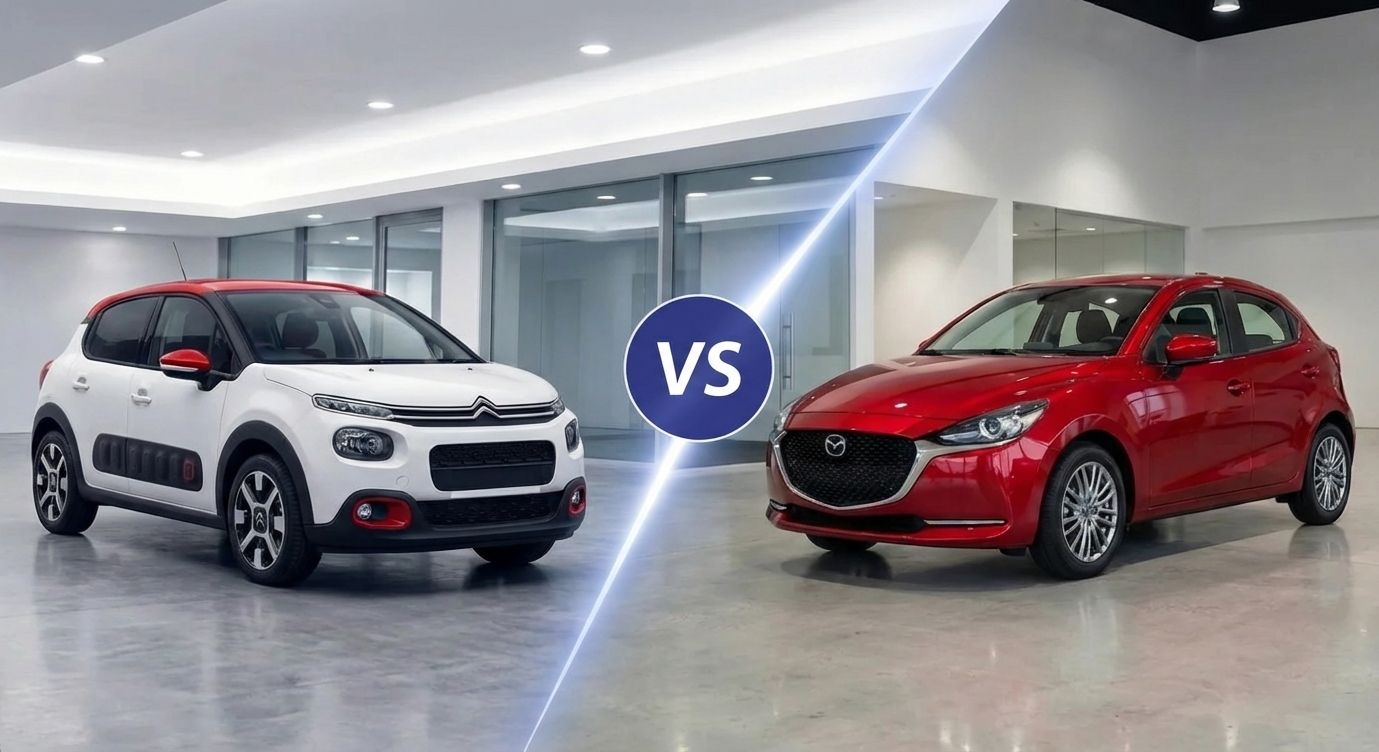
Detailed comparison of Citroën C3 vs. Mazda 2 (Mazda2). We offer real-world driving experiences, an equipment overview, engine comparison, and a clear verdict for the right choice.
Apr 13, 2026
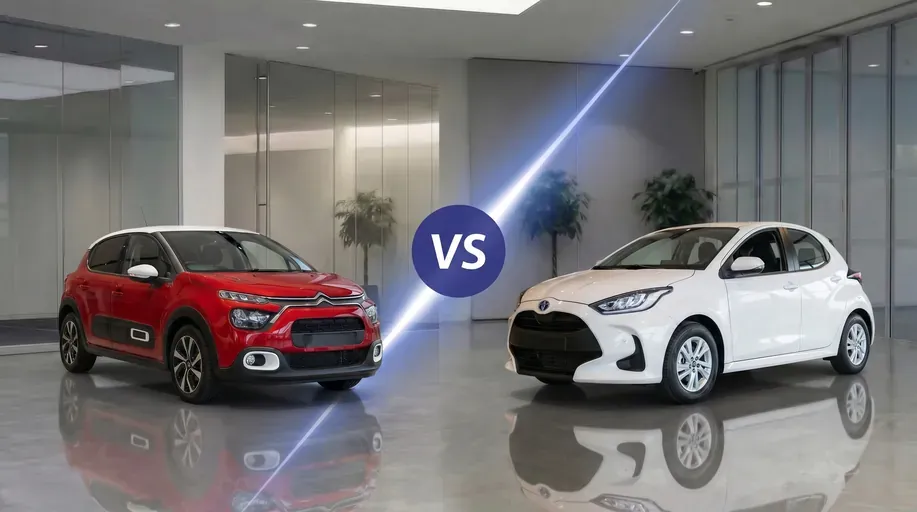
Detailed comparison of used Citroën C3 vs. Toyota Yaris. Discover the differences in engines, equipment, and reliability. Read our verdict before buying!
Apr 23, 2026