Car battle
Hyundai i10 vs. Toyota Aygo X: Complete comparison 2026
Hyundai i10 vs. Toyota Aygo X: A detailed comparison, real-world insights, and a verdict to help you choose the right small city car.
Apr 2, 2026
Articles
Car battle
Detailed comparison of used Citroën C3 vs. Toyota Yaris. Discover the differences in engines, equipment, and reliability. Read our verdict before buying!
April 23, 2026
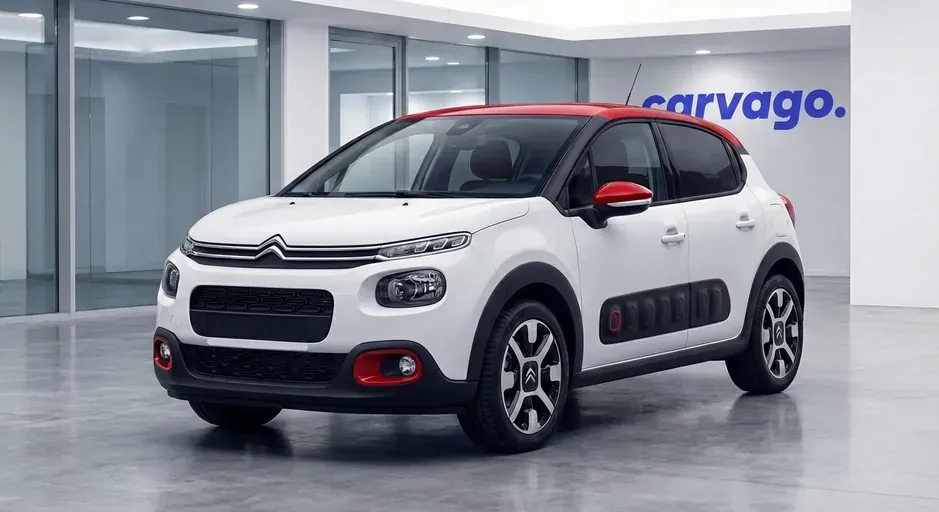
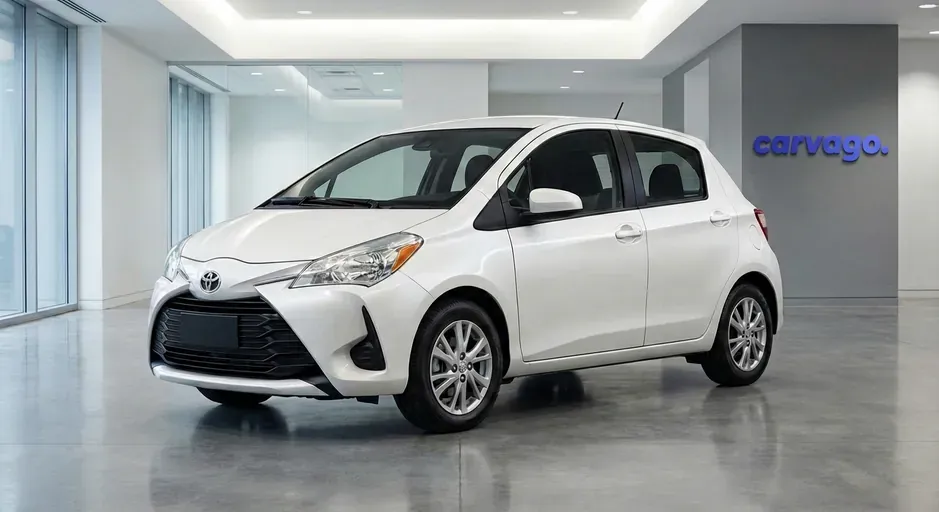
The Citroën C3 brings unmistakable French charm to the city hatchback segment, with a strong emphasis on originality and extraordinary driving comfort. In contrast, the Toyota Yaris, which has also been famous in other world markets under the names Toyota Vitz or Toyota Echo, represents the absolute benchmark of Japanese reliability and a leader in the field of fuel-efficient hybrid technologies. Let's take a detailed look at which of these two completely different approaches to a small car will emerge as the winner from our direct comparison.
When comparing the external dimensions of both cars, we are in the classic B-segment, where every millimeter counts during maneuvering and parking. If we focus on models roughly four years old (the third generation of the Citroën C3 and the Toyota Yaris generation designated XP21), we find that the French representative is slightly longer in its standard version. With a total length of 3996 mm, it exceeds the standard Yaris (3940 mm) by 56 millimeters. The difference in width is negligible for the standard versions (1749 mm for the C3 compared to 1745 mm for the Yaris, while the Yaris in the high-performance GR version widens up to 1805 mm). In practice, this means that both cars slip into tight city parking spaces very easily; however, the Citroën gives a slightly more massive impression thanks to its higher front-end construction and typical Airbump protective plastics.
An interesting turn occurs when looking at the wheelbase. Although the Yaris is shorter overall, its wheelbase is 2560 mm, which is 21 mm more than the Citroën C3, which has a value of 2539 mm. Thanks to the new platform, Japanese engineers managed to push the wheels further into the corners of the bodywork. For the driver and crew, this brings clear advantages: better directional stability at higher speeds on the highway and more efficient use of interior space in the rear seats. The modern C3, on the other hand, benefits from a slightly lower center of gravity, as its height is 1474 mm, while the standard Yaris measures exactly 1500 mm in height.
In the end, the choice between these two hatchbacks shows the different philosophies of both brands. The Toyota Yaris scores with its sophisticated architecture, which, thanks to a longer wheelbase, brings more mature driving characteristics and slightly better use of interior space on a shorter footprint. The Citroën C3, by contrast, bets on an optically more aggressive and longer body, which makes it an unmistakable and stylish companion that is not intimidated by any urban pitfalls.
| Parameter | Citroën C3 Hatchback | Toyota Yaris Hatchback |
|---|---|---|
| Width (mm) | 1749 | 1745 - 1805 |
| Length (mm) | 3996 | 3940 - 3995 |
| Height (mm) | 1474 | 1455 - 1500 |
| Wheelbase (mm) | 2539 | 2560 |
When choosing a compact city car such as the Citroën C3 and Toyota Yaris, the luggage compartment volume plays a surprisingly important role. Although these are B-segment cars primarily intended for city traffic, many drivers expect them to offer sufficient practicality for everyday family use. Differences in liters can thus represent a decisive factor in real life between comfortable packing and the need to make unwanted compromises.
The third-generation Citroën C3 (produced from 2017 to 2024) shows its strengths in this discipline and its overall focus on spatial comfort. In its standard configuration, it offers a luggage compartment with a volume of exactly 300 liters. After folding down the rear backrests, this space increases to an impressive 922 liters. In practice, this means room for several extra suitcases, while the overall wider loading opening makes handling even bulkier family cargo very pleasant.
The fourth-generation Toyota Yaris, designated XP21 (on the market since 2020), is by contrast focused more on agility and dynamics, which logically takes a slight toll on the boot space. Its basic volume is 286 liters, and after fully folding down the rear seats, it offers a maximum of 768 liters. Despite this smaller deficit on paper compared to its French rival, the Yaris has one major ace up its sleeve – in the highly sought-after hybrid versions, there is absolutely no reduction in boot capacity due to the batteries. The space is thus still fully sufficient for weekend shopping or a longer holiday for two.
| Parameter | Citroën C3 Hatchback | Toyota Yaris Hatchback |
|---|---|---|
| Base volume (liters) | 300 l | 286 l |
| Max volume with seats folded down (liters) | 922 l | 768 l |
While the Citroën C3 offers a slightly more generous transport capacity suitable even for bulkier family shopping, the Toyota Yaris scores by maintaining a fully usable boot without any spatial compromises, despite the presence of fuel-efficient hybrid technology.
The ability to tow a trailer is usually not a primary parameter for small city hatchbacks, yet for many buyers, it represents an important figure in terms of everyday practicality. The differences in towing capacity for roughly four-year-old used cars, namely the 3rd generation Citroën C3 and the XP21 generation Toyota Yaris, are quite fundamental. Given that available technical specifications do not list separate values for unbraked trailers, our comparison relies on data for braked trailers. This value is both the legislative and technical maximum for these models.
If you choose a Toyota Yaris with standard petrol engines, you get very solid parameters for this class. The common 1.0 three-cylinder (53 kW) can handle a braked trailer weighing 750 kg, and the more powerful 1.5 engine (92 kW) pushes the maximum up to 850 kg. This capacity is fully sufficient for a weekend trip to a DIY store, hauling bulky garden waste, or even for hitching a light caravan.
The French competitor, on the other hand, shows noticeably more modest limits. The maximum permissible weight of a braked trailer for the Citroën C3 (3rd generation) ranges from just 450 to 600 kg. For example, the popular base 1.2 PureTech 83 engine allows towing only 450 kg. A larger margin is provided only by more powerful versions, such as the 1.2 PureTech 110 or the 1.5 BlueHDi 100 diesel variant, which reach a maximum of 600 kg.
Care must be taken when choosing the currently highly sought-after hybrid versions, where permissible weights are significantly reduced due to their design. The very popular Toyota Yaris 1.5 Hybrid 116 has a towing capacity limited to just 450 kg. Although you won't be hauling construction debris with such a car, the lower limits are balanced by other practical benefits. You gain useful space for a few extra suitcases in the form of a small utility trailer, or the legal possibility of installing a sturdier e-bike rack, which is more than enough for a longer holiday or active family trips.
Final summary: If you know you will regularly tow a heavier trailer with wood or materials behind the car, the pure petrol engines of the Toyota Yaris will be the clear choice for you thanks to their higher weight limits. However, if you need a tow bar more for a bike rack or just for a very light trailer for occasionally hauling leaves from the garden, the lower limits of the hybrid Yaris and the stylish Citroën C3 will not pose any obstacle for you.
| Model and motorization | Braked weight of trailer (kg) | Unbraked weight of trailer (kg) |
|---|---|---|
| Toyota Yaris 1.5 (92 kW) | 850 | N/A |
| Toyota Yaris 1.0 (53 kW) | 750 | N/A |
| Toyota Yaris 1.5 Hybrid 116 (68 kW) | 450 | N/A |
| Citroën C3 1.5 BlueHDi 100 (75 kW) | 600 | N/A |
| Citroën C3 1.2 PureTech 110 (81 kW) | 450-600 | N/A |
| Citroën C3 1.2 PureTech 83 (61 kW) | 450 | N/A |
When it comes to the range of engines, the Citroën C3 and Toyota Yaris from around 2022 (ideal used cars approximately four years old) represent two completely different philosophies. While the French representative bets on proven classics in the form of three-cylinder petrol engines and is one of the few in its class to have retained an economical diesel engine at this time, the Japanese challenger leads the way in electrification. The fourth generation of the Toyota Yaris dominates the market with its full-hybrid powertrain, which excels with unbeatably low fuel consumption in the city and on country roads. The choice between these two cars often boils down to which type of drive best suits your daily mileage and route profile.
The Citroën C3 will primarily please more traditionally minded motorists. Its cornerstone is the popular naturally aspirated three-cylinder 1.2 PureTech (sold as PureTech 83), which with its 61 kW is an ideal and affordable companion for city hopping. However, if you often drive on the motorway, its turbocharged variant, the PureTech 110, is a significantly better choice. It offers not only a solid 81 kW and a generous 205 Nm of torque but was also the only petrol version of the C3 to offer the option of a six-speed classic automatic (EAT6). A complete rarity on the 4-year-old used car market in the small car segment is the presence of the economical 1.5 BlueHDi turbodiesel with 75 kW. For drivers who commute dozens of kilometers daily, this is an unexpectedly interesting alternative.
| Engine type | Fuel | Power (kW) | Torque (Nm) | Transmission |
|---|---|---|---|---|
| 1.2 PureTech 83 | Petrol | 61 | 118 | 5-speed manual |
| 1.2 PureTech 110 | Petrol | 81 | 205 | 6-speed manual / 6-speed automatic (EAT6) |
| 1.5 BlueHDi 100 | Diesel | 75 | 250 | 6-speed manual |
Since 2020, the Toyota Yaris has clearly shown the direction of development. The main attraction in used car dealerships is clearly the 1.5 Hybrid 116 engine. It combines an economical three-cylinder petrol engine with an electric motor for a total system output of 85 kW. Thanks to the e-CVT transmission and the ability to drive purely on electricity for a large part of the time in the city, it offers great user-friendliness and minimal consumption. For more traditional customers, the Yaris has two purely petrol engines in reserve: an affordable one-liter three-cylinder (53 kW) and a more dynamic naturally aspirated 1.5-liter with a high output of 92 kW. The icing on the cake for connoisseurs is the pure-bred "hot hatch" GR Yaris, which with its turbocharged 1.6-liter and all-wheel drive (GR-FOUR) has absolutely no competition in this category on the market.
| Engine type | Fuel | Power (kW) | Torque (Nm) | Transmission |
|---|---|---|---|---|
| 1.0 VVT-i | Petrol | 53 | 93 | 5-speed manual |
| 1.5 Dynamic Force | Petrol | 92 | 153 | 6-speed manual / automatic (CVT) |
| 1.5 Hybrid 116 | Petrol + Electric | 85 (system) | 120 (combustion) / 141 (electric) | Continuously variable (e-CVT) |
| 1.6 Turbo (GR Yaris) | Petrol | 192 | 360 | 6-speed manual / automatic |
If you are looking for the perfect and economical city car with an automatic, the Toyota Yaris Hybrid is an unbeatable choice. The Citroën C3, on the other hand, will suit budget-conscious buyers thanks to its reliable basic petrol engine, or high-mileage drivers thanks to the still available and economical BlueHDi diesel.
Choosing the right engine is absolutely key for long-term satisfaction with a car. While the French representative has relied primarily on turbocharged gasoline three-cylinders in its recent history, emphasizing low-end torque (for which the PureTech engine family won several Engine of the Year awards), its Japanese competitor completely dominates the market thanks to its advanced full-hybrid systems, where it has perfected the integration of the combustion and electric worlds. Both automakers took entirely different paths during development, resulting in cars with very different characters. The following recommendations for roughly four-year-old used cars from the third generation of the Citroën C3 and the fourth generation of the Toyota Yaris (XP21) are based on real-world experience, actual fuel consumption in traffic, owner feedback, and mechanical reliability.
From the third-generation lineup, the 110 hp (81 kW) turbocharged gasoline three-cylinder is by far the most versatile choice. It offers a great compromise between everyday practicality and dynamics, with real-world combined fuel consumption around a pleasant 5.5 to 6 liters per 100 km. Thanks to the turbocharger, it has generous torque from low RPMs, which you will appreciate both during quick starts in the city and for safer overtaking on country roads or highways. It is ideal for drivers with a more dynamic style or for those who don't just use the car for "short hops around town" but also head out on longer trips. From a mechanical standpoint, however, it is absolutely necessary to watch out for the single, yet crucial weakness of this engine – the timing belt immersed in oil. If oil change intervals are not followed (or if the car is frequently driven on short trips with a cold engine), chemical degradation of the belt occurs. It begins to crumble, and its particles can clog the oil pump pickup screen, leading to fatal lubrication failure. How to tell when buying: Unscrew the oil filler cap and shine a light inside at the timing belt. If its edges are frayed, the surface is cracked, or the material is obviously swollen, do not buy the car, or insist on an immediate belt replacement and oil pan cleaning. As the new owner, for maximum reliability, shorten the oil change interval to 10,000 km or 1 year.
In the fourth generation (coded XP21), the advanced 1.5 Hybrid powertrain with a combined output of 116 hp (85 kW) makes the most sense in terms of long-term value and user comfort. This sophisticated system combines a naturally aspirated three-cylinder engine operating on the Atkinson cycle with an efficient electric motor and an e-CVT planetary gearbox. For city users and suburban commuters, it is an unrivaled choice because you spend a large portion of your time in traffic jams purely on electricity, and real-world city fuel consumption commonly falls below 4 liters per 100 km. The entire drivetrain is renowned for its mechanical "indestructibility" – it lacks delicate components such as a traditional clutch, starter, alternator, or turbocharger, which minimizes the risk of expensive service tasks. However, a certain risk arises from the fact that the hybrid recovers most of its energy through recuperation using the electric motor, and the mechanical rear brakes often remain completely unused. How to tell when buying: Visually inspect the rear brake discs through the wheel spokes. If they are covered in a thick layer of deep rust (not just a light surface coating after rain), have deep grooves, or the calipers are clearly seized, a complete replacement will soon be necessary. To prevent this problem in a used car, we recommend occasionally braking more sharply on a safe stretch of road or safely braking in neutral (when the car does not recuperate) when exiting a highway to mechanically scour the pads. When buying a used Toyota, also always demand documentation of a completed traction battery test (Hybrid Health Check), which ensures an extension of the factory warranty on the battery.
When choosing a used car, it is always good to keep in mind that official fuel consumption figures provided by the manufacturer often differ from everyday reality. Paper figures are generated in laboratory conditions that hardly mimic morning stop-and-go traffic, driving with the air conditioning on, or fast highway commutes. To get a more accurate picture, we have analyzed user data from the well-known community portal Spritmonitor, where thousands of drivers from all over Europe regularly record their actual refueling.
The following table shows the average real-world consumption for the most common engines of both models from the monitored generations; we focused on roughly four-year-old used cars:
| Model and engine | Average consumption (l/100 km) |
|---|---|
| Toyota Yaris 1.5 Hybrid 116 (85 kW) | 4.3 |
| Citroën C3 1.5 BlueHDi 100 (75 kW) | 4.6 |
| Toyota Yaris 1.0 VVT-i (53 kW) | 5.2 |
| Toyota Yaris 1.5 VVT-i (92 kW) | 5.4 |
| Citroën C3 1.2 PureTech 83 (61 kW) | 5.6 |
| Citroën C3 1.2 PureTech 110 (81 kW) | 6.2 |
A look at the user data clearly shows the triumph of Japanese hybrid technology. The Toyota Yaris with the 1.5 Hybrid engine is the absolute king of efficiency, managing to drive long-term in real traffic for about 4.3 liters of gasoline per 100 km. However, the purely gasoline naturally aspirated versions from Toyota also perform excellently, with the more powerful 125-hp 1.5 VVT-i version showing consumption only slightly higher than the basic one-liter three-cylinder.
Conversely, for Citroën, a relatively well-known trend of recent years is confirmed: small gasoline turbo engines – such as the 1.2 PureTech 110 here – are not always a guarantee of the low consumption stated in the specs. Especially if you use their power potential to the fullest, real-world consumption easily exceeds the six-liter mark. The French model, however, scores strongly with its excellent 1.5 BlueHDi diesel, which, despite the general retreat of diesel engines from small cars, offers fantastic efficiency and reliably keeps its appetite below the five-liter mark.
For a typical city user who spends a lot of time in traffic jams or on short routes, the hybrid Yaris makes the most sense by far. It is precisely in city stop-and-go traffic that the system can best benefit from recuperation and complete a large part of the route purely on electricity. However, if you commute dozens of kilometers daily on country roads or highways, the diesel Citroën C3 suddenly becomes an excellent choice, as diesel consumption does not increase nearly as dramatically with rising speed and load as it does with small-displacement gasoline engines. Buying the basic naturally aspirated engines then makes sense mainly for calmer drivers looking for simple and proven technology.
Overall, fuel consumption should definitely play a key role in the decision-making process in this particular duel. It can very quickly act as the deciding factor – while Toyota excels with its ultimately tuned hybrid built for city conditions, Citroën still counters with an excellent diesel suitable for long-distance commuting. The final choice thus depends exclusively on where your daily journeys will take you.
When looking at the used car market for vehicles around four years old (2021 and 2022 models), we encounter a very significant price difference. The Citroën C3 represents the category of more affordable hatchbacks with traditional internal combustion engines, while the fourth-generation Toyota Yaris maintains a high residual value thanks to its advanced hybrid technology and reputation for reliability.
The third-generation Citroën C3, following its facelift, is among the most affordable four-year-old used cars in its class. Its price level is very budget-friendly, making it an ideal choice for buyers with a tighter budget.
Main advantage: For a price well below the €12,000 mark, you get a relatively young car that offers high driving comfort and simple, time-tested technology with cheaper spare parts.
The fourth-generation Toyota Yaris holds its value exceptionally well on the secondary market. Most used cars offered in this age category feature an advanced and efficient hybrid powertrain (1.5 Hybrid). This system is highly sought after and raises the average price by thousands of euros compared to conventional competitors.
Main advantage: Despite the significantly higher purchase price, a used Yaris offers excellent protection of the initial investment due to very slow depreciation and minimal maintenance costs for wear-and-tear parts, which the hybrid system helps preserve.
| Parameter | Citroën C3 (2021–2022) | Toyota Yaris (2021–2022) |
|---|---|---|
| Base used price | from ~€9,000 | from ~€14,000 |
| Typical price (good condition) | ~€10,000 | ~€16,000 |
| Price for top-equipped models | ~€12,000 | up to €22,000 |
| Prevailing engine on the market | 1.2 PureTech (petrol) | 1.5 Hybrid (petrol/electric) |
While a used Citroën C3 represents an exceptionally good value purchase for those looking for an affordable and comfortable city car, the Toyota Yaris easily justifies its substantially higher price tag with advanced hybrid technology and excellent value retention. For a strictly limited budget, the C3 is the clear winner, but in terms of operating costs and future investment, it pays to spend more for the Yaris.
When comparing safety, it is often assumed that both models represent modern five-star Euro NCAP standards (which the related C3 Aircross model boasts in the case of the French car), but it is absolutely crucial to put these results into context and consider the specific year of testing. The methodology and testing protocols of the independent organization are constantly evolving and becoming stricter over time. Percentage results from different years cannot be directly compared because newer tests place much greater emphasis on advanced scenarios such as frontal collisions with a mobile barrier, cyclist detection, or emergency braking at intersections.
The third-generation Citroën C3 underwent crash tests in 2017 and earned a very solid four stars. The hatchback proved it can protect its occupants well during the impact itself, as evidenced by the decent results at the time – 88% for adult protection and 83% for child protection. However, the car corresponds to older standards and thus offers mostly basic active safety systems. This was reflected in the lower rating for electronic assistants (58%) and the protection of vulnerable road users (59%). Furthermore, it is common for vehicles from this year that their safety certification has formally expired due to the obsolescence of the methodology.
In contrast, the fourth-generation Toyota Yaris underwent tests in 2020 and earned a full five stars. It became the first car on the market to be tested according to the significantly stricter protocols of the time. The Yaris thus had to handle a brand-new frontal impact simulation with a moving deformable barrier. At the same time, it was one of the first cars to introduce center airbags, which prevent dangerous head collisions between front passengers in a side impact. The result is not only excellent passive protection values but also a top rating for advanced assistance systems (85%) and pedestrian or cyclist protection (78%).
| Parameter | Citroën C3 | Toyota Yaris |
|---|---|---|
| Year of testing | 2017 | 2020 |
| Adult protection | 88% | 86% |
| Child protection | 83% | 81% |
| Vulnerable road user protection | 59% | 78% |
| Safety assistance systems | 58% | 85% |
In conclusion, while the Citroën C3 provides solid basic passive protection according to the standards of its inception, the Toyota represents a generational leap. From the perspective of current requirements, the Yaris offers an incomparably more comprehensive safety package and dominates primarily in the layer of advanced active accident prevention features.
Thanks to the latest technologies and equipment tested under significantly stricter 2020 tests, the Toyota Yaris offers much more modern and holistic occupant protection than the older Citroën C3.
Both models offer much more than just basic equipment, with each approaching added value in its own way and with regard to the different daily priorities of drivers. While one bets on original style and absolute comfort, the other brings top efficiency and advanced safety technologies to the small car segment.
The third-generation Citroën C3 (including its facelift) profiles itself as a stylish and playful city car that prioritizes on-board well-being and a distinctive personal style.
The fourth generation of the Toyota Yaris brought a revolution in driving characteristics and assistance systems to the used car market. It is a technologically very advanced car that focuses on modern powertrains and safety.
Above-average comfortable chassis and soft seats dampening city bumps
Original design with practical Airbump protective panels against parking lot scratches
Very favorable purchase price on the used car market
Decent luggage compartment volume within the class (300 liters)
Low costs for common spare parts and service tasks
Significant body roll in corners and overall uninspiring driving performance
Tedious climate control operation hidden exclusively in the touchscreen menu
Imprecise and rubbery shifting in versions with manual transmission
Increased risk of expensive faults in older 1.2 PureTech engines due to timing belt degradation in oil
The Citroën C3 is an ideal choice for drivers looking for an affordable, stylish, and, above all, exceptionally comfortable car for city traffic. Thanks to its supple suspension and original appearance, it will appeal to buyers who do not care about sporty driving but prefer calm and comfortable daily commutes.
Unrivaled fuel consumption in the top-tuned and reliable hybrid version
Surprisingly agile driving characteristics and a confident chassis bringing driving joy
Excellent value retention and very slow depreciation on the used car market
Rich standard safety equipment including assistants from the Toyota Safety Sense suite
Great maneuverability and compact exterior dimensions facilitating parking
Cramped space in the rear seats and a narrower rear door opening
Smaller luggage compartment volume (286 liters) compared to most competitors
Significantly higher purchase price of a used car, especially for hybrid variants
The graphics and speed of the multimedia system feel somewhat outdated
The Toyota Yaris represents the absolute top for those interested in a technically advanced, maximally reliable, and economical car that also drives great. It is the perfect solution for drivers who are happy to pay extra for trouble-free operation and low fuel consumption, even if it means a compromise in the form of less interior space for rear passengers.
Based on long-term user feedback, service reports, and detailed inspections provided by the comprehensive car check via the CarAudit service, we have compiled an overview of the most common problems you should watch out for in approximately four-year-old used cars of both these models.
The third-generation Citroën C3 after the 2020 facelift attracts with high driving comfort and unconventional design; however, for used cars, it requires a much more careful check of the service history and the condition of the power units.
The Citroën C3 offers high comfort, but its gasoline engines rely on delicate technology. It requires an owner who will strictly and timely change the oil, otherwise there is a risk of fatal engine damage.
The fourth-generation Toyota Yaris (since 2020) is the embodiment of legendary Japanese reliability, and no major mechanical problems usually threaten it; nevertheless, it also has several specific weaknesses related to its economical operation.
The Toyota Yaris remains a trouble-free and extremely durable city car. However, buyers of the hybrid version must watch out for longer periods of inactivity, which can easily drain the small 12V battery.
When buying a used car, a thorough inspection is key. Here are some specific points to focus on for these two models to avoid unpleasant surprises and expensive repairs. This is also why a thorough independent technical inspection of the car is the best step to uncover potential problems that an average buyer might not see at first glance.
The Citroën C3 offers a very decent luggage space in its class with a volume of exactly 300 liters. The Toyota Yaris has a slightly more modest boot with a total capacity of 286 liters. While the difference isn't vast, it can play a role in favor of the French car when frequently transporting bulkier shopping.
The Toyota Yaris clearly dominates thanks to its sophisticated hybrid powertrain, which can achieve fuel consumption well below 4 liters per 100 km in city traffic. The Japanese model is also consistently highly rated in reliability rankings and maintains an excellent residual value. While the Citroën C3 offers relatively economical petrol engines, it simply does not match the operational efficiency and legendary durability of the hybrid Yaris.
Both cars are great for heavy traffic, but the Japanese representative has a slight advantage thanks to its more compact exterior dimensions and excellent turning radius. On the other hand, the Citroën C3 offers unique Airbump protective elements that perfectly protect the sides of the car from being bumped by neighboring doors in tight parking lots. The Yaris is slightly more suitable for agile maneuvering through streets, while you will appreciate the C3 for worry-free parking at supermarkets.
The French car is the clear winner in this category thanks to its very soft suspension setup and special Advanced Comfort seats. The Toyota Yaris is tuned more sportily, which brings more confident handling in corners, but you will feel a firmer response from the wheels on a rough highway. If you are looking for a smooth and calm ride, the C3 will be a significantly more pleasant choice in terms of damping irregularities.
The fourth-generation Toyota Yaris is at the top of its class in terms of passive and active safety, and was one of the first in the segment to offer a center airbag between the front seats. This Japanese model also easily earned the maximum five-star rating in the stricter Euro NCAP tests from 2020. The Citroën C3 relies on a slightly older structural base, and although it has a good standard of assistants, it does not fully reach the level of its more modern competitor.
Choosing between a used Citroën C3 and a Toyota Yaris represents a choice between two completely different approaches to the modern city car. The French representative scores with a highly comfortable chassis, stylish Airbump protective elements, and a significantly more attractive purchase price, making it an ideal choice for budget-conscious drivers who prefer a calm and comfortable ride. The Toyota Yaris, on the other hand, confidently justifies its higher price tag on the used car market with its unbeatably economical and reliable hybrid powertrain, top-tier safety equipment, and surprisingly agile driving characteristics. Therefore, if your priority is maximum comfort, original design, and a lower initial investment, go for the Citroën; however, in terms of minimal operating costs, modern assistance systems, and excellent future value retention, the technologically more advanced Japanese hatchback is the rational winner.
Sources: ADAC, garaz.cz, svetmotoru.cz, autorevue.cz, fdrive.cz, autoguru.cz
This article was prepared using artificial intelligence tools. The section guarantor is Petr Dušek.
Hyundai i10 vs. Toyota Aygo X: A detailed comparison, real-world insights, and a verdict to help you choose the right small city car.
Apr 2, 2026
Detailed comparison: Dacia Sandero vs. Toyota Yaris. We reveal real-world experiences, fuel consumption, and equipment. Read our verdict and choose the ideal used car.
Apr 18, 2026
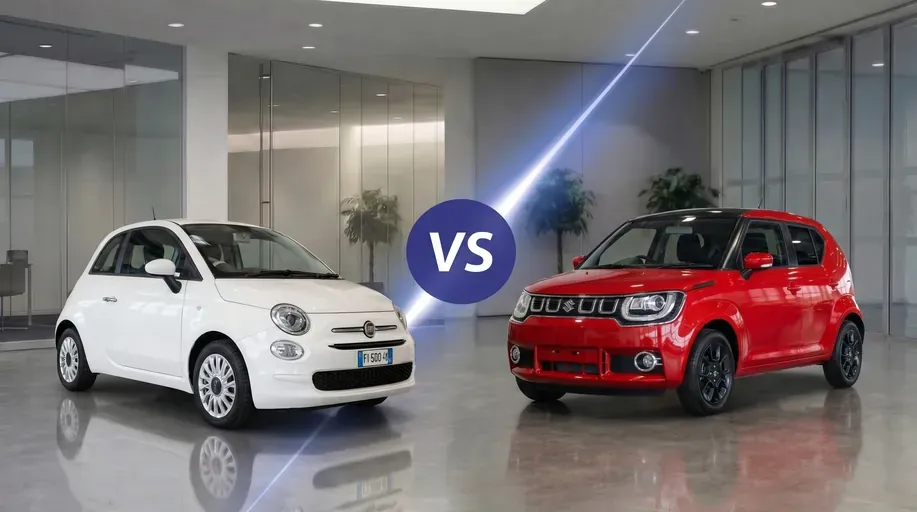
Detailed comparison: Fiat 500 vs Suzuki Ignis. We compared the Italian icon with the Japanese mini SUV. Discover the differences, fuel consumption, and verdict before buying a used car.
Apr 23, 2026