Car battle
Mercedes-Benz GLB vs. Volvo XC40: Complete comparison 2026
Detailed comparison of Mercedes-Benz GLB vs Volvo XC40. Find out which premium SUV offers better space, engines, and equipment. Read our final verdict!
Apr 19, 2026
Articles
Car battle
Kia Stonic vs Volkswagen T-Cross: Which city SUV to choose? Read a detailed comparison of equipment, driving characteristics, and a real verdict before buying.
May 10, 2026
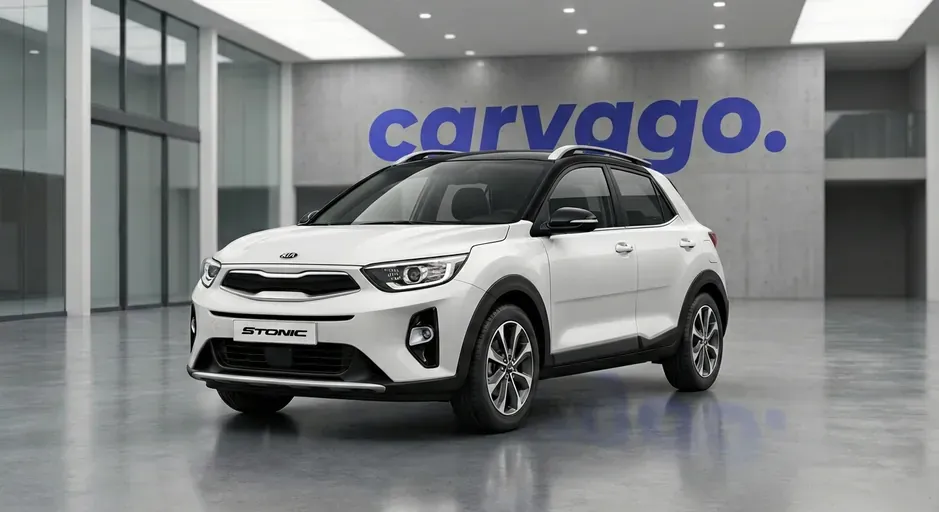
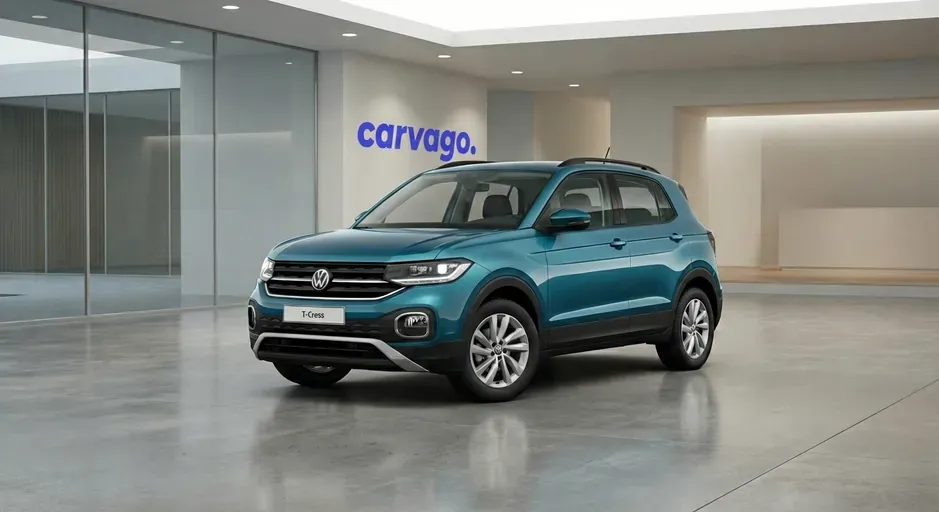
Kia Stonic, also known as the Kia KX1 in some markets, is a dynamic and compact city crossover that attracts with its sportier look and agile driving characteristics. Standing against it is the Volkswagen T-Cross, sold outside Europe also under the names Tacqua or Taigun, which represents an exceptionally practical and surprisingly spacious SUV built on proven German foundations. Let's take a detailed look at how these two popular representatives of the small city crossover segment stand in a direct comparison and which of them might be the better choice for you on the used car market.
When choosing a compact city crossover on the four-year-old used car market, external dimensions and the overall body concept play a key role. The Kia Stonic and Volkswagen T-Cross (in versions prior to the recent updates from 2020–2023) are very close in terms of their external footprint, yet they offer a different approach to spaciousness and driving style. With a total length of 4140 mm, the Kia Stonic is 32 mm longer than the Volkswagen T-Cross (4108 mm). In practice, you will hardly notice this slight difference, and both cars represent an ideal choice for easy maneuvering and parking in narrow city streets. The Volkswagen, on the other hand, is 22 mm wider (1782 mm compared to 1760 mm), which gives it a more robust, mature appearance and theoretically slightly more shoulder room for passengers. Both models are great for daily city driving, but the T-Cross feels slightly wider and more stable on the road.
However, the biggest and visually most striking difference is found in the height of the two models, which fundamentally defines their character. The Volkswagen T-Cross measures 1584 mm in height, while the Kia Stonic reaches only 1505 mm. The German representative is therefore a substantial 79 mm taller. For the driver, this means a more typical SUV driving feel – you sit noticeably higher behind the wheel, which provides a better view of the traffic ahead and a sense of greater safety. Furthermore, the taller body structure makes it easier to get in and out and to secure children in car seats. The Stonic, by contrast, with its noticeably lower silhouette, resembles a slightly raised classic hatchback. Your final choice here will thus depend heavily on personal preference: if you are looking for practicality and the more upright seating position of a classic SUV, the T-Cross is the clear winner. But if you prefer a sportier look and a center of gravity and driving position closer to regular passenger cars, the Stonic will suit you better.
In terms of wheelbase, which is often a key parameter for longitudinal cabin space, the Korean representative has a slight edge. The Kia Stonic has a wheelbase of 2580 mm, which is 29 mm more than the Volkswagen T-Cross (2551 mm). A longer wheelbase generally results in slightly calmer vehicle behavior on the highway or when driving over transverse bumps, and theoretically more legroom for rear passengers. However, Volkswagen compensates for this minor paper handicap very effectively with its taller roof structure and more upright seating for rear passengers. The Kia's longer wheelbase thus brings a theoretical advantage on paper, but in practice, the T-Cross does not lag behind in terms of space thanks to its clever interior layout and often feels airier.
| Parameter | Kia Stonic SUV | Volkswagen T-Cross SUV |
|---|---|---|
| Width (mm) | 1760 | 1782 |
| Length (mm) | 4140 | 4108 |
| Height (mm) | 1505 | 1584 |
| Wheelbase (mm) | 2580 | 2551 |
In the small urban crossover (B-SUV) segment, luggage capacity plays a key role, especially if the car is to serve as the primary family vehicle. Although the Kia Stonic and Volkswagen T-Cross target a similar group of customers looking for an elevated driving position and compact dimensions for easy city parking in roughly four-year-old used cars, their approach to overall practicality and interior space utilization differs quite fundamentally.
In its current generation (YB), the Kia Stonic offers a 352-liter trunk in its standard configuration. This value is perfectly sufficient for a regular large grocery shop, sports bags, or a weekend trip for two. From the perspective of daily family usability, however, it may be a slight compromise, especially when packing for a longer holiday. After folding down the rear seatbacks, the space increases to a maximum of 1155 liters, which easily serves for transporting bulkier items or a small piece of furniture. In more modern mild-hybrid powertrains (48V), the space under the double floor is often limited due to the battery placement, but the listed usable volume remains the same.
The Volkswagen T-Cross (1st generation), on the other hand, excels in the discipline of interior space packaging and takes full advantage of its cleverly designed platform and sliding rear bench. Thanks to this, the base trunk volume reaches a generous 455 liters. This represents a vast difference of more than 100 liters compared to its Korean competitor. In practice, this difference provides valuable space for several extra suitcases or the convenient loading of an unfolded stroller, making the car an ideal companion even for longer family holidays. With the seats fully folded, the T-Cross can hold a total of 1281 liters of cargo, confidently defending its position as one of the most practical cars in its class.
| Parameter | Kia Stonic SUV | Volkswagen T-Cross SUV |
|---|---|---|
| Base volume (liters) | 352 | 455 |
| Maximum volume with seats folded (liters) | 1155 | 1281 |
Thanks to its 455-liter trunk and versatile interior, the Volkswagen T-Cross offers significantly more practicality for families than the more modest Kia Stonic. If cargo capacity is a priority for you in a compact used crossover, the T-Cross is a much more versatile choice.
When choosing a compact crossover from the used car market, the ability to tow a trailer often plays an important role, especially if you plan family camping, transporting garden waste, or frequently attaching a heavier bike rack. If we focus on models roughly four years old, the Volkswagen T-Cross offers significantly higher and more flexible towing capacity values overall than the competing Kia Stonic.
While the Kia Stonic, in its newer petrol and mild-hybrid engine versions, can handle a braked trailer with a maximum weight of 900 to 910 kg, the Volkswagen T-Cross covers a noticeably higher range. For the standard 1.0 TSI (70 kW) engine, the T-Cross allows towing 1000 kg, while for more powerful versions – including the stronger one-litre three-cylinder and the popular 1.5 TSI four-cylinder – the maximum weight of a braked trailer moves up to a solid 1200 kg. A similarly fundamental difference exists for unbraked trailers. The Korean representative is strictly limited to exactly 450 kg across the commonly available model range. In contrast, Volkswagen allows safe towing of an unbraked load weighing 630 to 660 kg, depending on the chosen power unit.
In the case of the Kia Stonic, it is worth noting that the implementation of the 48V mild-hybrid system does not reduce the overall towing capacity – these electrified versions offer the exact same 900 kg limit as the standard conventional engines. In everyday practice, these values mean that attaching a smaller trailer to both cars easily creates space for a few extra suitcases, which is a solution that is perfectly sufficient for weekend shopping or a longer holiday. However, thanks to its better parameters, the Volkswagen provides much wider possibilities for bulkier loads.
For buyers, this means a relatively simple decision. If towing capacity is a key feature for you and you plan on occasionally transporting heavier building materials or attaching a smaller caravan, the Volkswagen T-Cross represents a clearly more versatile choice with a larger reserve. While the Kia Stonic will serve perfectly well for occasional home use with a light trailer, in terms of raw towing power, it comes up short in this comparison.
| Model and engine | Braked trailer (kg) | Unbraked trailer (kg) |
|---|---|---|
| Kia Stonic 1.2 (62 kW) | 910 | 450 |
| Kia Stonic 1.0 T-GDI 100 (74 kW) | 900 | 450 |
| Kia Stonic 1.0 T-GDI 120 48V-Mild-Hybrid (88 kW) | 900 | 450 |
| VW T-Cross 1.0 TSI OPF (70 kW) | 1000 | 630 |
| VW T-Cross 1.0 TSI OPF (81–85 kW) | 1100–1200 | 630–640 |
| VW T-Cross 1.5 TSI ACT OPF (110 kW) | 1200 | 660 |
The engine range for both models clearly shows the different approaches of the manufacturers, which has a direct impact on driving dynamics, fuel consumption, and overall reliability. While the Kia Stonic relies on more affordable naturally aspirated four-cylinders (e.g., 1.2 DPI) ideal for undemanding city driving and modern turbocharged three-cylinders 1.0 T-GDI (up to 88 kW) with advanced 48V mild-hybrid technology, the Volkswagen T-Cross goes exclusively the way of turbochargers. Its foundation is the proven one-liter three-cylinder 1.0 TSI, but for more demanding drivers, it offers a superior four-cylinder 1.5 TSI with 110 kW and cylinder deactivation technology (ACT). Those interested in roughly four-year-old used cars from 2022 should note that the 1.6 CRDi diesel engines in the Kia and 1.6 TDI in the Volkswagen were no longer in the range during this period, as both brands ended their sale during 2020. The choice for the monitored age category is thus narrowed exclusively to efficient petrol units.
The base engine for the Kia Stonic is a naturally aspirated four-cylinder 1.2 (formerly MPI, later with dual injection DPI) with an output of 62 kW, which is paired with a five-speed manual gearbox. Thanks to its structural simplicity, this engine is extremely reliable and perfectly suited for drivers with lower annual mileage spending most of their time in the city. Greater dynamics are provided by the turbocharged three-cylinder 1.0 T-GDI available in versions with 74 kW and 88 kW. Since 2020, the more powerful variant has been sold primarily as a 48V mild-hybrid, which helps reduce consumption and emissions. It is paired with an innovative iMT manual transmission (which can coast with the engine off) or a seven-speed dual-clutch automatic 7DCT. If you come across older used cars from the first years of production, you may also encounter a larger naturally aspirated four-cylinder 1.4 MPI (74 kW) or an economical diesel engine 1.6 CRDi (up to 85 kW). However, these units disappeared from the price lists at the beginning of 2020 and you will no longer find them on the market for younger four-year-old used cars.
| Engine type | Fuel type | Power (kW) | Torque (Nm) | Transmission |
|---|---|---|---|---|
| 1.2 DPI / MPI | Petrol | 62 | 118 | 5MT |
| 1.4 MPI | Petrol | 74 | 133 | 6MT / 6AT |
| 1.0 T-GDI | Petrol | 74 | 172 | 5MT / 6MT / 7DCT |
| 1.0 T-GDI 48V | Petrol (Mild-Hybrid) | 85 - 88 | 172 - 200 | 6iMT / 7DCT |
| 1.6 CRDi | Diesel | 81 - 85 | 260 - 280 | 6MT |
Under the hood of the Volkswagen T-Cross, turbocharged units play the main role, providing an excellent balance between daily agility and fuel consumption. The pillar of sales is the three-cylinder 1.0 TSI, which was available in a weaker version with 70 kW (paired only with a five-speed manual) or a stronger version with 81 kW or 85 kW. For the stronger version, it was already possible to choose between a six-speed manual and a smooth-shifting seven-speed DSG automatic. The most demanding buyers looking for performance will clearly prefer the refined four-cylinder 1.5 TSI ACT. It produces an impressive 110 kW and 250 Nm, and at low loads, it can imperceptibly deactivate two cylinders, effectively saving fuel. It was supplied exclusively with a seven-speed dual-clutch DSG transmission. Similar to Kia, Volkswagen initially offered a diesel alternative for high mileage – the economical four-cylinder 1.6 TDI (70 kW). However, it ended its life cycle in the T-Cross model in the autumn of 2020 and you will practically not encounter it in younger used cars.
| Engine type | Fuel type | Power (kW) | Torque (Nm) | Transmission |
|---|---|---|---|---|
| 1.0 TSI | Petrol | 70 | 175 | 5MT |
| 1.0 TSI | Petrol | 81 - 85 | 200 | 6MT / 7DSG |
| 1.5 TSI ACT | Petrol | 110 | 250 | 7DSG |
| 1.6 TDI | Diesel | 70 | 250 | 5MT / 7DSG |
While the Kia Stonic will please more conservative drivers with lower mileage with its exceptionally reliable naturally aspirated four-cylinder, the Volkswagen T-Cross relies exclusively on the power and refinement of turbo engines, led by the superior 1.5 TSI unit.
Choosing the right engine is crucial for long-term satisfaction with a car, especially when buying a used vehicle around four years old, where potential service pitfalls may already begin to surface. Both manufacturers have primarily bet on turbocharged three-cylinder petrol engines for their small crossovers. Interestingly, diesel units (1.6 CRDi for Kia and 1.6 TDI for Volkswagen) quietly disappeared from both models' lineups at the end of 2020, and thus play virtually no role in the market for four-year-old used cars. We will therefore focus on the best petrol engines from 2021 and 2022, which we evaluate for their excellent balance of dynamics, real-world fuel consumption, mechanical reliability, and overall user-friendliness.
This engine represents the most sensible choice and the "golden middle ground" on the used car market from around 2022. Compared to the more powerful 120-hp version, which has been standardly paired with 48V mild-hybrid technology since late 2020 (increasing the risk of future expensive battery and complex electronics repairs for a used car buyer), the 100-hp variant remains structurally cleaner and simpler. Technically, the engine scores points for its linear torque curve, unexpected willingness to rev, and real-world combined fuel consumption, which easily stays between 5.5 and 6 liters per 100 km. As with all direct-injection engines, however, there is a risk of carbon buildup on the intake valves, and frequent lugging (driving at too low RPMs) poses a risk of low-speed pre-ignition (LSPI). Caution when purchasing should be directed toward the service history – we recommend buying vehicles with documented oil changes at most every 15,000 km (ideally sooner) and using fuel with additives as a preventive measure. This engine is ideal for drivers who alternate between congested city traffic and suburban commuting and are looking for an agile, low-maintenance car.
The one-liter three-cylinder from the EA211 family is one of the most successful and mechanically durable small engines today, and it fits the character of the T-Cross perfectly. The more powerful 81 kW version (most commonly found on the used market from the 2021–2023 model years) is the ideal choice primarily because, unlike the basic weaker engine, it is paired with a precise six-speed manual transmission, which significantly reduces noise and consumption during highway travel. The unit is exemplary in its refinement, masks three-cylinder vibrations well, and real-world consumption averages around 6 liters in the long term. For four-year-old used cars, watch out for versions equipped with the seven-speed DSG automatic transmission with dry clutches (DQ200) – if the car was driven exclusively in city traffic jams, the clutches may be prematurely worn and might jerk when shifting. Another specific feature is the particulate filter (OPF), which requires a longer, steady drive outside the city every once in a while for proper regeneration. This power unit will delight versatile drivers and small families who want to comfortably handle weekend trips and summer highway journeys for holidays with their T-Cross.
Official fuel consumption figures provided by manufacturers according to testing cycles are one thing, but the reality of daily driving is often different. To get the most accurate picture of the actual appetite of these compact crossovers, we rely on real-world data from long-term users on Spritmonitor.de. Since we focus primarily on approximately four-year-old vehicles (production years 2020–2022) on the used car market, we have selected for comparison those generations and engines that formed the core of the offering during this period and are most represented in advertisements.
| Model and engine | Average consumption (l/100 km) |
|---|---|
| Kia Stonic 1.6 CRDi | 4.1 |
| Volkswagen T-Cross 1.6 TDI | 5.3 |
| Kia Stonic 1.0 T-GDI 120 48V (MHEV) | 5.7 |
| Kia Stonic 1.0 T-GDI 100 | 5.8 |
| Volkswagen T-Cross 1.0 TSI | 5.9 |
| Volkswagen T-Cross 1.5 TSI | 5.9 |
| Kia Stonic 1.2 | 6.1 |
Looking closely at the table, several interesting trends emerge. The first is the surprisingly higher consumption of the naturally aspirated 1.2 four-cylinder under the hood of the Kia Stonic. Although it might seem that a simpler engine without a turbo would be more economical, the opposite is true. Due to lower power and torque, the driver has to rev the engine more, which in practice results in consumption exceeding the six-litre mark.
Conversely, modern turbocharged 1.0-litre three-cylinders (1.0 T-GDI for Kia and 1.0 TSI for VW) stay within a reasonable range between 5.7 and 5.9 l/100 km. Here we can notice a slight benefit of mild-hybrid technology (MHEV) in the more powerful version of the Kia Stonic, which can save precious tenths of a litre of fuel compared to the standard version, especially in city traffic.
A very valuable insight for those interested in the Volkswagen T-Cross is the behavior of the more powerful 1.5 TSI four-cylinder. In real-world driving, it shows almost no increase in consumption compared to the smaller 1.0-litre three-cylinder, averaging 5.9 l/100 km. This is due to sufficient power reserves and also the cylinder deactivation system (ACT) under low load.
Regarding diesel engines, they disappeared from the range of both models very quickly and you will encounter them rather exceptionally on the four-year-old used car market (they appeared mainly in 2019–2020). However, if you are still looking for diesel, Kia's 1.6 CRDi engine, with an average of around 4.1 l/100 km, is significantly more economical than the German 1.6 TDI, which requires more than five litres.
Overall, the differences in consumption between the relevant petrol versions of both models are in the range of tenths of a litre per hundred kilometres. With normal annual mileage, this will not mean any huge difference in the family budget. Official figures should therefore definitely not be the primary factor for choosing between Kia and Volkswagen. The buyer should place much more emphasis on the environment in which the car will be operated. Choosing an adequately powerful engine will not only bring better driving comfort but, paradoxically, can protect your wallet from the unnecessarily increased consumption of an underpowered unit.
Looking at the used car market for vehicles roughly four years old (2020 to 2022 models), the different pricing policies of the two manufacturers are fully evident. Both cars are highly sought-after small city crossovers, but their purchase prices and the rate of depreciation on the secondary market differ quite significantly.
The Kia Stonic is an exceptionally attractive choice on the used car market for drivers on a tighter budget. This model's price drops a bit faster in the first few years, making it a very good second-hand buy if you are looking for the best price-to-age ratio.
The Volkswagen brand traditionally keeps its prices very high on the European market, and the Volkswagen T-Cross is no exception. Although the initial investment in a used car is noticeably higher, the car will reward you with a slower decline in value when it comes to a potential resale in the future.
| Indicator | Kia Stonic | Volkswagen T-Cross |
|---|---|---|
| Base price on the used market | from ~ €11,000 | from ~ €12,000 |
| Average price (well-maintained condition) | ~ €14,000 | ~ €16,000 |
| Highest prices (top trims) | ~ €16,000 | ~ €20,000 |
| Residual value retention | Average | Excellent |
If you are looking for maximum value for your money and a newer model at a reasonable price, the Kia Stonic represents a smart budget choice, while the Volkswagen T-Cross requires a higher initial investment but guarantees much better value retention for resale.
Both models, the Kia Stonic and the Volkswagen T-Cross, achieved the maximum five-star rating in their original Euro NCAP tests. However, when comparing the safety of used cars, context and the specific year of testing are absolutely crucial. Euro NCAP crash test methodologies and protocols are constantly evolving and becoming more stringent over time. While older tests focused primarily on passive safety and body structure strength, newer ones place huge emphasis on active assistance systems, such as advanced cyclist detection or vehicle behavior at complex intersections. For this reason, percentage results from different years cannot be directly and fairly compared.
The Kia Stonic underwent Euro NCAP crash tests in 2017 and took home a full five stars. However, this premium rating only applied to models equipped with the then-optional safety pack (which has fortunately become a more common standard in newer vehicles). With it, the car scored a very good 93% for adult protection and 84% for child protection. It achieved 71% for vulnerable road users and received 59% for safety assistance. Given the age of this assessment, it is quite clear that the certification took place under significantly more lenient rules. If the Stonic were to undergo testing according to today's demanding standards, its percentage score would undoubtedly be lower due to the absence of the latest active sensors.
The Volkswagen T-Cross was originally tested in 2019, when it also dazzled with a five-star result. However, in 2025, the model underwent an exceptionally strict re-evaluation according to the latest and most demanding Euro NCAP protocols, which led to an official drop in its rating to three stars. According to these strictest modern standards, it achieved a solid 74% for adult protection and 81% for child protection. The result of 60% for vulnerable road users and 57% in the safety assist category primarily reflects the fact that the older generation of Autonomous Emergency Braking (AEB) no longer fully keeps up with the most complex current simulations involving pedestrians and cyclists. This apparent drop does not mean that the T-Cross is an unsafe car; rather, it perfectly illustrates the relentless evolution of safety requirements.
Although the Kia Stonic looks like a slight favorite on paper due to higher percentage scores from 2017, the reality is a bit more complex. The Volkswagen T-Cross offers a more robust construction and more advanced safety technologies that have been tested through the incomparably stricter lens of the present. For those interested in a roughly four-year-old used car, both crossovers represent a reliable and safe choice for everyday driving. However, despite the "loss" of stars in the recent strict measurement, the T-Cross provides more modern and slightly more comprehensive protection in real-world traffic.
| Parameter | Kia Stonic | Volkswagen T-Cross |
|---|---|---|
| Year of testing | 2017 | 2025 |
| Adult occupant protection | 93 % | 74 % |
| Child occupant protection | 84 % | 81 % |
| Vulnerable road user protection | 71 % | 60 % |
| Safety assist systems | 59 % | 57 % |
Even though the T-Cross lost some of its stars after the latest re-evaluation in 2025, it offers overall more comprehensive protection than the Stonic, whose seemingly flawless results date back to a time of significantly more benevolent testing.
Both models offer much more than just basic equipment, with each approaching added value in its own way.
Excellent value for money on the used car market
Long 7-year factory warranty, which often covers even four-year-old used cars
Agile handling and a pleasantly sporty driving position
Traditional and intuitive ergonomics with physical buttons for the air conditioning
Smaller basic luggage compartment volume (352 liters)
Stiffer chassis tuning, which filters out bumps less effectively on broken roads
More limited legroom and headroom in the rear seats for taller passengers
Poorer cabin sound insulation at highway speeds
The Kia Stonic is an ideal choice for drivers looking for an affordable, reliable, and agile city SUV, where the security of a long factory warranty is a key factor. Its more dynamic character and compact dimensions will be especially appreciated by individuals or couples for whom maximizing interior space is not the top priority.
Practical sliding rear bench allowing the trunk to be expanded from 385 to 455 liters
Very comfortable and mature chassis tuning, typical of larger vehicles
Surprisingly generous interior space, which easily accommodates adult passengers in the back
Excellent value retention and easy resale on the used car market
Significantly higher purchase price compared to direct Asian competitors
Extensive use of cheaper hard plastics in the interior of pre-facelift models
Typically sparser basic equipment; advanced features required an extra charge
Only a standard two-year factory warranty (unless extended for an additional fee)
The Volkswagen T-Cross will appeal to customers who demand maximum practicality, interior variability, and a comfortable ride in a compact package. Thanks to clever interior solutions, it can successfully serve as the primary car for a small family even on a small footprint, though you will pay a bit more for this when buying a used car.
Based on data from CarAudit inspections, failure statistics, and long-term owner experiences, we have compiled an overview of the most common problems that used car buyers should watch out for. To avoid hidden defects, a detailed physical inspection of the car is an absolute necessity for roughly four-year-old used vehicles.
Kia Stonic is considered a relatively reliable crossover with solid engineering; however, even it has several typical ailments worth checking before purchase.
The Kia Stonic pleases with overall above-average reliability and robust mechanics. Pay particular attention to the condition of the brakes, the smoothness of the dual-clutch transmission shifts, and clutch wear on manual models.
The Volkswagen T-Cross benefits from proven Group technology, but in its early years of production, it has faced some recurring issues, particularly in the areas of electronics and the drivetrain.
The T-Cross offers a mature feel and advanced technology, but its electronics and DSG system may require additional service interventions. For a used car, it is definitely worth carefully checking the service history and listening to the engine sound when cold.
When buying a used car, a thorough inspection is key. Here are some specific points to focus on for these two models. Whichever you choose, an independent technical inspection of the car is always worth it, helping to reveal potential hidden defects before you pay for the car.
The Volkswagen T-Cross is the clear winner in terms of luggage space thanks to its practical sliding rear seats. It offers a flexible volume of 385 to 455 liters depending on their current position. The Kia Stonic has a slightly smaller, though still sufficient for everyday needs, boot with a basic volume of 352 liters.
The Kia Stonic represents a huge advantage for used car buyers thanks to its transferable 7-year or 150,000 km factory warranty. The Volkswagen T-Cross had a shorter standard warranty, but it excels with high-quality materials and the time-tested reliability of TSI engines. In terms of long-term durability, both cars are among the least troublesome small crossovers.
The Volkswagen T-Cross provides a more airy cabin and significantly more headroom, thanks to its boxier and taller body. The Kia Stonic relies on more aerodynamic shapes and a sportier, lower seating position, which doesn't offer as much space for taller individuals in the back. For families and frequent transport of adult passengers in the rear seats, the T-Cross is the more suitable choice.
While both cars handle city traffic excellently, the Kia Stonic, with its stiffer chassis and lower center of gravity, drives more agilely and more like a classic hatchback. The Volkswagen T-Cross, on the other hand, offers a higher driving position, softer damping of bumps, and slightly better all-around visibility. It depends, therefore, on whether you prefer more agile cornering or maximum comfort and the feeling of sitting higher up.
Both compared models are very economical, especially if you choose the popular one-liter three-cylinder engines. The Volkswagen T-Cross 1.0 TSI typically achieves a real combined consumption between 5.5 and 6 liters per 100 kilometers. The Kia Stonic with the 1.0 T-GDi engine performs very similarly, with mild-hybrid versions available after the facelift helping to push city consumption even a bit lower.
While the Kia Stonic attracts used car buyers primarily with its excellent value for money, sportier driving characteristics, and the appealing peace of mind provided by a long factory warranty, the Volkswagen T-Cross represents a more mature and practical alternative overall. The German representative scores points with its clever interior variability, led by a sliding rear bench seat, a larger luggage compartment, and a more comfortable elevated seating position, making it an ideal choice for small families and lovers of classic SUV style. The South Korean crossover, on the other hand, will appeal more to individuals and couples on a tighter budget who are looking for an agile, reliable, and low-maintenance car that is closer in character to a standard hatchback. The final choice thus depends purely on your priorities—whether you prefer the dynamics and budget-friendliness of the Stonic, or would rather pay extra for the spatial versatility and excellent residual value of the T-Cross.
Sources: ADAC, forbes.cz, aktualne.cz, auto-mania.cz, elektromobil.cz, autoperiskop.cz
This article was prepared using artificial intelligence tools. The section guarantor is Petr Dušek.
Detailed comparison of Mercedes-Benz GLB vs Volvo XC40. Find out which premium SUV offers better space, engines, and equipment. Read our final verdict!
Apr 19, 2026
Kia Stonic vs Suzuki Vitara: A detailed comparison of popular crossovers. Discover real-world experiences, differences in fuel consumption, and a verdict that will make your choice easier.
May 6, 2026
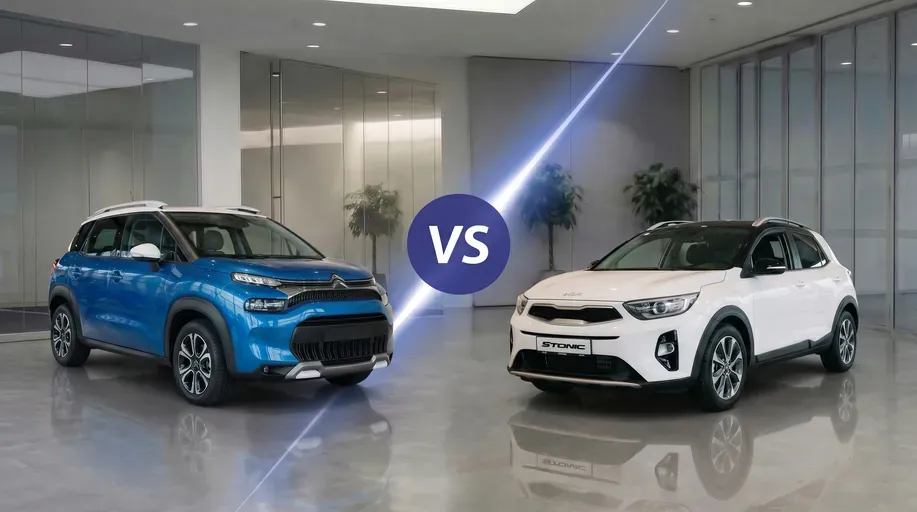
Detailed comparison of Citroën C3 Aircross vs. Kia Stonic. Discover the differences in spaciousness, equipment, and fuel consumption. Our verdict will make it easier to choose the right used SUV.
Apr 23, 2026