Articles

Car battle

Kia Stonic vs. Škoda Kamiq: Complete comparison 2026

Kia Stonic vs. Škoda Kamiq: Which used city SUV is better? Discover the differences in equipment, fuel consumption, and space. Read our detailed verdict.

April 28, 2026

VS
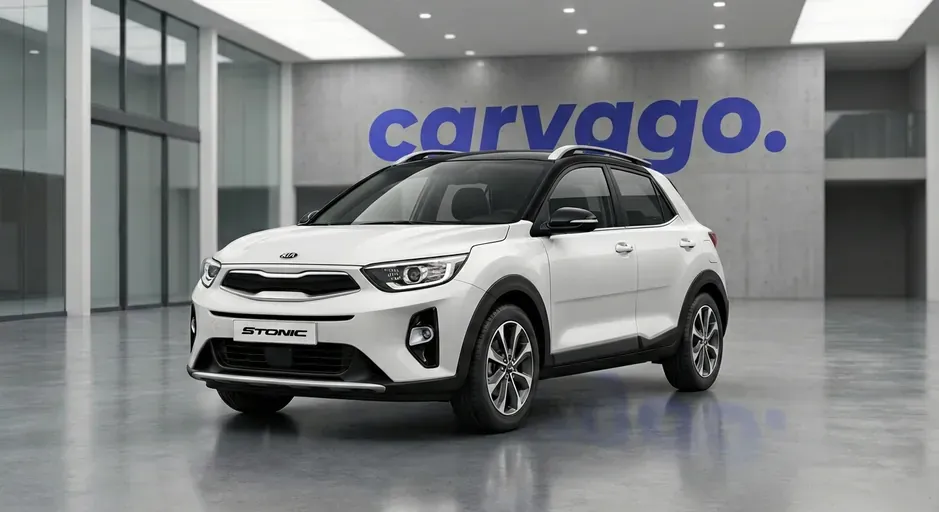
Kia Stonic

Kia Stonic

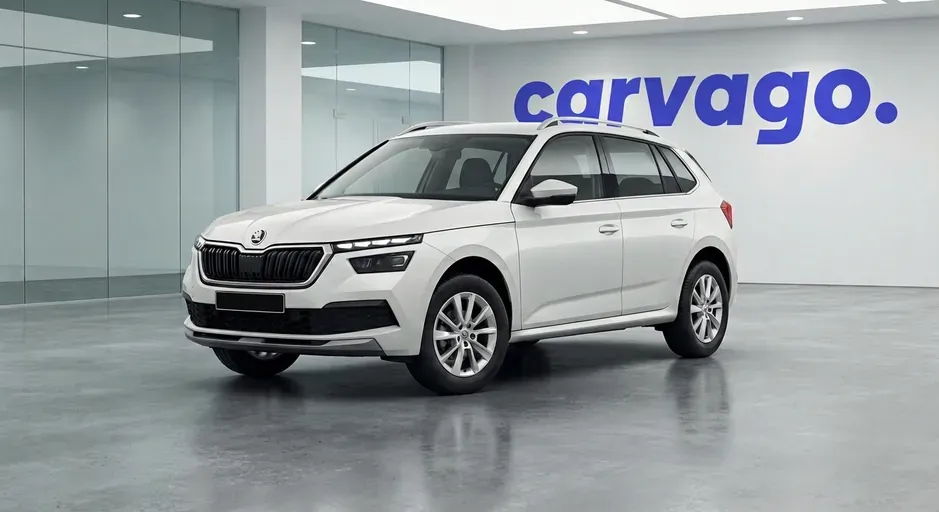
Škoda Kamiq

Škoda Kamiq

Introduction

The South Korean Kia Stonic, also sold in some global markets under the Kia KX1 name, is an agile subcompact crossover whose name was created by combining the English words "speedy" and "tonic," and which relies primarily on dynamic design and nimble driving characteristics in city traffic. Its challenger is the Czech Škoda Kamiq, whose name comes from the Inuit language and symbolizes something that "fits perfectly" its owner, with this model standing out in its class for its above-standard interior space thanks to the clever use of the group's MQB A0 platform. The following comparison will reveal in detail how these two exceptionally popular representatives of the city SUV category, which currently represent a very rational and desirable choice on the market for roughly four-year-old used cars, stand in a direct battle for your favor.

Comparison of External Dimensions

When you place the Kia Stonic and the Škoda Kamiq side by side, you immediately notice a different approach to proportions in the small city crossover segment. While the South Korean representative feels more like a slightly raised and dynamically styled hatchback, the model from Mladá Boleslav plays the note of robustness and maximization of interior space. Although both cars target a similar group of customers, their physical dimensions predestine them for slightly different types of use.

Looking closely at the data for vehicles most commonly appearing on the used car market today (roughly four-year-old models from 2020–2022), the difference in size is quite clear. The Škoda Kamiq surpasses the Kia Stonic in all directions:

  • Length: The Kamiq is a full 101 mm longer, which brings a significant advantage in both overall roominess and luggage compartment volume.
  • Wheelbase: The key parameter for longitudinal space in the cabin clearly favors the Škoda. The Kamiq offers a 71 mm longer wheelbase, which in practice translates to substantially more knee room for rear-seat passengers.
  • Width and height: The Kamiq is 33 mm wider and 22 mm taller. These extra centimeters help create a more airy feel in the interior, with more shoulder and head room.

In terms of daily life, these differences have clear practical impacts. If you are looking for a nimble and agile car primarily for dense city traffic, where you appreciate every saved centimeter for easy parking, the more compact Kia Stonic will be the more practical choice for you. Conversely, the Škoda Kamiq, thanks to its larger dimensions and longer wheelbase, brings more mature driving characteristics, better directional stability on the highway, and an interior space that allows it to reliably fulfill the role of a smaller family car even on longer trips.

ParameterKia Stonic SUVŠkoda Kamiq SUV
Width (mm)17601793
Length (mm)41404241
Height (mm)15051527
Wheelbase (mm)25802651

Trunk Volume

When choosing a used city crossover roughly four years old (2020–2023 generation), luggage compartment volume is often a decisive factor, especially if the vehicle is to serve as the main family car. Although both compared cars – Kia Stonic (YB generation after facelift) and Škoda Kamiq (1st generation) – fall into the same small SUV segment, they approach the issue of transport capacity differently. For everyday family usability and overall practicality, not only the raw volume but also the shape of the trunk and the interior variability after folding down the rear backrests are extremely important.

In terms of specific numbers, the clear winner is the Škoda Kamiq, which in its standard configuration offers a generous 400 liters, while the Kia Stonic has a slightly more modest 352 liters. If you fold down the rear seats, the difference deepens further: the Kamiq can hold up to 1,395 liters, whereas the Stonic offers a maximum of 1,155 liters. In practice, these extra liters mean a noticeable difference – the Kamiq provides space for several extra suitcases, making it a car easily sufficient for weekend shopping and longer vacations. The Stonic, on the other hand, scores more with childless couples or as a second family car, where its trunk reliably covers common daily needs and occasional trips.

When choosing a specific used car, it is also necessary to consider versions with alternative powertrains, which significantly limit the trunk volume. If you go for the Škoda Kamiq in the G-TEC version burning compressed natural gas (CNG), expect the gas tanks under the floor to reduce the basic volume to a below-average 278 liters. Kia Stonic in its mild-hybrid (MHEV) variants technically maintains the basic 352 liters on paper, but the 48V battery is located in the recess under the trunk floor. As a result, you lose practical hidden storage space, and instead of a spare wheel, you have to settle for just a tire repair kit in these versions. Overall, this dimension means a clear division of roles when choosing between the two cars: if you are looking for maximum transport utility on a small footprint, the Kamiq is the more rational choice.

ParameterKia Stonic SUVŠkoda Kamiq SUV
Base volume (liters)352400
Max volume with seats folded down (liters)1,1551,395

📦 Trunk Battle: Who Can Carry More?

Thanks to its more voluminous trunk, the Škoda Kamiq offers incomparably higher family usability, while the Kia Stonic scores more with drivers for whom standard transport capacity for everyday city trips is sufficient.

Discover the true condition of the car thanks to an independent inspection

Order CarAudit™

Trailer Weights

When choosing a compact city SUV, towing capacity can also play an important role, especially if you plan on occasionally transporting building materials, garden waste, or towing a small caravan. In this regard, the capabilities of these two popular used cars differ significantly, with the Škoda Kamiq offering much wider utility in terms of practicality and towing power.

Škoda Kamiq can handle more
The Czech model features a more robust construction for towing overall. The standard maximum weight for an unbraked trailer ranges from 610 to 630 kg. For a braked trailer, the capacity starts at 1000 to 1200 kg (applicable to most 1.0 TSI three-cylinder engines), while the more powerful 1.5 TSI four-cylinder and the 1.6 TDI diesel version from the early years of production can tow up to 1250 kg. An important exception for buyers of used cars from 2020 and 2021 is the eco-friendly 1.0 TGI G-TEC (CNG) variant, which, due to the installation of gas tanks, is not factory-homologated for towing a trailer at all.

Limits of the Kia Stonic
The Kia Stonic is significantly more modest when it comes to towing capacity. The fixed limit for an unbraked trailer is just 450 kg for all its versions. The weight of a braked trailer may then be a maximum of 900 to 1110 kg. For models from 2020–2022, where the popular 1.0 T-GDI 48V mild-hybrid technology takes center stage, the maximum permitted weight is reduced to 900 kg. The naturally aspirated 1.2 version from the same period can tow 910 kg. The peak 1110 kg towing capacity was primarily offered by older pure petrol engines (without hybrid assistance) and the reliable 1.6 CRDi diesel, which, however, disappeared from the range at the end of 2020.

What does this mean in practice?
The differences in the vehicle registration documents have clear real-world impacts on daily use. The Kia Stonic will easily provide space for a few extra suitcases on a very light small trailer, which is sufficient for a weekend trip to a DIY store or hauling away leaves. Conversely, the Škoda Kamiq is much more versatile. Its higher limits provide a safe margin even for a heavier trailer loaded with wood, and its capacity is fully sufficient even for a longer holiday with a lighter caravan or camper trailer.

Therefore, if you know you will be using the tow bar more frequently and for heavier loads, the Škoda Kamiq is clearly the more rational and capable choice in this category of used crossovers.
Model and engineBraked trailer weight (kg)Unbraked trailer weight (kg)
Škoda Kamiq 1.0 TSI (70–85 kW)1000–1200610–630
Škoda Kamiq 1.5 TSI ACT (110 kW)1250610–630
Škoda Kamiq 1.6 TDI SCR (85 kW)1250610–630
Kia Stonic 1.0 T-GDI (74–88 kW)900–1110450
Kia Stonic 1.0 T-GDI 48V (74–88 kW)710–900450
Kia Stonic 1.2 (58–62 kW)510–910450
Kia Stonic 1.4 / 1.6 CRDi1000–1110450

Overview of Most Common Motorizations

The engine range for the Kia Stonic and Škoda Kamiq shows two slightly different approaches to the small urban crossover segment, which is key to choosing the right one for your driving needs. While Kia bets on a straightforward solution with a choice of classic, highly reliable naturally aspirated four-cylinder engines for shorter routes and modern turbocharged three-cylinders for everyday driving, Škoda offers a generally more powerful range of units, topped by a strong four-cylinder with clever cylinder deactivation. A crucial fact for those interested in roughly four-year-old used cars (vehicles manufactured around 2021) is that diesel units definitely disappeared from the range of both models at this time. The 1.6 CRDi diesels in the Kia and 1.6 TDI in the Škoda were only sold until 2020. For drivers with high annual mileage, the Kamiq represents an interesting factory alternative with compressed natural gas (CNG) propulsion, while for the Stonic, the most efficient choice is the use of newer mild-hybrid technologies.

Kia Stonic: A bet on reliability and light electrification

The base engine range of the Kia Stonic has long consisted of mechanically simple naturally aspirated four-cylinder engines. Among four-year-old cars, you will most often come across the 1.2 DPI (62 kW) unit, which is exceptionally reliable and ideal for the city, but quickly runs out of steam on the highway due to the lack of a turbo. Older models produced until 2020 could also have a slightly more powerful naturally aspirated 1.4-liter (74 kW) under the hood. The core of the range and the most recommended choice for newer used cars is the turbocharged 1.0 T-GDI three-cylinder, available in 74 kW and 88 kW versions. The more powerful variant in post-facelift years (from 2020) is usually combined with a 48V mild-hybrid system (MHEV), which improves dynamics during take-off and can be paired with either a manual or a seven-speed dual-clutch DCT transmission. The 1.6 CRDi (81 kW) diesel engine was discontinued in 2020 due to low interest, so it no longer appears in the range for younger used cars.

Engine TypeFuelPower (kW)Torque (Nm)Transmission
1.2 DPIPetrol621185MT
1.4 MPIPetrol741336MT / 6AT
1.0 T-GDI 100Petrol741726MT / 7DCT
1.0 T-GDI 120Petrol881726MT / 7DCT
1.0 T-GDI 120 48VPetrol MHEV882006MT / 7DCT
1.6 CRDiDiesel812606MT / 7DCT

Škoda Kamiq: A wider range and a powerful four-cylinder

The Škoda Kamiq benefits from the modern engine range of the Volkswagen Group, which will satisfy even more dynamically minded drivers. The pillar of sales is the proven 1.0 TSI turbocharged three-cylinder, which was offered in 70 kW, 81 kW, and, in the latest cars, 85 kW tunes over various production years. For those requiring above-average dynamics for a small SUV (for example, when frequently traveling fully loaded), the top-of-the-line 1.5 TSI ACT four-cylinder with 110 kW is the clear choice. This sophisticated engine features the ACT system, which automatically shuts down two cylinders during steady driving and low load, significantly saving fuel. A very specific but exceptionally economical alternative is the 1.0 TGI G-TEC (66 kW) version burning CNG. Like Kia, Škoda also removed the diesel engine from the range, so the 1.6 TDI SCR (85 kW) four-cylinder can only be found in cars from the first two years of production (2019-2020).

Engine TypeFuelPower (kW)Torque (Nm)Transmission
1.0 TGI G-TECCNG/Petrol661456MT
1.0 TSIPetrol701755MT
1.0 TSIPetrol81/852006MT / 7DSG
1.5 TSI ACTPetrol1102506MT / 7DSG
1.6 TDI SCRDiesel852506MT / 7DSG

Korean durability vs. Czech dynamics 🏁

While the Kia Stonic makes the most sense with highly reliable naturally aspirated engines for calm city driving, the Škoda Kamiq is a much more versatile companion thanks to its diverse range of turbocharged units and the powerful 1.5 TSI engine.

Choosing the right engine is absolutely crucial for your long-term satisfaction with the car, reliability, and keeping operating costs in check. Our recommendations are based on the real-world experience of mechanics, owner feedback, and actual fuel consumption of roughly four-year-old used cars. While the Kia Stonic relies on relatively simple and time-tested technology, the Škoda Kamiq benefits from exceptionally efficient Group engines. An interesting market fact is that while you can find diesel 1.6 TDI versions or 1.0 TGI natural gas variants in the used Kamiq market (though both engines were discontinued in 2020 and 2022 due to emission standards and won't be found in newer model years), the Stonic has always focused exclusively on petrol engines. For both models, modern turbocharged one-liter three-cylinders emerge as the most rational and safest choice on the used car market from around 2022.

For the Kia Stonic, we recommend: 1.0 T-GDI (74 kW / 100 hp)

  • Why it's the best choice: In a diverse range of engines (from the weaker naturally aspirated 1.2 and 1.4 to the more powerful 120 hp version), the 100 hp 1.0 T-GDI represents the perfect middle ground. For roughly four-year-old used cars (produced 2020–2022), the crucial fact is that, unlike the more powerful 120 hp variant, this weaker version was not widely equipped with the more complex 48V mild-hybrid system (MHEV). Mechanically, the car is much simpler, does not require potentially expensive hybrid battery replacement in the long run, and promises significantly cheaper maintenance. While the naturally aspirated 1.2 engine scores points for mechanical bulletproofness, it lacks the necessary dynamics.
  • Technical advantages: The engine has a very pleasant torque curve, available even at low RPMs. Thanks to the light body, the car feels unexpectedly lively and agile. Real-world fuel consumption is very favorable, typically around 6 liters per 100 kilometers, and can be a liter lower on smooth country roads.
  • Known risks and weaknesses: Since this is a direct-injection engine, there is an increased risk of carbon buildup on the intake valves – especially if you drive the car exclusively on short "cold" city trips. Fortunately, prevention is very easy: use high-quality fuel with cleaning additives, occasionally take the engine for a run outside the city at higher RPMs, and strictly change the oil at most every 15,000 km or once a year.
  • Who it's best for: This version is ideal for versatile drivers who commute to work or go shopping during the week but enjoy going on longer trips on weekends. The car perfectly suits anyone looking for brisker dynamics but who fears high service costs for complex electrified technology.

For the Škoda Kamiq, we recommend: 1.0 TSI (81 kW / 110 hp)

  • Why it's the best choice: Although a one-liter displacement might raise doubts for such a robust-looking car, don't be fooled – the 81 kW (110 hp) version of the 1.0 TSI from 2020 to 2023 is by far the most versatile engine you can choose. It is surprisingly mature, exemplarily refined, and compared to the more expensive and complex four-cylinder 1.5 TSI ACT (which uses cylinder deactivation technology), it makes much more sense for everyday driving in terms of future costs. The older 1.6 TDI diesel is an entirely unnecessary and potentially costly risk for the typical suburban use of this crossover.
  • Technical advantages: The Group's one-liter three-cylinder stands out with above-standard sound insulation, so you often don't even know it's there in the cabin. However, its absolute greatest asset is its fantastic fuel consumption. If you drive even slightly proactively, you can bring real consumption down below 5.5 liters per 100 km. The dynamics are more than adequate for normal travel, and the engine works well with both the precise manual and the DSG dual-clutch automatic.
  • Known risks and weaknesses: The mechanics of the unit itself are extremely robust after years of development, and the engine does not suffer from any fatal design flaws. However, the main enemy is the so-called "LongLife" service interval (the manufacturer set oil changes at up to 30,000 km or 2 years for new cars). For a used car, shorten this interval immediately to a maximum of 15,000 km or 1 year. This will prevent unnecessary and premature wear of the turbocharger and extend the overall life of key components.
  • Who it's best for: It is a great and rational choice for families with small children, for daily commuting, and for drivers who appreciate very low operating costs and smooth operation. It's not a highway interceptor for long hauls across Europe, but for the vast majority of real-world everyday situations, this engine will not disappoint you in terms of performance or consumption.

Real Fuel Consumption

Official fuel consumption figures provided by manufacturers often differ significantly from reality in practice. For an objective comparison of real fuel costs, we have therefore used data from users themselves from the independent portal Spritmonitor.de. We focused primarily on roughly four-year-old used cars from the period 2020 to 2022, which currently make the most sense on the used car market.

Model and engineAverage consumption (l/100 km)
Kia Stonic 1.6 CRDi4,1
Škoda Kamiq 1.6 TDI SCR4,2
Škoda Kamiq 1.0 TSI5,4
Škoda Kamiq 1.5 TSI ACT5,4
Kia Stonic 1.0 T-GDI 120 MHEV5,6
Kia Stonic 1.0 T-GDI 1005,7
Kia Stonic 1.26,1

Looking at the real-world data in detail, it is clear that diesel engines are the most fuel-efficient choice. Both the 1.6 CRDi in the Kia and the 1.6 TDI in the Škoda easily stay just above the 4 litres per 100 kilometres mark. However, in the small crossover category, diesels are more of a niche on the used car market. Much more interesting is the comparison of petrol units, where a big surprise comes with the Škoda Kamiq: the more powerful 1.5 TSI four-cylinder actually achieves the same average consumption in practice as the smaller 1.0 TSI three-cylinder. This is mainly due to the cylinder deactivation technology (ACT), which effectively saves fuel during steady driving. Conversely, in the Kia Stonic, it turns out that the base 1.2 naturally aspirated engine needs to be revved more by the driver to achieve the necessary dynamics, making it the thirstiest engine in the comparison. Even Kia's turbocharged one-litre T-GDI units with mild-hybrid technology (MHEV) cannot quite match their Czech rival in efficiency, consuming on average a few tenths of a litre more fuel.

For the average motorist looking for a car for daily city driving and shorter suburban routes, the three-cylinder petrol engines (1.0 TSI and 1.0 T-GDI) represent a logical and economically sensible choice. However, if you spend more time on motorways or often drive with a full car, it makes a lot of sense to go for the 1.5 TSI engine in the Škoda Kamiq. You get a significantly better power reserve without having to worry about higher petrol bills. Diesel variants remain attractive only for a specific group of drivers with high annual mileage on long routes.

In conclusion, although the Škoda Kamiq emerges from the comparison of key petrol engines as a slightly more fuel-efficient car, differences in the order of tenths of a litre per 100 kilometres will not make a significant dent in a typical family budget. Fuel consumption itself will therefore most likely not be the main and decisive factor for preferring one model over the other.

Price Range and Used Car Offerings

When looking at the market for used cars around 4 years old (primarily 2021–2022 models), a difference in price levels is immediately apparent. While the Kia Stonic targets customers looking for the most affordable urban crossover, the Škoda Kamiq maintains a significantly higher value thanks to its local popularity and overall slightly greater interior spaciousness.

Estimated used car market prices (2021–2022 models)

ModelStarting price (from)Typical price for a well-maintained unitTop trims and powerful engines
Kia Stonic€9,000€12,000 – €14,000approx. €16,000
Škoda Kamiq€14,000€16,000 – €18,000€21,000 and more

Kia Stonic: Affordable entry into the world of SUVs

The Kia Stonic represents a very tempting choice on the used market for buyers with a tighter budget.

  • Base models: The cheapest units from the start of production or older models with a basic naturally aspirated engine can see prices drop to around €9,000.
  • The sweet spot: Reasonably equipped 2021 to 2022 models with the popular turbocharged 1.0 T-GDI three-cylinder engine and lower mileage typically range between €12,000 and €14,000.
  • Advantage for the buyer: Given the lower purchase price of a new car, the Stonic is very attractively priced on the used market. A huge draw for buying a roughly 4-year-old used car is also the fact that a large portion of these vehicles still benefit from Kia's standard seven-year factory warranty.

Škoda Kamiq: Higher price, but excellent value retention

As a representative of the domestic brand, the Škoda Kamiq traditionally holds its value much better on the Czech market, which is reflected in the higher amounts when buying second-hand.

  • Base models: Even the most affordable roughly four-year-old units with the 1.0 TSI engine and more modest equipment (e.g., Ambition) are most often listed from €14,000 upwards.
  • Most sought-after variants: Vehicles in the popular Style trim or those equipped with a DSG automatic transmission commonly range from €16,000 to €18,000.
  • Premium versions: If you are aiming for the more powerful 1.5 TSI four-cylinder (110 kW) or the visually very attractive Monte Carlo sports variant, prepare a budget that can easily exceed €21,000.

When choosing between these two models, your financial options are the deciding factor. For the same amount of money, the Kia Stonic will generally offer you a newer vehicle or lower mileage, while with the Škoda Kamiq, you pay extra for more space and generally easier future resale.

Price Verdict: Stonic saves your wallet 💰

While the Kia Stonic represents an excellent choice for buyers with a tighter budget due to its immediate affordability, the Škoda Kamiq offers an overall more spacious vehicle with strong value retention, for which you will, however, pay quite a bit more on the used market.

Safety and Euro NCAP Rating

Both models, the Kia Stonic and the Škoda Kamiq, boast a maximum five-star rating in independent Euro NCAP safety tests. However, when comparing these results, it is crucial to take into account the context and the exact year of testing. Euro NCAP's methodology and requirements are constantly evolving and becoming stricter, meaning that percentage scores and ratings from different years cannot be directly compared. Newer tests place much greater emphasis on active safety, such as advanced emergency braking systems with cyclist detection or vehicle behavior in intersection collision simulations.

Euro NCAP Test Results

Kia Stonic (Year of testing: 2017)
The Kia Stonic underwent a series of crash tests in 2017. The car achieved the full five stars only in the version equipped with the optional safety package (Advanced Driving Assistance Pack). It is very important to note that the standard version without this package received only a three-star rating under the rules at the time. Furthermore, given the age of the test, the certification under today's standards has already expired. In the five-star version with optional equipment, the Stonic achieved 93% for adult occupant protection and 84% for child occupant protection. It recorded a weaker result in the protection of vulnerable road users (71%) and especially in safety assistance systems (59%).

Škoda Kamiq (Year of testing: 2019)
The Škoda Kamiq underwent crash tests in 2019. This model earned the full five stars right in its standard equipment, according to the newer and stricter testing methodology. The Kamiq excelled primarily in adult occupant protection, where it scored an excellent 96%. It also recorded very good results for child occupant protection (85%) and protection of vulnerable road users (80%). Thanks to more modern safety assistants, such as the standard Lane Assist and advanced emergency braking (Front Assist), it achieved 76% in the safety assist category.

Detailed Comparison of Parameters

ParameterKia StonicŠkoda Kamiq
Year of testing20172019
Adult occupant protection93%96%
Child occupant protection84%85%
Protection of vulnerable road users71%80%
Safety assistance systems59%76%

Note: Values for the Kia Stonic model in the table correspond to the version with the optional safety package. The standard version without the package achieved a significantly lower score and an overall rating of 3 stars.

Final Safety Assessment

In an overall assessment, the Škoda Kamiq offers a more modern and comprehensive level of protection. Its five-star rating is standard for all trim levels and is based on the more demanding 2019 testing protocols. The Kamiq scores significantly better in the area of pedestrian and cyclist protection and features more advanced active assistants that help actively prevent accidents. With a used Kia Stonic, it is necessary to proceed much more cautiously and verify whether the specific unit on the used car market even has the optional safety features package. If it does not, its level of safety lags noticeably behind today's standards.

The safer choice is Škoda 🛡️

The Škoda Kamiq brings a more modern approach to safety and a full five stars even in the base trim, while for the Kia Stonic, used car buyers must carefully check for the presence of optional assistants.

Comparison of Interesting Equipment Features

In addition to standard equipment, each of the models offers several unique features that go beyond the basic foundation and demonstrate the specific approach of both carmakers to added value.

Kia Stonic: Mild-hybrid innovation and diverse personalization

  • Powertrain and innovative gearbox: Following the facelift (around 2020), the Stonic introduced EcoDynamics+ mild-hybrid technology complemented by the unique iMT (Intelligent Manual Transmission). It uses an electronically controlled "clutch-by-wire" system, allowing the car to coast with the engine off even when a gear is engaged, significantly reducing fuel consumption in real-world driving.
  • Connectivity and infotainment: The UVO Connect system (with an 8-inch display) ensures access to online services, including real-time traffic information and weather. A very practical feature is the ability to connect two mobile devices via Bluetooth simultaneously – one for calls and the other, for example, for music streaming.
  • Personalization and design: The Stonic stands out with its wide range of individualization options. Used car buyers can often find attractive two-tone body paint with a contrasting roof and specific color packages that liven up the otherwise functional interior.
  • GT-Line sports variant: For drivers looking for visual aggression, the GT-Line trim is available. It distinguishes the model with more aggressive bumpers featuring faux air intakes, a flat-bottomed sports steering wheel, and a dashboard with carbon fiber-style trim.
  • Assistance systems: Even in this class, Kia offers advanced ADAS features. The Lane Following Assist (LFA) system can center the car very precisely, and on versions with the DCT dual-clutch automatic transmission, smooth adaptive cruise control is also available.

Škoda Kamiq: Simply Clever solutions and spatial comfort

  • Simply Clever details: The Kamiq excels in everyday practicality thanks to the smart solutions that are iconic for the brand. Among the most useful are the umbrella hidden in the driver's door, the ice scraper integrated into the fuel filler cap (with a tire tread depth gauge), the rubber funnel on the windshield washer fluid reservoir, or the retractable plastic door edge protection that prevents paint damage in narrow parking spaces.
  • Space and modularity: Despite its compact exterior dimensions, the Kamiq scores with one of the largest rear passenger legroom spaces in its class. A great feature is the ability to fold down the front passenger seat backrest (depending on equipment), allowing for the transport of items nearly 2.5 meters long.
  • Chassis and driving dynamics: For more demanding drivers, the Kamiq offers the optional Sport Chassis Control system. This includes a 10 mm lowered chassis with electronically adjustable dampers, offering comfort and sport modes to adapt to the current mood or road conditions.
  • Digitalization and electronics: In higher-trim used cars, you will often find the 10.25-inch Virtual Cockpit, which replaces traditional dials and allows for detailed display customization (including navigation maps). The 9.2-inch Amundsen infotainment system then supports wireless SmartLink and online map updates.
  • Monte Carlo trim level: This iconic top-tier trim gives the car an exceptionally stylish character. You can recognize it by the black-painted body accessories, the standard panoramic glass roof, and, above all, the excellent sports seats with integrated headrests that hold the body perfectly in corners.

Key Advantages and Disadvantages

Kia Stonic

Pros

Excellent price-to-utility ratio on the used car market

Remaining part of the seven-year factory warranty (transferable to the next owner)

Agile driving characteristics resembling a classic hatchback rather than an SUV

Excellent control ergonomics thanks to the retention of physical climate control buttons

Attractive and playful design with frequent occurrence of two-tone paintwork

Cons

Significantly smaller luggage compartment (only 352 liters)

More cramped space for rear-seat passengers

Stiffer suspension tuning, which absorbs larger bumps less effectively

Higher aerodynamic noise and tire noise at highway speeds

The Kia Stonic represents an ideal choice for individuals or couples looking for an affordable, agile, and reliable city car with an attractive appearance. Thanks to the long factory warranty, purchasing a roughly four-year-old used model makes great sense in terms of peace of mind and expected low maintenance costs.

Škoda Kamiq

Pros

Well above-average legroom for rear-seat passengers

High suspension comfort and overall driving refinement

Larger and very well-shaped luggage compartment with a basic volume of 400 liters

Practical "Simply Clever" solutions (e.g., door edge protection, smart compartments)

Excellent range of proven and efficient engines (especially 1.0 TSI and 1.5 TSI)

Cons

Significantly higher purchase price on the used car market

More conservative and less emotive exterior and interior design

Necessity to control ventilation intensity and other functions via the touchscreen

More frequent complaints about slower responses and occasional freezing of the infotainment system

The Škoda Kamiq serves perfectly as a full-fledged family car for those who require maximum practicality, space, and driving comfort in a relatively compact package. Its higher price is easily justified by its mature driving behavior and excellent interior layout, which comfortably handles even longer highway journeys.

Common Problems and Owner Complaints

Based on long-term user experience, service statistics, and insights from the CarAudit service, which involves a detailed independent inspection of a car's technical condition, we have compiled an overview of the most common problems you should watch out for in roughly four-year-old used cars.

Kia Stonic

With the Kia Stonic model (especially cars from 2020–2022), owners most often face problems resulting from its predominantly urban use and occasional ailments of turbocharged engines.

  • Engine and Drivetrain (1.0 T-GDi): During long-term city driving with frequent cold starts, excessive carbon buildup occurs around the turbocharger and intake valves. This problem manifests as vibrations at low RPMs, poor throttle response, and higher fuel consumption. Newer models may also experience issues with incomplete gasoline particulate filter (GPF) regeneration. The solution is to regularly take the car for a run on the highway and use fuel with additives.
  • Transmission (7DCT): The seven-speed dual-clutch transmission with dry clutches can jerk unpleasantly or hesitate to engage gears during slow crawling in traffic jams. In city traffic, there is also a risk of premature wear of the clutch lining. Control software updates can slightly improve the behavior; however, for exclusively city driving, a manual is a more reliable choice.
  • Electronics and Infotainment: Users quite often report the onboard system freezing, Bluetooth connection drops, or Start-Stop system error messages. The cause of these malfunctions is most often a weakening battery (especially in winter after short trips) or outdated software that requires a reflash at a service center.
  • Chassis and Interior: The stiffer suspension tuning means poorer absorption of bumps, which causes faster wear of the bushings on broken roads and occasional metallic knocking from the front axle. The interior is dominated by harder plastics, which are prone to scratching and may start to creak over time.

Kia Stonic: A reliable base with interior quirks

Overall, the Kia Stonic is a mechanically robust car, but in exclusively city operation, modern direct-injection engines suffer from carbon buildup and dual-clutch automatic transmissions from premature wear.

Škoda Kamiq

The Škoda Kamiq is considered a solidly built and mature crossover, but even it has not avoided typical teething troubles associated with the group's electronics in models approximately four years old.

  • Electronics and Infotainment (MIB3): Clearly the most widespread weakness of the Kamiq is software bugs in the MIB3 onboard entertainment system. Touchscreen freezing, spontaneous system restarts, or drops in wireless phone mirroring (Apple CarPlay / Android Auto) are common occurrences. Most of these issues are only resolved by the latest software updates. The SOS emergency call module (eCall) error message, which also requires a software intervention at a service center, can also be a frequent nuisance.
  • Engine and Cooling (1.0 TSI and 1.5 TSI): In the 1.5 TSI engines, older used cars occasionally exhibited jerking when cold (so-called "kangarooing"), which was partially eliminated by factory software updates. For both gasoline units, it is also good to monitor the coolant level – minor leaks and slow losses around the water pump can occur.
  • Transmission (DSG DQ200): As with the Stonic, the seven-speed dual-clutch automatic with dry clutches is not an ideal choice for all-day city crawling. It manifests through jerky and nervous starts and, at higher mileages, may require expensive replacement of the clutch kit or a faulty mechatronics module.
  • Body and Workmanship: Although the Kamiq has materials that feel more premium to the touch than the Stonic, some owners complain about increased aerodynamic noise around the A-pillars and windows at highway speeds (due to weaker seals) and occasional creaking of the door handles.

Škoda Kamiq: Quality materials, but troublesome software

The Kamiq pleases with high-quality workmanship and mature driving characteristics, but its purchase should always be accompanied by a careful check of the software update history, as the onboard system is the most frequent source of problems.

Tips for Buying a Used Car

When buying a used car, a thorough inspection is key. Here are some specific points to focus on for these two models. Both cars primarily target city and suburban traffic, which brings specific wear and tear, so a comprehensive car inspection is always worth it before buying.

When choosing a Kia Stonic:

  • Clutch condition in manual transmissions: Especially with the most popular 1.0 T-GDi engine, pay attention to the clutch engagement during the test drive. If the pedal engages too high or the engine slips during a sharp start on a hill, the clutch may soon require an expensive replacement. For newer mild-hybrid versions with the intelligent manual transmission (iMT), test whether the car coasts smoothly after releasing the accelerator.
  • Smoothness of the 7DCT dual-clutch automatic: If you are buying a version with an automatic, focus on its behavior in stop-and-go traffic and during parking. Jerking, hesitation when downshifting, or rough starts often point to worn clutches or the need for a mechatronics software update.
  • Timing chain and cold start: Listen to the engine (especially the 1.0 T-GDi) during the very first cold start. A significant metallic rattling of the timing chain that doesn't disappear after a few seconds can indicate a tired tensioner – a problem you definitely shouldn't overlook.
  • Interior plastic wear: The Kia Stonic uses mostly harder plastics in the cabin, which are quite prone to scratching. Check the dashboard, door panels, and handles. While this doesn't affect reliability, it says a lot about how carefully the previous owner treated the vehicle.
  • Infotainment and connectivity functionality: During the drive, try pairing your phone and testing Apple CarPlay or Android Auto. Some software versions may suffer from random connection drops or touchscreen freezing.

When choosing a Škoda Kamiq:

  • Stability of the onboard system (MIB3): The infotainment system is a relatively common source of problems in VW Group vehicles from these years. Check if the system boots up smoothly, doesn't freeze, and if warning lights for assistance systems or SOS/eCall error messages (often accompanied by a red LED on the ceiling light) don't pop up randomly. A software update usually helps, but in neglected cars, the error can become costly.
  • 1.5 TSI engine behavior when cold: With this highly sought-after four-cylinder, focus on the first few starts with a cold engine. Early production years suffered from the so-called "kangaroo effect," where the car jerked unpleasantly in first gear when pulling away. This was mostly resolved by a factory ECU software update, but it's worth testing.
  • DSG automatic transmission test: The DSG transmission with dry clutches (DQ200) requires a careful test. The best way to check it is to try crawling slowly up a slight incline without pressing the accelerator and watching the shift from first to second gear. There should be no metallic sounds, and the gear change must be smooth, without jolts or vibrations.
  • Knocking from the front axle: During the test drive, drive onto rougher pavement or carefully over speed bumps. Dull thuds from the front wheels usually signal worn stabilizer links or worn-out front arm bushings, which is the usual price for frequently tackling city curbs.
  • Maintenance history of the 1.0 TSI engine: This three-cylinder is very reliable but is prone to oil dilution with gasoline if it was driven exclusively on short city routes with a cold engine. Carefully check the service book – ideally, the previous owner should have changed the oil sooner than the prescribed 30,000 km or 2 years (optimally every year or after 15,000 km). A physical inspection of the used car by an expert will help determine such details with certainty.

FAQ: Most Frequently Asked Questions

Škoda Kamiq offers a significantly larger and more practical luggage space with a basic volume of 400 litres. Kia Stonic lags behind in this regard with a basic volume of 352 litres, which may be slightly limiting for family needs. After folding the rear seats, the space difference in favour of the Czech model deepens even further.

The Škoda Kamiq clearly dominates thanks to its longer wheelbase, which provides rear passengers with generous legroom and headroom. The Kia Stonic has a noticeably more cramped cabin, making the rear seats more suitable for children or shorter trips. For adult passengers, the Mladá Boleslav car is therefore a much more comfortable choice.

Neither of these models offers all-wheel drive; both cars are sold exclusively with front-wheel drive. This is because they are primarily city crossovers designed for paved roads, not SUVs for demanding terrain. If a 4x4 system is a necessity for you, you will have to look at cars in a higher class.

Kia attracts with its above-standard seven-year warranty (or up to 150,000 km), which for approximately four-year-old used cars means still valid and very valuable factory coverage. Škoda has a shorter standard warranty but benefits from an extremely dense network of authorised service centres and easy availability of parts on the market. For both models, their most common petrol engines (TSI for Škoda and T-GDI for Kia) are a safe and reliable choice for a used car.

The Škoda Kamiq boasts a more compliant and overall more comfortably tuned chassis, which filters out common potholes excellently. The Kia Stonic, on the other hand, has stiffer suspension, which ensures slightly sportier and more confident handling in corners, but can be more jittery over bumps. For a calm daily drive around town, the Kamiq is thus more pleasant and softer.

Conclusion: Which Model to Choose?

Our Verdict

Choosing between these two popular crossovers from the market of roughly four-year-old used cars ultimately depends on your space requirements and financial possibilities. If you are looking for a more full-fledged family car with generous rear space, a comfortable chassis, and maximum practicality, the Škoda Kamiq easily justifies its higher purchase price with a much more mature driving experience. Conversely, the more agile Kia Stonic represents an ideal choice for individuals or couples, offering them a more affordable entry into the world of SUVs, complemented by the huge advantage of a still-valid seven-year factory warranty. While the Czech representative thus overall wins in versatility and safety for longer trips, the South Korean one is a clear rational hero for everyday city traffic with minimal risks.

Find your ideal car

Sources: ADAC, garaz.cz, lidovky.cz, elektromobil.cz, autoservis.cz, portalridice.cz

This article was prepared using artificial intelligence tools. The section guarantor is Petr Dušek.

Related articles

Car battle

Mercedes-Benz GLB vs. Volkswagen T-Roc: Complete comparison 2026

Mercedes-Benz GLB vs Volkswagen T-Roc: A detailed comparison of engines, features, and interior space. Read our verdict and find out which SUV is the better choice.

Apr 30, 2026

Car battle

Ford Kuga vs. Kia Sportage: Complete comparison 2026

Detailed comparison: Ford Kuga vs. Kia Sportage. Discover the differences in engines, equipment, and reliability, and find out which used SUV is the best choice for you.

Apr 22, 2026

Car battle

Audi Q3 vs. Volkswagen T-Roc: Complete comparison 2026

Detailed comparison of Audi Q3 vs Volkswagen (VW) T-Roc. Discover the differences in space, equipment, and real-world reliability. Read our clear verdict before you buy.

Apr 23, 2026

We accept online card payments as well as wire transfers.

visa payment provider logovisa-electron payment provider logomastercard payment provider logomaestro payment provider logodiners-club payment provider logodiscover payment provider logo