Car battle
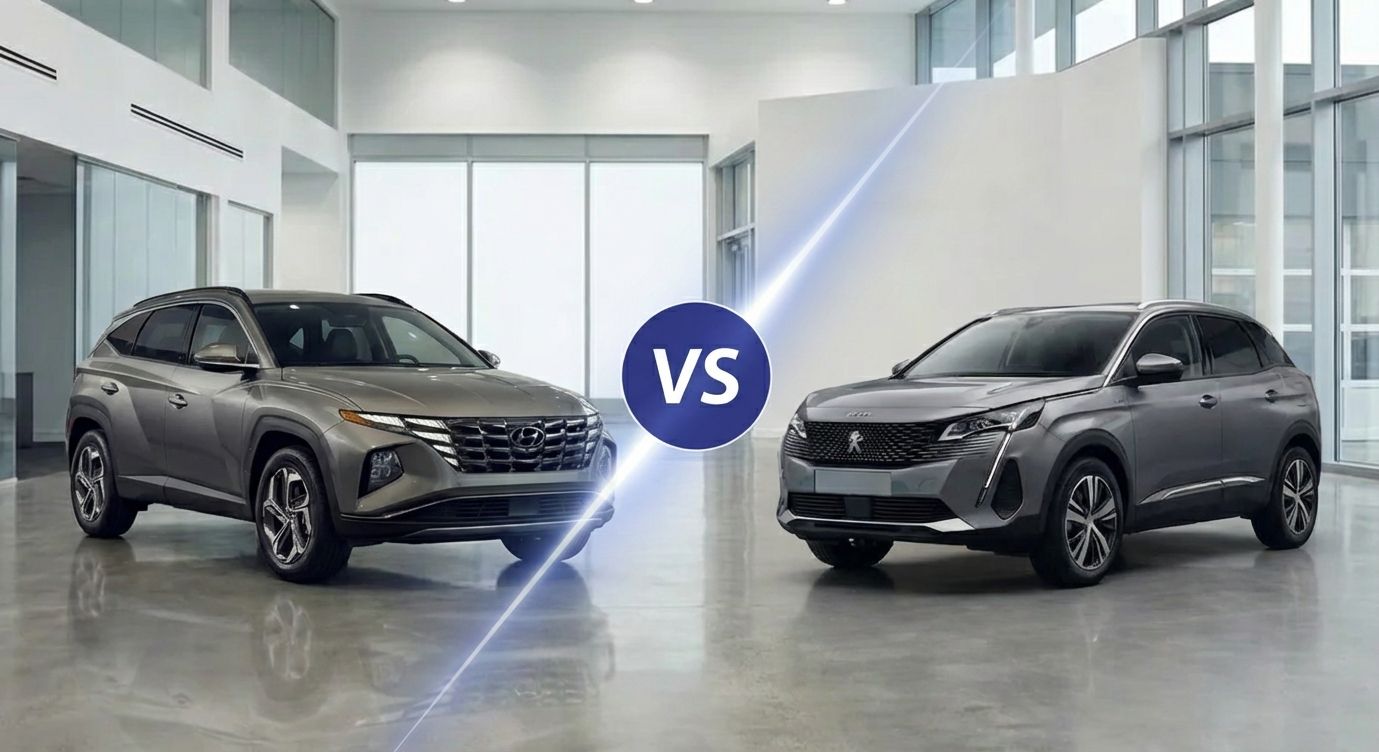
Hyundai Tucson vs. Peugeot 3008: A Complete 2025 Comparison
Hyundai Tucson vs Peugeot 3008: A detailed comparison of design, engines, and features. Find out which SUV is the better choice for you in our big test.
Apr 13, 2026
Articles
Car battle
Detailed comparison of Audi Q3 vs Volkswagen (VW) T-Roc. Discover the differences in space, equipment, and real-world reliability. Read our clear verdict before you buy.
April 23, 2026
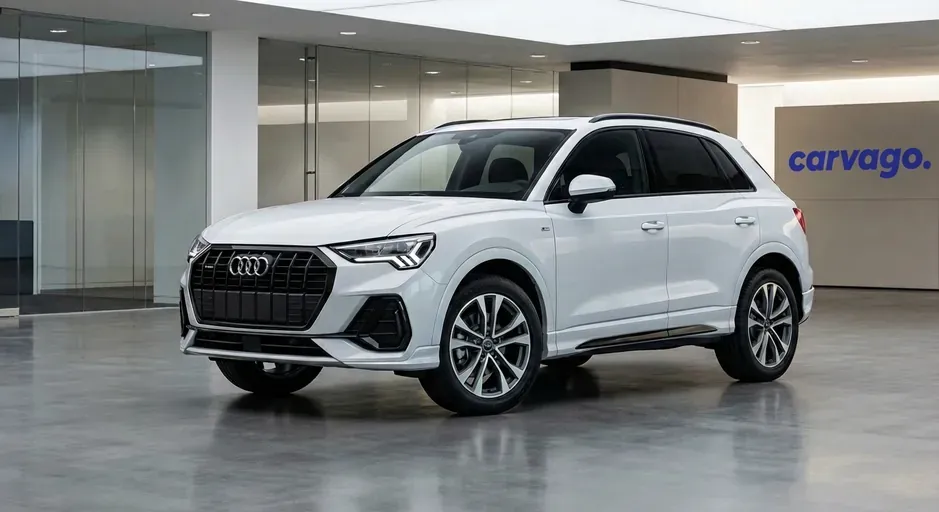
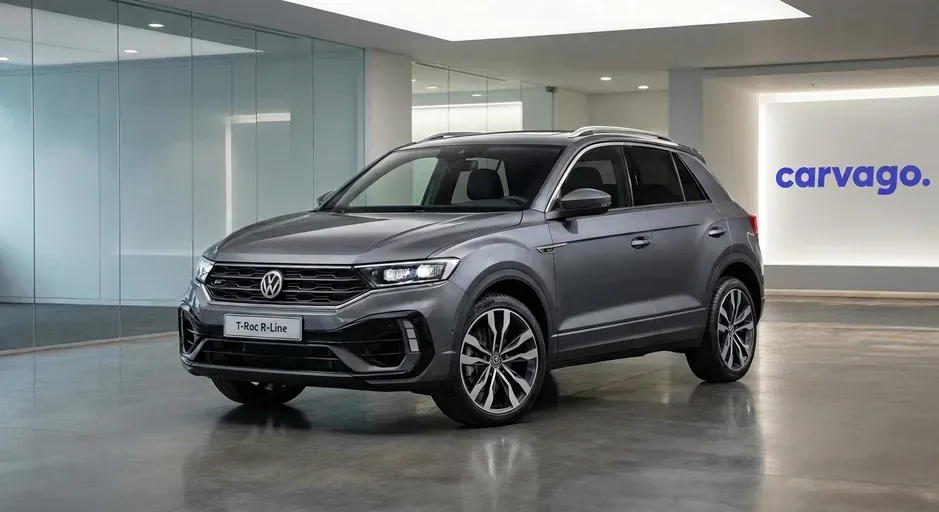
Audi Q3, a premium compact SUV with an emphasis on cutting-edge technology and luxurious craftsmanship, represents an attractive gateway to the world of high-end vehicles for many drivers. On the other hand, there is the Volkswagen T-Roc, a stylish and agile crossover that bets on bold design, everyday practicality, and proven group technology in a more affordable package. The following detailed comparison will help you find out whether it is worth investing in the prestigious representative with the four rings in its emblem, or if your requirements will be better met by the more rational, yet no less confident alternative from Wolfsburg.
When you place a roughly four-year-old Audi Q3 (F3 generation) and a Volkswagen T-Roc (1st generation) side by side, you immediately notice that although both cars use shared group technology, they target different customers in terms of size. The fundamental difference is the overall length. The Audi Q3 is, with its 4,484 mm, about 25 centimeters longer than the Volkswagen T-Roc, which measures around 4,236 mm. This striking difference places the Q3 more among full-fledged compact SUVs, while the T-Roc fulfills the role of an agile city crossover.
The difference is also significantly reflected in the wheelbase, which is a key parameter for interior cabin space. The Audi has a wheelbase of 2,680 mm, which is a full 90 mm more than in the case of the standard Volkswagen (2,590 mm). In practice, this means that the Audi offers noticeably more knee room for rear-seat passengers and an overall slightly airier interior. The T-Roc, on the other hand, counters with better characteristics for everyday parking, easier maneuvering in narrow city streets, and a feeling of greater agility.
While both models are very similar in height (staying just below the 1.6-meter mark), the width again plays in favor of the premium Audi. The Q3 is 30 mm wider, which adds valuable centimeters in the shoulder area for the occupants. An interesting feature of the used car market is the alternative body versions of both models. Audi offers the elegant Audi Q3 Sportback derivative with a sloping roof, which is paradoxically 16 mm longer than the standard version. Volkswagen, on the other hand, attracts with the unique Volkswagen T-Roc Cabriolet with a retractable roof, which received an extended wheelbase (2,630 mm) to accommodate the roof mechanism and maintain at least basic comfort for rear passengers.
| Parameter | Audi Q3 SUV | Volkswagen T-Roc SUV | Audi Q3 Sportback | Volkswagen T-Roc Cabriolet |
|---|---|---|---|---|
| Width (mm) | 1849 | 1819 | 1843 | 1811 |
| Length (mm) | 4484 | 4234 - 4241 | 4500 | 4268 - 4271 |
| Height (mm) | 1585 | 1559 - 1584 | 1567 | 1522 - 1527 |
| Wheelbase (mm) | 2680 | 2590 - 2594 | 2680 | 2630 |
If regular family use, rear-seat space, and comfort on long journeys are your priorities, the external dimensions and longer wheelbase of the Audi Q3 will suit you much better. The Volkswagen T-Roc, on the other hand, is a rational choice for individuals or couples looking for a car with a higher seating position and easy entry, but who prefer the most compact external dimensions possible due to frequent city driving.
When choosing a family or compact crossover, trunk capacity is often one of the deciding factors for daily practicality and overall usability. Audi Q3 and Volkswagen T-Roc, although both cars share a technical foundation within the VW Group and both fit perfectly into the used car market at around four years of age, approach interior space differently. The larger exterior dimensions and overall concept clearly favor the Audi Q3, which, with its proportions, can serve as the primary family car without compromise. The Volkswagen T-Roc, on the other hand, is more compact overall, which gives it an advantage in city agility and easier parking, but logically, this comes at the cost of slightly less cargo capacity.
The standard Audi Q3 (F3 generation) offers a very generous base trunk capacity of 530 liters for its class, which can be further increased to a fantastic 675 liters thanks to the standard sliding rear seats – all without needing to fold down the backrests. After folding them down completely, this space expands to an impressive 1,525 liters. The more stylish and sportier Audi Q3 Sportback surprisingly retains the base 530 liters (measured to the lower edge of the windows), but due to the elegantly sloping roofline, its maximum volume drops to 1,400 liters. The Volkswagen T-Roc (1st generation) counters with a very solid base of 445 liters, which increases to 1,290 liters after folding the rear bench. When choosing a used car, however, it is crucial to pay attention to specific versions – if you opt for a T-Roc with all-wheel drive (4Motion) or the top-tier R sports version, the installation of the rear differential reduces the trunk to 392 liters. A similar rule applies to the plug-in hybrid Audi Q3 TFSI e, where the batteries cut the base space to a more modest 380 liters. A completely unique chapter is the stylish Volkswagen T-Roc Cabriolet, whose complex soft-top mechanism limits the trunk capacity to a fixed 284 liters.
In practice, these differences in volume mean completely different usage possibilities. While the smaller trunk of the Volkswagen T-Roc is sufficient for weekend shopping or a longer vacation for two, the Audi Q3 provides precious extra space for several more suitcases, and the sliding bench makes it a master of variability, where you can easily fit even an unfolded baby stroller. The Q3 is therefore a much more versatile and logical choice for active families where ample space is an absolute necessity. The T-Roc, on the other hand, perfectly suits individuals or childless couples who prefer exterior compactness and distinctive style over the capabilities of a primary hauler.
| Parameter | Audi Q3 SUV | Volkswagen T-Roc SUV | Audi Q3 Sportback | Volkswagen T-Roc Cabriolet |
|---|---|---|---|---|
| Base volume (liters) | 530 | 445 | 530 | 284 |
| Maximum volume with seats folded (liters) | 1,525 | 1,290 | 1,400 | - |
While the Volkswagen T-Roc scores points in daily urban mobility and offers a more than solid trunk for two, the Audi Q3, thanks to its clever rear seat variability and significantly larger volume, wins hands down as a full-fledged and practical car for the whole family.
The ability to tow a trailer is often a decisive parameter for compact SUVs, as it combines everyday agility with significantly higher utility value. Whether you plan to tow a caravan, transport construction materials, or just need space for a few extra suitcases on a light trailer, the trailer weight directly defines how broad the practical use of your car will be. Looking at models roughly four years old (the popular F3 generation Audi Q3 and the 1st generation Volkswagen T-Roc), it quickly becomes apparent that each car is designed for a different load.
The Audi Q3 (F3 generation) benefits from its overall more robust and premium construction, which is reflected in its excellent towing capacity. Even standard base models with the 35 TFSI petrol engine can tow a braked trailer weighing an impressive 1800 kg. If you are looking for the absolute maximum, powerful diesel versions like the 40 TDI boast a maximum braked trailer weight of up to 2200 kg. A crucial exception that used car buyers should watch out for is the 45 TFSI e plug-in hybrid variant. Due to the additional weight of heavy traction batteries, this eco-friendly version has a significantly reduced capacity and can only tow 1400 kg.
The Volkswagen T-Roc (1st generation) is structurally smaller, lighter, and more oriented towards stylish urban driving, and therefore tows smaller loads. For the base three-cylinder 1.0 TSI, the maximum braked trailer weight is limited to just 1300 kg. The most popular used versions with the 1.5 TSI engine offer a standard capacity in the range of 1500 to 1600 kg. To achieve the absolute maximum for the T-Roc model, it is necessary to choose the top-of-the-range 2.0 TDI (140 kW) diesel engine, which can handle 1800 kg. This, incidentally, is the value where the Audi Q3's base engines only just begin.
In practice, these differences represent a fairly clear dividing line. The Volkswagen T-Roc has towing power that is perfectly sufficient for weekend shopping for bulkier equipment or moving garden waste on a lighter trailer. The Audi Q3, on the other hand, can serve as a full-fledged family workhorse that can easily handle even very heavy multi-berth caravans or horse trailers. It is a robust solution sufficient for weekend shopping as well as longer holidays across the whole of Europe.
Final Evaluation
If you are buying a used SUV mainly for regular commuting and only hitch up a light trailer a few times a year, the T-Roc will fully suit you thanks to its lower operating costs. However, if regular towing of heavier loads or caravans is a requirement, the limits stemming from its more massive construction make the Audi Q3 a much more versatile and safer choice.
Note: Values for unbraked trailers are not explicitly stated by the manufacturer in the database for these specifications; however, in this car class, they are standardly subject to the legislative maximum of 750 kg.
| Model and Engine | Braked Trailer Weight (kg) | Unbraked Trailer Weight (kg) |
|---|---|---|
| Audi Q3 35 TFSI (F3) | 1800 | Not specified |
| Audi Q3 40 TDI (F3) | 2200 | Not specified |
| Audi Q3 45 TFSI e (F3) | 1400 | Not specified |
| VW T-Roc 1.0 TSI (1st Gen) | 1300 | Not specified |
| VW T-Roc 1.5 TSI (1st Gen) | 1500-1600 | Not specified |
| VW T-Roc 2.0 TDI 140 kW (1st Gen) | 1800 | Not specified |
Although the basis of both cars comes from the same modular platform of the Volkswagen Group, their engine ranges are intentionally differentiated to suit different types of drivers. While the premium Audi Q3 relies on a stronger engine base and advanced technology, the Volkswagen T-Roc targets a wider audience and offers both highly efficient solutions for undemanding users and an exceptionally powerful sports variant. For four-year-old used cars, the standard choice for Audi is the 35 TFSI (110 kW) unit, while Volkswagen starts with the 1.0 TSI three-cylinder (81–85 kW). The most powerful civilian Q3 model is the 45 TFSI with 180 kW, but the T-Roc can offer a massive 221 kW in its top-of-the-line R version. Both cars then excel in fuel consumption if you choose the proven 1.5 TSI four-cylinder or the 2.0 TDI diesel engines.
The Audi Q3 in the F3 generation, which dominates the nearly-new used car market, relies on a very advanced and refined range of powertrains. You will find exclusively four-cylinder units with modern group architecture.
| Engine type | Fuel | Power (kW) | Torque (Nm) | Transmission |
|---|---|---|---|---|
| 35 TFSI (1.5) | Petrol | 110 | 250 | 6-speed manual / 7-speed S tronic |
| 40 TFSI (2.0) | Petrol | 140 | 320 | 7-speed S tronic |
| 45 TFSI (2.0) | Petrol | 180 | 370 | 7-speed S tronic |
| 45 TFSI e (PHEV) | Plug-in hybrid | 180 | 400 | 6-speed S tronic |
| 35 TDI (2.0) | Diesel | 110 | 340 | 6-speed manual / 7-speed S tronic |
| 40 TDI (2.0) | Diesel | 140 / 147 | 400 | 7-speed S tronic |
The T-Roc's range reflects its position as a universal lifestyle crossover and is significantly broader. In the market for used cars roughly 4 years old, you have a choice of many variants, from which both an economical city driver and a lover of fast driving will choose.
| Engine type | Fuel | Power (kW) | Torque (Nm) | Transmission |
|---|---|---|---|---|
| 1.0 TSI | Petrol | 81 - 85 | 200 | 6-speed manual |
| 1.5 TSI | Petrol | 110 | 250 | 6-speed manual / 7-speed DSG |
| 2.0 TSI | Petrol | 140 | 320 | 7-speed DSG |
| 2.0 TSI R | Petrol | 221 | 400 | 7-speed DSG |
| 1.6 TDI | Diesel | 85 | 250 | 6-speed manual |
| 2.0 TDI | Diesel | 85 / 110 | 300 / 360 | 6-speed manual / 7-speed DSG |
While the Audi Q3 relies on premium refinement and guarantees strong dynamics even in base versions, the Volkswagen T-Roc offers everything on the used car market from highly efficient one-litre engines for the undemanding to the high-performance R version.
Although both the Audi Q3 (F3 generation) and the Volkswagen T-Roc (1st generation) share the MQB platform architecture from the Volkswagen Group, their differing weights, sound insulation levels, and overall focus demand a completely different approach to choosing a power unit. An interesting fact is that while the lighter T-Roc, with its agile urban and suburban nature, is best suited to modern petrol engines with smart cylinder deactivation, the heavier and significantly more premium Audi Q3 is most often sought after on the used car market with powerful diesel engines and all-wheel drive. Choosing the right engine is absolutely crucial for long-term satisfaction. Our recommendations for cars roughly four years old are therefore based on a balance of performance, real-world fuel consumption, owner feedback, and documented mechanical reliability.
For a premium SUV like the Audi Q3 in its currently best-selling used F3 generation (from 2018–2024), the more powerful 2.0-litre diesel 40 TDI combined with all-wheel drive is the absolute ideal choice.
For the Volkswagen T-Roc (1st generation, ideally in post-facelift models from around 2021/2022), the 1.5 TSI four-cylinder petrol engine with cylinder deactivation technology is the clear winner on all fronts.
Official fuel consumption figures provided by manufacturers based on standardized test cycles are often overly optimistic and rarely achievable in real-world driving. For an objective evaluation and comparison of both models, it is therefore essential to rely on the experiences of drivers themselves. The following overview of real-world consumption is compiled based on user records from the popular crowdsourcing portal Spritmonitor.de. We focused exclusively on models and generations that currently dominate the market for four-year-old used cars, namely the first-generation Volkswagen T-Roc (including facelifted versions) and the Audi Q3 internally designated as F3.
| Model and Engine | Average Consumption (l/100 km) |
|---|---|
| Volkswagen T-Roc 1.0 TSI (81 kW) | 6.3 |
| Volkswagen T-Roc 1.5 TSI (110 kW) | 6.8 |
| Audi Q3 35 TFSI / 1.5 TSI (110 kW) | 7.2 |
| Volkswagen T-Roc 2.0 TSI 4Motion (140 kW) | 8.2 |
| Audi Q3 40 TFSI quattro / 2.0 TSI (140 kW) | 8.6 |
| Volkswagen T-Roc 2.0 TDI (110 kW) | 5.8 |
| Audi Q3 35 TDI / 2.0 TDI (110 kW) | 6.5 |
| Audi Q3 40 TDI quattro / 2.0 TDI (147 kW) | 7.0 |
The data clearly reveals interesting trends across the group's engine lineup. The most significant factor is the indisputable influence of curb weight and overall body design – although both models share the same technical foundation, the heavier, wider, and generally bulkier Audi Q3 consumes, on average, half a liter more fuel per hundred kilometers with a comparable engine. This is clearly demonstrated by the most popular 110 kW gasoline engine. The small turbocharged three-cylinder 1.0 TSI in the Volkswagen might come as a bit of a surprise. While it can be economical during defensive driving, as soon as it is pushed harder on the highway, its consumption comes dangerously close to the more refined and powerful 1.5-liter unit, causing its efficiency potential to vanish. As expected, diesel units maintain their lead in efficiency. While powerful two-liter gasoline engines with all-wheel drive confidently demand more than eight liters, modern diesels easily cover kilometers with much more favorable figures, and in the lighter T-Roc, they comfortably drop below the six-liter mark.
For typical used car buyers, this means a fairly logical division of priorities. If you are looking for a car primarily for daily commuting, city, or suburban driving, the 1.5 TSI gasoline variant (labeled as 35 TFSI in the Audi) represents the optimal balance between reliable dynamics and acceptable fuel bills. Conversely, for regular long-distance travelers and highway drivers, the economical 2.0 TDI diesel engine still makes clear sense in today's market, as it can significantly drive down total operating costs.
Ultimately, fuel bills can become an important factor that tips the scales in favor of one of these vehicles. If your priority is strict budget management and the lowest possible consumption, the compact Volkswagen T-Roc emerges as the winner. While the Audi Q3 offers the occupants noticeably more luxury, space, and overall premium robustness, it demands an inevitable toll at the gas station for this experience.
When looking at the used car market for vehicles around four years old (mostly 2021 and 2022 models), the different market focus of both models is fully evident. While the first-generation Volkswagen T-Roc targets a wide audience and attracts with an excellent price-to-value ratio, the second-generation Audi Q3 plays the role of an entry ticket to the premium world. This difference is strongly reflected in acquisition costs, but it is important to mention that the percentage depreciation (so-called residual value) is very similar for both Group representatives and remains at favorable levels in the long term.
The T-Roc is among the most sought-after used compact SUVs on the market. This ensures a wide range of used cars and highly competitive, and thus stable, prices for buyers.
The Audi Q3 holds its value very well in the used car market, yet as a used car, it is significantly more expensive than its more mainstream sibling. Here, the customer simply pays extra for the brand's prestige, a significantly higher quality and better sound-insulated interior, and also for a wider range of technological equipment.
| Category | Volkswagen T-Roc | Audi Q3 |
|---|---|---|
| Basic versions and lower trim | €16,000 – €20,000 | €25,000 – €31,000 |
| Most popular engines and mid-range trim | €21,000 – €27,000 | €35,000 – €41,000 |
| Top versions (4x4, sports packages, powerful engines) | €29,000 – €35,000 | €45,000 – €58,000+ |
While the Volkswagen T-Roc offers an excellent price-to-value ratio accessible to a wider range of motorists, for the four rings on the hood, more advanced technology, and premium craftsmanship of the Audi Q3, you will pay at least an additional €8,000 to €12,000 in the used car market.
Both these vehicles, the Audi Q3 and the Volkswagen T-Roc, boast a prestigious five-star rating from the independent organization Euro NCAP. When choosing a used car, however, it is crucial to consider the context and the year the testing was conducted. Euro NCAP testing protocols continuously evolve over the years and become much stricter. Percentage results from different years cannot be simply and directly compared. Modern tests include complex frontal impact simulations with a moving barrier, advanced cyclist detection, and evaluation of emergency scenarios at complex intersections. What was enough for a full star count five years ago would be far from enough for a top result for the same car today.
The latest available rating for the Audi Q3 comes from updated tests in 2025, where the car successfully defended its excellent results from its original market launch and regained five stars even according to the latest and most complex methodologies. In tests focused on adult occupant protection, the Audi Q3 earned a reliable 87%, and for child protection, it reached 86%, aided by the seamless installation of child car seats and an overall very robust body structure. From the perspective of vulnerable road users, the vehicle received 80%. The safety assist systems rating stood at 78%, proving that active safety technologies such as autonomous emergency braking (AEB) or lane keep assist continue to work most reliably in this premium SUV.
The Volkswagen T-Roc underwent its original crash tests in 2017; however, similar to the Audi, it recently underwent re-evaluation according to the extremely strict standards for 2025. The T-Roc again clearly confirmed its five-star rating and in many respects even surprised its more expensive premium competition. Adult occupant protection reached an excellent 91%, and the safety of the child crew was rated at 87%. Truly above-standard for this crossover is the protection of vulnerable road users (pedestrians and cyclists) with a result of 87%, thanks to the sophisticated crumple zone of the front fascia and the quick reaction of safety sensors. Assist systems earned 77% for the precise interventions of the AEB system and hazard detection during emergency braking at higher speeds.
| Parameter | Audi Q3 | Volkswagen T-Roc |
|---|---|---|
| Year of testing | 2025 | 2025 |
| Adult occupant protection | 87 % | 91 % |
| Child protection | 86 % | 87 % |
| Vulnerable road user protection | 80 % | 87 % |
| Safety assist systems | 78 % | 77 % |
In an overall comparison of both platforms, it is clear that these SUVs offer a top level of protection fully corresponding to modern standards even on the used car market. However, the Volkswagen T-Roc slightly dominates in adult occupant protection and demonstrably better protects vulnerable road users outside the vehicle. The Audi Q3, on the other hand, offers slightly more sophisticated calibration of the assist systems themselves. The most important finding for buyers remains that both platforms recently managed to meet the most demanding 2025 standards without major hesitation. Whichever of these models you choose, you will get an excellent family car in terms of both passive and active safety.
Although both SUVs comfortably defended their five stars even in the strictest tests for 2025, the Volkswagen T-Roc surprisingly offers a slightly higher rating for adult occupant and vulnerable road user protection.
In addition to standard equipment, each of the models offers several unique features that can be decisive for the customer, and each approaches added value in its own way.
Premium interior craftsmanship and top-quality materials on most surfaces
Significantly larger and more versatile luggage compartment (530 liters base capacity)
Sliding rear bench with adjustable backrest angle for better flexibility
Higher suspension comfort and overall better acoustic insulation of the cabin
Advanced infotainment system and top-tier digital instrument cluster (Virtual Cockpit)
Significantly higher purchase price on the used car market compared to mainstream competitors
More expensive regular servicing, genuine spare parts, and hourly rates at authorized service centers
Higher curb weight, which slightly impairs dynamics and increases fuel consumption
Some desirable assistance systems were often only available for a hefty surcharge; base equipment levels can be sparse
The Audi Q3 is an ideal choice for more demanding drivers and small families who require a premium feel, excellent travel comfort, and above-standard practicality. Thanks to the sliding rear seats and spacious interior, it handles longer vacations without a problem, but it requires a more generous budget not only for the purchase but also for subsequent maintenance.
Excellent ratio of purchase price to overall utility value
More agile and fun driving characteristics thanks to lower weight and a compact platform
Lower long-term operating and service costs
Efficient and reliable powertrains (especially the popular 1.5 TSI petrol engine)
More compact exterior dimensions, making it a more maneuverable car for the city and easier to park
Greater presence of hard and cheaper-feeling plastics in the interior (especially in versions before the 2022 facelift)
Smaller base luggage capacity (445 liters) and lack of sliding rear seats
Limited knee room in the rear seats for taller passengers
Firmer suspension tuning, which filters sharp bumps less effectively on larger optional wheels
The Volkswagen T-Roc will primarily appeal to individuals, couples, or small families looking for a stylish, agile, and more affordable crossover for everyday use. It offers confident driving characteristics and reasonable operating costs, but buyers must accept less space in the rear seats and slightly simpler materials in the cabin.
Based on long-term user feedback, service bulletins, and data from comprehensive vehicle inspections, we have prepared a detailed comparison of the most common faults to focus on for roughly four-year-old used cars.
For the second-generation Audi Q3 (F3), reliability is at a very high level, but specific issues arise, mainly related to software and powertrain settings.
The Audi Q3 is an overall reliable SUV, where you should pay particular attention to a documented history of oil changes in automatic transmissions and check the smooth operation of the onboard system.
The Volkswagen T-Roc shares the vast majority of its technology with other Group vehicles, so you will encounter typical Group ailments, which in the case of this model are joined by certain compromises in the materials used.
The Volkswagen T-Roc attracts with proven and overall robust technology. When choosing, however, focus carefully on the behavior of the automatic with dry clutches and be prepared for harder and noisier plastics in the cabin.
When buying a used car, a thorough inspection is key. Here are some specific points to focus on for these two models to avoid unpleasant surprises and potentially expensive repairs. If you don't feel confident doing the check yourself, a professional physical inspection of a used car can help.
Audi Q3 offers a significantly larger trunk with a base volume of 530 liters. The Volkswagen T-Roc has a slightly smaller but still very usable trunk with a capacity of 445 liters. So, if you often carry bulkier cargo or travel with your family, the Q3 is the more practical choice.
The Audi Q3 is characterized by premium craftsmanship, the use of high-quality soft-touch materials, and a more advanced infotainment system. The T-Roc offers an ergonomic and clear interior, but in pre-facelift versions, you will encounter a larger amount of hard plastics. Thus, the Audi provides an overall more luxurious and better sound-insulated environment for all passengers.
Yes, both cars use the group's MQB platform and share most of the powertrains, such as the proven 1.5 TSI or 2.0 TDI engines. However, the Audi Q3's chassis is tuned more for touring comfort and a smooth ride. In contrast, the T-Roc feels lighter, more maneuverable, and overall more agile behind the wheel.
Although both cars share many group technologies, service work and specific spare parts are traditionally more expensive for Audi. The Volkswagen T-Roc is overall more economical for long-term maintenance and potential post-warranty repairs. However, fuel consumption for comparable engines is very similar for both models.
The Volkswagen T-Roc is an ideal choice for drivers looking for a stylish, easy-to-handle, and more affordable SUV for everyday city driving. The Audi Q3, on the other hand, targets more demanding customers who require a higher level of driving comfort, premium materials, and more interior space. Both cars thus appeal to a different group of buyers, even though they share much technically.
The choice between Audi Q3 and Volkswagen T-Roc ultimately depends on your budget and daily priorities, as both used SUVs utilize shared group technology to appeal to completely different audiences. If you are looking for an agile, stylish, and affordable crossover with favorable operating costs that is at home in city traffic, the Volkswagen T-Roc represents a highly rational choice for individuals or couples. On the other hand, if you regularly travel with your family, require a more generous and versatile interior space, and value premium materials or first-class cabin soundproofing, the investment in an Audi Q3 will clearly pay off. While the T-Roc thus wins in terms of price-to-utility ratio for everyday lifestyle use, the Q3 fulfills the role of a more mature and prestigious vehicle that can serve as the main family workhorse without compromise.
Sources: ADAC, forbes.cz, garaz.cz, hybrid.cz, motorvize.cz, autowork.cz
This article was prepared using artificial intelligence tools. The section guarantor is Petr Dušek.
Hyundai Tucson vs Peugeot 3008: A detailed comparison of design, engines, and features. Find out which SUV is the better choice for you in our big test.
Apr 13, 2026
Detailed comparison of Ford Puma vs. Škoda Kamiq. Discover real-world experiences, differences in space, equipment, and engines, and choose the best city SUV!
Apr 23, 2026
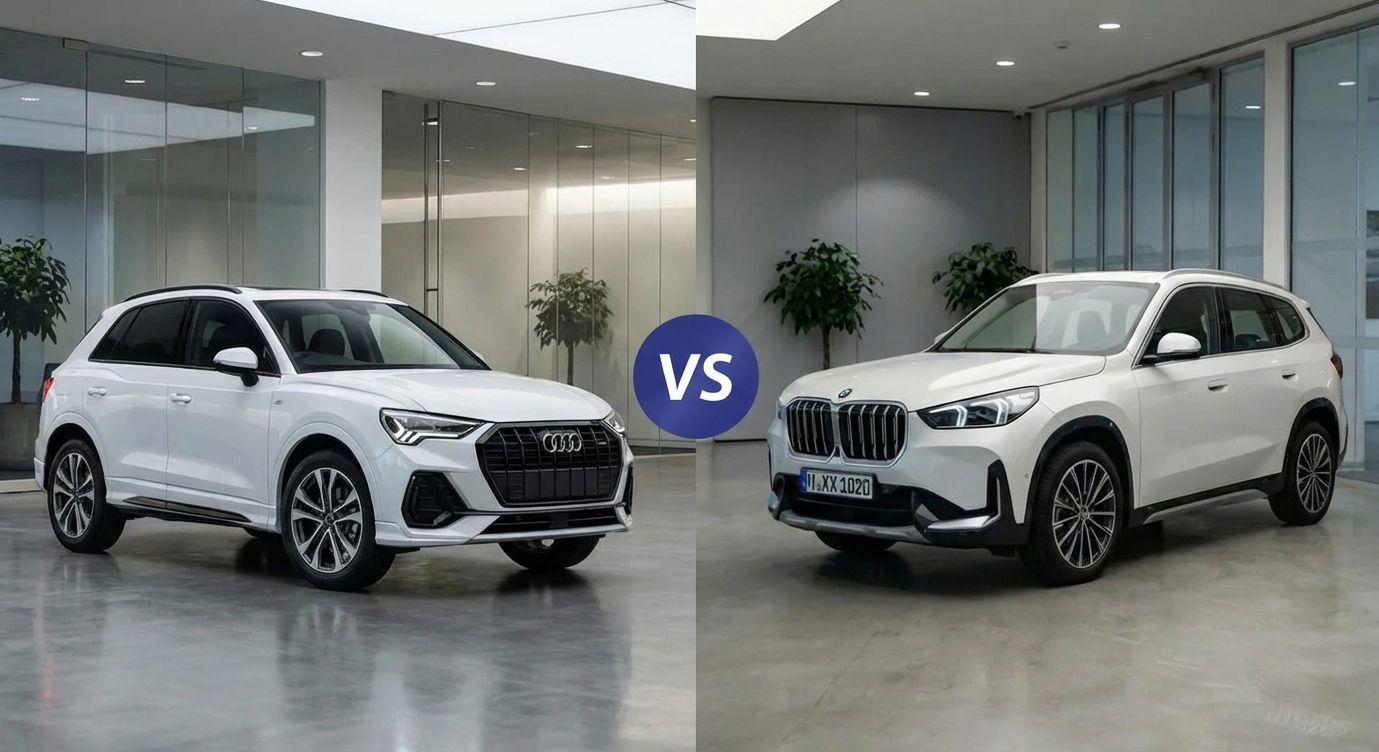
Audi Q3 vs BMW X1: Detailed comparison of design, performance, and practicality. Find out which premium SUV is the right choice for you in our verdict.
Apr 14, 2026