Articles

Car battle

Kia Sportage vs. Toyota RAV4: Complete comparison 2026

Comparison of the Kia Sportage and Toyota RAV4 SUVs. Find out how they perform in real-world tests of fuel consumption, reliability, and equipment. Choose the best used car!

April 28, 2026

VS
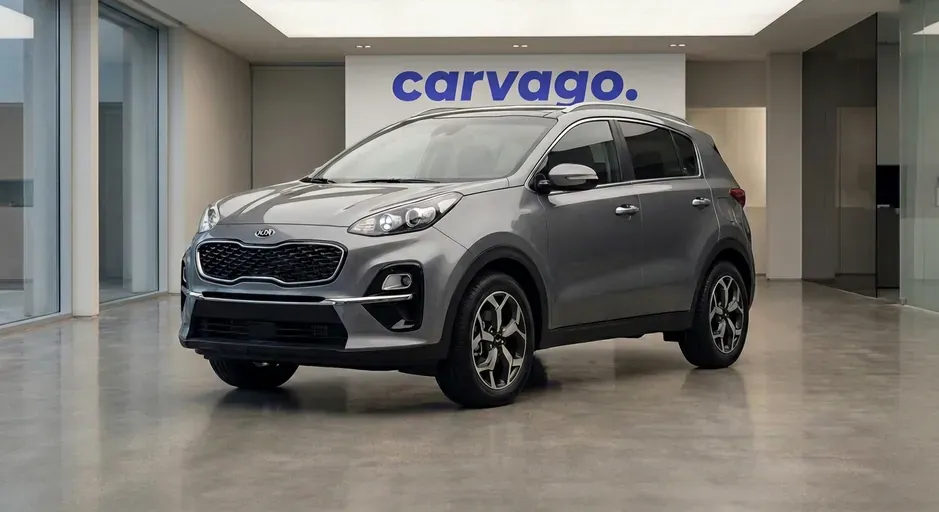
Kia Sportage

Kia Sportage

Toyota RAV4

Toyota RAV4

Introduction

The Kia Sportage, a popular South Korean compact SUV, has carved out a strong position in the European market thanks to its bold design, spacious interior, and excellent value for money. On the other side stands the Toyota RAV4, a legendary Japanese pioneer of the segment, whose plug-in hybrid version can also be found on the used car market under the sister name Suzuki Across, and which relies primarily on its renowned reliability and highly efficient powertrains. Let's take a detailed look at how these two exceptionally popular competitors fare in a head-to-head battle and which one represents the better choice for your daily travels.

Comparison of External Dimensions

When comparing the exterior dimensions of these two representatives of the popular compact SUV category, we find several interesting differences that can play a crucial role when choosing a used car. If we focus on models roughly four years old on the secondary market, namely the fifth-generation Kia Sportage (code name NQ5) and the fifth-generation Toyota RAV4 (XA5), we find that the Toyota is the longer car overall. It measures exactly 4,600 mm in length, which is 85 mm more than the vast majority of versions of its Korean competitor. In practice, this difference in length means slightly longer body overhangs, which gives the car the hallmark of a larger family vehicle and may slightly favor cargo capacity, but on the other hand, it requires more caution when parallel parking in cramped city streets.

In terms of width and height, the two models slightly swap roles. The Kia Sportage surpasses its Japanese rival with a width of 1,865 mm (compared to 1,855 mm for the Toyota RAV4). These additional 10 mm on the Kia's side can have a positive effect in the interior, where passengers gain slightly more generous shoulder room, which you will especially appreciate when traveling with three people in the back seats. The Toyota RAV4, on the other hand, dominates in body height – at 1,685 mm, it towers over the Sportage by 35 mm. The Toyota's taller build thus makes getting in and installing child car seats easier, and it offers taller passengers an airier feel with more headroom.

An interesting look is at the wheelbase, which is a key parameter for the longitudinal spaciousness of the cabin and sufficient legroom on the rear bench. Here, the situation is unexpectedly balanced – the Toyota RAV4, with a value of 2,690 mm, surpasses the Kia Sportage (2,680 mm) by a completely negligible 10 mm. This implies that although the Toyota is a noticeably longer car on the outside, in terms of actual longitudinal interior space, both cars offer comparable comfort. The choice between these two vehicles in terms of exterior dimensions thus narrows down to personal preference: the shorter and slightly wider Sportage rewards with better maneuverability in tight spaces, while the RAV4 targets drivers requiring a classic, bulkier, and taller "off-road" stance.

ParameterKia Sportage SUVToyota RAV4 SUV
Width (mm)18651855
Length (mm)4515 - 45404600
Height (mm)1645 - 16501685
Wheelbase (mm)26802690

Trunk Volume

When it comes to choosing a family car, the size and usability of the luggage compartment play a key role for many buyers. Whether you're planning regular weekend shopping trips, need to transport a stroller, or are packing for a long family holiday, both the Kia Sportage and the Toyota RAV4, in their current generations (Sportage NQ5 and RAV4 XA5) which are roughly four years old on the used car market, offer excellent practicality. Both of these popular SUVs boast a spacious and easily accessible trunk that will satisfy even the most space-demanding users. Nevertheless, there are minor differences between them that could tip the scales one way or the other during the final decision-making process.

The fifth-generation Kia Sportage boasts one of the largest luggage compartments in its class. In conventional internal combustion versions, it offers an impressive base volume of 591 liters, which increases to a great 1,780 liters after folding down the rear seats. In contrast, the fifth-generation Toyota RAV4 is not far behind, featuring a standard volume of 580 liters. With the seats folded down, the total cargo capacity of the RAV4 reaches a maximum of 1,690 liters. This slight lead in favor of the South Korean model means, in practice, space for a few extra small bags, while both cars have more than enough capacity for weekend shopping and longer holidays.

An important factor in the selection is also the chosen engine, as both cars experience a reduction in luggage volume in some electrified versions. In the Kia Sportage, due to battery placement, the trunk size decreases to 526 liters for mild-hybrid (MHEV) versions and 540 liters for the plug-in hybrid (PHEV). A similar trend applies to the Toyota RAV4, where the plug-in hybrid version takes a slight toll by reducing the volume to around 520 liters, while the classic hybrid (HEV) maintains an excellent 580 liters. In practice, however, even these slightly reduced capacities remain highly practical, offering sufficiently wide and deep loading areas without significant compromises for everyday life.

ParameterKia Sportage SUVToyota RAV4 SUV
Base volume (liters)591580
Max volume with seats folded down (liters)17801690

Family battle for every liter 🧳

Both SUVs offer a highly usable luggage compartment, but the Kia Sportage has a slight edge both in the base configuration and with the seats folded down. However, if you opt for the popular hybrid versions, the differences narrow, and both cars will satisfy even the most demanding family needs with ease and comfort.

Discover the true condition of the car thanks to an independent inspection

Order CarAudit™

Trailer Weights

The ability to tow a trailer is a key parameter for many prospective mid-size SUV buyers, whether they plan to transport heavy building materials or tow a family caravan on holiday. Both the Kia Sportage and Toyota RAV4 offer very solid towing power on the market for roughly four-year-old used cars, but the maximum values differ significantly depending on the chosen engine. While classic internal combustion versions will delight outdoor enthusiasts and travellers with their high limits, it is necessary to account for a reduction in capacity with the increasingly popular hybrid variants.

How does the Kia Sportage fare?

With used Kia Sportage models from 2020 to 2022, you will encounter a generational shift on the market (the previous QL and the newer NQ5).

  • Classic engines: The outgoing 2.0 CRDi diesel versions (QL generation) are among the top performers and can handle a braked trailer weighing 1900 to 2200 kg on the tow bar. In the newer NQ5 generation, the pure internal combustion units (1.6 CRDi and 1.6 T-GDI) rely on a standard capacity ranging from 1510 to 1950 kg.
  • Hybrid versions: If you choose a full hybrid (HEV) or plug-in hybrid (PHEV) powertrain in the more modern NQ5 generation, the maximum weight of a braked trailer drops. In the case of the plug-in hybrid, expect a limit of only 1210 to 1350 kg, which may not be enough for a larger family caravan.

Specifics for the Toyota RAV4 model

The competing Toyota RAV4 (current XA5 generation) shows that the type of drive is absolutely decisive here.

  • Pure internal combustion and AWD-i versions: The two-litre petrol engine can easily tow up to 2000 kg. The very popular 2.5 Hybrid full hybrid powertrain in the all-wheel-drive version (AWD-i) offers a solid 1650 kg, which guarantees safe space for transporting heavier loads and medium-sized caravans, making it an ideal solution even for longer holidays.
  • Hybrid "front-wheel drive": However, those interested in the basic 2.5 Hybrid variant with front-wheel drive (FWD) only must be extremely careful. Its towing capacity is radically limited to just 800 kg. This is sufficient for a small utility trailer (weekend shopping for bulky equipment or garden waste), but you can forget about any serious towing. The plug-in hybrid model then manages an acceptable 1500 kg.

Which car to choose for towing?

If you are buying an SUV primarily as a "tow vehicle," the diesel versions of the Kia Sportage (especially the older two-litre) will provide the greatest certainty and the highest limits among four-year-old used cars. On the other hand, if you prefer the reliability and fuel economy of Japanese hybrids while still wanting to occasionally tow heavier loads, the Toyota RAV4 2.5 Hybrid AWD will not disappoint you. However, always avoid the basic FWD version of the RAV4 and the plug-in hybrid Kia if your requirements exceed one small garden trailer.

Note: Values for unbraked trailers are not always listed separately in official specifications; however, European legislation for passenger cars in this category limits the weight of an unbraked trailer across the board to a maximum of 750 kg.

Model and motorizationBraked weight of trailer (kg)Unbraked weight of trailer (kg)
Kia Sportage 1.6 T-GDI (NQ5)1510 - 1650Not specified
Kia Sportage 1.6 CRDi (NQ5)1650 - 1950Not specified
Kia Sportage 2.0 CRDi (QL)1900 - 2200Not specified
Kia Sportage 1.6 T-GDI Plug-In Hybrid (NQ5)1210 - 1350Not specified
Toyota RAV4 2.0 (XA5)2000Not specified
Toyota RAV4 2.5 Hybrid (XA5)800 - 1650Not specified
Toyota RAV4 2.5 Plug-in Hybrid (XA5)1500Not specified

Overview of Most Common Motorizations

Engine and Drivetrain Range

When it comes to the range of powertrains, the Kia Sportage and Toyota RAV4 represent two completely different engineering philosophies, which is of fundamental importance for used car buyers in the four-year-old vehicle category. In modern generations, Kia bets on "downsizing," turbocharging, and a wide range of electrification – from mild-hybrid internal combustion engines with dual-clutch transmissions to advanced plug-in hybrids. The Sportage's turbocharged engines score points with a strong pull at low revs and the use of multi-speed gearboxes, which provide drivers with a more direct acceleration feel. In contrast, Toyota is the absolute pioneer of hybrid technology. For the RAV4, it relies on larger naturally aspirated engines paired with exceptionally durable e-CVT planetary gearboxes. The result is bulletproof reliability, seamless gear changes, and top-tier fuel economy (especially in cities). However, for drivers with high motorway mileage, Kia still offers an efficient diesel engine, which is completely absent from Toyota's lineup.

Kia Sportage (NQ5 generation)

The fifth generation of the Kia Sportage (NQ5), which is an ideal target when looking for a nearly-new used car from around 2022, boasts a very diverse selection of turbo engines with a uniform displacement of 1.6 litres. The absolute standard is the 1.6 T-GDI four-cylinder petrol engine, where mild-hybrid technology (labeled as EcoDynamics+) with 110 kW or 132 kW quickly became the dominant choice on the market. For long-distance drivers, a major benefit is the option of the 1.6 CRDi diesel engine, also with a mild-hybrid system. For those seeking maximum savings combined with decent dynamics, Kia offers a classic Hybrid (169 kW) and the heaviest, yet exceptionally brisk Plug-in Hybrid (195 kW). While both of these fully electrified models use a smooth six-speed automatic (6AT), in the internal combustion and mild-hybrid variants, you will encounter a manual or the popular seven-speed dual-clutch 7DCT transmission.

Engine TypeFuelPower (kW)Torque (Nm)Transmission
1.6 T-GDI / EcoDynamics+Petrol (MHEV)110 / 132250 / 2656MT / 7DCT
1.6 CRDi EcoDynamics+Diesel (MHEV)85 / 100280 / 3206MT / 7DCT
1.6 T-GDI HybridPetrol (HEV)1693506AT
1.6 T-GDI Plug-in HybridPetrol (PHEV)1953506AT

Toyota RAV4 (XA5 generation)

The foundation of the fifth-generation Toyota RAV4 (XA5) consists of a significantly simplified yet refined and functional range. As data shows, in the very early stages of production between 2019 and 2020, a purely internal combustion 2.0 Valvematic with 129 kW was also available; however, you will hardly encounter it among target four-year-old used cars. The absolute king of the used car market is the legendary 2.5 Hybrid system. This naturally aspirated four-cylinder offers an efficient 160 kW as a front-wheel drive (2WD), or the more common and sought-after 163 kW in the AWD-i specification, where an independent electric motor powers the rear wheels. The pinnacle of the Japanese brand's technical prowess is the 2.5 Plug-in Hybrid with a massive total system output of 225 kW, which gives the family SUV almost sports-car-like acceleration (0–100 km/h in just 6 seconds) with a fully electric range of around 75 km.

Engine TypeFuelPower (kW)Torque (Nm)Transmission
2.0 ValvematicPetrol1292076MT / CVT
2.5 Hybrid (2WD)Petrol (HEV)160221*e-CVT
2.5 Hybrid (AWD-i)Petrol (HEV)163221*e-CVT
2.5 Plug-in HybridPetrol (PHEV)225227*e-CVT

*Note: For full hybrid versions, Toyota specifies torque of 221 and 227 Nm exclusively for the internal combustion engine; however, the total real-world pull is significantly higher thanks to the immediate assistance of robust electric motors.

Turbocharger vs. Naturally Aspirated Hybrid 🥊

While Kia offers a choice from a diverse family of turbocharged engines (including diesel) focused on a more traditional driving feel, Toyota dominates the used car market with its reliable naturally aspirated hybrids, which offer excellent efficiency and low fuel consumption.

Choosing the right engine is absolutely crucial for your long-term satisfaction, reliability, and real operating costs. From our experience and service data, it follows that although both models today rely primarily on electrification, their technological approach is very different. While Toyota uses a naturally aspirated engine with an e-CVT planetary gearbox, Kia goes the route of a turbocharged unit paired with a classic torque converter automatic. In the table below, you will find our main recommendations for models approximately four years old. An interesting fact from the used car market is the retreat of diesel engines – the legendary RAV4 diesel (2.0 D-4D) completely disappeared from the range with the arrival of the fifth generation, and for the Kia Sportage (NQ5), the 1.6 CRDi EcoDynamics+ diesel engine is only available in very limited model years (mostly until 2024), after which it was gradually pushed out of the market by hybrids. We therefore focus exclusively on the most refined and promising petrol and hybrid versions.

ModelRecommended enginePowerDrivetrainAvailability of recommended version
Kia Sportage (NQ5)1.6 T-GDI Hybrid (HEV)169 kW (230 hp)4x2 / 4x42022 – 2024
Toyota RAV4 (XA5)2.5 Hybrid AWD-i163 kW (222 hp)4x4 (AWD-i)2020 – 2023

For Kia Sportage we recommend: 1.6 T-GDI Hybrid (169 kW / 230 hp)

This full hybrid version represents the best compromise between dynamics, operating economy, and overall reliability in the current NQ5 generation (most common on the used market are 2022 and younger). Unlike cheaper mild-hybrid versions (MHEV), which are often paired with a dual-clutch DCT transmission, this full hybrid uses a robust 6-speed torque converter automatic. From the perspective of mechanical wear, this solution is much more durable and completely eliminates unpleasant jerking or clutch slipping during slow crawling in city traffic jams. Thanks to electric assistance and turbocharging, the engine offers confident pull from the lowest RPMs, and the real fuel consumption of a family SUV can easily be kept around a fantastic 6 l/100 km.

What to watch out for from a mechanic's perspective:
The 1.6 T-GDI engine uses direct fuel injection, which means that during frequent operation only over short city distances (where the engine does not have time to fully warm up), the intake valves are not washed with fuel. The result is gradual carbon buildup and an increased risk of gasoline particulate filter (GPF) clogging. When inspecting the vehicle, therefore, focus carefully on the engine's idle and the smoothness of the pull. If the car vibrates at idle or jerks slightly during sharp acceleration, it is a warning signal of carbonization or a problem with the GPF. How to prevent this? Maintenance is easy – we recommend taking the car for a proper brisk drive on the highway at least twice a month, which burns off the deposits and the particulate filter. Otherwise, the car is ideal for drivers who want economical operation but insist on classic gear shifting and require occasional sportier dynamics from the vehicle.

For Toyota RAV4 we recommend: 2.5 Hybrid AWD-i (163 kW / 222 hp)

For the fifth-generation RAV4, the choice for a used car (most often years 2020–2023) is completely clear – the hybrid system with a powerful 2.5-liter naturally aspirated four-cylinder is, without exaggeration, a technological idol of reliability. The technical simplicity and durability of this powertrain make it one of the longest-lasting engines on the market. You won't find any mechanical clutch, turbocharger, classic starter, conventional alternator, or V-belts here. Toyota thus elegantly eliminates most of the expensive components that commonly fail on modern cars. You get absolutely bulletproof reliability and, for such a massive SUV, incredible fuel consumption of around 5.5 to 6 liters per 100 km, even in the AWD-i version, where the rear axle is driven by an independent electric motor.

What to watch out for from a mechanic's perspective:
Although the main powertrain is trouble-free, for used four-year-old units, the most common cause of failure is paradoxically a simple small 12V car battery. If the car has been sitting in a dealership for a long time or the original owner drove it only very sporadically, this battery discharges quickly, and the control unit then refuses to start the high-voltage hybrid system – the car is then de facto dead. Therefore, always have the condition and capacity of the classic 12V battery verified by diagnostics. The second essential task for AWD-i versions is a look at the undercarriage: focus on the massive high-voltage cable leading to the rear electric motor. Especially in cars operated in mountainous areas with heavy road salting, corrosion of the protective casing can appear here. Overall, however, you get a perfect workhorse with this engine. It is an ideal choice for families with high mileage who prefer the cheapest possible service and want a quiet, reliable car for many years to come.
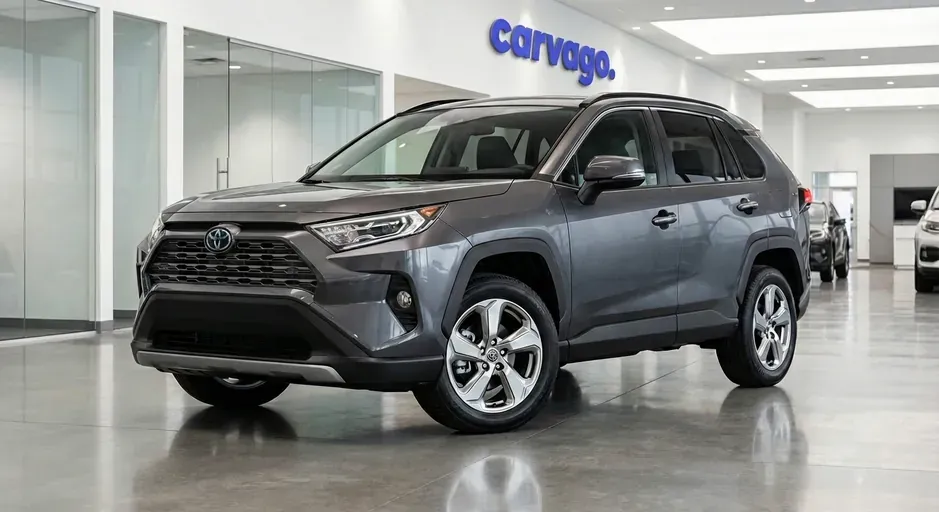
Real Fuel Consumption

Fuel Consumption: Paper Promises vs. Harsh Reality

As is common in the automotive world, official fuel consumption figures provided by manufacturers often differ significantly from reality. Especially with hybrid powertrains, it depends heavily on how you drive the car and the environment it moves in. For an objective comparison of used cars, which are typically around four years old on the market (in the context of the current year, this primarily concerns the fifth-generation Toyota RAV4 produced since 2019 and the incoming fifth-generation Kia Sportage from 2022), we looked at real-world user data. The most accurate picture is offered by shared data from the independent portal Spritmonitor.de, where records from millions of kilometers driven by real owners can be found.

Model and EngineAverage Consumption (l/100 km)
Toyota RAV4 2.5 Hybrid5.8
Kia Sportage 1.6 CRDi6.1
Kia Sportage 1.6 T-GDI Hybrid6.6
Toyota RAV4 2.07.2
Kia Sportage 1.6 T-GDI7.5

When interpreting real-world data, one very fundamental trend is visible. Toyota's legendary hybrid system with its large naturally aspirated 2.5-liter four-cylinder and e-CVT planetary gearbox is noticeably more efficient in practice than Kia's turbocharged 1.6 T-GDI. Especially in city and suburban traffic, Toyota can push consumption below 5.5 liters with a light foot, while the Sportage Hybrid, due to its turbo engine under load, doesn't drop below six liters so easily. The comparison of conventional petrol versions might also be a surprise – the small turbo engine in the Kia doesn't save fuel as paper specs would suggest, and the more old-fashioned naturally aspirated two-liter in the RAV4 actually performs a hair better in the end. However, Kia's trump card remains the offering of a reliable 1.6 CRDi diesel engine, which the Japanese manufacturer completely removed from its portfolio for this generation.

What does this mean for the typical used car buyer? If you spend most of your time hopping around the city or on short daily commutes, the full-hybrid RAV4 will be the clear king for you in terms of running costs. However, if you are a highway traveler and a long-distance mileage muncher, steady highway speeds quickly erase the hybrid's efficiency. In such a case, it makes much more economic sense to go for a diesel Kia Sportage. For customers with a tighter budget targeting basic non-hybrid engines, the differences in consumption do not represent such a massive barrier, and both cars operate in the range of 7 to 7.5 liters of petrol per hundred kilometers.

Overall, fuel consumption is one of the key decision-making factors for these family SUVs. Here, the Toyota RAV4 fully capitalizes on more than two decades of experience in tuning its hybrid system and, in the real world, ranks among the absolute most fuel-efficient representatives of its category on the market. The Kia Sportage offers very respectable figures and the strategic advantage of a diesel alternative, but its modern petrol and hybrid units still slightly lag behind Toyota's masterclass efficiency. Therefore, if you are considering a car purchase primarily through the lens of daily commuting costs, the Toyota RAV4 emerges from this battle as the overall winner.

Price Range and Used Car Offerings

Price comparison on the used car market

Looking at the market for roughly four-year-old used cars reveals a fairly fundamental difference in how both models hold their value and what amount you need to have ready for purchase. We focused on models from the 2021–2022 period, which represent an ideal compromise for used car buyers between modern technology and a lower purchase price compared to brand-new vehicles.

Kia Sportage (2021–2022 models)

In the category of four-year-old vehicles, the Kia Sportage represents a very interesting choice. In this age range, you will come across both run-out units of the fourth generation (designated QL) and the first models of the current fifth generation (NQ5), which causes a wider price range.

  • Base versions: The cheapest units of the previous generation with conventional engines and average mileage can be purchased starting from amounts around €16,000.
  • Higher trims and newer models: If you desire the modern fifth generation with its striking design, rich equipment (e.g., GT-Line), and hybrid powertrain, prices range between €25,000 and €29,000.

A major attraction when buying a used Kia is its seven-year factory warranty. With a four-year-old car, you still have a large portion of the guarantee ahead of you, which significantly reduces the risk of unexpected service costs.

Toyota RAV4 (2021–2022 models)

Japanese SUVs traditionally hold their value exceptionally well, and the fifth generation of the Toyota RAV4 (XA50) is no exception. Approximately four-year-old models represent a more premium and expensive choice on the market, reflecting renowned reliability and advanced hybrid technology.

  • Base versions: You will practically not find a solid RAV4 on the market below the €27,000 mark, and we are talking about cars that tend to have higher mileage.
  • Hybrid models: The vast majority of the offer relies on the exceptionally successful and sought-after 2.5 Hybrid powertrain. For well-maintained units with a reasonable number of kilometers driven (up to 100,000 km), prepare an average amount from €29,000 to €33,000.

However, the higher purchase price of a used Toyota is compensated by its very slow rate of subsequent depreciation. Buying a RAV4 can therefore be seen as a more conservative and safer investment for the future.

Indicative price comparison

Model (approx. 4 years old)Starting price (from)Typical price of a well-equipped car
Kia Sportage€16,000€23,000
Toyota RAV4€27,000€31,000

Price verdict 💰

While the Kia Sportage attracts with a significantly more friendly purchase price and the additional security coming from the remaining factory warranty, the Toyota RAV4 justifies its higher initial investment with minimal value drop over time and market-proven hybrid reliability.

Safety and Euro NCAP Rating

Both compared models, the Kia Sportage and Toyota RAV4, boast a maximum five-star rating in independent Euro NCAP safety tests. When comparing these results, however, it is crucial to take into account the context and the year of testing, as the evaluation methodology is constantly evolving and generally becomes significantly stricter every two years. Percentage scores from different years cannot be simply and directly compared.

The current generation Kia Sportage (NQ5) underwent testing in 2022 according to exceptionally strict protocols. These newer standards place enormous emphasis not only on passive safety but also on the comprehensive functionality of assistance systems, including more complex simulations of emergency situations at intersections. The Korean SUV therefore arrived with the latest architecture and is equipped as standard with a center airbag (which prevents front passengers from colliding with each other) and advanced autonomous braking with improved cyclist detection.

The Toyota RAV4 (XA50 generation), on the other hand, underwent evaluation in 2019. Its visually excellent percentage results fully reflect the standards of that time and point to the excellent structural rigidity of the TNGA chassis platform. The Toyota Safety Sense safety package worked very reliably in preventing collisions, thanks to which the car collected unusually high points for the protection of vulnerable road users at the time. However, the Japanese SUV did not face the same rigorous tests and assistance system scenarios as its Korean competitor three years later.

ParameterKia SportageToyota RAV4
Year of testing20222019
Adult occupant protection87 %93 %
Child occupant protection86 %87 %
Vulnerable road user protection66 %85 %
Safety assistance systems72 %77 %

Although the numbers in the table seem to favor the Toyota RAV4 at first glance, they must be interpreted precisely in the context of the time they were created. The slightly lower percentage score for the Kia Sportage is primarily due to newer and much more demanding evaluation criteria, rather than an indication of inferior safety. While Toyota offers solid body rigidity and stable electronics, Kia's three-year newer certification ensures that the car's assistance and restraint systems meet the most current and strictest requirements. Both cars represent an exceptionally safe choice for families on the used car market; however, thanks to its more recent design, the Kia offers a slightly more modern and comprehensive approach to protection.

Safety first 🛡️

Although the Toyota RAV4 shows visually higher percentages from 2019, the Kia Sportage tested in 2022 underwent a more demanding methodology. Both cars are extremely safe, but the Korean SUV benefits from more modern assistance systems and the integration of newer passive features, such as a center airbag.

Comparison of Interesting Equipment Features

In addition to standard equipment, each of the models offers several unique features that can be decisive for the customer during the final selection, and each has its own distinctive approach to added value.

Kia Sportage: Digital Revolution and Futuristic Comfort

  • Infotainment and Dashboard: The interior is dominated by a curved panoramic display that optically connects a 12.3-inch digital instrument cluster and an equally large infotainment screen into one elegant unit. A completely unique feature is the innovative touch bar below the air vents, where a single button can switch functions between climate control and audio.
  • Assistance Systems and Electronics: The advanced Blind-Spot View Monitor (BVM) projects a live image of the adjacent lane directly onto the display instead of classic dials when the turn signal is activated. Another great helper is the Remote Smart Parking Assist (RSPA), which allows you to control the car from the outside using the key and pull out of a narrow parking space.
  • Chassis and Driving Modes: In selected versions, Kia offers Electronically Controlled Suspension (ECS), which actively changes the damping stiffness based on the driving situation. All-wheel-drive models then feature a Terrain Mode rotary selector, which optimizes the car's settings for snow, mud, or sand.
  • Design and Trim Levels: The bold design language with iconic boomerang-shaped daytime running lights is most prominent in the sporty GT-Line version. This offers specific bumpers, a black headliner, and anatomically shaped seats combining premium leather and suede, giving the car a premium and dynamic character.

Toyota RAV4: Adventurous Nature and Functional Sophistication

  • Technology and Visibility: A practical technological highlight is the Smart Rear View Mirror. With a single flip of a lever, the mirror surface turns into a display transmitting a sharp image from an HD camera at the rear, solving the problem of an obstructed view when the trunk is loaded to the roof or tall passengers are sitting in the back.
  • Drivetrain and Smart Traction: The hybrid system is available with intelligent AWD-i all-wheel drive, which uses an independent electric motor on the rear axle. Off-road capabilities are further enhanced by a specific Trail Mode. This acts as an automatic limited-slip differential lock and ensures maximum traction for freeing the vehicle on slippery or unpaved surfaces.
  • Practicality and Clever Details: Toyota's interior focuses on maximum ergonomics and real-life usability. The highlights are the massive, rubberized rotary controls for climate and audio, which can be easily operated even in thick winter gloves. In plug-in hybrid versions and higher trims, you will also find a full-fledged 230V socket in the trunk.
  • Safety and Telematics: The RAV4 is equipped with the award-winning Toyota Safety Sense package. This includes advanced adaptive cruise control, lane-keeping assist, and a reliable pre-collision system with pedestrian and cyclist detection, which focuses primarily on long-term functionality without outages even in poor conditions.

Key Advantages and Disadvantages

Kia Sportage

Pros

Attractive and very modern interior design with an innovative curved display

Seven-year factory warranty, which is fully transferable (a huge advantage when buying a four-year-old used car)

High level of standard equipment and materials in the cabin that feel more premium

A wide range of powertrains including an efficient plug-in hybrid and an economical diesel for highway drivers

Excellent cabin soundproofing and very comfortable chassis tuning for daily travel

Cons

Bold front grille design may not suit more conservative buyers

Higher real-world fuel consumption for mild-hybrid and pure gasoline versions compared to Toyota

Extensive use of glossy black plastics ("piano black") in the interior, which are prone to scratching

Dual-function touch bar for climate and media control requires getting used to and distracts from driving

The Kia Sportage is an ideal choice for drivers looking for a technologically advanced, comfortable SUV with a premium feel and rich equipment. Thanks to the long factory warranty, it represents a very safe choice on the used car market that will please families and individuals who value modern design and connectivity.

Toyota RAV4

Pros

Unrivaled efficiency and exceptionally low fuel consumption for full hybrid (HEV) powertrains

Renowned reliability, powertrain longevity, and overall mechanical durability

Excellent residual value, which demonstrably minimizes financial loss upon resale

Very spacious and airy interior with a generous luggage compartment volume of 580 liters

Great ergonomics with the retention of large hardware buttons for climate control and basic functions

Cons

More outdated graphics and slower infotainment response (especially in models before the 2023 facelift)

Higher combustion engine noise during sharp acceleration due to the behavior of the e-CVT transmission

Materials used in the interior feel more utilitarian and do not offer the same sense of luxury as the Kia

Significantly higher purchase price on the used car market

The Toyota RAV4 will clearly appeal to pragmatically minded buyers for whom reliability, minimal operating costs, and trouble-free daily coexistence are absolute priorities. It is an unrivaled family workhorse whose higher initial purchase price for a used car is fully compensated by the fantastic fuel consumption of the hybrid system and very slow depreciation.

Common Problems and Owner Complaints

Based on long-term owner experience, service reports, and the results of our comprehensive car inspection, we have prepared a detailed overview of the most common faults you should watch out for in roughly four-year-old used cars of these models.

Kia Sportage (especially the transition between the popular fourth and the incoming fifth generation) is among the sturdily built SUVs, however, several specific technical weaknesses appear with improper use or higher mileage.

  • Engines and exhaust system: For 1.6 T-GDi petrol engines, problems with the gasoline particulate filter (GPF) occur during frequent short city trips as it doesn't have time to regenerate. For diesel versions (1.6 CRDi), frequent interruption of regeneration can lead to engine oil dilution with diesel and a clogged DPF filter.
  • Transmission: The seven-speed dual-clutch automatic transmission (7DCT) may exhibit jerky shifting or hesitation when starting off as mileage approaches 100,000 km. This usually means worn clutches or the need to recalibrate the mechatronics.
  • Electronics and infotainment: Owners quite often report freezing of the center display, connection drops via Apple CarPlay / Android Auto, and occasional failure of the rear parking camera, which moisture likes to penetrate in older units.
  • Chassis: On poorly maintained roads, the rear axle bushings and wheel bearings can wear out prematurely on heavier and more powerful specifications, manifesting as typical humming or knocking.

Kia Sportage: A solid foundation with minor quirks

Kia Sportage is a very reliable SUV, whose main ailments are limited to dual-clutch transmission wear and particulate filter problems in cars used mainly for short city trips.

The fifth generation of the Toyota RAV4 is famous for its long-term mechanical durability and top-tier hybrid drive, yet even this class benchmark has several well-documented weaknesses.

  • High-voltage wiring (so-called Cablegate): In all-wheel-drive versions (AWD-i), significant corrosion of the high-voltage cable connector leading to the rear electric motor appears in winter conditions with salted roads. If this problem is not addressed preventatively or detected in time, the repair is usually very expensive.
  • Electronics and 12V battery: A relatively common ailment of the RAV4 is the unexpectedly fast discharge of the classic 12V battery if the car stands for a longer period. Furthermore, the infotainment system in models up to roughly 2022 looks graphically outdated and occasionally suffers from slower responses.
  • Body and exterior: In earlier years of the current generation, there were cases of leaks into the interior through poorly sealed roof rails and a thinner paint layer that is more prone to stone chips on the front grille.
  • Engines and e-CVT: The 2.5 Hybrid system itself is almost bulletproof. From a user perspective, there are only complaints about increased noise from the e-CVT planetary gearbox during sharp acceleration (the so-called vacuum cleaner effect), which is, however, a design characteristic, not a technical fault.

Toyota RAV4: A durable workhorse with a few specifics

The Toyota RAV4 confirms its reputation as an exceptionally mechanically reliable car, with the greatest attention required for used cars being a thorough inspection of the rear electric motor's high-voltage wiring and monitoring the condition of the 12V battery.

Tips for Buying a Used Car

When buying a used car, a thorough inspection is key, and especially with today's modern SUVs packed with complex technology and assistance systems, it doesn't pay to underestimate the details. To make your investment as safe as possible, the ideal step is a comprehensive car audit by an independent expert. Here are some specific points you should focus on during the test drive and inspection.

When choosing a Kia Sportage:

  • Dual-clutch transmission (DCT) behavior: For models with an automatic transmission, focus on the smoothness of starts, especially uphill or when crawling in traffic. Gradually apply the throttle and watch for any jerking or hesitation during shifts. Jerky starts often point to excessively worn clutches or the need for a transmission control unit software update.
  • Gasoline Particulate Filter (GPF) condition: If you are buying a modern gasoline engine (1.6 T-GDi) and the previous owner used the car primarily for very short city trips, the car may suffer from a clogged particulate filter. During the test drive, try accelerating to higher RPMs – make sure the emission warning light is not on and the car does not suffer from power loss.
  • Infotainment speed and stability: Thoroughly test the central dashboard display. Try to pair your smartphone, launch the built-in navigation, and go through several menu items. The system should not freeze, and the image from the parking camera must load immediately after shifting into reverse. Slow responses usually require professional software intervention.
  • Chassis and play in the front axle: Drive the car on a rougher road, go over a series of small bumps or a recessed manhole cover, and listen closely to the axle soundproofing. Dull or metallic thuds when driving over potholes clearly indicate play in the stabilizer links or worn bushings. The exact extent of wear is best confirmed by a physical inspection of the car on a lift.

When choosing a Toyota RAV4:

  • Hybrid system and e-CVT smoothness test: During the test drive, focus on energy flows. The internal combustion engine must connect to and disconnect from the electric motor completely smoothly and almost imperceptibly. If you feel a noticeable jerk when accelerating more sharply, it may mean neglected system maintenance or wear of the mechanical parts of the complex e-CVT transmission.
  • 12V battery and high-voltage battery condition: The hybrid RAV4 is known for being more prone to discharging the classic 12V starter battery if the car sits for a long time. For plug-in hybrid (PHEV) versions, also check the fully charged electric-only range directly on the trip computer – if the estimated value is well below the paper average, it suggests the beginning of degradation of the expensive traction battery.
  • Electric 4x4 drive engagement (AWD-i): Toyota's AWD-i system handles all-wheel drive with a separate electric motor on the rear axle; there is no mechanical driveshaft. Find a slippery surface (gravel, wet grass) and try a sharper start. The rear wheels must engage for traction immediately, without the front wheels tending to spin excessively and aimlessly.
  • Checking for leaks and tailgate corrosion: Carefully inspect the luggage compartment under the carpet and the sides of the upholstery. In the early years of this generation, occasional issues with leaks around the roof rails could occur, and surface corrosion rarely appears near the tailgate hinges. The absence of a musty smell in the interior is always a good sign.

FAQ: Most Frequently Asked Questions

Toyota RAV4 offers a basic trunk capacity of 580 liters, which is very generous for everyday family use. Kia Sportage counters in newer generations with a volume of up to 591 liters for purely internal combustion versions, though this space decreases slightly for hybrid variants. In practice, both cars are very evenly matched in terms of space, but the Toyota usually scores points with a slightly wider loading opening.

The Toyota RAV4 has long dominated the market thanks to its advanced full-hybrid system with a real combined consumption of around 5.5 l/100 km. Alongside mild-hybrids, the Kia Sportage also offers a full hybrid, which feels more powerful but in practice shows slightly higher fuel consumption. If you are looking for maximum efficiency and low operating costs, especially for city and country roads, the Toyota is the clear choice.

Kia traditionally attracts buyers with its generous seven-year warranty (or up to 150,000 km), which provides great peace of mind when buying a roughly four-year-old used car. The Toyota RAV4, on the other hand, relies on its legendary long-term reliability and offers an extended warranty on the hybrid battery for up to 10 years with regular authorized servicing. Nevertheless, both cars statistically rank among the most reliable in the compact SUV class.

The Kia Sportage excels with a more premium feel and a modern interior dominated by connected curved displays and advanced assistance systems. The Toyota RAV4's interior is more conservative, placing great emphasis on practical robustness, and its infotainment can feel slightly dated compared to its Korean rival. While the Kia impresses with its technological execution, the Toyota pleases with traditional ergonomics and classic physical buttons.

For hybrid versions, the Toyota RAV4 relies on the intelligent AWD-i system, which uses a separate electric motor to drive the rear wheels and safely handles common winter conditions. The Kia Sportage, by contrast, also offers a traditional mechanical all-wheel drive, which feels more confident when tackling more demanding off-road climbs for longer periods. However, both cars can reliably handle trips to mountain resorts, snowy roads, and common dirt paths.

Conclusion: Which Model to Choose?

Our Verdict

The duel between these two extremely popular SUVs has no clear loser, as both vehicles target slightly different buyer priorities. The Kia Sportage dazzles with a modern and technologically advanced interior, a more attractive purchase price, and an ongoing factory warranty that provides peace of mind when buying a several-year-old used car. In contrast, the Toyota RAV4 represents an indomitable family workhorse that reliably justifies its higher initial investment with the unrivaled efficiency of its hybrid powertrain, legendary mechanical durability, and excellent value retention. If you prefer a more premium cabin feel and advanced digital equipment, the Korean SUV will be the right choice for you; however, if you are looking for maximum certainty, exceptionally economical city operation, and reliability for many years to come, the Japanese pioneer will fully meet your expectations.

Find your ideal car

Sources: ADAC, mdcr.cz, svetmotoru.cz, emobility.cz, autoservis.cz, doprava.cz

This article was prepared using artificial intelligence tools. The section guarantor is Petr Dušek.

Related articles

Car battle

Hyundai Tucson vs. Volkswagen Tiguan: Complete comparison 2026

Detailed comparison of Hyundai Tucson vs. Volkswagen Tiguan. Find out the differences in equipment, fuel consumption, and reliability, and read our verdict. Which SUV to choose?

Apr 25, 2026

Car battle

Mazda CX-5 vs. Volkswagen Tiguan: Complete comparison 2026

Detailed comparison of Mazda CX-5 vs Volkswagen Tiguan. Find out which used SUV has better engines, equipment, and driving characteristics. Read our clear verdict!

Apr 2, 2026

Car battle

Citroën C3 Aircross vs. Suzuki Vitara: Complete comparison 2026

Detailed comparison of used SUVs Citroën C3 Aircross and Suzuki Vitara. Find out the differences in engines, equipment, or reliability and read our final verdict.

Apr 13, 2026

We accept online card payments as well as wire transfers.

visa payment provider logovisa-electron payment provider logomastercard payment provider logomaestro payment provider logodiners-club payment provider logodiscover payment provider logo