Car battle
Hyundai i30 vs. Seat Leon: Complete comparison 2026
Detailed comparison of used Hyundai i30 vs Seat Leon. Find out which hatchback offers better driving characteristics, fuel consumption, and reliability. Read our verdict!
May 9, 2026
Articles
Car battle
Detailed comparison of Kia Ceed vs VW Golf (Volkswagen). Which used hatchback offers better engines, equipment, and reliability? Read our final verdict.
May 18, 2026
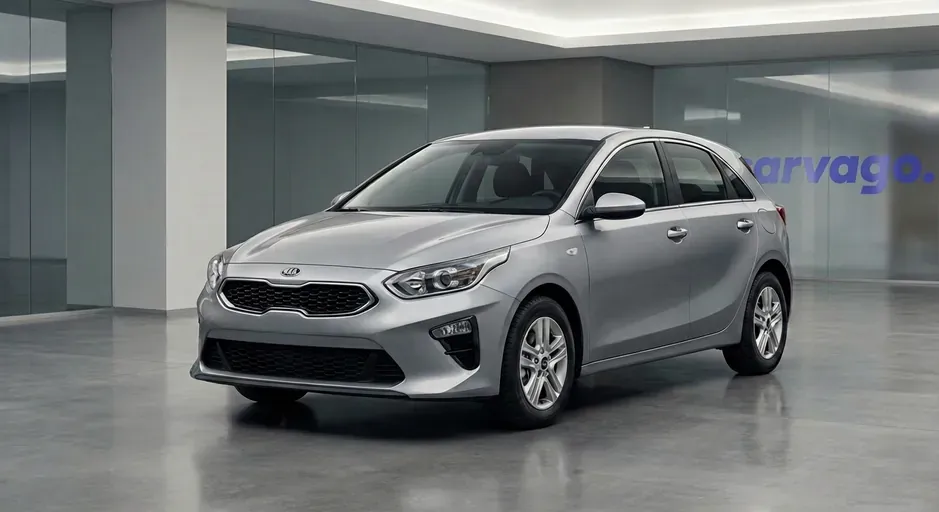
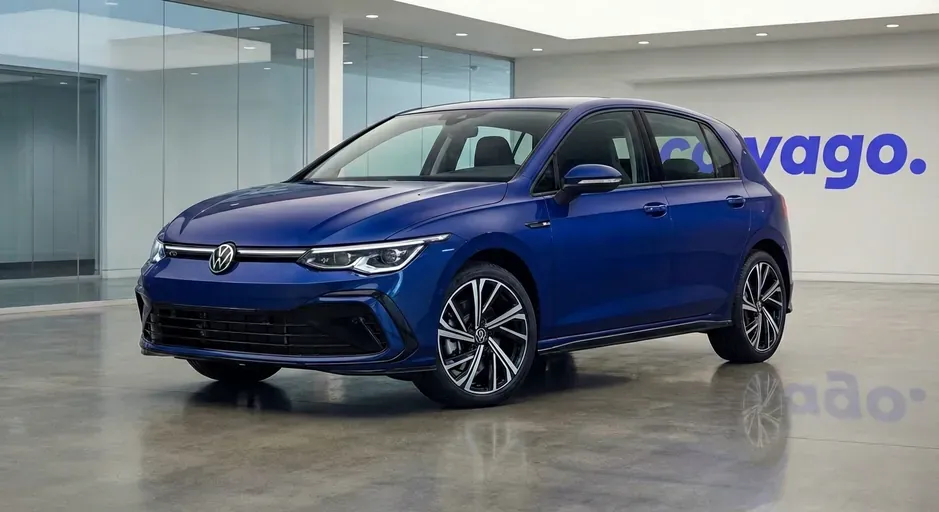
Kia Ceed, formerly unconventionally known as the cee'd, represents an ambitious South Korean contender that has earned a solid position on the European market thanks to its excellent price-to-value ratio, reliability, and utility. Standing against it is the iconic Volkswagen Golf, historically known in some markets as the Rabbit or Caribe, which is considered the absolute benchmark of the compact class and a car that has defined the standards for compact family hatchbacks for generations. Let's take a detailed look at how this confident challenger fares in a direct comparison with the seasoned German king of the segment and which of them represents a more sensible choice for your next used car.
When comparing the exterior dimensions of these two representatives of the compact class, we encounter interesting differences that clearly show the different approaches of the two manufacturers to interior space. If we look at roughly four-year-old used cars and classic five-door hatchbacks, the current generation Kia Ceed (CD) is slightly longer at up to 4325 mm than the eighth-generation Volkswagen Golf, which measures 4284 mm in its standard version. At 1800 mm, the Ceed is also 11 mm wider, but on the other hand, it stands out with a significantly lower silhouette. The difference in height can be up to 49 mm in favor of the German competitor. In practice, this means that the Kia gives a wider and sportier impression on the road, while the Golf relies on a taller build, which makes getting in and out easier. In terms of hatchback choice, the Kia will please drivers looking for more dynamic proportions, while the Golf will suit those who prefer more headroom.
A completely different situation occurs if your choice is directed towards the more practical estate body versions. Here, Volkswagen confidently takes the initiative with its Golf Variant model. With a length exceeding 4.63 meters, it is approximately 30 mm longer than the Kia Ceed Sportswagon. However, the crucial factor here is the wheelbase – while the Ceed retains a 2650 mm wheelbase for the estate version, identical to the hatchback, the eighth-generation Golf Variant has stretched to an impressive 2669 mm compared to its shorter sibling (and even to 2679 mm for the cladded Alltrack version). For families and those looking for maximum usable rear legroom, the Volkswagen Golf in the estate variant proves to be the objectively more spacious choice.
The final decision from the perspective of exterior proportions therefore depends purely on the body type. In the compact hatchback, Kia offers a more generous wheelbase of 2650 mm (compared to 2619 mm for the base Golf) and a more stable, wider stance. However, the Volkswagen Golf more than compensates for its handicap in the extended estate, where, thanks to a different chassis platform concept, it provides passengers with noticeably more longitudinal space. Nevertheless, both cars still maintain reasonable exterior dimensions, ensuring that daily parking in narrow city streets will not be a burden for the driver.
| Parameter | Kia Ceed Hatchback | Volkswagen Golf Hatchback | Kia Ceed Estate | Volkswagen Golf Estate |
|---|---|---|---|---|
| Width (mm) | 1800 | 1789 | 1800 | 1789 - 1795 |
| Length (mm) | 4310 - 4325 | 4282 - 4296 | 4600 - 4605 | 4631 - 4651 |
| Height (mm) | 1442 - 1447 | 1454 - 1492 | 1460 - 1465 | 1462 - 1510 |
| Wheelbase (mm) | 2650 | 2619 - 2630 | 2650 | 2669 - 2679 |
When choosing a compact car, trunk capacity often plays a decisive role, especially if the car is to serve as the sole family vehicle. Both the Kia Ceed and the Volkswagen Golf have long been among the most popular models on the market, and both approach interior space with maximum practicality in mind. Whether you are deciding on an agile hatchback suitable for city traffic or a family estate designed for long journeys, even relatively small differences in capacity can significantly affect the overall utility value. For roughly four-year-old used cars, where the third-generation Kia Ceed (CD) and the eighth-generation Volkswagen Golf (VIII) face off, it is also essential to monitor specific engine versions, as electrified versions take a significant bite out of the available volume.
In the case of five-door hatchbacks, the Kia Ceed has a slight edge, offering a base trunk capacity of 395 liters. The competing Volkswagen Golf lags slightly behind with a value of 381 liters. This minor difference means space for a few extra small items for the Kia, but both cars can handle regular family shopping or storing luggage for a weekend trip without issues. After folding down the rear seat backrests, the situation almost levels out – the Ceed provides 1,291 liters, while the Golf offers 1,237 liters. However, hybrid powertrains bring a significant impact on space. If you come across a mild-hybrid Ceed (48V), expect the volume to be reduced to 357 liters. Fortunately, for the Golf, the mild-hybrid eTSI version remains at the original 381 liters, but plug-in hybrid models like the Golf GTE and eHybrid offer only a very modest 273 liters (1,129 liters after folding), which is a substantial limitation for transporting bulkier items.
For families and users requiring space for strollers or large luggage, the estate body style makes the most sense. In this regard, the Kia Ceed Sportswagon (SW) scores points, boasting an above-average base volume of 625 liters. This is space quite sufficient for weekend shopping and longer vacations, often providing room for several extra suitcases. The Volkswagen Golf Variant follows closely with 611 liters. After fully folding the seats, the Kia reaches a generous capacity of 1,694 liters compared to 1,624 liters for the Volkswagen. Unfortunately, losses caused by battery installation are also evident in this category. The mild-hybrid Ceed estate reduces the trunk to 512 liters, and for its plug-in hybrid version, the value even drops to 437 liters (1,506 liters after folding). However, the combustion and standard eTSI versions of both cars will please anyone looking for a highly practical and spacious car.
| Parameter | Kia Ceed Hatchback | Volkswagen Golf Hatchback | Kia Ceed Estate | Volkswagen Golf Estate |
|---|---|---|---|---|
| Base volume (liters) | 395 | 381 | 625 | 611 |
| Maximum volume after folding seats (liters) | 1291 | 1237 | 1694 | 1624 |
The Kia Ceed offers a slightly larger trunk volume in both body versions than the Volkswagen Golf, but for used cars, always carefully check for the presence of a hybrid powertrain, which can noticeably reduce the usable space.
The ability to tow a trailer is often a key parameter for families, cottage owners, and active travelers. Although compact hatchbacks do not primarily serve as workhorses for the heaviest loads, when comparing approximately four-year-old Kia Ceed (CD generation) and Volkswagen Golf (VIII generation) cars, we encounter quite fundamental differences. The values depend on the specific engine, and these seemingly minor deviations significantly affect the car's practicality – from the ability to safely transport small building materials to the possibility of attaching a heavier caravan for a summer holiday.
With the eighth-generation Volkswagen Golf, the user options are noticeably more generous. Even the basic 1.0 TSI three-cylinder petrol engines (and their eTSI mild-hybrid versions) can handle a braked trailer weighing a solid 1300 kg. In the case of more powerful engines, such as the popular 1.5 TSI or the 2.0 TDI diesel, the limit moves to values between 1500 and 1600 kg. The absolute maximum for the Golf is boasted by the powerful GTE hybrids or the sporty R versions, where a trailer weighing 1700 to 1900 kg can be attached (for the estate variant).
In contrast, the third-generation Kia Ceed (CD) is somewhat more modest at the same age. The standard base in the form of the 1.0 T-GDI three-cylinder liter engine typically offers a braked trailer towing capacity of exactly 1000 kg. For the sought-after 1.5 T-GDI version, the value rises to 1410 kg, and the highest braked trailer weight of 1500 kg is provided by the 1.6 CRDi diesel variant.
A completely critical difference for used car buyers lies in the hybrid systems. While mild-hybrids (eTSI) from Volkswagen do not limit the car's total towing power in any way, for the Kia Ceed 1.0 T-GDI in the 48V (mild-hybrid) version, the capacity drops sharply – from 1000 kg it falls to just 700 to 710 kg for a braked trailer in selected versions. This drastic drop has an obvious practical impact, as it limits the owner more to attaching a small trailer with a light load from a DIY store. You simply cannot hitch a heavier caravan behind these engines.
Conclusion: The Volkswagen Golf is significantly better dimensioned in terms of trailer towing and offers more robust capacities in both basic and more powerful specifications. With the Golf, you can easily tow a large caravan or a family boat. The Kia Ceed will serve without problems for common purposes for weekend cargo transport, but when choosing mild-hybrid engines, the future owner must pay huge attention to the reduced values, which could thwart their plans.
(Note: Detailed specifications of the maximum weight for unbraked trailers in the current production database for these cars are stated as dependent on specific legislation and the type of brakes. According to regulations, for unbraked types, it is typically in the range of 600–750 kg).
| Model and engine | Braked trailer (kg) | Unbraked trailer (kg) |
|---|---|---|
| Volkswagen Golf VIII 1.0 TSI/eTSI (81 kW) | 1300 | Not specified |
| Volkswagen Golf VIII 1.5 TSI (110 kW) | 1500 | Not specified |
| Volkswagen Golf VIII 2.0 TDI (110 kW) | 1600 | Not specified |
| Volkswagen Golf VIII GTE (130 kW) | 1700 | Not specified |
| Kia Ceed CD 1.0 T-GDI (74/88 kW) | 1000 - 1200 | Not specified |
| Kia Ceed CD 1.0 T-GDI 48V (88 kW) | 700 - 710 | Not specified |
| Kia Ceed CD 1.5 T-GDI (118 kW) | 1410 | Not specified |
| Kia Ceed CD 1.6 CRDi (100 kW) | 1500 | Not specified |
The range of powertrains clearly shows the different engineering philosophies of both manufacturers, which is a key factor for those interested in a four-year-old used car in terms of reliability, efficiency, and future service costs. The eighth-generation Volkswagen Golf bets on massive electrification and offers a technologically very diverse range – from mild-hybrids (eTSI), through several performance levels of plug-in hybrids (eHybrid and GTE), to rare versions running on compressed natural gas (CNG). In contrast, the Kia Ceed (CD generation) has maintained a more traditional and mechanically simpler approach throughout its production with proven turbocharged engines. While the Ceed did bring a certain degree of modernization in the form of 48V mild-hybrid diesel units and a plug-in hybrid exclusively for the estate (Sportswagon), overall it targets drivers looking for less complexity. A fundamental difference is in the diesel versions, where the Golf has completely switched to a two-liter displacement (2.0 TDI), while Kia has retained the smaller 1.6 CRDi engine.
The Kia Ceed's engine range is built rationally and covers the needs of the vast majority of regular drivers. The base is a one-liter three-cylinder 1.0 T-GDI, but the most sought-after used car is the excellent four-cylinder 1.5 T-GDI. In 2021, this replaced the older and slightly weaker 1.4 T-GDI unit, which you will only encounter sporadically in four-year-old used cars. An interesting feature is the 1.6 CRDi diesel engine, which is often paired on the market with a 48V mild-hybrid system and the innovative iMT manual transmission with an electronically controlled clutch for coasting with the engine off. If you are looking for a more dynamic drive, the used car market also offers the sporty Kia Ceed GT with a 1.6 T-GDI engine (150 kW), although its production was definitively ended in early 2024. For budget-conscious families, the manufacturer offered a 1.6 GDI plug-in hybrid version, but this was tied exclusively to the more practical estate body style.
| Engine type | Fuel type | Power (kW) | Torque (Nm) | Transmission |
|---|---|---|---|---|
| 1.0 T-GDI | Petrol | 74 / 88 | 172 | 6MT / 7DCT |
| 1.5 T-GDI | Petrol | 118 | 253 | 6MT / 7DCT |
| 1.6 T-GDI (GT) | Petrol | 150 | 265 | 7DCT |
| 1.6 CRDi MHEV | Diesel / MHEV | 100 | 280 / 320 | 6iMT / 7DCT |
| 1.6 GDI PHEV | Petrol / PHEV | 104 | 265 | 6DCT |
The eighth generation of the Volkswagen Golf scores with an unusually wide and technologically advanced spectrum of powertrains. A fundamental element of the petrol range are the 1.0 TSI and 1.5 TSI engines. If these units are paired with a DSG automatic transmission, they bear the eTSI designation, meaning they are equipped with 48V mild-hybrid technology for more efficient starts, smooth coasting, and lower fuel consumption. The previously popular 1.6 TDI engine ended completely with the eighth generation and was replaced by the modernized 2.0 TDI evo unit with the "Twin Dosing" system, which excels in top-tier real-world fuel economy. A used Golf can also be found in the 1.5 TGI version designed for burning natural gas (CNG), although its support and availability were gradually phased out by the manufacturer around 2022. For demanding and eco-conscious drivers, the top of the range consists of the eHybrid and GTE plug-in hybrid models, or the purely sporty petrol legends GTI and R, whose power exceeds 300 hp.
| Engine type | Fuel type | Power (kW) | Torque (Nm) | Transmission |
|---|---|---|---|---|
| 1.0 TSI / eTSI | Petrol / MHEV | 66 / 81 | 175 / 200 | 6MT / 7DSG |
| 1.5 TSI / eTSI | Petrol / MHEV | 96 / 110 | 200 / 250 | 6MT / 7DSG |
| 2.0 TSI (GTI / R) | Petrol | 180 / 221 / 235 | 370 - 420 | 6MT / 7DSG |
| 1.4 eHybrid / GTE | Petrol / PHEV | 150 / 180 | 350 / 400 | 6DSG |
| 2.0 TDI SCR | Diesel | 85 / 110 | 300 / 360 | 6MT / 7DSG |
| 1.5 TGI | CNG / Petrol | 96 | 200 | 7DSG |
While the Golf scores with a huge selection of advanced mild-hybrids and very powerful sports versions, the Ceed is more rational in terms of engines and ideal for used car buyers who prefer proven mechanics without unnecessary technical complexities.
Choosing the right power unit is absolutely crucial for long-term reliability and satisfaction with the vehicle. The following recommendations are based on real-world service experience, mechanical reliability, and user feedback for approximately four-year-old cars. Both manufacturers approached emission standards differently. While Volkswagen bet heavily on electrification in the form of advanced mild-hybrids (eTSI) for the eighth-generation Golf (available since 2020), Kia maintained a somewhat more traditional and mechanically simpler approach with the Ceed model. However, for both rivals, the best characteristics are offered by the mid-range four-cylinder petrol engines.
This modern four-cylinder petrol engine from the Smartstream family replaced the older 1.4 T-GDI unit in early 2021. For a roughly four-year-old Ceed (CD generation), it represents the most logical choice in every respect.
For the eighth-generation Volkswagen Golf, the absolute favorite in the used car market is the 1.5 TSI Evo four-cylinder, or its mild-hybrid variant, the eTSI (which is standardly paired with the DSG dual-clutch automatic).
Car manufacturers like to state very optimistic fuel consumption values in their technical specifications obtained under laboratory conditions, which often differ fundamentally from real-world operation. For the most accurate comparison of roughly four-year-old used cars, we have used data from hundreds of real users from the European portal Spritmonitor.de. We focused on the generations that currently dominate the market for young used cars – namely the third generation of the Kia Ceed (designated as CD) and the eighth generation of the Volkswagen Golf (VIII).
Source: Spritmonitor.de,
| Model and engine | Average consumption (l/100 km) |
|---|---|
| Kia Ceed 1.5 T-GDI 118 kW | 6.0 |
| Kia Ceed 1.0 T-GDI 88 kW | 6.2 |
| Kia Ceed 1.6 CRDi 100 kW | 5.2 |
| Volkswagen Golf 1.5 eTSI 110 kW | 5.8 |
| Volkswagen Golf 1.0 eTSI 81 kW | 5.4 |
| Volkswagen Golf 2.0 TDI 110 kW | 4.6 |
Several very interesting trends clearly emerge from the real user data. The biggest surprise may be that the base three-cylinder 1.0 T-GDI under the hood of the Kia Ceed often consumes slightly more fuel than the more powerful and refined four-cylinder 1.5 T-GDI. This is because the smaller engine has to work much harder when fully loaded or at higher highway speeds, which ultimately leads to increased petrol consumption. Conversely, the Volkswagen Golf is able to fully capitalize on its excellent aerodynamics and advanced mild-hybrid technology (referred to as eTSI). Thanks to this, even the Golf's more powerful petrol engines can relatively easily stay below the six-liter-per-hundred-kilometer mark. In the diesel category, the German representative holds a clear lead – the legendary 2.0 TDI engine handles combined operation with a fantastic value of around 4.6 liters, while the comparable South Korean 1.6 CRDi diesel needs an average of half a liter more to cover the same distance.
For regular users and those interested in a young used car, this brings fairly clear recommendations. If you spend a lot of time on long highway journeys or regularly commute long distances, the diesel Volkswagen Golf 2.0 TDI represents the ideal choice for saving the family budget. However, if you are looking for a versatile car for daily shorter commutes and driving in the city or on country roads, the modern petrol variants of both brands will do a great job, and the risk of expensive diesel maintenance is not worth taking. In the case of the Kia Ceed, however, with regard to real consumption and dynamics, it is much more rational to go for the larger four-cylinder 1.5 T-GDI, which paradoxically brings more pleasant operating costs than the weaker three-cylinder.
In conclusion, it can be stated that although both compact cars are among the most economical on the current used car market, the Volkswagen Golf shows slightly higher overall efficiency from the perspective of real consumption. In both types of powertrains, petrol and diesel, the Golf manages to save valuable tenths of a liter thanks to advanced aerodynamics and mild-hybrids. Nevertheless, the differences in petrol engines are not so vast that fuel consumption should act as the sole and decisive factor for purchase. For most drivers, the type of routes they drive most often and the overall technical condition of the given unit will be much more important when choosing a used car.
When looking at the used car market – specifically at popular cars approximately 4 years old (i.e., with a production year around 2022) – we encounter very different pricing policies for these two rivals. While South Korean Kia attracts buyers with an unbeatable price-to-equipment ratio, German Volkswagen confidently relies on its iconic status and renowned ability to hold its residual value.
The third generation of Kia's compact (internally designated as CD) has brought a huge leap in driving characteristics and ergonomics since its launch. At the same time, the model definitively got rid of the typographically controversial apostrophe in its name (formerly "Cee'd"). After the facelift at the turn of 2021 and 2022, this car became one of the most rational choices on the used car market.
The biggest benefit of a roughly four-year-old Kia Ceed is the fact that it is usually still covered by part of the generous seven-year factory warranty. Prices for well-maintained units from 2022 with the reliable and dynamic 1.5 T-GDi engine (which replaced the older 1.4-liter) start in dealerships at approximately €12,000 to €13,000. If you are aiming for top-equipped models with the DCT dual-clutch automatic transmission or cars with the attractive GT-Line optical package, expect to pay €16,000 to €19,000.
The eighth generation of the Golf, representing the benchmark of the European compact class, caused a small revolution with its bet on almost complete digitalization of the interior (the so-called Innovision Cockpit) and a dramatic reduction of physical buttons. At the same time, it brought highly efficient eTSI mild-hybrid units under the hood. The Golf VIII holds its value excellently on the used car market, which naturally reflects in a higher purchase price.
A four-year-old Volkswagen Golf from 2022 represents a significantly larger financial commitment for the buyer. The most affordable models with the basic 1.0 TSI three-cylinder start around €15,000. However, if you are interested in the more sophisticated 1.5 eTSI four-cylinder or the legendary 2.0 TDI highway cruiser in higher trim levels like Life or Style, expect a price tag in the range of €20,000 to €25,000. Attractive and muscular-looking R-Line versions commonly sell for amounts significantly exceeding €25,000.
| Brand and Model | Engine and Common Equipment | Approximate Price (€) |
|---|---|---|
| Kia Ceed | 1.0 T-GDi (Base trim, higher mileage) | €12,000 – €13,000 |
| Kia Ceed | 1.5 T-GDi (Higher trim, e.g., TOP / GT-Line) | €16,000 – €19,000 |
| VW Golf | 1.0 TSI / 1.5 TSI (Mid-range Life trim) | €15,000 – €19,000 |
| VW Golf | 1.5 eTSI / 2.0 TDI (Higher Style / R-Line trim) | €20,000 – €25,000 |
While the Kia Ceed convinces with a perfect price tag and the benefit of a remaining factory warranty, a used Volkswagen Golf can justify its significantly higher price with a more prestigious name, more advanced technologies, and excellent value retention for subsequent resale.
Both models, the Kia Ceed and the Volkswagen Golf, boast a maximum five-star rating in crash tests by the independent organization Euro NCAP. When buying a used car, however, it is crucial to view these results in a broader context. The testing methodology is constantly evolving and becoming more stringent over time. Percentage results from different years therefore cannot be directly compared – what was enough for a full star rating in the past would often not suffice under the latest standards.
The third generation of the Kia Ceed underwent testing in 2019. The car achieved the full five stars in the version equipped with the optional safety assistance package (the standard version without it received four stars). In this higher specification, it earned very respectable percentage ratings. However, it must be taken into account that the methodology at that time did not yet include the most demanding intersection collision simulations or strict requirements for advanced cyclist detection. Additionally, Euro NCAP certifications typically expire after six years, meaning that the Ceed's 2019 rating formally ends after 2025.
The eighth-generation Volkswagen Golf has a much more recent record. Although it was also originally tested in 2019, the manufacturer voluntarily had it retested in 2022 according to new, substantially stricter rules. The Golf defended its five stars with ease, aided by the introduction of a center airbag (preventing head contact between front passengers) into standard equipment and the refinement of autonomous emergency braking (AEB) systems. These modernized assistants now handle much more complex scenarios, including turning across the path of oncoming traffic.
In terms of current standards, the Volkswagen Golf offers a more modern and comprehensive level of safety. While the Kia Ceed remains a very safe choice on the used car market, the Golf's newer certification under the tougher 2022 standards – and its longer validity – means its safety equipment better meets the latest demands for protecting both occupants and those around the vehicle.
| Parameter | Kia Ceed | Volkswagen Golf |
|---|---|---|
| Year of testing | 2019 | 2022 |
| Adult occupant protection | 88 % | 88 % |
| Child occupant protection | 85 % | 87 % |
| Vulnerable road user protection | 68 % | 74 % |
| Safety assist | 73 % | 79 % |
While both cars offer an excellent level of protection, the Volkswagen Golf, thanks to its successful retesting under the substantially stricter 2022 methodology, represents a more modern and more comprehensively protected choice for a used car buyer.
In addition to standard equipment, each model offers several unique features that can be decisive for the customer during the final selection. Both cars approach added value and everyday comfort in their own way and target slightly different driver preferences.
The South Korean representative builds on a proven recipe that combines modern technology with user-friendliness and a logical interior layout.
The eighth generation of the Golf has undergone a significant transformation and has set the bar in its segment for digitalization and smart electronic systems.
Excellent dashboard ergonomics with the retention of classic physical buttons
Long 7-year factory warranty (or 150,000 km), which also benefits used car buyers
Attractive price-to-value ratio on the used car market
Reliable and flexible petrol engines (especially the popular 1.5 T-GDi four-cylinder)
Confident and predictable handling with a multi-link rear axle on most versions
Higher levels of aerodynamic and road noise at highway speeds
The DCT dual-clutch automatic transmission shifts slightly less smoothly than the competing DSG
More conservative interior design, which feels slightly dated compared to modern competitors
Stiffer suspension tuning may not suit drivers looking for maximum comfort
The Kia Ceed represents a highly rational choice for drivers looking for a reliable car with traditional ergonomics without excessive touch surfaces. Thanks to the transferable seven-year warranty, it makes great sense on the four-year-old used car market and offers peace of mind regarding potential service costs.
Top-tier ride comfort, refinement, and excellent cabin soundproofing
Highly efficient engines, especially the eTSI mild-hybrid versions and the legendary TDI diesel
Advanced assistance systems and an excellently functioning adaptive cruise control
Modern and minimalist interior design with high-quality materials
Excellently tuned DCC adaptive suspension (if the vehicle is equipped with it)
Problematic and often criticized touch ergonomics (including the unlit slider for volume and temperature)
Software bugs and slower infotainment response in cars from the early production years of the eighth generation
Higher purchase price on the used car market compared to both Korean and European competitors
Only a standard two-year factory warranty (unless extended by the first owner)
The eighth-generation Volkswagen Golf targets more demanding buyers who prefer maximum comfort, advanced technology, and swallowing highway miles in total silence. It is an ideal car for drivers who are willing to pay extra for a more premium driving experience and can get used to the specific fully digital controls.
Based on our own data from comprehensive car inspections, breakdown statistics, and long-term feedback from both users and service centers, we have compiled a detailed overview of the most common issues that buyers of used cars approximately four years old should watch out for.
The third generation of the Kia Ceed (code name CD) ranks among the above-average reliable cars in the nearly new used car market; however, even it has several specifics and weak points worth focusing on.
The third-generation Kia Ceed scores points with its honest mechanics and overall robustness. Most problems are limited to common wear and tear of consumable parts and easily solvable infotainment software glitches.
The eighth-generation Volkswagen Golf brought significant digitalization to the compact class, which, however, became its greatest weakness, especially in cars from the first years of production (2020–2022) that you will encounter most often in used car lots.
The eighth Golf is an excellent, modern, and precisely handling car, but its reputation on the used car market is long-term hampered by extensive software teething troubles from the first years of production and constant failures of the assistance systems.
When buying a used car, a thorough inspection is key. Here are a few specific points to focus on for these two models to avoid unpleasant surprises. For complete peace of mind, the best solution is always an independent technical inspection of the car, which will reveal any hidden defects that a layperson has no chance of noticing during a short test drive.
The Kia Ceed is slightly more generous in terms of practicality in both body styles. Its hatchback offers a trunk volume of 395 liters compared to 381 liters for the Golf. In the estate version, the Ceed SW wins with a volume of 625 liters over the Golf Variant, which has 611 liters.
The Kia Ceed relies on traditional ergonomics with physical buttons for air conditioning and quick selections, making it easier to operate blindly while driving. The eighth-generation Volkswagen Golf has a minimalist interior where most functions are controlled via a touchscreen or capacitive surfaces. For many drivers, the Ceed's controls are therefore more intuitive and less distracting from driving.
Kia has long scored points thanks to its standard seven-year warranty (or up to 150,000 km), which gives buyers of approximately four-year-old used cars great confidence and coverage for potential defects. The Volkswagen Golf standardly offers a two-year warranty, although it could have been purchased with an optional extension. Both cars are mechanically above-average reliable, but the eighth-generation Golf initially experienced more frequent software issues with the infotainment system.
The Volkswagen Golf is the traditional class benchmark in terms of precise cabin soundproofing and excellent suspension comfort. The Kia Ceed has a slightly stiffer and sportier chassis tuning, which brings greater agility in corners, but can feel harsher on broken roads. For very long and frequent highway trips, the Golf is therefore a slightly more comfortable and refined choice.
The Volkswagen Golf offers a significantly wider range of powertrains, including advanced plug-in hybrids, mild-hybrid systems, and natural gas (CNG) versions. The Kia Ceed has a narrower range of classic internal combustion engines with a smaller share of electrification, but its gasoline units (especially the 1.5 T-GDI) are dynamic and comparable in fuel consumption to the competition. The Golf is thus more suitable for those interested in alternative fuels and modern electrified systems.
Both vehicles represent the top of the used car market in the compact segment, with each taking a completely different approach to the driver's needs. Kia Ceed is an ideal and highly rational choice for those looking for an excellent price-to-value ratio, traditional ergonomics with physical buttons, and maximum peace of mind thanks to the remaining seven-year factory warranty. The eighth-generation Volkswagen Golf, on the other hand, will appeal to more demanding buyers desiring first-class driving comfort, exceptionally fuel-efficient engines for long highway journeys, and advanced digital technologies. While the Korean representative scores with reliable mechanics and uncomplicated user-friendliness, the German benchmark confidently justifies its higher purchase price with top-tier sound insulation and excellent value retention for eventual resale.
Sources: ADAC, idnes.cz, forbes.cz, chytreauto.cz, automagazin.cz, roadblog.cz
This article was prepared using artificial intelligence tools. The section guarantor is Petr Dušek.
Detailed comparison of used Hyundai i30 vs Seat Leon. Find out which hatchback offers better driving characteristics, fuel consumption, and reliability. Read our verdict!
May 9, 2026
Detailed comparison: Peugeot 308 vs Volkswagen Golf (VW Golf). Read real-world experiences, engine comparisons, and a clear verdict on which hatchback to choose.
Apr 16, 2026
Detailed comparison of Citroën C4 vs Peugeot 308. Real-world driving experience, equipment comparison, and a detailed verdict for the right choice of your next car.
Apr 19, 2026