Articles

Car battle

Hyundai Santa Fe vs. Seat Tarraco: Complete comparison 2026

Detailed comparison of Hyundai Santa Fe vs. Seat Tarraco. Real-world experience, evaluation of spaciousness and driving characteristics. Find out which family SUV is better!

May 6, 2026

VS
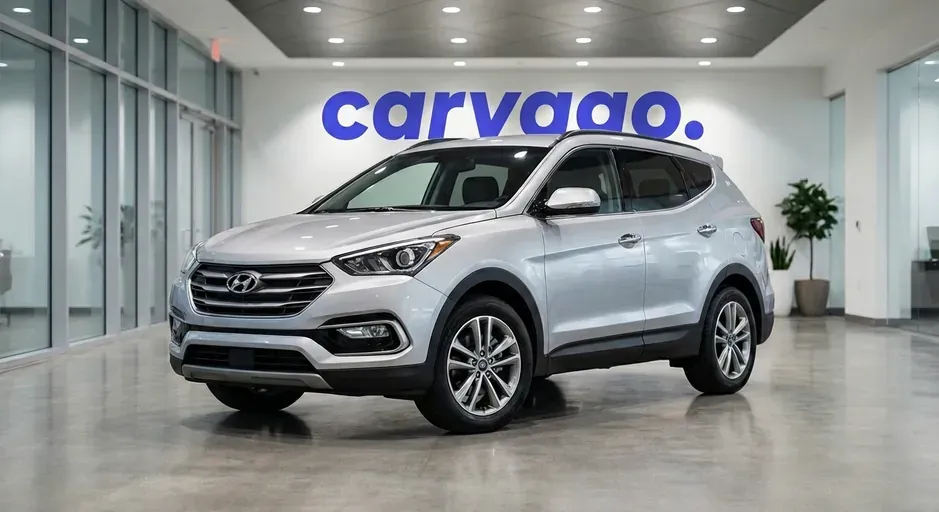
Hyundai Santa Fe

Hyundai Santa Fe

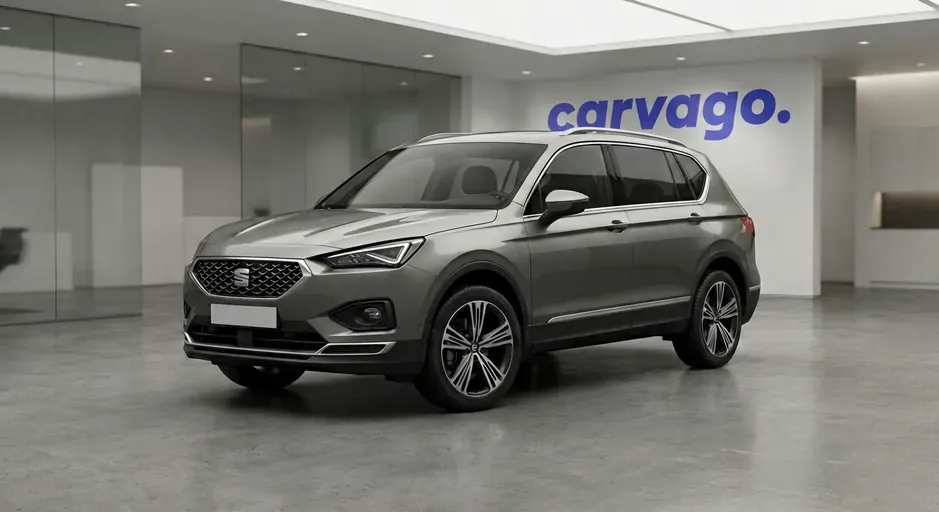
Seat Tarraco

Seat Tarraco

Introduction

The South Korean Hyundai Santa Fe, which also appears on some global markets under the name Shengda or was previously sold in extended versions as the Maxcruz, is a robust family SUV renowned for its premium comfort and generous equipment. Standing against it is the Spanish Seat Tarraco, the brand's flagship sharing a proven technical foundation with the Škoda Kodiaq, which scores points with a sharper design and a slightly sportier driving character. Let's take a detailed look at how these two popular representatives from the market of approximately four-year-old used cars fare in a direct comparison and which of them represents the ideal choice for your daily journeys.

Comparison of External Dimensions

Looking at the exterior dimensions of both family SUVs, we find that although they target the same customer group, their physical proportions differ slightly. Focusing on models from around 2022, which are currently typical for the four-year-old used car market, the fourth-generation Hyundai Santa Fe makes a slightly more robust and majestic impression on the road. The Seat Tarraco, on the other hand, maintains a more athletic and slender silhouette, which is a very characteristic feature of the Spanish automaker's design language.

In terms of specific numbers, the South Korean representative is 50 mm longer (4785 mm), a significant 61 mm wider (1900 mm), and 27 mm taller (1685 mm) than the Seat Tarraco. The Santa Fe's greater exterior width translates in practice to more generous shoulder room, which the occupants will appreciate especially when the car is fully occupied by three adults in the rear seats. On the other hand, the larger dimensions mean that the Santa Fe will require a bit more attention when parking in narrow garages and underground parking lots, where the Seat Tarraco benefits from its overall slightly narrower body.

An interesting twist occurs, however, when looking at the wheelbase, which is key for interior longitudinal space. Although the Seat Tarraco is a shorter vehicle overall, it has a wheelbase of 2790 mm, which is 25 mm more than the rival Hyundai. The Spanish SUV, which utilizes the Volkswagen Group's variable platform, is thus able to offer excellent space utilization and plenty of legroom for second-row passengers. The choice between these two cars therefore largely depends on whether you prioritize the overall bulk and more generous interior width of the Santa Fe, or rather the efficient use of longitudinal space and slightly easier urban maneuverability of the Tarraco.

ParameterHyundai Santa Fe SUVSeat Tarraco SUV
Width (mm)19001839
Length (mm)47854735
Height (mm)16851658
Wheelbase (mm)27652790

Trunk Volume

When choosing a family car from the used car market – focusing on models approximately four years old – the size of the trunk plays one of the most important roles. Whether you plan to transport a stroller, bulky sports equipment, or luggage for a trip to the cottage, the overall practicality of the trunk significantly shapes daily life with the car. Both of these popular SUVs offer families excellent utility value, yet there are significant differences between them that can tip the final decision one way or the other.

Seat Tarraco (KN generation) is considered an absolute hauler in the field of family SUVs. In its standard five-seat configuration, it has a massive basic capacity of 760 liters. In practice, this literally means space for several extra suitcases, which is perfectly sufficient for weekend shopping or a longer vacation without having to make compromises. If you fold down the rear backrests, the volume grows to an impressive 1,775 liters. However, it is important to mention that in the plug-in hybrid version (e-HYBRID), the batteries take up some of the space, reducing the basic trunk volume to 610 liters.

The fourth generation of the Hyundai Santa Fe (an ideal representative of four-year-old used cars) counters with a slightly smaller but still fully family-sized space. The standard five-seat version offers a basic capacity of 634 liters, which expands to 1,704 liters after folding the seats. The advantage of the Korean car is that the 634-liter value is maintained even for the classic and plug-in hybrid versions without significant limitations. You should only be cautious if you are looking for seven-seat variants – in those, in the five-seat configuration (with the third row stowed), the basic trunk slightly decreases to 571 liters and the maximum to 1,649 liters.

Trunk Capacity Comparison

ParameterHyundai Santa Fe SUVSeat Tarraco SUV
Basic capacity (liters)634760
Max. capacity with seats folded (liters)17041775

Note: The values in the table apply to the standard five-seat versions of the fourth-generation Santa Fe and the KN generation of the Tarraco, without the influence of batteries from plug-in hybrid systems or a third row of seats.

Decision in numbers 📏

Seat Tarraco wins in raw volume and is the clear choice for those who need to transport a huge amount of luggage, while the Hyundai Santa Fe offers an excellent and spatially balanced trunk regardless of the chosen engine type.

Discover the true condition of the car thanks to an independent inspection

Order CarAudit™

Trailer Weights

Towing capacity is a key parameter for many family SUV buyers, whether you plan to transport construction materials or need to tow a caravan. Looking at roughly four-year-old used cars on today's market, both models offer very solid values, though with significant differences across the available powertrains that are worth considering based on your specific needs.

For the fourth generation of the Hyundai Santa Fe, it depends heavily on which powertrain you choose. The powerful 2.2 CRDi diesel engine allows for towing a braked trailer weighing an impressive 2,000 to 2,500 kg, depending on the specific version and equipment. However, the situation changes significantly with electrified variants. The standard hybrid version (1.6 T-GDI Hybrid) has its maximum capacity reduced to 1,650 kg, and the plug-in hybrid variant can only handle 1,350 kg.

In contrast, the Seat Tarraco from 2020 to 2024 (KN generation) offers somewhat more consistent performance across the entire range. Even with the base 1.5 TSI ACT petrol engine or the plug-in hybrid (1.4 e-HYBRID), the standard braked trailer weight is a very respectable 1,800 kg. If you opt for the more powerful 2.0 TDI diesel or 2.0 TSI petrol engines, you reach a maximum capacity in the range of 2,000 to 2,300 kg.

From a practical standpoint, this means that while the lower values of the hybrid Santa Fe are perfectly sufficient for a weekend trip to a DIY store for bulky items or for attaching a standard light trailer, the two-ton and higher limits of the diesel variants in both cars (up to 2,500 kg for the Santa Fe) will easily allow you to tow a heavy caravan or a boat, which you'll appreciate if you're planning a longer holiday.

Conclusion:
If you're looking for a vehicle for the heaviest towing and prefer a diesel engine, the Hyundai Santa Fe with a capacity of 2,500 kg is the clear leader, capable of handling slightly more than the Tarraco. However, if you're considering more eco-friendly operation and looking at hybrid versions, the Seat Tarraco can tow 150 to 450 kg more, making it a much more versatile choice.
Model and engineBraked trailer weight (kg)Unbraked trailer weight (kg)
Hyundai Santa Fe 2.2 CRDi (4th generation)2000 - 2500750
Hyundai Santa Fe 1.6 T-GDI Hybrid (4th generation)1650750
Hyundai Santa Fe 1.6 T-GDI Plug-in-Hybrid (4th generation)1350750
Seat Tarraco 2.0 TDI (KN)2000 - 2300750
Seat Tarraco 2.0 TSI (KN)2250 - 2300750
Seat Tarraco 1.5 TSI ACT (KN)1800750
Seat Tarraco 1.4 e-HYBRID (KN)1800750

Overview of Most Common Motorizations

The engine range for the Hyundai Santa Fe and Seat Tarraco represents two completely different approaches to powering large family SUVs, which has a fundamental impact on fuel consumption, dynamics, and overall operating costs. While Hyundai opted primarily for electrification for the fourth generation (especially after the extensive facelift at the turn of 2020 and 2021), Seat relies on the broad and proven Volkswagen Group range of classic TSI and TDI internal combustion engines for the Tarraco. For buyers of a roughly four-year-old used car, this means a choice between technologically advanced, exceptionally smooth-running hybrids from the Korean manufacturer and traditional diesel or petrol mile-munchers from the Spanish sibling of the Škoda Kodiaq.

Hyundai Santa Fe: In the name of electrification and a massive diesel

The fourth-generation Hyundai Santa Fe offers a very clear yet technologically advanced engine range. In the relevant selection of current roughly four-year-old used cars, standard pure petrol versions are completely absent (the older 2.0 CRDi and 2.4 GDI engines were withdrawn from the European market in 2020). The role of the standard petrol engine has therefore been taken over by the sophisticated 1.6 T-GDI Hybrid full-hybrid system with a solid system output of 169 kW. This engine perfectly combines reasonable fuel consumption with smooth pull and pleases with a classic six-speed automatic transmission.

At the top of the eco-friendly range sits the plug-in hybrid variant of the same unit, the 1.6 T-GDI Plug-in-Hybrid with 195 kW, which is ideal for drivers who can regularly charge their vehicle from a domestic socket or wallbox. A traditional and highly sought-after staple on the used car market is the reliable 2.2 CRDi diesel engine with 148 kW and a generous 440 Nm of torque, which in the generation under review uses a modern eight-speed dual-clutch DCT transmission. Furthermore, most of the engines sold here are available with intelligent all-wheel drive.

Engine typeFuelPower (kW)Torque (Nm)Transmission
1.6 T-GDI HybridPetrol/HEV1693506AT
1.6 T-GDI Plug-in-HybridPetrol/PHEV1953506AT
2.2 CRDiDiesel1484408DCT

Seat Tarraco: The certainty of traditional internal combustion engines for everyone

The Seat Tarraco provides a disproportionately wider choice of classic powertrains that can satisfy both very thrifty drivers and lovers of dynamic, sporty driving. The standard and most affordable engine is the well-known 1.5 TSI ACT (110 kW) petrol four-cylinder equipped with cylinder deactivation for effective fuel consumption reduction under partial load. In used cars, it can be found with both a manual transmission and a seven-speed dual-clutch DSG automatic. More dynamically oriented drivers can then look for the more powerful two-litre 2.0 TSI petrol, which offers 140 kW and, in the sportier top-of-the-line FR trim, an impressive 180 kW.

However, the very popular 2.0 TDI diesel units (offered in 110 kW and 147 kW versions) play an absolutely key role, forming the backbone of the listings in used car dealerships. The more powerful diesel variant with a mighty 400 Nm of torque represents the ideal for the motorway with excellent efficiency. Like its competitor Hyundai, Seat also launched a plug-in hybrid in 2021 under the designation 1.4 e-HYBRID with a total output of 180 kW, which was primarily intended for corporate fleets. A major advantage of the two-litre versions of the Seat Tarraco is the presence of 4Drive all-wheel drive.

Engine typeFuelPower (kW)Torque (Nm)Transmission
1.5 TSI ACTPetrol1102506MT / 7DSG
2.0 TSIPetrol140 / 180320 / 3707DSG
1.4 e-HYBRIDPetrol/PHEV1804006DSG
2.0 TDIDiesel110 / 147340 / 4006MT / 7DSG

Strengths and weaknesses in practice

The main strength of the Hyundai Santa Fe is undoubtedly its sophisticated, very quiet, and user-friendly hybrid system. It is a top choice for comfortable family travel and absolutely excels in daily city driving or traffic jams. The flip side of the coin for some may be the complete absence of a cheaper non-hybrid petrol engine, which increases the initial purchase price of a used car. The large-capacity 2.2 CRDi diesel four-cylinder is then the clear choice for those with country houses or those who tow a trailer.

The Seat Tarraco clearly scores with its modularity and rich range of classic engines without forced full electrification. If you are looking for a family SUV at the most favourable price and do not need to set the world on fire, the basic 1.5 TSI will do an excellent job. For drivers operating on motorways with extremely high annual mileage, the 2.0 TDI remains the unbeatable king of the market. However, lovers of silence, technological features for reducing emissions in congested city traffic, and perfectly smooth take-offs will more likely find their winner behind the wheel of the South Korean Santa Fe.

Electrification from Korea vs. Combustion Staples from Spain ⚡

While the Hyundai Santa Fe is a bet on top-tier hybrid comfort and a quiet ride, the Seat Tarraco appeals with an unbeatably wide range of economical diesels and brisk petrol engines for every occasion.

Choosing the right engine is absolutely crucial for long-term satisfaction with a vehicle, which is why our recommendations for roughly four-year-old used cars are based on real-world performance, actual fuel consumption, owner feedback, and long-term mechanical reliability. While Hyundai relied on an exceptionally durable and field-proven diesel engine for its popular fourth generation (which, however, has completely given way to hybrid technologies in the latest models), Seat counters with a wide range from the VW Group, dominated by exceptionally efficient diesel engines for long highway journeys.

For the Hyundai Santa Fe, we recommend: 2.2 CRDi (148 kW / 202 hp)

This diesel engine represents the best possible choice for four-year-old 4th generation models in terms of balanced performance, practicality, and overall reliability. Furthermore, as you can notice in the available engine data above, for the latest 5th generation produced since 2024, this popular diesel is no longer available and has been fully replaced by gasoline hybrids (1.6 T-GDI), making used cars with this reliable engine highly sought after on the market. The engine boasts massive torque, which, combined with the modern eight-speed dual-clutch DCT transmission, offers perfect pull and maintains very reasonable real-world fuel consumption for a large SUV. If the previous owner only used the car for short city trips, there is a risk of the diesel particulate filter (DPF) and EGR valve becoming clogged. A documented service history is essential – always verify that the automatic transmission oil was changed at least every 60,000 km to avoid potential issues. It is an ideal highway cruiser that will particularly suit long-distance drivers, families going on vacation, and anyone who needs to reliably tow a caravan.

For the Seat Tarraco, we recommend: 2.0 TDI (147 kW / 200 hp) 4Drive DSG

The top-of-the-line two-liter turbodiesel (which seamlessly replaced the earlier 140 kW version in the lineup) is the absolute ideal for the massive seven-seater Tarraco, combining confident dynamics with exemplary operational efficiency. This VW Group engine with a massive 400 Nm of torque provides a perfect power reserve in all circumstances and allows for safely towing a braked trailer weighing up to 2,300 kg. A pleasant bonus is the excellent fuel consumption, which regularly falls below 7 liters per 100 km even on the highway. However, with this engine, problems with EGR valve and DPF filter clogging can occur during long-term city driving in traffic jams. During the test drive, pay special attention to any jerking of the seven-speed DSG transmission when pulling away; there is a strict requirement here for an oil change every 60,000 km as the best prevention against fatal failures of the expensive mechatronics unit. This makes it a perfect choice for drivers with high highway mileage, passionate caravanners, and users living in hilly terrain who will fully appreciate the smart 4Drive all-wheel drive.

Real Fuel Consumption

Official fuel consumption figures, which car manufacturers confidently state in catalogs, unfortunately often differ significantly from real-world results in everyday traffic. This difference is most noticeable in massive family SUVs like the Hyundai Santa Fe and Seat Tarraco. The largest deviations from the specs commonly occur in plug-in hybrid versions, whose standardized laboratory measurements benefit from specific conditions and a fully charged battery. To get a reliable and objective picture of the operating costs of popular used cars around four years old (specifically the fourth generation of the Santa Fe and the KN generation of the Tarraco), our comparison is based not only on paper assumptions but primarily on long-term averages of real drivers recorded on the community portal Spritmonitor.de.

Model and engineAverage consumption (l/100 km)
Diesel engines
Seat Tarraco 2.0 TDI6.4
Hyundai Santa Fe 2.2 CRDi6.8
Petrol engines
Seat Tarraco 1.5 TSI ACT7.1
Seat Tarraco 2.0 TSI8.5
Hybrid powertrains (HEV/PHEV)
Hyundai Santa Fe 1.6 T-GDI Plug-in-Hybrid1.6
Seat Tarraco 1.4 e-HYBRID1.7
Hyundai Santa Fe 1.6 T-GDI Hybrid7.3

Comparing these real-world figures reveals several very clear trends. Traditional diesel units, specifically the popular group 2.0 TDI in the Seat and the larger 2.2 CRDi in the Hyundai, still represent the best choice for drivers covering long distances. Despite the high weight of both cars, they handle constant highway speeds with excellent consumption between 6.4 and 6.8 liters per hundred kilometers. Conversely, the behavior of smaller petrol and hybrid units might be a surprise. While the entry-level 1.5 TSI petrol engine in the Tarraco can run at a pleasant 7.1 l/100 km, the more powerful 2.0 TSI sees consumption approach nine liters. A similar effect occurs with the full-hybrid (HEV) version of the Hyundai Santa Fe with the 1.6 T-GDI engine. While it saves fuel brilliantly in the city, as soon as it has to overcome the aerodynamic drag of the massive body on the highway, consumption realistically jumps to 7.3 liters. Plug-in hybrids (PHEV) may reign supreme on paper and on the display with fantastic values under 2 liters, but this applies exclusively on the condition that you have the car faithfully charged every day. Without energy in the battery, the real consumption of these vehicles immediately tips over the 6.5 l/100 km mark.

What does this mean for the average user and the family budget? If your daily bread consists of shorter city trips, dropping children off at school, and you have the certainty of overnight charging at home or at work, plug-in hybrid variants will be an absolutely unbeatable choice with minimal fuel bills. Thrifty customers looking for a good compromise between purchase price and consumption without having to deal with cables, on the other hand, most often and rightly choose the economical 1.5-liter in the Seat. However, if you are a highway traveler or occasionally tow a family caravan, the proven diesel versions of both models are a clear and logical necessity for you in terms of range and costs.

It can therefore be said that overall average fuel consumption should not be the main and only deciding factor in the battle between the Hyundai Santa Fe and the Seat Tarraco. Approximately four-year-old cars of both generations cover a fantastically wide range of modern powertrains. The decision simply doesn't rest on which brand can make a more economical car, but rather on whether the chosen engine technology and body size resonate 100% with your specific driving profile and daily habits.

Price Range and Used Car Offerings

If you are considering buying a used family SUV, models around four years old (production years 2021–2022) represent the ideal choice. The initial depreciation of a new car is already behind you, yet the cars are still in perfect condition, often with a documented service history. When comparing the fourth-generation Hyundai Santa Fe (after its significant facelift) and the first-generation Seat Tarraco, a relatively significant price gap is visible on the used car market.

Seat Tarraco: Excellent value for money

The Spanish SUV attracts buyers on the secondary market with very attractive prices. For four-year-old models, you will find a fairly wide price range in the listings, which is favorable for family budgets:

  • Basic availability (from approx. €19,000): For this amount, you get models with the basic 1.5 TSI petrol engine or lower-powered versions of the 2.0 TDI diesel. These are often cars from corporate fleets with mileage exceeding 120,000 kilometers.
  • The golden middle ground (approx. €23,000 – €27,000): In this category, you can find well-equipped pieces (Style or Xcellence trim levels) with acceptable mileage under 100,000 kilometers.
  • Top specifications (around €31,000): The most expensive four-year-old Tarracos on the market usually offer the attractive FR sports package, powerful engines (2.0 TSI or 2.0 TDI with 147 kW), and the popular 4Drive all-wheel drive.

Hyundai Santa Fe: A step towards premium for a higher surcharge

The Hyundai Santa Fe from 2021 and 2022 aims a bit higher in its segment. This is evident at first glance in the soundproofing and interior craftsmanship, and logically, it is reflected in the prices on the secondary market, where this model is noticeably more expensive:

  • Entry level (from approx. €27,000): The cheapest used units are usually powered by the popular 2.2 CRDi diesel engine. To reach this price point, the cars typically have higher mileage, often over 150,000 kilometers.
  • Mid-range and hybrids (€31,000 – €35,000): In this price range, advanced hybrid (HEV) and plug-in hybrid (PHEV) variants start to become widely available. Mileage here usually ranges from a more modest 60,000 to 90,000 kilometers.
  • Maximum equipment (up to €39,000): In the highest specifications, such as the luxury Calligraphy version, the cars are logically at the top of the price range. Their depreciation is not as steep, as the rich equipment maintains buyers' interest in the long term even on the used car market.

Comparison of parameters on the 4-year-old used car market

ParameterSeat Tarraco (2021–2022)Hyundai Santa Fe (2021–2022)
Approximate market price€19,000 – €32,000€27,000 – €39,000
Most common drivetrain on the market1.5 TSI, 2.0 TDI (often FWD)2.2 CRDi, 1.6 HEV/PHEV (almost always 4x4)
DepreciationMore significant drop at the start, great availabilityHolds value excellently, slower decline
Typical used car buyerLooking for maximum space on a modest budgetWants modern technology and premium craftsmanship

Budget and luxury requirements decide 💰

While the used Seat Tarraco scores with drivers looking for a reliable family background at a reasonable price, the Hyundai Santa Fe is noticeably more expensive, but easily justifies its price gap with richer equipment and advanced hybrid powertrains.

Safety and Euro NCAP Rating

Both models, the Hyundai Santa Fe and the Seat Tarraco, earned the maximum five-star rating in their Euro NCAP tests. However, it is essential to view these results in the context of when the vehicles were physically tested. Euro NCAP methodology is constantly evolving and becoming stricter – with each passing year, more demanding requirements are added, such as new frontal impact simulations (e.g., collision with a moving obstacle), stricter scenarios for cyclist detection, or testing of assistance systems in crisis situations at intersections. For this reason, percentage scores from older tests cannot be directly and unreservedly compared with current models on the market.

The fourth generation of the Hyundai Santa Fe underwent crash tests in 2018. The South Korean car demonstrated an exceptionally robust construction and provided excellent protection for both adult and child passengers. The only weakness was the protection of vulnerable road users, where the Santa Fe lost points due to overly hard hood edges and A-pillars in a potential collision with a pedestrian. Given that Euro NCAP limits the validity of its ratings to six or seven years, this model's 2018 certification has already formally expired by today's strict standards.

The Seat Tarraco underwent safety tests a year later, in 2019, and thus had to deal with a slightly updated and stricter set of testing protocols. The Spanish family SUV literally excelled in them. Adult passenger protection reached an impressive 97%, which at the time placed the model among the absolute top in its category. The Tarraco also handled the pedestrian and cyclist protection discipline much better and provided a somewhat more confident response within the assistance systems, which include prompt automatic emergency braking. Similar to its Hyundai rival, however, the validity of the five-star certificate for the Seat also expires, specifically in January 2026.

ParameterHyundai Santa FeSeat Tarraco
Year of testing20182019
Adult protection94 %97 %
Child protection88 %84 %
Vulnerable road users protection67 %79 %
Safety assistance systems76 %79 %

A detailed comparison of these results shows that the Seat Tarraco offers a slightly more modern and balanced safety package. Although both family SUVs represent a very reliable choice in terms of passive safety and protect children almost comparably, the Spanish model from the VW Group family performed better in a slightly more demanding testing year. It also demonstrated broader capabilities of its active assistants and a more considerate design towards its surroundings. For families buying a roughly four-year-old used car, the Tarraco is therefore a slight favorite in terms of the comprehensiveness of safety equipment.

🛡️ A Close Battle for the Family Vault

While both models provide excellent passive protection for the occupants, the Seat Tarraco wins slightly thanks to better pedestrian protection results and more sophisticated assistance systems from a stricter testing year.

Comparison of Interesting Equipment Features

In addition to standard equipment, each model offers several unique elements that can be decisive for the customer, and each automaker approaches this added value with a completely different philosophy. While the South Korean representative bets on modern technology and maximum comfort, the Spanish competitor benefits from group-wide ingenuity and offers a sportier character.

Hyundai Santa Fe: Technological Sophistication and Emphasis on Luxury

  • Blind-Spot View Monitor (BVM): One of the brand's most popular innovations. When the turn signal is activated, a circular dial on the 12.3-inch digital instrument cluster temporarily changes to a display showing the image from the mirror. The driver can see exactly what is happening next to the vehicle, which greatly facilitates movement in city lanes.
  • Remote parking via key: The Remote Smart Parking Assist system allows the car to be moved forward and backward remotely, even when standing outside. This feature, previously reserved only for luxury premium sedans, is invaluable when parking in very narrow garages or crowded parking lots.
  • Button shifting and "floating" console: In this generation, Hyundai has completely removed the classic automatic transmission selector and replaced it with Shift-by-wire technology. The transmission is controlled by buttons on a raised, massive center console, which has created a huge and practical storage space for a handbag or larger items underneath.
  • Smart safety for families: The car features Safe Exit Assist. If the electronics detect an approaching vehicle from behind, it temporarily locks the rear doors so that children cannot accidentally open them directly into the path of a passing car.
  • Driving modes and Terrain Mode: The rotary selector on the center panel allows not only the selection of classic driving modes but, thanks to the advanced HTRAC all-wheel-drive system, also offers specific settings for mud, snow, or sand.

Seat Tarraco: Sporty Flair and Group Modularity

  • Connectivity and predictive functions: The infotainment with a 9.2-inch display is positioned high in the line of sight and offers quick response. In combination with the SEAT Digital Cockpit, the system handles advanced functions – for example, predictive adaptive cruise control can adjust speed itself not only according to signs but also approaching curves or roundabouts.
  • FR (Formula Racing) sports trim: While the Santa Fe aims for majestic comfort, the Tarraco can please dynamically minded drivers. The FR version adds a more aggressive bumper look, up to 20-inch wheels, significantly shaped bucket seats with integrated headrests, and a specifically tuned DCC adaptive chassis for a sharper ride.
  • Smart luggage compartment solutions: Families will appreciate the so-called Virtual Pedal. If you are carrying groceries in both hands, simply wave your foot under the rear bumper and the tailgate opens and closes by itself.
  • Maximum interior modularity: The use of the group's MQB platform is reflected in huge internal variability. The second row of seats is asymmetrically split, sliding over an impressive 18 centimeters, and also allows for backrest angle adjustment. Additionally, you will often find practical folding tables for rear passengers in the backrests of the front seats.
  • Typical light signature: Lighting technology is characteristic of SEAT. Full LED headlights are complemented in higher trims by an effective light strip connecting the rear lamps and dynamic rear indicators, giving the car a modern European and easily recognizable look.

Key Advantages and Disadvantages

Hyundai Santa Fe

Pros

Very luxurious interior craftsmanship using premium materials

Wide range of fuel-efficient hybrid (HEV) and plug-in hybrid (PHEV) powertrains

Exceptionally rich standard equipment including advanced assistants even in the base trim

Excellently soundproofed cabin and a comfortably tuned chassis for long journeys

Fresh and confident exterior design

Cons

Higher purchase price on the used car market

The center console is cluttered with many buttons, which can feel confusing at first

Limited legroom and headroom for adult passengers in the optional third row of seats

The Hyundai Santa Fe is an excellent choice for those looking for maximum travel comfort, a sense of luxury, and modern hybrid powertrains. It represents the ideal family SUV for calmly tackling long highway routes with a sense of safety and extraordinary care for the crew.

SEAT Tarraco

Pros

More confident and surprisingly agile driving characteristics thanks to a sportier chassis tuning

Highly practical interior with excellent ergonomics and logical layout of controls

Proven and reliable Group TSI and TDI engines with good service availability

Better value for money when buying a used car

Fast and very intuitive multimedia system

Cons

The stiffer suspension can feel too firm for a family SUV on poor-quality country roads

Very conservative dashboard design that doesn't feel as luxurious

Lower trim levels lack some comfort features that competitors offer as standard

Significantly higher aerodynamic noise at highway speeds compared to the Santa Fe

The Seat Tarraco will appeal to drivers who need a seven-seater family car but don't want to give up a more dynamic feel behind the wheel and confident cornering. It is a rational and spacious choice benefiting from reliable Volkswagen Group technology, excelling in its practicality and massive luggage space.

Common Problems and Owner Complaints

Based on data from service reports, breakdown statistics, and information provided by our comprehensive car audit, we have compiled an overview of the most common problems that buyers of roughly four-year-old used cars of these models should watch out for.

The fourth-generation Hyundai Santa Fe (in the post-facelift version from around 2021) is generally considered a robust and mechanically very reliable SUV, however, even it has its specific weak points that are worth focusing on when choosing.

  • Engine and transmission: With the highly sought-after 2.2 CRDi diesel engine, problems with a clogged diesel particulate filter (DPF) or a troublesome EGR valve can occur during frequent short trips and city driving. The eight-speed dual-clutch transmission (DCT) in newer models requires increased attention. Owners occasionally complain about jerking, hesitant, or rougher shifting at very low speeds and typical crawling in traffic jams.
  • Electronics and infotainment: The most common minor faults include a freezing infotainment screen, unexpected sound dropouts from the speakers, or non-functional Bluetooth pairing. A restart or software update usually helps. For 2021 and 2022 models, issues with the Start-Stop system and occasional false warnings from assistance systems (such as emergency braking) have also been reported.
  • Interior and chassis: If you are looking at a car with a panoramic sunroof, check it during a test drive over bumps. In some units, the mechanism loosens over time, causing unpleasant creaking and knocking. Although the chassis is durable, due to the high weight of the vehicle, play in the front axle can appear more quickly in examples with higher mileage.

Hyundai Santa Fe: Robust foundation with occasional electronic quirks

The Santa Fe is a mechanically durable car that does not benefit from predominantly short city trips in the case of diesel engines. Most reported problems are limited to software errors and minor inaccuracies of the dual-clutch transmission during parking.

The Seat Tarraco shares most of its technology with the Skoda Kodiaq and VW Tiguan Allspace models. It thus benefits from the proven and available solutions of the VW Group, but at the same time, it also carries its typical teething troubles.

  • Engine and transmission: Similar to its siblings, 2.0 TDI engines suffer from DPF clogging and EGR circuit problems if used primarily as a "school bus" for short distances. With the 1.5 TSI petrol engine, the well-known "kangaroo effect" (slight jerking when pulling away) can occur, especially when cold. DSG dual-clutch transmissions (especially the seven-speed versions) unconditionally require adherence to oil change intervals. If neglected, they will start to jerk unpleasantly when pulling away and crawling.
  • Electronics and infotainment (MIB3): By far the most complaints are directed at the MIB3 onboard system. Users very often report display freezing, spontaneous system restarts, slow responses after starting, and loss of connection with a mobile phone. In addition, erroneous parking sensor reports or a faulty electronic fuel filler flap lock occasionally cause trouble.
  • Brakes and bodywork: In service reports for the Tarraco, above-average and premature wear of the brake pads and discs on the front axle is often mentioned, which frequently manifests itself after only 30,000 kilometres with squealing and reduced braking effect. A common aesthetic defect is also fogging and moisture condensation in the front LED headlights.

Seat Tarraco: Familiar technology requiring regular care

The Tarraco offers great utility value and confident driving characteristics, but its long-term reliability depends on honest DSG transmission servicing and patience with the occasionally faulty infotainment.

Tips for Buying a Used Car

When buying a used car, a thorough inspection is key. Here are some specific points to focus on for these two models. A careful used car inspection can reliably protect you from unexpected and expensive investments, which is why it always pays not to underestimate anything.

When choosing a Hyundai Santa Fe:

  • Behavior of the dual-clutch transmission (DCT) and automatic: Models around four years old (especially with the 2.2 CRDi diesel engine) already use an eight-speed dual-clutch transmission with wet clutches. During the test drive, focus on the smoothness of starts and behavior when crawling in traffic. Any jerking, unnatural hesitation, or vibrations may indicate worn clutches or the need for control software calibration.
  • Transitions in hybrid and plug-in hybrid (PHEV) versions: If you are considering a 1.6 T-GDi HEV or PHEV model, closely monitor the smoothness of switching between electric drive and the internal combustion engine. A noticeable jerk or audible clunks when the combustion engine engages point to possible hardware wear or the need for a full system update.
  • Battery capacity in plug-in hybrids: The battery in used PHEV models can lose some of its original capacity depending on how it was previously used. Check the trip computer to verify the estimated pure electric range at full charge. For a car approximately four years old, this value should still be around 45 to 50 kilometers.
  • Chassis play and suspension wear: The Santa Fe is a large and heavy SUV, which naturally puts a strain on chassis components. Listen closely when driving over speed bumps or broken roads. Dull thuds from the axles can mean worn ball joints or torn control arm bushings. You won't spot these with the naked eye on the street, so a physical inspection by an expert on a lift is the ideal solution in this case.
  • Diesel Particulate Filter (DPF) clogging: The diesel engine is a popular choice, but if the previous owner mostly used it for city shopping trips, there is a risk of a clogged DPF filter. During the test drive, watch for any warning lights flashing on the instrument cluster and notice any idling speed fluctuations.

When choosing a Seat Tarraco:

  • Cold engine operation (1.5 TSI): With the popular base petrol engine, early model years often experienced so-called "kangarooing" or noticeable throttle hesitation immediately after a cold start. Always insist that the engine must be completely cold before your test drive so you can reliably test for this common ailment.
  • DSG automatic transmission behavior: The seven-speed DSG dual-clutch transmission (DQ381) should shift smoothly, quickly, and logically while driving. Try both sharp acceleration and slow crawling from a standstill. Metallic clunks, long rev slipping, or a sharp jerk when shifting indicate neglected oil changes or an expensive mechatronics failure.
  • Infotainment freezing and crashes: The MIB3 system, widely used by the Volkswagen Group, is prone to software errors and slow screen responses. Actively test the navigation and phone connection via Apple CarPlay or Android Auto during the drive. If the system restarts or freezes, an authorized firmware update is often necessary.
  • Condition of the DCC adaptive chassis: Many better-equipped Tarraco models offer optional adaptive dampers. Click through all available driving modes and verify the actual change in stiffness on a rougher road. Unfortunately, electronically controlled dampers sometimes leak prematurely, and their repair is expensive. A thorough technical inspection of the car will help detect the onset of an oil leak.
  • Water pump and coolant leaks (2.0 TDI): For the two-liter diesel engines, pay close attention to the coolant level in the expansion tank when inspecting the engine compartment. Known issues with this engine at around four years of age are seepage and water pump failures. After starting, also listen for any squeaking sounds from the right side of the engine in the timing belt area.

FAQ: Most Frequently Asked Questions

In the five-seat configuration, the Seat Tarraco offers a volume of 760 liters, surpassing the Hyundai Santa Fe with a volume of around 634 liters. For seven-seat versions, the difference is slightly smaller, but the Seat model still maintains a slight advantage. After folding all rear seats, however, both cars provide a huge and highly usable space for any family needs.

The Hyundai Santa Fe provides slightly more legroom and shoulder room in the third row thanks to its overall wider body and specific platform. However, the seats in the very back row of both cars are primarily intended for children or emergency transport over shorter distances. Access to the rear seats is handled very similarly and intuitively in both models using a sliding second row.

The South Korean automaker offers a wider range of electrified powertrains, including full hybrid (HEV) and plug-in hybrid (PHEV) versions. While Seat offers a successful plug-in hybrid labeled e-Hybrid, a classic self-charging hybrid is missing from its lineup. For daily city driving without the need for constant battery charging from a socket, the Santa Fe is thus the more flexible choice.

The Hyundai Santa Fe is tuned with maximum emphasis on smoothness and comfortable damping of bumps, making it an ideal and quiet highway cruiser. The Seat Tarraco has a slightly stiffer chassis, which in return brings more stable driving characteristics and less body roll in corners. If you prefer ultimate comfort, the Hyundai wins, while for drivers looking for at least a hint of dynamics, the Seat is better.

Hyundai scores with its five-year factory warranty without mileage limits, meaning a roughly four-year-old used car can still be fully under warranty for the new owner. Seat standardly provided a two-year warranty, or extended to five years with a fixed mileage limit. In terms of overall reliability, both models perform above average, but it is crucial to ensure a verifiable maintenance history.

Conclusion: Which Model to Choose?

Our Verdict

Choosing between four-year-old used Hyundai Santa Fe and Seat Tarraco models represents a classic decision between Asian premium comfort and rational European practicality. While the more majestic Santa Fe excels with its luxurious craftsmanship, advanced hybrid powertrains, and top-tier sound insulation—which you'll appreciate during quiet long-distance journeys—its Spanish competitor attracts with a much more friendly purchase price. On the other hand, the Tarraco appeals to active families with its massive luggage space, more confident driving characteristics, and a proven range of traditional, fuel-efficient TSI and TDI internal combustion engines. If your priority is maximum comfort and technological sophistication, go for the South Korean SUV; however, if you are looking for an unbeatable price-to-interior-space ratio with a touch of sporty flair, the Seat Tarraco will be the better everyday companion for you.

Find your ideal car

Sources: ADAC, novinky.cz, auto.cz, motorvize.cz, automagazin.cz, motorsport.cz

This article was prepared using artificial intelligence tools. The section guarantor is Petr Dušek.

Related articles

Car battle

Nissan X-Trail vs. Renault Espace: Complete comparison 2026

Detailed comparison of the Nissan X-Trail and Renault Espace. Discover the differences in space, fuel consumption, and equipment, and read our verdict. Which family SUV is better?

Apr 18, 2026

Car battle

Ford Edge vs. Volkswagen Tayron: Complete comparison 2026

Ford Edge vs. Volkswagen Tayron: Which SUV to choose? A detailed comparison of equipment, driving characteristics, and real-world experiences. Read our final verdict.

Apr 20, 2026

Car battle

Kia Sorento vs. Renault Espace: Complete comparison 2026

Detailed comparison of popular family cars: Kia Sorento vs Renault Espace. Discover real-world experiences, differences in equipment, and our verdict before you buy.

May 1, 2026

We accept online card payments as well as wire transfers.

visa payment provider logovisa-electron payment provider logomastercard payment provider logomaestro payment provider logodiners-club payment provider logodiscover payment provider logo