Hyundai Santa Fe vs. Seat Tarraco: Complete comparison 2026
Detailed comparison of Hyundai Santa Fe vs. Seat Tarraco. Real-world experience, evaluation of spaciousness and driving characteristics. Find out which family SUV is better!
May 6, 2026
Articles
Car battle
Detailed comparison of the Hyundai Santa Fe vs. Renault Espace. We compared space, equipment, and reliability. Find out in our verdict which family car to choose.
May 17, 2026


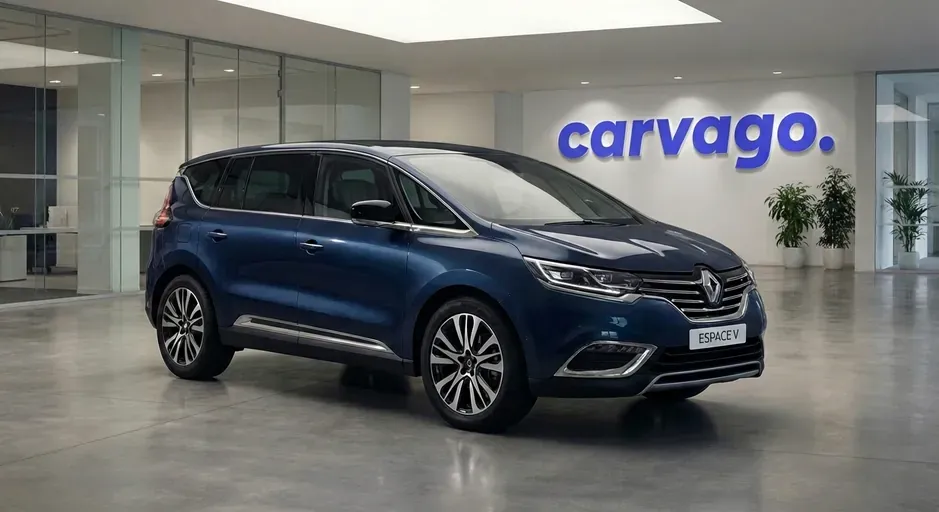
The South Korean Hyundai Santa Fe, which was also known as the Hyundai Maxcruz in its extended version in some markets, represents a robust SUV sought after for its comfort, reliability, and rich family equipment. Its challenger is the French Renault Espace, a legendary pioneer of the MPV category, which in its newer generations has successfully transformed into an elegant and spacious crossover. Let's take a detailed look at how these two representatives stand in a direct comparison on the market for approximately four-year-old used cars and which of them will offer you a better combination of practicality, driving characteristics, and overall utility value.
When choosing a family car on the used car market – typically models around four years old (generations produced around 2022) – exterior dimensions play a crucial role. The fifth-generation Renault Espace, with its concept on the borderline between a large MPV and a crossover, offers an impressive length of 4,858 mm and a width of 1,914 mm. Opposing it is the fourth generation of the classic SUV Hyundai Santa Fe, which, with a length of 4,785 mm, is 73 mm shorter and, with a width of 1,900 mm, slightly narrower. For everyday use, this means the Santa Fe will be slightly easier to maneuver in tight underground garages, while its French competitor will require a bit more space. The shorter footprint and smaller width thus make the Hyundai Santa Fe a slightly more user-friendly choice for drivers who frequently park in heavy city traffic.
An interesting perspective is offered by comparing the wheelbase, which is absolutely key for longitudinal interior space. Here, the Renault Espace clearly dominates with a value of 2,884 mm, which is a significant 119 mm more than the Hyundai Santa Fe (2,765 mm). This advantage is fully evident in the legroom for passengers in the second row of seats. As for height, the cars are very close – the Santa Fe measures 1,685 mm, while the Espace has a slightly lower, more aerodynamic silhouette with a height of 1,681 mm. The noticeably longer wheelbase of the Renault makes it a more suitable candidate for families requiring generous legroom on long journeys, while the higher roofline of the Santa Fe makes entry slightly easier.
Both cars approach space utilization differently. Despite its size, the Hyundai retains traditional SUV proportions with a more vertical rear, making it easier for drivers to estimate distance when reversing. The Espace, with its elongated and bulkier build, bets on maximizing highway comfort and interior volume. In the overall context of exterior dimensions, the Renault Espace represents a more suitable choice for highway travel with a full load, whereas the Hyundai Santa Fe offers a more balanced compromise of dimensions for everyday urban and suburban use.
| Parameter | Hyundai Santa Fe SUV | Renault Espace Van |
|---|---|---|
| Width (mm) | 1900 | 1914 |
| Length (mm) | 4785 | 4858 |
| Height (mm) | 1685 | 1681 |
| Wheelbase (mm) | 2765 | 2884 |
Luggage capacity is often one of the most important parameters for those interested in large family vehicles. When choosing a used car around four years old, which is a very popular choice for today's customers, the fourth generation of the Hyundai Santa Fe and the fifth generation of the Renault Espace are most commonly encountered on the market. Both vehicles offer generous interior space, but approach it slightly differently due to their different initial concepts. While the South Korean representative is a typical majestic family SUV, the French model successfully combines the dynamic features of a crossover with the traditional airiness of the MPV category.
If we look at the specific numbers, the Renault Espace (5th generation) from 2020 to 2022 offers a generous luggage capacity of 693 liters in its basic configuration. This space can be increased to a massive 1994 liters by folding down the rear seats. In contrast, the fourth-generation Hyundai Santa Fe has a standard capacity of 634 liters and a maximum volume of 1704 liters. The volume naturally changes for both cars in seven-seater variants – for example, in the Santa Fe with the optional third row of seats (often designated as Seven), the basic capacity behind the second row drops to 571 liters and the maximum to 1649 liters. A major advantage of the fourth-generation Santa Fe, however, is that the popular hybrid and plug-in hybrid versions do not restrict the interior space in any way and, even with the batteries installed, maintain a full volume comparable to conventional internal combustion engines.
In everyday practice, these differences mean that both cars will easily handle even more demanding transport tasks. Thanks to its concept with a longer wheelbase and lower floor, the Renault Espace undoubtedly offers space for a few extra suitcases, which makes packing for longer family trips or moving bulkier items much easier. The Hyundai Santa Fe, on the other hand, benefits from a robust architecture with a regularly shaped space without intrusive alcoves. Such a boot is perfectly sufficient for weekend shopping as well as a longer holiday with a full load. Folding the seats is very easy in both competitors, and once folded, a highly practical and excellently usable loading area awaits you.
| Parameter | Hyundai Santa Fe SUV | Renault Espace MPV |
|---|---|---|
| Base volume (liters) | 634 | 693 |
| Maximum volume with seats folded (liters) | 1704 | 1994 |
Although the fifth-generation Renault Espace provides an absolutely larger total luggage capacity thanks to its family MPV genes, the fourth-generation Hyundai Santa Fe SUV does not disappoint and scores with its extremely practical shape and the fact that even with its fuel-efficient hybrid versions, you won't lose a single bit of space for your luggage.
Braked trailer weight is a key parameter for anyone planning to tow a caravan, horse trailer, or heavier load with their car. For approximately four-year-old used cars, represented by the 4th generation Hyundai Santa Fe and the 5th generation Renault Espace, very interesting differences appear here, with the chosen engine also playing a significant role.
Looking at standard conventional engines, the Korean SUV has the upper hand in terms of maximum capacity. The popular Hyundai Santa Fe with the well-liked 2.2 CRDi diesel engine (4th generation) can tow an impressive 2,500 kg on its tow bar. In contrast, the rival fifth-generation Renault Espace stays at a universal but still very respectable 2,000 kg for its diesel and petrol engines (including the powerful BLUE dCi and TCe 225 versions).
However, the situation changes dramatically with electrified versions, where both models offer reduced capacity due to the compromise required by the additional weight of the batteries. The hybrid Hyundai Santa Fe 1.6 T-GDI (4th generation) can handle 1,650 kg, and its plug-in hybrid variant only 1,350 kg. For comparison, the newer 6th generation Renault Espace with the E-Tech Full Hybrid 200 powertrain offers a braked trailer weight of 1,500 to 1,600 kg.
In practice, these differences mean that while the diesel Santa Fe is an uncompromising workhorse perfectly sufficient for towing the heaviest twin-axle caravans for long holidays or bulky trailers, the hybrid models serve better for lighter loads. On the other hand, the two-ton capacity of most Renault Espace versions is still a perfect compromise – it can easily handle transporting materials or towing a standard family caravan.
In conclusion, if maximizing towing power is your priority when choosing a car, the traditional diesel Santa Fe will be the better choice. For most standard users, however, the balanced two-ton capacity of the Renault Espace will be more than enough.
| Model and engine | Braked trailer weight (kg) | Unbraked trailer weight (kg) |
|---|---|---|
| Hyundai Santa Fe 2.2 CRDi (4th generation) | 2000 - 2500 | 750 |
| Hyundai Santa Fe 1.6 T-GDI Hybrid (4th generation) | 1650 | 750 |
| Hyundai Santa Fe 1.6 T-GDI Plug-in-Hybrid (4th generation) | 1350 | 750 |
| Renault Espace BLUE dCi 160 / 190 / 200 (5th generation) | 2000 | 750 |
| Renault Espace TCe 225 (5th generation) | 2000 | 750 |
| Renault Espace E-Tech Full Hybrid 200 (6th generation) | 1500 - 1600 | 750 |
When comparing the engine options of the Hyundai Santa Fe and Renault Espace, it becomes clear that each manufacturer chose a different strategy for their large family cars, which plays a key role when choosing a suitable used car. While Hyundai gradually supplemented the powerful diesel engines of its SUV with modern electrified systems (including full hybrid and plug-in hybrid versions), Renault, with the Espace model oscillating between an MPV and a crossover, bet primarily on powerful two-liter turbodiesels ideal for long-distance highway travel. Both cars target families and drivers with high annual mileage, but Hyundai offers a significantly better choice for those who drive more frequently in suburban traffic and want to take advantage of smooth electrification, whereas Renault dominates on long routes.
The fourth generation of the Hyundai Santa Fe (available from 2018–2024), which is most relevant in the four-year-old used car market, offers a wide range of powertrains with an emphasis on reliability and towing capacity. At the beginning of production, it was available with a 2.0 CRDi engine and a 2.4 GDI petrol engine, but sales of both these units ended around 2020. The core of the used car market is thus formed by the very popular 2.2 CRDi diesel engine, which moved from the original 147 kW to 148 kW after the 2020 facelift and began using a completely new eight-speed dual-clutch transmission (8DCT). A significant step forward was the arrival of electrified versions. For urban and suburban traffic, the classic 1.6 T-GDI HEV hybrid with a system output of 169 kW or the even more powerful plug-in hybrid (PHEV) tuned to 195 kW is perfectly suited. Both electrified versions work seamlessly with a traditional six-speed automatic.
| Engine type | Fuel | Power (kW) | Torque (Nm) | Transmission |
|---|---|---|---|---|
| 1.6 T-GDI Hybrid | Petrol / HEV | 169 | 350 | 6AT |
| 1.6 T-GDI Plug-in-Hybrid | Petrol / PHEV | 195 | 350 | 6AT |
| 2.4 GDI | Petrol | 136 | 241 | 6AT |
| 2.0 CRDi | Diesel | 110 / 136 | 400 | 6MT / 8AT |
| 2.2 CRDi | Diesel | 147 / 148 | 440 | 8AT / 8DCT |
In the case of the fifth generation of the Renault Espace (offered from 2015–2023), the range of engine options underwent a significant transformation during production. While older models from the beginning of production offered only 1.6-liter units (ENERGY dCi 130/160 diesel and TCe 200 petrol), which were phased out during 2018, in the market for approximately four-year-old used cars, you will already encounter an improved range consisting of larger displacement units. The main role here is played by the refined 2.0 Blue dCi four-cylinder diesels. These were available in power levels of 118 kW (160 hp), 140 kW (190 hp), and 147 kW (200 hp) and were always paired with a seven-speed or six-speed EDC dual-clutch automatic transmission. At the peak of performance stands the 1.8 TCe turbocharged petrol engine (also referred to as TCe 225) developed in cooperation with the Alpine sports division, which provides the car with a strong 165 kW.
| Engine type | Fuel | Power (kW) | Torque (Nm) | Transmission |
|---|---|---|---|---|
| 1.8 TCe 225 | Petrol | 165 | 300 | 7EDC |
| 2.0 Blue dCi 160 | Diesel | 118 | 360 | 6EDC |
| 2.0 Blue dCi 190 | Diesel | 140 | 400 | 6EDC |
| 2.0 Blue dCi 200 | Diesel | 147 | 400 | 6EDC |
The Hyundai Santa Fe brings modern hybrid systems ideal for combined urban and family use, while the Renault Espace, with its torquey two-liter diesels, is perfectly suited for effortless and economical eating up of highway miles.
Choosing the right engine is absolutely crucial for long-term satisfaction with a vehicle, and our recommendations are based on real-world reliability experience, actual fuel consumption, and feedback from owners themselves. When comparing these two family cars, we encounter an interesting generational shift, especially if we are looking for a used car approximately four years old. While the fourth generation of the Hyundai Santa Fe is clearly dominated by an excellent and robust diesel engine, which is no longer offered at all in the latest fifth generation (from 2024), the fifth-generation Renault Espace relies on proven and exceptionally efficient Blue dCi diesel units before it too fully transitioned to hybrid technology in its sixth generation. In both cases, it makes huge sense on the used car market to go for the proven diesel engines from 2020 to 2023.
This powerful four-cylinder diesel from the fourth generation (produced until mid-2024) represents an absolutely ideal choice on the market for roughly four-year-old used cars. It must be emphasized that in the current fifth generation, this excellent engine has completely disappeared from the range, making it a highly sought-after commodity on the used car market. Its main advantages are perfectly balanced performance, reliability, and an impressive 440 Nm of torque, which easily handles a fully loaded family SUV or towing a heavy trailer.
Technically, the engine excels in its excellent pairing with a modern eight-speed dual-clutch transmission (8DCT) with wet clutches. The result is a very acceptable real-world fuel consumption ranging between 7 and 8 liters per 100 km, which is a great result for such a massive and heavy vehicle.
In terms of risks, with this diesel unit, it is necessary to watch out for carbon buildup in the EGR valve and potential clogging of the diesel particulate filter (DPF), which mainly occurs if the previous owner subjected the car to long-term short city trips.
This engine is primarily designed for long-distance drivers, caravan or trailer owners, and active families who prefer a quiet yet confidently powerful ride on highways and country roads.
In the case of the fifth-generation Renault Espace (available 2020–2023), the more powerful 2.0 Blue dCi 190 diesel represents the best possible choice for a roughly four-year-old used car. Just as with its South Korean competitor, if you are looking for a proper diesel for long-distance travel, you need to choose this generation, as the newer sixth iteration of the car has switched exclusively to hybrid power.
The 2.0 Blue dCi 190 engine is a perfect compromise between strong dynamics and operational efficiency. It offers a generous 400 Nm of torque, with which the spacious Espace accelerates smoothly and willingly, and it pairs excellently with the comfortably shifting six-speed EDC dual-clutch transmission. In real-world driving, this French MPV achieves exemplary low fuel consumption, which can be kept between 6.8 and 7.8 liters per 100 km at a more defensive highway pace.
The main potential risk with this modern diesel powertrain is sensitivity to fuel quality and the risk of problems with the AdBlue (SCR) system and injectors if the car is not used for regular and well-warmed-up long-distance trips.
This two-liter diesel will best serve calm highway mile-munchers and large families for whom overall reliability, highly economical operation, and top-tier comfort during long journeys across Europe are priorities.
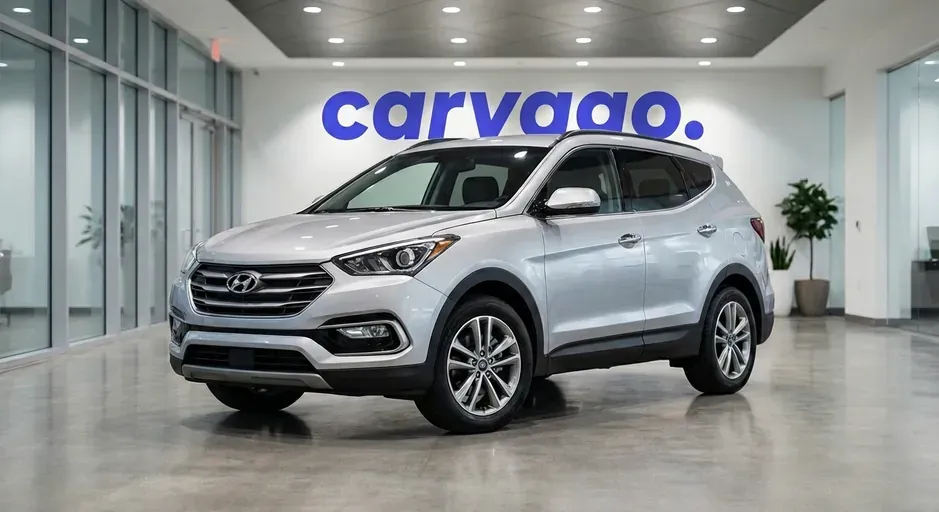
Official fuel consumption figures provided by manufacturers often paint an overly optimistic picture that can differ significantly from everyday reality on the roads. To get a truly objective idea of how much fuel these family cruisers consume, we have combined technical data with the long-term records of drivers themselves. An ideal and highly reliable tool for this purpose is the independent community platform Spritmonitor.de, where thousands of motorists diligently record every refueling. Given the demand in the used car market, we focused on relevant models approximately four years old – specifically the fourth-generation Hyundai Santa Fe (available since 2018) and the fifth-generation Renault Espace (produced between 2015 and 2023).
Source:
| Model and Engine | Average Consumption (l/100 km) |
|---|---|
| Diesel engines | |
| Hyundai Santa Fe 2.0 CRDi (4th generation) | 6.1 |
| Renault Espace ENERGY dCi 160 (5th generation) | 6.5 |
| Hyundai Santa Fe 2.2 CRDi (4th generation) | 6.6 |
| Renault Espace BLUE dCi 160 (5th generation) | 6.8 |
| Renault Espace BLUE dCi 200 (5th generation) | 7.1 |
| Petrol and hybrid engines | |
| Hyundai Santa Fe 1.6 T-GDI Plug-in-Hybrid (4th generation) | 1.6* |
| Hyundai Santa Fe 1.6 T-GDI Hybrid (4th generation) | 6.9 |
| Renault Espace TCe 225 GPF (5th generation) | 8.8 |
| Hyundai Santa Fe 2.4 GDI (4th generation) | 9.6 |
(Note: The value for the plug-in hybrid (PHEV) powertrain applies to an ideal scenario with a regularly charged battery; on longer trips without charging, consumption rises to the level of conventional petrol engines.)
Looking at the real-world data, it is clear that diesel engines remain the surest path to savings in the category of two-ton family vehicles. The South Korean diesel engines, 2.0 CRDi and 2.2 CRDi, are considered highly efficient units with typical consumption between 6.1 and 6.6 liters per hundred kilometers. Renault's dCi diesel engines (whether the ENERGY version or the newer BLUE dCi) show a slightly higher but still solid appetite, roughly between 6.5 and 7.1 liters. An interesting and somewhat surprising finding, on the other hand, is the relatively high consumption of petrol turbo engines that look modest on paper. The modern French TCe 225 GPF unit (with a displacement of just 1.8 liters) simply cannot defy physics and, under the load of a full MPV, asks for an average of almost nine liters. However, a great innovation is the 1.6 T-GDI HEV hybrid system under the hood of the Hyundai, which can confidently pull the combined consumption of a heavy SUV below the seven-liter mark.
For future owners, these figures represent a key guide. If you often travel long distances with your family or regularly commute hundreds of kilometers on motorways, the two-liter diesel versions (especially the reliable 2.2 CRDi in the Hyundai or the BLUE dCi in the Espace) will be the optimal choice, significantly easing the family budget. For users who spend most of their time crawling through heavy city traffic and handling daily family logistics, the advanced full-hybrid or plug-in hybrid powertrain of the Santa Fe makes the most sense. Traditional and powerful petrol variants, whether the TCe 225 GPF from Renault or the larger 2.4 GDI from Hyundai, will only appeal to a narrow group of drivers with low annual mileage who require a quiet, dynamic driving experience and are not bothered by higher fuel bills.
When it comes to the final comparison of both candidates, fuel costs will play a significant role. The Hyundai Santa Fe emerges from the duel as the more flexible and overall slightly more economical choice, mainly thanks to its sophisticated range of electrified powertrains that effectively offset the disadvantages of a huge SUV in the city. The Renault Espace, however, generously compensates for its slightly higher demands for liters of diesel or petrol with fantastic interior luxury and an unrivaled cabin, for which many buyers will willingly overlook a few tenths of a liter at the filling station.
When choosing a used family car around four years old (model years 2021–2022), you will encounter significant differences in how individual models hold their value on the market. While the Hyundai Santa Fe fully benefits from the unceasing popularity of large SUVs, the Renault Espace, as a representative on the borderline between an MPV and a crossover, pays the price with a faster depreciation. For a used car buyer, however, this represents an interesting buying opportunity.
The South Korean SUV holds its price very confidently on the used car market. For roughly four-year-old vehicles, you will pay relatively high amounts depending on the engine and equipment; on the other hand, you get a modern car with excellent residual value.
The French crossover between an MPV and an SUV is a hidden gem on the used market for those looking for maximum interior space and luxury for reasonable money. Faster depreciation, typical for large French cars, has pushed prices down significantly.
| Model | Typical price from | Typical price to | Depreciation characteristics |
|---|---|---|---|
| Hyundai Santa Fe | €27,000 | €43,000 | Slow decline, excellent residual value |
| Renault Espace | €21,000 | €31,000 | Rapid decline, extremely advantageous as a used car |
From a budget perspective, the Renault Espace offers a step more generous equipment for the same money, and you will very often come across models that are "fully loaded." The Hyundai Santa Fe, on the other hand, is a safe bet that will reward you with a higher vehicle value when the time comes to pass it on.
While the Hyundai Santa Fe scores with price stability and the unshakable popularity of SUVs, the Renault Espace represents a phenomenal ratio of purchase costs to opulent luxury on the four-year-old used car market.
Both vehicles in their examined generations achieved the maximum five-star rating in Euro NCAP crash tests. However, when assessing the safety of a used car, it is crucial to consider the context and the specific year of the tests. Euro NCAP testing protocols are constantly evolving and becoming stricter, meaning that percentage scores from different years cannot be directly compared. Newer methodologies place much greater emphasis on sophisticated active safety systems, cyclist detection, or vehicle behavior at intersections. Furthermore, the certifications for both evaluated generations have already formally expired due to the age of the tests; however, for the market of roughly four-year-old used cars, these data still represent a key and objective indicator of safety.
The fourth-generation Hyundai Santa Fe underwent testing in 2018 and earned a full five stars according to the significantly modernized rules of the time. It excelled primarily in adult occupant protection, where it achieved an impressive score of 94%. The car recorded a very good 88% for child protection. Since the Korean SUV faced newer standards, its safety and assistance systems, which received a 76% rating, had to withstand substantially more demanding test scenarios focused on active accident prevention.
The fifth-generation Renault Espace underwent Euro NCAP tests in 2015, three years earlier, and also received five stars. In its time, the car shone with excellent child protection with a rating of 89% and solid adult protection at 82%. Although the 80% score for safety assistance systems looks slightly better on paper than its Korean rival's, it is important to keep in mind that the requirements for these assistants and pedestrian detection (70% here) were significantly more lenient in 2015 and did not include today's complex simulations of crisis situations.
| Parameter | Hyundai Santa Fe | Renault Espace |
|---|---|---|
| Year of testing | 2018 | 2015 |
| Adult occupant protection | 94 % | 82 % |
| Child protection | 88 % | 89 % |
| Vulnerable road users protection | 67 % | 70 % |
| Safety assist systems | 76 % | 80 % |
In conclusion, although the Renault Espace offers an excellent level of passive safety for its time and generous protection for child passengers, the Hyundai Santa Fe represents a more advanced choice from today's perspective. Because the Korean SUV was built and tested with the stricter 2018 methodology in mind, its assistance and safety systems feature a more modern architecture that much better meets the demands and risks of today's road traffic.
Although both cars protect their occupants excellently, the newer homologation of the Hyundai Santa Fe means more advanced passive protection for adults and realistically more sophisticated safety assistants.
In addition to standard equipment, each of the models offers several unique features that can be decisive for the customer, and both cars take their own distinct approach to added value.
Generous standard equipment including advanced safety assistants and adaptive cruise control
Reliable and economical hybrid (HEV) and plug-in hybrid (PHEV) powertrains
Excellent interior ergonomics thanks to the retention of physical buttons for key functions
Five-year factory warranty with unlimited mileage, which adds great peace of mind when buying a used car
Slightly more usable space in the optional third row of seats compared to the Espace
Softer chassis tuning suppresses the driving experience and limits confidence in faster corners
The massive and distinctive front grille design may not suit more conservative buyers
Slightly slower infotainment response in some software versions
Significantly higher purchase price on the used car market compared to its French competitor
The fourth-generation Hyundai Santa Fe (post-facelift) is an exceptionally rational and safe choice for families looking for a robust and versatile SUV. Thanks to the excellent integration of hybrid powertrains and a long factory warranty, it is a car that promises lower operating costs and long-term peace of mind.
Fresh design that cleverly combines the practicality of a classic MPV with the attractiveness of a modern SUV
Above-standard travel comfort and great acoustic insulation at highway speeds
Excellent maneuverability in the city and a smaller turning radius thanks to the 4Control all-wheel steering system
Unusually airy cabin with huge space for passengers in the first two rows
Extremely attractive price-to-luxury and equipment ratio on the secondary market
Steeper depreciation and overall worse liquidity when trying to resell
The third row of seats (in the 7-seater version) is very cramped and only serves as an emergency option for small children
More average build quality with occasional creaking of interior plastics on uneven surfaces
Increased risk of more expensive repairs for complex onboard electronics and the rear-wheel steering system
The fifth-generation Renault Espace will appeal to motorists who long for French charm, maximum highway comfort, and an unconventional approach to a family car. On the market for roughly four-year-old used cars, it represents a "secret tip" on how to get a top-equipped cruiser designed for swallowing thousands of kilometers at a fraction of its original value.
Based on our long-term data from the CarAudit service, breakdown statistics, and service reports, we have compiled an overview of the most common issues revealed by independent technical inspections of used cars around four years old.
The fourth generation of the Hyundai Santa Fe after its facelift (from 2020 onwards) is considered an exceptionally robust family SUV. Although it is an above-average reliable vehicle, there are several areas you should pay attention to when choosing one.
The fourth-generation Hyundai Santa Fe proves to be a highly reliable vehicle, whose biggest bogeyman is clogged DPF filters from city traffic. If you find a piece with a smoothly shifting transmission and a good service history, you will get a workhorse for many years.
The fifth generation of the Renault Espace in its updated version (from 2020 onwards) has already been rid of many of the "teething problems" that plagued cars from the first years of production. Nevertheless, it is a technically complex car requiring caution when purchasing.
The initial tarnished reputation of the fifth-generation Espace no longer applies to post-facelift cars, and it is a very solid vehicle. When buying, main attention should be directed towards a thorough check of the 4Control chassis, the smoothness of the EDC automatic, and the condition of the particulate filter.
When buying a used car, a thorough inspection is key. Here are some specific points to focus on for these two models. For complete peace of mind when buying, a professional comprehensive car inspection via the CarAudit service, which checks more than 270 critical points, will help you best.
Thanks to its MPV concept, the Renault Espace offers three individual seats in the second row, which is ideal for installing three child car seats side by side. The Hyundai Santa Fe, on the other hand, uses a classic split bench seat but scores with its more robust construction and higher seating position. Both cars can commonly be found on the used car market in a very practical seven-seater configuration.
In a five-seat configuration, the French car has a slightly larger basic trunk with a volume of up to 680 liters, primarily thanks to its practical sliding rear seats. The South Korean SUV counters with a volume of 634 liters and a more regular trunk shape, which significantly facilitates loading boxes or a stroller. After folding down all the rear seats, both cars provide a huge cargo space safely exceeding the 1600-liter mark.
The Espace stands out on the road thanks to its unique 4Control system with rear-wheel steering, which makes it an unexpectedly agile car for its size in narrow city streets. Conversely, you are much more likely to find the Santa Fe with all-wheel drive (AWD), making it a more confident and safer choice for winter conditions and light off-road use. The choice therefore depends on whether you value city agility or confidence off paved roads more in your daily driving.
The fourth generation of the Santa Fe is considered a mechanically highly reliable car, and with roughly four-year-old used vehicles, you can often still benefit from the remainder of the five-year factory warranty with no mileage limit. The fifth generation of the Espace suffered from software and electronic glitches in early production; however, the situation is much more stable with newer post-facelift models (from 2020 onwards). Nevertheless, the maintenance and long-term reliability of the Korean representative tend to be more predictable from a service perspective.
Both vehicles feature powerful diesel engines on the used market (2.0 Blue dCi for Renault and 2.2 CRDi for Hyundai), with real-world combined consumption hovering around 7 to 8 liters per 100 kilometers. However, the Santa Fe has a huge advantage in these younger model years due to the availability of modern full-hybrid (HEV) and plug-in hybrid (PHEV) variants. These electrified powertrains can radically reduce overall fuel consumption, especially if you spend a lot of time in suburban traffic.
Choosing between the fourth-generation Hyundai Santa Fe and the fifth-generation Renault Espace depends primarily on your driving profile and budget. If you are looking for a reliable and robust SUV with available all-wheel drive, excellent residual value, and the option of modern hybrid powertrains, the South Korean representative is an ideal safe bet for versatile family use. On the other hand, if you spend a lot of time on motorways and long for vast interior space and premium comfort at an unbeatable price on the used car market, the Renault Espace with its agile 4Control steering represents a fantastic choice. Both cars serve excellently as generous family cruisers, but while the Santa Fe dominates in everyday versatility and a sense of safety, the Espace excels as an exceptionally comfortable long-distance mile-muncher.
Sources: ADAC, forbes.cz, lidovky.cz, autozive.cz, auto-mania.cz, dopravacek.cz
This article was prepared using artificial intelligence tools. The section guarantor is Petr Dušek.

Detailed comparison of Hyundai Santa Fe vs. Seat Tarraco. Real-world experience, evaluation of spaciousness and driving characteristics. Find out which family SUV is better!
May 6, 2026

Audi Q5 vs Volvo XC60: Which luxury used SUV should you choose? Read our detailed comparison of equipment, driving dynamics and practicality, complete with our final verdict.
May 4, 2026

Detailed comparison of Peugeot 5008 vs Renault Espace. We reveal real-world experiences, equipment details, and a clear verdict. Find out which 7-seater car to choose.
Apr 13, 2026