Hyundai Tucson vs. Toyota RAV4: Complete comparison 2026
Detailed comparison of Hyundai Tucson vs. Toyota RAV4. Read real-world experiences, a comparison of reliability, fuel consumption, and equipment, and find out our final verdict.
Apr 17, 2026
Articles
Car battle
Detailed comparison of Ford Puma vs. Volkswagen T-Cross. Discover the differences in driving dynamics, space, and fuel consumption. Our verdict will help you with your choice.
April 22, 2026


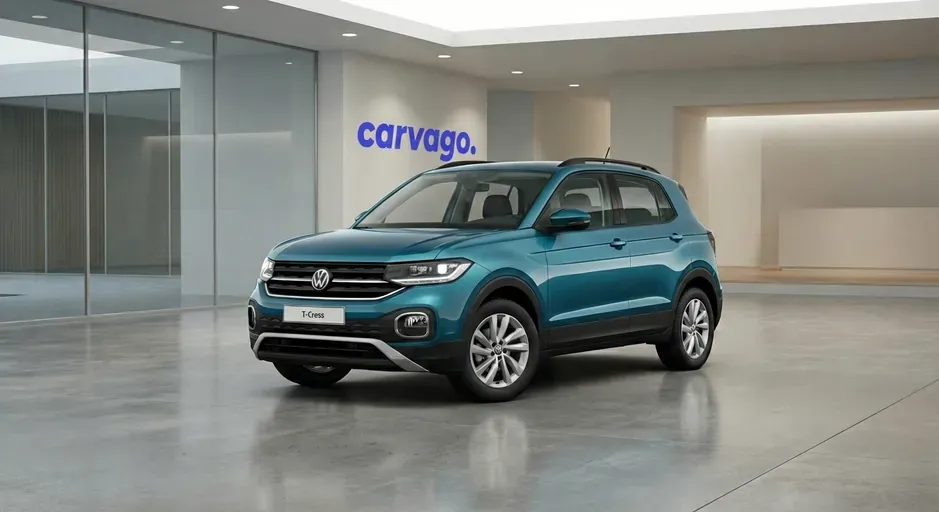
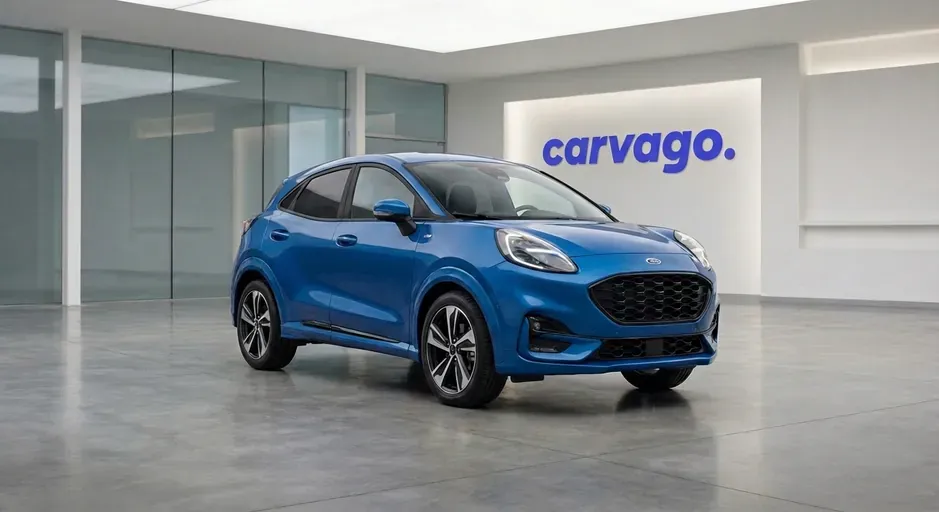
Ford Puma, bearer of the well-known name of the original small sports coupe from the nineties, positions itself in today's market as an agile and design-bold urban crossover. Standing against it is the Volkswagen T-Cross, an exceptionally practical compact SUV that you can also encounter in some non-European markets under alternative names such as Tacqua or Taigun. Let's take a detailed look at which of these two popular, roughly four-year-old used models offers a better balance of everyday utility, equipment, and overall driving experience.
Looking at the external dimensions of both popular city crossovers, we find that although they belong to the same segment, each manufacturer chooses a somewhat different approach. The second-generation Ford Puma (an ideal representative on the nearly-new used car market) bets on an athletically cut body with smooth lines, which is reflected in its length and width. With a length ranging from 4186 to 4266 mm (for the top-of-the-line ST sports versions), it is 78 to 158 mm longer than its German competitor. Also in width, the Puma, with its 1805 mm, offers slightly more than the T-Cross, which gives the car a more confident and sportier stance on the road. Hand in hand with this is a longer wheelbase (2588 mm compared to 2551 mm for the VW), which gives the Ford better directional stability on the highway.
The first-generation Volkswagen T-Cross, on the other hand, sticks to more traditional, purposeful shapes that radiate typical SUV robustness. Its main advantage in city traffic is its significant compactness. With a length of 4108 mm (valid for 2019–2023 models, which you will most often encounter when choosing a four-year-old used car) and a width of 1782 mm, it is slightly easier to maneuver in cramped parking lots or narrow underground garages. T-Cross clearly dominates in the vertical direction, however. The height of both older and updated versions ranges around 1573 to 1584 mm, which is noticeably more than the lower-slung Puma (1520 to 1555 mm).
This difference in proportions fundamentally affects daily life with the car. The taller build of the Volkswagen T-Cross means better vertical space for the crew, a airier cabin, and above all, the very popular higher seating position behind the wheel, which guarantees a great view of traffic. Ford Puma, on the other hand, thanks to its longer wheelbase and wider stance, offers a more stable and driver-attractive platform for those who require dynamic driving characteristics rather than ultimate parking agility.
| Parameter | Ford Puma SUV | Volkswagen T-Cross SUV |
|---|---|---|
| Width (mm) | 1805 | 1782 - 1784 |
| Length (mm) | 4186 - 4266 | 4108 - 4127 |
| Height (mm) | 1520 - 1555 | 1573 - 1584 |
| Wheelbase (mm) | 2588 | 2551 |
When choosing a compact city crossover, luggage compartment volume often plays a key role, especially if the car is to serve everyday family purposes. Looking at the used car market for vehicles around four years old, we take a look at the second-generation Ford Puma and the first-generation Volkswagen T-Cross. Both of these SUVs have approached interior space very innovatively and cleverly. The differences in their trunks are not just in absolute liters, but primarily in variability, which has a direct impact on how easily you load weekend shopping or luggage for a longer family holiday.
Ford Puma (produced since 2020) offers a great basic trunk volume of 456 liters. An important fact for used car buyers is that this value also applies to the widely represented mild-hybrid (MHEV) versions, where, unlike many competitors, there was no reduction in capacity due to battery installation. The secret of this above-standard space is hidden under the floor, where you find the so-called MegaBox. This is a unique deep 80-liter compartment with a washable surface and a practical drain plug at the bottom. It is perfect for transporting tall items, muddy shoes, or wet sports equipment. After folding the rear backrests, the total available space increases to 1126 liters.
On the other hand, the Volkswagen T-Cross (produced since 2019) prioritizes maximum modularity, utilizing a clever sliding rear bench. This can be adjusted longitudinally by 14 centimeters, allowing you to smoothly change the basic trunk volume from 385 liters to a very decent 455 liters. You can thus flexibly decide whether you currently need more legroom for rear passengers or prefer space for a few extra suitcases. When the rear backrests are fully folded, the T-Cross scores with an impressive maximum volume of 1281 liters, significantly outperforming its Ford rival in this discipline.
While the Ford Puma bets on a consistently large trunk with an unrivaled deep compartment for dirty cargo, the Volkswagen T-Cross brings excellent flexibility with sliding seats and overall more usable space when they are folded. Both solutions mean that even with a small car, you can handle common challenges without major compromises, so the final choice depends mainly on what type of cargo you carry most often.
| Parameter | Ford Puma SUV | Volkswagen T-Cross SUV |
|---|---|---|
| Basic volume (l) | 456 | 385 - 455 |
| Max. volume after folding seats (l) | 1126 | 1281 |
While the T-Cross scores with unrivaled sliding seat flexibility and a large maximum volume, the Puma wins you over with consistent space and the washable MegaBox hidden in the floor.
When choosing a compact crossover, towing capacity can play a surprisingly important role. Whether you plan to tow a small caravan on trips or just occasionally need to hitch a trailer for garden supplies, the car's ability to safely handle this load is a key indicator of its overall practicality. Both the Volkswagen T-Cross (1st generation) and the Ford Puma (2nd generation) offer values that align well with their segment and age; however, a detailed comparison reveals differences where the German representative has a slight edge.
For the Volkswagen T-Cross, the maximum braked towing capacity starts at 1,000 kg for the base 1.0-litre three-cylinder variant (70 kW). However, if you opt for the more powerful 1.0 TSI versions (81 and 85 kW) or the stronger 1.5 TSI four-cylinder (110 kW), the towing capacity increases to a solid 1,100 to 1,200 kg. The unbraked towing capacity then ranges from 630 to 660 kg, depending on the chosen engine.
In contrast, the Ford Puma offers a maximum braked towing capacity of 900 to 1,100 kg for most standard 1.0 EcoBoost combustion variants and popular mild-hybrid versions (92 to 114 kW). Attention must be paid to the specific specification here – while standard versions can handle over a tonne, sportier variants often have a structurally reduced capacity. For example, the top-of-the-line Puma 1.5 EcoBoost ST (147 kW) is limited to 750 kg, and the newer mild-hybrid ST version (117 kW) can tow a maximum of 900 kg. The unbraked trailer limit is a steady 640 kg across the entire model range.
In practice, these differences mean that hitching a small trailer to either car easily provides space for several extra suitcases, making it a solution that is perfectly sufficient for weekend shopping or longer holidays. However, if you plan to tow heavier loads more frequently, whether it's a horse trailer or a heavier caravan, the wider margin and higher limits of the Volkswagen T-Cross make it a slightly more versatile choice in this regard.
| Model and Engine | Braked towing capacity (kg) | Unbraked towing capacity (kg) |
|---|---|---|
| Ford Puma 1.0 EcoBoost (70 kW) | 900 | 640 |
| Ford Puma 1.0 EcoBoost Hybrid (92–114 kW) | 900–1,100 | 640 |
| Ford Puma 1.5 EcoBlue (88 kW) | 1,100 | 640 |
| Ford Puma 1.5 EcoBoost ST (147 kW) | 750 | 640 |
| Ford Puma 1.0 EcoBoost Hybrid ST (117 kW) | 900 | 640 |
| VW T-Cross 1.0 TSI OPF (70 kW) | 1,000 | 630 |
| VW T-Cross 1.0 TSI OPF (81–85 kW) | 1,100–1,200 | 630–640 |
| VW T-Cross 1.5 TSI ACT OPF (110 kW) | 1,200 | 660 |
| VW T-Cross 1.6 TDI SCR (70 kW) | 1,100 | 650 |
The range of powertrains for the Ford Puma and Volkswagen T-Cross differs significantly, primarily in their approach to electrification and focus on dynamics. For those interested in an approximately four-year-old used car, this practically means choosing between Ford's clever and efficient mild-hybrid technology and Volkswagen's classic, time-tested petrol engines without complex electrical assistance. An important factor for buyers is also the fact that while the Puma can appeal even to very sport-oriented drivers with its hot ST version, the T-Cross focuses more on a quiet, smooth ride and comfortable motorway cruising with its more powerful four-cylinder. If you are looking for diesel engines in this age range, you will have a very limited choice for both models, as diesel units disappeared from the price lists shortly after sales began.
The engine range for the Ford Puma is based on the popular turbocharged 1.0 EcoBoost three-cylinder. While basic non-hybrid versions appeared in the earliest model years, mild-hybrid variants (mHEV) with 92 kW and 114 kW absolutely dominate the market for roughly four-year-old used cars today. Their 48V starter-generator effectively smooths out "turbo lag" at low revs and helps significantly reduce fuel consumption. For enthusiastic drivers, an excellent full-fledged Puma ST version was offered with a powerful 1.5 EcoBoost (147 kW) engine, but according to market data, its production ended in 2024, when it was replaced by a more moderate 1.0-litre ST mHEV (125 kW) version. It is also important to mention that the 1.5 EcoBlue (88 kW) diesel engine only appears in the first model years – its production ended at the end of 2021, making it completely irrelevant for the younger used car market.
| Engine type | Fuel | Power (kW) | Torque (Nm) | Transmission |
|---|---|---|---|---|
| 1.0 EcoBoost | Petrol | 70 / 92 | 170 | 6MT / 7DCT |
| 1.0 EcoBoost mHEV | Petrol (Mild-Hybrid) | 92 / 114 | 210 / 240 | 6MT / 7DCT |
| 1.0 EcoBoost Hybrid ST | Petrol (Mild-Hybrid) | 125 | 248 | 7DCT |
| 1.5 EcoBoost ST | Petrol | 147 | 320 | 6MT |
| 1.5 EcoBlue | Diesel | 88 | 285 | 6MT |
The Volkswagen T-Cross maintains a more conservative approach, which may suit drivers who prefer classic technology without battery assistance. The core of sales consists of 1.0 TSI petrol three-cylinder engines tuned to 70 kW or a more powerful 81 kW (85 kW in later models). For the more powerful version, customers could also choose a fast and smooth-shifting seven-speed DSG transmission. Those who require more flexibility, for example when driving with more people, will be satisfied by the refined 1.5 TSI four-cylinder with 110 kW, which is paired with an automatic as standard. Regarding diesel powertrains, the same applies to the T-Cross as to the Puma, with the only difference being that the 1.6 TDI (70 kW) diesel left the Volkswagen range even a year earlier (during 2020). Therefore, looking for a diesel T-Cross on the market for typical four-year-old used cars no longer makes much sense.
| Engine type | Fuel | Power (kW) | Torque (Nm) | Transmission |
|---|---|---|---|---|
| 1.0 TSI | Petrol | 70 | 175 | 5MT |
| 1.0 TSI | Petrol | 81 / 85 | 200 | 6MT / 7DSG |
| 1.5 TSI | Petrol | 110 | 250 | 7DSG |
| 1.6 TDI | Diesel | 70 | 250 | 5MT / 7DSG |
While the Ford Puma delights with efficient mild-hybrid technology and the sporting genes of the ST range, the T-Cross bets on simplicity, the mature driving characteristics of petrol four-cylinders, and trouble-free everyday use.
Choosing the right engine is crucial for long-term satisfaction, which is why our recommendations are based on real-world experience, driving dynamics, actual fuel consumption, and mechanical reliability. While the Ford Puma relies on innovative mild-hybrid technology and an overall sportier three-cylinder performance in its newer generations, the Volkswagen T-Cross offers classic and years-refined Group TSI technology, which excels in its refinement. An interesting fact from the history of both models is that in their early days, they also offered diesel engines – for Ford, it was the 1.5 EcoBlue unit, and for Volkswagen, the 1.6 TDI. However, these diesels were phased out relatively early due to strict emission standards and declining interest (for the VW T-Cross as early as September 2020 and for the Puma at the end of 2021). When looking for a roughly four-year-old used car, you will therefore predominantly and quite rightly encounter petrol engines on the market.
This mild-hybrid one-liter three-cylinder represents the absolute ideal for everyday use on the used car market and makes the most sense in Ford's lineup. Thanks to the use of a belt-driven integrated starter-generator (BISG), the system can effectively fill the so-called "turbo lag" at low revs, giving the car unexpectedly brisk dynamics, especially in city traffic. The torque curve is beautifully smoothed out thanks to the electric assistance, and real-world fuel consumption easily stays between 5.5 and 6 liters per 100 km in normal traffic. Although the engine is mechanically robust, its weakness can be the timing belt running in oil if maintenance is neglected.
The turbocharged one-liter three-cylinder from the proven EA211 family in the more powerful 81 kW version (corresponding to models up to roughly 2023) is the sweet spot for the compact T-Cross. It excels in excellent sound insulation, very refined operation, and linear power delivery. Unlike the basic 70 kW version, it is also paired with a precise six-speed manual gearbox or a very well-tuned seven-speed DSG automatic. Real-world consumption averages around 6 l/100 km over the long term, and on the highway, unlike the weaker variants, the engine still has sufficient power reserves for safe overtaking.
Fuel consumption figures provided by manufacturers often differ significantly on paper from what drivers actually experience on the road. While laboratory standards provide only a theoretical idea, the engine's actual appetite in practice is influenced by weight, aerodynamics, and, of course, driving style. For the most accurate comparison, we have focused on real-world user data based on aggregated averages from drivers themselves on independent community portals such as Spritmonitor.de. The values in the table focus primarily on generations and engines relevant to roughly four-year-old used cars, which represent the most affordable and sought-after choice on today's market.
| Model and engine | Average consumption (l/100 km) |
|---|---|
| Ford Puma 1.5 EcoBlue | 4.5 |
| VW T-Cross 1.6 TDI SCR | 5.3 |
| Ford Puma 1.0 EcoBoost Hybrid | 5.5 |
| VW T-Cross 1.0 TSI OPF | 5.9 |
| Ford Puma 1.0 EcoBoost | 6.0 |
| VW T-Cross 1.5 TSI ACT OPF | 6.0 |
| Ford Puma 1.5 EcoBoost ST | 6.6 |
A closer look at the real-world consumption data reveals some very interesting trends. Overall, diesel engines naturally remain the most fuel-efficient choice, with the 1.5 EcoBlue diesel under the hood of the Ford Puma standing out with an unrivaled average of 4.5 l/100 km. However, in the small crossover category, these are an endangered species, and you will encounter diesels only sporadically on the used car market from around 2021.
For the much more popular gasoline engines, the real benefit of modern electrification is clearly evident. While the basic purely internal combustion 1.0 EcoBoost engine in the Ford consumes an average of 6.0 l/100 km, its more common and desirable mild-hybrid variant brings the appetite down significantly to 5.5 liters, beating even the standard one-liter TSI from Volkswagen. A big surprise, however, is the efficiency of Volkswagen's larger 1.5 TSI four-cylinder gasoline engine. Thanks to the Active Cylinder Technology (ACT) system, which automatically deactivates two cylinders under partial load, its real-world consumption stays at the same 6.0 l/100 km as the significantly less powerful three-cylinder Ford without hybrid assistance. This effectively debunks the myth that a small turbo engine automatically means the greatest savings.
For different types of drivers and driving scenarios, these figures lead to different recommendations:
In conclusion, average fuel consumption alone should not be the main deciding factor when choosing between the Ford Puma and the Volkswagen T-Cross. Both cars are among the most fuel-efficient models in their category, and their overall efficiency is admirable. The Puma wins slightly in heavy traffic thanks to its successful hybrid assistant, while Volkswagen successfully counters with the highly efficient and structurally more mature 1.5 TSI engine. The decision will depend more on the type of routes you plan to cover most often with the car.
Looking at the used car market – focusing on models approximately 4 years old, i.e., 2021 and 2022 – an interesting difference emerges in how both cars retain their value. Both models fall into the highly competitive city crossover (B-SUV) segment, but their pricing policies on the secondary market differ.
Ford Puma (2021–2022 models)
A used Ford Puma is a slightly more affordable choice on the market. Its prices typically start around €14,000 to €16,000 for base Titanium models with a manual gearbox. If you are looking for the more desirable and sportier ST-Line version (often paired with the popular mild-hybrid mHEV technology), prepare a budget of roughly €17,000 to €20,000. The Puma attracts buyers with a great price-to-equipment ratio, while a slightly faster initial depreciation plays into the hands of those looking for an attractive used car.
Volkswagen T-Cross (2021–2022 models)
Volkswagen, on the other hand, traditionally benefits from a strong brand reputation, which is reflected in more stable prices and slower depreciation. A used T-Cross from the same period starts on the market at approximately €16,000 to €17,000 (usually Life trim with a 1.0 TSI engine and manual transmission). Newer models with higher trim levels (Style or R-Line) and the highly sought-after DSG automatic dual-clutch transmission commonly sell in the range of €20,000 to €23,000.
| Model | Starting price of used car (base) | Average price (better equipment / automatic) |
|---|---|---|
| Ford Puma | from ~ €14,000 | €17,000 – €20,000 |
| VW T-Cross | from ~ €16,000 | €20,000 – €23,000 |
In terms of future operating costs, both cars are very similar after about four years of operation, and neither suffers from serious "teething problems." For a used Ford Puma, it's good to ensure the hybrid system and its cooling are in perfect condition, while for the T-Cross, the documented service history of the DSG automatic transmission should definitely not escape your attention.
While the Ford Puma represents a more affordable choice on the used market with an excellent price-to-equipment ratio for bargain hunters, the Volkswagen T-Cross holds its value more stably, providing owners with greater certainty of slower price depreciation in the coming years.
Looking at the original certifications, it might seem that both cars represent the absolute pinnacle of safety – both the Ford Puma and the Volkswagen T-Cross earned a full five-star Euro NCAP rating shortly after their launch in 2019. However, it is absolutely crucial to put these results into the correct context and take the year of testing into account. The methodologies and protocols of independent safety tests are constantly evolving and becoming much stricter. New and more demanding simulations of frontal impacts with an oncoming obstacle, stricter parameters for cyclist detection, or complex scenarios monitoring vehicle behavior at intersections are commonly introduced. For this reason, percentage scores from different years can no longer be fairly compared directly, and five stars from older tests are far from equivalent to those of today.
The Ford Puma underwent its latest round of testing at the end of 2022 according to significantly stricter methodologies. Higher demands on both active and passive safety resulted in a reduction of the overall rating to a still solid four stars. The car retained a robust structural foundation, but with a score of 75% for adult occupant protection, it paid the price for marginal driver chest protection in a specific offset frontal impact. Child protection, on the other hand, maintained a very good result of 84%. In the area of vulnerable road user protection, the Puma took home 70%, and in the safety assist systems category, 69%. These values mean that although the built-in collision prevention systems are fully functional and passengers are well protected, the car loses out slightly to the absolute elite in more complex autonomous braking tests and the most modern assistants.
The Volkswagen T-Cross was subjected to a very tough reassessment in October 2025 under the latest and completely uncompromising Euro NCAP rules. This re-certification meant a significant drop for the popular German SUV from its previous five stars to just three. While adult occupant protection was rated at 74% and child protection at 81%, which again clearly testifies to a reliable and solid body shell, active safety became the critical stumbling block for the model. The overall rating for assistance systems plummeted to 57% due to shortcomings in detecting cyclists, motorcyclists, and in demanding pre-collision scenarios. The value for overall vulnerable road user protection then dropped to a weaker 60%.
| Parameter | Ford Puma | Volkswagen T-Cross |
|---|---|---|
| Year of testing | 2022 | 2025 |
| Adult occupant protection | 75 % | 74 % |
| Child occupant protection | 84 % | 81 % |
| Vulnerable road users protection | 70 % | 60 % |
| Safety assist systems | 69 % | 57 % |
The overall comparison clearly shows that although both cars entered the market years ago as top performers boasting five stars, through today's modern lens they are paying for the gradual evolution of technology. While passive structural safety remains at a high level and you don't have to worry about either car in an actual crash, the onboard accident prevention software is gradually aging. The Ford Puma emerges significantly better from this direct duel, having managed to maintain an acceptable four-star standard and more reliable assistant responses even in newer tests. In contrast, the Volkswagen T-Cross, with its older generation of sensors, showed in extremely tough tests that it handles modern complex electronic supervision in urban traffic visibly worse. Therefore, if assistance equipment is your priority, the Ford offers a more modern experience.
Both models provide perfectly adequate and solid occupant protection in a crash, but the Ford Puma boasts a more modern level of assistance systems, which allow it to better withstand today's strict standards even years later compared to the aging electronics of the Volkswagen T-Cross.
In addition to standard equipment, each of the models offers several unique features, technological solutions, and clever details that can be decisive for the customer during the final selection. While one of the cars bets on innovative luggage solutions and sporty genes, the other dominates in interior flexibility and clear digitalization.
Fun and agile driving characteristics thanks to a precisely tuned chassis
Innovative "MegaBox" under the trunk floor offering an extra 80 liters of washable space
Economical and lively 1.0 EcoBoost mild-hybrid engines
Attractive, sporty exterior design
Good level of standard equipment and modern assistance systems
Less space in the rear seats, especially in terms of headroom and legroom
Stiffer chassis setup (especially in the ST-Line version) reduces comfort on uneven surfaces
Poorer rear-diagonal visibility due to the body shape and sloping roofline
Cheaper hard plastics in some areas of the interior
The Ford Puma is an ideal choice for drivers looking for a stylish and engaging crossover with excellent driving characteristics. Thanks to the clever luggage space solution with the washable MegaBox, it will also appeal to active individuals and small families who don't mind the stiffer suspension tuning and more modest space in the second row of seats.
High level of practicality thanks to the standard sliding rear bench (up to 14 cm)
Great visibility from the car and overall clarity of the boxier body
Above-average spacious interior considering the compact exterior dimensions
Comfort-oriented chassis that filters city bumps well
User-friendly interface and logical ergonomics of the controls
More conservative and boxy design, which looks duller next to the Puma
Large proportion of hard plastics on the dashboard and door panels
Higher purchase price on the used car market compared to non-premium competitors
Weaker dynamics and noisier performance of the base 1.0-liter three-cylinder engine when fully loaded
The Volkswagen T-Cross represents a rational choice focused on maximizing interior space, versatility, and everyday user comfort. It is a perfect car for the city and for practical-minded families who appreciate the sliding rear seats and excellent visibility, even if at the expense of sporty emotions behind the wheel.
Based on our own CarAudit inspections, breakdown statistics, and expert articles, we have compiled an overview of the most common problems that used car buyers should watch out for. For cars approximately four years old, a careful physical inspection of the used vehicle is definitely worth it to avoid unexpected investments.
Ford Puma is rated very well in terms of long-term reliability, but specific shortcomings stemming from the first years of production appear.
Ford Puma is considered a solid and mechanically durable crossover, for which it is critically important to adhere to timely oil changes for EcoBoost engines and to expect occasional whims of the onboard electronics.
Volkswagen T-Cross benefits from proven and widely shared group technology, but even it has not completely avoided some chronic problems of modern vehicles.
The T-Cross is a very user-friendly and robust vehicle, but when choosing a used one, it is essential to carefully check the condition of the dry clutches in DSG transmissions and check the responsiveness of the infotainment.
When buying a used car, a thorough inspection is key. Although we are talking about modern cars in the case of roughly four-year-old vehicles for both models, both have their specifics and minor weak points that are worth paying attention to. Therefore, before the final decision, a thorough physical inspection of the used car by a certified mechanic is always useful. However, if you are looking at the cars yourself first, focus on the following areas:
Ford Puma offers a base volume of 456 liters, including the innovative washable MegaBox under the floor, which can accommodate unusually tall items. The Volkswagen T-Cross counters with sliding rear seats, allowing the capacity to be continuously adjusted from 385 to 455 liters according to current needs. If you prefer absolute size and storage tricks, the Ford wins, while in terms of overall interior variability, its German competitor leads.
The Ford is generally considered one of the best and most fun-to-drive cars in its class thanks to its agile chassis and very precise steering. The rival model from Wolfsburg focuses more on safety, neutral comfort, and excellent bump absorption for a comfortable daily drive. Your choice thus depends entirely on whether you are looking for a sportier feel behind the wheel or a more relaxed travel experience.
Thanks to its boxier body, the Volkswagen offers noticeably more headroom and much easier entry. Its sliding rear bench also allows for generous legroom, so adult passengers can sit comfortably in the back. Conversely, its competitor has a significantly sloping roofline, which slightly limits rear-seat space and makes it primarily suitable for children.
For roughly four-year-old used cars, the Puma relies primarily on 1.0 EcoBoost mild-hybrid three-cylinder engines, which use a small electric motor to fill in "dead spots" and improve flexibility at low revs. The T-Cross uses reliable purely internal combustion 1.0 TSI engines and a more powerful 1.5 TSI four-cylinder without hybrid assistance. While the mild-hybrid brings a slight advantage in fuel consumption in heavy city traffic, the traditional TSI scores with overall refinement on longer journeys.
Both cars have very compact dimensions under 4.2 meters in length, making them ideal city companions with very easy parking. However, the T-Cross has a significant advantage in better visibility from the cabin in all directions thanks to its higher seating position and large glass areas. Due to its dynamic and muscular design, the Puma suffers from poorer rear-diagonal visibility, which must be compensated for more with sensors and a parking camera when parking.
Choosing between roughly four-year-old used Ford Puma and Volkswagen T-Cross depends primarily on whether you prefer emotion and driving dynamics or everyday utility and flexibility in a city crossover. While the Ford Puma will delight enthusiastic drivers with its agile sporty chassis, fuel-efficient mild-hybrid engines, and innovative trunk featuring the practical washable MegaBox, it requires certain compromises in rear-seat roominess. The Volkswagen T-Cross, on the other hand, represents an exceptionally rational choice with excellent visibility from the cabin, refined TSI petrol engines, and unrivaled interior variability thanks to the standard sliding rear bench. So, if you are looking for a stylish, driver-focused car primarily for the city and an active lifestyle, go for the Puma, while for maximum spaciousness, comfort, and fulfilling everyday family duties, the T-Cross will be the ideal companion.
Sources: ADAC, svetmotoru.cz, mdcr.cz, autojournal.cz, auto-mania.cz, autobox.cz
This article was prepared using artificial intelligence tools. The section guarantor is Petr Dušek.

Detailed comparison of Hyundai Tucson vs. Toyota RAV4. Read real-world experiences, a comparison of reliability, fuel consumption, and equipment, and find out our final verdict.
Apr 17, 2026

Peugeot 3008 vs Renault Austral. Which SUV is better? Detailed comparison, real-world data, and the final verdict will help you choose.
Apr 13, 2026

Detailed comparison of Ford Kuga vs. Toyota RAV4. We compared the fuel consumption, reliability, and driving characteristics of both SUVs. Read our test and final verdict.
Apr 2, 2026