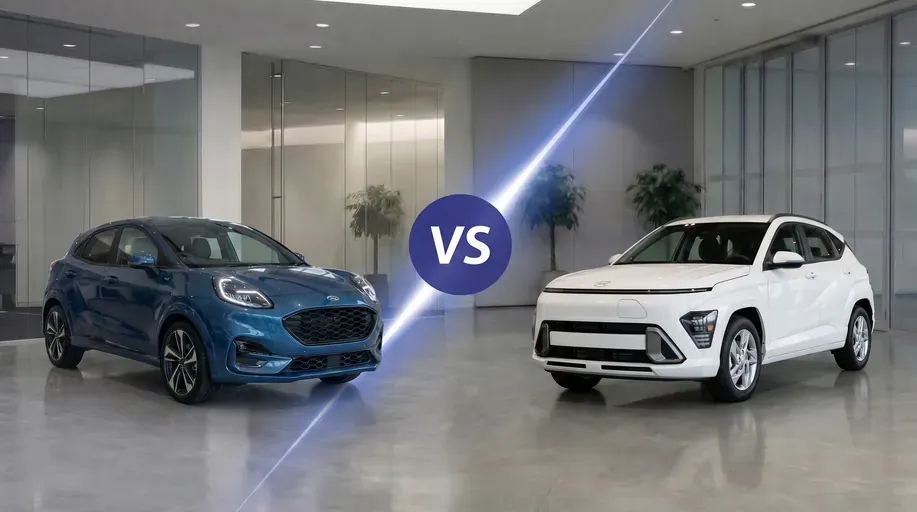
Car battle
Ford Puma vs. Hyundai Kona: Complete comparison 2026
Ford Puma vs Hyundai Kona: A detailed comparison of popular city SUVs. Compare driving characteristics, fuel consumption, and space, and read our final verdict.
Apr 30, 2026
Articles
Car battle
Ford Puma vs. Kia Stonic Comparison: Which city crossover offers better engines, equipment, and space? Read our detailed verdict and choose the right one for you.
May 15, 2026
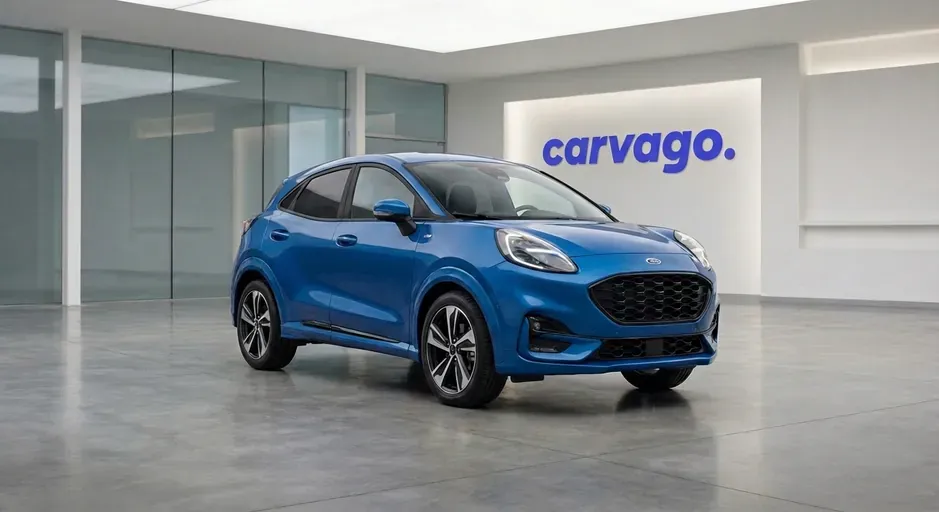
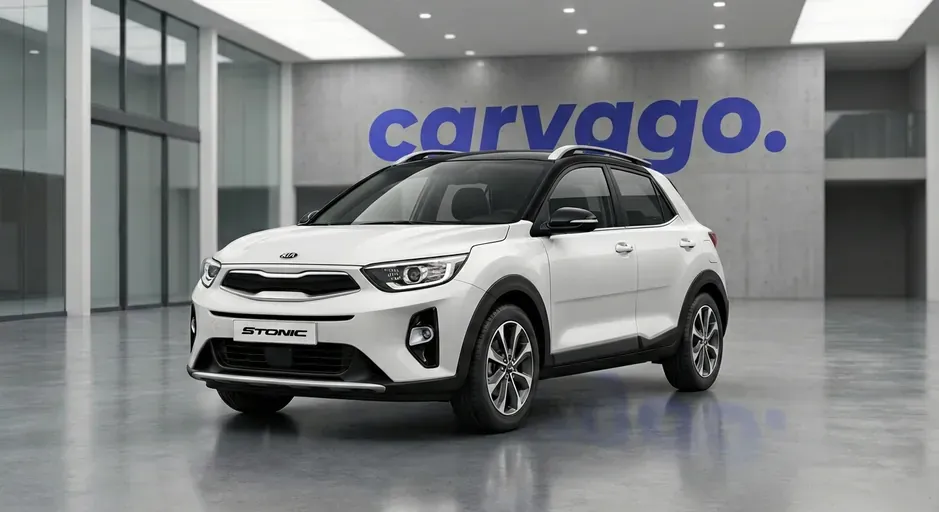
The Ford Puma, a popular subcompact crossover reviving a famous name from the nineties, offers drivers exceptionally agile driving characteristics and an innovative approach to practicality. Its challenger is the Kia Stonic, also known as the Kia KX1 in selected Asian markets, which bets on a confident design, proven reliability, and an excellent price-to-value ratio. In the following comparison, let's take a detailed look at which of these two popular city crossovers represents the smarter choice for your next used car purchase.
When we place the Ford Puma and Kia Stonic side by side, it is clear at first glance that both models target the popular urban crossover segment. When comparing the generations that are currently most in demand on the used car market (i.e., cars roughly four years old), we find clear differences in external proportions. The Ford Puma is overall a slightly more robust and larger car. For example, the Puma measures 1805 mm in width, while the Stonic offers only 1760 mm. This 45 mm difference contributes to the fact that the Ford feels much more confident on the road, and inside, the occupants can benefit from a slightly airier space in the shoulder area.
In terms of overall length and height, Ford again has the upper hand. The Puma reaches a length of 4186 to 4266 mm (depending on specific equipment or the sporty ST version), while the Kia Stonic sticks to a more modest and compact 4140 to 4165 mm. A similar, though less pronounced, trend also prevails in body height. In practice, this means that although the Stonic is more agile when trying to park quickly in narrow city streets, the Puma has extracted a more mature driving performance and slightly better directional stability from its longer body and slightly larger wheelbase (2588 mm compared to 2580 mm).
Deciding between the two models from the perspective of external dimensions thus depends primarily on your typical daily territory. If you spend the vast majority of your time in heavy city traffic and count every saved centimeter in a small parking space, the more compact dimensions of the Kia Stonic will make your life significantly easier. However, if you prefer a visually more substantial design, a wider stance, and want a car that proportionally gives the impression of being a class larger, the Ford Puma becomes the ideal candidate.
| Parameter | Ford Puma SUV | Kia Stonic SUV |
|---|---|---|
| Width (mm) | 1805 | 1760 |
| Length (mm) | 4186 - 4266 | 4140 - 4165 |
| Height (mm) | 1520 - 1555 | 1505 - 1520 |
| Wheelbase (mm) | 2588 | 2580 |
When it comes to choosing a compact city crossover, the luggage compartment volume often plays a decisive role in everyday practicality and family usability. Although both models belong to a similar size category, a look into the trunk reveals quite significant differences that can tip the scales in favor of one of them. Among approximately four-year-old vehicles on the used car market, both models are strong competitors; however, in terms of transport capacity, the balance of power is uneven.
The second-generation Ford Puma significantly dominates here thanks to its clever layout. In its standard configuration, it offers a trunk volume of 456 liters, which is a highly above-average value in this class, sufficient for weekend shopping or a longer vacation. After folding the rear backrests, you get a maximum capacity of 1216 liters. A huge advantage is that the very popular mild-hybrid versions (EcoBoost Hybrid) maintain the same volume as the purely internal combustion models (1.0 EcoBoost and 1.5 EcoBlue). Furthermore, the Puma scores with its innovative washable "MegaBox" hidden under the trunk floor, which allows for the convenient transport of tall items. For completeness, it can be mentioned that the upcoming newer purely electric Gen-E version increases the capacity up to 523 liters.
The Kia Stonic is noticeably more modest compared to the Ford. Its luggage compartment holds 352 liters in its basic configuration, which in practice means that compared to the Puma, you lose space for several smaller extra suitcases. The maximum volume after folding the seats in the Stonic model is 1155 liters, and these values do not decrease even for the mild-hybrid variants on the used car market. For everyday city life and shorter trips, this space is perfectly sufficient, but for more demanding users or families requiring the regular transport of strollers, this difference of more than a hundred liters can be significant.
| Parameter | Ford Puma SUV | Kia Stonic SUV |
|---|---|---|
| Basic volume (liters) | 456 | 352 |
| Maximum volume with seats folded (liters) | 1216 | 1155 |
If maximum volume and clever storage solutions are your priority, the Ford Puma, with its 456 liters, clearly outperforms the otherwise agile but more space-modest Kia Stonic.
When it comes to towing capacities, the Ford Puma and Kia Stonic show how significantly modern compact crossovers can differ. This parameter is absolutely crucial for all buyers looking for a versatile car with the option of attaching a trailer or a bike rack. The correct trailer weight value determines whether the vehicle can handle only occasional help or can easily cope with heavier loads.
Ford Puma (2nd generation, vehicles around model year 2022)
The Puma profiles itself as a surprisingly capable hauler. Most variants offer a maximum braked trailer weight of up to 1,100 kg, which applies especially to the very popular 1.0 EcoBoost Hybrid engines. Standard non-hybrid versions of this engine most often tow 900 kg. An unbraked trailer can have a weight of approximately 640 kg for the Puma. An interesting point is the top-of-the-line sporty 1.5 EcoBoost ST version. Due to its specifically tuned chassis and sports exhaust system, its towing capacity is significantly reduced to just 750 kg.
Kia Stonic (YB generation, vehicles around model year 2022)
The competing Stonic has values set slightly lower across the board. The standard braked trailer weight is around 900 kg for modern mild-hybrid and classic 1.0 T-GDI versions and 910 kg for the 1.2 naturally aspirated four-cylinder. Kia offered the absolute maximum at the level of 1,110 kg only for older 1.6 CRDi diesel versions or early 1.0 T-GDI variants produced until 2020; you will encounter them rather exceptionally among four-year-old used cars. Furthermore, the unbraked trailer for the Stonic model is limited to a relatively low 450 kg, and some of the very latest hybrid variants after 2024 have even limited the braked capacity to 710 kg.
Summary and practical use
In practice, these differences mean that while the Ford Puma provides the necessary reserve for heavier loads and its capacity is sufficient for weekend shopping and longer holidays (it can even tow a lighter caravan), the Kia Stonic serves more for smaller trailers. With the Kia, you get a guarantee of safe transport of light material to the cottage or space for a few extra suitcases. In terms of overall usability, the Ford Puma feels like a noticeably more robust workhorse, while the Stonic will suit primarily undemanding users with basic family needs.
| Model and engine | Braked trailer weight (kg) | Unbraked trailer weight (kg) |
|---|---|---|
| Ford Puma 1.0 EcoBoost | 900-1100 | 640 |
| Ford Puma 1.0 EcoBoost Hybrid | 900-1100 | 640 |
| Ford Puma 1.5 EcoBoost ST | 750 | 640 |
| Kia Stonic 1.0 T-GDI (incl. 48V) | 900 | 450 |
| Kia Stonic 1.2 | 910 | 450 |
| Kia Stonic 1.6 CRDi (older cars) | 1110 | 450 |
The Ford Puma bets on a dynamic approach and modern mild-hybrid technology, while the Kia Stonic offers a wider and more traditional range of conventional naturally aspirated and turbocharged engines. While the base engines in the Stonic will appeal more to undemanding drivers on a tight budget, the Ford Puma starts straight away with energetic 1.0 EcoBoost three-cylinder engines and offers a greater power reserve for trips outside the city. The differences deepen most in the top versions – while the Stonic ends at a rational 88 kW (120 hp) with the 1.0 T-GDI engine, the Puma will delight sporty drivers with the uncompromising 1.5 EcoBoost ST derivative with a staggering output of 147 kW (200 hp). Over the years, both automakers have responded to stricter emission standards by deploying electrification and gradually phasing out diesel units. For those looking at the market for roughly four-year-old used cars, this means that the choice of diesel variants is very limited, and advanced petrol units play the leading role on both fronts. Overall, Ford is more oriented towards driving experience and performance, while Kia targets affordability, proven technical simplicity, and low service costs.
The range of engines for the Ford Puma (2nd generation) is primarily based on the award-winning turbocharged 1.0 EcoBoost three-cylinder, which is mainly found on the four-year-old used car market in conjunction with 48V mild-hybrid technology (mHEV). Standard versions offer 92 kW (125 hp) or 114 kW (155 hp) and are characterized by excellent flexibility, to which the rapid support from the electric motor replacing turbo lag significantly contributes. For pure automotive enthusiasts, the Ford Performance division prepared the hot Puma ST version. This initially dazzled with a fantastic 1.5 EcoBoost three-cylinder with 147 kW (200 hp) and a precise manual gearbox, while later the range was enriched by the smaller mild-hybrid 1.0 EcoBoost ST with 125 kW (170 hp) and a PowerShift dual-clutch automatic. The classic non-hybrid 1.0 EcoBoost, as well as the rare 1.5 EcoBlue diesel four-cylinder (88 kW), were phased out at the end of 2021, so you will encounter them only very rarely when looking for more modern used cars.
| Engine type | Fuel | Power (kW) | Torque (Nm) | Transmission |
|---|---|---|---|---|
| 1.0 EcoBoost | Petrol | 70 / 92 | 170 | 6MT / 7DCT |
| 1.0 EcoBoost Hybrid | Petrol (mHEV) | 92 / 114 | 170 - 240 | 6MT / 7DCT |
| 1.0 EcoBoost Hybrid ST | Petrol (mHEV) | 125 | 248 | 7DCT |
| 1.5 EcoBoost ST | Petrol | 147 | 320 | 6MT |
| 1.5 EcoBlue | Diesel | 88 | 285 | 6MT |
The Kia Stonic (YB generation) takes a noticeably more conservative approach to its powertrain lineup, and exceptionally simple naturally aspirated engines can be found in its range, which is a highly sought-after feature in today's market. Initially and for most of its production time, the 1.2 CVVT four-cylinder (later designated DPI) with 62 kW (84 hp) served as the base choice. With its 122 Nm of torque and five-speed manual, this engine is an absolutely ideal tool for calm city traffic and scores points for its renowned long-term reliability without the risk of expensive repairs to complex emission systems. However, the backbone of the nearly-new used car market consists of much more dynamic turbocharged 1.0 T-GDI three-cylinders with 74 kW (100 hp) or 88 kW (120 hp). After the 2020 facelift, the more powerful variant also received 48V mild-hybrid assistance (EcoDynamics+) with a choice of a seven-speed DCT automatic or the unique iMT manual transmission (with an electronically controlled clutch). A solid 1.6 CRDi (81 kW) engine was the diesel alternative for drivers with higher motorway mileage, but it was quietly removed from the price lists at the end of 2020. The larger 1.4 MPI petrol four-cylinder (74 kW) ceased to be offered as early as 2019, so you won't encounter it at all in the case of cars around four years old.
| Engine type | Fuel | Power (kW) | Torque (Nm) | Transmission |
|---|---|---|---|---|
| 1.2 CVVT / DPI | Petrol | 62 | 122 | 5MT |
| 1.4 MPI | Petrol | 74 | 133 | 6MT / 6AT |
| 1.0 T-GDI 100 | Petrol | 74 | 172 | 5MT / 6MT / 7DCT |
| 1.0 T-GDI 120 | Petrol | 88 | 172 | 6MT / 7DCT |
| 1.0 T-GDI 120 48V | Petrol (mHEV) | 88 | 172 - 200 | 6MT / 7DCT |
| 1.6 CRDi | Diesel | 81 - 85 | 260 - 280 | 6MT |
While the Ford Puma impresses with its agile mild-hybrids and satisfies the sporty driver with its hot ST versions, the Kia Stonic scores with pragmatic users thanks to the availability of uncomplicated naturally aspirated engines built for long, maintenance-free service in the city.
Choosing the right engine is absolutely crucial for long-term satisfaction and vehicle reliability. While both manufacturers primarily opted for small-displacement turbocharged three-cylinder engines for these crossovers, their approaches differ. For the Puma, Ford relied almost exclusively on sophisticated mild-hybrid technology (mHEV) paired with the 1.0 EcoBoost engine, while the 1.5 EcoBlue diesel quietly disappeared from the lineup at the end of 2021 and is quite rare on the four-year-old used car market. The Kia Stonic, on the other hand, maintained a more diverse range throughout its production, including simple naturally aspirated engines (1.2), although it too said goodbye to the 1.6 CRDi diesel back in 2020. Our recommendation therefore focuses on the ideal compromise between real-world fuel consumption, dynamics, and mechanical durability, which makes the most sense in the young used car market.
Official fuel consumption figures provided by manufacturers are often significantly more optimistic than everyday reality, especially for modern small-displacement turbocharged engines that are extremely sensitive to driving style. To get a more accurate picture of the real fuel costs you can expect with roughly four-year-old used cars from 2020–2022, we rely on real-world data from drivers collected on the Spritmonitor.de platform. These data clearly show that although car manufacturers boast very low figures in technical specifications, in practice, a slight increase must be expected, particularly with petrol engines.
| Model and engine | Average consumption (l/100 km) |
|---|---|
| Ford Puma 1.0 EcoBoost | 6.5 |
| Ford Puma 1.0 EcoBoost Hybrid | 6.3 |
| Ford Puma 1.5 EcoBlue | 4.6 |
| Ford Puma 1.5 EcoBoost ST | 7.5 |
| Kia Stonic 1.2 | 6.2 |
| Kia Stonic 1.0 T-GDI 100 | 6.5 |
| Kia Stonic 1.0 T-GDI 120 48V-Mild-Hybrid | 6.0 |
| Kia Stonic 1.6 CRDi | 4.6 |
A detailed look at the average real-world figures reveals several interesting trends. For long-distance highway travelers, diesel engines represent the most economical choice – the 1.5 EcoBlue in the Ford and the 1.6 CRDi in the Kia. Both can achieve a very pleasant fuel consumption of around 4.6 l/100 km. However, diesel versions of small crossovers are somewhat rare on the used car market and are not ideally suited for the primary purpose of these vehicles. For the most popular petrol variants, there is a rather surprising finding: small one-liter turbo engines do not save fuel as drastically as theory suggests. Interestingly, the basic naturally aspirated 1.2 four-cylinder in the Kia Stonic can be slightly more economical during smooth driving than the comparably powerful turbocharged three-cylinder. Mild-hybrid technology (mHEV/48V), offered by both brands, can reduce consumption by about half a liter in the real world, mainly in heavy city traffic thanks to more frequent energy recovery and smoothing out power peaks.
For the average motorist choosing a car for daily commuting, shopping, and occasional weekend trips, it makes the most sense to opt for the aforementioned mild-hybrid versions. With an average consumption ranging from 6 to 6.3 liters, they offer the best balance of operating costs and dynamics. Drivers focused purely on reliability and a low budget will likely most appreciate the simple naturally aspirated Kia Stonic 1.2 variant. At the opposite end of the spectrum is the sporty Ford Puma ST with its powerful 1.5 EcoBoost engine, where the average appetite is logically significantly higher, and figures around 7.5 l/100 km are an acceptable price to pay for an engaging driving experience.
In the end, it turns out that fuel consumption should not be the main factor deciding your choice between these two models. Both the Ford Puma and Kia Stonic offer nearly identical operating costs for their most popular petrol generations, differing only by a few tenths of a liter. The final verdict should therefore be based more on preferences regarding driving characteristics, space requirements, and overall design appeal, rather than an effort to save negligible amounts at the pump.
The used car market in the small city crossover category offers a diverse selection. If we focus on models approximately four years old (2021–2022 model years), we encounter noticeable differences in price levels. The Ford Puma, as a slightly more premium-oriented crossover with more modern mild-hybrid technologies, holds its value better, while the Kia Stonic represents a significantly more affordable and practically oriented choice.
While the Kia Stonic targets customers looking for the best possible value for money, the Ford Puma attracts buyers willing to pay extra for a more dynamic design and a more sophisticated chassis.
| Model (2021–2022 model year) | Starting price of used cars (approx.) | Average price of better-equipped cars | Most common engines on the market |
|---|---|---|---|
| Kia Stonic | €9,700 | €11,500 | 1.2 DPi, 1.0 T-GDI |
| Ford Puma | €13,000 | €16,000 | 1.0 EcoBoost (incl. mHEV) |
In terms of initial costs, the Kia Stonic is one of the most affordable representatives of the B-segment crossover category. Its huge advantage on the used car market is the renowned seven-year factory warranty. For an approximately four-year-old car, there are often two to three years of warranty coverage remaining, which gives used car buyers great peace of mind.
The Ford Puma, on the other hand, benefits from its modern rounded look and much more agile driving characteristics. It is among the sought-after cars, and its great popularity among European customers helps keep its residual value at a very good level. The higher purchase price of a four-year-old Puma is thus balanced in the long term by a slower and more stable price depreciation during potential resale.
While the Kia Stonic excels with an exceptionally low purchase price on the used car market and the transfer of a long factory warranty, the Ford Puma justifies its higher prices with better residual value retention and more attractive technology.
When evaluating safety, at first glance both models can boast a maximum five-star rating from the independent organization Euro NCAP. However, it is extremely important to put this result into context and consider the year the testing took place. Euro NCAP's methodology and test protocols are constantly evolving and becoming significantly stricter over time. For this reason, percentage scores from different years cannot be directly compared. While older tests were more lenient, the latest ones require advanced frontal impact simulations, reliable cyclist detection, and handling complex crisis scenarios, such as turning at intersections.
Ford Puma was last subjected to crash tests in 2022. Although the car received five stars upon its original launch in 2019, re-testing under the new and significantly tougher protocols resulted in an overall score of four stars. In practice, however, this result represents a high and very current level of safety. The Puma earned a 75% rating for adult occupant protection and an excellent 84% for child protection. The score for vulnerable road user protection reached 70%, and modern safety assistance systems received a very solid 69%. The result reflects the presence of modern assistants that stand up even to the latest standards.
In contrast, the Kia Stonic underwent Euro NCAP crash tests back in 2017. Furthermore, the car only achieved the full five stars in versions equipped with the optional Safety Pack (the standard version had to settle for three stars). The tested model with the safety package achieved an impressive 93% in adult protection and 84% for child protection. Vulnerable road user protection was 71%. From today's perspective, however, the active assistance systems with a rating of 59% clearly lag behind the current state of the art. Due to the age of the test and the more lenient methodology, the official five-star certification for this model is now considered expired.
In terms of overall safety, the Ford Puma proves to be a significantly more modern and comprehensive choice for buyers in the used car market. Even though the Kia Stonic has seemingly higher percentage gains from its older test, the Ford has passed through a much more demanding sieve in the recent past. It offers more advanced protective and assistance features designed to effectively protect the occupants from the threats of today's dense traffic.
| Parameter | Ford Puma | Kia Stonic |
|---|---|---|
| Year of testing | 2022 | 2017 |
| Adult occupant protection | 75 % | 93 % |
| Child protection | 84 % | 84 % |
| Vulnerable road user protection | 70 % | 71 % |
| Safety assistance systems | 69 % | 59 % |
Although both cars received five stars in the past, the Ford Puma has undergone much stricter testing from 2022, making it a safer and more technologically advanced used car in real-world traffic.
In addition to standard equipment, each model offers a range of unique features, and both approach added value in their own way. While the American brand bets on unrivaled practical gadgets and driving experiences, the Korean challenger counters with extensive individualization options and modern powertrain technologies.
With the Puma, Ford has managed to combine attractive looks with surprising everyday usability and above-standard driving characteristics.
After its update around 2020, the Kia Stonic has significantly rejuvenated in terms of on-board technology and focuses on offering owners maximum connectivity and chic urban style.
Top-tier driving dynamics and agile steering, which are among the best in the small SUV class
Innovative luggage compartment with a practical washable MegaBox storage compartment in the floor
Economical and sufficiently dynamic EcoBoost mild-hybrid engines
Attractive and sporty exterior design that ages slowly
Limited legroom and headroom for rear-seat passengers
Stiffer chassis tuning (especially in the ST-Line trim) can reduce comfort on broken roads
Poorer rear visibility due to the sloping roofline and massive rear pillars
Dashboard architecture is taken almost unchanged from the Fiesta model and feels somewhat ordinary
The Ford Puma is ideal for drivers who demand driving fun, attractive looks, and a cleverly designed luggage space from a compact crossover. Its sportier and playful character, however, comes at the cost of stiffer damping of bumps and more cramped space in the second row of seats.
Very favorable purchase price on the used car market and generally excellent value for money
Seven-year factory warranty (transferable to subsequent owners), which is a huge benefit for a roughly four-year-old used car
Completely intuitive control ergonomics, retaining physical buttons for air conditioning and radio
Low seating position and driving behavior that feels more like a classic hatchback than an SUV
Noticeably smaller luggage compartment (only 352 liters) lags behind the class average
Abundant use of harder and cheaper-feeling plastics in the interior
The range of powertrains is narrower and lacks a full hybrid option
Less sophisticated chassis, which can be bouncy and noisier on more significant bumps
The Kia Stonic represents a very rational and affordable choice for buyers who appreciate the security of a long factory warranty, clear controls, and undemanding daily operation. It is perfectly suited for individuals or couples moving mainly in the city and its surroundings, but will less satisfy families with higher demands on transport capacity.
Based on our own CarAudit inspections, long-term user experience, service reports, and breakdown statistics, we have compiled an overview of the most common problems that buyers of roughly four-year-old used cars should watch out for.
The Ford Puma is generally rated as a reliable crossover, yet specific defects can occur that you should focus on in detail during a physical inspection of a used car.
The Ford Puma pleases with very good reliability if the previous owner strictly followed oil change intervals and had initial software issues resolved at an authorized service center.
The Kia Stonic is considered a mechanically durable and simple car; however, before making a final purchase decision, an independent technical inspection focused on the following known weaknesses is worthwhile.
The Kia Stonic represents a mechanically very safe choice; the greatest risk is a faster-wearing clutch and a clogged GPF filter in cars previously driven mainly on short city trips.
When buying a used car, a thorough inspection is key. Whether you are deciding on a sportier Ford or a practical Kia, the absolute foundation of a successful purchase should be a detailed physical inspection of the used car and a careful test drive. Here are some specific points to focus on for these two models, which most frequently appear in used car dealerships as roughly four-year-old vehicles (generations around the 2020–2022 model years).
The Ford Puma is the clear winner in this regard, offering a superior boot capacity of 456 liters. This figure includes the innovative washable Megabox compartment under the floor, which is extremely practical for transporting dirty items. The Kia Stonic has a significantly smaller luggage compartment with a volume of 352 liters, which is sufficient for everyday shopping but may be limiting when packing for a holiday.
The Ford Puma shares its platform with the exceptionally playful Fiesta model, giving it some of the best and most agile driving characteristics in the small SUV segment. In contrast, the Kia Stonic is very stable and predictable to drive, but its chassis is tuned primarily for calm and comfortable journeys. If you enjoy driving on winding country roads, the Ford model will be a significantly more appealing choice for you.
The Kia Stonic often uses very reliable naturally aspirated engines that are easy to service, and as a used car, it can still benefit from the transferable seven-year factory warranty. The Ford Puma relies mostly on mild-hybrid 1.0-liter three-cylinder EcoBoost engines, which are lively and economical but structurally and technically more complex in the long run. For customers looking for simple technology with the lowest possible risk of expensive repairs, the Korean model often makes more sense.
Both cars are technologically based on small city hatchbacks, so rear seat space is rather average and primarily suitable for children. Due to its attractive sloping roofline, the Ford has less headroom, which can cause problems for taller adult passengers. The Kia has a more traditional and boxy body shape, providing a slightly more generous headroom reserve in the back and a better sense of airiness.
Thanks to the widespread use of advanced mild-hybrid technology, the Ford achieves excellent fuel consumption, which in real-world traffic ranges between 5.5 and 6 liters per 100 km. The turbocharged 1.0 T-GDi versions of the Stonic show very similar efficiency, however, older and simpler naturally aspirated engines can consume about half a liter more fuel. Overall, both crossovers are economical and wallet-friendly, with EcoBoost engines benefiting from electric assistance especially in city traffic jams.
The final comparison of these two popular crossovers clearly shows that each model excels in slightly different areas and targets a different type of customer. Ford Puma represents the ideal choice for more demanding drivers who require agile, sporty driving characteristics, modern mild-hybrid technology, and an unrivaled trunk volume led by the clever MegaBox storage compartment. On the other side of the fence stands the Kia Stonic as the embodiment of rationality, appealing to pragmatic buyers looking for an excellent price-to-value ratio, clear controls, and the security of a transferable seven-year factory warranty. While the Ford is thus a slightly more premium and driver-focused choice for active individuals and families with higher space requirements, the Kia represents an affordable, reliable, and exceptionally maneuverable car built for carefree daily movement in city streets.
Sources: ADAC, lidovky.cz, denik.cz, hybrid.cz, autojournal.cz, logistika.ihned.cz
This article was prepared using artificial intelligence tools. The section guarantor is Petr Dušek.
Ford Puma vs Hyundai Kona: A detailed comparison of popular city SUVs. Compare driving characteristics, fuel consumption, and space, and read our final verdict.
Apr 30, 2026
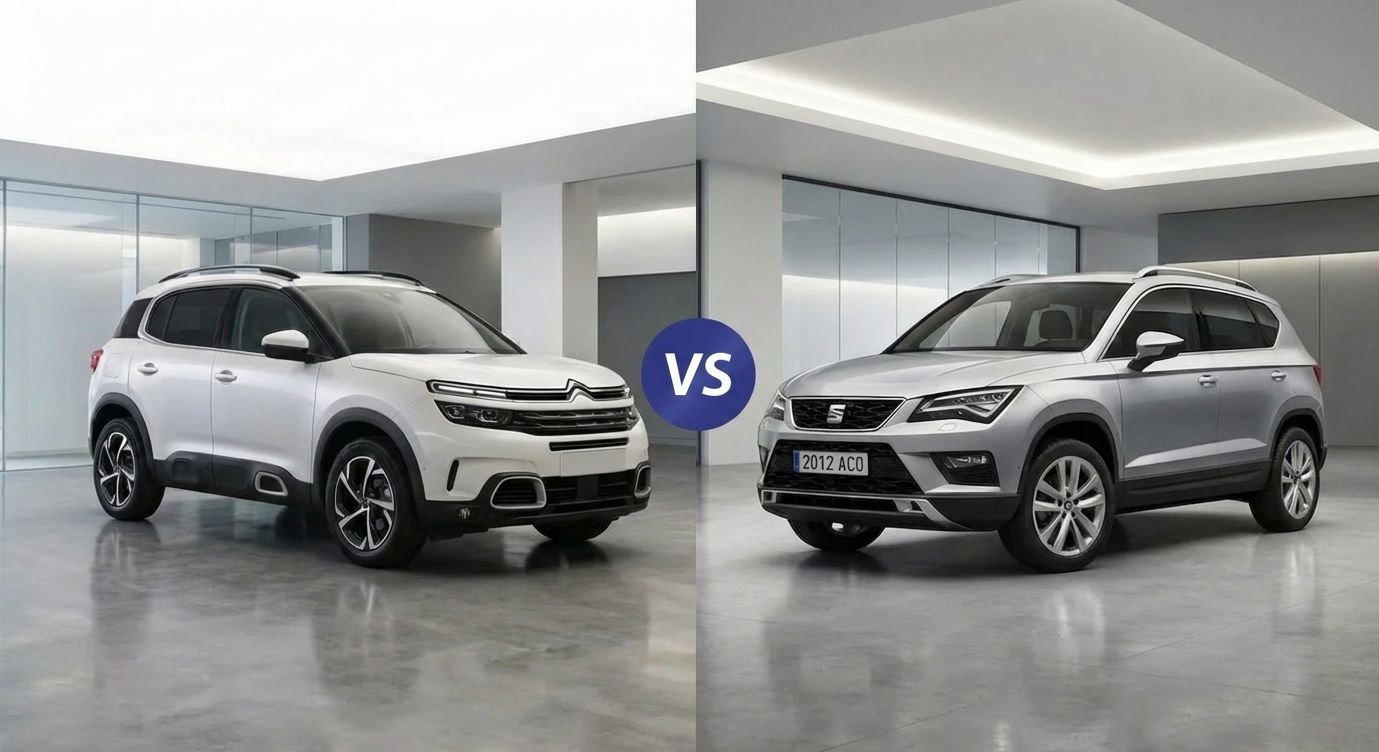
Detailed comparison: Citroën C5 Aircross vs. Seat Ateca. Find out which used SUV offers better comfort and equipment. Read the facts and our final verdict.
Apr 8, 2026
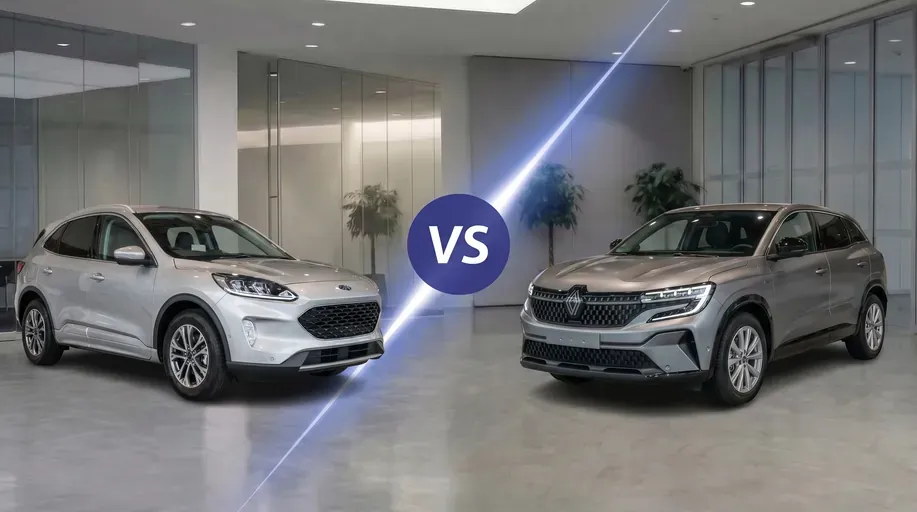
Used SUV comparison: Ford Kuga vs. Renault Austral. Find out which model offers better engines, equipment, and real value. Read our final verdict!
Apr 18, 2026