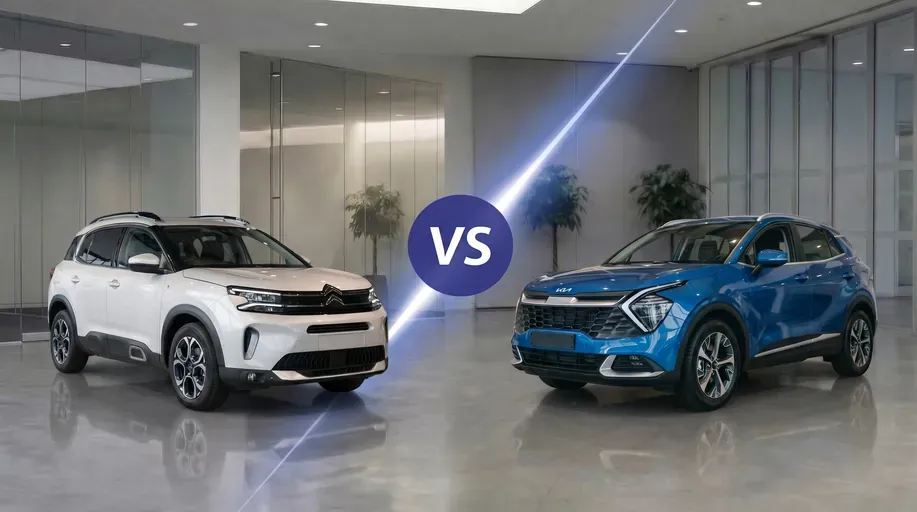
Car battle
Citroën C5 Aircross vs. Kia Sportage: Complete comparison 2026
Detailed comparison of used SUVs: Citroën C5 Aircross vs. Kia Sportage. We compared comfort, space, reliability, and equipment. Read our final verdict!
Apr 20, 2026
Articles
Car battle
Ford Puma vs. Citroën C3 Aircross: A detailed comparison of used crossovers. Compare real-world fuel consumption, interior space, reliability, and our final verdict.
April 30, 2026
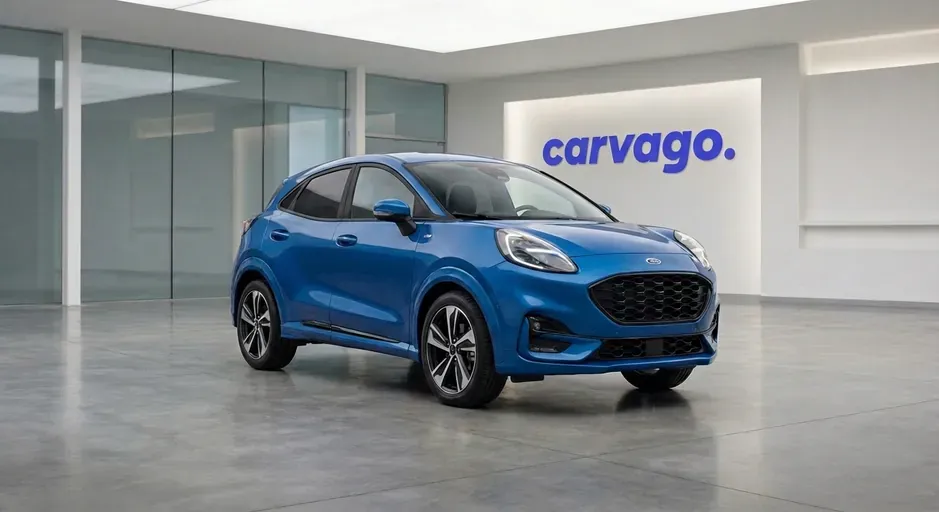
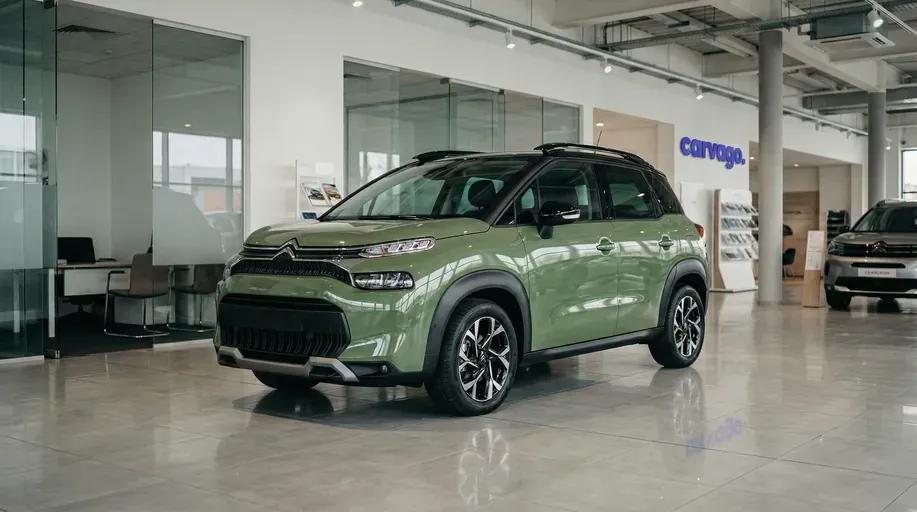
The Ford Puma, bearing the well-known name of the original small sports coupe from the nineties, has established itself on today's used car market as an agile and design-bold urban crossover with an emphasis on dynamics. Standing against it is the Citroën C3 Aircross, sold in some non-European markets under the shortened name Citroën Aircross, which instead bets on maximum driving comfort, flexible interior space, and original French design. The following comparison will detail the key differences between these popular models with regard to roughly four-year-old used cars and will make it easier for you to decide when choosing the ideal compact SUV for everyday travel.
When choosing a used urban crossover (around four years old), we come to a direct comparison between the second-generation Ford Puma and the first-generation Citroën C3 Aircross. While the Puma bets on more dynamic proportions and a sporty design, the C3 Aircross presents itself at first glance as an exceptionally practical and tall-built car. This different approach by the manufacturers is very clearly reflected in their exterior dimensions and determines the daily experience with the vehicle.
Ford Puma is, with its length of 4186 to 4266 mm (longer values apply to the sporty ST versions), slightly longer than the C3 Aircross, which measures a more compact 4154 mm in length. Furthermore, at 1805 mm, the Puma is a noticeable 49 mm wider than its French competitor (1756 mm). This difference gives the Ford not only a more aggressive look and better stability when cornering but also provides front passengers with slightly more shoulder room. On the other hand, the narrower body and overall shorter length make the Citroën a slightly more agile companion when parking in narrow city streets.
Citroën C3 Aircross stands 1597 mm tall, which is a significant 42 to 77 mm more than the lower-slung Puma (1520–1555 mm). This advantage gives the Citroën driver a noticeably higher seating position, which relates to a better view of traffic and overall more comfortable entry or placing children into car seats. The French model also benefits from a slightly longer wheelbase of 2604 mm (the Puma has 2588 mm), which in practice helps free up more longitudinal knee room for rear-seat passengers.
The differences in exterior dimensions thus clearly define the character of both cars and suggest who they are ideal for. If you are looking for a more dynamic crossover that sits more firmly on the road and offers a wider and sportier interior, the Ford Puma will be a bullseye. However, if you prefer maximum maneuverability in the city, a more upright seating position, and easier entry, the taller build and longer wheelbase of the Citroën C3 Aircross will be much more beneficial for you.
| Parameter | Ford Puma SUV | Citroën C3 Aircross SUV |
|---|---|---|
| Width (mm) | 1805 | 1756 |
| Length (mm) | 4186–4266 | 4154 |
| Height (mm) | 1520–1555 | 1597 |
| Wheelbase (mm) | 2588 | 2604 |
Trunk space is often one of the most important parameters when choosing a family crossover or small SUV. Especially for roughly four-year-old used cars, which families often purchase as a primary or secondary vehicle, every liter of volume plays a crucial role. The size of the trunk determines whether the car can easily accommodate a weekend grocery run, a stroller, or luggage for a longer vacation. Although the second-generation Ford Puma and the first-generation Citroën C3 Aircross belong to the same segment, each approaches interior space in a completely different way, targeting different buyer needs.
The second-generation Ford Puma pleasantly surprises with an above-standard base volume of 456 liters for its class. However, this figure hides one ingenious engineering solution – the so-called MegaBox. This is an innovative, deep 80-liter storage compartment hidden under the trunk floor, equipped with a practical drain plug at the bottom. This makes it an absolutely ideal place for transporting dirty hiking boots, wet sports equipment, or tall items placed upright. With the rear backrests folded down, the Puma offers a maximum capacity of 1216 liters. For the popular mild-hybrid variants, it is necessary to account for a slightly smaller base volume (just above the 400-liter mark) due to the battery installation under the rear seats; however, the main practical advantage of the MegaBox is always preserved.
The first-generation Citroën C3 Aircross counters by focusing primarily on extraordinary family interior modularity. In its base configuration, its trunk volume is 410 liters, which is sufficient for weekend shopping and packing for a shorter trip. Its main trump card, however, is the sliding rear bench. If you slide it all the way forward, you suddenly gain space for several extra suitcases, and the total trunk capacity increases to an impressive 520 liters. When the rear seats are fully folded, the transport volume increases to 1289 liters. Citroën also adds another very useful feature – the ability to fully fold down the front passenger seat backrest, allowing you to easily transport exceptionally long items, which is typically useful during unexpected trips to the furniture store.
In a direct comparison of the numbers, the difference in volumes is clearly evident. In a purely base configuration, the Ford Puma has a 46-liter advantage (456 compared to 410 liters). However, as soon as you slide the rear seats forward in the Citroën, the situation completely reverses, and the French car gains a tangible lead of 64 liters (520 compared to 456 liters). In terms of total maximum capacity with the rear seats folded, the Citroën representative offers 73 liters more space than its Ford rival (1289 compared to 1216 liters).
| Parameter | Ford Puma SUV | Citroën C3 Aircross SUV |
|---|---|---|
| Base volume (liters) | 456 | 410 - 520 |
| Max volume with seats folded down (liters) | 1216 | 1289 |
While the Ford Puma scores with its unique washable MegaBox in the floor, which is ideal for dirty items, the Citroën C3 Aircross wins in overall flexibility thanks to its sliding rear seats and slightly larger maximum transport volume.
The ability to tow a trailer can be a key factor for many buyers of used compact SUVs, as it significantly expands the car's overall practicality. Whether you plan to tow a trailer with construction materials or hitch up a smaller caravan, the differences in towing capacity between the Ford Puma and Citroën C3 Aircross can easily decide the choice. Both cars have different limits that define what their towing hitch is realistically usable for.
Ford Puma, represented on the used car market by its second generation (produced since 2020), offers a quite solid towing capacity for its segment. The standard braked trailer weight for the popular 1.0 EcoBoost engines and their mild-hybrid variants ranges from 900 to 1100 kg. The 1.5 EcoBlue diesel version also reaches the maximum of 1100 kg. However, an exception is the sporty Puma ST (1.5 EcoBoost) variant, which, due to its focus, has its towing capacity significantly limited to just 750 kg.
On the other hand, the first-generation Citroën C3 Aircross (from 2017–2024, which is a key period for the four-year-old used car market) provides overall lower and more modest limits. Standard 1.2 PureTech petrol engines (in 110 and 130 hp versions) can handle a maximum of 840 kg, while the weakest naturally aspirated PureTech 82 version can only tow 650 kg. Those interested in the highest possible capacity for the Citroën must opt for the more powerful 1.5 BlueHDi 120 diesel version, which has a maximum of 870 kg. As for unbraked trailers, the differences disappear – both cars most often handle weights from 600 to 665 kg.
In terms of everyday use, the higher values of the Ford Puma represent an indisputable advantage. You can much more easily hitch a larger trailer to the car, giving you additional space for several extra suitcases or sports equipment for the whole family. However, even the slightly lower limits of the Citroën are fully sufficient for weekend shopping or a longer holiday, especially if you are counting more on a light unbraked trailer for occasional transport of items.
Overall, the Ford Puma is a more versatile and logical choice for drivers who know they will use the towing hitch for heavier loads. The Citroën C3 Aircross, by contrast, serves better as support for light trailers or as a base for a bicycle rack.
| Model and engine | Braked trailer weight (kg) | Unbraked trailer weight (kg) |
|---|---|---|
| Ford Puma 1.0 EcoBoost (70–92 kW) | 900–1100 | 620–665 |
| Ford Puma 1.0 EcoBoost Hybrid (92–114 kW) | 900–1100 | 620–665 |
| Ford Puma 1.5 EcoBlue (88 kW) | 1100 | 665 |
| Ford Puma 1.5 EcoBoost ST (147 kW) | 750 | 665 |
| Citroën C3 Aircross 1.2 PureTech 82 (60 kW) | 650 | 450–600 |
| Citroën C3 Aircross 1.2 PureTech (81–96 kW) | 840 | 600 |
| Citroën C3 Aircross 1.5 BlueHDi 100/110 (73–81 kW) | 840 | 620 |
| Citroën C3 Aircross 1.5 BlueHDi 120 (88 kW) | 870 | 620 |
When choosing between the Ford Puma and the Citroën C3 Aircross, you encounter two completely different approaches to powertrains, which perfectly reflect the overall focus of both cars and are absolutely crucial for buyers. While the Ford Puma bets on a sportier character, electrification in the form of mild-hybrid technology (mHEV), and high-revving petrol units, Citroën sticks to more traditional internal combustion engines with maximum emphasis on a smooth ride and economy on longer trips, as evidenced by the stronger representation of diesel units. For buyers of used cars around four years old, this means a clear choice: the Puma offers agile and powerful engines ranging from 92 to 147 kW (including the hot ST version), which will be appreciated by driving enthusiasts. The Citroën C3 Aircross, on the other hand, relies on proven engines with outputs from 73 to 96 kW, which perfectly suit calmer drivers and families looking for comfort and operating efficiency. Both urban crossovers share the absence of all-wheel drive – power is always sent only to the front wheels. However, you will find a significant difference in automatic transmissions, where Ford uses the dual-clutch PowerShift (7DCT), while Citroën bets on the classic hydrodynamic torque converter EAT6.
The engine range for the second-generation Ford Puma (2020–present) revolves almost exclusively around the acclaimed turbocharged petrol three-cylinder 1.0 EcoBoost. In the market for nearly-new used cars, you will most often encounter its mild-hybrid variants (mHEV), which have an output of 92 kW (125 hp) or the more powerful 114 kW (155 hp). Thanks to the support of a starter-generator, they offer great dynamics from low revs and good fuel consumption. For true enthusiasts, Ford prepared the top-of-the-line Puma ST version, which until 2024 was powered by the phenomenal 1.5 EcoBoost engine with 147 kW (200 hp) paired with a manual gearbox. It was later joined by a weaker mild-hybrid version, the 1.0 EcoBoost ST with 125 kW and an automatic.
If you wanted a diesel engine in the Ford Puma, the choice is very limited. The manufacturer initially offered the economical 1.5 EcoBlue diesel with 88 kW (120 hp), but production data clearly shows that this diesel engine was definitively withdrawn from the European range at the end of 2021. You will no longer find it in newer models.
| Engine type | Fuel | Output (kW) | Torque (Nm) | Transmission |
|---|---|---|---|---|
| 1.0 EcoBoost | Petrol | 92 | 210 | 6MT / 7DCT |
| 1.0 EcoBoost mHEV | Petrol | 92 / 114 | 210 / 240 | 6MT / 7DCT |
| 1.5 EcoBlue | Diesel | 88 | 285 | 6MT |
| 1.0 EcoBoost Hybrid ST | Petrol | 125 | 248 | 7DCT |
| 1.5 EcoBoost ST | Petrol | 147 | 320 | 6MT |
The Citroën C3 Aircross addresses the market with a much more classic range of powertrains, and we are focusing here primarily on the 1st generation (produced until 2024), which is absolutely pivotal for the 4–5-year-old used car market. The main word here belongs to the 1.2 PureTech petrol three-cylinders. The base variant consists of a turbocharged version with 81 kW (110 hp) connected to a manual transmission. For those interested in an automatic, the more powerful version with 96 kW (130 hp) is exclusively intended, standing out with smooth shifting thanks to the classic EAT6 gearbox.
Unlike Ford, Citroën has maintained a wide and stable range of economical 1.5 BlueHDi diesel engines. It is an ideal choice for drivers who cover long distances. Although the weakest version with 73 kW (100 hp) ended around 2020, it was fully replaced by more powerful specifications with 81 kW (110 hp) for the manual and 88 kW (120 hp) reserved for the automatic transmission. Although the C3 Aircross has lower power outputs on paper than the Puma, the diesel engines balance the situation with a huge torque of up to 300 Nm.
| Engine type | Fuel | Output (kW) | Torque (Nm) | Transmission |
|---|---|---|---|---|
| 1.2 PureTech 110 | Petrol | 81 | 205 | 6MT |
| 1.2 PureTech 130 | Petrol | 96 | 230 | 6AT (EAT6) |
| 1.5 BlueHDi 100 | Diesel | 73 | 250 | 6MT |
| 1.5 BlueHDi 110 | Diesel | 81 | 250 | 6MT |
| 1.5 BlueHDi 120 | Diesel | 88 | 300 | 6AT (EAT6) |
While the Ford Puma attracts buyers with driver-focused mild-hybrids and sharp ST sports models, the Citroën C3 Aircross remains the king of economical and comfortable travel with an irreplaceable range of classic automatics and exceptionally efficient diesels.
When choosing the right engine, it is crucial to consider not only performance and real-world fuel consumption but also long-term reliability and owner feedback. The approach of both manufacturers to power units in roughly four-year-old used cars is completely different. While Ford, with the second generation of the Puma, bet almost exclusively on advanced electrification for petrol engines and relies on mild-hybrid technology with a 48V circuit to smooth the torque curve, Citroën, with the first generation of the C3 Aircross, took the path of more conservative power units without extensive hybrid assistance. This reduces the car's complexity on one hand but requires a more vigilant approach to specific service maintenance on the other.
This electrified three-cylinder represents the absolute ideal in the Puma range, and for four-year-old used cars, it is the best choice in terms of residual value and reliability. The mild-hybrid system (mHEV) uses a 48V starter-generator that effectively fills the "turbo lag" at low revs and provides the car with surprisingly brisk dynamics at a very realistic combined consumption of around 5.5 to 6 liters per 100 km. A major technical and service advantage of these more modern mild-hybrid units is the use of a robust timing chain, whereby Ford eliminated the issues with the crumbling belt-in-oil known from the past in this generation. Specific risks here include occasional discharge of the 12V battery during very frequent short trips and minor bugs in the hybrid system software, which can usually be resolved by reflashing the software at an authorized service center. The Powershift dual-clutch automatic transmission can sometimes jerk unpleasantly in stop-and-go city traffic; therefore, the precise six-speed manual is a safer choice from a long-term maintenance perspective. If you are considering an alternative for long distances, you must take into account that the excellent 1.5 EcoBlue diesel four-cylinder disappeared from the range at the end of 2021 according to available data, and you will therefore hardly come across it on the market for younger used cars. This hybrid EcoBoost will be appreciated by dynamically minded drivers who often combine city driving with more spirited runs on country roads.
For the playful and comfort-oriented C3 Aircross, the sweet spot is the 1.2 PureTech turbocharged three-cylinder with 110 hp. It is a refined and pleasantly flexible engine that fits the car's character much better than the much weaker naturally aspirated 1.2 PureTech 82 version (which ended sales in 2019 and thus won't be found in four-year-old used cars) and makes more sense for most users than more expensive diesel alternatives. Its main technical weakness, however, is the delicate design of the timing belt, which operates in an oil bath (the so-called wet belt). If the previous owner neglected maintenance or drove exclusively short trips with a cold engine, the belt material degrades due to unburnt fuel in the oil, begins to crumble, and clogs the oil pump pickup strainer, which can lead to fatal engine damage. When inspecting a used car, it is absolutely critical to visually check the condition of the belt surface directly through the oil filler cap. Choose only cars with a carefully documented service history and a maximum oil change interval of 15,000 km or one year. Once you find a verified unit and do not neglect this prevention, the engine will reward you with smooth pull and reliability, which perfectly suits families and calmer drivers for their daily commute.
Official fuel consumption figures provided by car manufacturers are often measured under ideal laboratory conditions and can therefore differ significantly from real-world practice. To get a more accurate picture of how much both crossovers actually cost in fuel, we looked at data from drivers themselves on the independent community portal Spritmonitor.de. We focused on the engine versions you are most likely to encounter on the market for roughly four-year-old used cars.
| Model and engine | Average consumption (l/100 km) |
|---|---|
| Ford Puma 1.5 EcoBlue 88 kW | 4.8 |
| Ford Puma 1.0 EcoBoost mHEV 92/114 kW | 6.0 |
| Ford Puma 1.0 EcoBoost 92 kW | 6.3 |
| Ford Puma 1.5 EcoBoost ST 147 kW | 7.4 |
| Citroën C3 Aircross 1.5 BlueHDi 81/88 kW | 5.1 |
| Citroën C3 Aircross 1.2 PureTech 81 kW | 6.5 |
| Citroën C3 Aircross 1.2 PureTech 96 kW | 6.8 |
Several interesting trends can be identified from the long-term user data. In the Ford Puma, the benefit of mild-hybrid technology (mHEV) is clearly evident; it can save roughly 0.3 liters of petrol per 100 km in the real world compared to the standard 1.0-liter EcoBoost engine, and it also helps with flexibility at lower revs. In contrast, the turbocharged 1.2 PureTech three-cylinder petrol engines in the Citroën C3 Aircross consume more fuel in practice than one might expect from a small engine. The most economical choice in both cases remains the four-cylinder diesel engines – both Ford and Citroën can achieve an efficient average of around 5 liters per 100 km.
This provides quite clear recommendations for the average driver. If you use the car mainly for shorter trips around town and its surroundings, the mild-hybrid Ford Puma is the more efficient choice. The small assistance from the electric motor makes the most sense here during constant stop-and-go driving. If, on the other hand, you are a long-distance motorway driver or commute a long distance to work daily, the diesel versions of both models represent a huge relief for your wallet. Budget-conscious used car buyers should, in any case, be wary of the petrol Citroën, where slightly higher expenses at the petrol station must be expected.
Fuel consumption thus definitely plays an important role in this duel and can be one of the key factors in the selection process. While the diesel versions are comparably economical in both cars, in the case of the more popular petrol variants, the Ford Puma emerges as the winner of this comparison. Its more modern mild-hybrid system effectively masks the shortcomings of the three-cylinder engine and keeps consumption within more reasonable limits.
Looking at the used car market for vehicles around four years old (2020 to 2022 models), the different market positions of both models are clearly visible. Although both the Ford Puma and Citroën C3 Aircross fall into the popular small urban crossover segment (B-SUV), their price tags differ quite significantly. This corresponds not only to different original purchase prices but also to a different approach to the target customer group.
A used Ford Puma holds its value very well on the market. This is due to its attractive design, excellent driving characteristics, and the presence of modern technologies.
From the start, Citroën has positioned itself as a more affordable and highly practical alternative. From the perspective of a used car buyer, this is great news, as the depreciation of the Aircross favors second-hand purchases.
| Model (Year of manufacture 2020–2022) | Estimated price from | Estimated price to | Most common engine on the market |
|---|---|---|---|
| Ford Puma | €12,000 | €18,000 | 1.0 EcoBoost (mHEV) |
| Citroën C3 Aircross | €8,000 | €14,000 | 1.2 PureTech |
While a used Ford Puma will suit drivers who are happy to pay extra for dynamics, a sharper chassis, and electrified engines, the Citroën C3 Aircross is a favorite for those looking for the maximum price-to-utility ratio. For a significantly lower amount, the French model offers more interior comfort and greater spatial flexibility.
While the Ford Puma maintains a higher price thanks to its sporty character and modern technology, the Citroën C3 Aircross represents a significantly more affordable choice for drivers looking for a practical and comfortable family SUV for reasonable money.
Safety is a key factor when choosing a family or city crossover. Although the Ford Puma and Citroën C3 Aircross models may boast solid results in tests by the independent Euro NCAP organization at first glance, it is absolutely crucial to look at the context and the year of their testing. Euro NCAP protocols have been constantly evolving and tightening over the years. They focus increasingly on advanced technologies, the vehicle's ability to prevent accidents at intersections, or the detection of cyclists and pedestrians. Percentage scores and the number of stars from different years cannot be directly compared.
Ford Puma was originally tested in 2019, when it received five stars. However, in 2022, it underwent a rigorous reassessment according to newer methodologies, resulting in a revised rating of four stars. In this new and significantly more demanding test, the Ford Puma achieved a score of 75% for adult protection, 84% for child protection, 70% for vulnerable road user protection, and 69% in the safety assist category. The result reflects very modern and strict benchmarks, with the Puma continuing to offer a highly up-to-date level of active safety, which today's standards focus on.
Citroën C3 Aircross underwent crash tests much earlier, back in 2017, when it took home the maximum rating of five stars at the time. It received a very good 85% for adult protection, 82% for child protection, 64% for vulnerable road user protection, and 60% for safety assistance systems. However, it must be emphasized that this testing took place under significantly more lenient rules. Today, the car would likely not achieve a similar rating due to its older generation of assistance systems, and the Euro NCAP certification for this model has already officially expired due to the age of the test.
In terms of current safety standards, the overall winner is the Ford Puma. Although on paper it has a newer four-star rating compared to the Citroën's historical five stars, its real-world safety equipment, pedestrian protection, and active assistants meet the much more current and demanding requirements of today.
| Parameter | Ford Puma | Citroën C3 Aircross |
|---|---|---|
| Year of testing | 2022 | 2017 |
| Adult occupant protection | 75 % | 85 % |
| Child protection | 84 % | 82 % |
| Vulnerable road user protection | 70 % | 64 % |
| Safety assistance systems | 69 % | 60 % |
When comparing these two models, do not be misled by the historical number of stars; the Ford Puma underwent a much more recent assessment and offers realistically more advanced safety technologies than the older Citroën, whose original certification has already expired.
In addition to standard equipment, each of the models offers several unique features that can be decisive for the customer and bring specific added value to everyday life. While Ford bets on clever luggage solutions and a sportier feel, Citroën focuses on maximum flexibility and relaxed travel.
Top-tier driving dynamics and agile steering, which are among the best in class
Innovative and practical "MegaBox" storage space (a washable compartment under the trunk floor)
Efficient and dynamic 1.0 EcoBoost mild-hybrid engines
Attractive sporty design that remains modern even after years
Extensive safety and assistance equipment available even in lower trim levels
Stiffer suspension tuning (especially in the ST-Line version) means less comfort on broken roads
More cramped legroom and headroom for rear-seat passengers
Poorer rear-quarter visibility due to the sloping roofline and wide C-pillars
SYNC 3 infotainment graphics look slightly dated compared to the latest competitors
The Ford Puma is an ideal choice for drivers who demand a dynamic look and above-average driving experience from a compact crossover. Thanks to the unique trunk solution with the washable MegaBox, it also offers solid practicality, although the rear seats are more suitable for children or shorter distances.
Extremely comfortable chassis and exceptionally comfortable seats (Advanced Comfort program)
Excellent interior versatility thanks to a sliding rear bench with adjustable backrest angle
Airy and bright cabin with excellent visibility in all directions
Unmistakable design with a wide range of color combinations
Higher driving position makes entry and city maneuvering easier
More pronounced body roll in corners and less precise steering discourage spirited driving
Impractical climate control integrated exclusively into the touchscreen
Higher noise levels from the three-cylinder gasoline engines during hard acceleration and at highway speeds
Presence of cheaper-feeling hard plastics on the dashboard and door panels
The Citroën C3 Aircross will primarily appeal to buyers who prioritize maximum travel comfort and family utility over sporty performance. It is a perfect choice for more relaxed drivers who appreciate the clever modularity of the rear seats and French charm in city traffic.
Based on our own statistics, reports from the service network, and detailed data provided by every used car audit, we have compiled an overview of the most common problems that buyers of roughly four-year-old examples should watch out for.
Although the Ford Puma (model years around 2020 and 2021) is generally considered a very reliable car, several specific areas require increased attention when choosing a used one.
The Ford Puma is an above-average reliable crossover, whose only serious threat is neglected oil service endangering the oil pump belt. With a manual transmission and a careful maintenance history, it represents a safe and trouble-free choice.
The Citroën C3 Aircross can impress with its space and high comfort, but from a reliability perspective, it hides several serious technical traps, making an independent comprehensive car inspection before purchase an absolute necessity.
Unfortunately, the Citroën C3 Aircross pays for the chronic problems of the 1.2 PureTech petrol engines with a rapidly degrading timing belt. If you are considering buying one, strictly choose only cars with a precisely documented and preferably shortened oil change history.
When buying a used car, a thorough inspection is key, and both models have their specifics that are worth paying attention to during testing. For peace of mind, a detailed independent technical inspection of the car is always worth it, as it reveals any hidden defects before you pay for the vehicle.
Ford Puma has a basic capacity of 456 litres, which includes a unique washable space called the MegaBox under the floor, perfect for dirty items. Citroën C3 Aircross on the other hand offers 410 litres as standard, but thanks to sliding rear seats, this space can be increased up to 520 litres. In terms of overall variability, Citroën scores, while Ford excels with its innovative use of boot depth.
The Ford Puma is considered one of the best-driving small SUVs, offering a stiffer, sportier chassis, precise steering, and excellent agility in corners. The Citroën C3 Aircross, by contrast, focuses fully on maximum driving comfort with softer suspension that very effectively dampens urban bumps. The Puma is thus the ideal choice for enthusiastic drivers, while the C3 Aircross will be appreciated by fans of a calm and smooth ride.
The Ford Puma is widely available with advanced mild-hybrid technology (mHEV) paired with 1.0 EcoBoost engines, which helps reduce consumption and improves dynamics when starting off. In contrast, the Citroën C3 Aircross in the generation around 2022 does not offer hybrid drive and relies exclusively on classic petrol (PureTech) and diesel (BlueHDi) engines.
The Citroën C3 Aircross is a better family car thanks to its taller, boxy body shape and airier cabin, making it easy to install child car seats. The Ford Puma has a sportier sloping roofline and smaller side windows, which slightly limits rear headroom and worsens the view for smaller children. If you are primarily looking for a family SUV, the Citroën will offer you more practicality and overall comfort.
Both cars are very economical; the petrol Ford Puma with a mild-hybrid system can achieve real-world consumption between 5.5 and 6 litres per 100 km. Petrol versions of the Citroën C3 Aircross achieve similar values, but may consume slightly more in the city due to the lack of hybrid assistance. However, the Citroën also scores by offering an economical diesel engine, which is a great and efficient choice for frequent long motorway journeys.
Choosing between a used Ford Puma and a Citroën C3 Aircross is ultimately a clear choice between sporty flair and maximum family practicality. The Ford Puma will primarily appeal to dynamically minded drivers, offering top-tier handling, modern and efficient mild-hybrid engines, and an innovative trunk with the cleverly designed, washable MegaBox. The Citroën C3 Aircross, on the other hand, represents a more affordable alternative for more relaxed travelers and families, impressing with unrivaled ride comfort, a higher and clearer seating position, and excellent interior variability, led by sliding rear seats. So, if you expect daily fun behind the wheel and a stylish design from your roughly four-year-old crossover, go for the Ford with confidence; however, if you prefer airy space, relaxed travel, and an excellent price-to-value ratio, the French model will be a much more ideal companion for you.
Sources: ADAC, novinky.cz, denik.cz, automix.cz, hybrid.cz, roadblog.cz
This article was prepared using artificial intelligence tools. The section guarantor is Petr Dušek.
Detailed comparison of used SUVs: Citroën C5 Aircross vs. Kia Sportage. We compared comfort, space, reliability, and equipment. Read our final verdict!
Apr 20, 2026
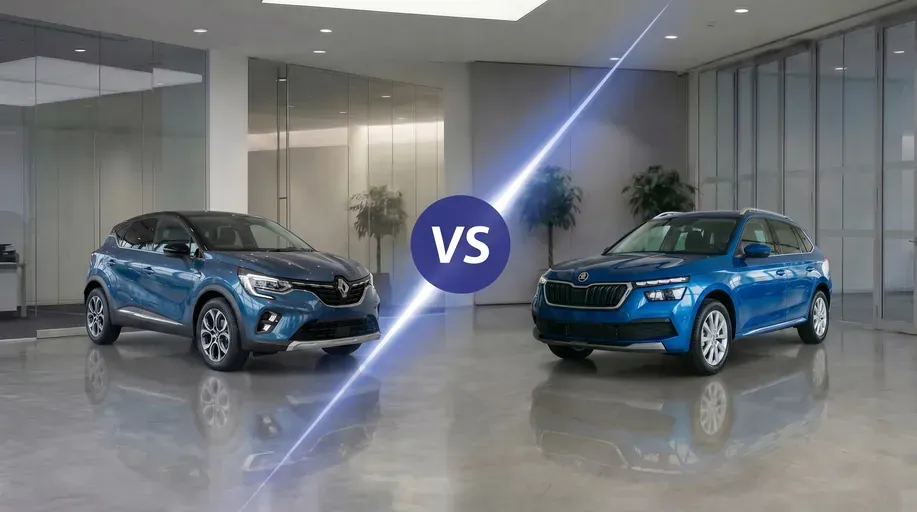
Detailed comparison: Renault Captur vs. Škoda Kamiq. Discover the differences in space, engines, and equipment. Read our verdict before buying a used SUV!
Apr 25, 2026
Detailed comparison of Ford Kuga vs. Mazda CX-5. Discover real-world experiences, differences in engines and equipment, and read a clear verdict before choosing a used SUV.
Apr 17, 2026