Choosing the right engine is absolutely critical for long-term satisfaction with a vehicle, which is why our recommendations are based on real-world performance experience, actual fuel consumption, owner feedback, and mechanical reliability. Both of these large MPVs require powerful and torquey units to move their weight, but when looking for a used car roughly four years old, you will encounter an interesting fact: due to tightening emission standards, both manufacturers had to radically cut their engine offerings. Looking at historical production data, it is clear that popular older diesel generations (such as Ford's 2.0 TDCi discontinued in 2018) or powerful petrol units (such as VW's 2.0 TSI discontinued in 2015) are no longer found in late-model vehicles. The current market for family used cars is thus dominated exclusively by modernized and, over the years, refined 2.0-litre diesel engines, which make the most sense for large family cruisers in terms of both cost and durability.
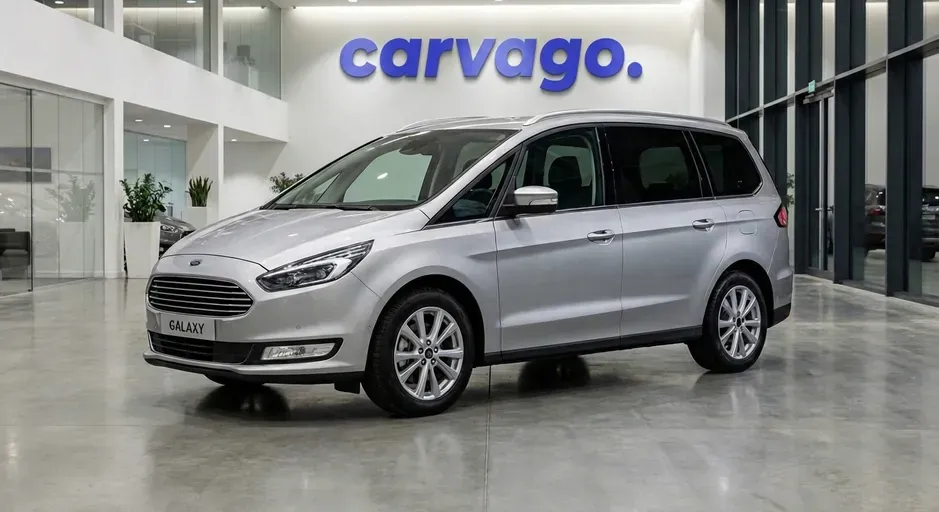
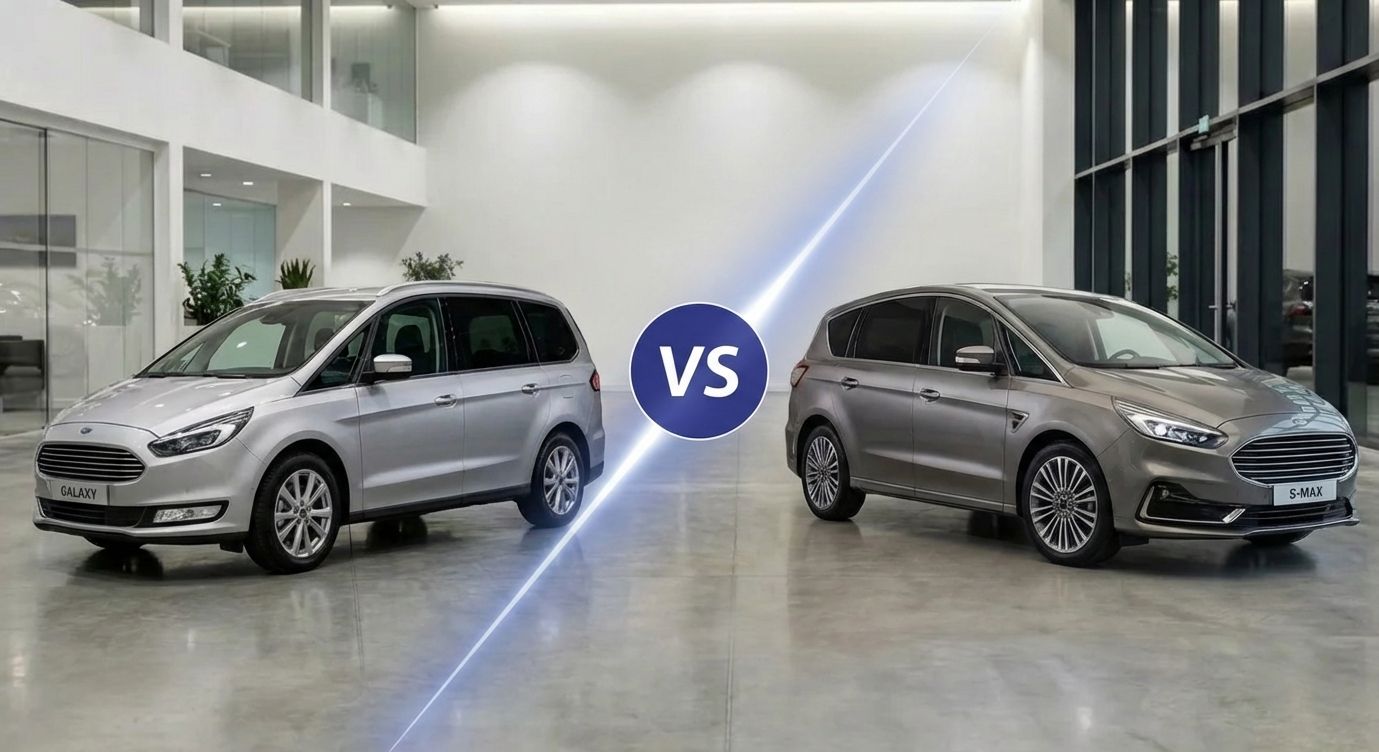
For the Ford Galaxy, we recommend: 2.0 EcoBlue, 110 kW or 140 kW
This modern 2.0-litre diesel, which reliably replaced the older TDCi engines in Generation III (specifically in models up to 2021), is objectively the best and most sensible choice for the massive Galaxy. In the 110 kW (150 hp) version, it represents a great compromise between purchase price and dynamics, while the more powerful 140 kW (190 hp) variant provides the necessary reserve even when fully loaded with luggage and seven passengers. The engine is praised for its overall refinement, solid pull from low revs, and long-term operational reliability.
From a technical standpoint, it particularly pleases with a wide and flat torque curve (up to 400 Nm in the more powerful version), which ensures a smooth ride without the need to over-rev the engine. Real-world consumption for a car of this size ranges between a very pleasant 6.5 and 7.5 litres per 100 kilometres. A significant technical bonus for late-model used cars is also the fact that the more powerful versions are usually paired with a modern eight-speed planetary automatic transmission with a torque converter. This replaced the older and more problematic PowerShift dual-clutch transmissions and excels with much smoother shifting and higher durability.
The main risk with used 2.0 EcoBlue vehicles is a typical ailment of all modern diesels – clogging of the Diesel Particulate Filter (DPF) and crystallization or faults in the urea injection system (AdBlue), which occur most frequently when the car has been driven exclusively on short city trips. How to detect this problem? During a test drive, check if the car suffers from a loss of power, shows any error messages on the dashboard, or has a suspiciously rough or fluctuating idle. To mitigate the risk of internal engine wear, we strongly recommend shortening the oil change interval to a maximum of 15,000 km immediately after purchase and not relying on extended factory intervals.
This engine is perfect for drivers who regularly drive long highway stretches, transport a large family, or head to the sea in the summer with a fully loaded car. If you are looking for a comfortable mile-muncher with a calm driving style, the 2.0 EcoBlue will reward you with fantastic operating economy. Conversely, it is not an ideal candidate for daily "hopping" around a congested city to the shopping centre and back.
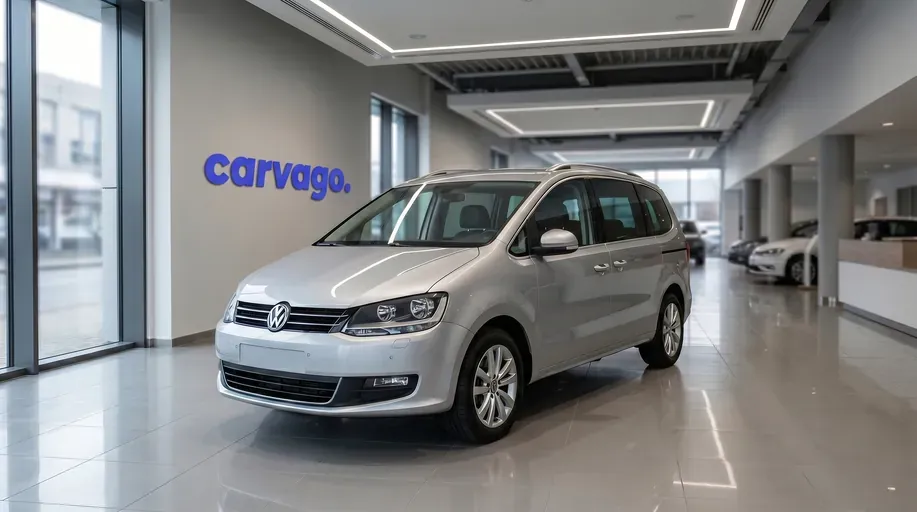
For the Volkswagen Sharan, we recommend: 2.0 TDI SCR BMT, 110 kW
The legendary 2.0 TDI engine with 110 kW (150 hp) from the reliable EA288 development family represents the gold standard under the hood of the Volkswagen Sharan. Although the second-generation Sharan was produced for a very long time, it is the evolutionary 2.0 TDI SCR BMT versions, which were sold until the very end of main production (in Comfortline, Highline, or Black Style trims until 2020), that form the absolute core of the four-year-old used car market. It is a time-tested, technically mature, and exceptionally balanced power unit, in which Volkswagen eliminated most of the teething problems of previous generations.
Among the main technical advantages is excellent operational efficiency, which for such a boxy and heavy body can often drop below 6.5 l/100 km. The engine offers confident pull from the lowest rev range and works perfectly with both the precise manual and the optional DSG dual-clutch transmission. The Exhaust Gas Recirculation (EGR) system in this generation of the EA288 engine is conceptually much better designed – it takes gases after the DPF filter, so they are relatively clean and the valve no longer suffers from such massive carbon buildup and clogging as earlier TDI units.
However, even this honest machine is not immune to the risks of wear and tear. In used Sharans, which often serve as hard-working family and company workhorses, one must watch out for wear on the dual-mass flywheel. The fault manifests as audible metallic rattling and subtle vibrations at idle. Therefore, during an inspection of a used car, unconditionally insist on a test drive with a completely cold engine, when the play manifests most. For versions with the DSG automatic transmission, it is then crucial to check the service history – adhering to regular transmission oil changes every 60,000 km is an absolute necessity, and the absence of this service is a clear argument for a discount or walking away from the purchase.
The Sharan with the 2.0 TDI SCR BMT engine is a persistent workhorse ideal for travellers and active families. It is best suited for smooth driving at a steady speed on country roads and cruise-control highway journeys. We do not recommend it for permanent city operation with frequent starts – constant interruption of DPF regeneration in city traffic jams leads to reduced reliability of the emission systems.