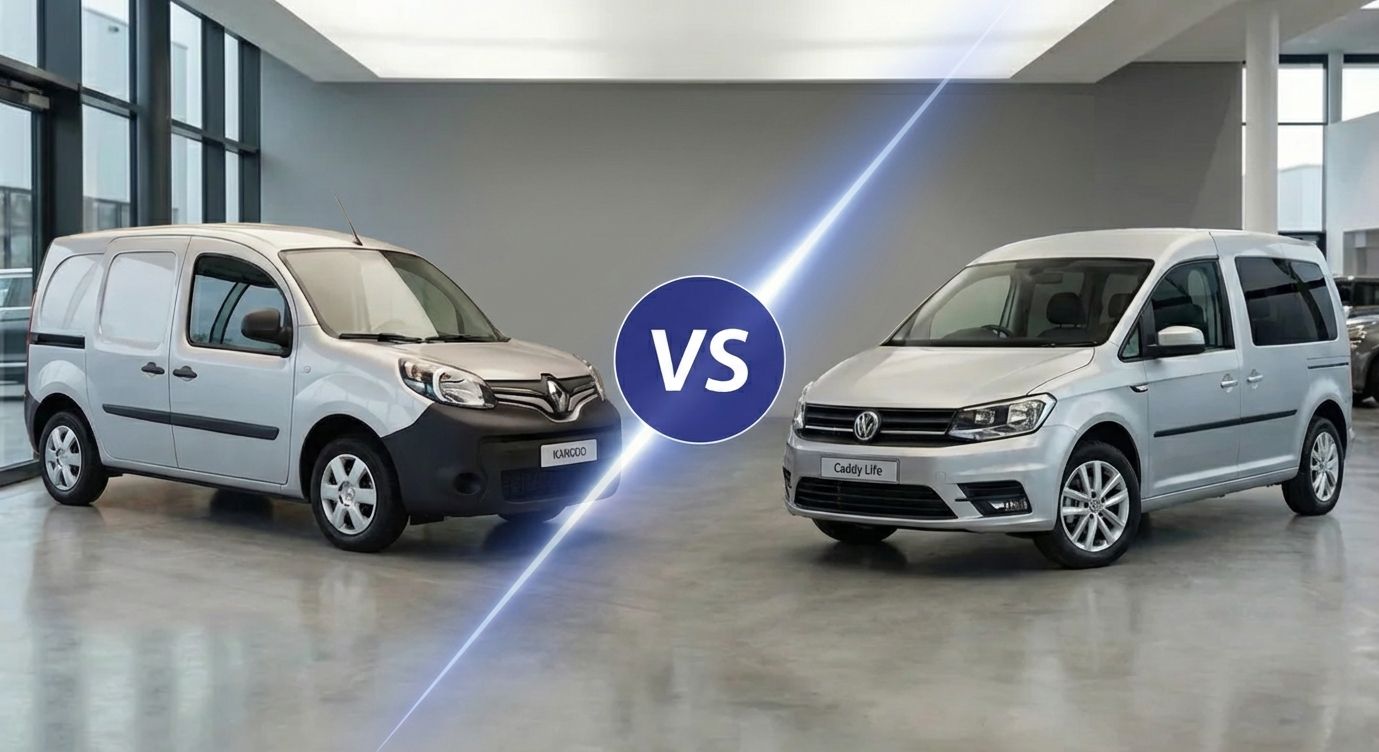
Car battle
Renault Kangoo vs. Volkswagen Caddy: Complete comparison 2026
Renault Kangoo or Volkswagen Caddy? Our detailed comparison reveals the key differences and helps you decide which car is right for you.
Apr 13, 2026
Articles
Car battle
Detailed comparison of Ford Galaxy vs. Ford S-Max. Find out which used 7-seater MPV offers better space, reliability, and driving characteristics. Read our verdict!
April 13, 2026
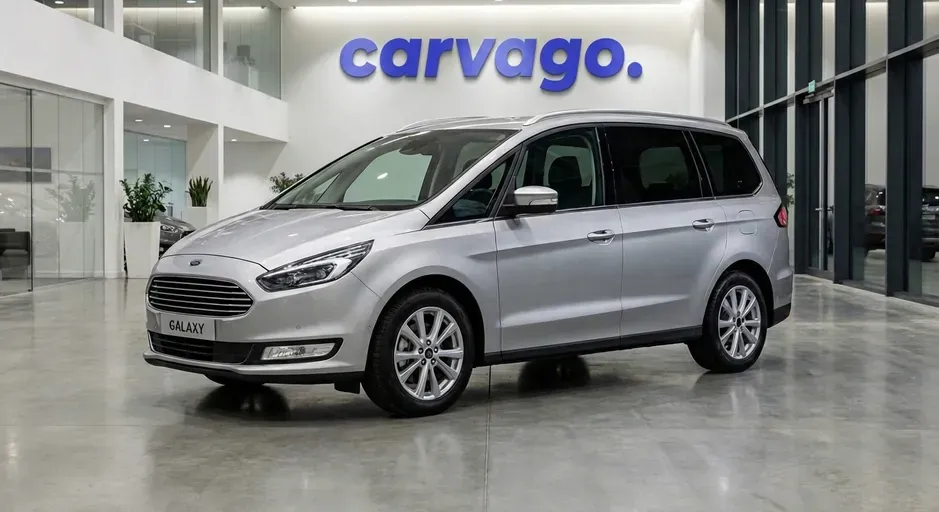
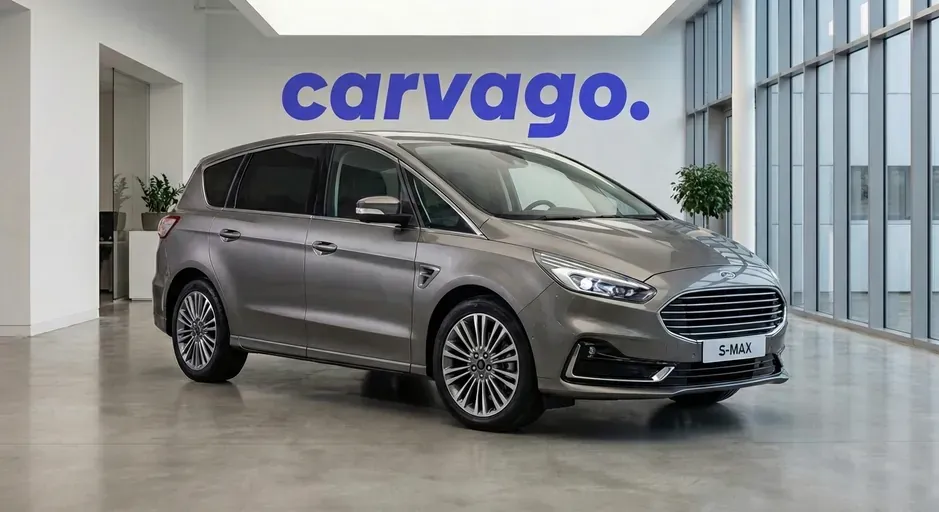
Ford Galaxy, whose first generation was created in a joint venture and is also known on the market under the sister names Volkswagen Sharan or SEAT Alhambra, represents a full-fledged large-capacity MPV focused primarily on maximum interior space and uncompromising comfort for large families. In contrast, the Ford S-Max uses an entirely identical technical foundation but brings a more dynamic exterior design with a lower roofline and noticeably sportier driving characteristics, thereby targeting drivers looking for the ideal balance between everyday practicality and agility behind the wheel. The following comparison will map out the key differences between the two models in detail and help you objectively decide which of these popular family cruisers will be the best choice for your specific needs on the market of roughly four-year-old used cars.
Both models, the Ford Galaxy and the Ford S-Max, share the identical chassis platform, which is clearly reflected in their basic dimensions. The width of both cars is a respectable 1916 mm, and the wheelbase reaches an identical 2850 mm (some technical sheets for the S-Max state 2849 mm depending on the measurement methodology). This wide and stable base ensures above-standard interior space for the crew in the first two rows for both representatives of the MPV category, while also contributing to confident driving characteristics on the highway. The deciding factor when choosing will therefore not be the width of the car or the longitudinal legroom in the middle, because in this regard, both siblings offer a practically identical and very generous foundation for family use.
The most significant differences begin with the overall length of the body. While the sportier-cut S-Max measures 4796 mm in length, the more conservative and boxier Galaxy is 52 mm longer (basic versions reach 4848 mm, and even 4853 mm for the newer hybrid motorization). Although five centimeters may seem like a negligible value, in practice, this increase helps the Galaxy model achieve a more voluminous luggage compartment and, above all, more usable space in the third row of seats. On the other hand, the slightly shorter and dynamically shaped S-Max guarantees slightly easier orientation in narrow city streets, and parking it in crowded centers and garages is somewhat more comfortable.
By far the biggest visual and practical difference, however, is the height of both vehicles. The Ford Galaxy, with its 1747 mm, towers a noticeable 92 mm higher than the Ford S-Max, whose roof ends at 1655 mm. Passengers in the back primarily benefit from this significant difference – the Galaxy offers substantially more headroom, which adult passengers will appreciate especially in the third-row seats, where the roof in the S-Max already slopes downwards. The taller body structure of the Galaxy also makes it easier for adults to get in and out, as well as handle child car seats on a daily basis. However, thanks to its lower silhouette, the S-Max scores with a lower center of gravity, less aerodynamic drag, and noticeably more agile behavior in corners, making it the clear choice for drivers who prefer driving dynamics over the absolute maximization of transport capacity.
| Parameter | Ford Galaxy MPV | Ford S-Max MPV |
|---|---|---|
| Width (mm) | 1916 | 1916 |
| Length (mm) | 4848 - 4853 | 4796 |
| Height (mm) | 1747 | 1655 |
| Wheelbase (mm) | 2850 | 2849 - 2850 |
When choosing a family car, the size of the luggage compartment plays one of the most important roles, and especially in the large MPV segment, this parameter is often the main argument for purchase. Both the Ford Galaxy and the Ford S-Max share the same chassis platform and focus on maximum practicality, yet their approach to interior space differs slightly. While the Galaxy relies on a more traditional boxy body with a high roof optimized for the greatest possible utility value, the S-Max opts for a more dynamic, sportier-cut silhouette with a sloping rear. This design difference inevitably affects how much cargo both cars can realistically hold, which is crucial for larger families who regularly transport bulky items.
In terms of numbers, the difference between the two models is noticeable, even though in the basic five-seat configuration (when loaded up to the cargo cover), both cars offer an identical volume of 700 liters. However, the situation changes if you load the luggage compartment up to the roof – here the Galaxy dominates with a value of 1301 liters, while the S-Max provides 1035 liters. If you use all seven seats, the Galaxy offers 300 liters for luggage, compared to 285 liters in the Ford S-Max. The difference is then most apparent after folding down all the rear backrests. In such a case, the Galaxy swallows a gigantic 2339 liters of cargo, thereby surpassing the S-Max with its 2200 liters in the five-seat configuration (or 2020 liters for the seven-seat version) by a substantial 139 liters. It is also important to mention that in modern full hybrid versions (HEV 2.5 Duratec), which are commonly found on the market of roughly four-year-old used cars, there is practically no reduction in usable trunk capacity thanks to the smart placement of the compact battery under the floor.
In practice, these differences mean that while the luggage compartment of the Ford S-Max is absolutely sufficient for weekend shopping and longer vacations for four or five people, the Galaxy represents a genuine moving van. The higher loading sill and almost flat roofline of the Galaxy model mean space for several extra suitcases, easy transport of bicycles, or hassle-free loading of bulky furniture directly into the car. Furthermore, the completely flat loading area that is created in both models after folding down the rear rows makes them great candidates for emergency sleeping on the road.
| Parameter | Ford Galaxy MPV | Ford S-Max MPV |
|---|---|---|
| Basic volume (liters) | 700 | 700 |
| Max. volume with folded seats (liters) | 2339 | 2200 |
In conclusion, if maximum transport capacity is an absolute priority for you and you often travel fully loaded to the roof, the Ford Galaxy is the rational winner, providing unbeatable space reserves. However, if you do not utilize every available liter and prefer a more agile appearance, the trunk volume of the Ford S-Max will certainly not limit you in fulfilling both standard and above-standard family duties.
Towing Capacity and Practical Use
Trailer weight is often a decisive parameter for large family MPVs, whether you plan to tow a heavy residential caravan or need to attach a trailer with building materials. The Ford Galaxy and Ford S-Max share the identical chassis platform, which in practice means that in terms of towing power, they offer very similar, if not completely identical options.
Differences Across Motorizations
For the third generation of the Ford Galaxy, which perfectly represents the market of roughly four-year-old used cars, the maximum weight of a braked trailer ranges from a standard 1500 kg to an excellent 2000 kg.
For all mentioned models, the maximum weight of an unbraked trailer is limited to the legislative 750 kg. The significant transport flexibility of both MPVs thus means that if, for example, you use the tow hitch for a box or a bike rack and gain space for a few extra suitcases inside the car itself, their total capacity will be absolutely sufficient for weekend shopping and longer holidays.
How Does the Ford S-Max Perform?
Although exact tabular data for the Ford S-Max model is not available for this specific dataset, the structural kinship with the Galaxy model gives you a clear answer. The limits are almost identical – strong diesel versions of the S-Max from recent years can easily handle a two-ton braked trailer, while the hybrid S-Max (2.5 Hybrid) offers a capacity oscillating around the value of 1560 to 1750 kg. For unbraked trailers, the blanket limit of 750 kg applies again.
Final Summary
As a result, towing capacity will not be the main deciding factor when choosing between these two giants. Both models provide excellent facilities for towing heavier loads. Your choice should therefore be based purely on the design and interior layout – choose the Galaxy for uncompromising space and airiness in the third row of seats, while the S-Max will be ideal for drivers preferring a sportier cut.
| Model and motorization | Braked weight of trailer (kg) | Unbraked weight of trailer (kg) |
|---|---|---|
| Ford Galaxy 1.5 EcoBoost (118-121 kW) | 1600 | 750 |
| Ford Galaxy 2.0 EcoBlue (110 kW) | 1600-2000 | 750 |
| Ford Galaxy 2.0 EcoBlue (140-177 kW) | 2000 | 750 |
| Ford Galaxy 2.0 TDCi (110-154 kW) | 2000 | 750 |
| Ford Galaxy 2.5 Hybrid (110 kW) | 1510-1710 | 750 |
The Ford Galaxy and Ford S-Max share the same chassis platform and essentially the identical range of powertrains, which is great news for used car buyers. This means you do not have to limit yourself in choosing a motorization based on whether you prefer the sportier and more dynamic S-Max or the maximally spacious and family-oriented Galaxy model. In the used car market, especially for models around four years old (after the extensive modernization in 2019), strong and economical diesel engines clearly dominate, which are an ideal choice for frequent long journeys and high highway mileage. Furthermore, diesel variants in both models very often offer the option of intelligent all-wheel drive (AWD), which you will appreciate, for example, during regular trips for winter sports. Conversely, drivers with shorter urban and suburban routes should pay attention to the modern full hybrid motorization (HEV), which completely replaced purely combustion engines towards the end of production of both models and offers excellent fuel consumption without the need for any grid charging. Thanks to this spectrum of engines, both vehicles can satisfy both thrifty families and drivers with higher dynamic demands.
The third-generation Ford Galaxy appears on the market of four-year-old used cars predominantly with modernized 2.0 EcoBlue diesel engines, which fully replaced the older TDCi units after the facelift. These engines form the backbone of the offer and are available in a tune of 110 kW (150 hp) or a stronger 140 kW (190 hp), while being frequently paired with a modern eight-speed automatic transmission and the aforementioned 4x4 drive. The peak of the diesel offer for the Galaxy was the powerful 2.0 EcoBlue Bi-Turbo version providing 177 kW (240 hp). Gasoline versions like the basic 1.5 EcoBoost or the stronger 2.0 EcoBoost gradually disappeared completely from the offer after modernization due to emission limits, and you will not encounter them in younger model years. A major turning point in the car's history occurred in 2021 when Ford introduced the fully hybrid 2.5 Hybrid variant with an output of 140 kW and an e-CVT continuously variable transmission. If you are looking for a nearly new Galaxy manufactured between 2021 and 2023 today, you will highly likely come across this reliable and economical hybrid, which became the sole and exclusive motorization for the final years of production of this model.
| Engine type | Fuel | Power (kW) | Torque (Nm) | Transmission |
|---|---|---|---|---|
| 1.5 EcoBoost | Gasoline | 118 | 240 | 6MT |
| 2.0 EcoBoost | Gasoline | 177 | 345 | 6AT |
| 2.0 EcoBlue | Diesel | 110 / 140 | 370 / 400 | 6MT / 8AT |
| 2.0 EcoBlue Bi-Turbo | Diesel | 177 | 500 | 8AT |
| 2.5 Hybrid | Hybrid (HEV) | 140 | 200 | e-CVT |
The second generation of the Ford S-Max offers an absolutely identical engine range to its larger sibling, the Galaxy, but thanks to a lower body build, slightly lower weight, and noticeably better aerodynamics, it feels somewhat more agile and shows negligibly better acceleration figures. On the nearly-new used car market, you will most often encounter the identical and extremely popular 2.0 EcoBlue diesel (110 kW or 140 kW), which excels in family use with long-term reliability and very favorable fuel consumption. For more demanding drivers who want to fully utilize the renowned sporty genes of the S-Max's agile chassis, dynamically tuned engines are a perfect fit, such as the previously offered turbocharged 2.0 EcoBoost petrol engine (177 kW) or the exceptionally powerful 2.0 EcoBlue Bi-Turbo diesel unit with a commanding pull of 500 Nm. Just like the Galaxy model, the S-Max had to switch exclusively to the sophisticated 2.5 Hybrid technology from 2021 due to market trends. This combines a large-displacement naturally aspirated petrol engine operating on the Atkinson cycle with an auxiliary electric motor, creating an unusually smooth, mechanically very durable, and efficient powertrain for the driver, designed for both city driving and comfortable cruising.
| Engine type | Fuel | Power (kW) | Torque (Nm) | Transmission |
|---|---|---|---|---|
| 1.5 EcoBoost | Petrol | 118 | 240 | 6MT |
| 2.0 EcoBoost | Petrol | 177 | 345 | 6AT |
| 2.0 EcoBlue | Diesel | 110 / 140 | 370 / 400 | 6MT / 8AT |
| 2.0 EcoBlue Bi-Turbo | Diesel | 177 | 500 | 8AT |
| 2.5 Hybrid | Hybrid (HEV) | 140 | 200 | e-CVT |
Choosing the right engine is absolutely crucial for long-term satisfaction with the car, which is why our recommendations are based on real-world experience with performance, actual fuel consumption, owner feedback, and mechanical reliability. Both of these large MPVs share the identical technical foundation, but given their different characters and typical family use, a slightly different powertrain makes the most sense for each model. An interesting fact from the development history of these related cars is that with the onset of stricter emission standards, Ford had to significantly reduce the wide range of available engines, causing the models to lose their previously popular and powerful turbocharged petrol engines, but in exchange, they received exceptionally durable hybrid technology.
| Model | Recommended engine | Power | Typical consumption | Ideal use |
|---|---|---|---|---|
| Ford Galaxy | 2.0 EcoBlue | 110 - 140 kW | 6.5 - 7.0 l/100 km | Highways, long trips |
| Ford S-Max | 2.5 Duratec Hybrid | 140 kW | 5.5 - 6.5 l/100 km | City, suburban driving |
Looking at the databases and production years (AVAILABLE_YEARS), it is also evident that on the market for four-year-old and nearly-new used cars, you will practically no longer encounter the 1.5 EcoBoost and 2.0 EcoBoost petrol engines, nor the older generation of reliable 2.0 TDCi diesel engines. Their production ended for most versions between 2018 and 2020. Today's sensible choice of a nearly-new used car therefore relies primarily on updated diesel units and modern hybrids.
For the huge and heavy Ford Galaxy, the 2.0-liter diesel from the EcoBlue generation is objectively the best choice in the available lineup. It offers an excellent balance between sufficient power output, everyday practicality, and high fuel efficiency under heavy load.
For the slightly sportier-styled S-Max, which for many families more often plays the role of a versatile all-rounder for frequent city and suburban driving, the full hybrid system (FHEV) is a perfect choice. It appeared in the lineup in 2021, and from the perspective of bulletproof long-term reliability, it is the best thing under the hood of a used car.
When focusing on the fuel consumption of large family MPVs like the Ford Galaxy and Ford S-Max, the paper values stated by the manufacturer often differ noticeably from everyday reality. In such robust vehicles, the engine's appetite is influenced by the body's aerodynamics, current load, and route profile. For the most accurate comparison, we therefore used crowdsourced data from real users from the independent portal Spritmonitor.de, which reliably reflect average results in real-world operation. We focused on the generations of both models from about four years ago, which are clearly dominated on the used car market by modern EcoBlue series diesels and advanced hybrid powertrains.
| Model and engine | Average consumption (l/100 km) |
|---|---|
| Ford S-Max 2.5 Hybrid 140 kW | 6.3 |
| Ford Galaxy 2.5 Hybrid 140 kW | 6.4 |
| Ford S-Max 2.0 EcoBlue 110 kW | 6.4 |
| Ford Galaxy 2.0 EcoBlue 110 kW | 6.6 |
| Ford S-Max 2.0 EcoBlue 140 kW AWD | 6.9 |
| Ford Galaxy 2.0 EcoBlue 140 kW AWD | 7.1 |
Looking at the real-world values, it is clear that both models, despite their considerable size and weight, maintain more than reasonable operating costs.
The choice of the optimal engine should strictly depend on your typical daily routine:
In a direct comparison of the Ford Galaxy and Ford S-Max models, fuel consumption itself does not play a major role. The difference in average values caused by the different body structure represents only tiny tenths of a liter, which will certainly not ruin your budget. It is much more important to think about how the car will be used – whether it makes more sense for your lifestyle to choose a reliable diesel for long journeys or an efficient hybrid for frequent city driving.
When looking for roughly four-year-old family cars (model years 2021 and 2022), you will find that both the Ford S-Max and Ford Galaxy are relatively well represented on the Czech used car market. However, the sportier S-Max appears in listings significantly more often, giving buyers a greater choice of different trim levels and engines.
The prices of both models at this age are strongly influenced by Ford's transition to full hybrid powertrains (2.5 Duratec HEV), which occurred in 2021. The market is thus essentially divided into cheaper, predominantly diesel versions (2.0 EcoBlue), which often served as fleet vehicles with high highway mileage, and nearly new gasoline hybrids, which hold their value very well thanks to their reliability and low mileage.
Prices for a roughly four-year-old Ford S-Max start at approximately €14,000 for the 2.0 EcoBlue diesel versions (usually in the 110 kW version), which often have over 150,000 kilometers behind them.
The golden middle way on the market is represented by diesel models in the richer Titanium or ST-Line trims with mileage up to 100,000 km. For such a car, prepare an amount between €18,000 and €23,000.
If you are targeting the modern and exceptionally economical 2.5 HEV hybrid engines in premium trims (e.g., the luxurious Vignale or sporty ST-Line), expect a price tag from €27,000 up to €33,000 depending on the current mileage and overall condition of the car.
The Ford Galaxy, as a more spacious full-size MPV, was noticeably more expensive even when new, which is directly reflected in the used car market. There are generally fewer of these cars, as they appeal to a narrower group of buyers requiring maximum space in the third row of seats and an above-average trunk size.
The cheapest diesel pieces from 2021 and 2022 with a reliable service history start at amounts around €18,000 to €20,000.
However, most young used Ford Galaxy models from the end of production are already equipped with the 2.5 HEV petrol hybrid powertrain. These models most commonly range in price from €26,000 to €31,000 on the market. For very lightly driven, premium-equipped units with a mileage of around 10,000 to 20,000 km, sellers can charge amounts reaching up to €39,000.
To make it easier for you to navigate the current offer, we have prepared a table comparing the average prices of typical used cars for both models at around 4 years of age (model years 2021–2022).
| Vehicle Type (model years 2021–2022) | Ford S-Max | Ford Galaxy |
|---|---|---|
| Diesel engine (mileage over 150,000 km) | from €14,000 | from €18,000 |
| Diesel engine (mileage up to 100,000 km) | €18,000 – €23,000 | €23,000 – €25,000 |
| Hybrid powertrain 2.5 HEV (lower mileage) | €27,000 – €33,000 | €26,000 – €39,000 |
Note: The prices listed above are indicative and always depend on the overall technical condition, equipment, and carefully documented service history of the specific vehicle.
Summary of selection by price:
If your main limitation is the purchase budget and you are looking for an affordable family car, the S-Max will offer you a much friendlier entry point and a wider selection. On the other hand, the Ford Galaxy holds its value more firmly, which makes it more expensive to buy, but guarantees that you will sell the car very well in the future to those for whom interior volume is an absolute priority.
Both tested vehicles, the Ford Galaxy and the Ford S-Max, received the maximum five-star rating in tests by the independent organization Euro NCAP in their time. However, when evaluating the safety of these family models, it is crucial to consider the context and the actual year the measurements took place. Euro NCAP testing protocols are constantly evolving and becoming radically stricter over the years, which in practice means that percentage scores from different years cannot be directly compared. Furthermore, modern tests today place much greater emphasis on more sophisticated active systems, such as reliable cyclist detection, autonomous braking at intersections, or stricter scenarios for frontal and side impact simulations.
Ford Galaxy
The Ford Galaxy last underwent crash tests in 2015, and this data is also valid for cars manufactured several years later, as it is still the identical generation. Given the date of the test, the original five-star certification expired in January 2022, which indicates that its tests no longer reflect the latest methodology for complex assistance systems. Even so, the car demonstrated exceptional structural rigidity and reliable passive safety, mainly due to the use of ultra-high-strength steel in key areas of the bodywork. In the measurements, the model scored 87% for adult occupant protection and an identical 87% for child protection. The rating for vulnerable road users reached 79%, while the car scored 71% for safety assistants. From the perspective of family use, the presence of not only window and knee airbags but also rear side airbags to protect passengers in the second row is essential.
Ford S-Max
Similar to its larger sibling, the sportier-styled Ford S-Max also passed homologation trials and Euro NCAP tests in 2015. Since it shares the chassis platform, overall body architecture, and electronic equipment offerings with the Galaxy model, the achieved results are absolutely identical. The S-Max also took away 87% for adult and child protection, 79% for consideration towards vulnerable road users, and 71% for the level of safety assistance systems. The same applies to the S-Max – the certification according to earlier and milder standards has already expired. Nevertheless, the car maintains a very decent portion of active protection, which includes features such as Pre-Collision Assist with pedestrian detection or an intelligent speed limiter.
| Parameter | Ford Galaxy | Ford S-Max |
|---|---|---|
| Year of testing | 2015 | 2015 |
| Adult occupant protection | 87% | 87% |
| Child protection | 87% | 87% |
| Vulnerable road users protection | 79% | 79% |
| Safety assistance systems | 71% | 71% |
Conclusion of the safety comparison
In a direct comparison of passive and active safety between the Ford Galaxy and the Ford S-Max, there is no clear winner or loser. Given that, from a technical and structural standpoint, they are identical vehicles built on the same foundations, they provide exactly the same level of protection for the crew and other road users. Although their safety standards from 2015 and active assistance equipment now lag behind the strictest modern charts (which is reflected in the expired validity of the rating), for families choosing a car in the nearly-new used market, they still represent highly robust, solid, and structurally safe choices.
In addition to standard equipment, each model offers several unique features that can be decisive for the customer, and although both cars share the same technical foundation, each approaches added value and the concept of family travel in its own way.
Based on our own experience from the CarAudit service, failure statistics, and service bulletins, we have compiled an overview of the most common problems that buyers of roughly four-year-old used cars should watch out for. With large family MPVs, which often have hundreds of thousands of demanding kilometers behind them, a professional physical inspection of the used car is an absolute basis for a safe purchase.
Most approximately four-year-old Ford Galaxy cars hide a 2.0 EcoBlue diesel engine under the hood. Although it is very user-friendly and economical, it hides one major design risk.
Newer four-year-old models no longer use the problematic PowerShift dual-clutch transmission, but a more reliable 8-speed automatic with a torque converter.
The Galaxy is a heavy MPV built to transport seven people and a large amount of luggage, which takes its toll on the wear and tear of consumable parts.
Summary for the Ford Galaxy:
With proper and preventive maintenance, it is a fantastic family workhorse. However, the 2.0 EcoBlue diesel engine requires a flawless service history and strict adherence to short oil change intervals. If these records are missing, the car is a ticking time bomb.
Because the S-Max is technically based on the same platform as the Galaxy, we find identical powertrains under its hood. However, the user profile of the S-Max is different, which is reflected in the type of defects.
Compared to the Galaxy, the S-Max has a stiffer, sportier-tuned chassis, which shortens the lifespan of suspension components on such a heavy car on Czech roads.
Summary for the Ford S-Max:
The S-Max remains one of the best-driving family cars on the market. Most of its expensive problems do not stem from design flaws of the car itself, but from the inappropriate use of diesel versions on excessively short trips. A detailed inspection of the engine's condition and service history is an absolute necessity.
When buying a used car, a thorough inspection is crucial. Even though the Ford Galaxy and S-Max are exceptionally practical and reliable family MPVs, both models (especially the generations from recent production years) have their specific areas to watch out for during a test drive. For maximum peace of mind, the ideal solution is an independent technical inspection of the car, which will reveal any hidden defects before you buy the car.
The Ford Galaxy provides overall more space for luggage thanks to its taller and more angular body, especially when loaded up to the roof. When using all seven seats, the Galaxy has 300 liters of space left, while the sportier S-Max holds 285 liters. After completely folding down both rear rows, the Galaxy dominates with a total volume of 2339 liters compared to 2200 liters for the S-Max model.
For full use of seven seats, the clear choice is the Ford Galaxy, which, thanks to its flatter roofline, provides plenty of headroom for adult passengers even in the third row. The S-Max features a sloping rear, which limits space in the last two seats and makes them more suitable for children or shorter emergency trips. In addition, the Galaxy offers overall more comfortable boarding and better access to the very back of the car.
The Ford S-Max is legendary among MPVs for its sportier driving characteristics, and thanks to a lower center of gravity and a stiffer chassis, it offers surprisingly agile cornering. Although the Galaxy shares the same chassis platform, it has softer suspension and is overall tuned for maximum smoothness and comfort on long journeys. If you enjoy dynamic driving, the S-Max will please you more, while the Galaxy will serve as the perfect family cruiser.
The fuel consumption of both models is very similar, as they share a completely identical range of engines, including the reliable 2.0 EcoBlue diesel engines and the modern 2.5 Duratec hybrid. However, the S-Max benefits from its lower and overall more aerodynamic body, which gives it a slight advantage in fuel consumption at highway speeds. In normal suburban and city traffic, however, the differences in fuel costs are completely negligible.
Both cars underwent the same modernizations during production, so roughly four-year-old models offer the identical SYNC 3 system and the same packages of safety assistants. The deciding factor is therefore only the trim level of the specific unit, not the choice of the model itself. The difference, however, lies in the preferences of the original buyers, so with the S-Max model, you will more often come across the sporty ST-Line trim on the market, while the Galaxy is more common in the luxurious Vignale or Titanium versions.
Although Ford Galaxy and Ford S-Max share a technical basis, they appeal to different drivers based on priorities of space versus driving dynamics. Ford Galaxy is a rational choice for large families with an emphasis on maximum interior volume, seven full-size seats, and comfort. Conversely, Ford S-Max represents an ideal intersection for four- to five-member families who want the practicality of an MPV, but also an attractive design and sportier driving characteristics. For regular highway mileage, the 2.0 EcoBlue diesel with a flawless service history is recommended. However, for city and suburban operation, the full-hybrid 2.5 Duratec (FHEV) engine is the perfect choice thanks to its reliability and low consumption, which eliminates the problems of diesels in city traffic.
Sources: ADAC, lidovky.cz, garaz.cz, autohome.cz, automagazin.cz, automakers.cz
This article was prepared using artificial intelligence tools. The section guarantor is Petr Dušek.
Renault Kangoo or Volkswagen Caddy? Our detailed comparison reveals the key differences and helps you decide which car is right for you.
Apr 13, 2026
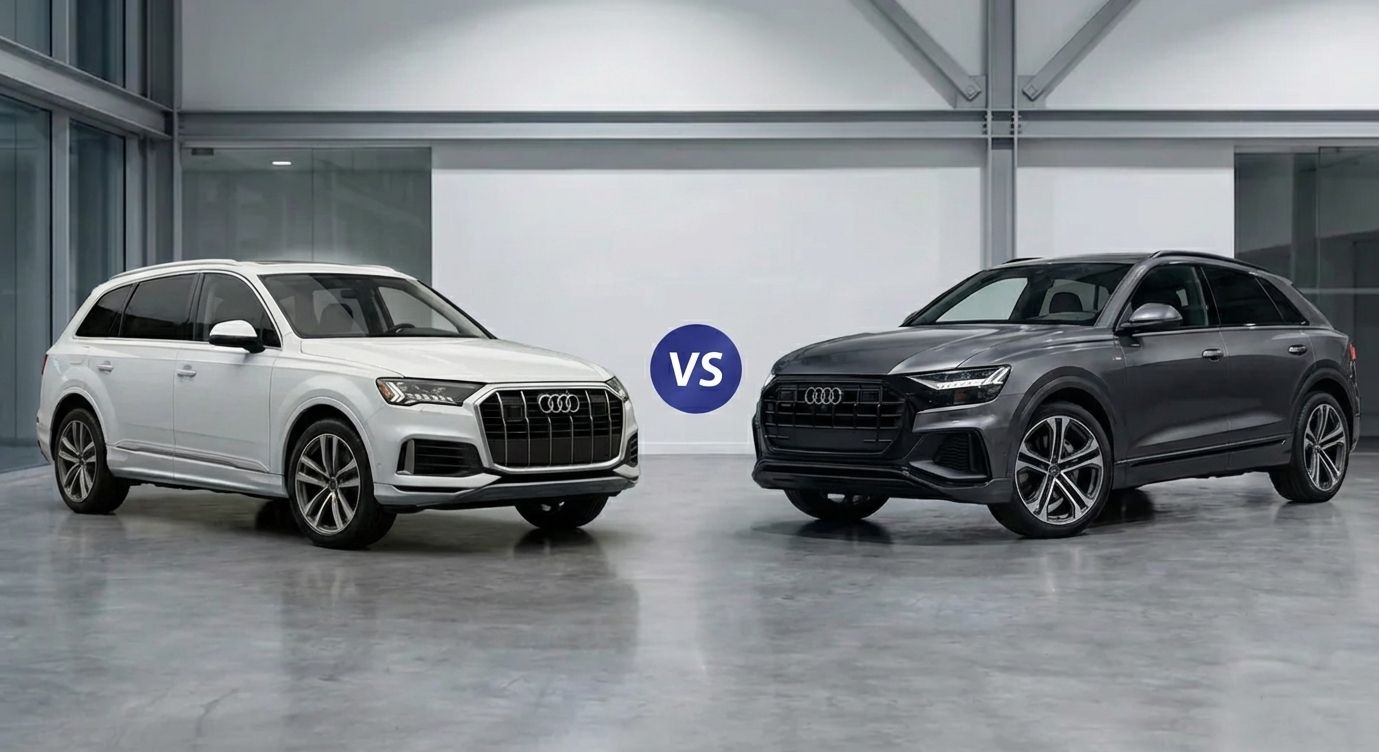
Audi Q7 vs. Audi Q8: Which luxury SUV is better for you? A detailed comparison of design, practicality, and driving performance to help you decide.
Apr 13, 2026
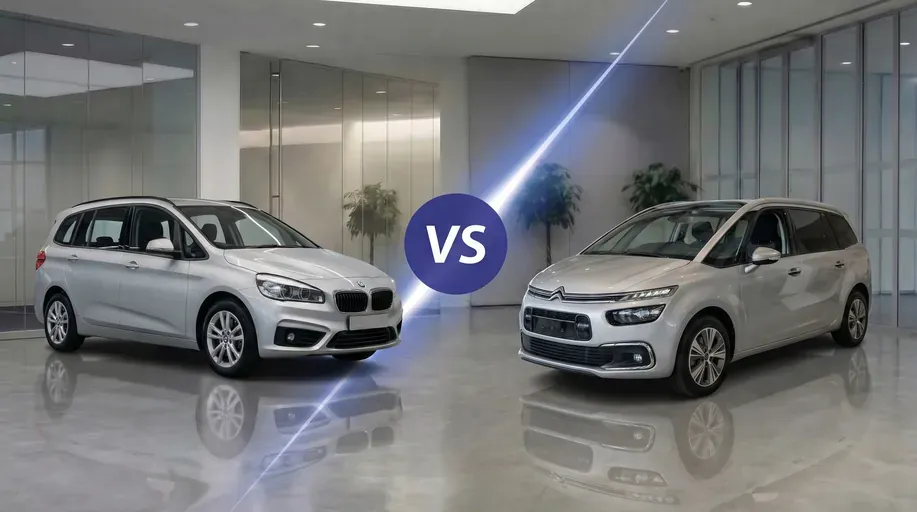
Detailed MPV comparison: BMW 2 Series Gran Tourer vs. Citroën Grand C4 SpaceTourer (Picasso). Discover the differences in equipment, real-world experience, and the final verdict.
May 10, 2026